Uncategorized
Cocaine Hair Detox: What the 500 pg/mg Cutoff Means
Oct
Some hair-cleansing treatments lower measured cocaine concentrations, but no technique reliably guarantees a negative hair test in accredited labs. The Society of Hair Testing sets a cocaine cutoff of 500 pg/mg, and controlled studies referenced by resources like PassHairDrugTest.com show real but variable reductions. The rest of this article explains how testing works and why.
TL;DR:
- Accredited labs assess cocaine against the 500 pg/mg cutoff and seek at least one major metabolite; cocaine alone may reflect surface contamination.
- A hair test usually reflects about 90 days of growth from roughly an inch and a half of hair nearest the scalp; cosmetic treatments can alter results.
- Lab wash fractions help distinguish surface residue from incorporated drug: high cocaine in the final wash suggests contamination, while clean washes and metabolites support use.
- Record bleaching, dyeing, perming, or straightening and share the dates with the test administrator; if results are positive, ask which metabolites and wash results informed interpretation.
- An at home confirmation test can offer preliminary information, but it is not equivalent to accredited laboratory analysis and cannot predict a formal result.
Table of Contents
Table of Contents
- How hair follicle testing for cocaine works
- Laboratory decontamination and wash protocols: what labs actually do
- Peer-reviewed evidence on hair cleansing treatments and measured reductions
- Practical steps to take if you’re facing a cocaine hair test
- Resources and experience behind this information
- Where evidence ends and personal judgment begins
- Where to find hair-cleansing products and testing support
- FAQ
- Sources
How hair follicle testing for cocaine works
Cocaine gets into hair mainly through the bloodstream as hair follicles form, which is why a hair sample can reflect drug exposure going back roughly 90 days, matching about an inch and a half of growth closest to the scalp. Sweat and environmental contact can also deposit cocaine on the hair’s surface, which is one reason labs do not rely on a single data point to call a result positive.
Analysts do not just look for cocaine itself. They screen for several related compounds because each one tells a different part of the story:
- Benzoylecgonine, the primary metabolite produced when the body processes’ cocaine.
- Norcocaine, another metabolic byproduct formed through liver enzyme activity.
- Cocaethylene, which forms specifically when cocaine and alcohol are used together.
- Hydroxy-cocaines, additional breakdown products that support confirmation of internal metabolism.
Finding cocaine alone, with no metabolites, raises the possibility of external contamination rather than actual use. Finding metabolites alongside the parent drug is much harder to explain away, since the body has to process a substance to produce them.
The Society of Hair Testing cutoff for cocaine in hair is 500 pg/mg, and its consensus guidance recommends identifying at least one major metabolite to confirm consumption rather than mere surface exposure. That combination, a concentration above cutoff plus metabolite confirmation, is what most accredited labs treat as a defensible positive result.
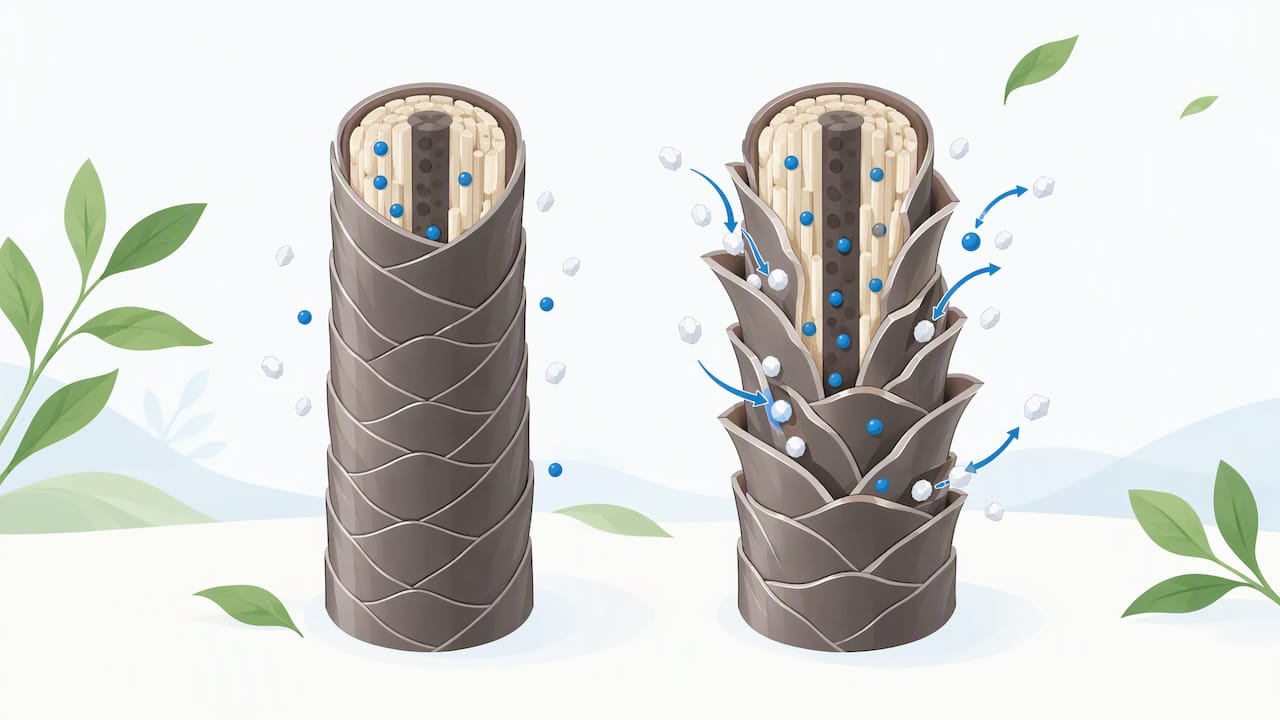
Hair porosity matters as much as the testing method itself. Hair that has been permed, bleached, or chemically treated tends to have a more open cuticle structure, which can let more external material in during contact with drug residue, and can also let more material wash or leach out during cleaning. This is why two people with identical exposure histories can produce different lab numbers depending on how their hair has been treated cosmetically. A general hub on hair drug testing walks through these mechanics in more depth for readers who want the full technical picture, and our cutoff explainer breaks down how numeric thresholds get applied in practice.
Laboratory decontamination and wash protocols: what labs actually do
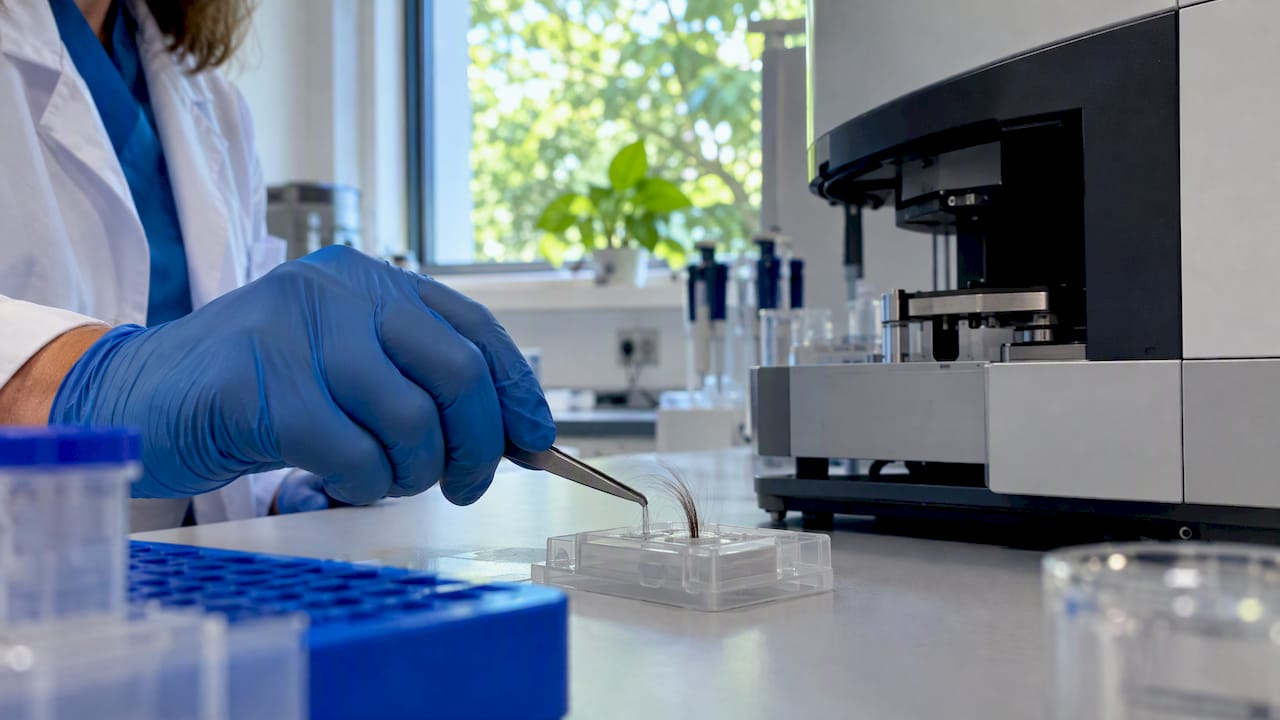
Before any hair sample gets extracted and analyzed, accredited laboratories run it through a decontamination process. This step exists specifically to separate what is sitting on the hair’s surface from what got incorporated into the keratin matrix during growth.
A typical forensic wash sequence looks something like this:
- An initial nonaqueous rinse, often with a solvent like methanol, to remove loose surface residue without disturbing the hair’s internal structure.
- Multiple aqueous washes, usually with a buffer or detergent solution, repeated several times with fresh solvent each round.
- Collection and separate analysis of each wash fraction, not just the final rinse.
- Comparison of drug concentrations in the wash fractions against concentrations found in the digested hair matrix itself.
That last step is where the real forensic judgment happens. Research on decontamination of cocaine-positive hair samples found that multi-step methanol washes and repeated short washes with fresh solvent can rapidly clear recent external contamination, but these same washes are far less effective at pulling out cocaine that has already been incorporated into the hair’s inner compartments during growth. Contamination tends to wash out quickly and predictably. Incorporated drug tends to stay put.
Labs use the ratio between what comes off in the wash and what remains in the digested hair to build a decision tree. A sample where the final wash solution carries a high concentration of parent drug relative to what is found in the hair extract itself is often flagged as likely surface contamination rather than genuine use, according to SoHT consensus guidance. A sample where the wash fractions are comparatively clean but the hair extract still shows cocaine and metabolites above cutoff points toward actual consumption.
| Wash stage | What it targets | What a clean result suggests |
|---|---|---|
| Nonaqueous rinse (methanol) | Loose surface residue | Minimal external contact |
| Aqueous wash cycles | Residual surface contamination | Surface is largely clear |
| Final wash fraction analysis | Comparison point against hair extract | Low wash levels with high extract levels support use rather than contamination |
Older forensic work on hair analysis wash procedures found that hair porosity, not hair color, determines how much drug a strand absorbs during contact, and that an effective wash sequence (an initial nonaqueous step followed by multiple aqueous washes) is essential for telling contamination apart from use. Perming and other oxidative cosmetic treatments increase porosity and can increase uptake in soaking experiments, which helps explain why wash results vary so much between individuals with different hair histories.
The practical limit here is straightforward: washing protocols are good at clearing what is sitting on the hair. They are not designed to, and generally do not, strip out what has already been incorporated into the structural matrix during the roughly 90-day window the sample represents. Readers who want a closer look at how these cutoffs translate into real lab reports can check our breakdown of cocaine-specific detection timing.
Peer-reviewed evidence on hair cleansing treatments and measured reductions
Controlled experiments give the clearest picture of what cleaning treatments actually do to cocaine concentrations in hair, and the numbers are more specific than most online claims suggest.
One controlled study testing homemade treatment combinations, including baking soda, salicylic acid, and bleach applied in sequence, found mean decreases in cocaine concentration of up to 90%, with a range of 32% to 99% across analyzed samples, compared with untreated reference hair. That is a genuinely large reduction in some cases. It is also a wide enough range that outcomes clearly depend heavily on how the treatment was applied, how much cocaine was present to begin with, and the condition of the hair being treated.
A few patterns stand out across this kind of research:
- Oxidative treatments like bleaching tend to produce the largest measured reductions, likely because bleach chemically degrades the hair’s structural proteins along with whatever is trapped inside them.
- Acid and alkaline cycling treatments, such as salicylic acid followed by baking soda, show more variable results than bleaching alone.
- Multi-step combination treatments generally outperform single-step treatments, but the gap between best-case and worst-case results within the same study is large.
- Reductions measured for cocaine do not always match reductions measured for its metabolites in the same samples, which matters because labs confirm use through metabolite presence, not just parent drug concentration.
That 32% to 99% range from controlled testing is the clearest published signal that hair cleansing treatments do something measurable, and also the clearest signal that nothing in this category works consistently enough to call predictable.
Lab conditions in these studies are controlled in ways real-world use rarely is: known drug concentrations, standardized treatment application, and no interference from unrelated hair care products. A person treating their own hair at home is working with an unknown starting concentration, inconsistent application, and hair that may already be carrying residue from styling products, water hardness, or prior chemical treatments. Visual hair damage is also not a reliable guide. Hair can look basically normal after a treatment that significantly altered its internal keratin structure, and it can look visibly damaged while barely touching the compounds a lab is testing for. Our article on why large reported reductions don’t guarantee a lab pass goes further into this gap between lab numbers and real outcomes.
Practical steps to take if you’re facing a cocaine hair test
If a hair test is coming up, there are a handful of things worth doing regardless of exposure history, and they are more about documentation and realistic expectations than about any single product.
- Write down your recent cosmetic history, including any bleaching, dyeing, perming, or chemical straightening, and when it happened.
- Tell the collector or testing administrator about any recent cosmetic treatments before the sample is taken, since this can be relevant to how results get interpreted.
- If the test date is flexible, understand that no treatment changes the underlying 90-day detection window; nothing shortens how far back the test can see.
- Consider an at-home confirmation test for your own information before a formal screening, while recognizing these are not equivalent to accredited laboratory analysis.
- Accept going in that there is no technique with a documented, consistent pass rate. The published numbers show reductions, not guarantees.
If a lab result comes back positive, you (or whoever is reviewing the result on your behalf, such as a Medical Review Officer) can ask specific questions: What were the wash-fraction results compared to the hair extract concentration? Which metabolites were identified, and at what levels relative to the SoHT cutoff? Was cosmetic history factored into the interpretation? These questions target exactly the data points forensic labs use to separate contamination from use, as outlined in federal testing guidance published through the Mandatory Guidelines for Federal Workplace Drug Testing Programs.
Pro Tip: Keep receipts or appointment records for any professional hair treatments, and note dates for any at-home steps you take, since a documented cosmetic history is one of the few things that can meaningfully inform how a lab or reviewer interprets a borderline result.
For more on how detection windows interact with timing decisions, our guide on hair growth lag and the 90-day window explains the general principle, and our cocaine testing archive covers related scenarios in more depth.
Resources and experience behind this information
Our site is focused on hair, urine, saliva, and blood drug-testing products and the research behind them. That focus means we track the published science on hair decontamination and detection windows closely, not just the marketing claims that circulate around it.
Here is what we maintain for readers researching this topic:
- Hair-cleansing kits and shampoo-based products designed for people preparing for a hair follicle test.
- Instructional guides that walk through step-by-step preparation, including our multi-step Macujo Method materials.
- At-home test kits that let you check your own result before a formal screening.
- A general information hub covering detection science, cutoffs, and related testing types.
You can also review our scientific accuracy breakdown for a closer look at what hair testing can and cannot distinguish.
Where evidence ends and personal judgment begins
The research here is more honest than most of what circulates about hair detox, and that honesty is exactly what makes it uncomfortable. A 32% to 99% reduction range is not a failure of the science. It is the science telling you that outcome depends on variables you cannot fully control at home: starting concentration, hair condition, application consistency, and a lab’s own decision tree.
My actual recommendation is boring compared to what most forums promise: document your cosmetic history, understand the cutoff and metabolite confirmation process before you walk into a collection site, and use an at-home confirmation test if the stakes are high enough to justify it. Nothing here changes a 90-day window or guarantees a lab report. If a job, custody arrangement, or legal matter depends on the outcome, talk to an attorney or an occupational health professional before you rely on any single method, including the ones with published data behind them.
— MIchael
Where to find hair-cleansing products and testing support
If you are preparing for a cocaine hair test and want products built specifically around the science covered above rather than generic beauty-aisle shampoo, our hair follicle drug test shampoos and kits are built around the multi-step approach described in this article: addressing surface residue and hair porosity together rather than relying on a single wash.
What you get with these products:
- Shampoo formulations paired with step-by-step instructions.
- Multi-step kits that combine cleansing stages tested in controlled studies.
- At-home test kits for use before a formal lab screening.
- Phone support available for questions about timing, application, or specific situations.
Beauty-store clarifying shampoos and generic detox products on the market were not formulated with hair follicle testing in mind, and most carry no instructions at all for this specific use. We built our hair follicle testing products around the testing science itself, with instructions that account for porosity, timing, and the multi-step process the published research points toward. Browse our full product range to find the kit that matches your timeline and hair history.
This article is general information, not a substitute for advice from a qualified doctor. Consult a qualified healthcare professional about your own circumstances before acting on anything here.
FAQ
How can I ensure I pass a hair follicle drug test?
No method, including commercial detox kits, can guarantee a passing result on an accredited hair follicle test, since labs confirm results through metabolite identification and wash-solution analysis against a 500 pg/mg cutoff. What you can do is document your cosmetic history, understand the roughly 90-day detection window, and use products designed specifically for hair follicle testing rather than general shampoo.
Does hair detox work for a drug test?
Some treatments measurably lower cocaine concentrations in hair. Controlled testing found mean decreases of up to 90%, with results ranging from 32% to 99% depending on the treatment and hair condition, but this variability means results are not consistent enough to call reliable.
Is there a way to bypass a hair follicle test?
There is no documented way to bypass accredited hair follicle testing entirely, since labs use decontamination washes, metabolite confirmation, and cutoff comparisons specifically to catch surface-level manipulation. Cosmetic treatments and cleansing products can reduce measured concentrations, sometimes substantially, but forensic decontamination research shows these methods struggle to remove drug that has been incorporated into the hair’s inner structure.
What type of shampoo removes drugs from the hair?
Shampoos built around multi-step formulations, often combining a deep-cleansing or chelating base with a separate follow-up treatment, are designed specifically to address both surface residue and hair porosity rather than relying on a single wash. These differ from standard clarifying shampoos, which were not formulated with hair follicle test science in mind and carry no instructions for this specific use.
Sources
- Hair analysis: Assessment of homemade hair treatment effects on drug concentrations in the keratin matrix
- Consensus document / Society of Hair Testing guidance (2024)
- Hair analysis for cocaine: requirement for effective wash procedures and effects of drug concentration and hair porosity in contamination and decontamination
- Mandatory guidelines for federal workplace drug testing programs (Federal Register, 2026)
Recommended
- 90% Reductions Don’t Guarantee a Pass: Cocaine Hair Detox in U.S. Labs
- Do You Need a Cocaine Hair Test? Here’s How Long Coke Stays in Your Hair
- Home Hair Detox: Realistic Protocol and Verification Guide
- Hair Test Cutoff Levels: What the Numbers Actually Mean
