No products in the cart.
Uncategorized
Tide Detergent Hair Test: Does It Work Before a Drug Test?
03
Nov
Nov
Tide is made to clean laundry, not hair, and nothing we found shows that it reliably changes a hair follicle drug test result. The “Tide hair test” method circulates on forums as a step in home cleansing routines, but a lab tests the drug metabolites inside the hair shaft, and a surface wash is a weak plan for reaching them. Below we explain what the test measures, what the evidence says about washing hair before a test, what laundry detergent does to your scalp, and what a purpose-built routine looks like.
Table of Contents
TL;DR
- Tide is designed to clean fabric and remove stains. It is not a hair product and has no tested record of changing hair drug test results.
- Hair tests look for drug metabolites that entered the hair through the blood, so a single surface wash, with any product, is a thin strategy.
- Detergent can irritate skin and eyes, and dermatologists advise keeping harsh detergents off the skin.
- If you are preparing for a hair follicle test, use a product made for hair and follow a structured, multi-step routine.
- Our shampoos and the Mike’s Macujo Method are built for exactly this situation, with phone support if you have questions.
Table of Contents
- Why people search for a Tide hair test
- What a hair drug test actually measures
- What the research says about washing hair before a test
- Is it safe to wash your hair with laundry detergent?
- Tide vs a purpose-made hair cleansing routine
- What we see work better: a structured approach
- Perspective: why we steer people away from kitchen-shelf fixes
- Get a routine made for hair
- Practical tips if you are preparing for a hair test
- FAQ
- Sources
Why people search for a Tide hair test
The idea comes from forum threads. One popular style of post lists a routine: a shower cap, apple cider vinegar, an astringent, then a soak in Tide original for 30 to 45 minutes. Some versions treat a detox shampoo as step one and Tide as the follow-up, repeated several times. These posts are anecdotes. Nobody can verify the person’s hair history, the lab used, the cutoff levels or how heavy their use was. A “I passed” story tells you almost nothing about whether the method caused the result.
It is easy to see why the idea spreads, though. Laundry detergent is a strong surfactant, it is cheap, it is already in the house, and a hair test is stressful. If you have a job offer waiting on a result, a free fix sounds attractive. The question is whether it is a good bet. Here is what we know.
What a hair drug test actually measures
To judge any cleansing idea, start with what the lab is looking for. The National Institute of Justice (NIJ) explains that hair can provide evidence of drug use in the more distant past, because drugs remain in hair for months longer than they remain in the bloodstream. That longer window is why employers and agencies choose hair testing over urine.
The same NIJ article makes three points that matter here:
- Drugs can get into hair through blood, through sweat, and through environmental contact. Hair that has been exposed to smoke or touched by a contaminated surface can pick up traces on the outside.
- Laboratories wash samples to remove external contaminants, and those washing procedures are not standardized across labs.
- Testing for metabolites, the byproducts your body makes when it processes a drug, helps tell actual use apart from outside exposure. The test identifies the drugs present, not the quantity consumed.
This is the key to the Tide question. The lab already washes the sample on its own. The material it is looking for is the part that was built into the hair from the inside. A detergent soak works on the outside surface, so it is aimed at the layer the lab has already been removing. Whether any product reaches the deeper material depends on how well it opens the hair shaft and how many times it is applied. That is why a purpose-built routine is designed differently from a laundry soak.
For a deeper explanation of timing and what labs look at, see our hair follicle drug test information page. If you are not sure which test you are facing, our comparison of hair drug tests vs urine shows how detection windows differ.
What the research says about washing hair before a test
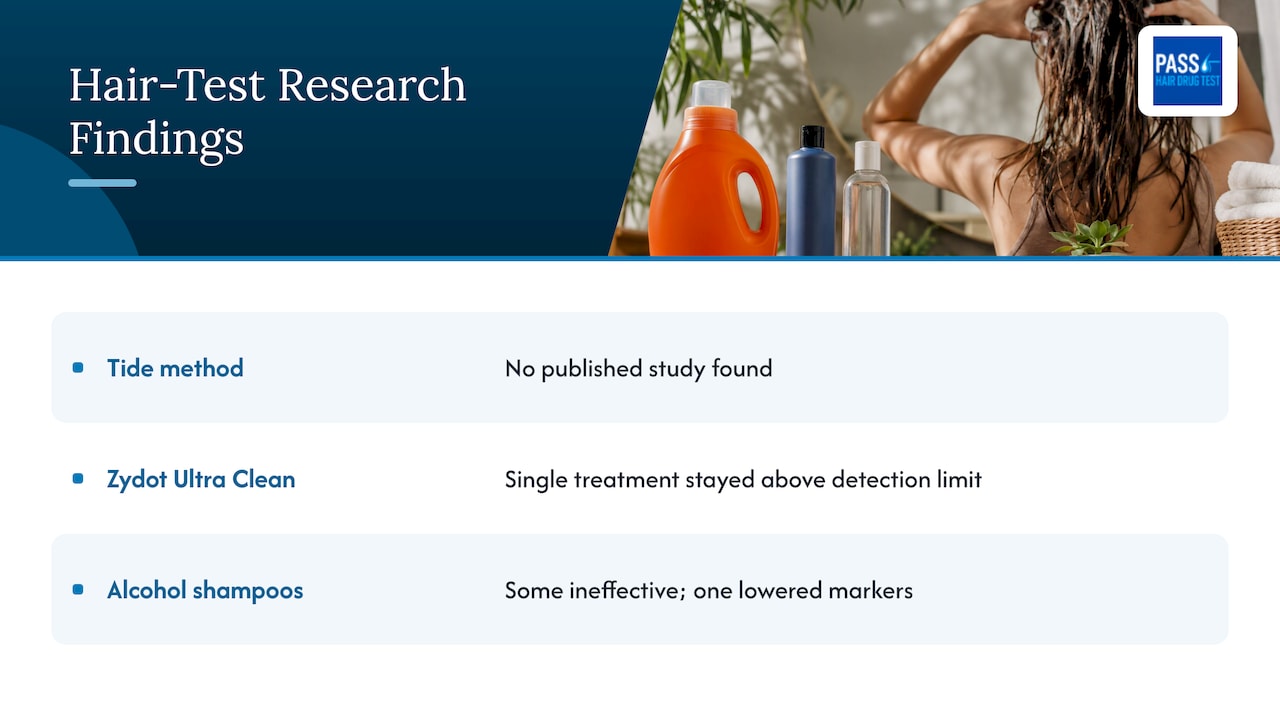
There is no published study of Tide as a hair-test pretreatment that we could find. That is worth saying plainly: the Tide method rests on forum posts, not on lab data.
There is research on specialty cleansing shampoos. In a study in the International Journal of Legal Medicine, researchers tested Zydot Ultra Clean on hair from 14 people with a known history of drug use. They found that a single Ultra Clean treatment did not drop drug concentrations below the detection limit of the lab method used. That is a finding about a single treatment, and it is one reason we do not suggest one wash of anything as a plan. Our approach is a structured, repeated routine, which we explain below.
Research on alcohol metabolites points in the same direction: results depend heavily on the specific product. A multi-centre team tested four shampoos on hair from regular drinkers and reported that some brands were ineffective while at least one strongly lowered the marker levels. The lesson is that formulation matters. A product designed to treat hair is a different tool from a product designed to lift grease out of cotton.
What this means for Tide
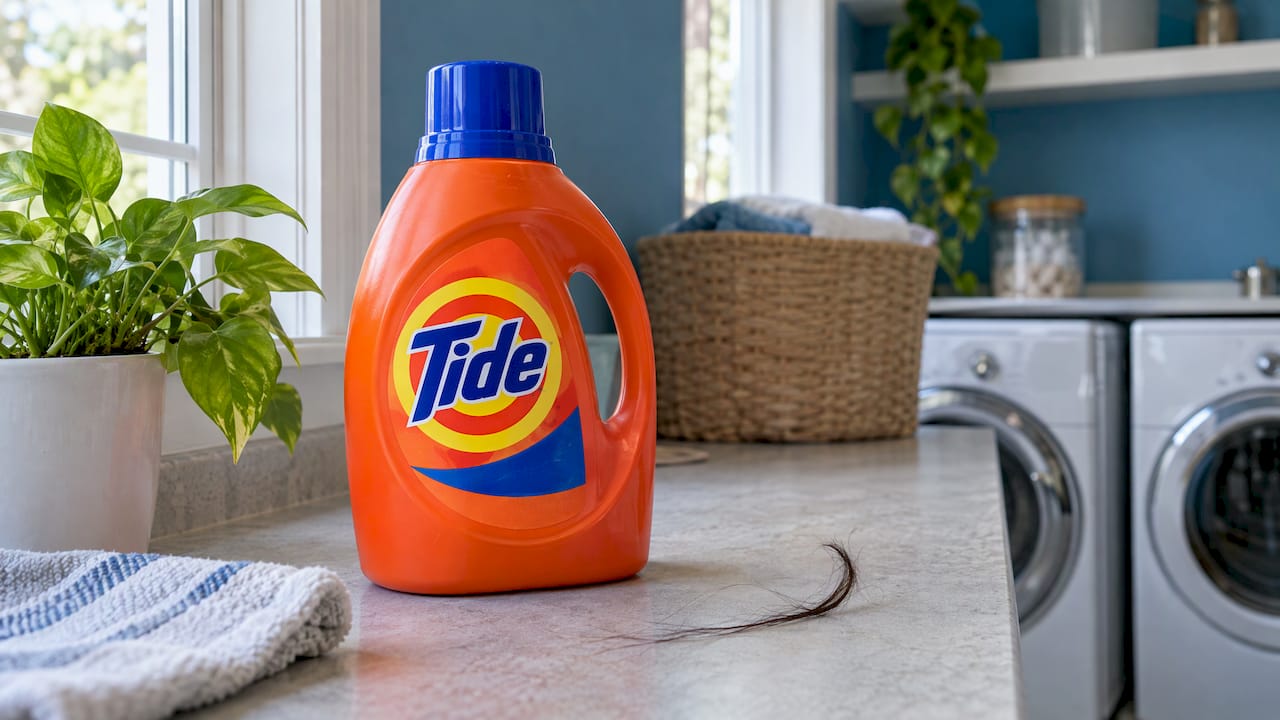
Tide’s job is to clean fabric. A retail listing describes it as designed to clean laundry and remove stains from machine-washable fabrics. Its formulation has been built and tested for that purpose, not for hair cuticles or follicle testing. So there is nothing to back up the idea that it does more for a hair test than any ordinary harsh shampoo would. When a tool is built for a different job and has no testing in this one, you are guessing with something that matters.
Is it safe to wash your hair with laundry detergent?
This is the other half of the search. People also ask whether detergent is good for hair, and whether Tide contains harmful chemicals.
What Tide’s safety data says
Tide’s 2024 safety data sheet lists surfactants, enzymes and ethanol among its ingredients. It states that the product is harmful if swallowed and an eye irritant. The first aid steps are simple:
- Skin: rinse with water.
- Eyes: rinse with water for several minutes.
- Swallowed: drink one to two glasses of water, and call a poison center or doctor if you feel unwell.
An older safety sheet for the granular product lists skin effects as none under normal use but still advises avoiding skin contact. Those documents are written for handling the product as intended, in a washing machine, with a rinse. A 30 to 45 minute scalp soak under a shower cap is not that use. A cap holds the liquid against your skin and keeps it from rinsing off, so irritation is more likely, and so is liquid running toward your eyes.
What dermatologists say
The American Academy of Dermatology tells people with scalp conditions to avoid getting harsh detergents or strong soaps on the skin to prevent flare-ups. That advice is written for seborrheic dermatitis, but the reasoning applies to anyone: strong cleansers strip the oils your skin and hair rely on. If you have a flaky, itchy or sensitive scalp, see a dermatologist before putting laundry products anywhere near it. If you get burning, a rash or blistering after a soak, rinse thoroughly and get medical advice.
Hair condition matters for the test, too
Rough handling of hair has a practical cost. Harsh soaking can leave hair dry, brittle and hard to manage, and nobody wants to arrive at a collection appointment with damaged hair on top of the stress. We wrote more on this in our look at detox shampoo damage, and the same common-sense rules apply to anything you put on your hair repeatedly.
Tide vs a purpose-made hair cleansing routine
Here is how the two approaches compare on the points a reader usually cares about.
| Point | Tide laundry detergent | Purpose-made hair cleansing routine |
|---|---|---|
| Designed for | Fabric and stain removal | Hair, ahead of a hair test |
| Published testing on hair-test results | None found | Studies exist on specialty shampoos, with mixed results by product and by number of treatments |
| Scalp and eye safety | Labeled an eye irritant and harmful if swallowed | Made to be used on hair, with directions |
| Instructions | None for hair | Step-by-step directions and support |
| Typical use | Long soak, often under a cap | Structured sequence of washes |
The last row matters most. A single product, used once, is a gamble for any hair. A routine is a plan: the sequence, the timing, the number of washes and the aftercare all count.
What we see work better: a structured approach
We have sold hair-cleansing products for more than 20 years, and the pattern we describe to customers is consistent. People who prepare well do four things:
- Know the test. Confirm it is a hair test and what sample the employer or agency will take. Our guide on the hair follicle drug test walks through this.
- Start early. Leave yourself time to do the full routine rather than a rushed one the night before.
- Use hair products, not household ones. Our shampoos, including Macujo Aloe Rid Shampoo and Zydot Ultra Clean Shampoo, are made for hair and come with directions.
- Follow a complete method. Our multi-step Mike’s Macujo Method is designed as a sequence, so no single product is carrying the whole job.
The detailed steps are laid out on our page about how to pass a hair follicle drug test, and our hair drug testing shampoo guide explains the products.
A note on body hair and short hair
Some people ask whether they can skip the question by relying on other hair. Labs can test body hair when head hair is too short, and the detection window differs. Read our page on the body hair drug test before assuming anything.
Perspective: why we steer people away from kitchen-shelf fixes
We hear about Tide every week. A caller has read a forum thread, has a test coming up, and wants to know whether the laundry aisle can solve it. Our honest answer is that we would not build a plan around it.
Here is how we think about it. A hair test is a lab analysis of what is inside the hair. Anything you do needs to be designed for hair, repeatable, and backed by directions. That is why we built our offer around Macujo Aloe Rid Shampoo, Zydot Ultra Clean Shampoo and the multi-step Mike’s Macujo Method, rather than one product used once.
After 20 years in this industry, we know people are rarely worried about the chemistry. They are worried about a job. So we give them a clear sequence, instructions written in plain English, and unlimited phone support so they are not guessing at midnight. We believe the method is the right tool for light and heavy users alike, and we stand behind it.
If you are going to put time and effort into preparing, put it into a routine made for the job.
MIchael
Get a routine made for hair
If you have a hair follicle test coming up, you do not need to improvise with laundry products. Our store carries the hair shampoos and the multi-step method, along with instructions and phone support from people who have helped customers prepare for years.
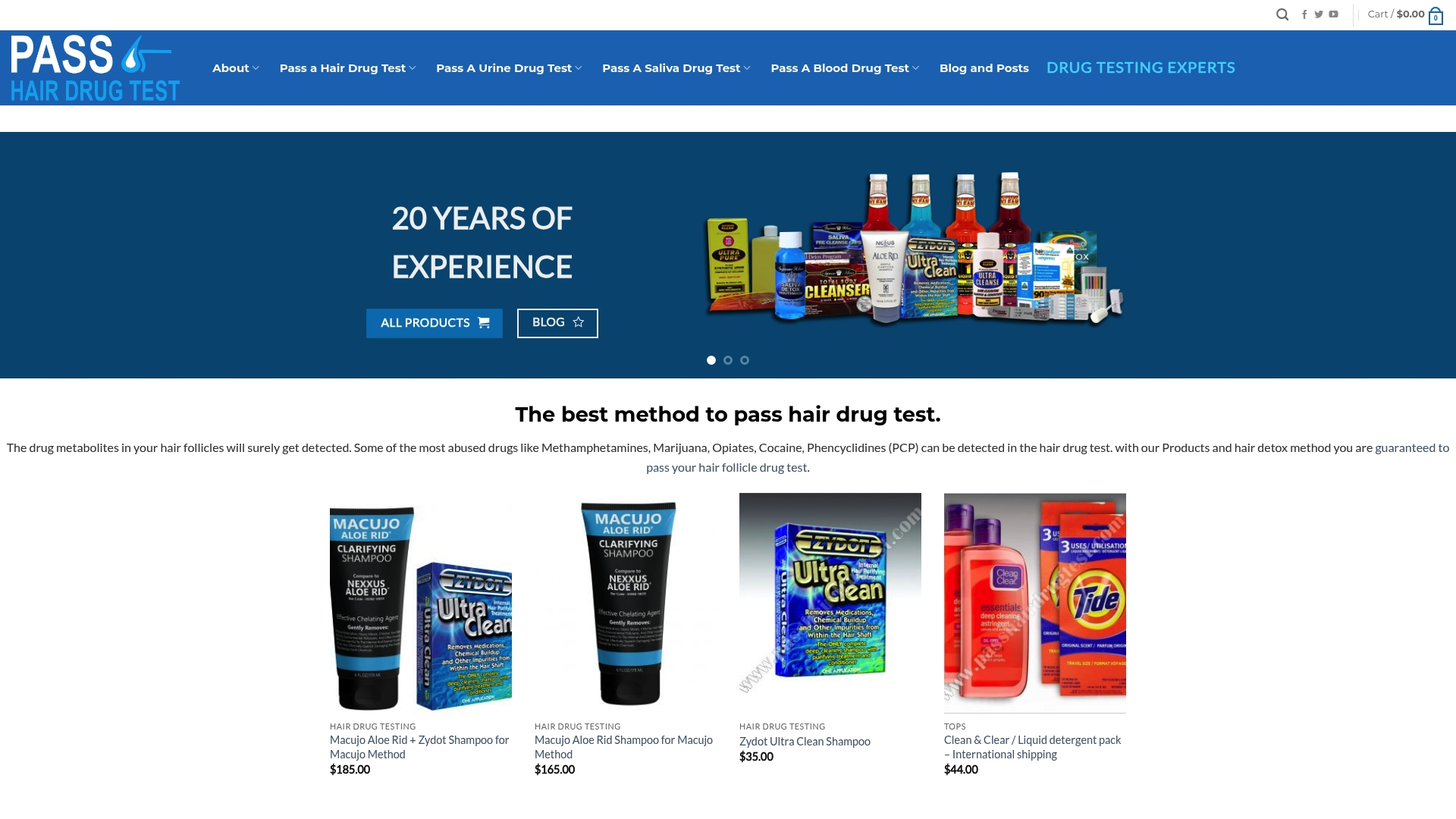
Browse our hair drug testing products, or start on our pass hair follicle drug test page to see what fits your situation. Prices are shown on the product pages at checkout.
Practical tips if you are preparing for a hair test
Whatever route you choose, these basics apply.
- Do not rely on forum anecdotes. A story with no lab, no cutoff and no hair history is not evidence.
- Avoid long soaks with household chemicals. Eyes, scalp and hair condition are all at stake.
- Keep the sample in mind. Labs wash samples and use metabolite analysis, so outside contamination is only part of the picture, as the NIJ explains.
- Ask what test you are getting. Some employers use urine or saliva instead. We have guides on passing a urine drug test and a saliva drug test if that applies to you.
- Plan the timing. Starting early gives you room to follow directions and repeat steps.
- Get support. If you have a sensitive scalp, a skin condition or an allergy, talk to a dermatologist before using any strong cleanser.
FAQ
Does Tide detergent work on a hair drug test?
We found no published study showing that Tide changes hair test results. It is designed to clean fabric, and the evidence people cite is forum anecdotes. The lab tests metabolites inside the hair, so a purpose-built hair routine is a more sensible choice.
Is it good to use detergent to wash hair?
No. Laundry detergent is made for fabric, and its safety data lists it as an eye irritant. The American Academy of Dermatology advises keeping harsh detergents off the skin. If you have a sensitive or flaky scalp, see a dermatologist.
Are there harmful chemicals in Tide laundry detergent?
Tide’s safety data sheet lists surfactants, enzymes and ethanol, and says the product is harmful if swallowed and irritates the eyes. If it gets on your skin, rinse with water. For eyes, rinse for several minutes. If it is swallowed, drink water and call a poison center or doctor if you feel unwell.
Will a single wash with any detox shampoo be enough?
Research on a specialty shampoo found that one treatment did not bring drug levels below the detection limit. That is why we recommend a structured multi-step routine rather than one wash. Our support team can walk you through the sequence.
Sources
- Detecting Drugs in Hair: Is It Drug Use or Environmental Contamination? (NIJ)
- Effect of the shampoo Ultra Clean on drug concentrations in human hair (International Journal of Legal Medicine, 2000)
- Detox shampoo drench deceives drink test (Wiley Analytical Science, 2019)
- Tide Original Scent Liquid Laundry Detergent product listing
- Tide Detergent Safety Data Sheet, 2024
- Tide Granular Laundry Detergent MSDS
- Seborrheic dermatitis: self-care (American Academy of Dermatology)
Recommended
- How to pass hair drug test
- Same Day Hair Detox Before a Hair Drug Test: What Works
- How to Prepare for a Hair Test the Right Way
- Hair Detox Mistakes Before a Drug Test: 9 to Avoid
