No products in the cart.
Uncategorized
Conditioner Before a Hair Drug Test: What It Does and Doesn’t Do
21
Nov
Nov
Conditioner is made to soften and detangle hair, not to clear THC metabolites from inside the hair shaft. If you have a hair follicle test coming up, the question is what actually works on the part of the hair the lab measures. For that job you need a purpose-built cleansing routine with a dedicated shampoo, and conditioner has a supporting role at most. Below we explain how the test works, where conditioner fits, and how a multi-step approach like our hair follicle program is built around the real problem.
Table of Contents
TL;DR
- Hair tests measure drug metabolites carried into the hair from your bloodstream, so a surface product like conditioner is not aimed at what the lab looks for.
- Hair grows about half an inch per month, so each segment of hair reflects a window of time, and a drug can take 7 to 10 days to show up in hair after use.
- Labs have no routine way to flag cleansing shampoos or heavy washing, which is why the product and the routine you choose matter more than any single conditioner.
- Our Mike’s Macujo Method is a multi-step routine, and we pair it with Macujo Aloe Rid Shampoo and Zydot Ultra Clean Shampoo.
- No federal agency is currently testing hair under the federal workplace program, so most hair tests you face come from private employers who set their own rules.
Table of Contents
- How a hair follicle test actually works
- Where conditioner fits, and where it stops
- Why a routine beats any single product
- A practical plan for the weeks before your test
- What the rules say about hair testing in the U.S.
- What our shampoos and method are for
- Ready to build your routine?
- Our point of view
- FAQ
- Sources
How a hair follicle test actually works
When you use THC, the drug and its metabolites travel in your blood. According to Testing.com’s hair follicle test guide, drugs and metabolites enter the core of the hair through the follicle, and also through sweat and oil glands, then stay in the hair as it grows. That is why a hair test looks back weeks or months instead of hours.
Two facts from the same guide shape your preparation:
- Hair grows about half an inch per month. The lab typically examines a length of hair close to the scalp, so the amount of hair tested translates into a stretch of your history.
- Use may not appear in hair for 7 to 10 days. Very recent use often is not picked up, and the test cannot show current intoxication.
The lab then runs a two-stage process. An immunoassay screen comes first, and any non-negative result is confirmed with gas or liquid chromatography and mass spectrometry. Labcorp’s hair testing page says negative results are generally available within 48 to 72 hours of receiving the specimen, and confirmations take up to another 72 hours.
What the lab looks for with THC
Marijuana is a special case. SAMHSA’s guidance on hair testing explains that most U.S. hair testing targets the parent drug itself, with the main exception of the major THC metabolite, THC-COOH. That matters because THC-COOH is formed in the body, not on the surface of the hair. The cutoffs listed by Testing.com for confirmation are 0.05 ng/mg for THC and just 0.0002 ng/mg for THC-COOH. To see what those tiny numbers mean for you, read our explainer on hair test cutoff levels.
Where conditioner fits, and where it stops
Conditioner coats the outside of the hair with ingredients that smooth the cuticle, add slip and reduce tangles. Those are cosmetic jobs. The THC-COOH a lab confirms sits in the hair matrix, and a product that mainly deposits a conditioning layer is not designed to reach it.
The research on ordinary hair care shows why the type of product and the intensity of treatment matter. A 1993 review in the Journal of Analytical Toxicology, Welch and colleagues’ evaluation of hair analysis methods, found that shampoos, conditioners and peroxide bleaches reduced cocaine levels in treated hair by 60 to 80% after 30 treatments. That was cocaine, not THC, and it took repeated treatment, so it is not a recipe for a test next week. It does show that what happens to hair over many washes is not uniform, and that results depend on what you use and how often.
A second line of work looks at the hair itself. Jurado and colleagues (1997) found that cosmetic treatment such as bleaching or dyeing lowered the drug content of hair, by about 30% for THC and more for other substances, and that more damaged hair lost more. We do not suggest you damage your hair to chase a result. The point is that conditioner on its own is a gentle product on the mild end of that range, and a cleansing routine is a different kind of tool.
What conditioner is good for in a cleansing routine
People doing a serious cleanse often wash hair far more than usual, and hair that is repeatedly shampooed can feel dry and tangle easily. That is the situation where a conditioner is helpful for comfort and combing. Treat it as hair care around the routine, not as the step that moves THC-COOH out of the hair. If you are unsure how to fit it in, follow the instructions that come with the method you choose, and call us for guidance.
Why a routine beats any single product
Searching for a conditioner that passes a hair test usually means hoping one product does everything. In practice there are three things to solve at once:
- Surface contamination. Smoke, residue and handling can leave drug on the outside of the hair. SAMHSA calls external contamination the major issue in hair testing, which is why labs wash hair before analysis.
- Drug inside the hair. This is the part the confirmation stage measures, and it takes a dedicated cleansing approach rather than a moisturizer.
- Timing. Because of the 7 to 10 day lag and the half-inch-a-month growth rate, the schedule you follow before collection matters as much as the products.
That is the logic behind a multi-step method instead of a bottle. Our Mike’s Macujo Method is a multi-step routine, and the shampoos in it, Macujo Aloe Rid Shampoo and Zydot Ultra Clean Shampoo, are what we recommend for the cleansing work. We have been in the drug-testing and detox-product business for more than 20 years, and we offer unlimited phone support so you are not guessing at each step.
Will a lab notice what you used?
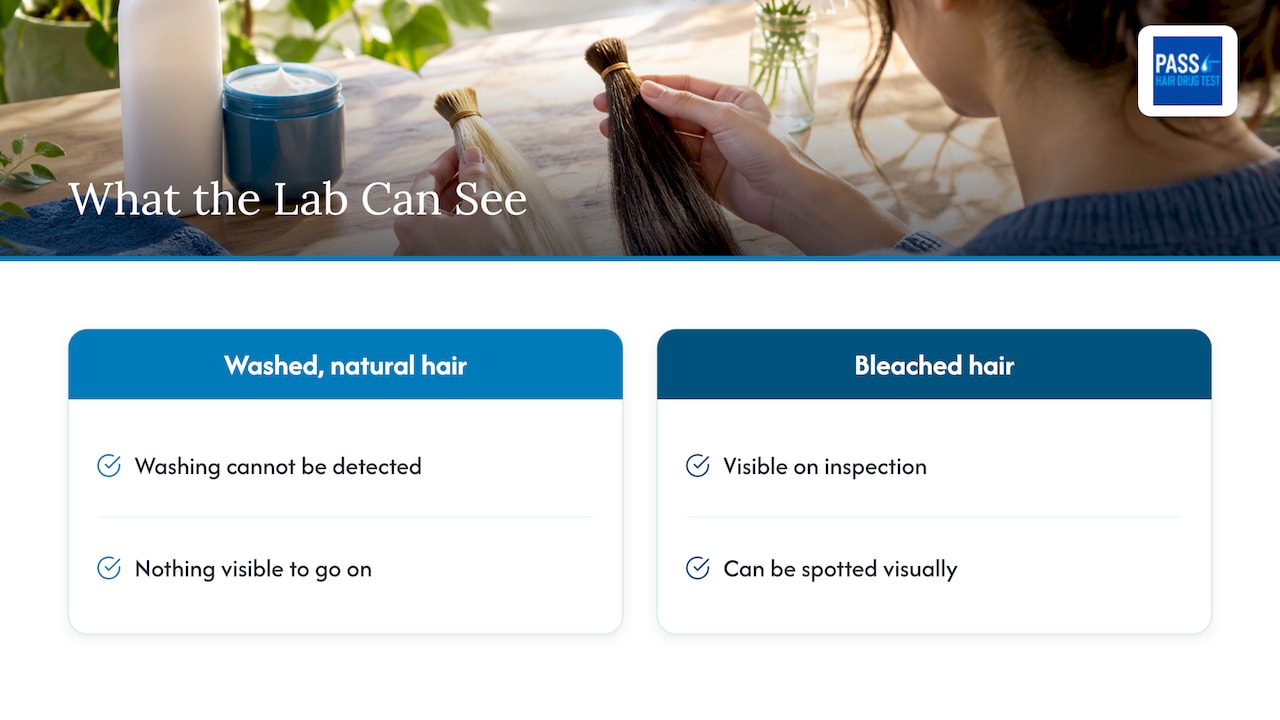
This is the question behind most searches like yours. A 2023 toxicology review by Wissenbach, Binz and Steuer reports that no standardized routine workflow exists to screen for cosmetic hair treatment or extensive washing, and that cleansing shampoos and extensive washing cannot be detected with the available methods. Dyeing and bleaching, by contrast, can be spotted by visually inspecting the hair. In practical terms, a hair that is washed well and looks natural gives the lab nothing visible to go on, while heavily bleached hair does. We go deeper on this in our piece on whether a lab can detect detox shampoo in your hair.
A practical plan for the weeks before your test
This is the order we would work through if you have a test coming and do not know the date yet.
1. Work out your timeline
Every half inch of hair is roughly a month of history, and recent use may not yet be in the hair. If you are still using, stopping is the first step of any plan, because nothing you apply to hair keeps up with ongoing exposure. Our hair drug test information page walks through detection windows in more detail.
2. Choose a cleansing system, not an add-on
Pick a routine built to be followed from start to finish. The Mike’s Macujo Method, with its shampoos, is designed that way. If you use a conditioner at all, use a plain one for comfort and detangling, and keep it separate from the cleansing steps.
3. Leave your hair natural
Bleaching and dyeing are visible to a lab and, per the Jurado study, depend on how much damage the hair takes. The Wissenbach review notes that treatments like these can be identified by looking at the hair. Natural, undamaged hair that has been well cared for is the cleaner path.
4. Plan for the collection itself
The sample is cut from close to the scalp. Short or shaved hair raises questions about what the collector can take, so ask the employer or the collection site what they require and give yourself enough time before the appointment to finish your routine.
5. Keep supporting evidence
If your employer’s policy or a collection form raises questions, keep copies. It is also reasonable to know whether a urine test is an option; our comparison of a hair drug test versus urine shows how each detects use.
What the rules say about hair testing in the U.S.
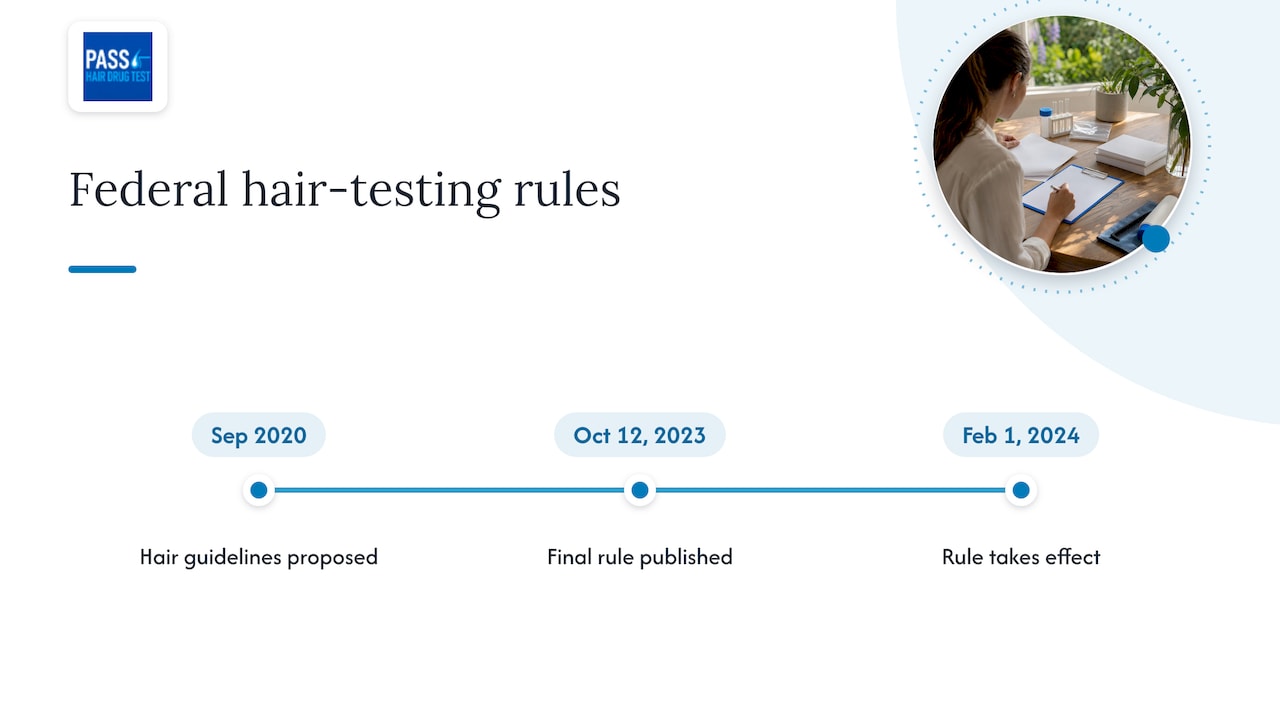
Many readers assume hair testing is a federal requirement. It is not, at least under the federal workplace program. The HHS and SAMHSA final rule in the Federal Register of October 12, 2023, effective February 1, 2024, revised the urine guidelines and states that no federal agencies are testing hair or oral fluid specimens at this time. Hair guidelines were proposed in September 2020 but the rule you are most likely to meet is your employer’s own policy.
That means the test you face usually comes from a private employer or a specific job category, and the details (which drugs, how much hair, when) are set by that employer and the lab they use. Read the paperwork you were given and ask the employer which panel is being run. THC is part of most standard panels, and so are the other substances that the Testing.com guide lists, including cocaine, opioids and amphetamines.
What our shampoos and method are for
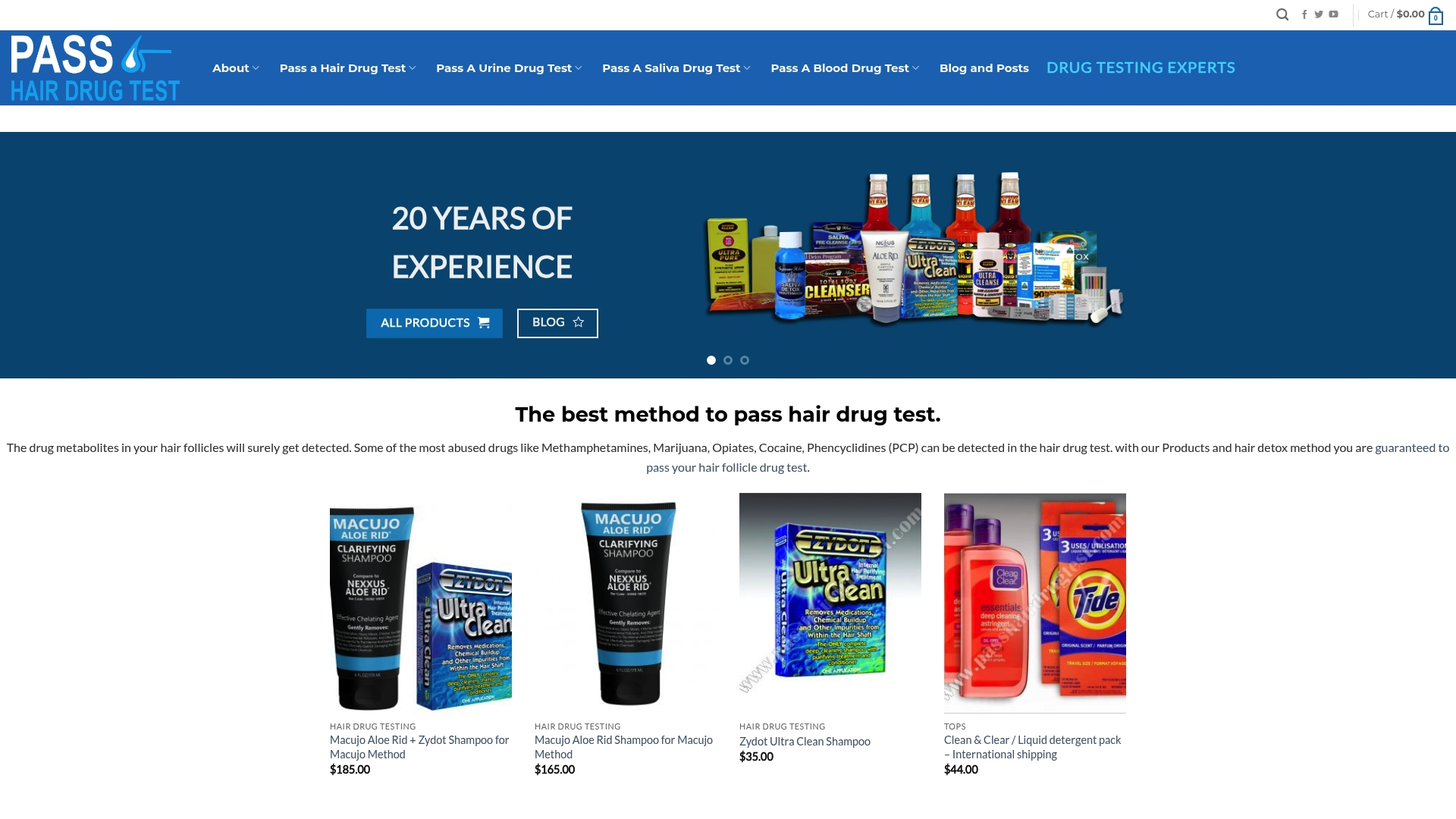
If you are looking at the products page, here is how we describe them. Macujo Aloe Rid Shampoo and Zydot Ultra Clean Shampoo are the two cleansing shampoos in our hair line, and the Mike’s Macujo Method is the multi-step routine that organizes them. We position our approach as the way to handle both light and heavy use, with detailed instructions and support materials that come with it. Our site also carries urine, saliva and blood products and at-home test kits, in case your situation involves more than one test.
Ready to build your routine?
If you need a plan instead of a single bottle, start with our hair follicle drug testing page, where the method and shampoos are laid out step by step. You can also browse everything we carry on the products page, and our team answers questions by phone.
When you order, tell us your timeline and hair length so you can plan around your appointment.
Our point of view
Most people who write to us ask the same thing: is there one product I can add to my shower and be done? We understand why. A conditioner is cheap, it is in your bathroom already, and it feels like part of hair care.
But the test is not asking whether your hair is clean on the surface. It is asking about what is inside the hair, and the lab compares it to cutoffs measured in fractions of a nanogram per milligram. That calls for a routine with a clear start, a clear finish and a shampoo designed for the job.
That is why we built our approach around the Mike’s Macujo Method, with Macujo Aloe Rid Shampoo and Zydot Ultra Clean Shampoo as the cleansing products. After more than 20 years in this field, we believe a defined, multi-step method gives you more to rely on than hoping a conditioner will do the work of a cleanser. We also stand behind it with unlimited phone support, because the questions come at the odd moments, the night before a collection or halfway through a routine.
Use a conditioner if your hair feels dry, since frequent washing is hard on it. Just keep it in its lane, and put your effort into the cleansing steps.
MIchael
FAQ
Can conditioner remove THC from hair before a drug test?
Conditioner is formulated to smooth and soften the hair surface, not to clear THC-COOH from inside the hair shaft, which is what the lab confirms. For that goal, a dedicated cleansing shampoo and a multi-step routine are the right tools. Conditioner is a comfort product alongside the routine.
Can a lab tell if I used shampoo or conditioner on my hair?
A 2023 toxicology review found that no standardized routine method exists to detect cleansing shampoos or extensive washing. Bleaching and dyeing can be noticed by visual inspection, so leaving your hair natural is the safer course.
How far back does a hair drug test look?
Hair grows about half an inch per month, so each segment of hair covers roughly a month of history. Use can take 7 to 10 days to show up in hair, according to Testing.com. Our hair follicle drug test guide covers the timelines in more detail.
Does the federal government require hair drug tests?
Not currently under the federal workplace program. The 2023 HHS and SAMHSA final rule states that no federal agencies are testing hair or oral fluid specimens at this time. Hair tests you are asked to take usually come from a private employer’s policy.
Sources
- Hair Follicle Drug Test: How It Works and What It Detects, Testing.com
- Hair Follicle Drug Testing: Process and Benefits, Labcorp
- Drug Metabolites and Hair Testing, SAMHSA
- Hair Analysis for Drugs of Abuse: Evaluation of Analytical Methodology, Journal of Analytical Toxicology, 1993
- Influence of the cosmetic treatment of hair on drug testing, PubMed, 1997
- Advances in testing for sample manipulation in clinical and forensic toxicology, PMC, 2023
- Federal Register, Volume 88, Issue 196, October 12, 2023
Recommended
- Hair Washes Before a Hair Drug Test: What Actually Matters
- How to Prepare for a Hair Test the Right Way
- How to Pre-Test Your Hair at Home Before a Drug Test
- Hair Detox Mistakes Before a Drug Test: 9 to Avoid
