No products in the cart.
Uncategorized
Hair vs Saliva Drug Test: Which One Is Harder to Prepare For?
19
Nov
Nov
A saliva test looks back about a day or two. A hair test looks back about 90 days. That gap decides how you prepare: with saliva, a short break from THC usually covers the window, while a hair test records weeks of past use that waiting alone cannot change quickly. If a hair follicle test is on your calendar, the preparation is a hair-cleansing routine started well before collection day, and that is what we build our products around at Pass Hair Drug Test.
Table of Contents
TL;DR
- Saliva tests detect THC for roughly 1 to 48 hours after use. Hair tests detect it for up to about 90 days in head hair.
- Hair takes 7 to 10 days after use before THC shows up at all, so a recent session may not register while older use will.
- Hair testing costs more per sample than saliva or urine, and employers use it for pre-employment screening because it catches use that a short break would hide.
- If you face a hair test, the preparation that matters is a hair-cleansing routine, not just abstaining. Our Mike’s Macujo Method is a multi-step routine built around Macujo Aloe Rid Shampoo and Zydot Ultra Clean Shampoo.
Table of Contents
- How each test works
- Detection windows for THC, side by side
- Accuracy: what each test can and can’t tell
- What each test costs
- Which test will you face?
- Why a hair test needs a plan, not just a break
- Practical steps before a hair test
- Our view
- Get ready for your hair test
- FAQ
- Sources
How each test works
Saliva: a swab and a short window
A saliva (oral fluid) test is the simplest of the common drug tests. According to MedlinePlus, the collector rolls a swab around your mouth or holds it under your tongue for about two minutes. The sample is then tested on the spot or sent to a lab. Cleveland Clinic adds that you can’t eat or drink for at least 10 minutes before collection, that on-site results come back within minutes, and that lab results take 24 to 48 hours.
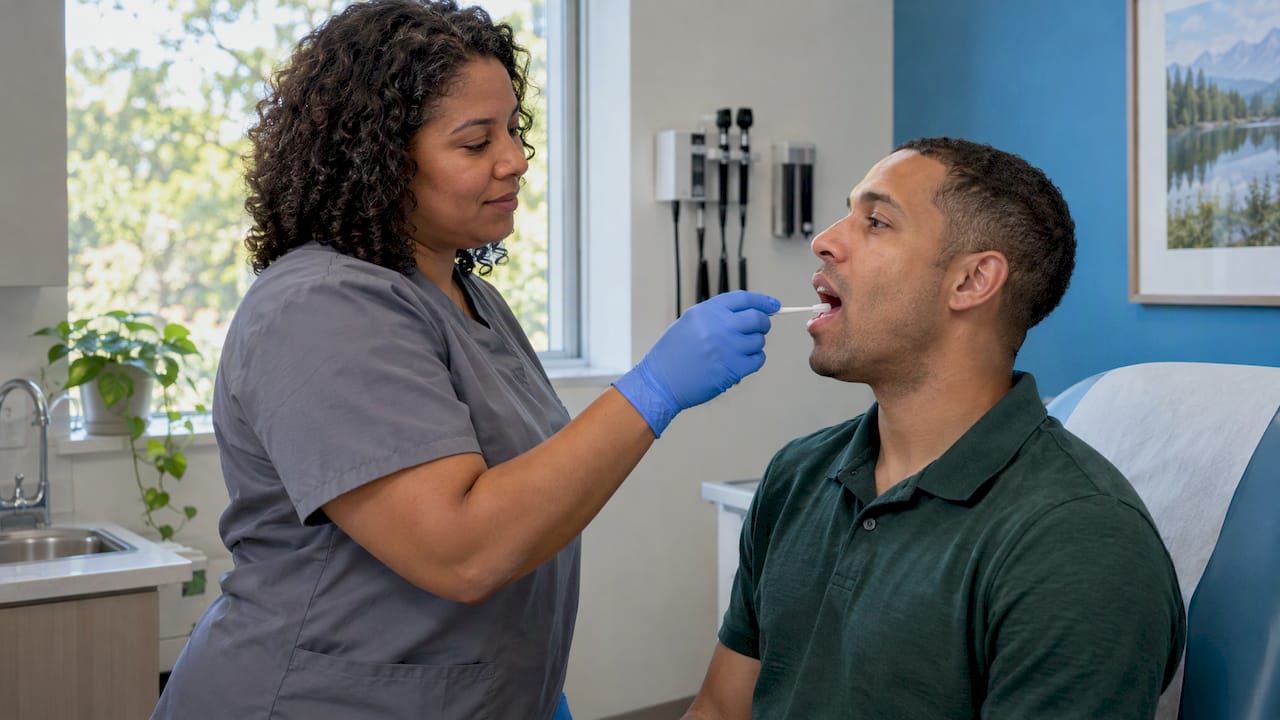
The saliva test mostly finds the parent drug, the THC itself, rather than the breakdown products found in urine. A peer-reviewed review of oral fluid drug testing notes that this makes oral fluid a good fit when the question is recent use. In practice that is why saliva is common for roadside, post-accident and reasonable-suspicion testing.
Hair: a record of weeks, not hours
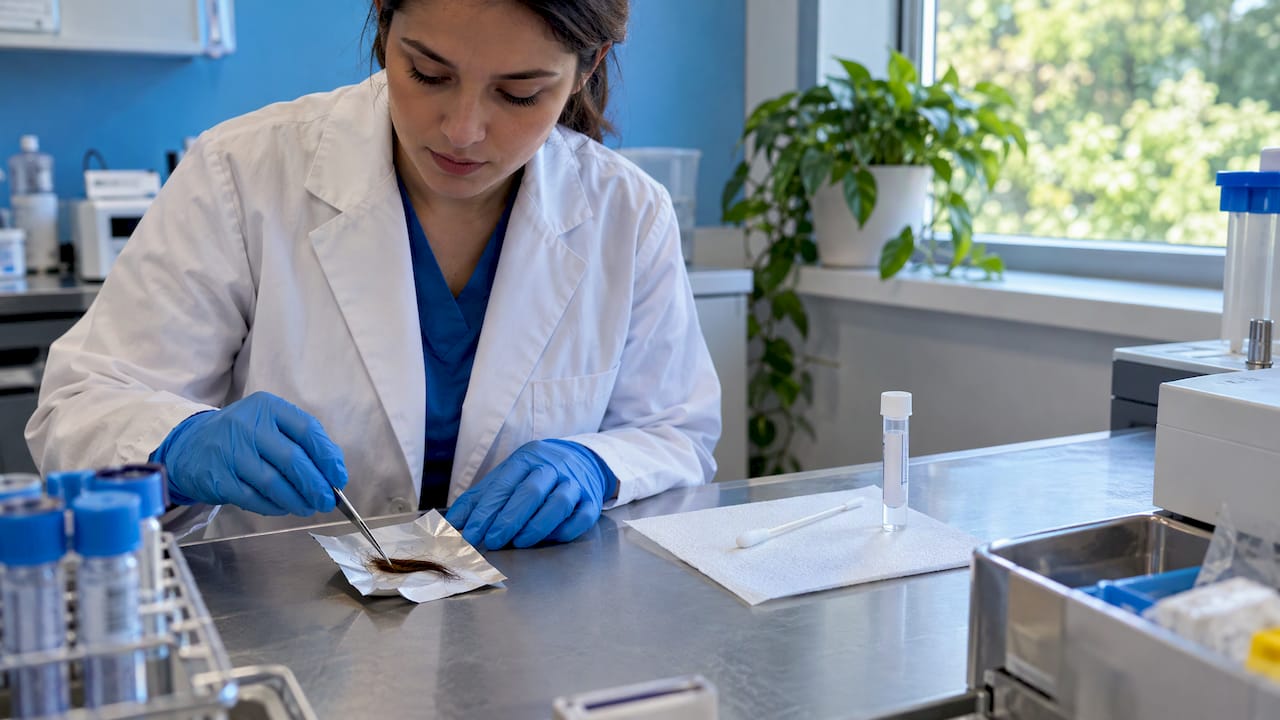
A hair test works differently. The lab analyzes the drug that has been incorporated into the hair shaft as it grows. Lehigh Valley Health Network describes hair testing as highly resistant to evasion or short-term abstinence, with a detection window of several months. A 2025 review in the Journal of Applied Laboratory Medicine explains that the preferred collection spot is the posterior vertex, the back of the crown, because growth there is the most consistent. The lab washes the sample before analysis to remove outside contaminants.
That is why employers use hair for pre-employment screening. You can’t stop smoking two days before the appointment and expect the record to change.
Detection windows for THC, side by side
The numbers below come from official and clinical sources. Real-world windows vary with how often you use, your metabolism and the test’s cutoff level.
| Saliva test | Hair test | |
|---|---|---|
| What it measures | Parent THC in oral fluid | Drug incorporated into the hair shaft |
| Typical THC window | About 1 to 48 hours, with 18 to 24 hours as the likely maximum from a single ingestion (Texas DFPS) | Up to 90 days in head hair, up to 1 year in body hair (Texas DFPS) |
| When use first shows | Within minutes to hours | About 7 to 10 days after use (SAMHSA) |
| Result time | Minutes on site, 24 to 48 hours at a lab | Lab analysis only |
| Best at catching | Very recent use | Pattern of use over months |
Why hair has a delay
Hair does not show use the same day. The federal HHS/SAMHSA hair-testing proposal says drugs and metabolites are not detected in hair for 5 to 7 days after ingestion, which is why hair is not appropriate for post-accident or reasonable-suspicion testing. The 2025 hair review puts the lag at a couple of days up to 10 days before drug is detectable in the part of the shaft above the scalp.
The other side of the delay is the long tail. Hair grows about 1 cm per month, and most laboratories analyze hair equivalent to three months of growth, according to SAMHSA’s clinical guidance. Use from two months ago sits in the segment the lab tests.
What the cut end really represents
Collectors rarely cut flush with the scalp. The same 2025 review reports a study where collectors left an average of 0.8 cm of hair on the scalp, so the cut end can represent more than a month of growth instead of “today.” For you, this means the sample often reaches further back in time than you’d expect.
Accuracy: what each test can and can’t tell
Saliva
Cleveland Clinic says the best oral drug tests can be around 97% accurate, but it also notes that cannabis is harder to detect in saliva than cocaine or opioids. Results depend on when you last used, how fast your body breaks the drug down, how often you use, the quality of the test, and food or drink in your mouth. These tests show presence, not amount. If a donor knows a result is wrong, they can ask for lab confirmation or a second sample. MedlinePlus also says positive screens are usually followed by a confirming test.
Hair
Hair finds more users than urine does. A 2023 study of pre-employment testing at seven large U.S. trucking companies, published in Logistics, found hair’s positivity rate was statistically higher than urine’s for every drug examined and for all drugs combined. The authors explain this by the fact that people can abstain for 2 to 3 days before a urine screen but not rewrite a longer hair record.
Hair is not a measure of how much or exactly when. The test shows presence over a period. It can’t pinpoint a day, and it doesn’t say how impaired anyone was. For you as a test taker, the practical point is simple: the hair sample reflects the weeks before collection, so that is the period your preparation has to address.
What each test costs
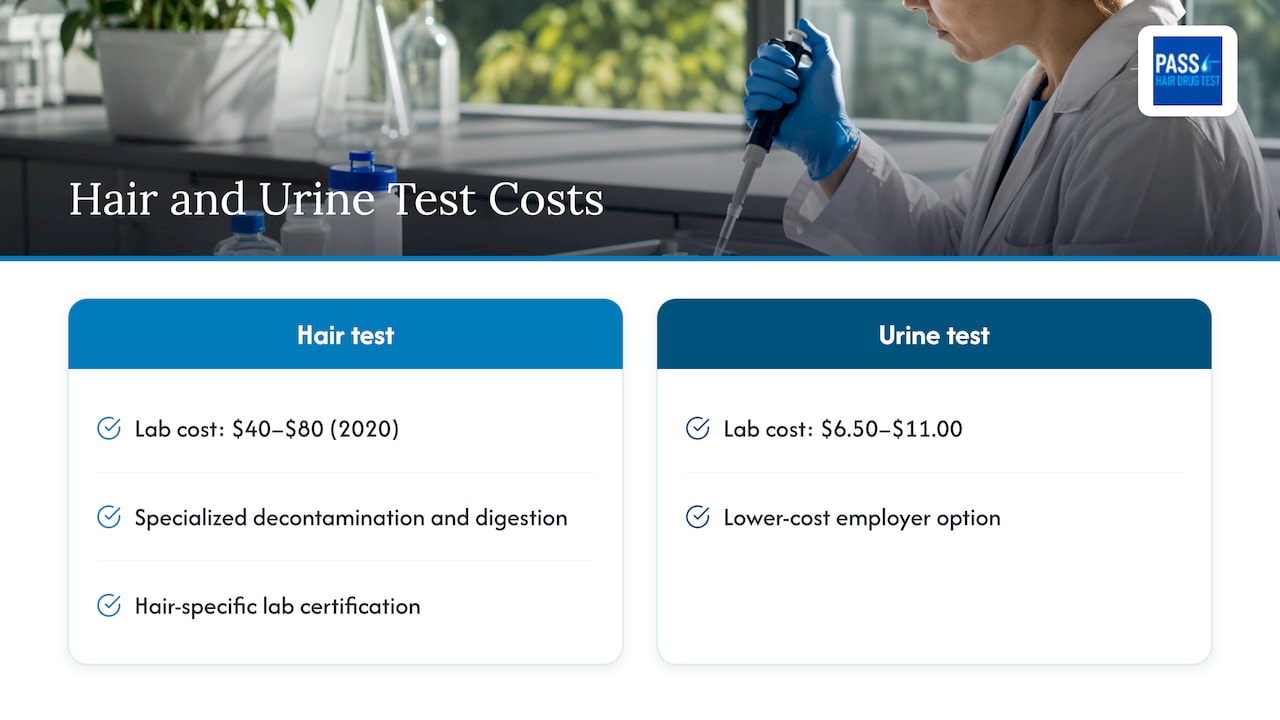
Hair is the pricier test. The HHS/SAMHSA hair-testing proposal estimated in 2020 that a hair specimen costs a lab $40 to $80 when initial and confirmatory testing are both performed, against roughly $6.50 to $11.00 for a urine specimen. It explains that hair costs more because of specialized decontamination and sample digestion, and because laboratories must be specifically certified for hair testing.
Those are lab costs, not what an employer or a retail kit charges you. Employer-paid tests are free to the applicant, and that cost is one reason some employers still choose urine or saliva. When a company does choose hair, it is because it wants the longer look-back.
Which test will you face?
You usually don’t choose. The employer or agency picks the method, so read your paperwork and ask the collection site what sample type to expect.
- Saliva: common for fast results, often at the workplace, after an incident or on suspicion of recent use.
- Hair: common for pre-employment screening and positions where employers want a long record. Lehigh Valley Health Network’s occupational medicine page lists hair among the workplace options.
- Urine: the most common workplace test overall, with a window shorter than hair and longer than saliva.
If your appointment is for a hair follicle test, the rest of this page is for you. If it is saliva, the window is short enough that the details at our saliva drug testing guide will likely cover what you need.
Why a hair test needs a plan, not just a break
With saliva, time does most of the work. With hair, time works slowly. New hair grows about a centimeter a month, and the segment closest to the scalp is the part that reflects recent months. Because hair has that 7 to 10 day delay before use appears, stopping use helps for what comes later, but it does not remove what is already in the strand.
This is where preparation fits. People facing a hair test look for a cleansing routine they can start right away and follow through the days before collection. Our hair follicle drug test guide walks through what the test looks at, and our hair drug test information page covers the basics. For THC specifically, the same logic applies to light and heavy users: the strand is what gets tested, so the strand is what you prepare.
The routine we make
Our Mike’s Macujo Method is a multi-step hair-cleansing routine. It is built around Macujo Aloe Rid Shampoo and Zydot Ultra Clean Shampoo, and we sell the shampoos together as a set for the method. The Macujo Aloe Rid Shampoo guide explains the product, and how to use the shampoo lays out the steps. We back the method with detailed instructions and unlimited phone support, so you aren’t guessing at a step the night before your test.
Practical steps before a hair test
- Confirm the sample type. Ask the collection site or HR contact whether it is head hair or body hair. Body hair can reflect up to a year, according to the Texas DFPS table above.
- Count your timeline. Use the one-centimeter-a-month growth rate to see how much hair the lab is likely to analyze, about three months’ worth in most cases.
- Start your routine early. Begin the cleansing routine as soon as you know the date, and follow the steps in order. Our hair follicle drug testing page covers the process.
- Stop new exposure. Any new use adds to the record once the 7 to 10 day lag passes.
- Keep your hair as it is. Collectors take samples from the back of the crown, so don’t plan on a last-minute cut as a shortcut. Cutting and collection practices vary, and the cut end often represents more than a month of growth.
- Ask us. If you are unsure about timing, hair length or which product set fits, our phone support is there for exactly that.
Our view
We hear the same story from people who use THC and have a hair test coming: they read about saliva and urine windows, feel reassured by how short they are, and then realize hair is a different kind of test.
The difference is that saliva and urine reflect days, while hair is a record. So the question stops being “how long since I last used?” and becomes “what is in the strand, and what can I do about it before collection?”
That is why we built our hair-cleansing work around a multi-step routine rather than a single product. Mike’s Macujo Method pairs Macujo Aloe Rid Shampoo with Zydot Ultra Clean Shampoo, and we stand behind it with detailed instructions and unlimited phone support. We have 20 years in the drug-testing and detox-product industry, and we designed the method for both light and heavy users.
If a hair test is ahead of you, start the routine early, follow every step, and call us with questions.
MIchael
Get ready for your hair test
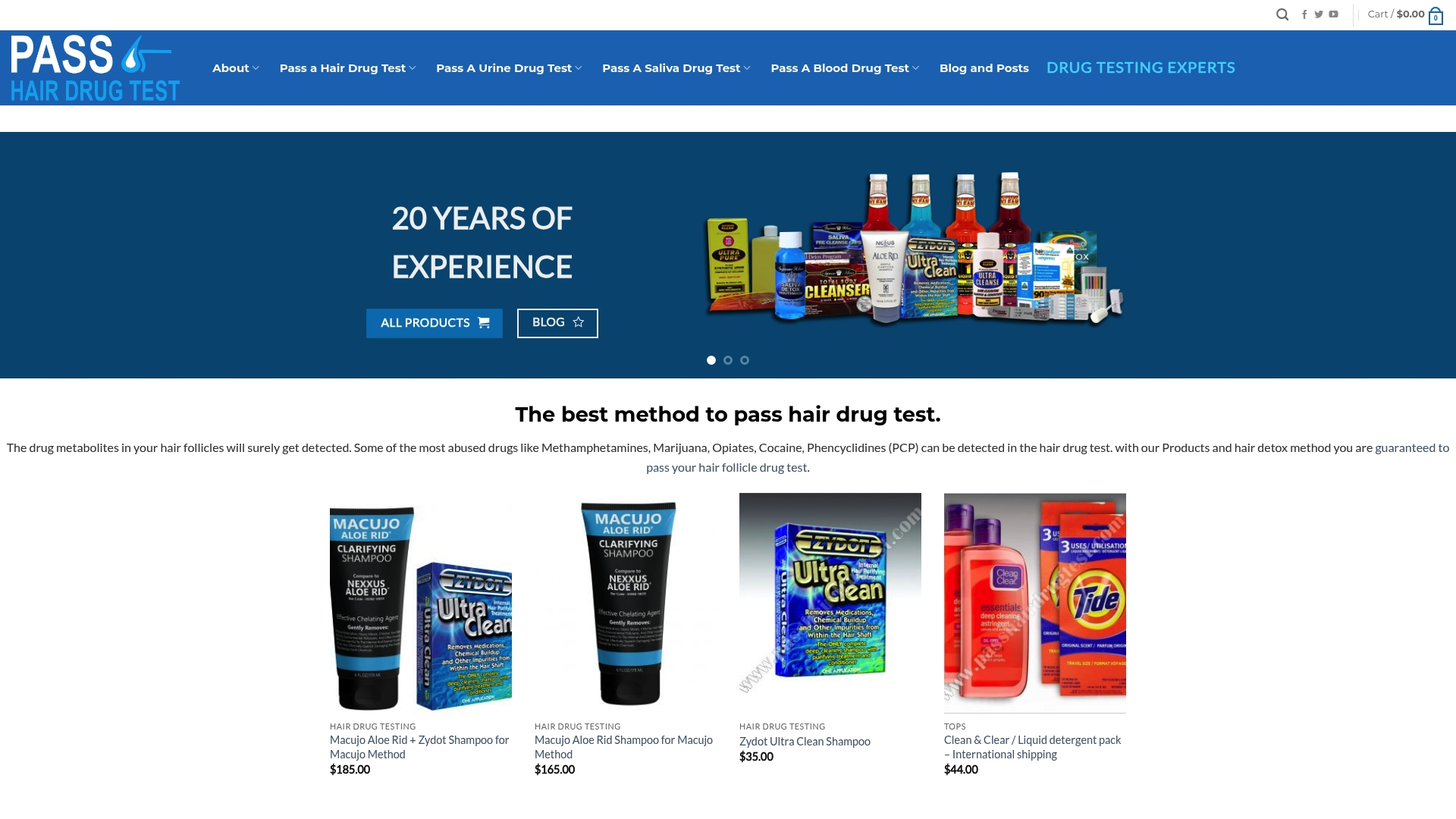
If you have a hair follicle test coming, our Macujo Aloe Rid Shampoo and Zydot Ultra Clean Shampoo are available individually and as a set for Mike’s Macujo Method, with instructions and phone support included in how we work. You can see the Macujo Aloe Rid + Zydot set or browse the full product range.
We also carry saliva, urine and blood testing products if your screening is a different type.
FAQ
Which is more accurate, a hair test or a saliva test?
They answer different questions. Saliva is better for very recent use, and the best oral tests can reach about 97% accuracy according to Cleveland Clinic. Hair is better for use over the past few months, and in the 2023 trucking study hair flagged more users than urine for every drug.
How long does THC stay in hair compared with saliva?
In head hair, THC can be detected for up to about 90 days, and in body hair up to a year. In saliva it is roughly 1 to 48 hours, with 18 to 24 hours as the likely maximum from one use, per the Texas DFPS table cited above.
Does a hair test catch use from yesterday?
Not usually. Hair needs about 7 to 10 days after use before THC appears in the portion above the scalp, which is why federal guidance says hair is not appropriate for post-accident or reasonable-suspicion testing. A saliva test is the one built to catch use from the last day or so.
How much does a hair follicle test cost?
HHS estimated in its 2020 proposal that labs spend $40 to $80 per hair specimen with confirmation, compared with about $6.50 to $11.00 for urine. What you pay for a retail test varies by panel and provider. If an employer requires the test, the employer normally covers it.
How should I prepare for a hair follicle test?
Start as early as you can. Confirm the sample type, stop new exposure, and follow a full routine in order. Our Mike’s Macujo Method is a multi-step routine, and our team answers questions by phone.
Sources
- Drug Testing: MedlinePlus Medical Test
- Workplace Drug and Alcohol Testing, Lehigh Valley Health Network
- Drug Testing in Oral Fluid, PMC
- Appendix 1922.1: Detection Periods for Abused Substances, Texas DFPS
- Clinical Drug Testing in Primary Care, SAMHSA
- Review on Toxicology Testing in Hair, Journal of Applied Laboratory Medicine
- HHS/SAMHSA proposed hair-testing guidelines (4162-20-P)
- A Comparison of Truck Driver Pre-Employment Hair and Urine Drug Test Results
- Oral Drug Test (Mouth Swab), Cleveland Clinic
Recommended
- Saliva Drug Testing
- Pass Saliva Swab Drug Test
- How Can I Pass a Hair Drug Test?
- Body Hair vs Head Hair: What Drug Test Labs Really Use
