No products in the cart.
Uncategorized
Hair Drug Testing Laws in the U.S.: What Applies to You

18
Nov
Nov
There is no single national law that governs hair drug testing. Federal rules cover truckers and other federally regulated jobs, states set their own limits for most private employers, and the company’s written policy fills the rest. If you use THC and a job requires a hair follicle test, the rules that matter are the ones for your state and your job type, and the part you can control is how your hair is prepared before the sample is cut. We sell hair-cleansing products for exactly that situation, and this guide gives you the legal picture first so you know what you are preparing for.
Table of Contents
TL;DR
- No one U.S. law covers every hair test. Federal rules apply to DOT-regulated jobs, and states differ widely on who can be tested, when and how.
- Hair testing suits pre-employment and random screens. Federal guidance says it is not suited to post-accident or reasonable-suspicion tests because drugs take days to reach the hair.
- California protects workers from discrimination over nonpsychoactive THC metabolites. Maryland caps hair specimen length at 1.5 inches and limits hair testing to pre-employment.
- Refusing a required test is treated as a positive in DOT-regulated jobs, and the result generally cannot be overturned in another forum.
- Preparation is your decision to make before the test. Our hair-cleansing products are built for that purpose.
Table of Contents
- Why no single law covers hair drug testing
- Federal rules: DOT, truckers and federal guidelines
- State laws that change what an employer can do
- How the main rules compare
- What the law means for THC and a hair test
- Are hair test results valid in court?
- Preparing for a hair test lawfully and sensibly
- Our view on preparing for a hair test
- Get ready with our hair-cleansing products
- FAQ
- Sources
Why no single law covers hair drug testing
In the United States, drug testing rules come from three layers. Federal law sets rules for specific industries, such as transportation. State law sets limits for private employers within the state. Then the employer’s written drug policy decides the details: which substances, which sample type, and what happens after a positive.
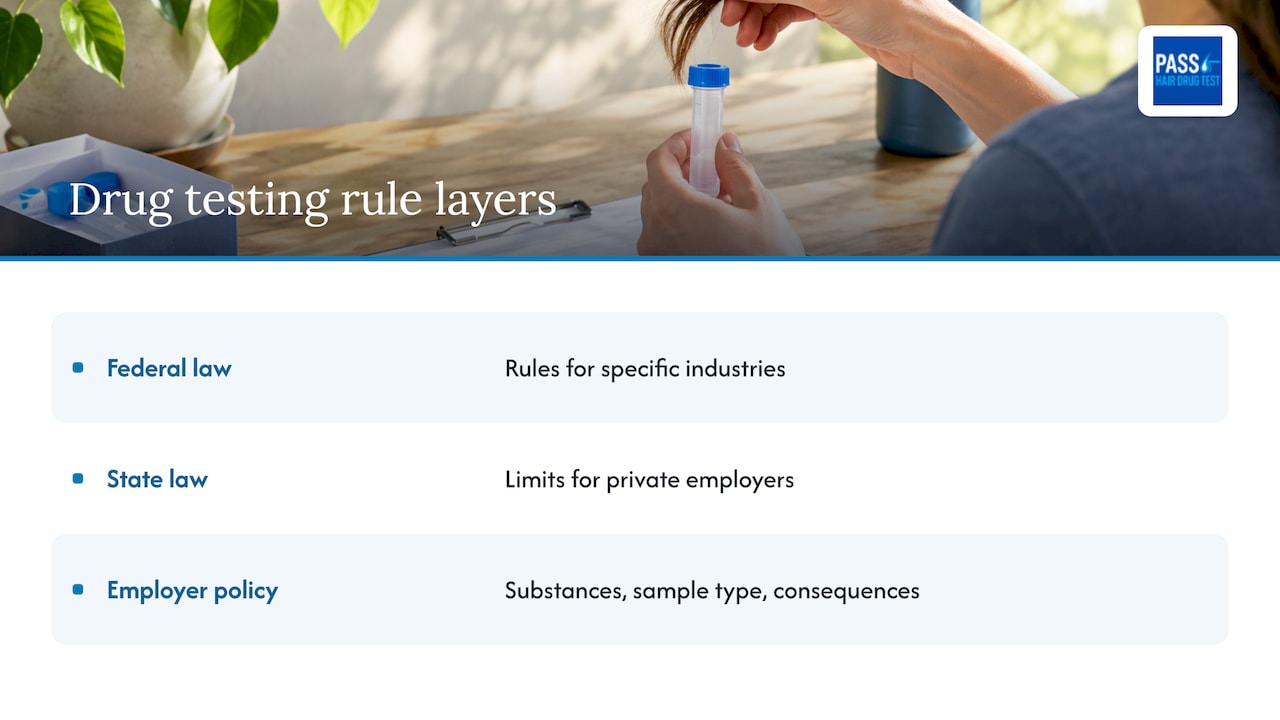
SAMHSA, the federal Substance Abuse and Mental Health Services Administration, says plainly that no single set of rules applies nationwide. Louisiana allows testing in virtually every kind of business, public or private. Maine restricts who can be tested, how, and what rehabilitation or disciplinary options follow a positive. Some states, New York among them, disqualify employees from unemployment benefits for testing positive in violation of workplace policy.
For you, the practical consequence is simple: a rule you read about for one state or one job may not apply to yours. Start with your offer letter or the employer’s drug policy, then check your state.
Federal rules: DOT, truckers and federal guidelines
Commercial drivers
The main federal statute that mentions hair is 49 U.S.C. § 31306. It directs DOT regulations to permit motor carriers to use hair testing as an alternative to urine for pre-employment controlled-substance testing of commercial motor vehicle operators. Random testing by hair is allowed only if the driver was hair-tested pre-employment. Drivers whose established religious beliefs prohibit cutting or removing hair are exempt.
That is a permission for carriers, not a nationwide hair-testing mandate, and DOT’s own testing procedures work differently from many carrier policies. We explain how this plays out in our guides on DOT hair testing for CDL drivers and what every trucking driver must know about hair follicle tests.
Refusing a test
Under 49 CFR Part 40, Subpart I, a DOT employee who fails to appear for a required test, fails to provide a specimen, or fails to cooperate has “refused to take a drug test.” The consequences set by DOT agency regulations cannot be overturned or set aside by arbitration, grievance, state court or any other non-federal forum.
A February 2026 D.C. Circuit opinion shows how serious that is in aviation. A pilot who refused a test cannot perform DOT safety-sensitive duties until completing a substance-abuse evaluation, treatment, re-evaluation and follow-up testing. A new medical certificate cannot be issued if the pilot refused a test within the preceding two years. The court also held that the FAA must independently review an airline’s refusal finding.
The takeaway: walking away from a required test is not a safe way to avoid a result.
Federal hair-testing guidelines
In 2020, HHS and SAMHSA published proposed guidelines for hair testing in federal workplace programs. They are a useful picture of how labs think about hair, even for readers outside federal programs. The proposal calls for:
- Head hair specimens of 0.5 to 1.0 inch (about 2.5 cm), representing roughly a 30 to 60 day window.
- Use for pre-employment and random testing, not for post-accident or reasonable-suspicion testing, because drugs are not detected until 5 to 7 days after ingestion.
- A panel that includes the marijuana metabolite THC-COOH (also written THCA), plus cocaine, PCP, opioids, amphetamines and MDMA.
- A second allowable sample, such as urine or oral fluid, authorized for collection in the program.
The same document acknowledges that hair is exposed to the environment, and that environmental contamination, natural hair color and cosmetic treatments can affect results. That is the scientific reason hair preparation is a topic at all, and our page on hair drug test accuracy goes deeper.
State laws that change what an employer can do
States are where most private-sector rules live. Two examples show how different they can be.
California
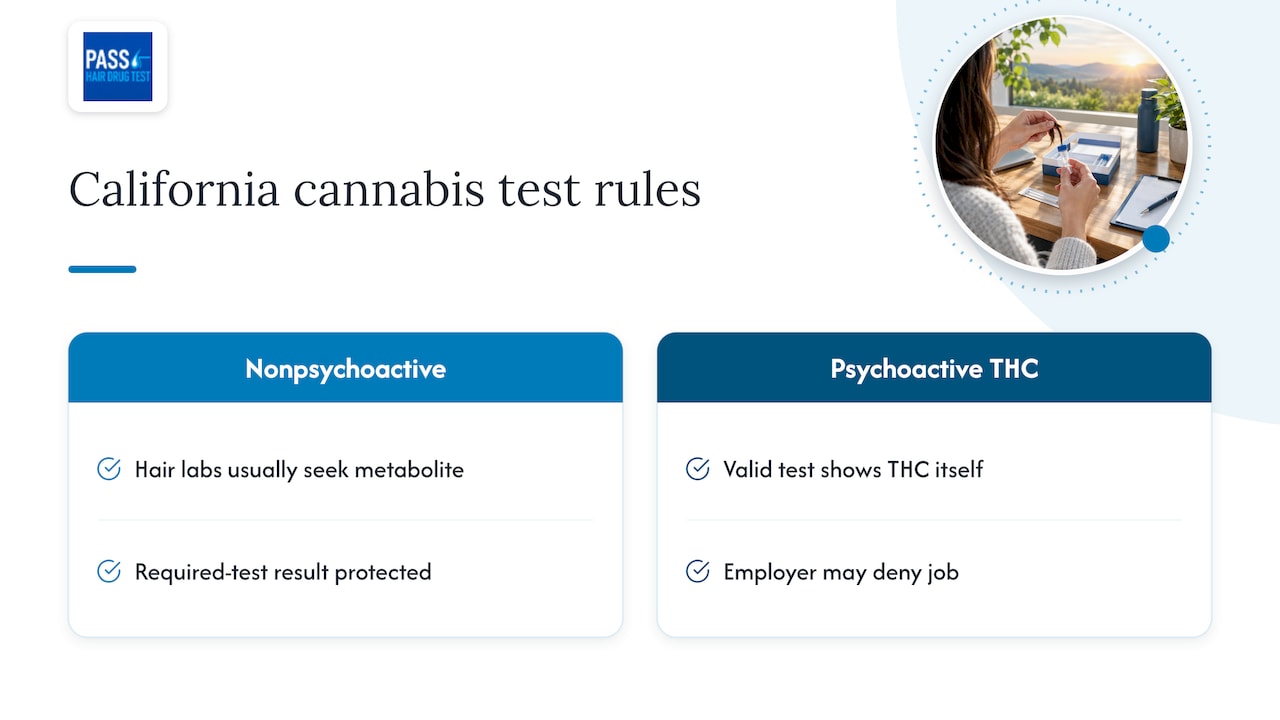
California Government Code § 12954, operative January 1, 2024, makes it unlawful for an employer to discriminate against a person for off-duty cannabis use, or because a required test found nonpsychoactive cannabis metabolites in hair, blood, urine or other bodily fluids. It generally bars asking applicants about prior cannabis use. Exceptions include the construction trades (for part of the law) and positions that require a federal background investigation or security clearance.
The California Civil Rights Department’s cannabis FAQ adds an important detail: if a scientifically valid test shows psychoactive THC itself in a person’s hair, blood, urine or other fluids, an employer may deny the job on that basis. Hair labs usually look for the nonpsychoactive metabolite, so the practical reach of the protection depends on what the lab reports. Read your state’s wording closely.
Maryland
Maryland Health-General § 17-214 is one of the more specific hair rules. Employers may use human hair as a specimen only for pre-employment testing, and the specimen may not be longer than 1.5 inches measured from the body. A positive result must be confirmed before the employer gives you a copy of the lab result, the written drug policy, notice of intended discipline, and a statement of your right to request independent testing of the same sample at your own cost.
Louisiana
Louisiana’s drug-testing chapter shows what quality controls look like in statute. It defines a CAP-FDT-certified laboratory as one certified for forensic hair drug testing by the College of American Pathologists. It also defines a medical review officer as a licensed physician who reviews positive results alongside your medical history before any negative employment consequence.
Federal disability law
Under the Americans with Disabilities Act, SAMHSA states that employers cannot fire, refuse to hire or refuse to promote someone simply because of a history of substance use or because they are enrolled in a recovery program. That is a narrow protection and does not stop an employer from enforcing a drug-free policy on current illegal use.
How the main rules compare
| Rule | Who it covers | What it says about hair |
|---|---|---|
| 49 U.S.C. § 31306 | Commercial motor vehicle operators | Hair allowed as an alternative to urine pre-employment; random only if hair-tested pre-employment |
| HHS/SAMHSA 2020 proposed guidelines | Federal workplace programs | 0.5 to 1.0 inch head hair, 30 to 60 day window, pre-employment and random |
| California Gov. Code § 12954 | Most California employers | Bars discrimination for nonpsychoactive cannabis metabolites found in a test |
| Maryland Health-General § 17-214 | Maryland employers | Hair only for pre-employment, 1.5 inch maximum, confirmation and retest rights |
| Louisiana drug-testing chapter | Louisiana employers | Defines certified hair labs and the medical review officer role |
What the law means for THC and a hair test
THC is the substance most people ask about, and the legal status of cannabis in your state does not settle your job situation. State legalization generally changes what is a crime. It does not automatically change an employer’s right to set a drug-free policy, except in states with specific employment protections like California’s. Federal jobs and DOT jobs stay under federal rules, where cannabis remains prohibited.
The timing matters too. Hair grows slowly, so a hair test does not catch use from the last few days. The Justice Speakers Institute’s testing guide says head hair grows about half an inch per month, so 1.5 inches of hair can reflect roughly 90 days, and drugs take five to seven days to appear in the shaft. That is why employers use hair for pre-employment screens and not for a same-week suspicion test.
If you are comparing the sample types an employer might choose, our page on hair drug tests versus urine lays out what each one detects and when.
If a result comes back positive
Your options depend on the policy and the state. Many employers use a medical review officer who contacts you before reporting a result. Some states, like Maryland, give you a right to independent testing of the same sample at your own cost. Our guide to hair drug test retests covers the options after a positive. For a legal question about your own case, such as discrimination or a firing, see an employment attorney in your state or contact your state’s civil rights agency.
Are hair test results valid in court?
Most readers here face an employer test, not a courtroom, but the question comes up often. Courts have generally treated hair results as information to weigh, and the science affects how much weight they carry. In U.S. v. Bethea, a military appeals court held that urinalysis results consistent with multiple cocaine uses gave probable cause to seize hair, because analysis was as likely as not to find evidence of use.
The HHS 2020 guidelines mention that the inability to rule out external contamination has presented legal challenges, citing a Massachusetts decision. That is the same scientific point again: hair sits in the environment, so labs and lawyers argue about contamination, hair color and cosmetic treatment. Our explainer on gray hair and drug testing and the one on body hair tests cover two common hair questions.
Preparing for a hair test lawfully and sensibly
Nothing in the sources above makes it unlawful for you to wash your own hair or to choose a hair-care product before a test. What the rules do control is the collection: sample length, how it is handled, the lab, and what the employer can do with the result. Within that, here is a practical order of operations.
- Read the policy. Find out which sample type is used, which substances are on the panel and whether the test is pre-employment or random.
- Know your window. About half an inch of hair grows per month, so a 1.5 inch sample reflects up to about 90 days, and a shorter 0.5 to 1.0 inch sample reflects roughly 30 to 60 days.
- Check your state. Look for limits like Maryland’s 1.5 inch cap or California’s protections, and confirm whether your job is DOT-regulated.
- Plan hair care before the collection date. Hair that has been exposed to environmental residue or treated can behave differently in a lab, so start your routine well ahead of the appointment.
- Show up and cooperate. In DOT-regulated jobs, a no-show or refusal counts as a failed test, with consequences that no other forum can undo.
Our hair drug test information page walks through this in more detail, and for CDL holders we have a separate guide on how to pass a DOT hair test.
Our view on preparing for a hair test
We have spent more than 20 years in the drug-testing and detox-product business, and the questions that arrive most are about rules: what can my employer do, and what do I do before the sample is taken.
Our answer is to learn the rules first and then act early. The law decides who can test you and how. Your preparation decides how ready you are when the collector picks up the scissors.
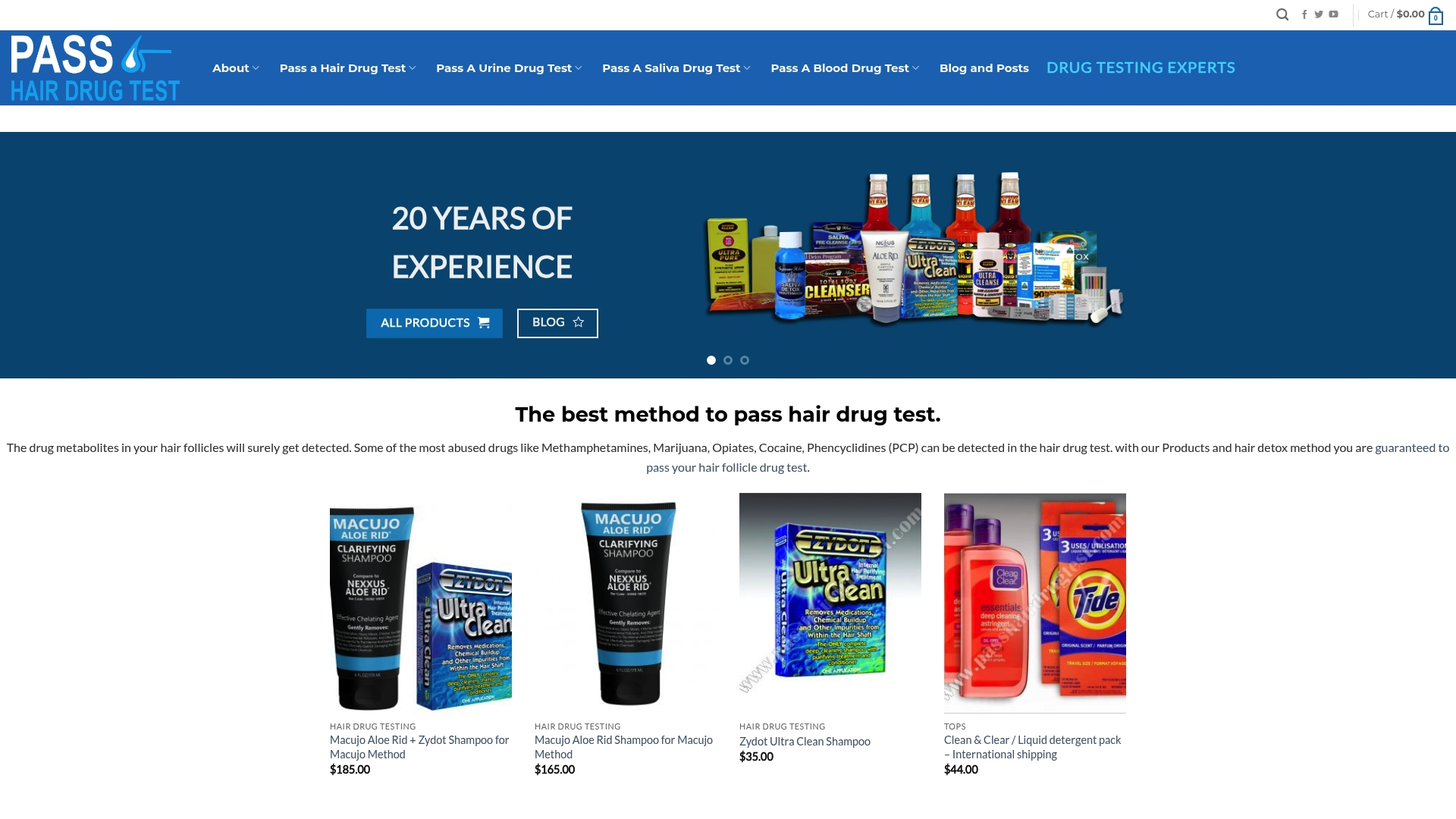
That is why our hair-cleansing line is built around a multi-step approach, Mike’s Macujo Method, alongside Macujo Aloe Rid Shampoo and Zydot Ultra Clean Shampoo, with instructions and phone support so you are not guessing at the steps. We believe a clear routine, started in good time, is the best way to walk into a hair test with confidence.
MIchael
Get ready with our hair-cleansing products
If you have a hair follicle test coming and you use THC, we carry hair-cleansing shampoos and the multi-step Mike’s Macujo Method, with detailed instructions and phone support. Browse the full range on our hair follicle drug testing page or see everything on our products page.
We also stock urine, saliva and blood testing products if your employer uses a different sample type. Start with the shampoo guide if you want to see how the routine works.
FAQ
Can an employer require a hair drug test in the U.S.?
In most states, yes, for private employers who have a written policy, though some states limit who can be tested and when. Maryland, for example, allows hair only for pre-employment testing. Federal rules apply on top for DOT-regulated jobs. Check your state’s rules and the employer’s policy.
How long does my hair need to be for a hair drug test?
Federal proposed guidelines call for head hair of 0.5 to 1.0 inch, covering roughly 30 to 60 days. Many labs and employers use about 1.5 inches, which can reflect around 90 days. If your hair is very short, ask the collector about alternatives such as body hair, which we cover in our body hair test guide.
Can I refuse a hair drug test?
You can decline, but the consequences can be severe. In DOT-regulated jobs, a refusal counts as a refused test, and the consequences cannot be overturned by arbitration or state court. In other jobs, a refusal usually costs you the offer or is treated under the employer’s policy.
Does California’s law protect me if I test positive for THC on a hair test?
California Government Code § 12954 protects against discrimination based on a test finding nonpsychoactive cannabis metabolites. It does not protect positions that need a federal background check or security clearance, and employers may act on a valid test showing psychoactive THC. For your own situation, talk to an employment attorney or the California Civil Rights Department.
Is a hair test accepted as evidence in court?
Courts have generally treated hair test results as information to weigh, and they have used them to support probable cause, as in U.S. v. Bethea. Contamination, hair color and cosmetic treatments can affect how much weight a court gives the result.
Sources
- 49 U.S.C. § 31306: Alcohol and controlled substances testing
- California Government Code § 12954
- California Civil Rights Department: Cannabis Use FAQ
- Maryland Health-General § 17-214
- Louisiana drug-testing laws
- SAMHSA: State and Local Laws and Regulations
- SAMHSA: Drug Testing Federal Laws
- HHS/SAMHSA 2020 proposed hair-testing guidelines
- 49 CFR Part 40 Subpart I
- U.S. Court of Appeals for the D.C. Circuit, No. 24-1348 (February 2026)
- U.S. v. Bethea
- Justice Speakers Institute: MATCP Drug Testing
Recommended
- Hair Drug Test Information
- Which Labs U.S. Employers Use for Hair Follicle Drug Tests
- Hair Drug Test vs Urine: Which Detects Use When
- How to pass hair drug test
