Uncategorized
90% Reductions Don’t Guarantee a Pass: Cocaine Hair Detox in U.S. Labs
Sep
No peer-reviewed method reliably guarantees a negative cocaine hair test, and anyone promising otherwise is selling hope, not science. Lab studies from researchers like Rohrich et al. show certain treatments reduce cocaine concentration in hair strands by large margins, but reductions are inconsistent and lab cutoffs still catch plenty of treated samples.
TL;DR:
- Most detox treatments can reduce cocaine levels in hair but do not reliably produce a negative test result because of individual factors and testing cutoffs.
- Laboratory studies show reductions of up to 90% in controlled conditions, but real-world effectiveness varies heavily by product, hair type, and application.
- Different hair treatments, such as bleaching or homemade remedies, can cause damage or inconsistent reductions, and none guarantee passing a drug test.
- For the most reliable results, abstinence and waiting for the natural growth window remain the only scientifically supported methods.
- Proper sample collection, lab safeguards, and metabolite ratios help labs distinguish between contamination and actual drug use.
Table of Contents
Table of Contents
- Understanding Cocaine Hair Test Detox and How Hair Tests Actually Detect Use
- Cocaine Detection Window and What Changes the Numbers
- What the Research Actually Shows About Detox Methods
- Common Detox Methods and the Risks Nobody Mentions
- How Labs Tell Contamination Apart From Actual Use
- Safer Alternatives Worth Considering Before a Test
- Who’s Behind This Guide and What Passhairdrugtest Actually Offers
- The Gap Between the Bottle’s Promise and What the Lab Report Shows
- Where to Learn More Before You Buy Anything
- Sources
- FAQ
Understanding Cocaine Hair Test Detox and How Hair Tests Actually Detect Use
Cocaine gets into hair through the bloodstream, not from the outside in. As a hair follicle grows, blood vessels feeding the root deposit trace amounts of cocaine and its primary metabolite, benzoylecgonine, directly into the keratin structure. Once that segment of hair hardens and pushes above the scalp, whatever got trapped inside is locked in for the length of that strand. This is precisely why topical cleansers face such long odds: they’re working on the outer cuticle while the drug residue labs actually care about sits embedded in the cortex underneath.
Laboratories don’t just eyeball a strand and call it a day. Testing follows a two-step model that NIDA’s research on cocaine and federal testing standards both describe:
- An initial immunoassay screen flags samples that may contain cocaine or benzoylecgonine above a threshold.
- Any presumptive positive gets confirmed using liquid chromatography tandem mass spectrometry (LC-MS/MS), a far more precise method that identifies and quantifies the exact compounds present.
Confirmatory testing also checks for cocaine’s metabolites specifically, not just the parent drug, since benzoylecgonine indicates the body actually metabolized cocaine rather than the hair simply brushing up against it.
Standard collection uses a 1.5-inch hair segment closest to the scalp, which roughly corresponds to about 90 days of growth. There’s also a lag of around seven days between using cocaine and when that residue actually shows up in the hair emerging from the scalp, since the strand needs time to grow out of the follicle. Use from last week won’t show up on a test taken tomorrow. That’s a detail people trying to time a test around recent use consistently get wrong.
The practical upshot: because the analytes are embedded rather than sitting on the surface, a shampoo that strips oil and buildup from the cuticle isn’t touching the actual evidence. Contamination at the surface and consumption recorded inside the shaft are two entirely different things, and labs have gotten good at telling them apart.
Cocaine Detection Window and What Changes the Numbers
A standard 3-centimeter hair sample covers roughly three months of history, and that window doesn’t shrink just because someone wishes it would. Combined with the seven-day incorporation lag, this means a single-use scenario from two weeks ago sits squarely inside the detectable range, while use from yesterday might not show up yet.
Detection factors that swing results in either direction:
- Frequency and dose of use — heavier, more frequent use deposits more cocaine and benzoylecgonine per centimeter of hair, making detection easier and treatment less likely to knock concentrations below cutoff.
- Melanin content — darker, more pigmented hair binds basic drugs like cocaine more readily than light or gray hair, which is a documented source of racial and individual bias in hair testing.
- Chemical hair treatments — coloring, perming, and relaxing can alter baseline drug retention independent of any deliberate detox attempt.
- Hair length and body location — scalp hair grows at a fairly predictable rate, but body hair grows slower and doesn’t correspond to the same clean 90-day window, which matters if a collector asks for an alternate sample.
- Individual metabolism — how a person’s body processes cocaine into benzoylecgonine varies, changing the ratio labs see even between two people who used the same amount.
Cutoffs matter as much as the drug itself. Federal workplace testing programs set specific analyte cutoffs for both the initial screen and the confirmatory test, detailed in the Mandatory Guidelines for Federal Workplace Drug Testing Programs. A treatment that cuts measured concentration by half doesn’t produce a negative result if the starting concentration was well above that cutoff to begin with. Understanding how those cutoff levels actually translate into pass or fail outcomes matters more than most people realize before they gamble on a cleansing regimen.
What the Research Actually Shows About Detox Methods
The strongest data on cocaine hair detox comes from controlled strand experiments, not from anyone’s real-world testing story, and that distinction matters more than most detox product marketing lets on.
Rohrich’s experimental work found that certain aggressive treatments produced reductions in measured cocaine concentration of up to roughly 90% in treated hair strands under lab conditions. That number sounds decisive until you look at how it was generated: researchers cut hair samples, applied a specific chemical protocol under controlled conditions, then measured concentration before and after. A separate study examining homemade hair treatments and their effects on drug concentrations in the keratin matrix found that household products, vinegar, dish soap, and commercial detox shampoos among them, produced inconsistent reductions that varied heavily by product and by which drug was being tested for.
| Treatment category | Reported effect on concentration | Key limitation |
|---|---|---|
| Bleaching or oxidative treatments | Often the largest measured reductions | Visible damage, hair breakage, permanent color change |
| Commercial detox shampoos | Modest, inconsistent reductions | Effect varies by product and analyte |
| Multi-step chemical regimens (Macujo-style) | Variable, sometimes substantial | Not reproducible across hair types |
| Household products (vinegar, dish soap) | Small to moderate in some trials | Results don’t translate reliably to live testing |
Three things separate lab findings from what actually happens when someone walks into a collection site:
- Strand experiments treat cut hair in a controlled environment; real scalps have living tissue, natural oils, and uneven product application that a beaker never accounts for.
- Reduction percentages describe average changes across samples, not a guarantee for any individual head of hair with its own melanin content and growth pattern.
- Even a genuine reduction only matters if it drops the concentration below whatever cutoff that specific lab and testing program uses, and commercial detox shampoos don’t come with a lab report proving they’ll clear that particular bar for that particular person.
None of this means treatments do nothing. It means the gap between “reduces concentration in a study” and “reliably produces a negative result for you” is wider than most product pages admit.
Common Detox Methods and the Risks Nobody Mentions
People facing a hair test tend to gravitate toward the same handful of approaches, and each one carries a different risk profile worth understanding before you commit to it.
- Multi-step chemical regimens. The Macujo Method, most commonly associated with the Macujo Aloe Rid Shampoo, involves a sequence of vinegar, Tide detergent, a specialized shampoo, and repeated hot-water rinses applied over roughly an hour. It’s built around the idea of opening the hair cuticle and stripping surface-bound residue before a test. Zydot Ultra Clean Shampoo is often used as a same-day companion step. The evidence base here is thin and mostly anecdotal, though the underlying chemistry, using surfactants and mild acids to strip cuticle buildup, overlaps with what forensic researchers have tested in controlled settings.
- Bleaching and oxidative treatments. Bleach produces some of the largest measured reductions in lab studies, but it comes at a real cost: permanent hair damage, scalp irritation, and hair that looks obviously and freshly bleached right before a scheduled test, which itself can raise questions during collection.
- Shaving. Shaving the head eliminates the sample entirely in the short term, but collectors trained under standard protocols are allowed to request body hair as an alternate sample when scalp hair isn’t available. Body hair grows slower and doesn’t map to the same clean 90-day window, so the outcome isn’t necessarily better.
- Commercial detox shampoos. These range widely in formulation and evidence quality. Some rely on the same surfactant and chelating chemistry studied in forensic literature; others are closer to a standard clarifying shampoo with a marketing label attached.
- Homemade regimens. Recipes involving bleach mixed with other household chemicals, undiluted vinegar left on for extended periods, or improvised combinations show up constantly in online forums. Medical sources documenting bleach exposure describe real risks including chemical burns to the scalp and eyes, and respiratory distress when bleach fumes combine with other cleaning products in a poorly ventilated bathroom.
Pro Tip: If you’re going to try any commercial regimen, follow the manufacturer’s exact timing and dilution instructions rather than improvising your own “stronger” version. Doubling exposure time doesn’t double effectiveness, but it does raise your risk of scalp irritation and hair breakage. Reading through detailed instructions for detox shampoo use before you start beats guessing at concentrations on the fly.
How Labs Tell Contamination Apart From Actual Use
Forensic toxicologists have spent decades building safeguards specifically because people have been trying to beat hair tests for just as long. The system isn’t foolproof, but it’s more sophisticated than most detox product marketing acknowledges.
- Multi-wash decontamination. Before any analysis begins, labs typically run hair samples through repeated washes, often methanol-based, designed to strip away surface contamination that never entered the hair shaft. Research on these wash protocols found that recently applied surface cocaine washes out quickly, while cocaine that was actually incorporated into the internal structure stays remarkably stable through the same wash cycle.
- Metabolite-to-parent ratios. Because the body converts cocaine into benzoylecgonine through actual metabolism, a sample showing cocaine but essentially no benzoylecgonine looks a lot more like environmental contamination than genuine use. Labs use these ratios as a decision tree rather than relying on a single number.
- Escalation on unusual findings. Visibly damaged, discolored, or chemically altered hair, or results that don’t fit expected patterns, can trigger additional scrutiny, a request for an alternate sample, or a more detailed forensic review before anything gets reported to an employer.
This layered approach is exactly why forensic toxicology literature on contamination versus consumption treats hair testing interpretation as a decision process, not a single yes or no readout. It’s also part of why no topical product carries a peer-reviewed guarantee: the analytes the tests are actually built to find live below the surface a shampoo can reach.
Safer Alternatives Worth Considering Before a Test
Chemical gambles aren’t the only option, and in most cases they aren’t the smart one either.
- Abstinence and time. The only variable with genuine scientific backing is stopping use and letting time do the work. Given the roughly 90-day window and the seven-day incorporation lag, understanding exactly how long cocaine stays detectable in hair helps you gauge realistically whether enough time has passed.
- Trimming strategically. If you know your test date and understand your hair’s growth rate, a documented haircut before testing can shorten the window a collector has to sample, though this only works if there’s genuinely less recent-growth hair to collect.
- Requesting an alternate matrix. Where policy allows, asking whether a urine test can substitute for a hair test is worth raising with an employer or testing coordinator, since urine testing covers a much shorter detection window measured in days rather than months.
- Disclosure through proper channels. Talking to a Medical Review Officer about legitimate medication use or a documented health situation is a legal, established process that exists precisely to handle edge cases fairly.
Pro Tip: If a chemical treatment caused a visible reaction, redness, peeling, or a burning scalp, treat that as a medical issue first. See a healthcare provider before your test, and keep a simple record of what happened and when. That documentation protects you if you need to explain an unusual hair or scalp condition to a collector.
Who’s Behind This Guide and What Passhairdrugtest Actually Offers
This article was written under the editorial direction of Michael, who covers drug-testing science and consumer detox products for Passhairdrugtest. Passhairdrugtest has spent more than 20 years in the drug-testing and detox-product industry, building its hair-cleansing catalog primarily around Macujo Aloe Rid Shampoo, Zydot Ultra Clean, and the multi-step Mike’s Macujo Method, backed by phone support for customers working through the process.
No study proves a guaranteed, universally safe method for clearing cocaine from hair, and Passhairdrugtest doesn’t get to rewrite that science just because it sells detox products. What the company can offer is category depth, detailed usage instructions, and support for people who’ve already decided to try a commercial approach. Evaluate any product claim, including its own, against the actual lab evidence covered above, not against marketing copy.
The Gap Between the Bottle’s Promise and What the Lab Report Shows
The biggest failure in most detox advice isn’t that it lies outright. That number came from a controlled strand experiment, not a guarantee for your specific hair, your specific usage history, or your specific lab’s cutoff.
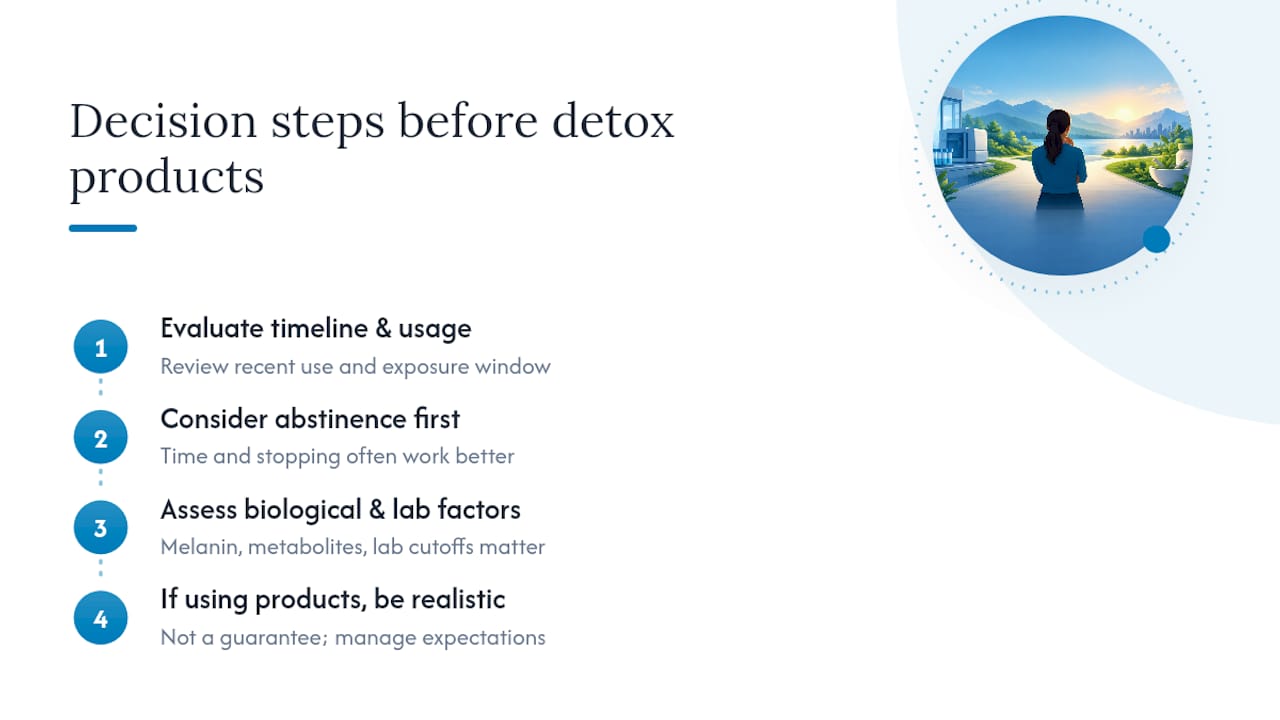
Conventional wisdom treats detox shampoo like a magic eraser. The research treats it like one variable among several, competing against melanin content, metabolite ratios, and decision trees built specifically to catch tampering. If you’re going to try a commercial regimen, do it with realistic expectations rather than blind faith in a percentage pulled from a study you never read.
What should come first isn’t which product to buy. It’s an honest look at your timeline, your usage pattern, and whether abstinence and time are simply the better bet before you introduce bleach or unregulated chemicals to your scalp. Products have their place for people who’ve already made that calculation. They’re not a substitute for making it.
— MIchael
Where to Learn More Before You Buy Anything
Passhairdrugtest built its catalog around three things: detox shampoos, multi-step cleansing kits, and at-home test kits you can use to check your own results before the real one counts. If you’re leaning toward the Macujo Method, the product pages walk through what’s included and how the steps fit together, and unlike generic advice threads, you get an actual usage protocol rather than guesswork stitched from forum posts.
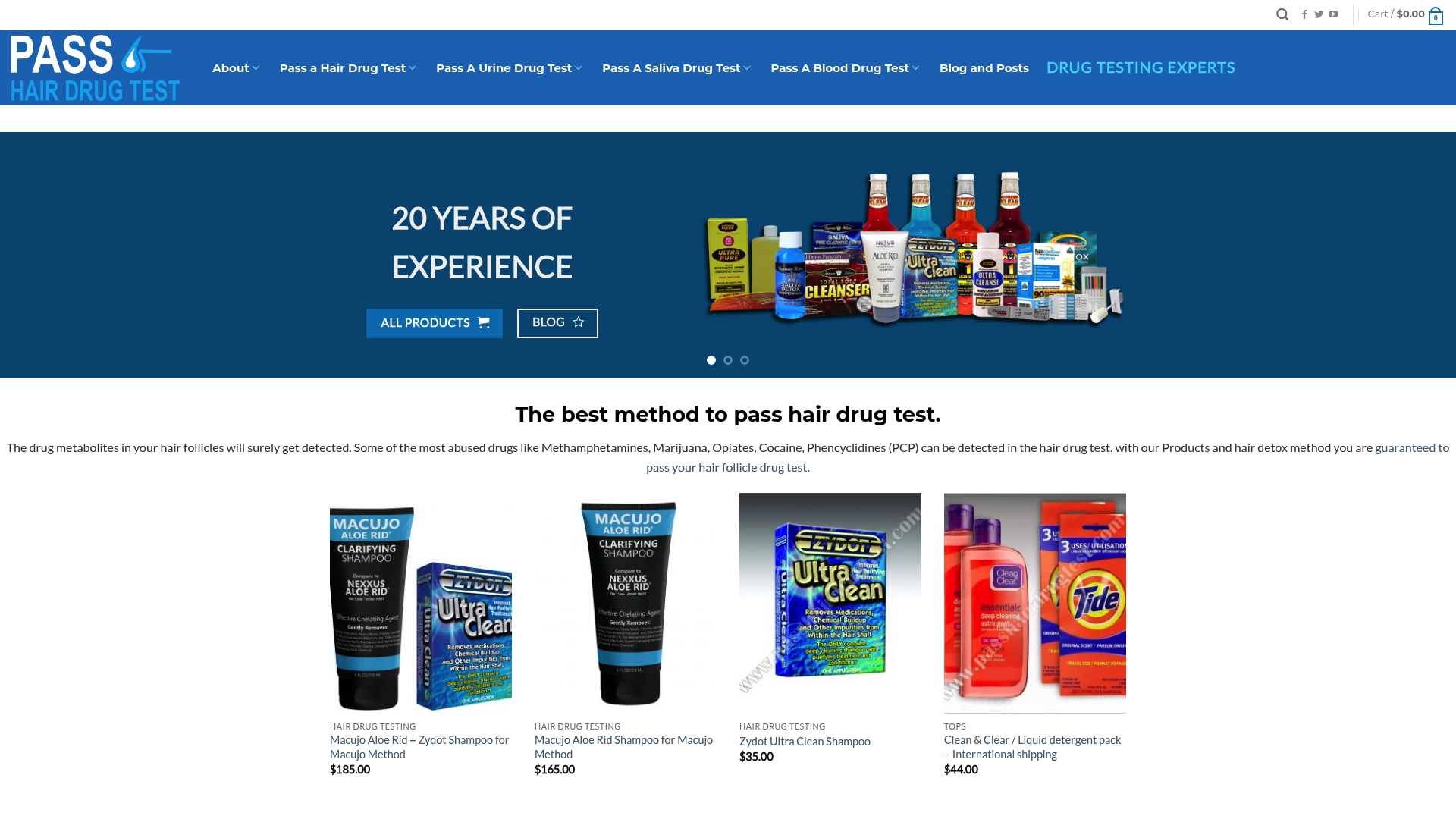
Nobody here claims a guaranteed outcome, because the science doesn’t support that claim for any product on the market. What Passhairdrugtest offers instead is two decades of category-specific experience, clear instructions, and support if you have questions about timing your regimen against your test date. If you want the full picture on how hair follicle testing works before deciding anything, start there, then reach out to customer support with your specific situation. That’s a better first move than guessing alone.
Sources
- Rohrich et al. (peer-reviewed experimental study on hair analyte reduction)
- Hair analysis: Assessment of homemade hair treatment effects on drug concentrations in the keratin matrix (2022)
- MedlinePlus — Safety and risks of bleach and related chemicals
- Mandatory Guidelines for Federal Workplace Drug Testing Programs — Federal Register (2026)
FAQ
How long can cocaine be detected in a hair test?
A standard hair test samples about 90 days of growth, and cocaine or its metabolite benzoylecgonine can show up throughout that window once it’s incorporated into the hair shaft. There’s roughly a seven-day lag between use and when it appears in hair emerging at the scalp.
Can you detox your hair for a hair follicle test?
Some treatments reduce measured cocaine concentration in controlled lab studies, with reductions reaching up to roughly 90% in certain protocols, but no method reliably guarantees a negative result. Individual factors like melanin content, usage history, and lab cutoffs all affect whether a treated sample actually falls below the threshold a specific testing program uses.
What’s the most realistic way to prepare for a hair follicle test in 2026?
Start with an honest look at your usage timeline against the 90-day window, since abstinence and time remain the only approach with consistent scientific support. If you’re considering a commercial regimen like the Macujo Method, detailed usage instructions matter more than shortcuts, since misapplied products add health risk without reliably improving your outcome.
How can I detox my hair follicles safely?
Avoid improvised chemical mixtures, since misusing bleach or combining household cleaning products can cause documented chemical burns and respiratory distress. If you use a commercial product, follow its exact instructions rather than extending exposure time, and treat any scalp irritation as a reason to stop and consult a healthcare provider.
Is hair testing more accurate than urine testing for cocaine?
Hair testing covers a much longer detection window, around 90 days versus a few days for urine, making it better suited to detecting patterns of use rather than a single recent instance. Urine testing catches recent use more precisely but misses anything outside its short window, which is why some employers use both depending on what they’re trying to detect.
Recommended
- Why Baking Soda Fails Many U.S. Hair Drug Tests Despite 60% Lab Drops
- Home Hair Detox: Realistic Protocol and Verification Guide
- Facing a Hair Test: Can Relaxers Reduce Drug Levels to 5–67%?
- Do You Need a Cocaine Hair Test? Here’s How Long Coke Stays in Your Hair – Pass Hair Drug Test
