Uncategorized
40–90% Reductions: How Bleach and Dye Change Hair Drug Tests

Sep
Short answer: yes. Chemical treatments like bleaching and permanent color can alter what a hair follicle test measures, sometimes dramatically, but the effect is inconsistent and drug specific. Bleaching tends to strip out more parent drug than ordinary dye jobs do. Nothing you put on your hair, including a $40 detox shampoo, reliably guarantees a negative result. If you have recently colored or chemically treated your hair before a scheduled test, tell the collector and think about whether an alternate specimen type makes more sense for your situation.
TL;DR:
- Bleaching reduces measured drug levels by 40% to 90%, depending on the drug and extent of damage, but effects are inconsistent.
- Permanent dyes may lower certain analyte concentrations, but large population studies show dyed hair detection odds can be higher, not lower.
- Labs use chemical markers and confirmatory testing to detect chemical treatments, but visually untreated hair can still be chemically altered without obvious signs.
- Detox shampoos can occasionally reduce drug residues by up to 90%, but results vary widely by drug, hair type, and application method.
- Disclosing recent chemical treatments and considering alternative testing matrices, like urine, offers the best approach if hair has been recently treated.
Table of Contents
Table of Contents
- How Hair Drug Testing Actually Works
- Bleach, Dye, Perms: Which Treatments Change the Numbers Most
- What the Research Actually Shows About Effect Sizes
- How Labs Spot Treated Hair Before Reporting Results
- Do Detox Shampoos and Home Remedies Actually Work?
- What To Do If You Colored Your Hair Before a Scheduled Test
- Why the “Just Dye Your Hair” Myth Won’t Die
- Where Passhairdrugtest Fits Into Your Plan
- Sources
- FAQ
How Hair Drug Testing Actually Works
Hair follicle testing relies on a simple biological fact: your bloodstream feeds the hair follicle as it grows, and drugs or their metabolites get trapped inside the hair shaft as keratin forms around them. That’s incorporation, and it’s why a 1.5 inch (3.9 cm) segment collected close to the scalp typically represents roughly 90 days of drug history. Hair grows at a fairly predictable rate, so labs use segment length to estimate the detection window, and they collect from the back of the head near the crown, called the vertex, because hair there grows more uniformly than at the temples or nape.
Labs don’t just toss a hair sample under a microscope and call it a day. The process runs in stages:
- Collection: A small sample, usually about 100 to 120 strands, is cut close to the scalp from the vertex region.
- Decontamination: The sample gets washed to remove surface contamination like environmental smoke or accidental exposure residue.
- Screening: An initial immunoassay test flags samples that appear positive for a drug class.
- Confirmation: Presumptive positives go through liquid chromatography tandem mass spectrometry (LC-MS/MS) or gas chromatography mass spectrometry (GC-MS), which identify the specific drug and metabolite at a much higher level of certainty.
That washing step matters more than most people realize. It’s designed to strip away external contamination sitting on the hair’s surface, not the drug metabolites that have been chemically incorporated into the hair matrix itself. Anything embedded inside the shaft survives the wash. That’s the whole basis for the test, and it’s also why cosmetic chemistry that reaches inside the shaft, not just the surface, is what actually moves the needle on results.
Bleach, Dye, Perms: Which Treatments Change the Numbers Most
Not all chemical treatments hit hair the same way, and the differences come down to basic chemistry. Oxidative processes open the hair cuticle and break down the protein and pigment structures inside it. Non-oxidative processes mostly coat the outside.
- Bleaching (hydrogen peroxide) does the most damage to drug concentrations. Peroxide oxidizes melanin and keratin alike, and that same chemical reaction that lifts your natural color also degrades and leaches out a meaningful share of whatever drug residue is trapped in the shaft.
- Permanent dye usually involves peroxide and often ammonia to open the cuticle and deposit color. It can reduce certain analytes, but the effect is far less predictable than straight bleach, partly because permanent dye formulas vary so much between brands and shades.
- Semi-permanent or demi-permanent color skips the oxidative step almost entirely. It coats the hair surface rather than penetrating it, so its impact on measured drug levels tends to be small and inconsistent.
- Perms and chemical relaxers don’t target pigment, but they still involve harsh chemistry that raises hair porosity. Porous hair leaches more of its contents over time, especially with repeated heat styling, sun exposure, or frequent washing on top of the chemical service.
Here’s the part that surprises a lot of people: oxidative chemistry doesn’t just remove things. The same reaction that degrades a parent drug like THC or cocaine can, in some cases, generate or free up metabolites, meaning a treated sample can show a lower parent drug reading while a related metabolite reads higher. That’s not a loophole. It’s a reminder that lab chemistry doesn’t always move in the direction people assume.
Pro Tip: If you’re weighing whether a treatment will help or hurt your situation, remember that the goal isn’t “less color show up,” it’s “will a lab flag this sample as altered.” Heavy processing that leaves hair brittle or discolored is often more likely to draw scrutiny, not less.
What the Research Actually Shows About Effect Sizes
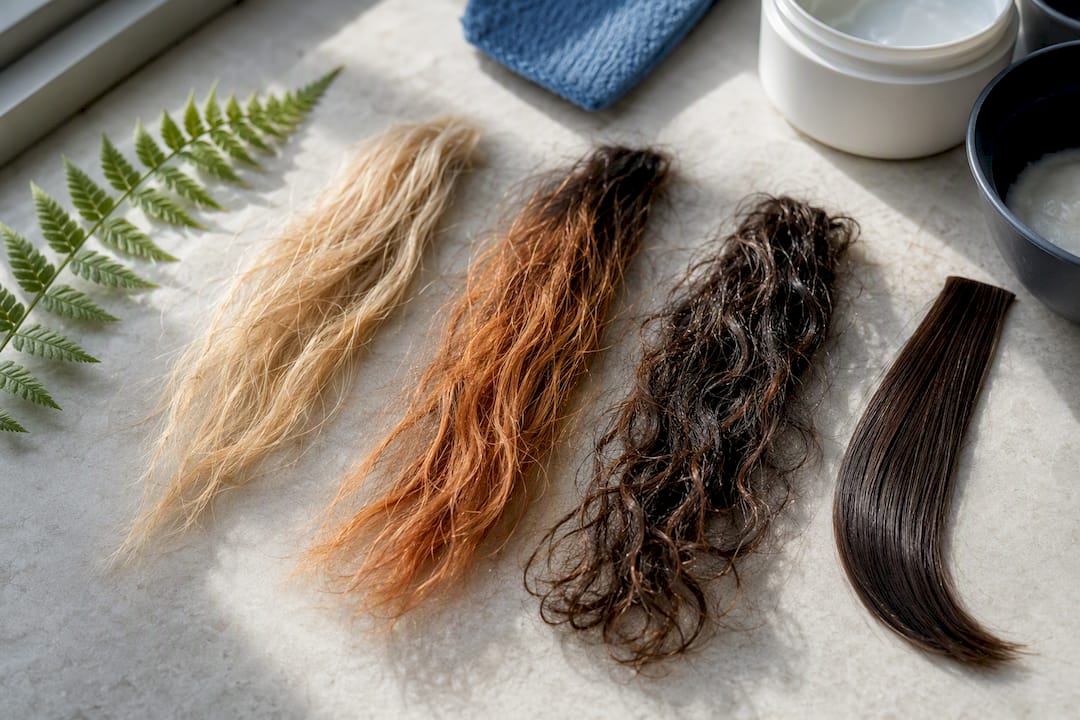
The strongest data point in this space comes from controlled studies on cosmetically treated hair, which found that oxidative treatments like bleaching decreased measured drug concentrations by roughly 40% to 90%, depending on the specific drug and how much damage the hair sustained. That’s a wide range, and the width itself tells you something: this isn’t a fixed, predictable discount. It depends on the drug class, the strength and duration of the bleaching process, and how porous the hair already was.
Population-level research complicates the picture further. One large epidemiological analysis found that people who reported dyeing their hair had higher odds of any detection for some drugs, while measured levels among positives were often lower, even though the measured concentration among those positive samples tended to be lower. That’s a genuinely counterintuitive finding. Dyeing didn’t make detection go away. It just shifted what the number looked like once a positive was already there.
A few things explain why lab studies and population data don’t always agree:
- Small controlled studies test specific drugs under specific bleaching protocols, which doesn’t capture the variability of real-world hair care habits.
- Large observational studies mix all kinds of dye types, frequencies, and drug use patterns together, which blurs individual effects.
- Cutoff levels used by labs mean a moderate reduction in concentration doesn’t automatically flip a result from positive to negative.
Separate systematic research on prohibited-substance detection found no significant difference in positivity rate between dyed and undyed hair at forensic cutoffs, though drug concentrations shifted in some samples, even though concentrations shifted at the individual sample level. Bleaching can knock a number down substantially. It rarely erases the underlying signal a lab is actually testing for.
How Labs Spot Treated Hair Before Reporting Results
Visually normal hair can be chemically altered in ways nobody would notice at a glance, and that’s exactly why labs don’t rely on eyeballing a sample. Analytical work on treatment invisibility confirms that oxidative treatment can leave hair looking completely untouched while its internal chemistry has shifted considerably.
To catch this, forensic and clinical labs use a layered approach:
- Oxidative markers: Compounds like PTCA and PTeCA form specifically from melanin breakdown during bleaching or oxidative coloring, giving labs a chemical fingerprint of treatment even when hair looks unprocessed.
- Confirmatory mass spectrometry: LC-MS/MS and GC-MS methods can detect drugs at very low limits, and some validated screening methods flag when a sample’s chemical profile looks inconsistent with an untreated one.
- Protocol exclusions: Some labs specifically exclude visibly damaged or dyed hair segments from testing when a cleaner segment is available, following high-throughput screening method guidelines.
- Documentation and follow-up: When treatment markers show up, labs may note it in the report, request a re-collection, or recommend an alternate testing matrix.
This is the workflow that keeps hair testing from being either too easily fooled or unfairly punitive: visual inspection plus chemical markers plus confirmatory testing, run together rather than any one step standing alone.
Do Detox Shampoos and Home Remedies Actually Work?
The honest answer is: sometimes, partially, and never reliably enough to promise a clean result. Controlled research assessing home and commercial “cleansing” treatments, including baking soda mixes, repeated bleach and dye cycles, and Ultra Clean style clarifying shampoos, found that some protocols produced reductions in analyte concentration as high as 80% to 90% for certain drugs. That’s a real, measurable effect for some substances under some conditions.
The catch is consistency. The same study line showed that results varied enormously depending on the drug tested and the person’s hair type, treatment history, and how the protocol was applied. A method that knocks out a large share of one drug’s residue might barely touch another. Complete elimination showed up rarely, if at all, across the drugs studied.
A few realistic expectations worth sitting with:
- Reductions are possible, sometimes substantial ones, but they’re inconsistent across drug classes and individual hair chemistry.
- Overprocessing hair to force a bigger reduction can leave it damaged enough that a collector or lab flags the sample for closer scrutiny.
- Labs follow documented decontamination and confirmation procedures specifically designed to catch and account for altered samples.
Pro Tip: If you’re considering a clarifying or detox shampoo ahead of a test, treat it as one part of a broader plan, not a standalone fix. A multi-step cleansing method that pairs the right shampoo with proper technique tends to produce more consistent results than a single wash the night before.
What To Do If You Colored Your Hair Before a Scheduled Test
If a hair follicle test is coming up and you’ve recently bleached, dyed, or chemically treated your hair, a few concrete steps matter more than panicking over what the shampoo aisle promises.
- Disclose the treatment to the collector. Tell them what you did and roughly when. Trying to hide it doesn’t change the chemistry, and it can look worse if a lab marker picks up on treatment you didn’t mention.
- Keep documentation if you have it. A receipt or appointment record showing the date of a salon visit can support your account if questions come up later.
- Consider timing and alternate matrices. If your schedule allows, waiting for some natural regrowth helps. If not, ask whether urine or oral fluid testing is an acceptable substitute for your situation.
- Don’t overprocess your hair trying to “fix” it. Extreme, repeated treatment right before a test is more likely to draw scrutiny than to help.
- Request confirmatory testing and chain-of-custody records if a result surprises you. Unexpected positives or negatives deserve a second look, and in complicated cases, professional or legal review is worth pursuing.
Why the “Just Dye Your Hair” Myth Won’t Die
People want a clean, mechanical trick, dye your hair, beat the test, and the research simply doesn’t support that as a plan. What strikes me most in the data is the gap between lab-scale findings and what circulates online. A controlled study can show bleaching cuts a drug’s concentration by a wide margin, and that fact gets repeated as “bleaching beats hair tests,” stripped of every caveat that made it a legitimate finding in the first place.
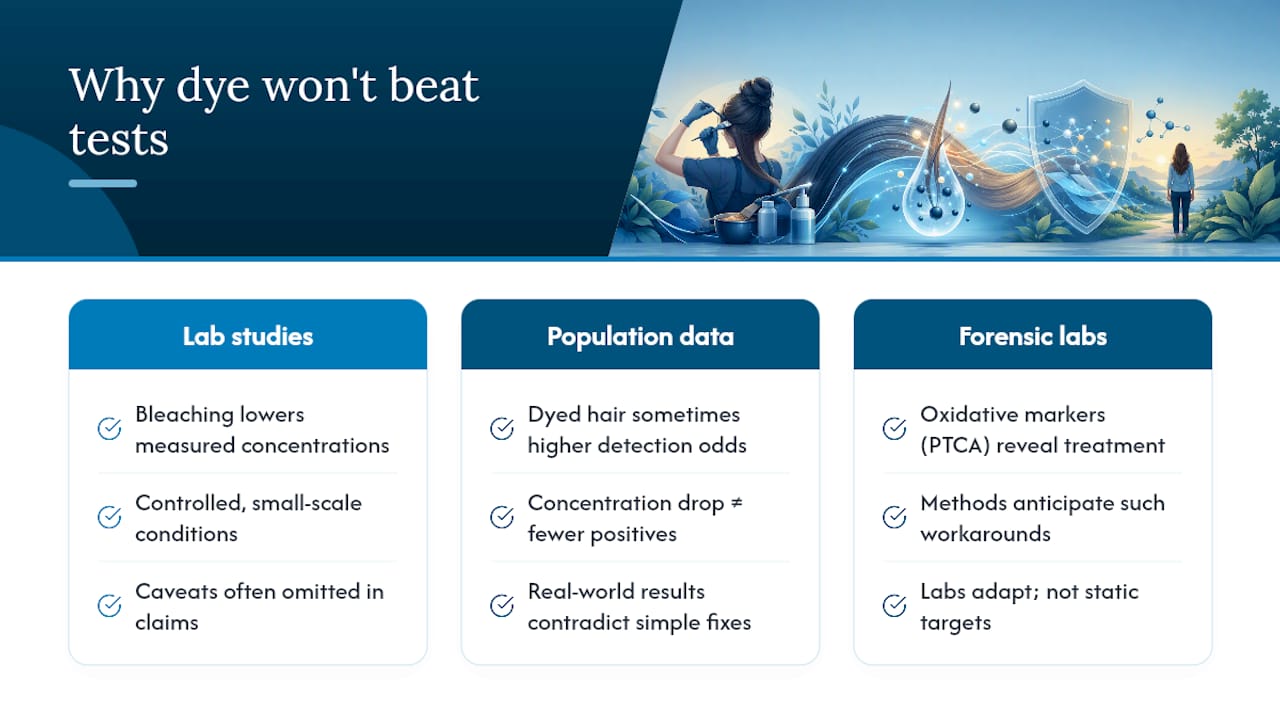
The population data is the part more people should be paying attention to. Dyed hair showing higher odds of any detection for some drugs, even while individual concentrations dropped, tells you the relationship between cosmetic treatment and test outcome isn’t a dial you can turn in one direction. Labs also aren’t static targets. Oxidative markers like PTCA exist specifically because forensic science anticipated that people would try exactly this workaround, and built a way to spot it.
None of this means cosmetic treatment is irrelevant, it clearly has measurable effects, sometimes large ones. But it means anyone treating dye or bleach as a guaranteed fix is working from outdated or oversimplified information.
— MIchael
Where Passhairdrugtest Fits Into Your Plan
If you’re staring down a test with recently treated hair and want a more structured approach than a single drugstore purchase, some vendors specialize in this problem and have years of experience. Core product lineups often center on specific shampoos and multi-step methods that combine several products in a specific sequence rather than relying on one bottle to do everything.
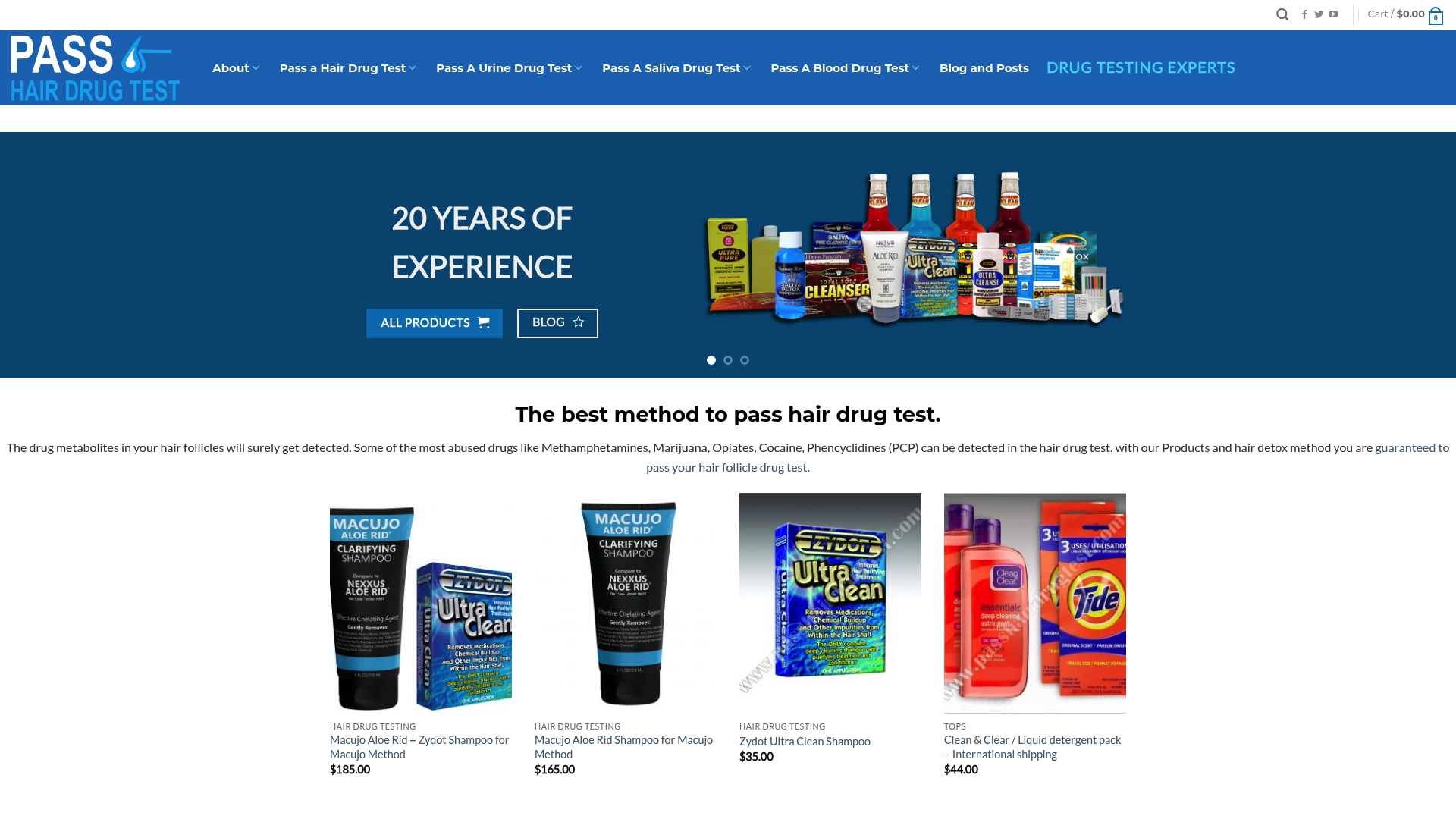
To be direct about it: no shampoo, kit, or method changes the chemistry described above into a sure thing, and you should always follow whatever rules your testing facility sets. Some providers offer detailed instructions and support materials designed for different usage patterns, so users are not guessing their way through a protocol alone. Browse the full product lineup to compare options, or read the step-by-step usage guide before you start a cleansing routine so you know exactly what each stage of the method is supposed to do.
Sources
This article draws on peer-reviewed research covering cosmetic treatment effects on hair drug concentrations, large-scale epidemiological analysis of dyed hair and detection odds, controlled studies of home and commercial cleansing treatments, and laboratory guidance from Quest Diagnostics on collection and testing procedures. Full citations appear inline throughout the article above.
- Influence of the cosmetic treatment of hair on drug testing
- Hair color, hair dyeing, and detection of cocaine and MDMA in hair samples (epidemiology analysis)
- Hair analysis: Assessment of homemade hair treatment effects on drug concentrations in the keratin matrix
FAQ
Will Hair Dye Affect a Drug Test?
Yes, but the effect depends heavily on the type of dye. Oxidative treatments like bleaching and some permanent colors can reduce measured drug concentrations by 40% to 90%, while semi-permanent, non-oxidative color tends to have a much smaller and less consistent impact.
Can I Pass a Hair Follicle Test in 30 Days?
Thirty days is a short window against a roughly 90-day detection period built into standard hair testing. No treatment, cosmetic or otherwise, has been shown to reliably clear a standard 1.5 inch sample in that timeframe, though certain cleansing protocols have shown partial reductions in some studies.
What Can Throw Off a Hair Follicle Test?
Bleaching, permanent dye, chemical relaxers, and repeated harsh processing can all alter measured drug concentrations, sometimes lowering parent drug levels while leaving or even increasing certain metabolites. Environmental exposure and hair porosity also play a role, which is part of why labs run a decontamination wash before screening.
How Long Will a Hair Follicle Test Detect Drugs?
A standard 1.5 inch (3.9 cm) hair segment collected near the scalp typically reflects around 90 days of drug history, since that length approximates roughly three months of hair growth. Longer segments can extend that window further back, though labs generally focus on the portion closest to the scalp for the most recent picture.
Does Passhairdrugtest Guarantee a Negative Result?
No responsible answer to this can promise a guaranteed outcome, since research shows cosmetic and cleansing treatments produce variable, drug-specific effects rather than universal results. Passhairdrugtest provides detailed instructions and phone support for its Mike’s Macujo Method and shampoo products, but current pricing and product details are listed directly on the site.
Recommended
- Bleach Lowers Lab Numbers but Doesn’t Guarantee a Negative Drug Test
- Facing a Hair Test: Can Relaxers Reduce Drug Levels to 5–67%?
- I bleached my hair and passed a drug test
