No products in the cart.
Uncategorized
Macujo on Dyed Hair: What to Know Before Your Hair Test
01
Nov
Nov
Yes, you can use Macujo Aloe Rid Shampoo, or the full multi-step Mike’s Macujo Method, on hair that has been dyed. Dye doesn’t block the method, and the method is designed to work on any hair color. But color treatments change how drug residue sits in the hair, they change how your hair tolerates a harsh cleansing routine, and neither one guarantees a result on its own. This guide covers what dye and bleach do to a hair test, how to prepare colored hair, and where we think the Macujo approach fits.
Table of Contents
TL;DR
- Dyed or bleached hair can still be tested. Labs sample the first 1.5 inches of hair from the scalp, and that is the stretch you need to plan around.
- Research shows bleaching and dyeing can lower the measured concentration of drugs in hair, but they do not reliably erase evidence of use.
- Macujo is built as a multi-step routine, so dyed hair needs extra care: read the full instructions, do a strand test, and never stack treatments on damaged hair without a plan.
- Hair that is already dry or breaking needs gentler handling. Talk to a stylist or dermatologist if your scalp is irritated.
- Our guides and products are at passhairdrugtest.com, with phone support if you want to talk through your situation.
Table of Contents
- What a lab actually tests
- What dye and bleach do to drug levels in hair
- Can a lab tell your hair was treated?
- Where Macujo fits with colored hair
- A practical timeline for dyed hair
- What about shaving your head?
- Perspective: why we recommend a method, not a single product
- Get the right kit for your hair
- What the evidence says about commercial methods
- Other questions that come up with colored hair
- FAQ
- Sources
What a lab actually tests
Before deciding anything about dye, it helps to know what the lab looks at. Quest Diagnostics states that its standard head-hair sample is the first 1.5 inches (3.9 cm) from the root, which represents roughly 90 days and a pattern of repetitive drug use.
Two things follow from that.
- Your roots matter most. The sample is cut close to the scalp. Dye applied to the lengths of your hair last month is mostly beside the point, because the lab is analyzing the portion that grew in the recent window. Hair that has grown out since your last color is untreated hair.
- Your last color job may not cover the sample. If you dye every six weeks and keep your roots touched up, the treated portion and the tested portion overlap. If you colored months ago, the part that would be cut is mostly new growth.
That overlap is the first thing to map out. Measure about 1.5 inches from your scalp and note which of that length has been colored, bleached or relaxed, and how recently.
If you want a broader primer on windows and sample types, our hair drug test information page walks through the basics.
What dye and bleach do to drug levels in hair
This is the question behind most searches for Macujo on dyed hair, so it is worth reading the research rather than forum threads.
A 2025 review in the Journal of Applied Laboratory Medicine reports that cosmetic treatments like bleaching or dyeing can reduce the concentration of incorporated drugs by damaging the hair cuticle and causing chemical degradation, but that they do not reliably eliminate evidence of use.
A large German comparison points the same way. Agius’s 2014 study looked at 1,026 cosmetically treated and 9,488 untreated authentic samples. Treated hair had significantly lower drug concentration ranges, yet positivity rates did not differ significantly between the two groups.
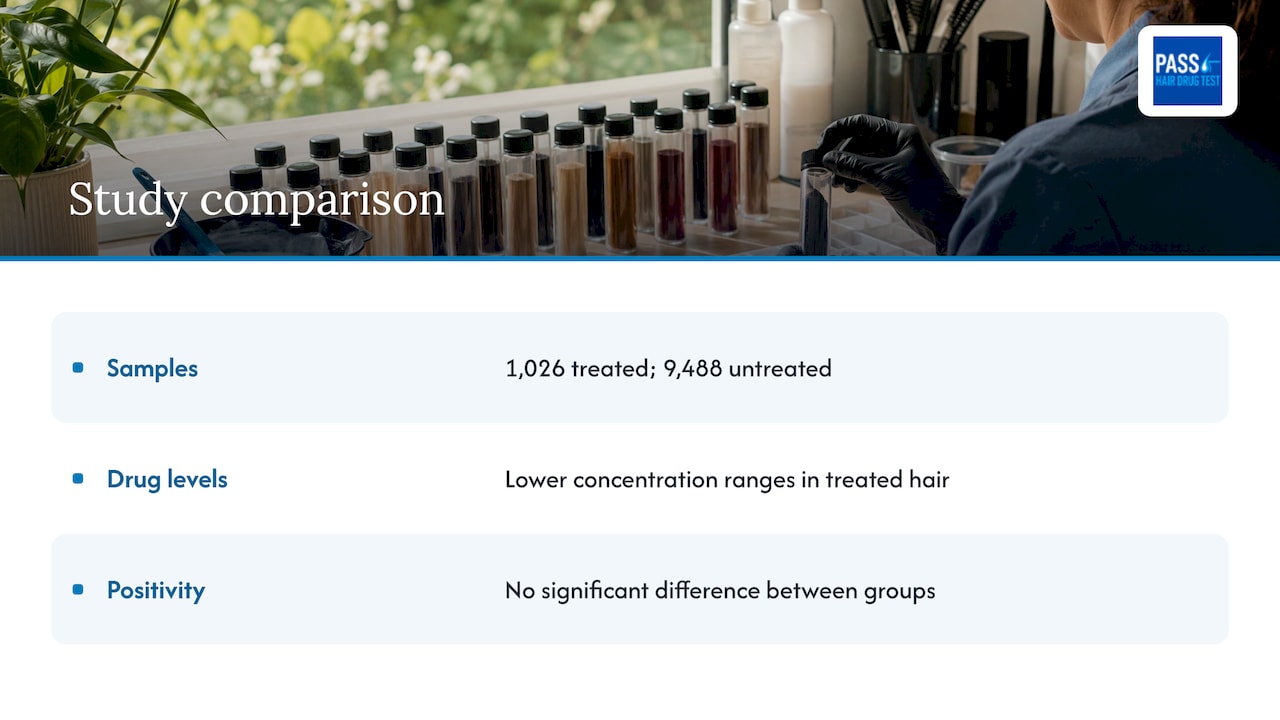
In plain terms: color treatment tends to lower the numbers on the lab report, but not necessarily below the cutoff. Our own write-ups on this are on the page about how bleach and dye change hair drug tests and on why bleach lowers lab numbers but doesn’t guarantee a negative.
Dye is not the same as bleach
The two are often lumped together, but they behave differently.
| Treatment | What it does to the hair | What that means for you |
|---|---|---|
| Semi-permanent or permanent color | Opens the cuticle to deposit pigment | Moderate change to the hair surface, usually less aggressive than bleach |
| Bleach or lightener | Breaks down pigment and weakens the structure | Hair is more porous and fragile, so extra cleansing steps need extra care |
| Relaxers and perms | Chemically restructure the hair | Another layer of damage to account for before any cleansing routine |
The more treatments you have layered, the more fragile your hair is. That is why the practical advice below leans on caution rather than stacking steps.
Natural hair color also plays a role
Dark, melanin-rich hair binds certain drugs, such as cocaine and methamphetamine, more strongly than lighter hair, which researchers have cited as a source of potential bias in workplace testing. A New York City study found that past-year hair dyeing was associated with higher odds of cocaine and MDMA detection, but not significantly with the detection levels. In other words, hair color and cosmetic history are tangled together, and no one can predict a result from color alone.
Can a lab tell your hair was treated?
People often ask whether a lab can spot dye or chemical processing. Forensic toxicologists note that there is no standardized, reliable method to objectively detect every instance of cosmetic hair manipulation, although labs are developing better tools to identify excessive chemical damage. The practical takeaway is that severely damaged hair is the thing that tends to draw attention, which is another reason to be careful and not to overdo it.
Where Macujo fits with colored hair
Macujo Aloe Rid Shampoo is the core of what we sell for hair preparation. It is designed as a clarifying detox shampoo meant to work through the hair’s outer layers, and the Mike’s Macujo Method combines it with additional steps in a set order. We stand behind the method, and we describe it as the approach our customers use when they have a hair follicle test coming and want a structured plan, with 20 years of experience in the detox-product industry behind our guidance.
Here is how we think about it for hair that has been colored.
Start with what the instructions say
The method works as a sequence. The order and timing of each step matters, so follow the complete written instructions rather than a summary from a forum. Our guide to the Macujo Method lays out the whole routine, and our walkthrough on how to use detox shampoo covers the shampoo step in detail.
Expect dryness
In our method e-book we tell customers that the routine is safe for hair and that dryness is normal. Colored or bleached hair starts out drier than untreated hair, so it will feel it more. Plan for a conditioning routine between steps and avoid heat styling during the preparation period.
Run a strand test
Before you go through the whole routine, test a small, hidden section of hair. Colored hair, especially bleached hair, can react differently from virgin hair. A strand test tells you how your own hair handles the shampoo and the steps that follow.
Don’t add extra treatments on a whim
This is where people get hurt. The pull to add one more bleach session or one more product is strong when a test date is close. The FDA’s page on hair cleansing products lists adverse event reports that include hair loss, breakage, balding, itching and rash. If your scalp is already irritated, stop and see a dermatologist before adding anything. If your hair is breaking, ask a licensed stylist how much more processing it can take.
A practical timeline for dyed hair
The right timing depends on your test date and what your hair has been through. Here is a framework to adapt.
- Measure and map. Mark 1.5 inches from the scalp and note which portion has been treated, and when.
- Hold off on new color. If you have the choice, don’t add a fresh dye or bleach cycle right before the routine. Your hair has a limited tolerance for chemistry.
- Strand test. Do it several days ahead so any reaction shows before the real thing.
- Follow the written method. Do each step in order, with the timing as written.
- Condition and rest. Between steps, use the conditioning guidance in the instructions and keep styling gentle.
- Plan the day itself. Wash your hair as instructed close to the appointment, and bring any paperwork your employer sent.
If your test date is very close, call us. Phone support is part of what we offer, and walking through your hair history with someone usually saves mistakes.
What about shaving your head?
It comes up all the time: if you shave, won’t new hair grow in clean? Not in time. Hair grows slowly, and the lab only needs a small sample. Laboratories can also collect body hair if scalp hair isn’t available, so a shaved head doesn’t remove the option of testing. A shave is not a shortcut, and if you are considering it, ask the testing company or your employer how they handle that situation.
Perspective: why we recommend a method, not a single product
We have spent more than 20 years in this industry, and the question we hear most from customers with colored hair is whether they have to choose between their color and their test. The honest answer is that they don’t have to choose, but they do have to plan.
Hair dye and bleach change the surface of the hair. Some research says they can lower measured concentrations. But research also says that they don’t erase everything, and that is why we never tell anyone to rely on a box of color. We built our approach around the Mike’s Macujo Method because a structured, multi-step routine, started early and followed as written, gives you a defined plan instead of guesswork.
Colored hair is more delicate, so we ask every customer to respect the instructions: strand test first, condition between steps, and call us before changing anything. Our products are more affordable than many alternatives, and our phone support is there so you can ask questions before you start, not after something goes wrong.
If you have a hair test coming, start with the plan, not the panic.
MIchael
Get the right kit for your hair
If you are preparing for a hair follicle test, our hair products page has Macujo Aloe Rid Shampoo, Zydot Ultra Clean Shampoo and the multi-step method, each with detailed instructions and support materials. Browse our hair drug testing products or read our hair follicle testing guide first if you want more background.
What the evidence says about commercial methods
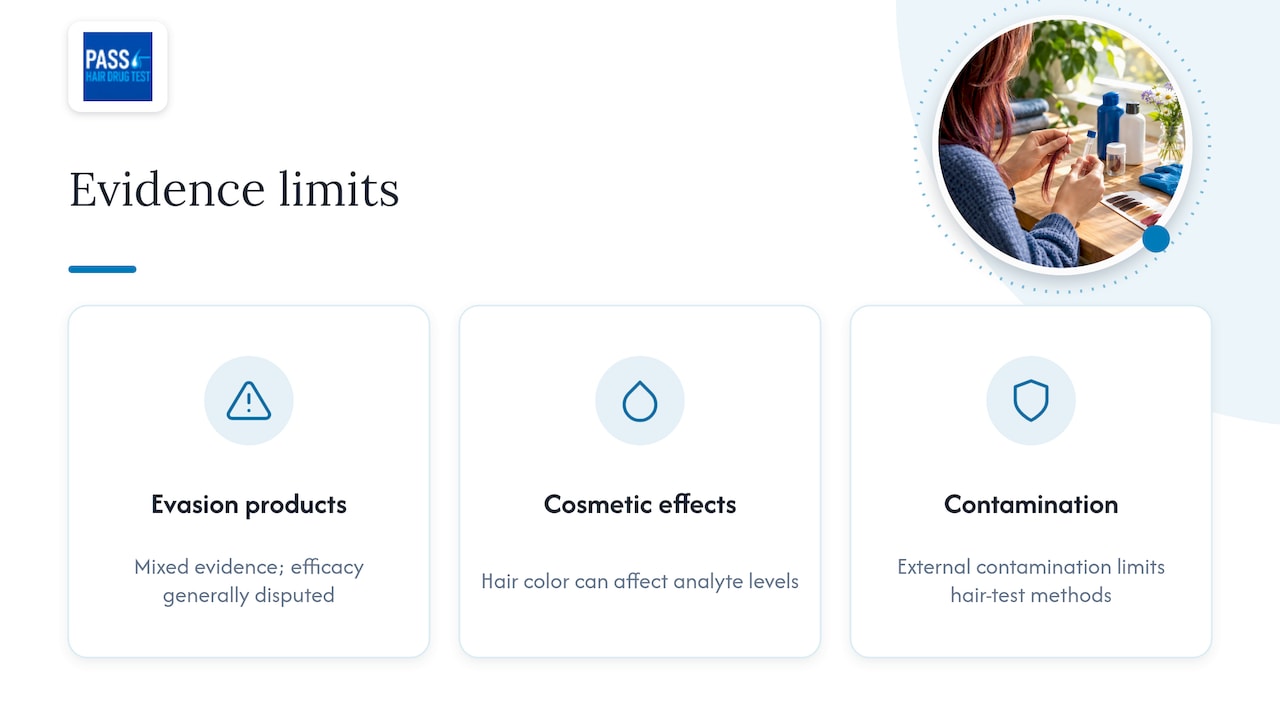
A fair read of the research is that the picture is mixed. A 2017 review of hair analysis found mixed evidence for commercial evasion products and, considering source quality, generally disputed their efficacy. The same authors note that hair color and cosmetic treatments can affect analyte levels and discuss external contamination as a limit of hair-test methods.
What we take from that is a reason for care, not a reason to do nothing. Hair tests use highly sensitive cutoffs, and the results depend on the sample, the lab and your hair’s history. That is why we encourage customers to read the full instructions, use the products as directed and ask us about their specific case. For more customer experiences, see our Macujo Method reviews.
Other questions that come up with colored hair
Should you dye your hair to match your roots before the test?
Not as a strategy. If your color is already in place and your hair is healthy, leave it. Adding new processing close to the test date increases damage risk, and the research above says that cosmetic treatment doesn’t reliably remove evidence.
Does cutting hair help?
The lab samples near the scalp, so trimming the ends does not change the part that gets tested. Some people cut length so that the routine is easier to manage, which is a styling decision rather than a testing one.
What if your hair is very damaged already?
Talk to a licensed stylist and, if your scalp is irritated, a dermatologist. Damaged hair needs a lighter touch, and no hair test is worth losing hair over.
FAQ
Does hair dye affect a hair follicle drug test?
It can change the measured level. Research shows that dyeing or bleaching may lower the concentration of drugs in hair, but it does not reliably eliminate evidence of use. Some studies found treated and untreated samples tested positive at similar rates.
Can you use Macujo shampoo on bleached hair?
Many people do, but bleached hair is more fragile, so dryness and breakage are the main concern. Do a strand test first, follow the written instructions in order, and condition between steps. If you are unsure, call our support line before you start.
How much of my hair does the lab test?
A standard head-hair sample is the first 1.5 inches from the scalp, which represents about 90 days. That is the part of your hair you need to plan around, including any color on it.
If I shave my head, will the new hair be drug-free?
Not reliably, and it doesn’t solve the timing. Labs may collect body hair if there is no scalp hair to sample, so ask the testing provider how it handles a shaved head.
Sources
- Hair testing FAQ, Quest Diagnostics
- Review on Toxicology Testing in Hair, Journal of Applied Laboratory Medicine
- Utility of coloured hair for the detection of drugs and alcohol, Drug Testing and Analysis
- A multivariable analysis delineating hair color, hair dyeing and drug detection, PMC
- Advances in testing for sample manipulation in clinical and forensic toxicology, PMC
- Hair analysis for the detection of drug use, PubMed
- Hair Cleansing Products, FDA
Recommended
- How to Pass a Hair Test: Your Guide to the Macujo Method
- Macujo Method Reviews for Hair Drug Tests
- Macujo Method Risks: 50–65% Lab Reductions, Plus Scalp Burn Dangers
- How to Pass a Hair Follicle Drug Test
