No products in the cart.
Uncategorized
Scalp Health During a Hair Detox: Cleanse Without Irritation
31
Oct
Oct
If you are cleansing your hair before a hair follicle test, your scalp is the part that pays for mistakes. Keep the routine gentle, follow the product directions exactly, stop at the first sign of burning or a rash, and give your skin recovery time between washes. A scalp that stays calm lets you finish a multi-step routine on schedule instead of cutting it short with painful, inflamed skin.
This guide covers what a “scalp detox” means in ordinary hair care, how it differs from a pre-test cleansing routine, what the research says about washing and THC in hair, and how to look after your skin the whole way through.
Table of Contents
TL;DR
- A scalp detox in everyday care means deep cleansing of oil, product, sweat and dead skin. It is not the same thing as a drug-test routine, though the two share many steps.
- Harsh ingredients and abrasive tools can cause dryness, inflammation or contact dermatitis, so go slowly, patch test and avoid scrubbing.
- Laboratories wash hair samples before analysis, and no routine can be promised to change a result. Plan around your own situation, not around hope.
- Painful burning, heavy scaling or intense itching that does not settle is a reason to see a dermatologist, not to push through.
- Keep your washing schedule consistent and your hair handling gentle, so your scalp stays healthy from the first wash to test day.
Table of Contents
- What “scalp detox” actually means
- Signs your scalp has buildup
- What cleansing can and cannot do to a hair test
- Protect your scalp during an intensive routine
- Ingredients and habits that irritate
- When to stop and see a dermatologist
- Our perspective
- Build your routine with the right products
- A sample week for a gentle, scalp-first routine
- Common mistakes that hurt both scalp and plan
- FAQ
- Sources
What “scalp detox” actually means
In general hair care, a scalp detox is a deep cleanse meant to remove buildup from products, oils, sweat and dead skin cells, with the aim of a more balanced scalp environment. SELF describes it that way, and the top-ranking pages for this topic say much the same: clarifying shampoos, exfoliating treatments and massage, used occasionally.
Notice what that definition leaves out. It is about the skin and the roots, not about what is inside the hair shaft. THC metabolites that end up in hair are incorporated into the strand as it grows. That is why a pre-test hair routine is a different goal from a beauty scalp detox, even when both use a shampoo in the shower.
For you, the practical lesson is this: a cleansing routine for a test is an intensive version of ordinary scalp care. Intensive means more chances for irritation. Everything below is about getting through it with healthy skin.
Signs your scalp has buildup
Buildup comes from natural oil production, shedding skin cells and the products you use. Dermatologists quoted by Byrdie note that regular cleansing helps prevent and remove it. Signs that commonly point to it include:
- Roots that look greasy a day or two after washing
- An itchy or tight feeling
- Flaking or visible dandruff
- Dryness or general discomfort
- Buildup around the follicles, often felt as small bumps
- Hair that looks flat at the roots
Byrdie’s expert piece lists dryness, itching, dandruff and discomfort among the signals. SELF adds that greasiness, flaking, itching and hair loss are the concerns people most often connect to buildup.
Why this matters before a test: if you start an intensive routine on a scalp that is already irritated, flaky or inflamed, the new products land on compromised skin. Take a few days to notice your baseline first. Is it oily, dry, itchy, calm? Write it down. You will compare against it later.
What cleansing can and cannot do to a hair test
You deserve a straight picture here, because it affects how much effort and skin stress make sense.
Laboratories do not test hair straight off your head. Washing the sample before analysis removes environmental contaminants and interfering substances while leaving drugs incorporated within the hair structure, as a 2025 review in the Journal of Applied Laboratory Medicine explains. Employers value hair testing partly because it resists tampering, and the usual minimum sample is about 1.5 inches of hair from the scalp, according to AMH Nationwide.
That is one side. The other side is that hair care is not neutral. A 2022 study of THC in hair found that commercially available hair-care products reduced THC concentrations, and some treated samples fell below the detection limit. The same work reported that bleaching, coloring and perming reduced THC concentrations too, but that these treatments are mostly visible to the analyzing laboratory. The review above adds that sunlight exposure degrades certain cannabinoids in the hair shaft, so concentrations can drop naturally.
Taken together, the honest reading is that what you do to your hair can change the numbers, that results vary from person to person and strand to strand, and that nobody can reasonably promise a specific outcome. Our own method is designed to address the hair, and we explain it on our detox shampoo guide. The point of this article is the other half of the job: keeping the skin underneath healthy while you do it.
If you are weighing chemical treatments instead, our page on how bleach and dye change hair drug tests covers what those do to the strand and to the scalp.
Protect your scalp during an intensive routine
Most scalp trouble during a cleansing routine comes from three things: too much friction, too much frequency and too little recovery. Here is a plan that keeps those in check.
Before you start
- Patch test every new product. Put a small amount behind the ear or on the inner forearm and wait the time the label specifies. Hair products can cause allergic contact dermatitis, an itchy rash on the scalp and other skin the product touches, as the American Academy of Dermatology explains.
- Read the full directions once, start to finish. Multi-step routines work in sequence. Skipping ahead or doubling steps is how scalps get burned.
- Check your starting point. If you already have open sores, a flaring rash or heavy flaking, deal with that first, with a doctor if needed.
- Trim your supplies list. Keep to the products in your routine and set aside everything else, such as scented sprays, heavy oils and styling gels.
While you cleanse
- Use fingertips, not nails. Massage in small circles with the pads of your fingers. Scratching creates micro-tears that sting when the next product goes on.
- Skip abrasive tools. SELF notes that harsh ingredients or abrasive tools can cause excessive dryness, damage, inflammation or contact dermatitis. Stiff brushes and gritty scrubs are the usual culprits.
- Use lukewarm water. Hot water strips oil and makes a dry, tight scalp worse. Rinse until the water runs clear and the hair no longer feels slippery.
- Rinse thoroughly. Leftover product is a common cause of itch. Give the back of the neck and behind the ears extra time.
- Pat dry. Rubbing with a towel drags on both hair and skin. Press and blot instead.
- Do not stack extras. Adding a homemade mix on top of a formulated product raises the odds of a reaction without a clear benefit.
Between washes
Your skin needs recovery time. If the directions give you a schedule, follow it. If you feel tightness or sting between sessions, a plain, fragrance-free conditioner on the lengths (not the scalp) can reduce friction and keep hair from tangling. Avoid heavy oils at the roots. The American Academy of Dermatology notes that hair products with oils or comedogenic ingredients can clog pores and cause acne along the hairline, forehead or back of the neck.
If you are growing out hair and the sample length is a concern, remember that scalp care and hair length are separate issues. Our explainer on what labs measure in long hair covers how length figures in a test.
Ingredients and habits that irritate
No single product is a villain, and individual skin differs. These are the patterns that most often show up when someone’s scalp reacts badly:
| Habit or ingredient | What it can do | Safer approach |
|---|---|---|
| Scrubbing with nails or stiff brushes | Micro-tears, soreness, inflammation | Fingertip massage with light pressure |
| Washing more often than directed | Dryness, tightness, rebound oiliness | Follow the label schedule, allow recovery |
| Hot water | Strips oil, worsens itch | Lukewarm water |
| Leaving product on longer than directed | Burning, contact dermatitis | Time every step |
| Layering several actives | Stacked irritation | One routine at a time |
| Heavy oils at the roots | Clogged pores, breakouts | Light conditioner on lengths only |
| Fragranced extras | Allergic reactions in sensitive skin | Fragrance-free when your skin is reactive |
Some detox shampoos include antifungal ingredients. According to SELF, these can help manage mild dandruff and flaking, but intense itching, painful burning or heavy scaling may call for a dermatologist rather than more product.
Our own write-up on detox shampoo damage and what 20 years of evidence shows goes deeper on how hair itself responds to repeated cleansing.
When to stop and see a dermatologist
Mild tingling that fades within minutes can be normal for a clarifying product. These are not normal, and they are the moment to stop the routine:
- Painful burning that continues after rinsing
- Intense itching that persists for more than a day or two
- Excessive scaling or thick, crusted patches
- An itchy rash on the scalp, ears, neck or forehead that matches where the product touched, a pattern the AAD links to allergic contact dermatitis
- Swelling, oozing or open sores
- Sudden or patchy hair loss
SELF advises consulting a dermatologist for painful burning, excessive scaling or intense itching that persists. A board-certified dermatologist can tell contact dermatitis from dandruff, a fungal problem or a psoriasis flare, which look alike but need different treatment. Bring the product names and the dates you used them.
If a doctor tells you to stop a product, follow that advice. Your health outranks any schedule, and a healed scalp is easier to work with than a raw one.
Our perspective
After more than 20 years in the drug-testing and detox-product business, the pattern we see is that people who struggle are rarely the ones who lack a plan. They are the ones who rush it. They double a step, scrub harder because the clock is ticking, and end up with a sore, inflamed scalp that makes the rest of the routine miserable.
That is why we built our approach around structure. Macujo Aloe Rid Shampoo, Zydot Ultra Clean Shampoo and the multi-step Mike’s Macujo Method come with detailed instructions so each step happens in order, for the time it is meant to, and we offer phone support so you can ask before you guess. We design these products for both light and heavy users, and we believe a clear step-by-step routine is the best protection for your skin.
Our advice is simple: treat your scalp as part of the plan, not an afterthought. Patch test, follow the directions, be gentle with your hands, and call us if something feels off. If your skin is telling you to stop, listen to it and see a dermatologist.
MIchael
Build your routine with the right products
If you are preparing for a hair follicle test and want a structured routine rather than a pile of improvised steps, start with our hair drug test shampoo page. It explains how Macujo Aloe Rid Shampoo, Zydot Ultra Clean Shampoo and the Mike’s Macujo Method fit together, with directions written for first-time users. You can browse everything we carry, including home test kits, on our products page.
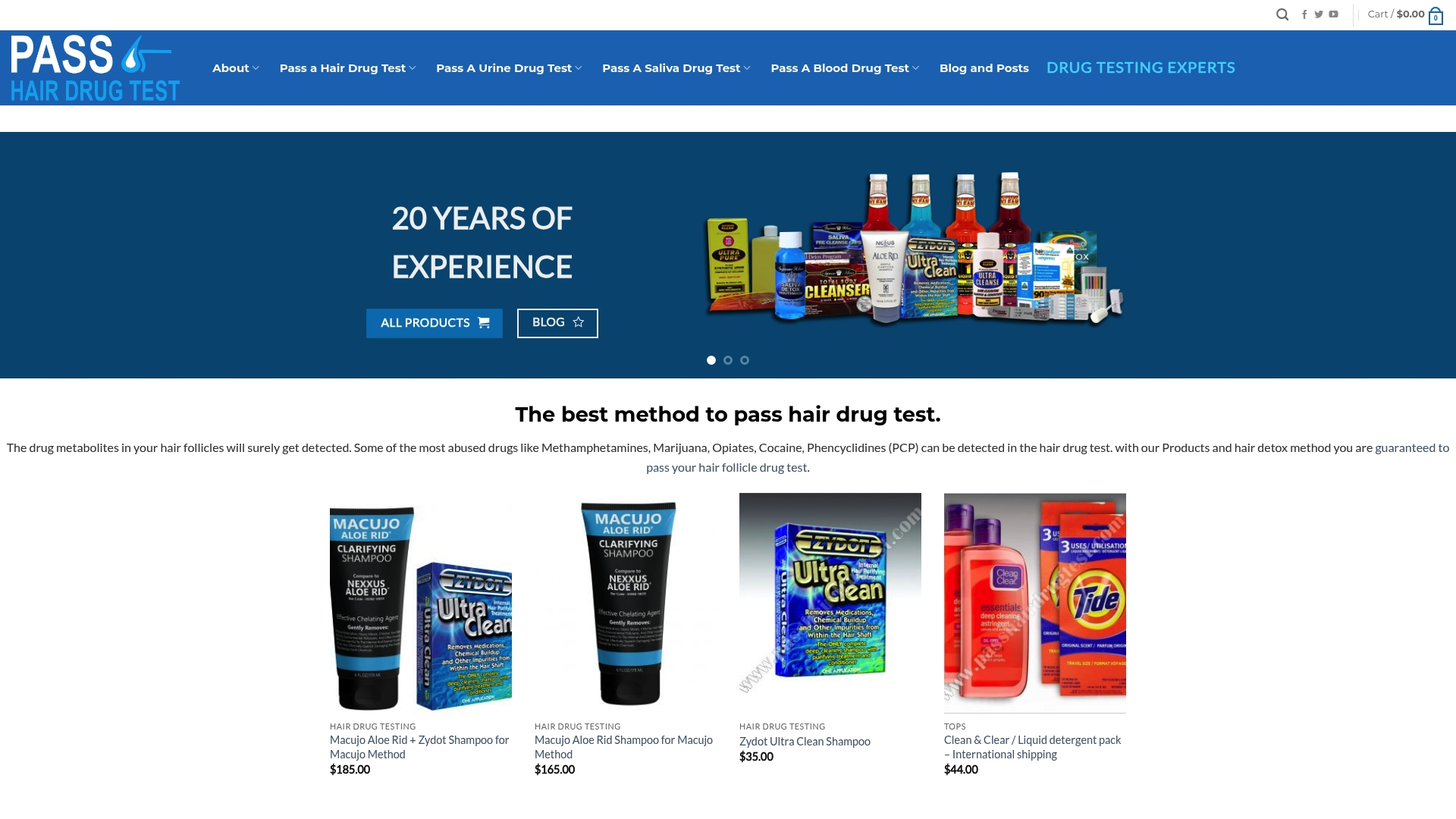
Not sure where you stand on timelines, sample length or what your employer’s test involves? Read our hair follicle drug test information first, then call our support line with your questions. Current pricing is on each product page.
A sample week for a gentle, scalp-first routine
Every routine differs, so treat this as a framework for protecting your skin, not a replacement for the directions that come with your products.
Day 1: baseline. Wash with your usual shampoo. Note oiliness, itch, flaking and any tender spots. Do a patch test on a new product.
Day 2: read and prepare. Check the patch test area. Lay out supplies, set a timer, and read the directions again. Clear your schedule so you are not rushing.
Days 3 to 5: follow the directions step by step. Time each step. Use fingertips only. Rinse with lukewarm water until no residue remains. After each session, check the scalp in a mirror or with a phone camera. Redness that fades within an hour is usually fine. Redness that deepens or spreads is not.
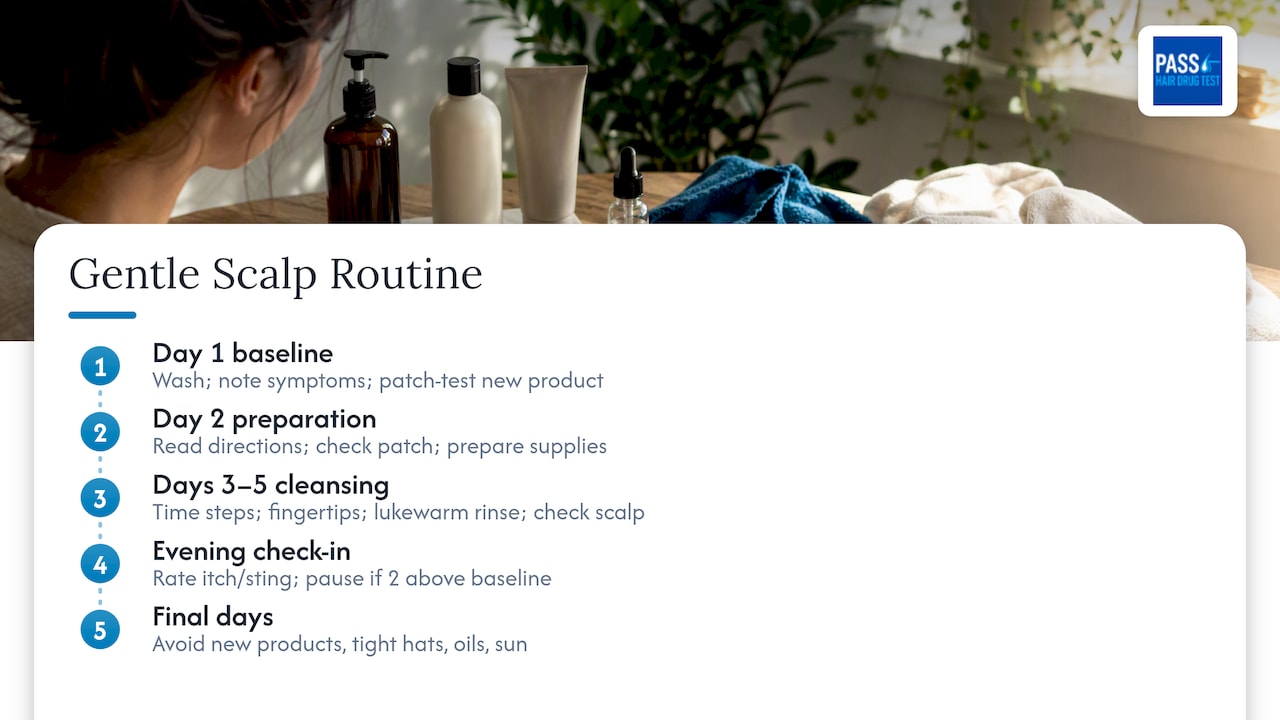
Evening check-in. Rate the scalp from 1 to 5 for itch and for sting. If either climbs two points above your baseline, pause and call us or your doctor.
Final days: keep it calm. Avoid new styling products, tight hats, heavy oils and sun exposure on a sensitive scalp. Sleep, hydration and a normal diet are plain but sensible support for healthy skin.
Notice the theme: a record of how your skin responds lets you catch trouble in a day, not a week.
Common mistakes that hurt both scalp and plan
- Starting too late. A short runway tempts people to compress steps. Give yourself time so you can follow the schedule as written.
- Chasing a tingle. Some people believe a stronger sting means a stronger result. Irritation is a sign of stress on the skin, not proof of anything.
- Mixing methods. Combining a shampoo routine with bleach, dye or other chemical treatments multiplies the load on your scalp. If you are considering chemical processing, read about the trade-offs first.
- Ignoring existing conditions. Dandruff, eczema and psoriasis change how skin reacts. Ask a dermatologist before you start if you have any of them.
- Skipping conditioning on the lengths. Dry, brittle hair tangles and tugs at the scalp. Light conditioning of the lengths protects both.
- Hiding a problem. If something goes wrong, tell the support team or a doctor early. It is much easier to adjust a plan than repair a flare.
FAQ
Is a scalp detox safe to do before a hair drug test?
For most people with healthy skin, a gentle clarifying routine used as directed is manageable. The risks come from harsh ingredients, abrasive tools, overuse and ignoring warning signs. Patch test first, follow the directions, and stop if you get burning, a rash or persistent intense itching.
Will washing my hair change a hair follicle test result?
Labs wash samples before analysis to remove external contaminants, so ordinary washing does not simply wipe the slate. A 2022 study did find that some commercial hair products lowered measured THC, with results varying by sample. No one can honestly guarantee a result for your hair.
How do I know if my scalp is irritated or just has buildup?
Buildup tends to show as greasy roots, mild flaking or a tight, itchy feel that improves after a good rinse. Irritation tends to bring stinging, redness, burning or a rash that gets worse after products touch the skin. When in doubt, pause new products and ask a dermatologist.
Can I use a scalp scrub during my routine?
It is wise to skip abrasive scrubs while using an intensive routine, since friction on top of strong cleansers can cause inflammation. Fingertip massage with light pressure gives you the circulation benefit without scratching the skin.
When should I see a dermatologist?
See one if you have painful burning, excessive scaling, intense itching that persists, an itchy rash where products touched, swelling or sudden patchy hair loss. Bring your product list so they can identify the trigger.
Sources
- Who Really Needs a Scalp Detox? (SELF)
- Do Scalp Detoxes Really Work? We Asked the Experts (Byrdie)
- 8 Ways to Remove Scalp Buildup, According to Dermatologists (Byrdie)
- Manipulation of THC Hair Concentrations by Commercially Available Hair Products (PMC)
- Review on Toxicology Testing in Hair (Journal of Applied Laboratory Medicine)
- How to Clean Hair Follicles for Drug Testing (AMH Nationwide)
- Are your hair care products causing breakouts? (American Academy of Dermatology)
- 10 reasons your scalp itches and how to get relief (American Academy of Dermatology)
Recommended
- Match Your Hair Detox Kit to Your Test Date, Backed by 20+ Years of Protocols
- Hair Detox Mistakes Before a Drug Test: 9 to Avoid
- Do Detox Shampoos Work for Hair Follicle Tests?
