No products in the cart.
Uncategorized
Hair Washes Before a Hair Drug Test: What Actually Matters
05
Nov
Nov
Washing your hair before a hair drug test is allowed, and it will not make you fail on its own. Collectors don’t ask you to skip shampoo, and the lab washes your sample again before it analyzes anything. What matters is the 90-day window your hair covers, how the sample is collected, and what you do with your hair in the weeks before. This guide explains each piece in plain terms so you can plan.
Table of Contents
TL;DR
- Normal washing, styling products and dye do not stop a lab from testing your hair. Healthline notes the laboratory washes the collected sample before testing.
- A hair test generally looks back about 90 days, so a single wash the night before is a small part of the picture.
- Labs use validated multi-step wash protocols to remove surface contamination, then test what is left inside the hair.
- Bleaching, dyeing, perming and straightening change hair and are noted by labs, so keep your hair history straight.
- If you want a structured cleansing routine, we offer the Macujo method and shampoos built around it. Details are in the promo section below.
Table of Contents
- What the lab does to your hair before it tests
- Does washing before a hair test matter?
- How hair collection works
- The 90-day window and what it means for your plan
- Dye, bleach and other treatments
- A practical routine for the weeks before your test
- Ready to build your routine?
- FAQ
- Sources
What the lab does to your hair before it tests
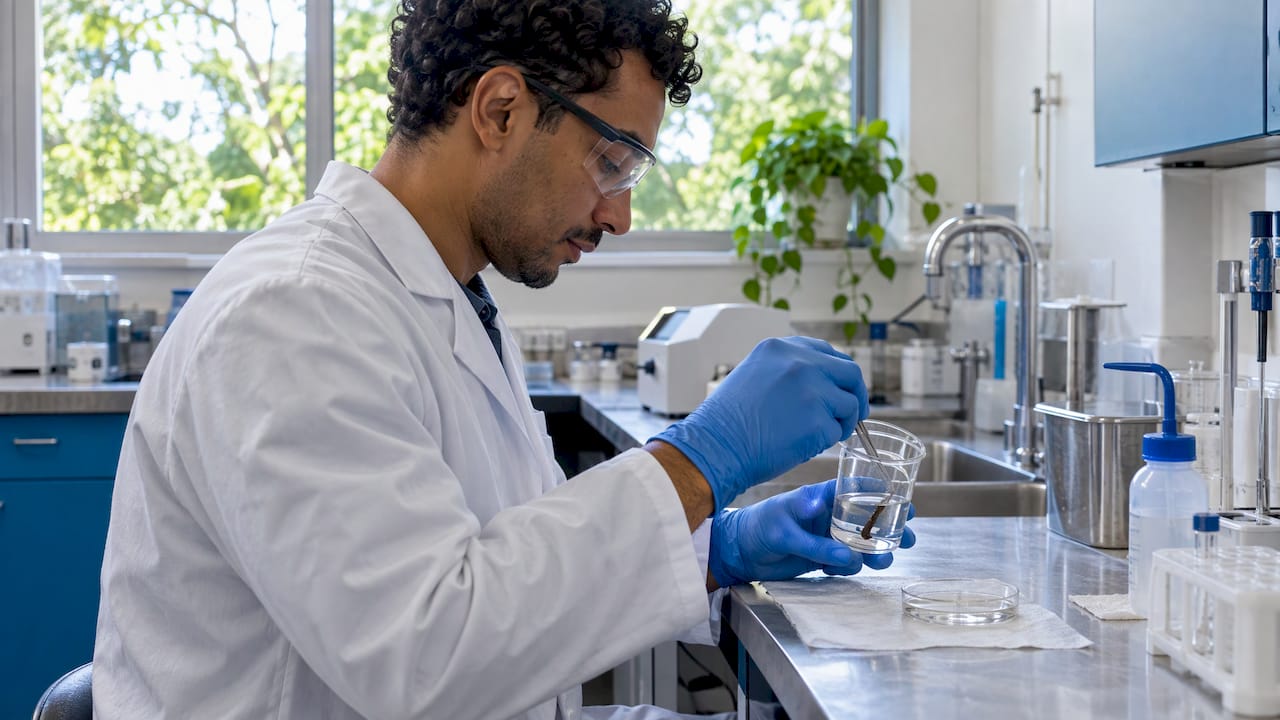
Before any measurement, the lab cleans the sample. The goal is to remove things sitting on the outside of the strand: hair products, sweat, sebum, dust and other surface contamination. According to a 2025 review in the Journal of Applied Laboratory Medicine, laboratories may even analyze the wash liquid afterward, which helps them judge whether drug found in the hair came from the outside or the inside.
There is no single universal recipe. The same review describes protocols that combine water-based solutions, detergents, methanol and other organic solvents in validated sequential steps. Each lab chooses its own.
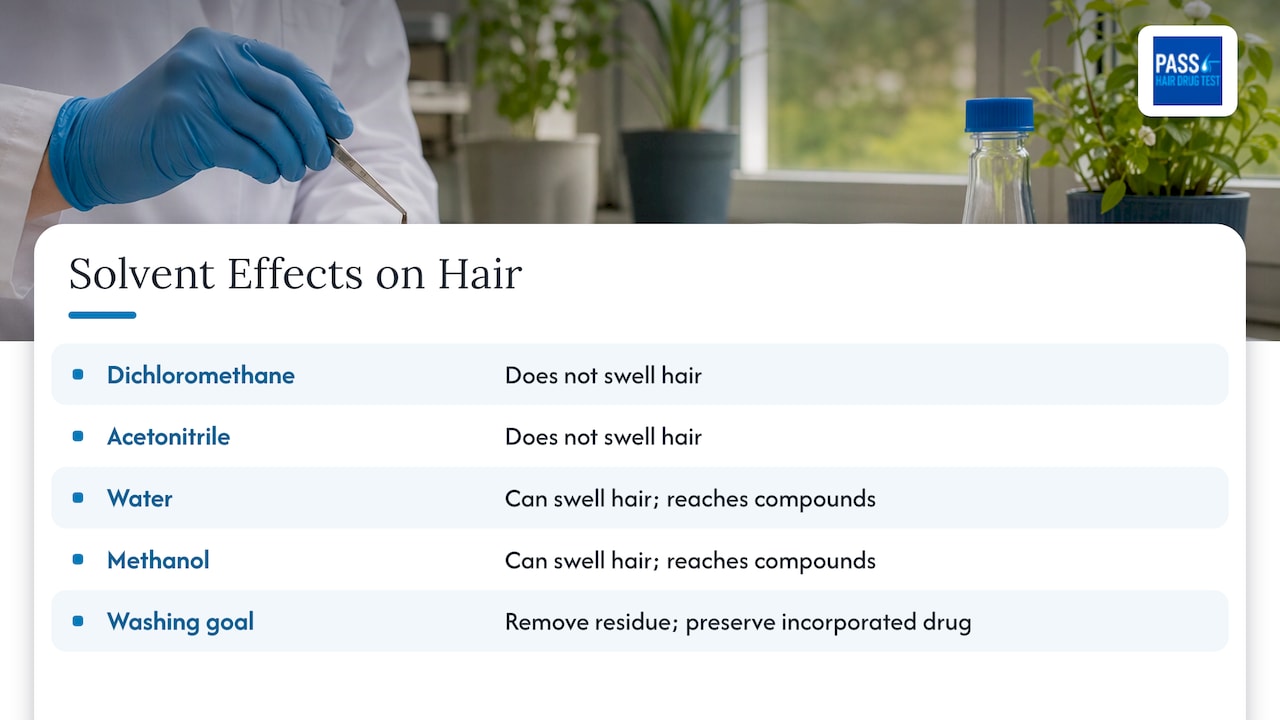
The United Nations Office on Drugs and Crime explains the balancing act in its laboratory guidelines for hair testing: washing should remove surface residue without pulling out drug that is incorporated in the hair, which is practically impossible to do perfectly, so labs settle on a validated compromise. The same document says some solvents, such as dichloromethane and acetonitrile, don’t swell the hair, while water and methanol can swell it and reach embedded compounds.
What this means for you: whatever you wash with at home, a professional wash comes after it. The home shower is the first rinse. The lab’s protocol is the last one.
Why labs wash the sample at all
A hair test is meant to show use, not exposure. Smoke in a room or a contaminated surface can leave traces on hair. The wash step, together with other checks, helps the lab tell the difference. The 2025 review explains that drug present in the hair but absent from the wash weighs against external contamination, while far more drug in the wash than in the hair means contamination has to be considered.
That is also why labs rarely rely on washing alone. A peer-reviewed cocaine decontamination study recommends reading wash results together with metabolite ratios and cutoff thresholds.
Does washing before a hair test matter?
For a normal person, a regular wash changes nothing about how the collection or test is carried out. Healthline states that washing, dyeing and using styling products will not affect the accuracy of the results, and that there are no restrictions on what you do with your hair after collection.
Research does show that hair is not a perfectly fixed record. The 2023 toxicology review on sample manipulation says repeated washing and specialty products can lower some measured concentrations, but the size and direction of the change depend on the drug, the hair, the treatment and the protocol. In other words, the effect is not reliably predictable. Some of the figures in that review come from lab experiments with hair soaked for up to 10 hours, which is nothing like a quick shower.
The practical takeaways:
- Wash as you normally would. Skipping washes does not help you, and arriving with unwashed hair does not look better to a collector.
- Don’t expect any single wash to rewrite 90 days of history.
- Consistency in the weeks before the test matters more than what you do the final night.
How hair collection works
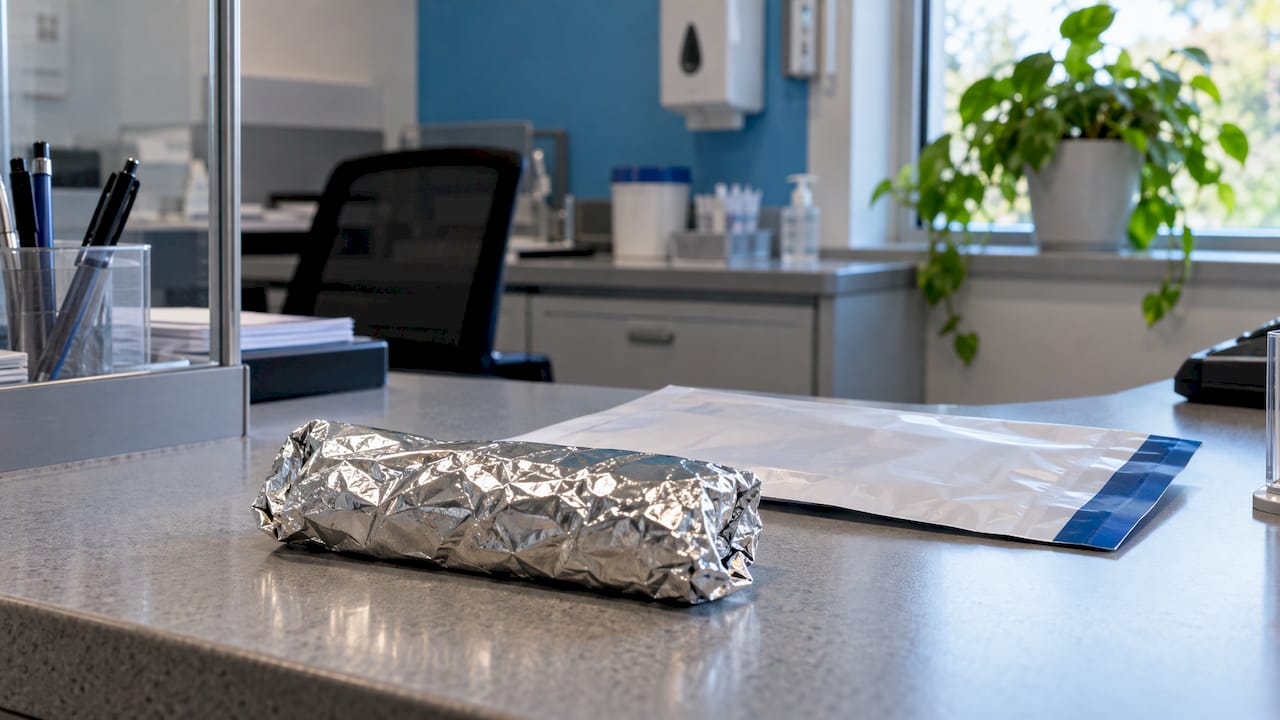
Knowing the collection step helps you plan around it. According to Healthline, a collector cuts about 100 to 120 hairs from the crown, wraps them in foil and sends them off in a secure envelope. The lab screens with ELISA, and anything nonnegative is confirmed with GC/MS. A negative can be reported within 24 hours, while a confirmed positive takes about 72 hours.
Labcorp describes its U.S. process as taking roughly 100 milligrams of hair, or 90 to 120 hairs, cut at the scalp and sealed in foil under chain-of-custody procedures. It adds that collection in full view of the collector, with documentation, is designed to minimize the chance of adulteration or substitution.
Two things follow. First, the sample is taken close to the scalp, so you can’t count on a fresh haircut to reset the clock. Second, everything happens in front of a collector, so the preparation has to happen before you arrive. For more on how labs treat different hair lengths, see our page on the long hair drug test. If you have little scalp hair, our body hair drug test guide covers the alternative.
The 90-day window and what it means for your plan
Hair testing generally covers about 90 days. Labcorp explains that head hair grows about half an inch per month and the segment analyzed is typically 1.5 inches long. It also says detection depends on dose, assay sensitivity, preparation, route, duration of use, specimen type, the substance and individual metabolism, so 90 days is an approximation and not a calendar.
Healthline adds that drugs generally don’t show in clipped hair until about five to seven days after use. That lag is why hair testing is not built for very recent exposure, and it is the main reason people compare it with other tests. Our guide on hair versus urine testing lays out which test sees what and when, and the page on the 5 to 10 day lag goes deeper.
Here is how that shapes a sensible schedule:
| Time before test | What it means for your hair |
|---|---|
| 90+ days out | Hair collected now reflects mostly newer growth near the scalp |
| 30 to 90 days out | The segment the lab analyzes still holds this period |
| Final 1 to 2 weeks | New growth is not yet detectable in clipped hair, but the older segment is |
| Final 24 hours | Routine care only; sample is washed by the lab anyway |
The lesson is that hair is a slow record. Planning weeks ahead is realistic. Planning the night before is mostly about staying calm and keeping your normal routine.
Dye, bleach and other treatments
What you put on your hair changes the strand itself. The 2023 review notes that bleaching, dyeing, perming, straightening, UV exposure and alkaline treatments can damage hair and increase leaching. The Society of Hair Testing 2021 consensus says labs should document treatment history and take it into account when interpreting results.
For your preparation, that means:
- Be consistent. A sudden change right before a test is more likely to draw questions than a long-standing routine.
- Know your history. If you dyed or bleached recently, remember when, so you can answer honestly if asked.
- Treat your hair gently. Damaged hair is harder to sample cleanly and can behave unpredictably in testing.
For alcohol testing the same professional body says, in its alcohol marker consensus, that bleaching, perming and dyeing may lower EtG, while hairspray, gel, wax and oil were not reported to influence it. Cosmetic history is simply treated as a variable the lab must consider.
Our perspective
We have spent more than 20 years in the drug-testing and detox-product business, and the question we hear most is whether a wash can matter. Our answer is that a random wash is not a plan, and a plan is what customers actually need.
Hair holds a long record, labs rinse it with their own protocols, and a collector watches the cut. So a one-off shampoo the night before is a weak strategy. We built our approach around a structured, multi-step routine, the Mike’s Macujo Method, because we believe the order, the timing and the products matter together. Our guidance is designed for people facing a hair test who want clear instructions and someone to call.
We also think customers deserve straight talk about the basics: know your window, keep your hair care consistent, and start early. Our shampoos, including Macujo Aloe Rid and Zydot Ultra Clean, are designed to fit a routine like that, and our phone support is there to walk you through it.
MIchael
A practical routine for the weeks before your test
There is no honest shortcut, but there is a sensible order of operations. Here is how we suggest thinking about it.
- Find out your timeline. Ask the employer or collector when the test will happen. Even a rough date lets you plan the weeks ahead.
- Stay consistent with your hair care. Use the products you normally use, and avoid sudden dye, bleach or perm changes close to the test.
- Choose a structured cleansing routine. If you want one, pick a method with written, step-by-step directions and follow them exactly as printed, in the order given.
- Rinse thoroughly. Finish with plenty of warm water so no shampoo residue stays on the strand or scalp.
- Keep your scalp hair intact. The collector cuts from the crown, so plan on having hair there rather than relying on other sites.
- Keep your paperwork and questions ready. If the collector asks about hair treatments, answer accurately.
To understand the broader process, our pages on the hair follicle drug test and hair drug test information cover detection basics in more detail.
Why a product-based routine appeals to many people
Many people who contact us are on a timeline and want something they can follow without guesswork. A routine with defined steps replaces the trial and error of kitchen-cabinet advice with directions you can read once and repeat. Our guide to the Macujo Aloe Rid shampoo explains how the shampoo fits into the method, and our Aloe Rid review answers common questions about what to expect from it.
Our page on how to pass a hair drug test with shampoo walks through the products and the order in which our method uses them.
Ready to build your routine?
If your test is coming up, we carry the Macujo Aloe Rid shampoo, the Zydot Ultra Clean shampoo and the multi-step Mike’s Macujo Method with printed instructions. Unlimited phone support is part of how we work, so you can ask questions about your timeline before you start. You can browse the full range on our products page.
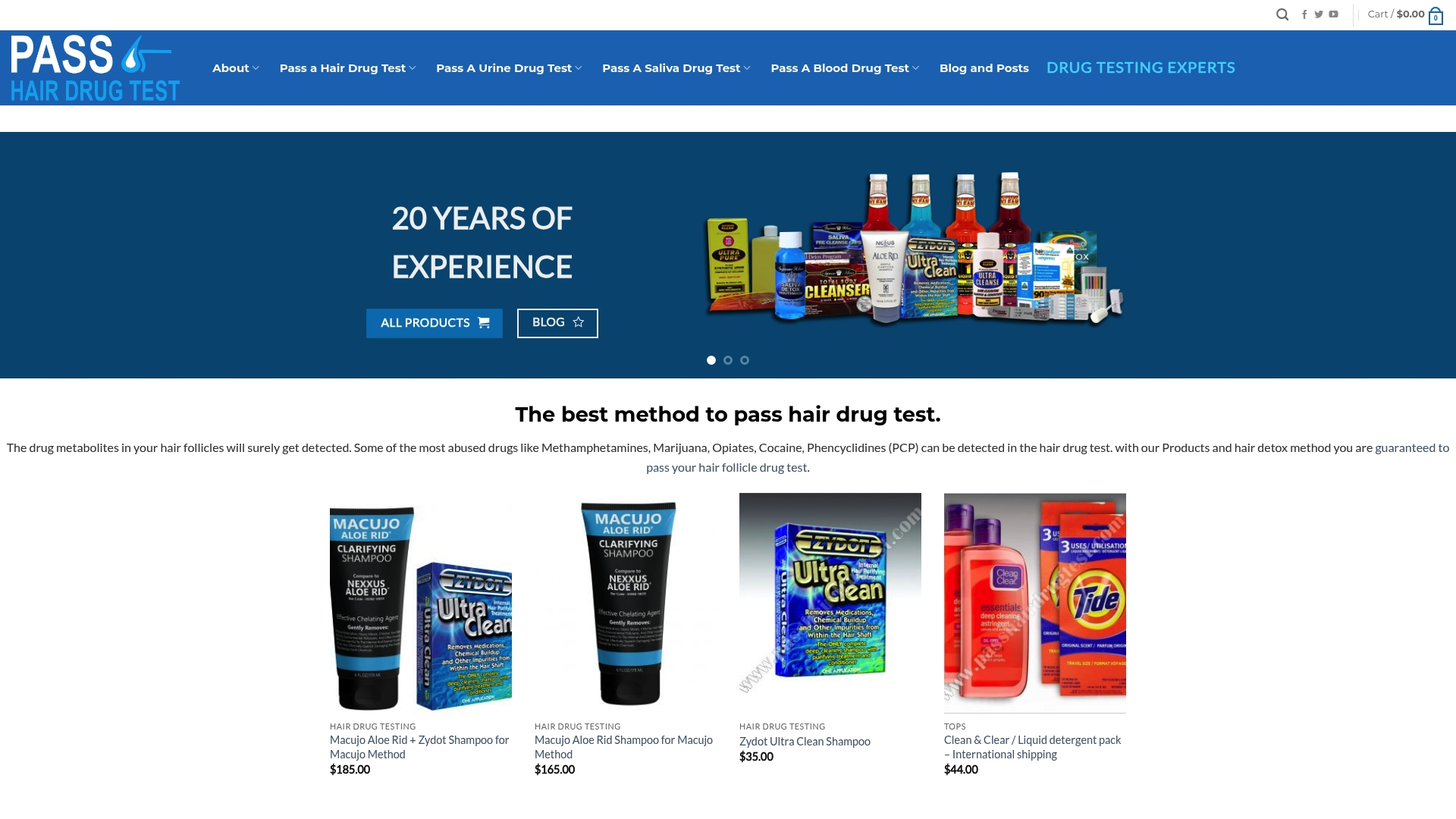
If you want the shampoo that anchors the method, start with the Macujo Aloe Rid Shampoo page, or see the Aloe Rid and Zydot bundle for the pairing used in the method.
FAQ
Should I wash my hair before a hair follicle test?
Yes, wash as you normally do. Collectors don’t require unwashed hair, and Healthline says washing and styling products do not affect test accuracy. The lab will also wash the sample before analysis.
How many washes does it take to change a hair test result?
No number is reliable. The 2023 toxicology review says the effect of washing depends on the drug, the hair, the product and the protocol, and cannot be predicted with confidence. That is why we recommend a structured, early routine rather than counting washes.
Can I wash EtG out of my hair?
EtG is the alcohol marker, and its behavior differs from drug metabolites. The Society of Hair Testing alcohol consensus says dyeing, bleaching and perming may lower it, while sprays, gels and oils were not reported to influence it. Labs treat cosmetic history as something to consider when interpreting the result.
How far back does a hair test look?
About 90 days in most cases, based on hair growing roughly half an inch a month and a 1.5-inch segment being analyzed, according to Labcorp. It is an approximation that varies from person to person.
Does cutting my hair short help?
Not reliably. Collectors cut as close to the scalp as possible, and when scalp hair is too short they may look to other body hair. Our body hair drug test page explains how that works.
Sources
- Hair Strand Drug Test: How It Works, Uses, and What to Expect (Healthline)
- Hair Follicle Drug Testing: Process and Benefits (Labcorp)
- Review on Toxicology Testing in Hair (Journal of Applied Laboratory Medicine)
- Guidelines for testing drugs under international control in hair, sweat and oral fluid (UNODC)
- Insights into the Decontamination of Cocaine-Positive Hair
- Advances in testing for sample manipulation in clinical and forensic toxicology
- 2021 SoHT Consensus on Drugs of Abuse Testing in Hair
- 2014 Consensus for the use of alcohol markers in hair (Society of Hair Testing)
Recommended
- How to pass hair drug test
- Hair Detox Mistakes Before a Drug Test: 9 to Avoid
- How Can I Pass a Hair Drug Test?
- How to Prepare for a Hair Test the Right Way
