No products in the cart.
Uncategorized
Thick Hair Drug Test: What Labs Collect and How to Prepare
06
Nov
Nov
Thick hair does not make a hair drug test easier or harder to read. The lab needs a fixed amount of hair, and with a full head of it the collector simply takes that amount from a small spot near the scalp. What matters is the length of the strand closest to your scalp, because that segment covers roughly the last 90 days. If you have thick hair and a test coming, the useful questions are what gets cut, what the lab looks for, and how to prepare thick hair so it is treated evenly from root to tip.
Table of Contents
TL;DR
- Collectors take about 100 mg of hair (90 to 120 strands), cut at the scalp. Thick hair just makes that easy to do.
- The first 1.5 inches from the scalp covers about 90 days of history, whatever the density of your hair.
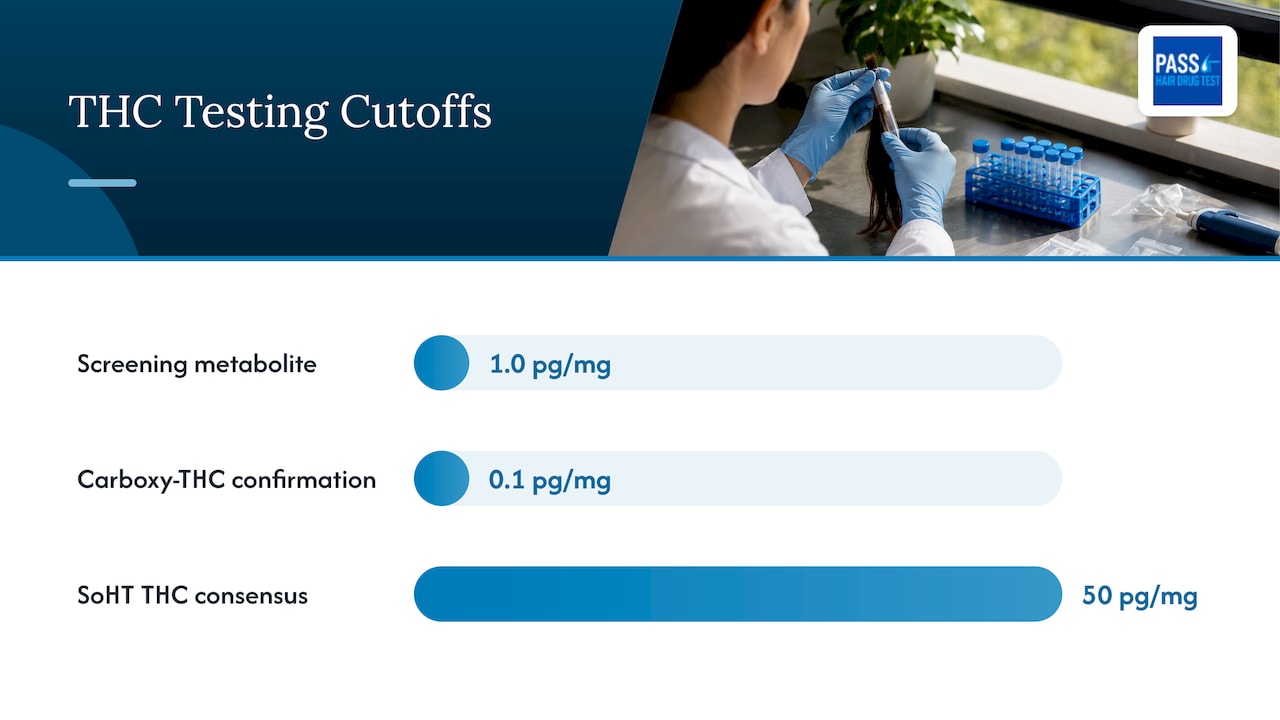
- For THC, labs screen at 1.0 pg/mg and confirm the carboxy-THC metabolite at 0.1 pg/mg.
- Thick, dense or coarse hair needs more product, more time and more thorough saturation to be cleansed evenly.
- Body hair is an option only when there is not enough head hair, and it reads differently.
Table of Contents
- How a lab collects a sample from thick hair
- What the 90-day window means for thick hair
- How THC shows up in a hair test
- What can differ with thick, coarse or dark hair
- Preparing thick hair before a test
- Body hair as a backup when head hair is short
- What happens if a result is disputed
- Our perspective
- Get the right kit for thick hair
- FAQ
- Sources
How a lab collects a sample from thick hair
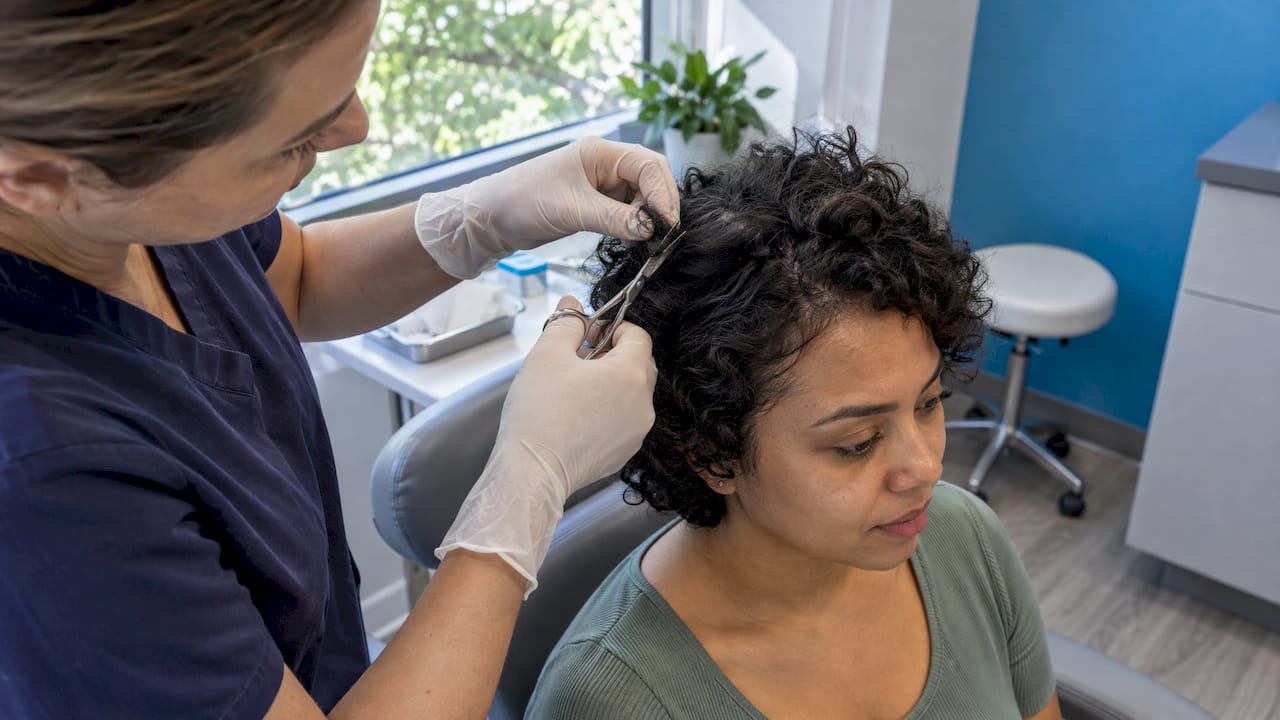
The standard collection is simple. According to Labcorp, the collector obtains a 100-milligram sample of hair (90 to 120 strands), cuts it at the scalp, seals it in foil and completes chain of custody paperwork before it ships to the lab.
That is a small amount. On a thick head of hair, 90 to 120 strands is a tiny tuft, and collectors usually take it from the crown area. Density gives the collector more choice about where to cut, and it means a small cut is much less visible afterward. It does not change the quantity the lab needs, and it does not dilute what is in each strand.
Two practical points follow:
- Thickness of each strand and the number of strands are different things. A dense head has many strands per square inch. A coarse head has wider strands. Either way, the lab weighs and processes the sample the same way.
- Thick hair is not a barrier to being tested. Because it is easy to cut a sample from, collectors have no reason to ask for a body-hair substitute.
For a deeper look at what labs actually measure on longer hair, see our guide to the long hair drug test.
What the 90-day window means for thick hair
The window comes from growth, not density. Quest Diagnostics reports that head hair from the crown grows about 1.3 cm (½ inch) per month, and that the standard length tested is the first 3.9 cm (1½ inches) from the root end, covering about 90 days. Labcorp gives the same figure: a 1.5-inch sample reflects up to 90 days before the test.
There is also a lag. Quest notes that drug-containing hair takes about 5 to 10 days to reach the scalp surface. A 2025 review in the Journal of Applied Laboratory Medicine adds that drugs enter the hair bulb in as little as 30 minutes, but will not be detectable above the scalp for at least a couple of days and sometimes up to 10 days.
What this means in practice:
- Use in the last week or so is usually not yet present in the segment that gets cut.
- The sample reflects the 90 days before that, which is why timing matters more than hair volume.
- Longer hair can in theory reflect more history, but labs generally test the 1.5 inches nearest the scalp. A 2019 review in PMC describes windows of up to a year for long strands, which is why length can matter in some settings.
Our page on the 90-day window and the 5 to 10 day lag walks through the same timing logic.
How THC shows up in a hair test
THC is measured differently from many other drugs. Labs look for the carboxy-THC metabolite, not just THC itself. The reason, per Waters Corporation, is that THC alone can come from passive smoke, so the Society of Hair Testing recommends confirming a positive by measuring carboxy-THC.
That metabolite is present at very low levels. The UNODC guidelines say it may sit in the low pg/mg range, which is why labs need extremely sensitive methods, with a lower limit of quantification below 0.2 pg/mg.
Here is how the numbers stack up for U.S. workplace-style testing:
| Item | Figure | Source |
|---|---|---|
| Screening cutoff, marijuana metabolite | 1.0 pg/mg | Quest, Omega |
| Confirmation cutoff, carboxy-THC | 0.1 pg/mg | Quest, Omega |
| Society of Hair Testing consensus cutoff for THC itself | 50 pg/mg | SoHT 2021 |
The SoHT consensus also says that every presumptive positive from a screen must be confirmed by mass spectrometry. So the number that decides your result is usually the confirmation, not the first screen.
Quest tests for amphetamines, opiates, cocaine, the marijuana metabolite and PCP, with an expanded panel that adds fentanyl and methadone. If you are not sure which panel your employer ordered, ask the employer or the collection site before the appointment.
What can differ with thick, coarse or dark hair
The SoHT consensus states that natural hair color and chemical or physical treatments can affect measured drug concentrations. That is one reason labs document treatments and consider them when they interpret a result.
For people with thick hair, three things are worth knowing:
- Density does not raise or lower your numbers. Concentration is measured per milligram of hair, not per head.
- Hair color and structure vary between people. The review literature notes that interpersonal variation in growth rate, drug incorporation, age and ethnicity sits outside a lab analyst’s control, as Davies et al. (2020) describe.
- Any treatment has to reach the whole sample. Thick hair resists even coverage. A product that only wets the surface of a dense head will not treat the hair near the scalp, which is exactly the part the lab cuts.
Preparing thick hair before a test
People researching hair cleansing often ask what actually cleans out hair follicles. The honest framing is that drugs are incorporated inside the hair shaft, so cleansing products aim at the shaft rather than the surface. The evidence on this is mixed in the lab literature, and it is worth knowing both sides.
- A 2022 study by Bertges et al. treated 54 THC-positive hair samples with commercial products. Mean THC reductions ranged from 52% with Zydot shampoo to 65% with a disinfectant product, and the authors reported that everyday hair-care products could bring concentrations down to non-detectable levels in some samples.
- A 2023 study by Mestria et al. found a homemade treatment cut THC by 60%, and treated hair showed no noticeable damage or discoloration. Oxidative hair treatments were the most effective at lowering concentrations.
- An older 2000 study by Rohrich et al. found that a single application of Ultra Clean shampoo lowered THC by a mean of 36%. That points to repeated, structured treatment rather than one wash.
The takeaway for thick hair: results depend on how thoroughly and how repeatedly the hair is treated, and thick hair makes thoroughness the main challenge. That is the reasoning behind multi-step methods rather than a single shampoo.
Practical tips for thick or dense hair
- Section your hair. Divide it into four to six parts so product reaches the roots, not just the top layer.
- Use enough product. Thick hair takes more than the amount that suits fine hair. Work the shampoo through each section and down to the scalp.
- Allow full contact time. Follow the timing in your product instructions, and do not rinse early because the hair feels coated.
- Rinse thoroughly. Dense hair holds product. Leftover residue can leave hair feeling heavy.
- Keep your routine consistent in the days before the test. A consistent routine is easier to follow than a last-minute rush.
- Mind the schedule. Repeat treatments as the instructions describe, and plan your timing around your appointment notice.
Body hair as a backup when head hair is short
Some readers with thick body hair ask whether it counts. It can be tested. A 2023 study by Tsanaclis et al. found significantly higher THC levels in leg and beard hair than in head hair, and lower levels in underarm hair. AlphaBiolabs explains that body hair cannot be split into a month-by-month profile because growth rates vary, and gives an overview of up to 12 months.
The practical point: if you have a full head of hair, the collector will take head hair. Body hair usually comes up only when the head is bald or very short.
What happens if a result is disputed
Hair results are not always clear-cut. Davies et al. note that there is little standardization in hair analysis, and that both false positives and false negatives are encountered. The SoHT says that analyzing the washings can help identify external contamination, and that the identification of certain metabolites is required to identify users. A 2001 study by Romano et al. found that a positive result alone should be confirmed, for example by urine analysis.
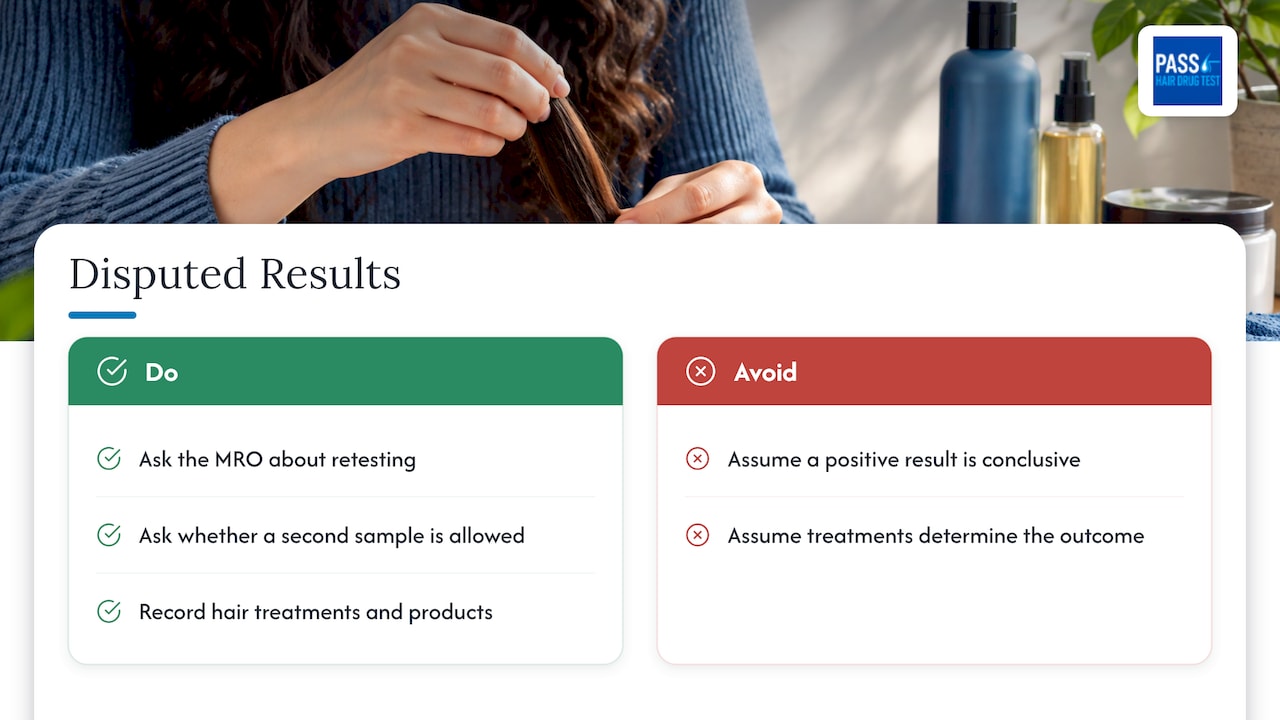
If you receive a positive result you believe is wrong, ask the employer’s Medical Review Officer about the retest process and whether a second sample is allowed. Keep a record of any hair treatments or products you used, because labs consider treatments in interpretation.
Quest states that under worst-case conditions most treatments had minimal impact on test results for most drugs. Labs run their own validated protocols, so a given outcome depends on the lab, the panel and your hair. Plan around the lab’s process rather than assume anything.
Our perspective
We have worked in the drug-testing and detox-product space for more than 20 years, and the most common mistake we hear from people with thick hair is under-treating it. They buy a good product, use a small amount, and never reach the roots.
Our approach is built around Macujo Aloe Rid Shampoo, Zydot Ultra Clean Shampoo and the multi-step Mike’s Macujo Method. We designed the method as a structured routine, not a single wash, because the research shows that repeated, thorough contact matters. Thick hair rewards the same discipline: sectioning, full saturation, and sticking to the steps.
We also offer unlimited phone support, so you can ask how much product your hair density needs and how to time the steps around your test date. Our products are priced to be accessible for both light and heavy users, and our instructions are written for real heads of hair, not ideal ones.
MIchael
We set out the method steps in more detail in our guide to the Macujo Aloe Rid shampoo and our overview of hair follicle drug testing.
Get the right kit for thick hair
If you have a hair test coming, the kit you choose should match your hair, your timeline and how much product a dense head needs. Our shampoos and the multi-step method come with detailed instructions and phone support.
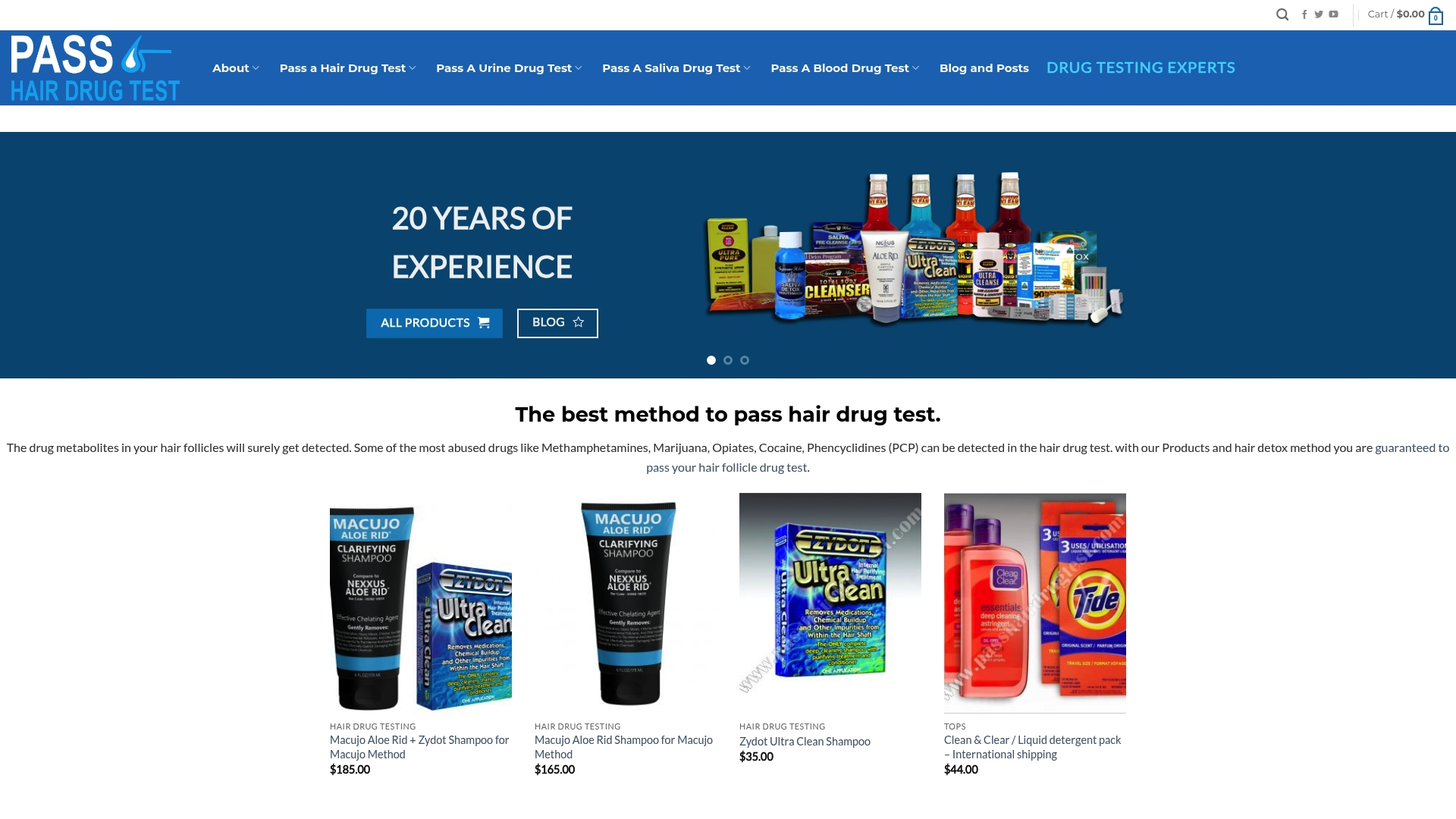
Browse the Macujo Aloe Rid and Zydot shampoo set for the Macujo Method, or see everything we carry on our products page.
FAQ
Does thick hair make a hair drug test harder to pass?
No. Labs measure drug concentration per milligram of hair, and they take about 100 mg whatever your density. Thick hair mainly affects how evenly a cleansing routine reaches the roots, so section it and use enough product.
How much hair do they take for a hair follicle test?
Labcorp describes a 100-milligram sample, which is 90 to 120 strands, cut at the scalp. On thick hair, that is a small tuft, usually from the crown, and it is easy to take without leaving a visible gap.
How long will a hair sample show THC?
The standard 1.5-inch sample from the scalp covers about 90 days, based on growth of roughly half an inch per month. Recent use can take 5 to 10 days to reach the scalp surface, so very recent use is often not in the sample yet.
Is body hair as accurate as head hair?
It can be tested, but it reads differently. A 2023 study found higher THC levels in leg and beard hair and lower levels in underarm hair than in head hair. Body hair cannot be split into a month-by-month profile, so it gives a broader overview.
Sources
- Labcorp: Hair follicle drug testing
- Quest Diagnostics: Hair testing FAQ
- Journal of Applied Laboratory Medicine: Review on toxicology testing in hair
- PMC: A review of bioanalytical techniques for evaluation of drugs in hair
- Waters: Analysis of carboxy-THC in hair
- UNODC: Guidelines for testing drugs in hair, sweat and oral fluid
- Omega: Hair panels and cutoffs
- Society of Hair Testing: 2021 consensus on drugs of abuse testing in hair
- Davies et al. (2020): Variability associated with interpreting drugs within hair
- Bertges et al. (2022): Manipulation of THC hair concentrations
- Mestria et al. (2023): Assessment of homemade hair treatments
- Rohrich et al. (2000): Effect of Ultra Clean shampoo on drug concentrations in hair
- Tsanaclis et al. (2023): Drug levels in head and body hair
- AlphaBiolabs: Can body hair be used for drug testing?
- Romano et al. (2001): Hair testing for drugs of abuse and external contamination
Recommended
- Long Hair Drug Test: What Labs Actually Measure
- How to Prepare for a Hair Test the Right Way
- Body Hair vs Head Hair: What Drug Test Labs Really Use
- How to Pass a DOT Hair Test: What the Law and Labs Say
