No products in the cart.
Uncategorized
Delta 9 Hair Test: Detection, Window and What to Do
07
Nov
Nov
Yes, delta-9 THC use can show up on a hair drug test. Labs don’t hunt for delta-9 itself. They look for a marijuana metabolite that your body makes and that gets locked into growing hair, and a standard sample covers roughly the last 90 days. This guide explains what is measured, how far back it goes, what changes the result and how to prepare if a hair test is on your calendar.
Table of Contents
TL;DR
- A standard hair test looks back about 90 days, based on the first 1½ inches of hair from the scalp.
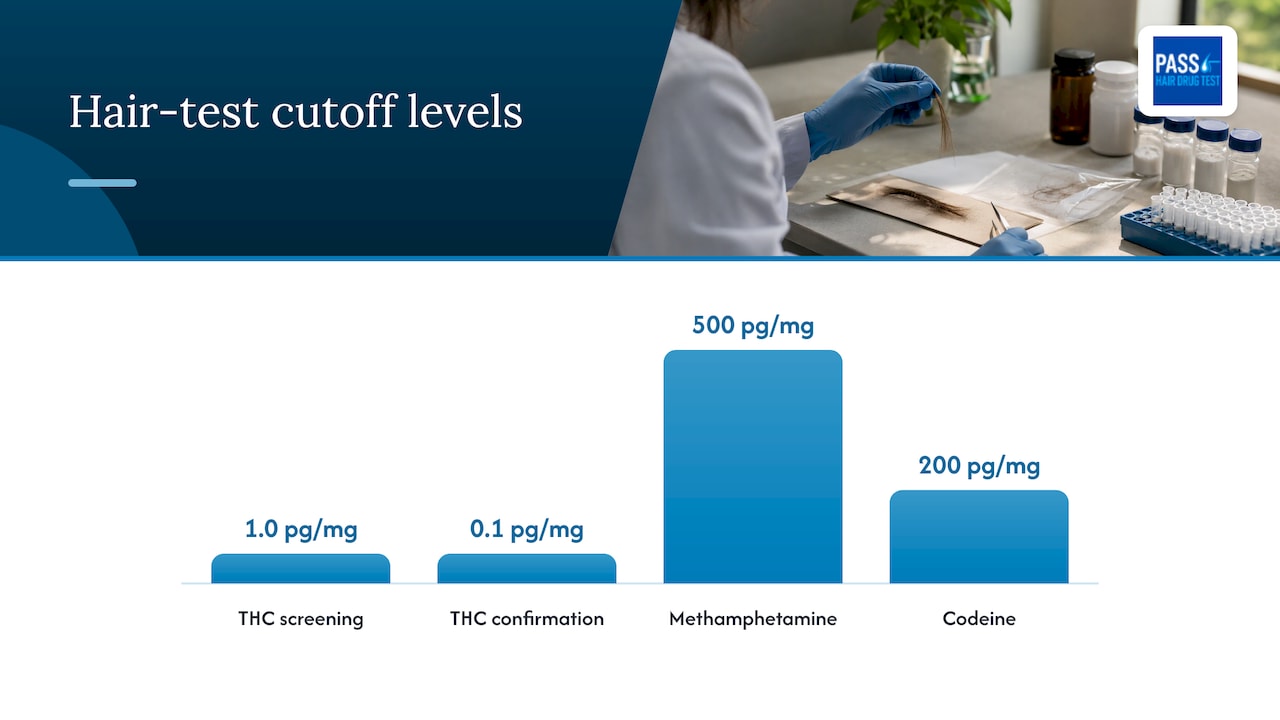
- Labs screen for a THC metabolite, not for delta-9 as it appears in a product. The screening cutoff at one major lab is 1.0 pg/mg, with a confirmation cutoff of 0.1 pg/mg.
- Hair takes about 5 to 10 days to grow out of the scalp, so the most recent week of use usually isn’t in the sample.
- Hair length, treatments such as dyeing or bleaching, and the lab’s method all affect the result.
- A hair test can cost from roughly $75 to $950 depending on state and provider, and preparation is far easier when you start early.
Table of Contents
- Does delta-9 THC show up on a hair test?
- How a hair test finds it
- How far back does it go?
- Frequency, dose and the “one gummy” question
- What can change the result
- Can you pass a hair test in 60 days?
- What a hair test costs
- A practical timeline if a test is coming
- Our perspective
- Where to start
- FAQ
- Sources
Does delta-9 THC show up on a hair test?
Delta-9 THC is the main psychoactive compound in cannabis, and it is what a hair lab is ultimately checking for evidence of. Quest Diagnostics lists the marijuana metabolite, THC carboxylic acid, among its hair-test panels, with a screening cutoff of 1.0 pg/mg and a confirmatory cutoff of 0.1 pg/mg. For comparison, the same lab lists 500 pg/mg for methamphetamine and 200 pg/mg for codeine. The numbers are very different because the compounds behave differently in hair.
The federal workplace framework points the same direction. The 2020 proposed HHS guidelines identify THCA (delta-9-tetrahydrocannabinol-9-carboxylic acid) as the marijuana analyte in hair. In plain terms, whether you used flower, a vape, an edible or a gummy, the test is built around the same marker.
This matters for the question people actually type. “Delta 9” in a product name, whether hemp-derived or from a dispensary, doesn’t change what the lab checks. If your body processed delta-9 THC, the metabolite pathway is the same.
How a hair test finds it
Hair is a record, not a snapshot. Quest explains that follicles beneath the scalp are surrounded by a dense network of capillaries, and drugs in the bloodstream can incorporate and bind to the growing hair. As the hair grows out, that record moves away from the scalp.
The lab process generally runs in two stages. NIDA notes that drug testing may use hair as a biological sample, and that screening uses immunoassays while confirmation uses mass spectrometry methods (gas or liquid chromatography). A screening result is a first pass. A positive is then confirmed with a more specific method at a much lower cutoff.
The federal notice adds a detail worth knowing. Cannabinoid immunoassays react with multiple compounds that may be incorporated into hair, which is why the screening cutoff is higher than the confirmation cutoff.
What is collected
Quest requests approximately 100 mg of hair cut from the first 1½ inches from the root. For hair longer than four inches, approximately 120 strands are needed. The collector typically cuts close to the scalp, usually at the crown. If you have little head hair, body hair can be used in some programs, and the detection window then differs, so ask the requester which sample type applies.
How far back does it go?
The standard answer is about 90 days. Quest states that the standard 1½ inches of head hair from the root covers approximately 90 days, based on head hair growing about 1.3 cm per month. It also describes hair testing as the only method that gives up to a 90-day history of repetitive drug use.
Two details change how you should read that number.
The one-week blind spot. It takes approximately 5 to 10 days for hair containing drugs to reach the surface of the scalp where it can be collected. Use in the last week or so typically isn’t part of the cut sample. That doesn’t make a recent user safe, because the weeks before it are still in the hair. It only means the window starts slightly behind today.
Shorter windows on some programs. The 2020 federal proposal allows agencies to test head hair between 0.5 and 1.0 inches, representing roughly 30 to 60 days, for pre-employment and random testing. The same document notes that growth at the vertex of the scalp averages about 1 cm per month. Most private employers follow the commercial 1½-inch standard, so don’t assume the shorter window applies to you.
An academic review of bioanalytical techniques adds that hair analysis can have a wider window that runs from a week to many months depending on the length of the strand. Longer hair simply holds a longer record, but labs generally cut only the segment closest to the scalp.
| Sample | Typical look-back | Notes |
|---|---|---|
| Standard hair test (1½ inches) | About 90 days | Misses roughly the most recent 5 to 10 days |
| Short federal-style cut (0.5 to 1.0 inch) | About 30 to 60 days | Proposed for federal pre-employment and random testing |
| Urine | Days to a few weeks, depending on use | Different sample, different rules |
Frequency, dose and the “one gummy” question
People searching this keyword often used a delta-9 gummy once or twice and want to know whether that will show. The honest answer is that science is unsettled at the low end, and you should not plan around a hope.
A 2015 German study by Moosmann and colleagues found that neither THC nor THCA-A was incorporated into human hair in relevant amounts after systemic uptake, and concluded that oral uptake of THC or cannabis products doesn’t necessarily lead to positive THC hair findings. It also found cannabinoids can reach hair through transfer from sweat, sebum or smoke.
That research is one reason labs take care with interpretation. The Society of Hair Testing’s 2022 consensus says immunoassays are not recommended for single or seldom intake or exposure cases. But it is also the reason a result is never fully in your control: a regular user is much more likely to carry detectable levels, a light user may or may not, and you can’t know which side you fall on before the lab reports. If a test is scheduled and a job depends on it, treat the risk as real.
A recent U.S. study gives a sense of how labs now approach hemp-era cannabinoids. A 2025 analysis by Racines and colleagues examined de-identified hair specimens trimmed to 1.5 inches and looked for delta-9-THC, delta-8-THC, delta-10-THC and CBD. If you used a delta-8 product instead, see our page on the delta-8 hair test risk.
What can change the result
The outcome depends on more than how much you used.
- Hair color and pigment. The 2019 review notes that pigmented hair binds more drugs than non-pigmented hair. The federal notice adds that SAMHSA is still evaluating possible hair-color impact on THCA results.
- Cosmetic treatments. The Society of Hair Testing says concentrations can be affected by bleaching, dyeing, perming, straightening and UV exposure, as well as by external contamination. A 2023 review reports that after coloring, most drugs dropped, while cannabinoids showed only slightly reduced levels after permanent dyeing, and the strongest bleaching caused complete degradation. That is a reason not to treat dye as a plan: it can damage hair and a lab may note it.
- Hair length and the cut location. Cut closer to the scalp, and the segment reflects the most recent growth.
- Time. New hair grows at around 1.3 cm a month, so the single most dependable change is more clean weeks of growth between your last use and the collection date.
For a deeper look at length and what labs actually measure, read our explainer on the long hair drug test, and for the metabolite itself, THC in hair.
Can you pass a hair test in 60 days?
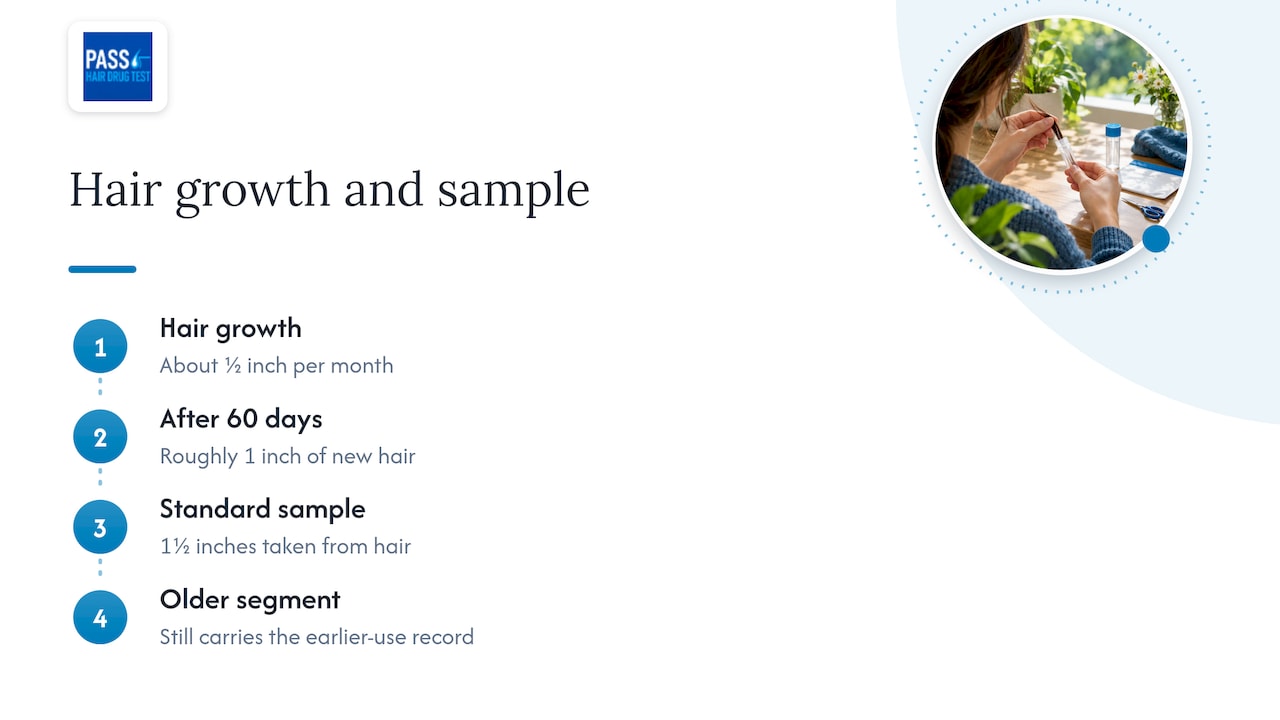
This is the question behind most of these searches, and it needs a careful answer. Hair grows about half an inch a month. After 60 days, roughly an inch of new hair has grown, and the standard sample takes 1½ inches. So a 60-day gap alone leaves the older half of the sample still carrying the record of your earlier use if the lab cuts the full standard length. Stopping early is the foundation of any plan, but 60 days of abstinence by itself doesn’t remove the older segment from a 90-day sample.
That is why people who face a hair test look at hair-cleansing routines in addition to stopping. The shampoos and multi-step methods in this category are designed to cleanse the hair shaft before collection. Results from any cleansing approach depend on your hair, your use history and how closely you follow the steps, so start as early as you can rather than the night before.
What a hair test costs
If you are paying for a test yourself, or just curious what the employer is spending, prices vary widely. BlueHive’s 2026 state-by-state guide reports hair follicle screens averaging from $110 in Utah and Vermont to $244 in Arkansas, with typical ranges from $75 to $950 depending on state and provider. Court-ordered and confirmation-heavy panels sit at the higher end. In most pre-employment cases the employer pays and you never see the price.
A practical timeline if a test is coming
- Stop use now. Every additional day of use adds to the record that the next 1½ inches of hair will carry.
- Find out the sample rules. Ask the requester whether it is a standard 90-day head hair test, how long the notice period is and whether body hair is accepted.
- Leave your hair natural. Avoid new dye, bleach or heavy treatments that could draw attention or damage the sample you need to cleanse.
- Plan the cleansing routine early. Choose a method with clear instructions and support, and begin well before the collection date.
- Keep the schedule consistent. A cleansing routine works best when you follow the full set of steps on the days you planned.
- Know your fallback. If a lab asks for body hair, a retest or a different sample type, you want your options mapped out, not improvised.
Our perspective
We have worked in the drug-testing and detox-product space for more than 20 years, and the pattern we see most is the same. People find out about a hair test late, read that hair holds 90 days of history, and conclude there is nothing to do. That isn’t how we see it.
Delta-9 reaches your hair through the bloodstream, and what the lab reads sits in the hair shaft you can actually reach. That is the idea behind Mike’s Macujo Method, a multi-step routine we offer, along with Macujo Aloe Rid Shampoo and Zydot Ultra Clean Shampoo for people who want a simpler product. We designed our materials with detailed instructions, and we offer unlimited phone support because the steps matter and people have questions in the middle of them.
Our advice is to start early, follow the routine as written and not to wait for a test date to get close. We stand behind our approach and the guarantee that comes with it.
MIchael
Where to start
If you have a hair test ahead, see how our hair products and the Macujo Method are laid out on the how to pass a hair drug test page. It explains the steps, the shampoos and what support comes with them. You can also browse the full hair drug testing products range.
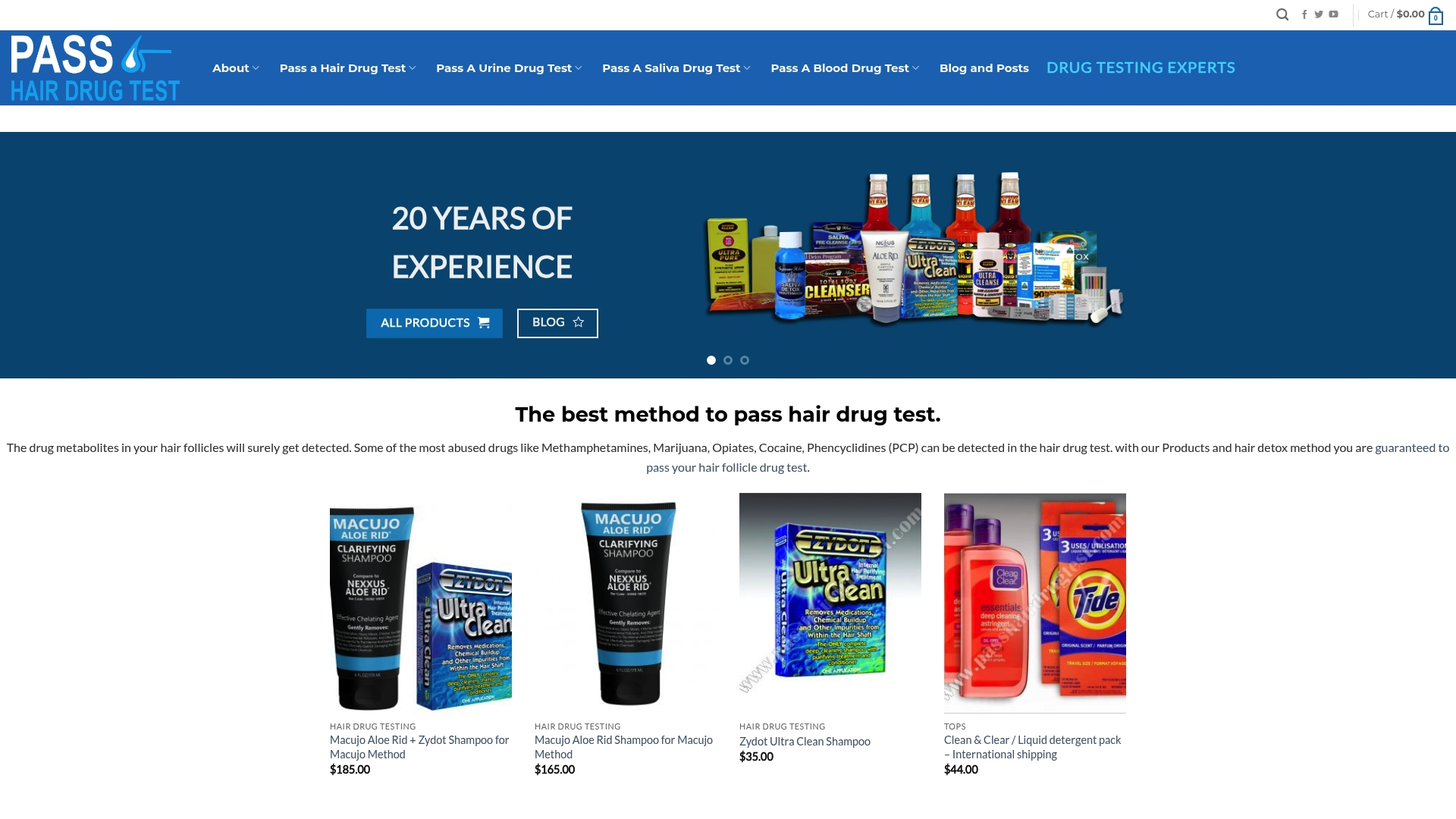
The Mike’s Macujo Method is a multi-step routine, so reading the instructions before your order arrives and planning your calendar around them helps you get the most out of it. For background, our hair follicle drug test information page covers the process end to end, and the science behind the hair drug test goes deeper into how hair holds drug metabolites.
FAQ
Does delta-9 gummy use show up on a hair follicle test?
It can. The test targets the THC metabolite carried by the bloodstream into growing hair, and that doesn’t depend on whether you smoked or ate the product. Heavier and more frequent use makes detection more likely, while a one-time dose is less predictable, so don’t count on it going unnoticed.
How long does delta-9 stay in hair?
A standard test reads about 90 days of growth from the first 1½ inches of hair at the scalp. The most recent 5 to 10 days usually aren’t included yet because hair needs that long to surface. Shorter cuts used in some federal programs cover closer to 30 to 60 days.
Will delta-8 show up on a hair test?
The standard marijuana panel is built around the THC metabolite, and labs and researchers are paying more attention to delta-8 and related cannabinoids. Because products vary and can contain delta-9, you should plan as if any THC product could matter. Our page on the delta-8 hair test goes into more detail.
How much does a hair follicle drug test cost?
BlueHive’s 2026 data puts typical prices between $75 and $950 depending on state and provider, with state averages from $110 to $244. Employers usually cover the cost of pre-employment testing.
Can I pass a hair follicle test in 60 days?
Sixty days of no use means about an inch of clean growth, but a standard sample takes 1½ inches, so the older segment is still tested. Combining early abstinence with a cleansing routine started well ahead of the collection date is how most people in this situation prepare.
Sources
- Quest Diagnostics, Hair testing FAQ
- Federal Register, Mandatory Guidelines for Federal Workplace Drug Testing Programs (2020)
- HHS/SAMHSA hair testing guidelines notice (2020)
- NIDA, Drug Testing
- Moosmann et al. (2015), Finding cannabinoids in hair does not prove cannabis consumption
- Society of Hair Testing, General Consensus on Hair Testing (2022)
- Racines et al. (2025), detection of delta-9-THC and related cannabinoids in hair
- Shah et al. (2019), review of bioanalytical techniques
- Wissenbach et al. (2023), Advances in testing for sample manipulation
- BlueHive, Hair Follicle Drug Screen Cost by State (2026)
Recommended
- 90 Day Delta 8 Hair Test Risk, Labs Found It in 9.0% of Samples
- 90 Day Window Explained: Opioid Hair Detection Time and the 5–10 Day Lag
- 90 Day Fentanyl Hair Detection: Why 0.1–5 pg/mg Sensitivity Matters
- Hair Drug Test vs Urine: Which Detects Use When
