No products in the cart.
Uncategorized
GC-MS Hair Test: How the Lab Confirms a THC Result
27
Nov
A GC-MS hair test is the confirmation step. If a first screening of your hair sample comes back presumptively positive, the lab runs gas chromatography-mass spectrometry to identify the exact molecule and measure how much of it is there. That second test is far more specific than the screen, so a hair follicle test is decided by what is physically in and on your hair shaft. If you use THC and have a hair test coming, the practical question is what your hair looks like when it reaches the lab. That is why we built our hair-cleansing products around the multi-step Mike’s Macujo Method, and why this guide explains the lab process first.
Table of Contents
TL;DR
- GC-MS (gas chromatography-mass spectrometry) is the confirmation test run after a screening test flags your hair as presumptively positive.
- Labs wash the sample, dissolve the hair, extract the THC metabolite and measure it at trace levels, in picograms per milligram of hair.
- A standard head-hair sample covers roughly the last 90 days, and use inside the first week or so generally has not reached the hair above the scalp yet.
- The lab’s own wash is designed to remove external residue, so what your hair carries into the lab matters.
- Our Macujo Method is a multi-step hair cleansing routine, backed by our two decades in the detox-product business and unlimited phone support.
Table of Contents
- What a GC-MS hair test actually is
- Screening versus confirmation
- How the lab prepares your hair, step by step
- What the numbers mean: picograms per milligram
- How far back a hair test looks
- Not every THC user tests positive the same way
- What affects the result before the instrument
- Preparing your hair for a follicle test with the Macujo Method
- Where our Perspective comes in
- Ready to start your routine
- FAQ
- Sources
What a GC-MS hair test actually is
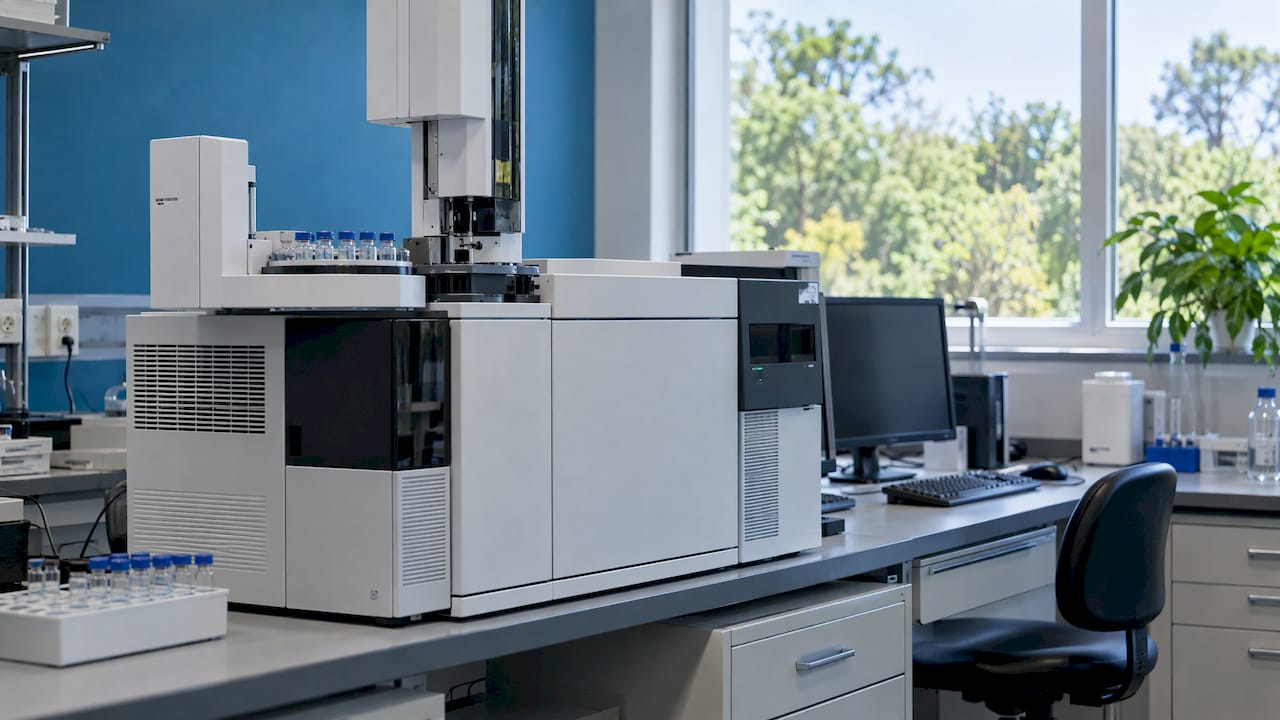
Two instruments are chained together. Gas chromatography separates the chemicals in a prepared extract as they travel through a long, thin column, each at its own pace. The mass spectrometer then breaks each one into fragments and reads the fragment pattern like a fingerprint. According to UNODC laboratory guidelines, GC-MS is the most frequently used confirmation technique in hair analysis, thanks to its resolving power, the high specificity of its mass spectra and the use of deuterated internal standards (lab-made look-alike molecules that let the lab correct for losses during preparation).
The result is not a yes or no from a color change. It is a number tied to a named compound. That is the difference from a screening test, which is usually an immunoassay: a fast, cheaper test that reacts to a family of molecules and can be fooled by look-alikes. A screen only says “possibly.” The GC-MS step says “this specific substance, this concentration.”
Newer labs also use LC-MS/MS (liquid chromatography with tandem mass spectrometry). A 2025 study in Drug Testing and Analysis describes a common two-tier workflow: LC-MS/MS screens quickly with little sample preparation, and GC-MS or GC-MS/MS confirms the positives. Either way, the confirmation is the result that counts.
Screening versus confirmation
Here is how the two stages compare for a hair sample.
| Stage | Typical method | What it answers | Weak spot |
|---|---|---|---|
| Screening | Immunoassay | Is there something in the cannabinoid family? | Can react to related molecules |
| Confirmation | GC-MS or GC-MS/MS | Which compound, and how much? | Slower, more prep work |
The 2021 consensus of the Society of Hair Testing states that every presumptively positive screening result must be confirmed by mass spectrometry using internationally accepted identification criteria. Federal workplace rules follow the same logic. HHS’s 2020 proposed guidelines require confirmatory hair tests to use mass spectrometric identification such as GC/MS or LC/MS/MS, and require a validated decontamination procedure for each specimen before testing.
If you are applying for a private-sector job, your employer’s lab will usually follow a similar screen-then-confirm pattern. Ask the employer or the collection site which lab handles the sample if you want details.
How the lab prepares your hair, step by step
The UNODC guidelines lay out a typical cannabis workflow. Knowing it shows you where the sample can change before the instrument ever sees it.
- Collection. A collector cuts hair close to the scalp, usually from the back of the head. HHS’s proposed rule says scalp hair grows about 0.4 mm per day, roughly 1 cm a month, and that the lab uses the first inch from the root end when it can identify it.
- Decontamination. About 100 mg of hair is washed, for example with two 5 mL dichloromethane washes or with a detergent, water and acetone sequence. The goal is to strip off hair products, sweat, sebum and dust without pulling out drug that is inside the hair.
- Homogenization. The hair is cut into 1 to 3 mm pieces or ground to a powder, so the chemicals can be extracted evenly.
- Digestion. Roughly 30 to 50 mg is dissolved in 2 mL of 1 M potassium or sodium hydroxide at 95°C for 30 minutes. For the THC metabolite, an overnight digestion at 45°C is also described.
- Extraction. A liquid-liquid extraction pulls the cannabinoids out of the digest.
- Derivatization. A chemical agent (for THC-COOH, BSTFA/TCMS at 70°C for 30 minutes) makes the molecule suitable for gas chromatography.
- Analysis. The extract is injected into the GC-MS in selected ion monitoring mode with a trideuterated THC internal standard.
Note what step 2 says. The lab’s wash is designed to remove what sits on the outside. The same UNODC document explains that no washing procedure can completely remove massive external contamination. What your hair carries when it arrives is therefore part of the story, and it is the part you control before test day.
What the numbers mean: picograms per milligram
THC itself is the molecule that enters the bloodstream, but labs looking for evidence of actual use focus on THC-COOH, a metabolite (a breakdown product made by the body). It appears in hair in extremely small amounts, so the cutoffs are tiny.
- HHS’s 2020 proposed federal rule sets the marijuana confirmatory cutoff at 0.05 pg/mg for THCA (the metabolite), with a 1 pg/mg initial test cutoff.
- The UNODC guidelines cite Society of Hair Testing recommendations of 0.2 pg/mg for THC-COOH for chronic use, and note that methods must reach a limit of quantification below 0.2 pg/mg, for example GC-MS/MS in negative ion chemical ionization.
- A pg/mg is a trillionth of a gram per thousandth of a gram of hair. You cannot see it, feel it or smell it.
Cutoffs differ between programs, so the figure in your own test is the one your employer’s lab applies. The takeaway is that modern GC-MS/MS can quantify at levels that a plain rinse will not erase.
Why a lab can measure but not say how much you used
The SoHT consensus is clear that the concentration found in hair cannot establish the amount consumed. A 2025 review in the Journal of Applied Laboratory Medicine adds that there is no strong correlation between ingested dose and hair concentration. Many things affect what ends up in a strand: hair color and melanin content, growth rate, contamination and cosmetic treatments. In practice, a lab reports whether a substance is above or below the cutoff, and your result is read against that line.
How far back a hair test looks
Most U.S. laboratories analyze hair equivalent to about three months of growth. SAMHSA’s Clinical Drug Testing in Primary Care says the hair window runs from roughly 7 to 10 days after use to the time needed to grow the sampled length, and may be limited to 6 months of hair growth. So a test cannot see use from 12 months ago in a standard head-hair sample.
Two timing facts matter for planning:
- The lag. Drug-embedded hair takes several days to emerge above the scalp. The 2025 JALM review says drugs enter the hair bulb within minutes to hours, but may not be detectable in the shaft above the scalp for at least a couple of days and up to 10 days. A 2023 study of 1,390 adolescents gives the same 7 to 10 day figure.
- The length. HHS’s proposed rule would test 0.5 to 1.0 inch specimens, a window of roughly 30 to 60 days. Many commercial labs use 1.5 inches, about three months, which a 2016 clinical review also describes.
If you want the full picture on how hair differs from a urine test on timing, our page on hair drug test versus urine walks through it. If your hair is long, see what labs actually measure in our long hair drug test guide.
Not every THC user tests positive the same way
In a 2006 study of 53 head-hair specimens from 38 documented cannabis users, detection rates at GC-MS/MS limits of 1.0 pg/mg for THC and 0.1 pg/mg for THC-COOH were 85% for daily users and 52% for non-daily users. The method is sensitive, but the same intake does not leave the same trace in every head of hair. Light and heavy users both face the same question: what is in my hair when the lab washes it?
What affects the result before the instrument
The research is consistent that hair chemistry and hair care matter. The JALM review lists decontamination protocols, extraction methods, melanin, growth rate, contamination and cosmetic treatments as factors in accuracy. The SoHT consensus adds that the collector should document the type of hair treatment, and that labs can analyze the wash fluid to look for external contamination.
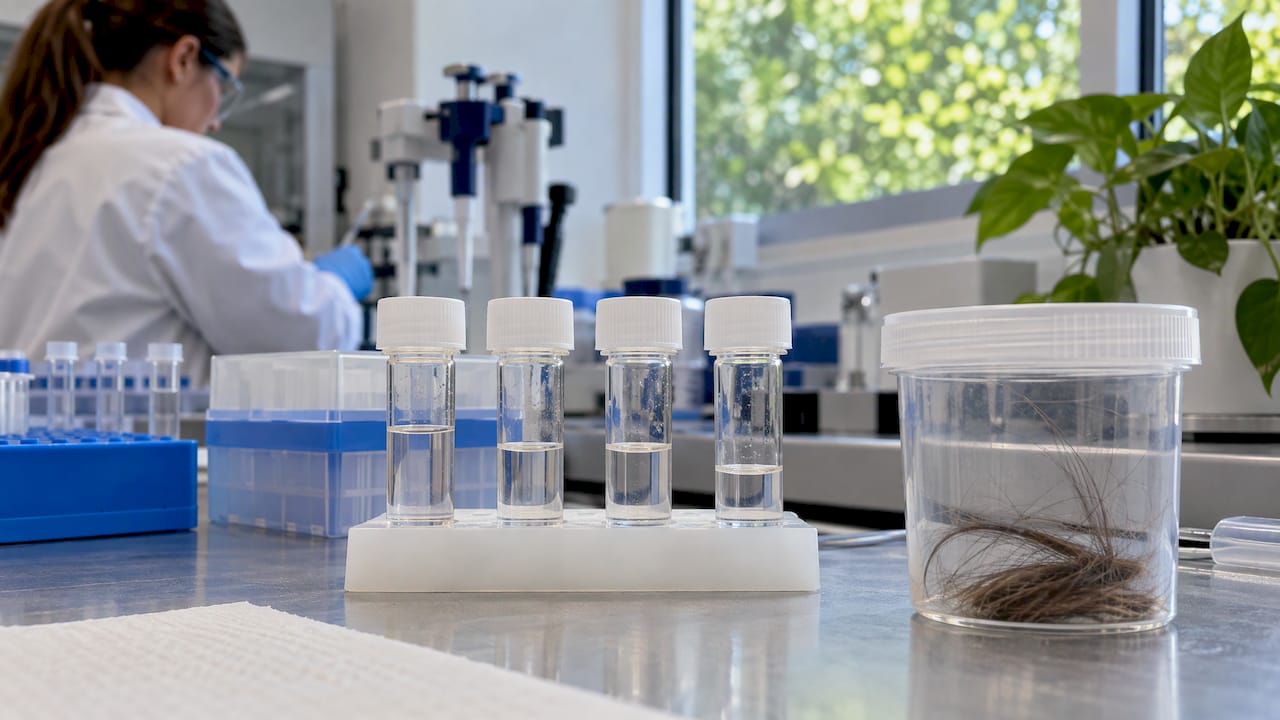
That last point is worth absorbing. Labs can look at what came off your hair in the wash. Surface residue is something the lab is actively checking for and trying to remove, which is why an effective, thorough cleansing routine in the days before collection is the approach we focus on, rather than a quick rinse the night before.
We do not recommend bleaching, dyeing or heat treatments as a strategy. Labs document them and consider them in interpretation, and they are not a substitute for a proper cleansing routine.
Preparing your hair for a follicle test with the Macujo Method
This is where our work starts. We have more than 20 years of experience in the drug-testing and detox-product industry, and our hair-cleansing business is built around Macujo Aloe Rid Shampoo, Zydot Ultra Clean Shampoo and the multi-step Mike’s Macujo Method. Our position is that a single shampoo is not a routine, and that is why the method is a sequence rather than a bottle.
What we offer for hair:
- Macujo Aloe Rid Shampoo, the core of the method. See the Macujo Aloe Rid Shampoo guide for how it fits into the routine.
- Zydot Ultra Clean Shampoo, which is also available as a bundle with Macujo Aloe Rid for the method: Macujo Aloe Rid plus Zydot.
- Detailed instructions and support materials, plus unlimited phone support, so you are not guessing at any step.
Our method is designed for both light and heavy users, and we back it with a pass guarantee. For a walkthrough of how the process works, start with how to pass a hair drug test. If you want to read about our shampoo first, our Aloe Rid Shampoo review covers it.
A sensible timeline
- Find out the test type and date. Confirm it is a hair test, not urine. If your employer’s notice says only “drug screen,” ask which specimen is collected.
- Start early. Because the lab cuts hair near the scalp, new growth is what is sampled. Begin your routine as soon as you know a test is coming.
- Follow the method as written. Multi-step means each step matters. Skipping one changes the routine.
- Keep hair plain on collection day. Avoid adding products, which the collector may note.
- Call us with questions. Unlimited phone support exists for exactly this.
Where our Perspective comes in
We talk to people every day who have a hair test coming and are reading lab papers at midnight. The science is not on their side or against them, it is just precise. A GC-MS/MS system can quantify a THC metabolite at fractions of a picogram per milligram. The lab decontaminates the hair before it does, and it does so because it knows hair carries surface residue.
So we think about hair preparation the same way a careful person thinks about any process with a hard deadline: start early and follow every step. That is why our approach, Mike’s Macujo Method, is multi-step and not a single product. We designed it so that heavy users and light users alike follow one clear routine, with instructions and phone support that do not run out.
After more than 20 years in this industry, our view is simple: know how the lab works, then prepare your hair with a routine built for the job.
MIchael
Wait, correction: the signature must be the last line, so the section is closed below.
Ready to start your routine
If you have a hair follicle test coming, the Macujo Aloe Rid Shampoo is the place to start, and you can see the rest of our hair range on our products page.
Our hair follicle drug testing page explains how everything fits together.
FAQ
What is a GC-MS confirmation test?
It is the second, more specific test a lab runs when a screening test flags a hair sample. Gas chromatography separates the chemicals, and mass spectrometry identifies each by its fragment pattern. The result names the compound and its concentration.
How accurate is a gas chromatography drug test on hair?
GC-MS identification is highly specific, and a 2017 Clinical Toxicology review says GC or LC-MS used with due caution gives accurate identification and high sensitivity. Interpretation still depends on method, contamination and hair treatments.
Can a hair follicle test go back 12 months?
Not in a standard head-hair sample. U.S. sources describe a window limited to about 6 months of growth at most, and most labs test the equivalent of roughly 3 months.
Will my drug test require a hair sample?
Only if the employer or program specifies it. Ask which specimen will be collected. Hair, urine, saliva and blood tests each work on different timelines, and our hair follicle drug test information page covers the hair side.
Sources
- Federal Register: Mandatory Guidelines for Federal Workplace Drug Testing Programs (2020 proposed rule)
- UNODC: Guidelines for testing drugs under international control in hair, sweat and oral fluid
- Zhang et al., An Improved GC-MS/MS Method for a Fast Multidrug Analysis (2025)
- Society of Hair Testing 2021 consensus on drugs of abuse testing in hair
- Review on Toxicology Testing in Hair, Journal of Applied Laboratory Medicine (2025)
- SAMHSA: Clinical Drug Testing in Primary Care
- Concordance Between Substance Use Self-Report and Hair Analysis (2023)
- Hadland and Levy, Objective Testing: Urine and Other Drug Tests (2016)
- Huestis et al., Cannabinoid Concentrations in Hair from Documented Cannabis Users
- Cuypers, The interpretation of hair analysis for drugs and drug metabolites (2017)
Recommended
- Concentrates and Hair Drug Tests: What Labs Can Detect
- THC in Hair: What U.S. Cannabis Users Need to Know
- External Contamination and Hair Drug Tests: THC Users’ Guide
- Trace THC in CBD Can Trigger a Positive Hair Drug Test for Workers
