No products in the cart.
Uncategorized
Daily Smoker Hair Test: What Labs Can Detect and What Your Options Are
09
Nov
Nov
If you smoke cannabis every day, a hair follicle test is the test most likely to catch it. Labs typically read about 90 days of history from a 1.5-inch hair sample, and research on hair analysis treats daily or near-daily use as the pattern hair detects best. This guide explains what the lab sees, why stopping for a few weeks may not be enough, and how people in your position approach cleansing.
Table of Contents
TL;DR
- A standard hair test covers roughly 90 days, so daily use in that period is the pattern it is built to find.
- Use does not show up for the first 5 to 10 days, so the last week before a test is not what the lab reads.
- Sixty days without cannabis still leaves about half an inch of older hair, from the days you were using, in a 1.5-inch sample.
- Peer-reviewed studies found that cosmetic and cleansing treatments lowered THC levels in hair, though results varied by sample.
- Our multi-step approach is designed for heavy users who need a plan, and you can start with the steps below.
Table of Contents
- How a hair test reads a daily smoker
- The detection timeline for heavy use
- How likely is a daily smoker to test positive?
- Can you pass a hair test after 60 days off?
- What the research says about cleansing and treatments
- Perspective
- A practical plan for a daily smoker
- Our hair cleansing options
- FAQ
- Sources
How a hair test reads a daily smoker
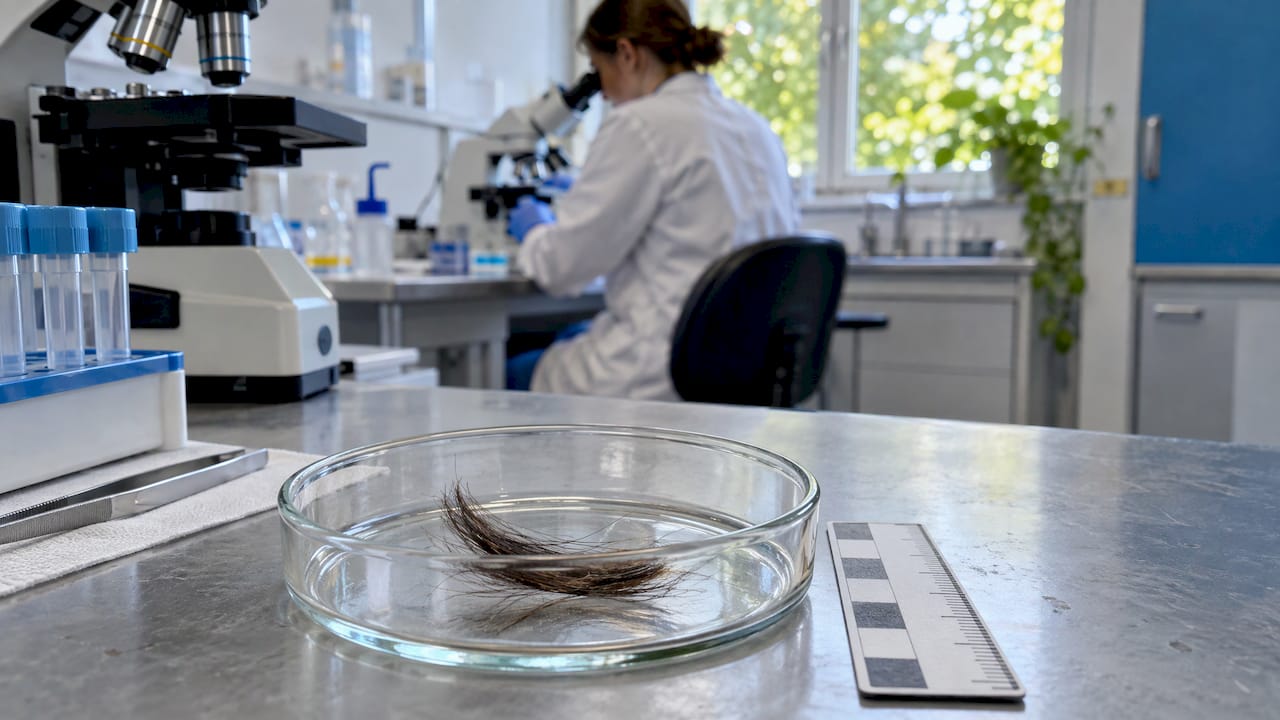
A hair test is a record, not a snapshot. Drugs circulating in your blood reach the follicle and are laid down in the hair as it grows. Labcorp states that head hair grows about half an inch per month, so a 1.5-inch sample covers up to 90 days. It also says a test with screen and confirmation needs 100 milligrams of hair, about 90 to 120 strands.
For a daily smoker, every one of those half-inch segments has a history of use in it. That is why hair is called a lifestyle test. Labcorp’s FAQ contrasts it with urine, where drugs are generally detectable for one to seven days or longer in chronic users, and with oral fluid, where the window is five to 48 hours.
Two details matter for you:
- The test is not about impairment. The National Safety Council says a positive shows consumption before collection, not impairment.
- Hair is better at heavy use than light use. The same NSC statement says hair may not be suitable to detect infrequent use or single exposures. Daily use is the opposite case.
If you are comparing yourself with a weekend user, our page on the occasional smoker hair test covers that side.
The detection timeline for heavy use
| Question | What sources say |
|---|---|
| How far back does a standard sample go? | About 90 days for 1.5 inches of scalp hair (Labcorp) |
| How long until use shows in hair? | About 7 to 10 days after exposure (Testing.com) |
| Shorter samples? | Proposed federal guidelines describe 0.5 to 1.0 inch, about 30 to 60 days (HHS/SAMHSA proposal) |
| Body hair instead of scalp hair? | Slower growth can mean a window of up to 12 months (Testing.com) |
The lag is useful to understand. The HHS/SAMHSA proposal says drugs and metabolites are not detected in hair for 5 to 7 days after ingestion, so hair is not a tool for catching very recent use. Your use in the last week or so is mostly not in the part of the hair being read. Our page on the 5 to 10 day lag explains the same mechanism for another drug class.
If your hair is long, labs usually take the segment closest to the scalp. Read more in what labs actually measure on long hair.
How likely is a daily smoker to test positive?
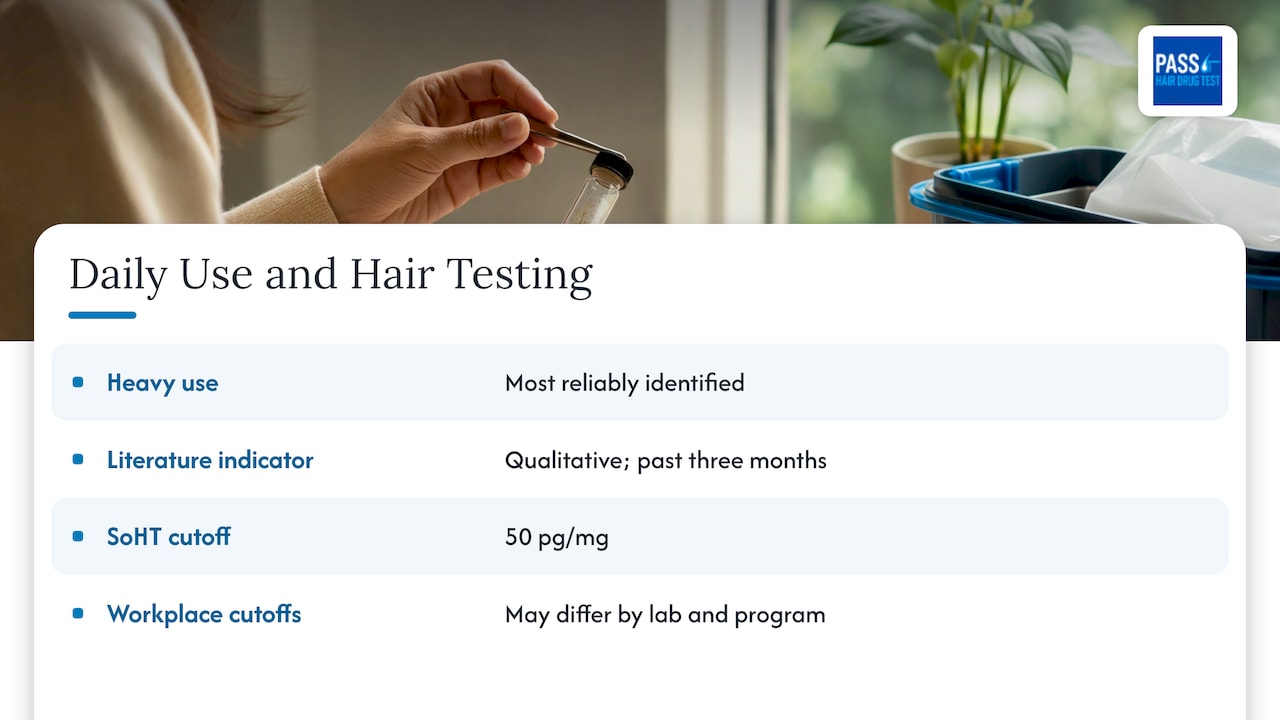
Very likely if the lab tests the full window. One study often cited, Taylor et al. is not the one we rely on here. The fact we can stand behind is simpler: hair analysis is described in the literature as a qualitative indicator of heavy cannabis use in the past three months, and heavy users are the group it identifies most reliably.
A positive depends on cutoffs, the concentration thresholds a lab uses. The Society of Hair Testing cutoff of 50 pg/mg is discussed in a 2015 Scientific Reports study. Workplace programs may use different numbers, and proposed federal guidelines describe screening and confirmation levels for the cannabis metabolite THC-COOH in the picogram-per-milligram range. Because cutoffs differ by lab and program, see our explainer on what the numbers actually mean.
Why a positive is not always simple
The same 2015 study found that THC reaches hair through the bloodstream at a very low rate, and that THC found in hair can come from external sources such as smoke or contaminated fingers. The HHS/SAMHSA proposal also lists hair color, hygiene and cosmetic treatments among factors that influence results. In practice, labs often look for the metabolite THC-COOH to separate use from surface exposure.
Hair color matters too. A 2019 review notes that pigmented hair binds more drugs than non-pigmented hair.
Can you pass a hair test after 60 days off?
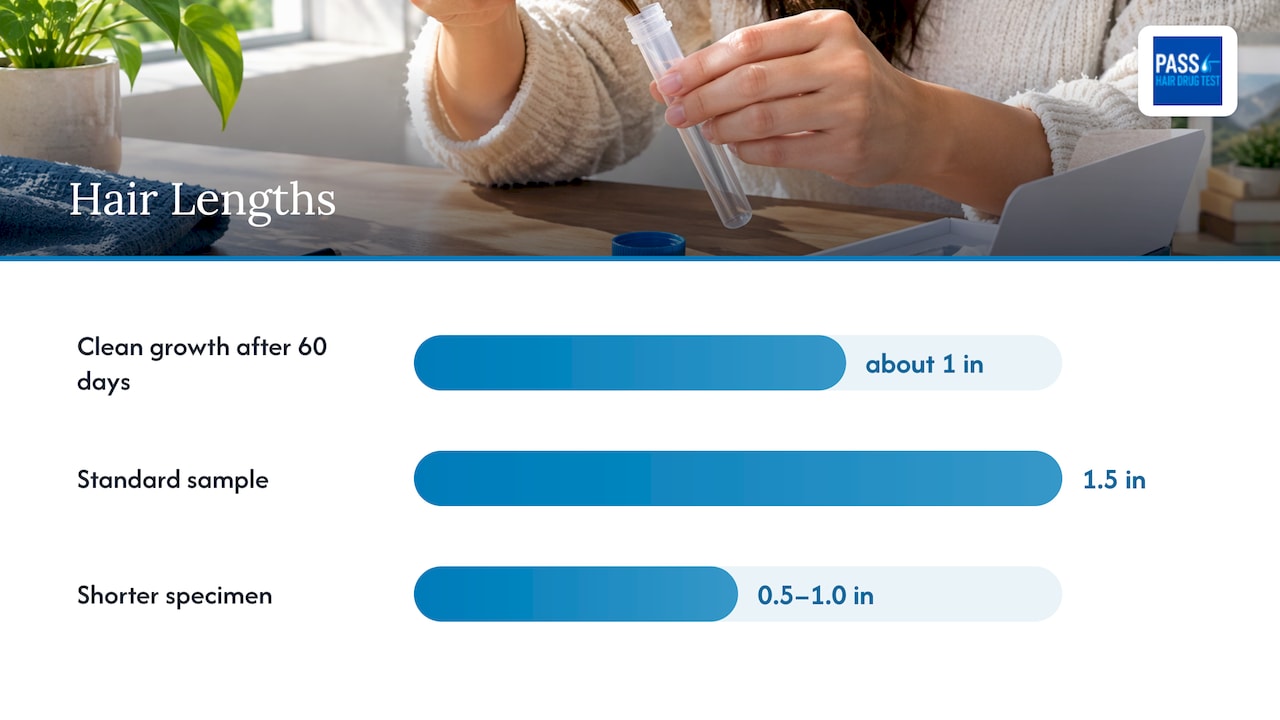
It depends on the sample length, and the arithmetic is the place to start. At about half an inch per month, 60 days of abstinence produces roughly one inch of new, clean hair at the scalp. A 1.5-inch sample then includes that clean inch plus about half an inch from the earlier period when you were smoking daily.
Two things can change that picture:
- A shorter sample. If a program uses a 0.5 to 1.0 inch specimen, as the proposed federal guidelines describe, the sample might sit mostly within the clean growth.
- The lag. Because use takes 7 to 10 days to appear in hair, the newest growth is not informative either way.
Sixty days is therefore a real step, though for a daily smoker it often is not the whole answer on its own. Employers set their own rules. Federal rules proposed in 2020 would allow hair only for pre-employment and random testing, and the lab collection sample length is set by the program that orders the test, so ask the testing site which applies to you. The more time you give the plan, the better your position.
What the research says about cleansing and treatments
Hair is not sealed. Shampoos, bleach and dyes interact with what is in it, and researchers have measured that.
- A 2022 study by Bertges et al. treated 54 THC-positive hair samples with commercially available products. Mean THC reductions ranged from 52% for a Zydot shampoo to 65% for a disinfectant, and some samples fell below detection.
- A 2023 study by Mestria et al. found bleaching-and-dyeing cycles reduced THC by about 60% on average, with no noticeable damage or discoloration in treated hair.
- An older 1997 study found cosmetic treatment lowered drug content, mostly by 40% to 60% for THC-COOH, with bleaching reducing it more than dyeing.
The pattern is consistent: treatment lowers measured THC, and it is hard for a lab to see it with the eye. Results are averages, so they vary from head to head. A single wash is different from a structured, repeated routine, which is why we point heavy users toward a multi-step plan, not one shampoo used once. Hair that is already heavily treated or damaged needs extra thought, since the HHS/SAMHSA proposal describes labs possibly screening for damaged hair.
Cosmetic processes and harsh treatments can irritate your scalp. If you have a skin condition or sensitive skin, talk to a dermatologist or your doctor before using bleach or strong cleansing products.
Perspective
Most daily smokers we talk to come in with the same worry: “I’ve smoked every day for years, so is it even worth trying?” Our answer is yes, but with a plan that matches the amount of use.
We have spent more than 20 years in the drug-testing and detox-product industry, and the lesson is that heavy users do best with a structured method and not a quick fix. That is the reason we built our hair offer around Macujo Aloe Rid Shampoo, Zydot Ultra Clean Shampoo and the multi-step Mike’s Macujo Method. The method is designed for both light and heavy users, with detailed instructions and phone support so you are not guessing at each step.
Our advice: start as early as you can, stop using cannabis now, follow the instructions exactly, and call us with questions before test day.
MIchael
A practical plan for a daily smoker
- Stop using cannabis today. Each week of clean growth is more clean hair at the scalp end.
- Find out the collection rules. Ask the employer or the collection site what sample length and hair type they take. Do not guess.
- Do not rely on one wash. The studies above looked at repeated or combined treatment effects, not a quick rinse.
- Choose a multi-step routine. Our guide on how to pass a hair follicle test for weed walks through the process.
- Avoid smoke around your hair. External exposure can also leave THC on hair, according to the 2015 study above.
- Plan for a back-up. Some employers also run urine or saliva tests, which have far shorter windows.
If concentrates are part of your routine, see what labs can detect with concentrates.
Our hair cleansing options
We offer Macujo Aloe Rid Shampoo, Zydot Ultra Clean Shampoo and the multi-step Mike’s Macujo Method for people preparing for a hair follicle test, with instructions and unlimited phone support. You can read how the shampoo approach works or go straight to the hair drug testing products.
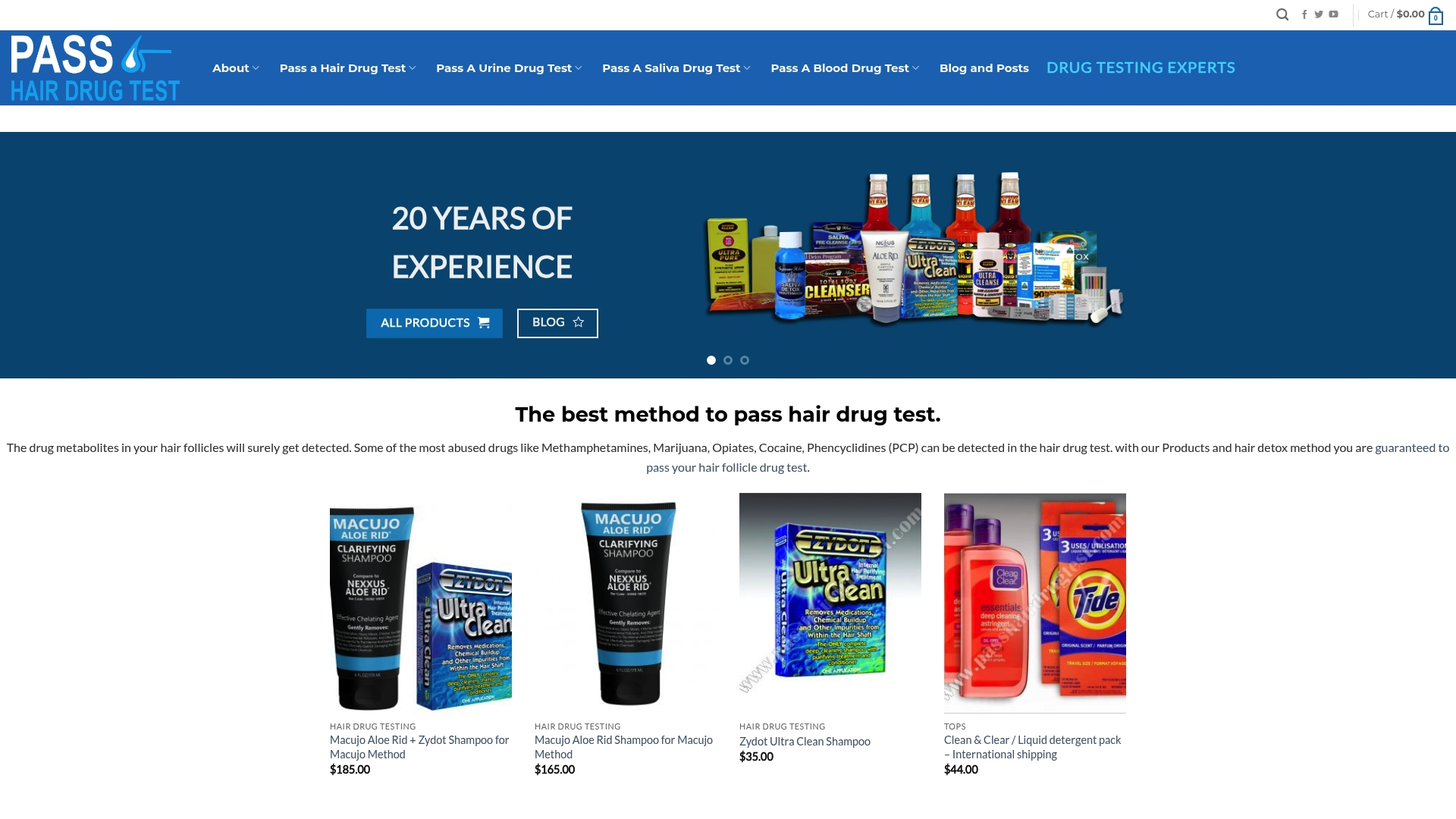
If your employer might also run a urine, saliva or blood test, we carry products for those too, listed on the same page.
FAQ
How long do I have to stop smoking for a hair follicle test?
A standard sample reflects about 90 days, so a full 90 days of clean growth would replace the whole window. Hair takes 7 to 10 days to show use, so the final week matters less. Shorter windows help if the lab uses a shorter sample.
Can I pass a hair follicle test in 60 days?
Sixty days gives about one inch of new growth. A 1.5-inch sample would still include about half an inch of older hair from the period of daily use. A shorter sample or additional cleansing steps change the odds.
Will I fail a hair test if I smoked once?
Unlikely. The National Safety Council says hair testing may not be suitable to detect single exposures or infrequent use. That does not apply to a daily routine.
What throws off a hair follicle test?
Hair color, hygiene, cosmetic treatments and environmental contamination all influence results, according to the HHS/SAMHSA proposal. Studies on bleaching, dyeing and shampoos found lower THC readings after treatment.
Sources
- A review of bioanalytical techniques for evaluation of drugs in hair (PMC, 2019)
- Labcorp: Hair Follicle Drug Testing
- Labcorp: Hair Drugs of Abuse Testing FAQ
- National Safety Council position statement
- Testing.com: Hair Follicle Drug Test
- HHS/SAMHSA proposed hair testing guidelines, 2020
- Federal Register: Mandatory Guidelines, 2020
- Finding cannabinoids in hair does not prove cannabis consumption (Scientific Reports, 2015)
- Bertges et al., Manipulation of THC hair concentrations (2022)
- Mestria et al., homemade hair treatment (2023)
- Jurado et al., cosmetic treatment of hair (1997)
Recommended
- Heavy Smoker Hair Test: What Labs Find and Your Options
- 90 Day Risk: Can an Occasional Smoker Fail a Hair Test?
- 15 Minute Sealed Exposure Can Affect a Secondhand Smoke Hair Test
- How to Pass a DOT Hair Test: What the Law and Labs Say
