No products in the cart.
Uncategorized
Chelating Shampoo and Hair Drug Tests: What the Evidence Shows
28
Oct
Oct
A chelating shampoo can lower the amount of THC measured in a hair sample, but a single wash rarely turns a positive result negative. Published lab work shows partial reductions that vary with the product, the hair and how long the shampoo stays on. Ordinary dandruff and salon shampoos are not a shortcut. Below we explain why, where detox products fit, and what to do if your test is coming up.
Table of Contents
TL;DR
- Hair tests look back about 90 days, so a shampoo cannot change how much you used. It can only affect what is left on and in the strand.
- In a 2000 study, one wash with a cleansing shampoo lowered drug levels (THC by about 36% on average) but every drug was still detectable.
- Ketoconazole, Selsun Blue and salon clarifying shampoos are built for scalp or buildup, not for drug metabolites. Treat them as unproven.
- Repeated, multi-step treatment is what moves numbers in studies, and harsh treatment damages hair. Our Macujo products are built around a multi-step routine for that reason.
- Start early, follow directions exactly, and never rely on one wash the night before.
Table of Contents
- Why hair tests are hard to shampoo away
- What “chelating” means on a shampoo label
- What the lab studies found
- Ketoconazole shampoo and Selsun Blue
- Salon clarifying treatments
- Comparing the options
- The risks of overdoing it
- Perspective: what we tell customers
- How to prepare
- Where our products fit
- What the lab sees after you wash
- FAQ
- Sources
Why hair tests are hard to shampoo away
Drugs and their metabolites get into hair in three ways: diffusion from the blood during growth, deposition from sebum and sweat, and external contamination. Only the last route sits on the surface. The first two put the substance inside the hair shaft, where an ordinary wash does not reach easily.
The same review notes that a 1-cm segment of scalp hair represents roughly one month of growth. A standard sample is longer than that. Drugs.com reports that a typical 1.5-inch scalp sample covers about 90 days and can show marijuana, cocaine and amphetamines. Quest Diagnostics says the same in its hair testing FAQ: its standard test analyzes the first 1½ inches from the root.
Two practical points follow.
- If you used regularly within the last three months, the sample can reflect it. Hair testing is designed for regular use patterns, not one-off use, according to Drugs.com.
- New hair grows in at about a centimeter a month, so time is the only thing that changes what the lab sees at the root. Anything you do to the strand is about reducing what is already there.
What “chelating” means on a shampoo label
Chelating agents bind metal ions, which is why they appear in products that remove mineral buildup from pool water or hard water. Marketing for detox shampoos borrows the term and implies the same grabbing power over drug molecules. Labs do not describe it that way. What actually matters is whether a product can get into the hair cortex, where metabolites sit, and whether the contact time is long enough.
That is why products differ so much. A true clarifying shampoo strips product residue from the surface. A detox shampoo is formulated to open the cuticle and work deeper, usually with a defined contact time. If you want the side-by-side, our page on detox versus clarifying shampoo covers the formulation differences.
What the lab studies found
Research is limited, and it does not support promises of a guaranteed result from one wash. It does show that treatment can matter.
A single wash: lower, not gone
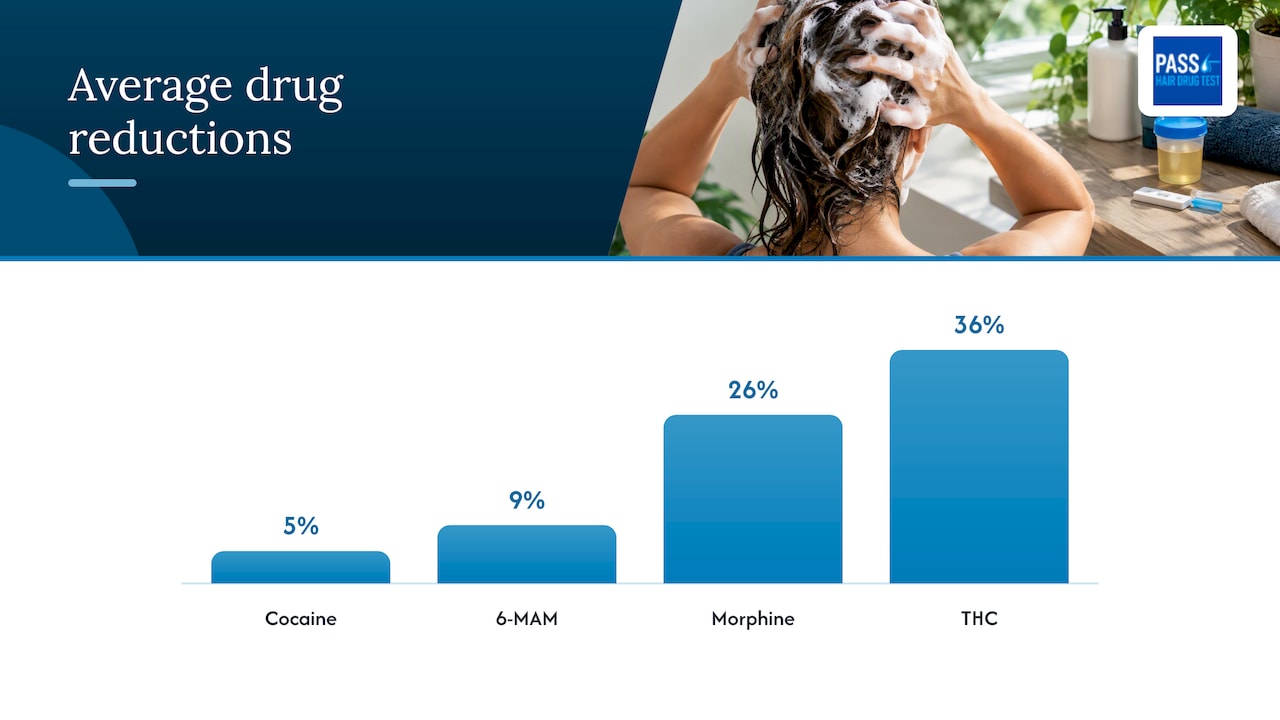
A 2000 study of the shampoo Ultra Clean found that a single application did not push drugs below the detection limit for THC, cocaine or opiates. Average decreases were about 5% for cocaine, 9% for 6-MAM, 26% for morphine and 36% for THC. The drugs were reduced but still detectable.
Longer contact and repeated treatment
A 2023 review of sample manipulation reports that evidence is mixed: one study found no significant effect after a single application, while prolonged incubation with one product produced a mean 73% decrease in EtG, an alcohol marker. A separate 2019 in-vitro study of four detox shampoos found that three behaved like plain deionized water for EtG, while one produced extra washout of up to 86% after 2.5 hours. For another alcohol marker, FAEE, some shampoos actually raised the reading because the marker was an ingredient.
Two lessons here. Products are not interchangeable, and time on the hair matters. These are alcohol-marker results, not THC, so read them as evidence of mechanism rather than a promise for your sample.
THC specifically
A 2022 German study tested THC-positive hair and found that commercial products and everyday items reduced THC by a mean of 52%, with some samples falling to non-detectable. The same work found that vodka, disinfectants and hair tonics did as well as or better than products sold as detox shampoos. That includes dandruff shampoo in the products tested. It also tells you something uncomfortable: results depend heavily on the individual sample, and nothing is predictable.
Bleach and dye
A 2023 Italian study found that aggressive homemade treatments with bleaching and dyeing produced drops of up to 90% for cocaine, and the hair often looked untreated. Our own page on how bleach and dye change hair drug tests goes through the reductions in more detail. The cost is damage, which we cover below.
Ketoconazole shampoo and Selsun Blue
Both are medicated dandruff shampoos. Ketoconazole is an antifungal, and Selsun Blue’s active ingredient is selenium sulfide. Neither was designed to pull drug metabolites out of the hair cortex, and we know of no controlled test showing they do. The 2022 German work above included an ordinary anti-dandruff shampoo among everyday products and found reductions that varied widely, which is a reason for caution rather than confidence.
There are also practical drawbacks. Medicated shampoos are meant for scalp contact of a few minutes, a few times a week. Using them repeatedly as a detox attempt can leave the scalp irritated and the hair dry. Drugs.com lists dryness or oiliness, increased hair loss and irritation among reported Selsun Blue side effects. Using something unproven that also costs you scalp comfort is a poor trade when a test matters.
Salon clarifying treatments
A salon clarifying wash removes silicone, wax, hard-water minerals and styling product from the outside of the hair. That is useful if buildup blocks other treatments, and it does nothing to the substances held inside the shaft. Quest reports that shampoos, sprays and gels applied to cut hair samples had little or no effect on positive or negative specimens in its worst-case testing, and that normal bleaching or dyeing typically did not change the reporting category. Labs also consider this as part of how they design their tests, so do not assume a single surface wash will matter.
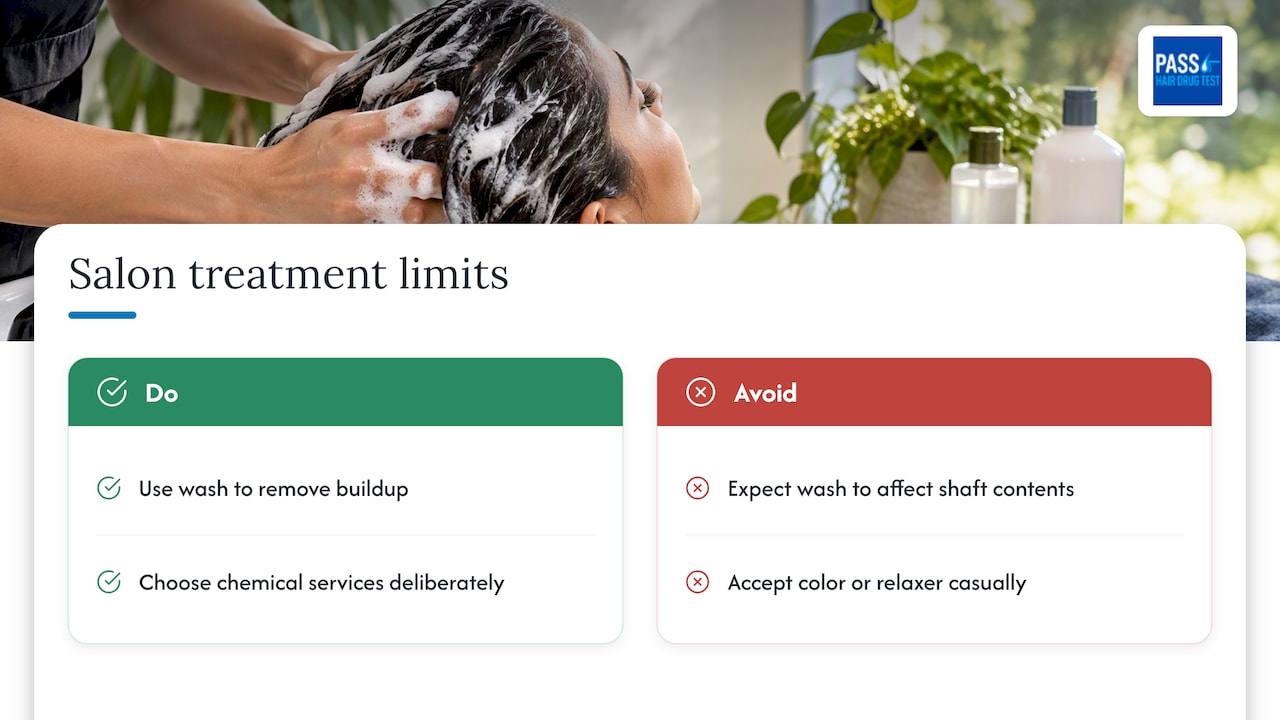
A salon visit is a reasonable first step only for removing buildup before a proper detox routine. Ask the stylist to skip any chemical service such as color or relaxer unless you have decided on it deliberately, because those change the hair itself.
Comparing the options
| Approach | What it targets | What studies suggest | Main downside |
|---|---|---|---|
| Dandruff shampoo (ketoconazole, selenium sulfide) | Scalp fungus and flaking | Variable, unpredictable in lab work | Dryness, irritation, no designed purpose here |
| Salon clarifying wash | Surface buildup | Little effect on the sample inside the strand | Does not reach the cortex |
| Single detox shampoo wash | Surface and some deeper layers | Lower levels but still detectable in the 2000 study | Not enough alone |
| Multi-step routine with longer contact | Deeper layers, repeated | Larger reductions where contact time was long | Needs time, follow directions exactly |
| Bleach and dye | Hair structure | Drops of up to 90% for cocaine in one study | Damage, and labs can notice |
The risks of overdoing it
Harsh or repeated treatment is not free. The 2023 review notes that hair treatments can damage the structure of the hair, make it porous and increase drug leaching. It also says extensive washing and cosmetic treatments can lower concentrations and that telling normal cosmetic use from deliberate manipulation is often impossible. Brittle hair, breakage and scalp irritation are the real-world price, and damaged hair can make a short sample harder to collect.
If you have a scalp condition, open sores, or a known sensitivity to ingredients, ask a dermatologist before running any repeated chemical routine. Do the patch test the product directions describe. Our page on detox shampoo damage lays out what to watch for, and our guide to conditioner after detox shampoo explains why we do not claim conditioner changes test results.
Perspective: what we tell customers
We have sold detox products for more than 20 years, and the question we hear most is whether one shampoo can fix a test. Our honest answer is that one wash is the weakest version of the idea. The research above points the same way: the more thorough the process and the more contact time, the larger the reduction, and ordinary shampoos are inconsistent.
That is why our hair line is built around Macujo Aloe Rid Shampoo, Zydot Ultra Clean Shampoo and the multi-step Mike’s Macujo Method rather than a lone bottle. We also tell people to start earlier than they think they need to, to follow the directions to the minute, and to keep their expectations realistic about light versus heavy use. Our site describes the method as designed for both light and heavy users, and you can reach us by phone if you want to talk through your timeline.
What we avoid is telling anyone that a dandruff shampoo or a salon rinse is a plan. If you are not sure what to do, the safest step is to find out early what kind of test you are facing.
— MIchael
How to prepare
- Confirm the test type. Hair follicle, urine, saliva and blood tests need different approaches. Our hair follicle test information page explains what employers usually order.
- Stop use now. New growth is the only thing that lowers the level at the root.
- Choose a defined routine. Pick a product that gives exact directions and contact times, and follow them. Our walkthrough on how to use detox shampoo covers the steps.
- Avoid stacking harsh treatments. Bleach, dye and repeated strong washes together can leave hair visibly damaged.
- Leave margin. Do not plan a first wash for the night before the collection.
- Think about the sample. Labs can use body hair if scalp hair is short, so a haircut is not a plan.
Where our products fit
If you want a routine rather than a single bottle, our hair line is where to start. It includes Macujo Aloe Rid Shampoo, Zydot Ultra Clean Shampoo and the step-by-step Mike’s Macujo Method, with instructions and phone support. You can compare them on our best hair detox shampoo page, or go straight to the hair drug testing products.
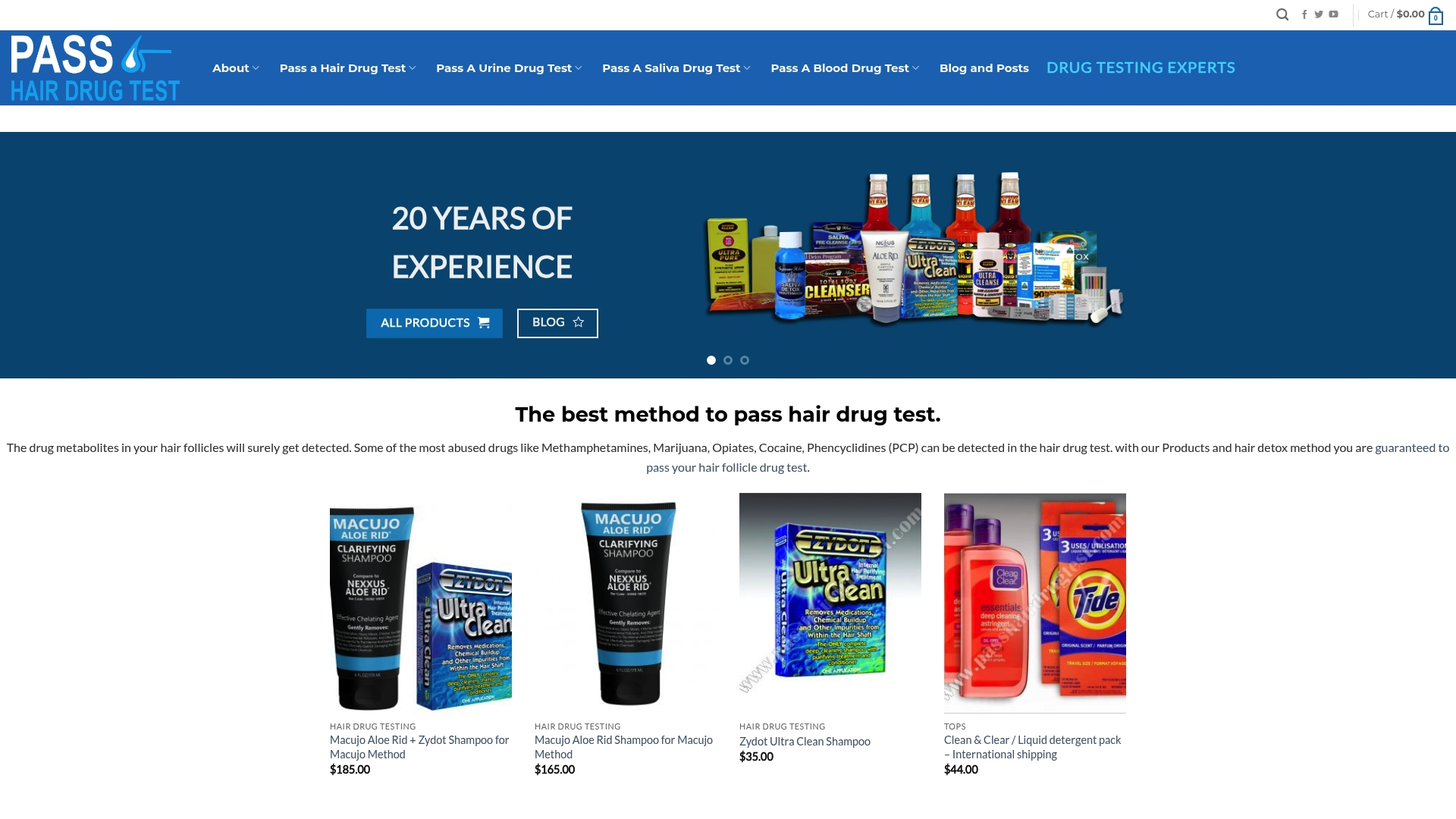
If you are also facing a urine or saliva screen, we carry products for those too, listed in the same catalog, and our guide on passing a urine drug test is a good next stop.
What the lab sees after you wash
It helps to know what you are up against. Labs typically wash the sample first to remove external contamination, then extract and measure. A 2022 study of decontamination procedures found that even prolonged methanol washing produced decreases of up to 80%, yet drugs and metabolites generally stayed relatively well retained after 90 minutes, and retention depended on hair condition. In plain terms, the lab’s own wash is strong, and what remains is mostly inside the hair. That is the target a detox routine has to address, and also why a gentle clarifying wash is a poor match.
FAQ
Does Selsun Blue or ketoconazole shampoo help pass a hair test?
There is no reliable evidence that it does. These are scalp treatments, and lab results with everyday shampoos vary a lot from one sample to the next. Dryness and irritation are the likely outcomes of overuse.
Can a salon clarifying shampoo remove THC from hair?
It removes surface buildup, which is not where most of the drug sits. Quest reports that shampoos applied to cut samples had little or no effect in its worst-case testing. Treat a salon wash as a prep step at most.
How long do I need to be clean to pass a hair follicle test?
A standard test reflects about 90 days, using the first 1½ inches of hair from the root. Staying clean for at least that long is the only approach that changes the sample at its source. Anything else only lowers what is already there.
Does bleaching hair get rid of drugs?
It can lower concentrations a lot, with one 2023 study finding drops of up to 90% for cocaine. It also damages the hair, and results vary. We do not suggest it as a plan.
Sources
- Review on Toxicology Testing in Hair, The Journal of Applied Laboratory Medicine
- How far back does a hair follicle test detect drugs? Drugs.com
- Quest Diagnostics, Hair testing FAQ
- Effect of the shampoo Ultra Clean on drug concentrations in hair
- Advances in testing for sample manipulation in clinical and forensic toxicology
- Detox shampoos for EtG and FAEE in hair
- Manipulation of THC Hair Concentrations by Commercially Available Products
- Hair analysis: Assessment of homemade hair treatment, Drug Testing and Analysis
- Evaluation of decontamination procedures for drug testing in hair
- Selsun Blue side effects, Drugs.com
Recommended
- Before a Hair Test: Detox Shampoo Damage and 20 Years’ Evidence
- Detox vs Clarifying Shampoo for Hair Drug Test Prep
- Do Detox Shampoos Work for Hair Follicle Tests?
- How to Use Detox Shampoo for a Hair Drug Test
