Uncategorized
How to Use Detox Shampoo for a Hair Drug Test

Aug
A strict, multi-step regimen using Macujo Aloe Rid Shampoo, Zydot Ultra Clean, and Mike’s Macujo Method can reduce detectable drug metabolites in hair. No product guarantees a negative result. U.S. labs confirm presumptive positives by GC-MS/MS or LC-MS/MS and a Medical Review Officer (MRO) reviews every confirmed positive before a final result is issued.
Start here:
- Buy Macujo Aloe Rid Shampoo and Zydot Ultra Clean today.
- Pick up white vinegar (5%), Clean & Clear Deep Cleaning Astringent (salicylic acid), baking soda, Tide liquid detergent, rubber gloves, a shower cap, and Vaseline.
- Plan for multiple full cycles spaced several hours apart before your test date.
- Reserve Zydot Ultra Clean for the morning of the test, within two hours of leaving.
Research and practitioner guidance consistently show that single-use detox shampoos may slightly lower concentrations but cumulative, multi-cycle approaches are the only method with any measurable effect. Even then, results vary by metabolism, hair type, and how closely you follow the protocol.
Table of Contents
Table of Contents
- What products and tools do you need before starting?
- How do you follow the Macujo method step by step?
- When should you start, and how many cycles do you need?
- What does the evidence actually show about detox shampoo effectiveness?
- How do labs process your sample and confirm results?
- What are the real health risks and lab red flags?
- What should you do if you get a positive result?
- Key Takeaways
- The gap between what detox shampoos promise and what labs actually see
- Passhairdrugtest has the kit that matches this protocol
- Useful sources and further reading
What products and tools do you need before starting?
The Macujo-style protocol uses each product for a specific chemical purpose. Using a substitute or skipping an item undermines the whole regimen.
Core product list:
- Macujo Aloe Rid Shampoo — the chelating backbone; its propylene glycol formula penetrates the hair shaft to loosen metabolites from the cortex.
- Zydot Ultra Clean Shampoo — a three-part test-day finisher (shampoo, purifier, conditioner) that strips surface residue and adds a final surfactant layer.
Authenticity matters. Counterfeit Aloe Rid and Zydot packets circulate online. Check that the Aloe Rid bottle lists propylene glycol prominently and that the Zydot kit includes all three components. A fake product at any step wastes every other step.
Pro Tip: Store each product in a labeled bag and keep your brushes and combs separate from anyone else’s. Shared tools can reintroduce metabolites to freshly treated hair.
How do you follow the Macujo method step by step?
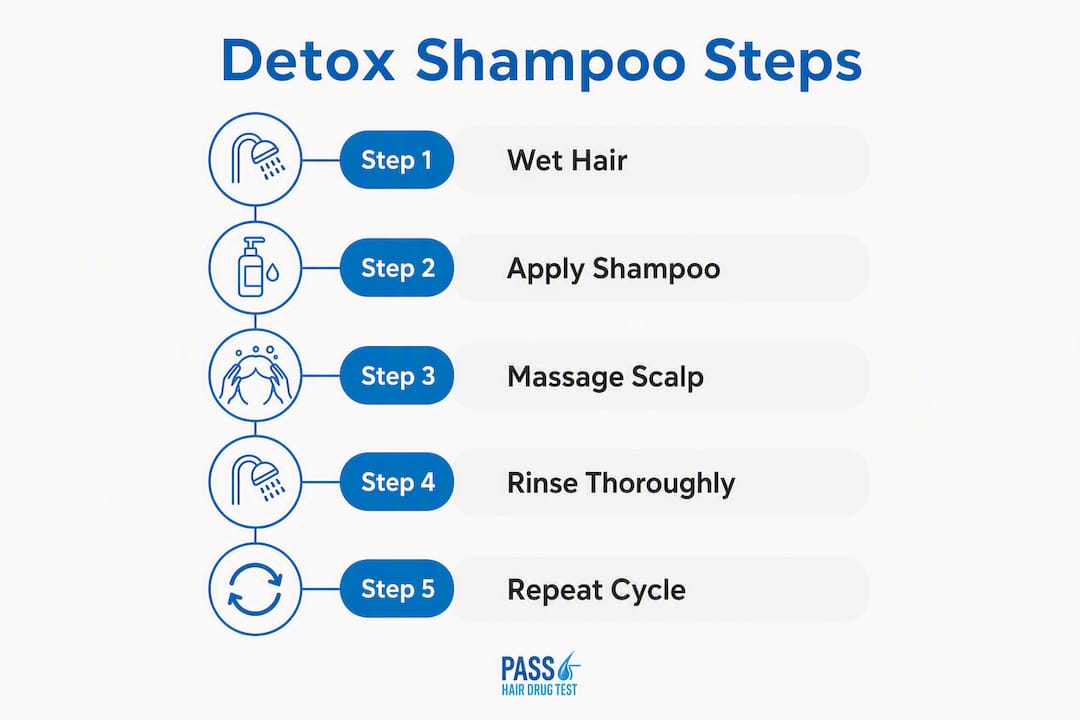
One full cycle takes roughly 2–3 hours. Practitioner guides document a 9-step Macujo-style cycle and recommend 5–15 repetitions spaced 8–10 hours apart.
- Apply Vaseline along your entire hairline, ears, and neck. This is your chemical barrier.
- Wet hair with warm water — not soaking, just damp.
- First Aloe Rid wash — work a generous amount root-to-tip, massage for 3–5 minutes, rinse thoroughly.
- Baking soda scrub — mix with a small amount of water into a paste, scrub the scalp and hair shaft for 2–3 minutes, rinse.
- Vinegar soak — saturate hair with white vinegar, put on the shower cap, and sit for 15–20 minutes. Do not rinse yet.
- Salicylic acid astringent — with the vinegar still in your hair, apply Clean & Clear liberally. Replace the shower cap and sit for another 30 minutes. The acid-on-acid combination is intentional; it keeps the cuticle open.
- Rinse thoroughly — warm water, at least 2 minutes.
- Tide detergent scrub — a small amount worked through the hair for 2–3 minutes, then rinse completely.
- Second Aloe Rid wash — repeat step 3 to close the cycle and remove any remaining surfactant residue.
Section hair into 4–8 parts before you start and work every product from root to tip. The proximal segment (the inch and a half closest to the scalp) is what labs test, so product contact there is non-negotiable.
Pro Tip: Space cycles at least 8–10 hours apart to give your scalp time to recover. Running two cycles back-to-back the same day dramatically increases the risk of chemical burns without adding meaningful benefit.
On test day only: After your final pre-test cycle, use Zydot Ultra Clean as your last wash within two hours of leaving for the collection site. Follow the Zydot instructions exactly: shampoo, then purifier, then conditioner, in that order.
When should you start, and how many cycles do you need?
Hair follicle testing uses roughly 1.5 inches of proximal hair, which covers approximately a 90-day detection window. That window does not shrink because you washed your hair.
Planning by usage level:
- Light or occasional user: 5–8 cycles, starting 7–10 days before the test.
- Heavy or chronic user: 10–15 cycles, starting 10–14 days before the test.
- Test tomorrow (emergency): Complete as many cycles as time allows, spaced at minimum 8 hours apart. Realistic odds drop significantly with fewer cycles, but some reduction is better than none.
Hair length affects the lab’s ability to collect a sample, not the detection window itself. If your hair is shorter than 1.5 inches, the lab may collect body hair, which can reflect a longer history than scalp hair. Shaving your head entirely often triggers automatic suspicion and may be treated as a refusal.
The proximal segment is the only part labs analyze. Growing your hair out does not dilute the existing proximal segment — it just adds new, unaffected growth above it. Focus every cycle on the roots.
What does the evidence actually show about detox shampoo effectiveness?
The honest answer is: modest reductions, not elimination. A PubMed study on Ultra Clean found that a single wash produced modest average decreases in postmortem hair: cocaine −5%, 6-MAM −9%, morphine −26%, and THC −36%, but every substance remained detectable after one treatment. Charles Darwin Research confirms there is no peer-reviewed clinical proof that any detox shampoo guarantees a negative result; efficacy varies by metabolism, hair type, and regimen consistency.
Why is single-wash effectiveness so limited? Labs wash hair samples themselves to strip external contamination before analysis. Metabolites embedded in the cortex (the inner structure of the hair shaft) are shielded by the cuticle. A single shampoo application touches the surface; it does not reliably reach the cortex.
Quest Diagnostics notes that shampoos, sprays, and gels applied to cut hair samples had little or no effect, and that normal bleaching or dyeing typically did not change a positive result to negative.
What repeated cycles can and cannot do:
How do labs process your sample and confirm results?
After collection, the lab does not simply run your hair through one test. The process has multiple layers, and each one matters.
Typical lab workflow:
- Hair is washed by the lab to remove external contamination before any analysis begins.
- An initial immunoassay screen identifies presumptive positives.
- Any presumptive positive is confirmed by GC-MS/MS or LC-MS/MS — mass spectrometry methods precise enough to identify specific metabolites at very low concentrations.
- A Medical Review Officer reviews every confirmed positive and contacts the donor before a final result is reported to the employer.
Chain-of-custody and tamper-evident sealing are enforced at every step. Visible damage to seals, unusual chemical residue on the sample envelope, or hair that appears chemically compromised can trigger automatic rejection by the lab.
A rejected sample is not a clean result. Many employers treat a rejected or refused sample the same as a confirmed positive under their drug-free workplace policy.
For DOT-regulated or court-ordered tests, the protocols are even stricter. Those programs have specific cutoff levels, mandatory MRO procedures, and defined consequences for refusal or adulteration. Seek HR or legal guidance if your test falls under those programs.
What are the real health risks and lab red flags?
Repeated salicylic acid and detergent applications are genuinely harsh. The risks are not hypothetical.
Health risks to watch:
- Chemical burns and open sores along the hairline or scalp, especially after multiple cycles.
- Severe dryness, breakage, and hair loss from repeated cuticle disruption.
- Eye and skin irritation if products contact the face without the Vaseline barrier.
Stop immediately if you develop open sores, bleeding, or pain beyond mild tingling. Continuing over broken skin increases absorption of chemicals and worsens damage without adding detox benefit.
Lab red flags:
- Visibly “fried,” brittle, or structurally compromised hair can be noted as potentially adulterated.
- Extreme bleaching or chemical treatment may lower metabolite levels but often produces hair damage that labs flag.
- Chemical residue on the sample or its packaging raises chain-of-custody concerns.
Pro Tip: Use Vaseline generously along your entire hairline before every cycle, not just the first. Reapply between cycles if your skin feels raw. Gloves are non-negotiable — salicylic acid absorbs through skin.
What should you do if you get a positive result?
A presumptive positive is not the final word. Here is the sequence:
- Do not attempt further chemical alteration of the sample after collection. The sample is sealed and in lab custody.
- Expect the lab to run GC-MS/MS or LC-MS/MS confirmation. A presumptive screen can produce false positives; confirmation is far more specific.
- The MRO will contact you directly. This is your opportunity to disclose any legitimate medications or medical conditions that could explain the result.
- Request chain-of-custody documentation if you believe the collection or handling was improper.
- If the confirmed result stands and you believe it is incorrect, ask about split-sample testing where available.
- If the sample was rejected due to visible damage or tampering, check your employer’s written policy. Some treat rejection as equivalent to a positive result.
- Document all communications, preserve product receipts and usage dates, and consult an employment attorney or HR representative before responding formally.
This article provides general information, not legal or medical advice. Confirm current rules with your MRO, employer, or a qualified professional.
Key Takeaways
The most effective approach to hair follicle test preparation is a multi-cycle Macujo-style regimen using Macujo Aloe Rid Shampoo and Zydot Ultra Clean, started at least 7–10 days before the test, with no guarantee of a negative result.
| Point | Details |
|---|---|
| Multi-cycle regimen required | Single washes reduce concentrations minimally; multiple cycles spaced several hours apart are recommended. |
| Start early | Light users need 7–10 days; heavy users need 10–14 days to complete enough cycles. |
| Labs confirm by mass spectrometry | GC-MS/MS or LC-MS/MS confirmation and MRO review follow every presumptive positive. |
| Visible damage is a red flag | Chemically altered or brittle hair can prompt sample rejection, which many employers treat as a failed test. |
| Passhairdrugtest kits | Passhairdrugtest bundles Macujo Aloe Rid and Zydot Ultra Clean with protocol instructions aligned to the regimen above. |
The gap between what detox shampoos promise and what labs actually see
Most people shopping for a detox shampoo are looking for certainty. The marketing often implies it. The science does not deliver it, and pretending otherwise does no one any favors.
What the evidence actually supports is this: repeated, aggressive chemical extraction cycles can lower the concentration of metabolites in the hair shaft. Whether that reduction crosses below a lab’s specific cutoff threshold depends on how much metabolite was deposited in the first place, how your body metabolizes the substance, and how consistently you ran the protocol. Those variables are outside anyone’s control.
The Macujo-style approach is the most documented multi-step method available. Aloe Rid’s propylene glycol formula and Zydot’s surfactant finish are the most studied products in this category. That does not make them a guarantee. It makes them the best-supported option in a category where no option is guaranteed.
The part most guides skip: labs are not passive. They wash samples, run confirmation tests, and employ MROs specifically to catch both false positives and adulteration attempts. Visible hair damage is a data point to a trained collector. A rejected sample can be worse than a positive one depending on your employer’s policy.
Use the protocol correctly, protect your scalp, and go in with clear eyes about what the science shows.
Passhairdrugtest has the kit that matches this protocol
The Hair Follicle Shampoo Kit from Passhairdrugtest bundles Macujo Aloe Rid Shampoo and Zydot Ultra Clean with step-by-step instructions built around the Macujo-style regimen described above. You get the two products that matter most, sourced for authenticity, without hunting across multiple retailers and risking a counterfeit.
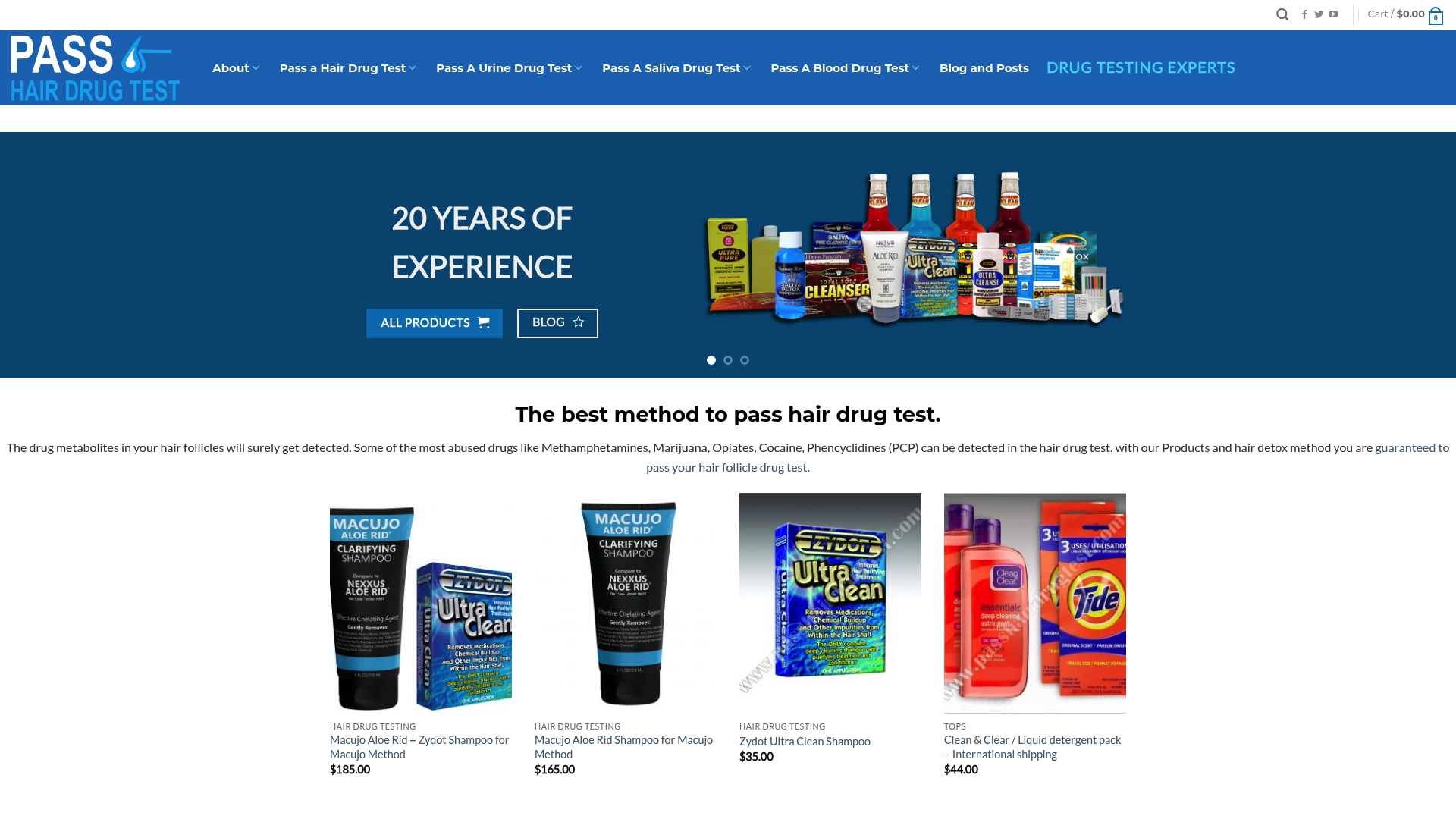
Passhairdrugtest has spent more than 20 years in the drug-testing and detox-product space. The kit ships discreetly, and customer support is available if you have questions about timing or protocol. For anyone working against a tight deadline, having the right products in hand on day one is the only variable you can fully control. Order the Macujo Aloe Rid + Zydot bundle directly from the product page and start your first cycle as soon as it arrives.
Useful sources and further reading
- Effect of the shampoo Ultra Clean on drug concentrations in human hair (PubMed) — peer-reviewed study showing per-substance concentration reductions after a single Ultra Clean wash.
- Hair Follicle Drug Test: How It Works and Detection Windows (LegalClarity) — covers MRO review, GC-MS/MS confirmation, and lab washing protocols.
- Hair Drug Testing (Labcorp) — explains the 90-day detection window and collection procedures.
- Hair Testing FAQ (Quest Diagnostics) — lab-side perspective on how shampoos and treatments affect test outcomes.
- Charles Darwin Research — detox shampoo analysis — independent analysis confirming no peer-reviewed guarantee exists for any detox shampoo.
- Drug Metabolites and Hair Testing (SAMHSA) — federal guidance on how drug metabolites incorporate into hair and the challenge of distinguishing use from external contamination.
- Detecting Drugs in Hair: Use or Environmental Contamination? (National Institute of Justice) — NIJ overview of hair testing science and contamination differentiation.
- Best Hair Detox Shampoos: Expert Guide (Dr. Gary A. Cohen) — practitioner-level protocol guidance including cycle counts and spacing recommendations.
- Hair Drug Test Information (Passhairdrugtest) — publisher’s internal resource on sample collection, chain-of-custody, and lab processing.
Recommended
- Best Hair Detox Shampoo for Hair Follicle Drug Tests
- Detox vs Clarifying Shampoo for Hair Drug Test Prep
- How to pass hair drug test
- Do Detox Shampoos Work for Hair Follicle Tests?
