Uncategorized
20 Years’ Evidence: U.S. Workplace Hair Testing and Defensible Steps
Oct
If you’re facing a workplace hair follicle test, the safest first move is also the simplest: stop using the tested substance now, gather documentation of any prescriptions or exposures, and avoid harsh chemical treatments that could damage your hair before collection. Product-assisted cleansing may help some people reduce detectable concentrations, and we carry options for that approach, but no method guarantees a negative result.
TL;DR:
- Hair drug testing results can vary significantly depending on hair pigmentation, porosity, and treatment history, impacting drug retention and detection likelihood.
- Most tests detect drug use within a roughly 90-day window, with shorter or longer segments revealing different timelines; last-minute trims may raise suspicion.
- No chemical or shampoo treatment guarantees a negative result, but aggressive washing or chemical protocols may moderately reduce detectable drug levels in some samples.
- Proper documentation of prescriptions, exposures, and hair treatments is crucial, especially if the test result is positive or contested.
- An at-home test kit provides a realistic preview of your drug levels before the official collection, but it cannot match lab sensitivity.
Table of Contents
Table of Contents
- What to do and avoid in the days before your test
- How hair follicle tests detect drugs and why results vary
- What peer-reviewed research says about shampoos and detox methods
- A conservative, practical preparation protocol
- If your result comes back positive
- Detection windows and how timing affects your options
- Our two decades in hair-testing preparation
- Where to find product guidance and support
- FAQ
- Sources
What to do and avoid in the days before your test
The days before a scheduled collection matter more than anything you might try the night before. Your goal is to be defensible, not desperate.
- Stop using the tested substance immediately and keep a written log of your last use.
- Gather prescriptions, over-the-counter medications, and any occupational or environmental exposures that could explain trace findings.
- Avoid new bleaching, perming, or other harsh salon chemical treatments right before collection, since sudden hair changes can raise questions during review.
- Keep up normal hygiene: regular washing with your usual shampoo is fine and expected.
- If you choose a detox shampoo, follow the instructions exactly and consider an at-home test kit to check your progress beforehand.
Skip anything involving methanol soaks, prolonged solvent exposure procedures, or last-minute bleaching treatments. These carry real risk of scalp irritation and visibly damaged hair, and they don’t reliably produce a clean result.
Pro Tip: Document your timeline in writing (last use date, medications, exposures) before your test, not after a positive result forces you to reconstruct it.
How hair follicle tests detect drugs and why results vary
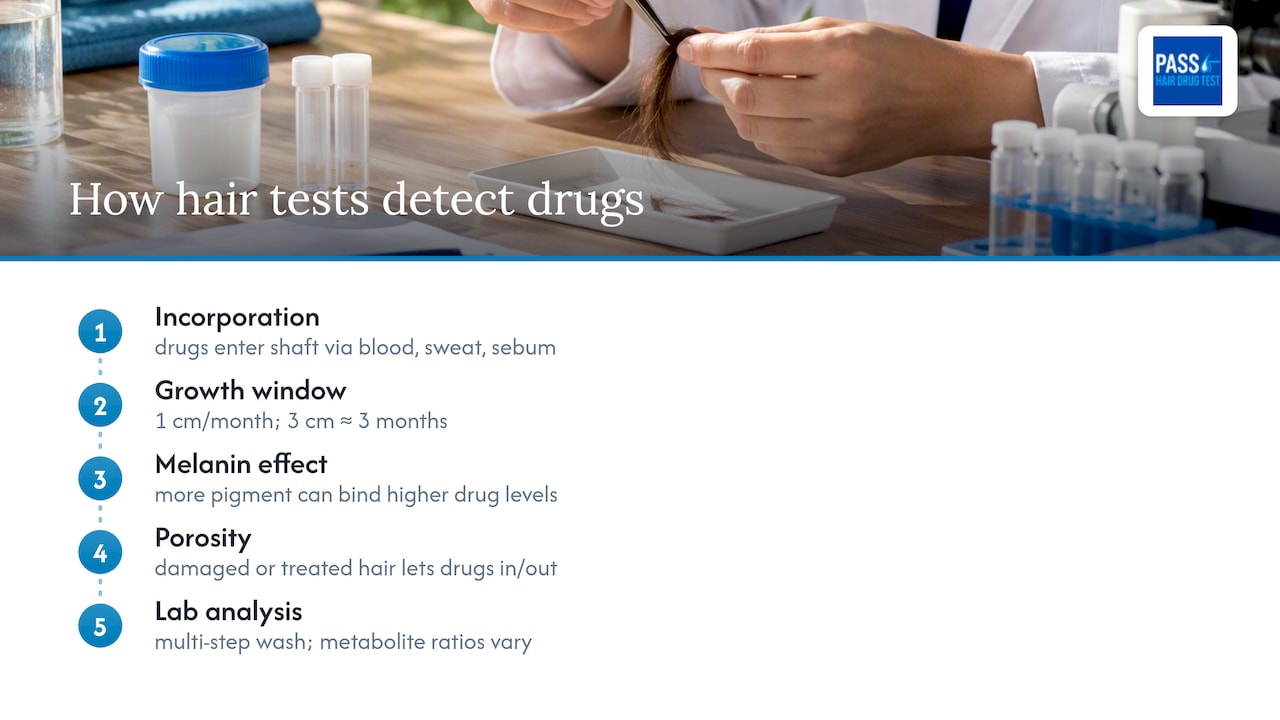
Hair testing works because drugs and their metabolites travel into the hair shaft through blood, sweat, and sebum during growth, then stay embedded as the hair grows outward. Labs typically rely on an average hair growth rate commonly approximated to about one centimeter per month to estimate how far back a sample can detect use, which is why a standard 3 cm segment is commonly considered to represent about a three-month window.
Two biological factors make outcomes unpredictable. Melanin content affects how much of certain drugs bind within the hair, so darker, more pigmented hair can sometimes retain higher concentrations than lighter hair exposed to the same amount of a substance. Porosity matters too: damaged or chemically treated hair has a more open cuticle structure, which can let drugs in (or out) more easily during washing, affecting both detection and attempts at removal.
On the lab side, technicians use multi-step wash procedures before analysis specifically to strip external residue and distinguish surface contamination from drugs that were actually incorporated into the hair during growth. Many labs also test for specific metabolites, since a metabolite’s presence suggests the substance passed through the body rather than just touching the hair’s surface, a distinction examined in detail in a review of metabolite-to-drug ratios in forensic hair testing. That review found metabolite ratios vary widely between individuals and substances, which is one reason interpretation of a single result is rarely simple.
What peer-reviewed research says about shampoos and detox methods
The scientific literature on hair detox products is more cautious than most marketing claims suggest, and it’s worth knowing what it actually found before you decide on a strategy.
- A 2022 study of 54 THC-positive hair samples tested against vodka, hair tonic, Zydot Ultra Clean Shampoo, disinfectant, and ordinary shampoo found mean THC reductions ranging within a significant range depending on the product, from moderate to substantial reductions.
- Some individual samples in that study reached non-detectable levels after treatment, but the effect was sample-specific rather than consistent across the group.
- A 2022 evaluation of decontamination procedures found that aggressive washing, including extended methanol exposure, can reduce analyte levels in some samples, but retention depends heavily on how porous or damaged the hair already is.
The research shows mean reductions ranging from moderate to substantial levels in a controlled study of commercial products, yet even the strongest-performing treatments left detectable drug in a meaningful share of samples, according to the peer-reviewed study on commercial product manipulation.
These studies used relatively small sample sizes and controlled, in vitro conditions that don’t perfectly mirror everyday use. Hair type, porosity, and how recently the hair was treated all shifted the outcome. The forensic toxicology literature is blunt about the bottom line: no peer-reviewed, universally reliable method exists that guarantees a negative result for every person and every substance.
A conservative, practical preparation protocol
If you want a defensible approach rather than a gamble, work through these steps in order.
- Collect documentation first: prescriptions, over-the-counter medications, workplace or environmental exposures, and your recent cosmetic or hair-treatment history.
- Stop further use of the tested substance and maintain your normal washing routine. If you decide to add an evidence-backed detox shampoo to that routine, follow the labeled instructions precisely rather than improvising frequency or contact time.
- Avoid aggressive chemical protocols like bleach baths or extended solvent treatments. A simple trim is a safer cosmetic option if you’re also changing your look, but shaving your head right before a test can itself raise questions with an employer.
- Use an at-home test kit to check where you stand before the scheduled collection, and defer to your employer’s or testing program’s specific guidance whenever your situation is unclear.
Pro Tip: An at-home kit won’t match a certified lab’s sensitivity exactly, but it gives you a realistic read on your progress days before the real test.
If your result comes back positive
A positive result isn’t necessarily the end of the process. Pull together the same documentation you gathered earlier: prescriptions, confirmed exposures, and your cosmetic treatment history, and present it in writing.
Contact the collection site, your employer’s human resources contact, or the Medical Review Officer assigned to your case, and ask specifically about metabolite testing, segmental analysis, or reanalysis of the original sample. SAMHSA guidance on hair testing recommends this kind of documented review process over any attempt at further chemical treatment once a sample has already been collected or a result reported.
Trying aggressive manipulation after a positive result is counterproductive: it can’t change a sample already in a lab’s possession, and it undermines your credibility if you’re asking for a fair review.
Detection windows and how timing affects your options
Most workplace hair panels rely on the roughly 1 cm per month growth assumption, and a standard 3 cm segment taken close to the scalp corresponds to about a 90 day detection window. That’s the baseline most readers should plan around.
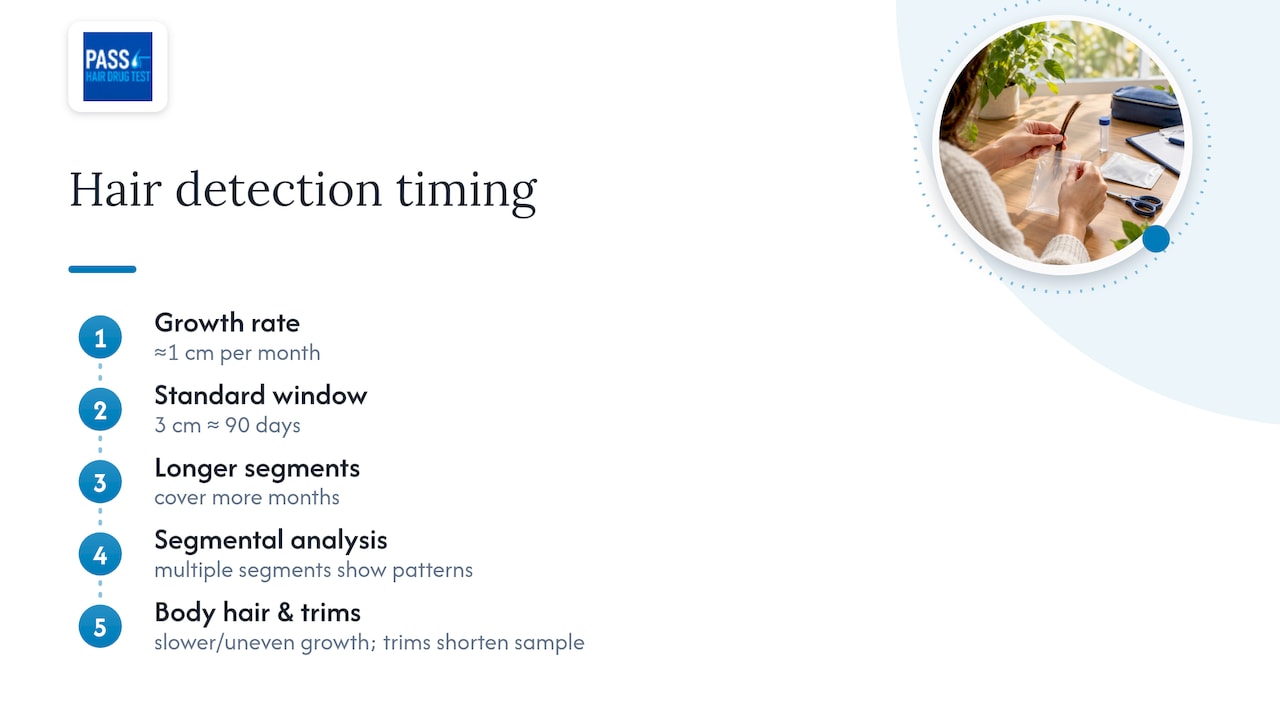
Segmental analysis can narrow or extend that picture: a longer segment covers more time, and testing multiple segments can show a pattern of use rather than a single data point. Body hair, when used instead of scalp hair, grows more slowly and unevenly, which complicates establishing a reliable timeline.
A recent haircut or a last-minute trim right before collection can also raise flags, since collectors are trained to expect a minimum hair length and may note unusual timing in their report. If you’re unsure how your employer’s policy handles an unusually short sample, ask before your appointment rather than after.
Our two decades in hair-testing preparation
We’ve worked in the drug-testing and detox-product space for more than 20 years, and the core of what we recommend centers on three things: Macujo Aloe Rid Shampoo, Zydot Ultra Clean Shampoo, and the multi-step Mike’s Macujo Method. None of these erase risk or guarantee an outcome, and we say that plainly rather than burying it in fine print.
We offer product guidance based on customer questions and usage patterns, plus support for readers who want to pair a product-assisted approach with proper documentation and review.
— MIchael
Where to find product guidance and support
Choosing a product-assisted approach makes more sense once you understand what each option is actually built to do. Our product catalog covers hair, urine, saliva, and blood detox options for readers weighing more than one testing scenario.
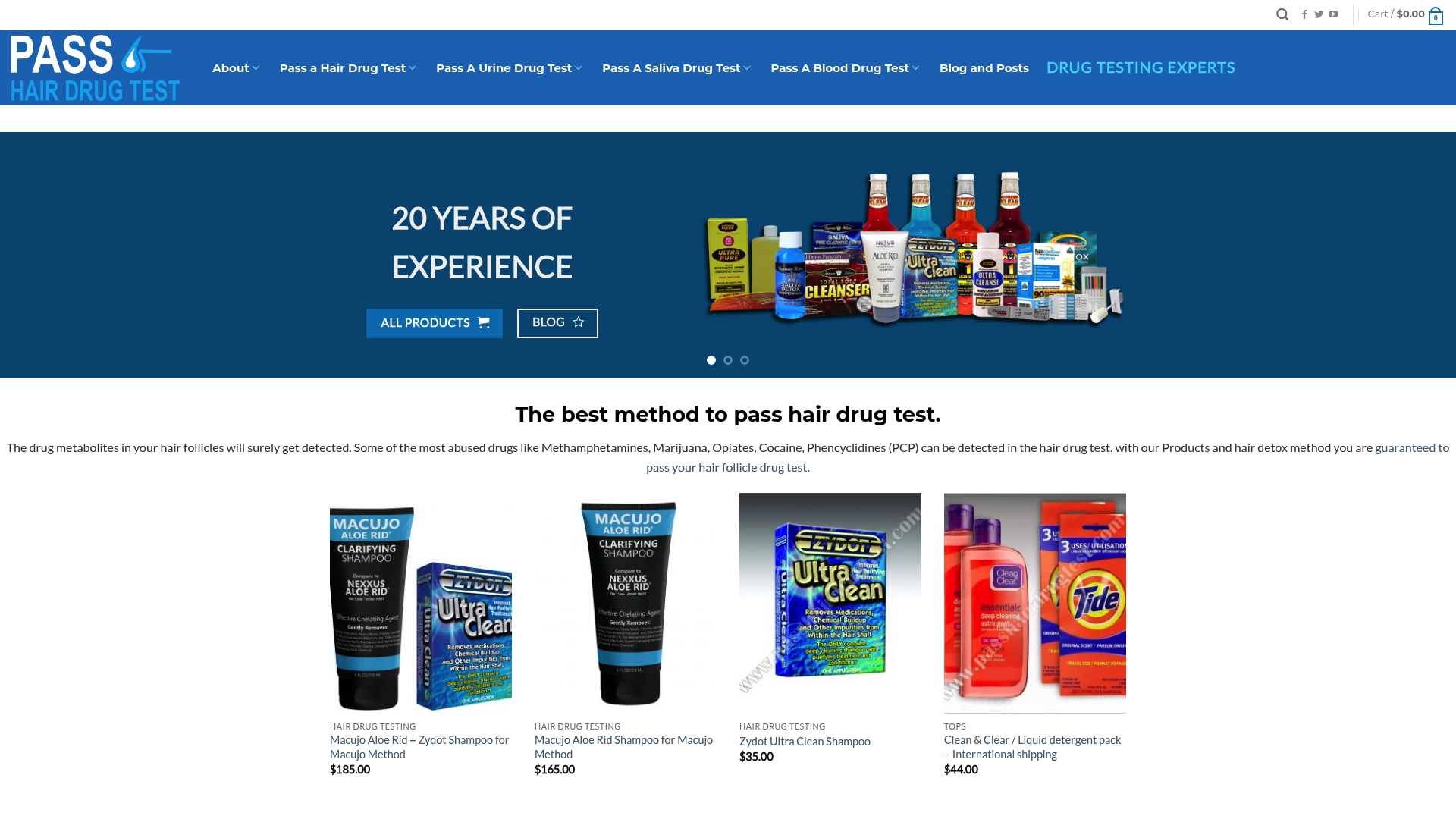
- Our hair drug test information page breaks down the science behind melanin, porosity, and growth rate that affects your results.
- Our hair follicle testing guide walks through practical, product-focused steps for people with an upcoming test.
- Our step-by-step shampoo guide details the Mike’s Macujo Method alongside Aloe Rid and Zydot Ultra Clean usage.
- Our detox shampoo usage instructions cover frequency, contact time, and safety notes for anyone using these products.
We’re upfront that results vary by individual, hair type, and usage history, which is why we encourage pairing any product plan with the documentation steps covered earlier. If you’re not sure which kit fits your situation, our support team is available to help you choose based on your hair type and timeline. Start by browsing our full product lineup to see what fits your situation.
FAQ
How long do drugs stay detectable in hair?
Most workplace hair panels use a standard 3 cm segment, which corresponds to roughly a 90 day window based on an average growth rate of about 1 cm per month. Actual retention can vary by drug type, hair porosity, and individual hair growth rate.
Can a detox shampoo guarantee a negative hair test?
No product or method guarantees a negative result. A controlled study of 54 THC-positive samples found mean reductions between roughly 52% and 65% depending on the product, with results varying significantly from sample to sample.
What substances do workplace hair tests commonly check for?
Workplace hair panels typically screen for THC, cocaine, opiates, amphetamines, and PCP, though the exact panel depends on the employer or testing program. Each substance incorporates into hair differently, which is part of why THC is often reported as harder to reduce reliably than other drugs.
What should I do if I get a positive result I believe is wrong?
Document your prescriptions, exposures, and cosmetic treatment history, then contact the collection site, your employer, or the Medical Review Officer to request metabolite testing, segmental analysis, or reanalysis. SAMHSA guidance recommends this documented review path rather than attempting further chemical treatment after collection.
Does hair damage or bleaching affect test accuracy?
Yes, hair porosity and cosmetic treatment history both affect how drugs are retained and how they respond to washing or cleansing attempts. An evaluation of decontamination procedures found that damaged or more porous hair behaves differently from undamaged hair during both drug incorporation and removal attempts.
Sources
- Metabolite-to-drug ratios in hair and their value in forensic interpretation – PMC
- Evaluation of decontamination procedures for drug testing in undamaged versus damaged hair – PubMed
- Drug metabolites and hair testing – SAMHSA
Recommended
- Which Labs U.S. Employers Use for Hair Follicle Drug Tests
- Pre-Employment Hair Test: What Job Applicants Need to Know
- Start Three Weeks Out: Evidence Backed Hair Sample Collection Protocol
- The Science Behind the Hair Drug Test
