Uncategorized
Hair Detox: Why 6 Months and an At Home Test Matter for Opiates
Oct
Hair detox methods can reduce detectable opiate concentrations in some cases, but no method guarantees a passing result, and the only reliable way to clear a hair follicle test is time without use. If a test is scheduled soon, your best move is an honest assessment of your timeline, combined with an at-home screening test before the official one. Some commercial and household treatments measurably lower drug residues, but results are inconsistent enough that we never call any method foolproof.
TL;DR:
- Opiates may not appear in scalp hair until 5 to 10 days after use; labs usually test the 1.5 centimeters nearest the scalp.
- Controlled product studies found average residue reductions of about 52% to 65% for particular treatments, but effects varied by product, drug, and hair condition.
- For chronic users, one study found 27% remained positive after two months and 20% after four months, while none tested positive at six months.
- Bleaching and repeated chemical washing can cause breakage or scalp irritation, and visible processing may prompt labs to document treatment or request supplemental urine testing.
- Use a home hair screen before starting and again a day or two before the appointment; it is the only available feedback on treatment effects.
Table of Contents
Table of Contents
- How hair follicle testing detects opiates
- What people try: shampoos, bleach, and home remedies
- What the evidence and industry guidance show about effectiveness
- A realistic at-home protocol and how to verify it
- Risks, hair damage, and lab red flags
- How long opioids actually take to clear from hair
- What we see in customer questions about opiate detox
- How PassHairDrugTest.com can help you prepare
- FAQ
- Sources
How hair follicle testing detects opiates
Opiates enter hair through the bloodstream as the follicle forms new growth, which is why there’s a lag of about 5 to 10 days between use and when a drug becomes detectable in the hair shaft above the scalp. This incorporation window matters: a test taken the day after use will likely miss it, since that segment of hair hasn’t grown out yet.
Labs don’t just look for morphine. They typically screen for codeine, morphine, and 6-monoacetylmorphine (6-MAM), a metabolite unique to heroin use that helps distinguish heroin from codeine or poppy seed exposure. Testing the parent drug alongside its metabolites gives toxicologists a clearer picture of actual ingestion rather than incidental contact.
Standard lab practice uses a proximal hair sample, usually the 1.5 cm closest to the scalp, drawing from roughly 25 milligrams of hair, following cut-off and confirmation standards set out in the Society of Hair Testing consensus. This section closest to the scalp represents the most recent growth and the most relevant window for current use.
A few things shape how this process plays out in practice:
- Hair is segmented in centimeter sections to map drug use over time, not just confirm a single positive or negative.
- Confirmatory testing relies on liquid chromatography-tandem mass spectrometry (LC-MS/MS), which separates parent drugs from metabolites with high specificity.
- Validated panels that quantify opioid glucuronides make it harder to explain away a positive as surface contamination, according to research presented to SAMHSA.
- Cut-off concentrations are set deliberately low enough to catch regular use while limiting false positives from trace environmental exposure.
What people try: shampoos, bleach, and home remedies
People facing a hair follicle test for opiates turn to a wide variety of methods, ranging from mild to genuinely damaging. Here’s what shows up most often in forums and product marketing:
- Commercial detox shampoos claim to strip surface residues and, in some multi-step protocols, open the hair cuticle to reach deeper into the shaft.
- Multi-step regimens, like the kind built around repeated washing and conditioning cycles, layer several products together rather than relying on a single shampoo.
- Household solvents, including vinegar, vodka, and various disinfectants, are used in repeated clarifying washes on the theory that acidity or alcohol content can degrade stored metabolites.
- Chemical treatments such as bleach, perm solution, or permanent hair dye oxidize the hair cortex, which is also where drug metabolites accumulate.
- Mechanical abrasion, like aggressive brushing or scrubbing during washing, aims to physically remove compromised outer layers of the hair shaft.
- Shaving or using body hair as an alternative sample sometimes gets attempted, though labs that encounter an unusually short or absent head hair sample often request body hair anyway, which has its own longer detection window and different incorporation patterns.
Each of these methods works, if it works at all, by either diluting surface contamination or damaging the hair structure enough to leach out stored compounds. None of them target opiates specifically, and none come with a reliable before-and-after way to confirm they worked until the actual test result comes back.
What the evidence and industry guidance show about effectiveness
Controlled research gives a more measured picture than most product marketing suggests. An experimental study on commercially available hair products found that repeated application of certain household and commercial products reduced detectable drug concentrations, with mean reductions ranging from about 52% with one product to 65% with a disinfectant-based treatment, and some samples fell below detection limits entirely after repeated use.
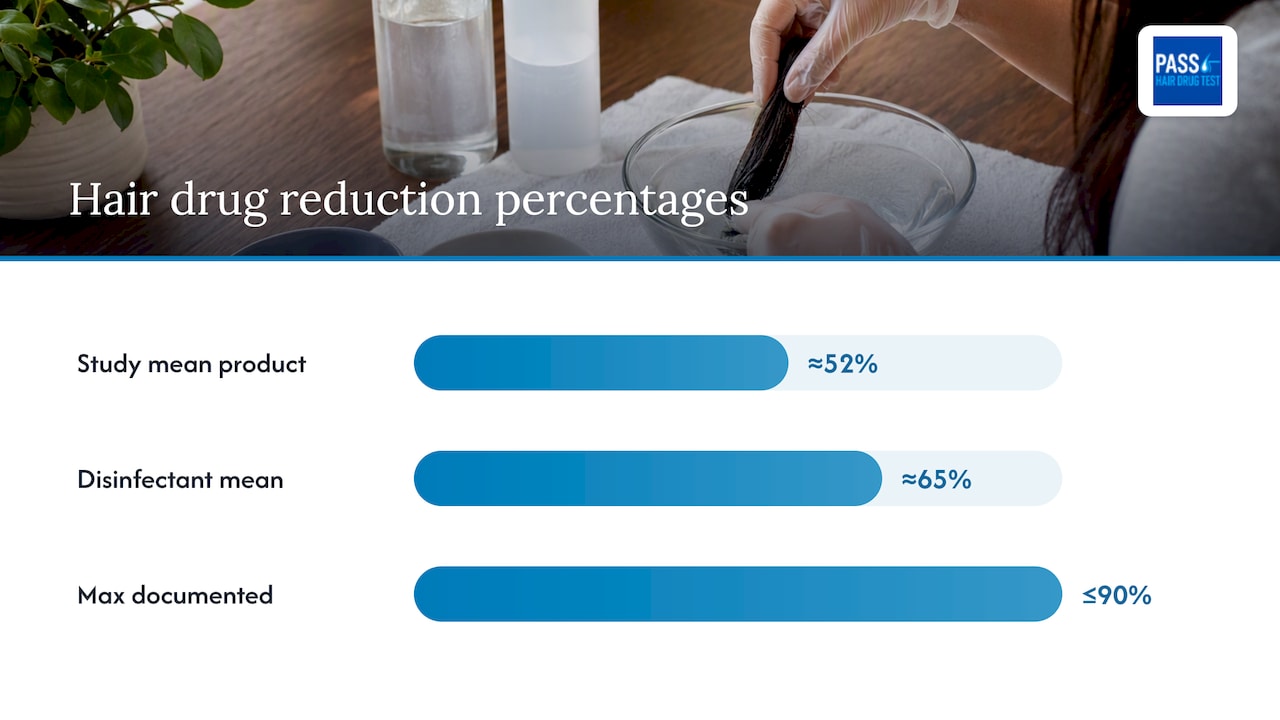
That range matters because it shows two things at once: some methods do measurably lower concentrations, and the effect varies enormously by product, drug class, and how aggressively the treatment is applied, per the same PMC study.
A few patterns show up consistently across the literature:
- Reductions documented in controlled studies span roughly 40% to over 90%, depending on method, drug class, and the condition of the hair being treated.
- The Society of Hair Testing requires labs to validate their own decontamination protocols precisely because external treatments can interfere with results.
- Hair type, dose history, treatment method, and the specific lab’s extraction technique all shift outcomes, which is why no two people trying the same shampoo get identical results.
- Metabolite testing and confirmatory mass spectrometry are the main defenses labs use against evasion, since a treatment that lowers the parent drug doesn’t always lower metabolite markers at the same rate.
The mechanism behind these reductions isn’t some chemical neutralization of the drug itself. It’s mechanical and chemical damage to the hair cortex that leaches out stored residues, the same damage that can be visible or detectable when a lab technician prepares the sample, as the SoHT consensus notes. You can read more about where detox shampoos fit into this picture in our analysis of whether detox shampoos work for hair follicle tests.
A realistic at-home protocol and how to verify it
If you’re going to attempt hair cleansing before a test, treat it as damage control, not a guarantee, and verify your results before the real one counts.
- Check your timeline first. If your last use was more than 5 to 10 days ago, drug traces have likely already incorporated into the hair closest to your scalp.
- Buy an at-home hair-screen test to check your starting point before you spend time or money on a cleansing protocol.
- Start with a clarifying shampoo designed to strip oils and buildup, since a clean base matters before any targeted product goes on.
- Follow a documented multi-step sequence exactly as instructed, including repeat rinses and wait times between applications; skipping steps undermines the whole process. Our guide on how to use detox shampoo walks through a standard sequence in more detail.
- Reserve aggressive chemical treatments, like bleaching, for situations where you understand the visible damage they’ll cause and have time to let hair recover somewhat before the test.
- Retest at home a day or two before the official appointment to see whether your approach made a measurable difference.
- Keep records of what you used and when, in case you need to explain any cosmetic treatment to a technician who asks.
Pro Tip: An at-home screening test a few days before your appointment is the only real feedback loop you have, since there’s no way to know mid-process whether a treatment is working.
Risks, hair damage, and lab red flags
Aggressive treatments carry real costs that go beyond a failed test. Dryness, breakage, and scalp irritation are common after repeated clarifying washes or chemical stripping, especially on hair that’s already color-treated or chemically processed.
Labs aren’t blind to this either:
- Visible bleaching, unusual shaft texture, or signs of recent chemical processing can prompt a technician to note cosmetic treatment in the report.
- Some labs respond to suspected tampering by requesting a supplemental urine test rather than accepting the hair result alone.
- Documented treatment history on a sample can shift how a lab interprets a borderline or negative result.
- Deliberate evasion raises ethical and, in some employment or legal contexts, contractual concerns that honest disclosure or requesting an alternative test method can avoid entirely.
How long opioids actually take to clear from hair
Segmental research on chronic opioid users gives a clearer timeline than guesswork. One study found that 27% of chronic users still tested positive at 2 months after cessation, 20% remained positive at 4 months largely due to residual 6-MAM, and none tested positive across any opioid analyte at 6 months, according to segmental disappearance research.
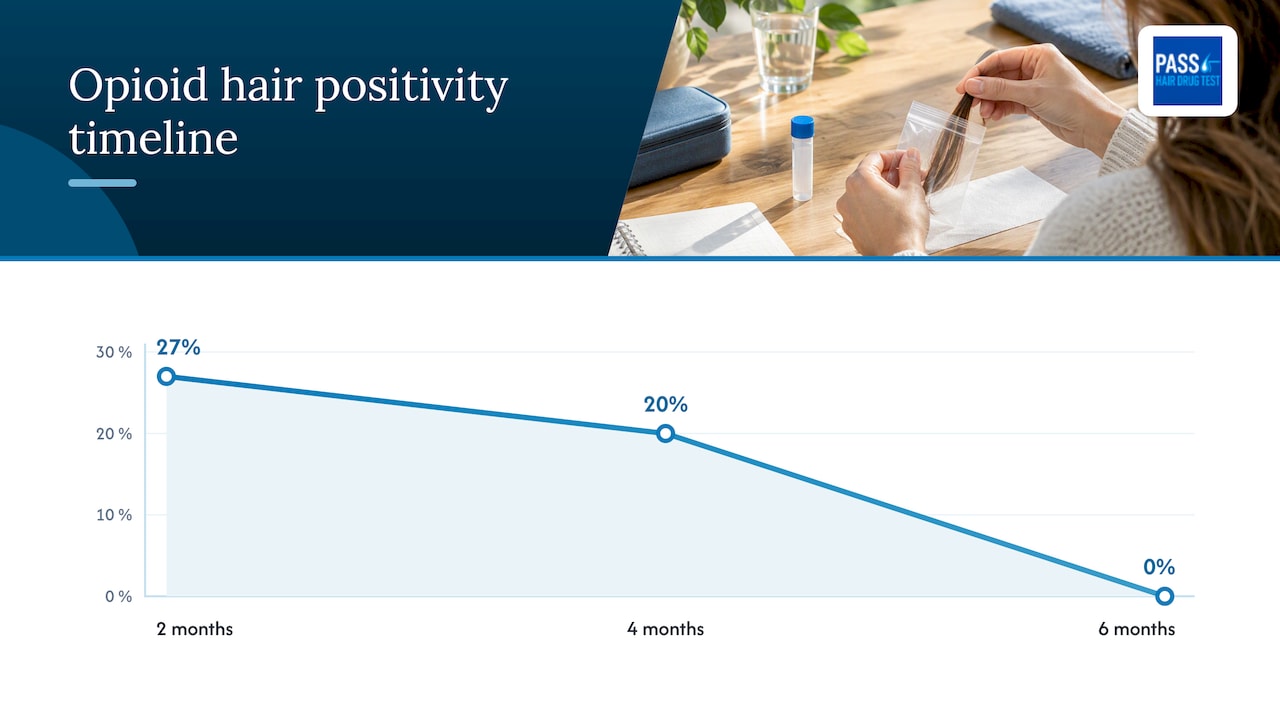
Hair growth rate and how long and heavily someone used both shift this timeline. Someone with a brief, light history of use may clear faster than someone with months of regular use. If your test is weeks away rather than months, urine or blood testing, which clear much faster, may better reflect your actual current status. You can read more about detection windows in our breakdown of the opioid hair detection timeline.
What we see in customer questions about opiate detox
After two decades answering questions about hair testing, we consistently hear the same hope: a single wash that erases months of use. That’s not realistic, and we say so. We built our protocols around what research and lab practice actually show, not around promises we can’t back up, because a customer who understands the real odds makes better decisions than one chasing a guarantee.
— MIchael
How PassHairDrugTest.com can help you prepare
Abstinence and time are the only certainties here, but if you’re working against a deadline, having the right tools and realistic guidance still matters more than guessing. We carry detox shampoos, multi-step cleansing kits, and at-home test kits built around the protocols discussed above, including a proximal clarifying wash and repeat-rinse sequence noted in research.
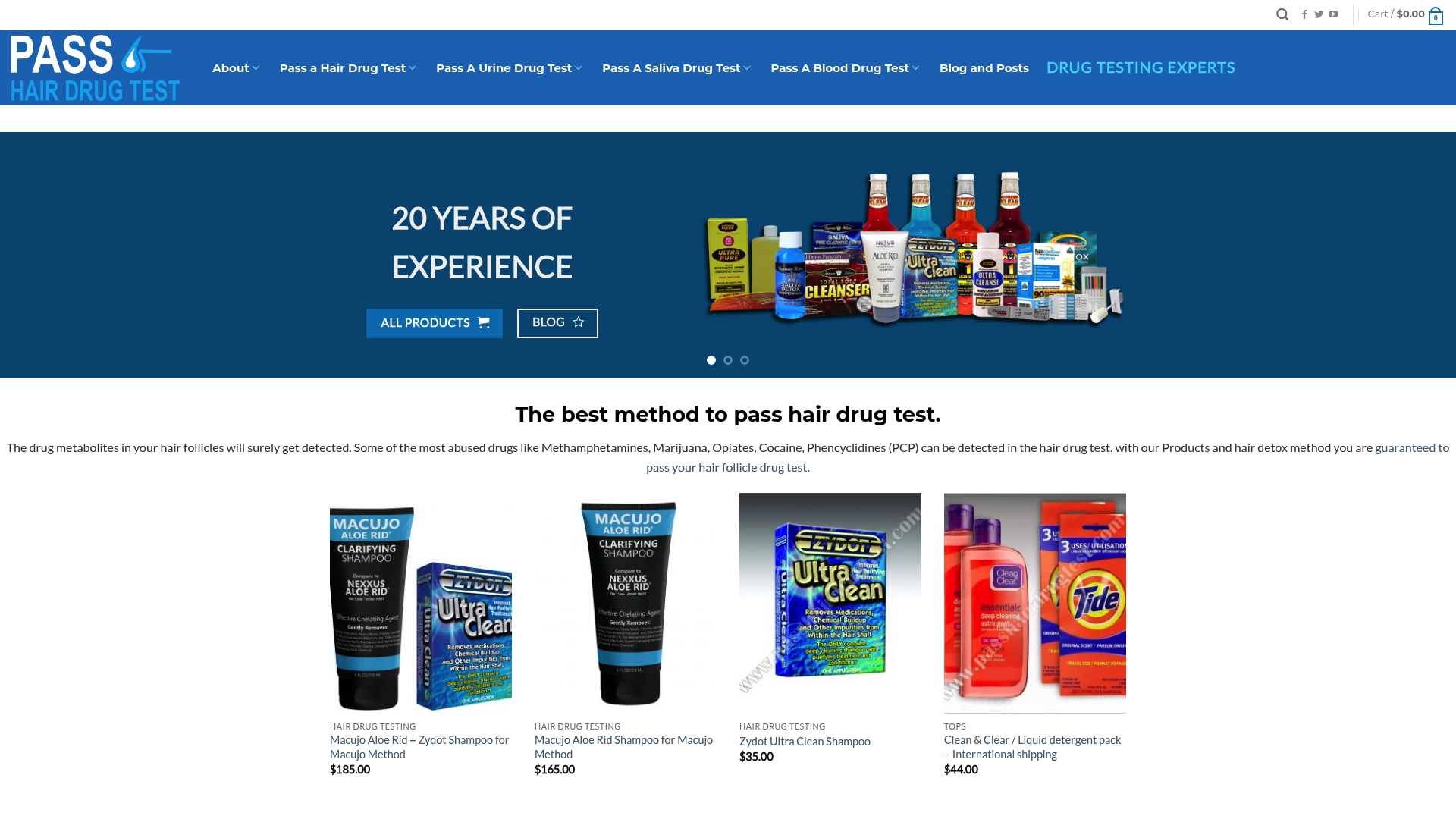
- Detox shampoos and kits support the washing sequence described in our protocol section, for readers who want a documented, repeatable process.
- At-home hair screen tests let you check your status before the appointment that counts, the same verification step we recommend throughout this guide.
- Urine, saliva, and blood test kits cover situations where a different sample type is a better fit for your timeline.
We also encourage pre-testing before any official appointment and keeping expectations grounded in what the research actually shows rather than vendor promises. Browse our full product lineup to find the kit that matches your situation, or check our hair drug test information page for order support and usage questions.
FAQ
Does detox help with hair follicle tests?
Some commercial and household treatments can measurably reduce detectable opiate concentrations in hair, with studies showing mean reductions ranging in a moderate percentage depending on the product. Results are inconsistent enough across hair type, dose, and method that detox treatments never guarantee a passing result, per research on commercial hair products.
What can throw off a hair follicle drug test?
Visible cosmetic treatments like bleaching, perming, or dyeing can alter hair structure enough that labs document them, and heavy chemical processing can reduce drug concentrations unpredictably. Environmental contamination is also a factor labs account for, which is why confirmatory testing checks for metabolites like 6-MAM rather than relying on parent drug levels alone, following Society of Hair Testing guidance.
What is the best detox for hair?
There’s no single product proven to reliably clear opiates from hair, since controlled studies show effectiveness varies widely by method and individual factors. A documented multi-step washing protocol paired with an at-home verification test, like the approach in our best hair detox shampoo guide, gives you the most realistic combination of effort and feedback.
How do I detox my hair follicles?
The most evidence-aware approach starts with a clarifying shampoo to remove buildup, followed by a documented multi-step product sequence applied exactly as instructed. Abstinence remains the only approach with consistent support in the research, since segmental studies show full negativity typically requires up to 6 months without use for chronic users.
Is attempting to alter a hair drug test result legal?
Laws and employer policies on tampering with a drug test vary by jurisdiction and by the context of the test, so we recommend checking your specific situation with a legal professional or your employer’s policy rather than assuming a blanket answer. Requesting an alternative test method or being upfront about a failed result is often a safer route than deliberate evasion.
Sources
- Society of Hair Testing Consensus on Drugs of Abuse (DoA) Testing in Hair
- Manipulation of THC hair concentrations by commercially available products – PMC
- Disappearance of codeine, morphine and 6‑MAM in hair after cessation of abuse
- Detection of opioid glucuronides in user hair (SAMHSA meeting document)
Recommended
- Home Hair Detox: Realistic Protocol and Verification Guide
- Do Detox Shampoos Work for Hair Follicle Tests?
- How to Prepare for a Hair Test the Right Way
