No products in the cart.
Uncategorized
Athletes and Hair Drug Tests: What They Show and When
26
Oct
Oct
Most athletes are never hair tested for sport. Anti-doping and college programs lean on urine and blood, and hair tests usually come from somewhere else: a job, a coaching position, a league or a school that has its own policy. If one lands on your calendar, it can reach back about 90 days, and it reads THC exposure differently than a urine cup does. This guide covers what a hair test shows, how it is collected, where athletes actually meet it, and what you can do about it.
Table of Contents
TL;DR
- A hair test shows a history of use, not impairment. Hair grows roughly 1 cm per month, so a standard sample covers about the last 90 days.
- Sports bodies such as USADA and the NCAA rely mainly on urine and blood. Hair tests usually come from employers, leagues or schools with their own policies.
- Hair color, bleaching, dyeing and outside contamination all affect how a result reads, and a hair result can be hard to interpret.
- A routine sports physical normally does not include drug screening.
- If you are facing a hair test, read the policy, know your sample type and timeline, and get the facts before the collection date.
Table of Contents
- What a hair drug test actually shows an athlete
- How far back does it go?
- How the sample is collected and analyzed
- Where athletes actually get hair tested
- What can throw off a hair result
- If you think a result is wrong
- Our perspective
- Preparing for a hair test
- FAQ
- Sources
What a hair drug test actually shows an athlete
A hair test is a record, not a snapshot. Drugs and their metabolites are incorporated into growing hair, so the lab can look at a strand and see exposure over time. A 2025 review in the Journal of Applied Laboratory Medicine describes hair as a historical record of long-term exposure, unlike blood, oral fluid and urine, where a drug may no longer show once it has cleared.
For an athlete who used THC, that means three things.
- It shows exposure, not performance or impairment. A positive says a substance was present in the hair. It does not say when in the window you used it, how much, or whether you were under the influence at any practice or game.
- It is better at spotting repeated use than a single occasion. The same review notes that the relationship between the dose someone takes and the concentration found in hair is weak, so a lab cannot reliably turn a number into an amount of use.
- It is not instant. Drugs can be found in the hair root within a day, but they are not detectable in the shaft above the scalp at that point. Detection above the scalp may take at least a couple of days, sometimes up to 10, according to the same review. A 2019 review of bioanalytical techniques adds that hair analysis for THC is often a complement to blood and urine screening, partly because of the time drugs need to be incorporated, often cited as up to 15 days.
The practical result: a hair test is poor at catching what you did last weekend and good at showing a pattern across the past few months.
How far back does it go?
The review assumes hair grows about 1 cm per month, though individual rates vary. Hair segmentation turns that into a timeline, and the profile is longer with longer hair. Labs commonly use a 1.5 inch section cut near the scalp, which is where the familiar 90-day window comes from. Shorter hair means a shorter history, and the lab can only test what it receives.
| Factor | What it does to the window |
|---|---|
| Hair length | Longer hair, longer history. Short hair covers fewer weeks. |
| Growth rate | About 1 cm a month is the working assumption, but people differ. |
| Collection site | Scalp hair is preferred. Body hair can be used, and it grows on a different cycle. |
| Recent use | May not appear yet, since it takes days for hair above the scalp to carry the drug. |
If you wonder about body hair as a fallback for a shaved head, our page on the body hair drug test explains how it differs.
How the sample is collected and analyzed
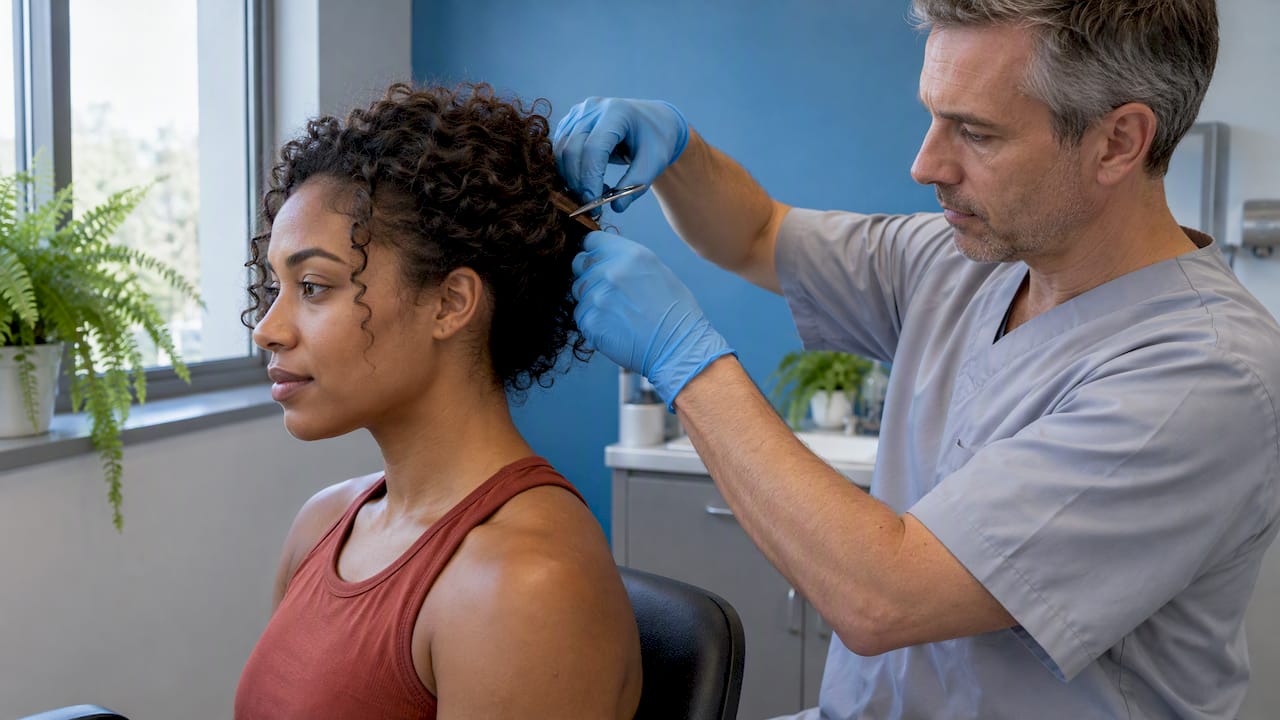
The Society of Hair Testing’s 2022 consensus document sets out the standard practice. Scalp hair from the posterior vertex, at the back of the crown, is preferred. The collector cuts as close to the scalp as possible and keeps the root end identified so a lab can analyze segments in order. Laboratories wash the hair to remove surface contaminants, extract the substances, and confirm with mass spectrometry.
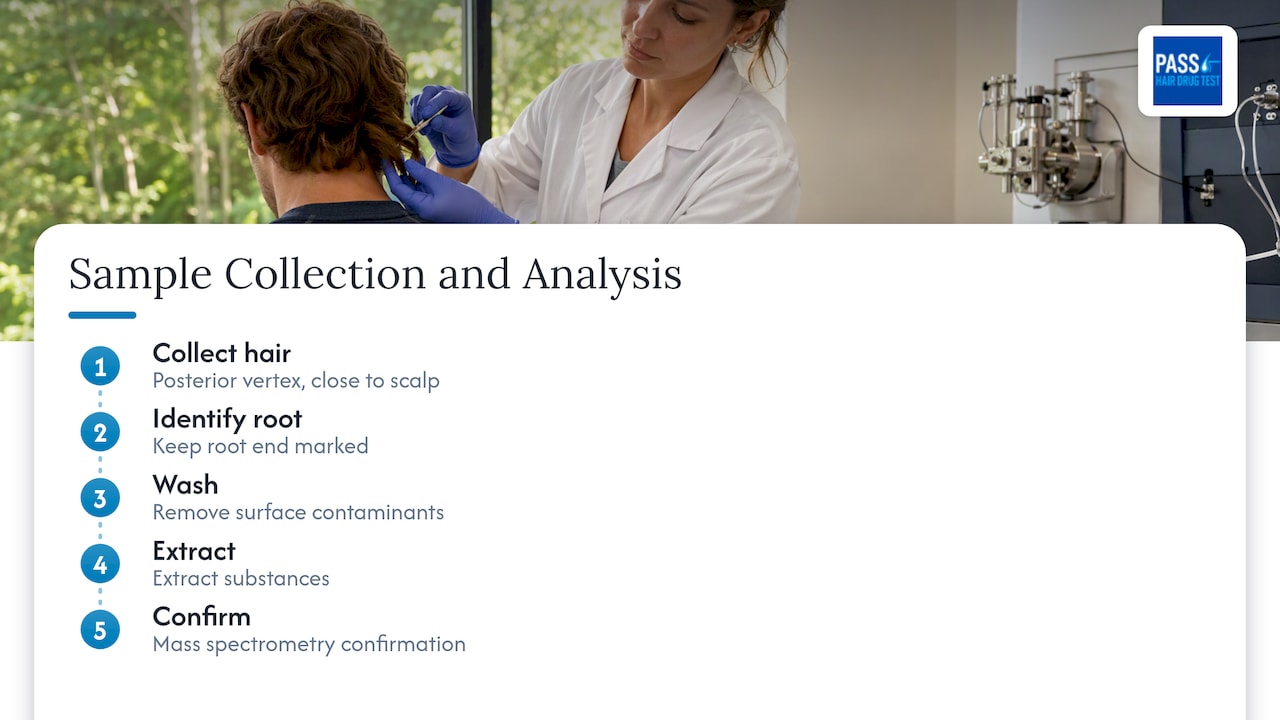
That last step matters. A first screen is not the final answer, and confirmation by mass spectrometry is what a result normally rests on. If you want the full walkthrough of a collection, from the clip to the lab report, see our hair follicle drug test guide.
Where athletes actually get hair tested
This is where the search for “athletes hair drug test” often gets muddled. Several different kinds of testing exist, and they work differently.
Anti-doping programs: mostly urine and blood
Athletes under USADA’s jurisdiction can be tested in and out of competition, 365 days a year, without notice, as the 2026 Clean Sport Handbook explains. The same handbook says athletes are strictly liable for any prohibited substance found in their sample, whatever their intent. It also notes that blood samples allow detection of substances not otherwise found in urine, such as those tied to the Athlete Biological Passport. Hair is not what these programs lead with.
College athletics: the NCAA
The NCAA bans broad classes of drugs, including stimulants, anabolic agents and street drugs, and warns that dietary supplements are poorly regulated and may carry contaminants that cause a positive, according to its banned drugs education material. On cannabis specifically, the association raised its reporting threshold to 150 ng/mL in 2022 to align with WADA. Its Division I leadership has also said that drug-testing policy should focus on student-athlete health and well-being, not punishment for cannabis use, as stated in a 2024 release. Penalties for a positive under older NCAA compliance materials included a 365-day period of ineligibility, so check the current rulebook for your division.
The point for a THC user: a urine threshold of 150 ng/mL is a much different bar than a hair test, which is built to find lower-level, longer-term exposure.
Jobs around sports
Hair follicle testing is common in pre-employment and DOT-regulated work. A former athlete moving into coaching, athletic training, school employment, law enforcement or trucking may face one. A hair test can detect drug use up to 90 days before collection, which is why employers who want more than a recent-use check often choose it. Our hair vs. urine comparison lays out which method detects what.
Team, league and school policies
Private schools, leagues and clubs can write their own testing rules. If your program tests, the handbook or team policy will name the sample type, the substances and the consequences. Read that document, not forum posts.
Does a sports physical include a drug test?
Normally no. A routine sports physical focuses on medical history and general health and safety, and drug testing, when it happens, is a separate step in competitive or college programs. Ask your clinic or athletic department if you are unsure.
What can throw off a hair result
Hair results are less clear-cut than people assume. A 2017 review of hair analysis interpretation lists the confounders: natural hair color, chemical and physical treatments such as dyeing, bleaching and heat, and external contamination. The same author warns that inappropriate interpretation has likely contributed to serious miscarriages of justice, notably in custody cases, and calls for weighing all available circumstantial evidence.
The 2025 review says external contamination is a major concern, and that washing protocols may fail to remove contaminants and can sometimes even force drugs into the hair shaft.
For an athlete, that has real implications:
- Cosmetic treatments change concentrations. Bleach and dye can lower what a lab measures. Our page on how bleach and dye change hair drug tests covers the ranges involved. Treatment is no guarantee of anything, and a lab may note damaged hair.
- Environment matters. Smoke exposure, locker-room or team-house settings, and shared products are the kind of thing that raises the contamination question.
- A positive is not the whole story. If a result seems wrong, ask for the lab’s documentation, the cutoffs used and the confirmation method.
If you think a result is wrong
Start with the policy that applies to you. Under the NCAA and USADA, sample handling, confirmation and appeal steps are written down, and strict liability under USADA means intent is not a defense to a positive. Request the lab report and chain of custody, check which substance and cutoff produced the result, and talk to your athletic department’s compliance office or, for Olympic-movement athletes, USADA’s own process. A sports-law attorney is the right person for contested cases with eligibility or a job on the line.
Our perspective
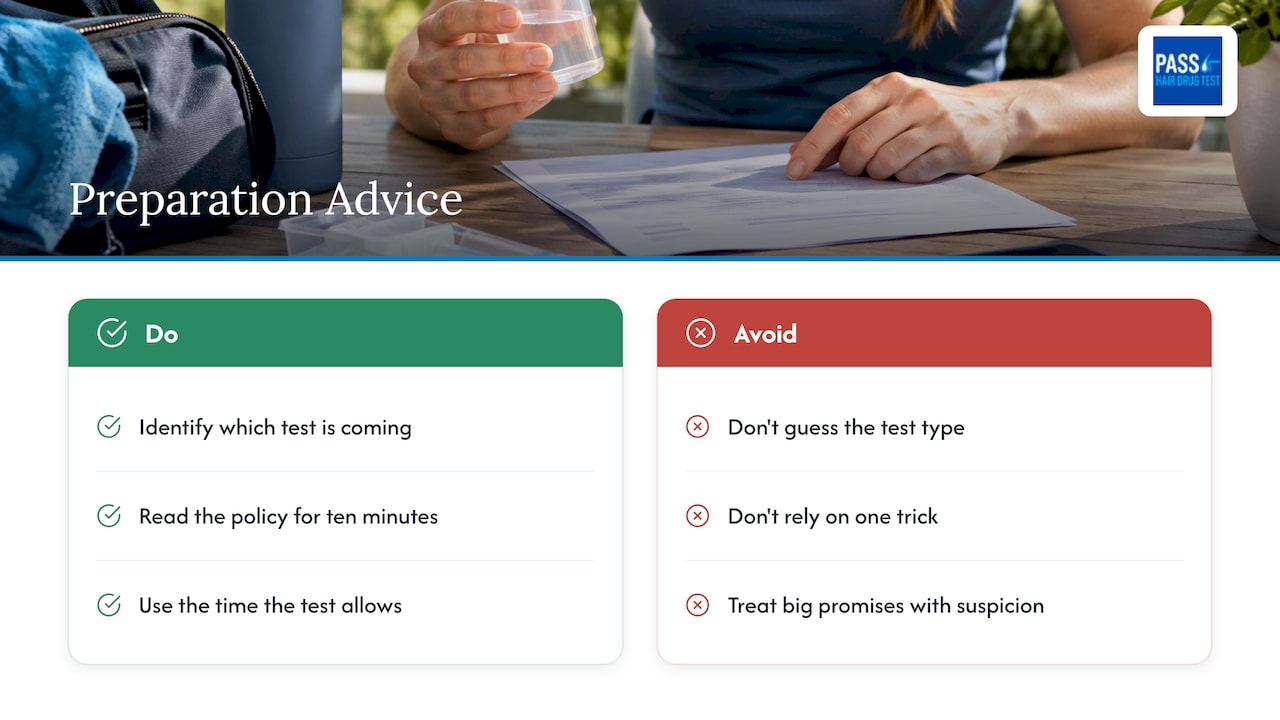
People come to us after learning a test is coming, and the first thing we tell them is to find out which test it is. An athlete worried about a college program is usually thinking about urine. Someone starting a job in coaching or transportation is more likely facing a hair collection. The right preparation depends on that answer, so we would rather you spend ten minutes on the policy than guess.
We have worked in the drug-testing and detox-product industry for more than 20 years, and what we see is that hair is the test people understand least. They do not know it reaches back about three months, that the lab confirms with a second method, or that hair color and treatments change how results read. We built our guides, shampoos and the multi-step Mike’s Macujo Method around people with those questions. We offer phone support because the details of a person’s hair, timeline and test type vary, and a general article can only go so far.
Our honest advice is the same whether you buy from us or not: do not rely on a single trick, give yourself as much time as the test allows, and treat anything that promises more than it can show with suspicion.
— MIchael
Preparing for a hair test
If a hair collection is on your calendar, work through this order.
- Confirm the test type. Hair, urine, saliva or blood, and which panel. A standard five-panel includes marijuana, cocaine, opiates, amphetamines and PCP.
- Count your time. Your hair length tells you how many weeks the sample covers, and new growth is what eventually changes the picture.
- Learn the collection rules. Head hair is preferred, with body hair as an alternative in some cases.
- Do not stack random products. Harsh treatments can damage hair and the collector may notice.
- Get support early. Questions are easier to solve a few weeks before collection than the night before.
Our hair follicle drug testing page explains what hair cleansing involves, and the Hair Drug Test Information page covers detection basics.
Hair cleansing products
For people who need to prepare, we sell Macujo Aloe Rid Shampoo, Zydot Ultra Clean Shampoo and the multi-step Mike’s Macujo Method, along with urine, saliva and blood products and home test kits. You can see the full range on our drug testing products page, and our shampoo instructions page explains how the method is used. Our team answers questions by phone if you are unsure which fits your hair and timeline.
FAQ
Do athletes get hair drug tested?
Sometimes, but it is not the standard for sport itself. USADA and NCAA programs rely mainly on urine and blood, as their handbooks describe. Hair testing is more common in employment, and in school or league programs that write their own policies.
How often are athletes drug tested?
It depends on the governing body. Athletes under USADA can be tested in and out of competition at any time of year without notice, per the 2026 Clean Sport Handbook. College and school programs set their own schedules, so check your handbook.
Does a sports physical include a drug test?
Usually not. A standard sports physical covers health history and fitness to play. Drug testing, if it happens, is a separate step in competitive or college programs.
How far back can a hair test detect THC?
About 90 days for a standard 1.5 inch sample, based on a growth rate of roughly 1 cm per month. Recent use may not show for several days, because the drug takes time to appear in hair above the scalp.
Can hair color or dye change a hair test result?
Yes. Natural hair color, dyeing, bleaching and heat can all affect results, and external contamination complicates interpretation. That is why a lab result is not the same thing as a precise measure of how much someone used.
Sources
- Review on Toxicology Testing in Hair, Journal of Applied Laboratory Medicine (2025)
- The interpretation of hair analysis for drugs and drug metabolites (Cuypers, 2017)
- Society of Hair Testing consensus on hair testing (2022)
- A review of bioanalytical techniques for evaluation of cannabis
- USADA 2026 Clean Sport Handbook
- NCAA: committee adjusts THC test threshold (2022)
- NCAA banned drugs education, 2011-12
- NCAA Division I news release (2024)
- NCAA Division III compliance form on ineligibility
- Sports physical exam: what to expect
Recommended
- Body Hair Drug Test: What You Need to Know
- Hair Drug Test vs Urine: Which Detects Use When
- Body Hair vs Head Hair: What Drug Test Labs Really Use
- How to Prepare for a Hair Test the Right Way
