No products in the cart.
Uncategorized
20+ Years Testing: Macujo Without Aloe Rid, Safe Substitutes and Risks
02
Sep
Sep
Yes, you can run a Macujo-style routine with generic clarifying shampoos, salicylic-acid cleansers, and food-grade vinegar instead of Aloe Rid, but it’s less reliable and carries more risk to your scalp. The purpose-built formula does specific chemical work that plain drugstore products don’t fully replicate. Keep reading for the substitution list, the risks, and what actually improves your odds.
TL;DR:
- Generic substitutes like vinegar, dish soap, and salicylic-acid treatments can partially replicate the Macujo cycle but lack the penetration technology of purpose-built products, reducing effectiveness.
- Multiple cycles may be necessary depending on recent drug use, with the final wash performed as close as possible to the test time, preferably within a few hours.
- Heavy recent use, chemical hair treatments, or tests scheduled within 24 to 48 hours make external detox methods unlikely to succeed, leaving abstinence as the only reliable option.
- Improper execution, such as under-dosing, mixing incompatible chemicals, or ignoring scalp irritation, significantly decreases chances of success and risks scalp damage.
- Using a complete, tested hair cleansing kit ensures proper formulation and contact times, minimizing guesswork and increasing the likelihood of effective detoxification.
Table of Contents
Table of Contents
- Macujo Without Aloe Rid: A Step-by-Step Substitution Guide
- How Many Cycles Do You Need and When?
- Does This Actually Work? What the Evidence Shows
- Protecting Your Scalp When You Skip Aloe Rid
- Common Mistakes That Sink a DIY Macujo Attempt
- What 20+ Years in This Industry Has Taught Us
- Why the DIY Version Is a Bigger Gamble Than People Admit
- Skip the Guesswork With a Complete Hair Cleansing Kit
- Sources
Macujo Without Aloe Rid: A Step-by-Step Substitution Guide
The original Macujo method works by cycling through opposite chemical states: an acid to force the cuticle shut, an alkaline agent to force it back open, a harsh detergent to strip surface oils, and a clarifying agent that penetrates the shaft to disrupt metabolites lodged inside. Each step has a job. Skip one or swap it for the wrong substitute, and the whole cycle loses its point.
Here’s a practical order using products available at any pharmacy:
- Acid step: Apply undiluted white vinegar or a 5% food-grade vinegar solution to the scalp and hair for a few minutes. This mimics the original acid rinse, which tightens the cuticle before the alkaline hit.
- Alkaline/detergent step: Work in a strong dish detergent like Dawn, concentrating on the scalp, then rinse.
- Clarifying step: Apply a salicylic-acid scalp treatment (a Neutrogena T/Sal-type product works for many people) and let it sit briefly before rinsing. Community reports suggest this is the weakest link when Aloe Rid is missing, since it lacks the penetration enhancers found in specialized formulas.
- Repeat rinse and clarifying shampoo: Finish with a standard clarifying shampoo to strip residue.
Avoid anything not designed for skin contact. Household bleach, ammonia-based cleaners, and industrial degreasers show up in forum threads as “hacks,” but they risk chemical burns and won’t improve your result. Never combine bleach with vinegar or ammonia products in the same session; the fumes alone can be dangerous.
Pro Tip: Do the whole cycle in one sitting rather than spreading steps across a day. The acid/alkaline sequence only works if the cuticle is still reacting from the previous step.
How Many Cycles Do You Need and When?
Cycle count depends entirely on how much and how recently you used. Light, infrequent users sometimes get by with several cycles spread over several days. Heavy or daily users, and anyone using within the last week or two of a test, typically need multiple cycles, and even that offers no guarantee without a specialized formula.
A few scheduling points matter more than people expect:
- Space out sessions rather than running back-to-back cycles the same day; over-processed hair breaks and looks obviously treated.
- Do your final wash as close to sample collection as reasonably possible, ideally within a few hours, since external treatment effects fade quickly and recontamination from touching hair with unwashed hands is a real issue.
- Don’t assume cutting hair short solves anything. Labs typically test the 1.5 inches closest to the scalp, representing roughly the last 90 days of growth, and a suspiciously short or uneven cut can itself raise questions.
If you’re facing a test with only a day or two of notice and heavy recent use, no cycle count fixes that math.
Does This Actually Work? What the Evidence Shows
Metabolites from THC and other substances bind inside the hair cortex, not just on the surface, which is why confirmatory testing with GC-MS methods catches residue that a surface wash misses. That’s the core problem with any external wash, Aloe Rid included: you’re trying to reach something embedded inside a keratin structure from the outside.
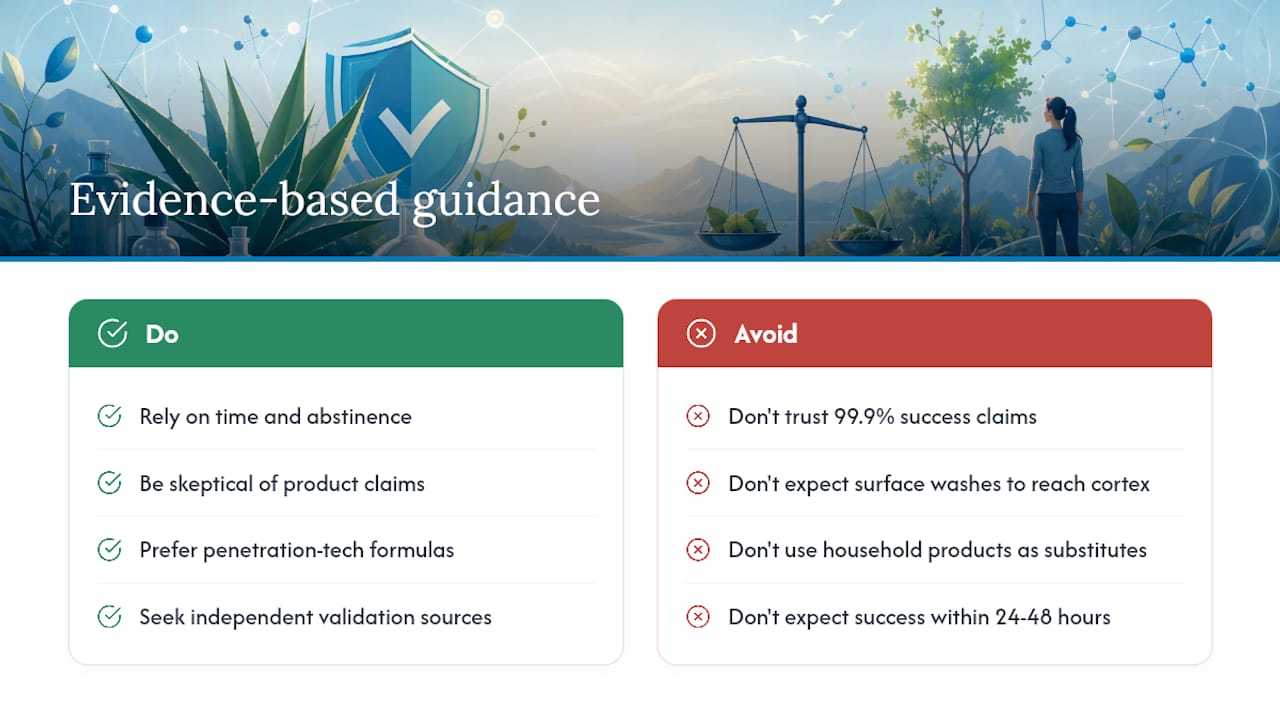
Specialized detox shampoos marketed for hair drug tests claim high success rates, but those claims lack independent, peer-reviewed clinical validation, and real-world performance is inconsistent.
That caution applies to Aloe Rid too, not just to the substitutes. The difference community analyses point to is the penetration technology in aloe-based formulas, things like propylene glycol and microsphere delivery, which household products simply aren’t engineered to include. No serious source backs a 99.9% success figure for any product, DIY or purpose-formulated.
Where this gets genuinely unlikely to work: very recent heavy use, a test scheduled within 24 to 48 hours, or hair that’s already been chemically treated (colored, relaxed, permed) in ways that alter how metabolites bind. In those situations, time and abstinence remain the only dependable path. Everything else is odds management, not certainty.
Protecting Your Scalp When You Skip Aloe Rid
Running acid, alkaline, and detergent steps back to back without a formula designed for that cycle puts real stress on skin and hair. Watch for redness that doesn’t fade within an hour, blistering, oozing, or pain that lingers after rinsing. Any of those warrants stopping immediately and seeking medical care rather than pushing through for one more cycle.
A few harm-reduction habits help without undoing the process:
- Patch-test any new product on a small area of scalp 24 hours before a full application.
- Use lukewarm, never hot, water, and keep each step’s contact time short rather than “longer is better.”
- Follow up with a moisture- or protein-restorative conditioner to calm the scalp between sessions.
- Skip anything not formulated for skin, no matter what a forum thread claims worked.
Pro Tip: Visible scalp damage, redness, flaking, or an obviously stripped texture can itself prompt a collector to flag your specimen for closer scrutiny, so cosmetic damage isn’t just a comfort issue.
Common Mistakes That Sink a DIY Macujo Attempt
Most failures trace back to a handful of avoidable errors, and strict adherence to the sequence matters more than people assume.
- Under-dosing the clarifying step. A quick 30-second rinse with a salicylic treatment doesn’t give it time to work; leave it on for the full recommended duration.
- Mixing incompatible chemicals. Combining bleach with acidic products or ammonia creates dangerous fumes and doesn’t improve results.
- Skipping the clarifier entirely to save time, which defeats the purpose of the whole cycle.
- Ignoring irritation signs and running another cycle anyway, which compounds scalp damage without adding cleansing benefit.
If your scalp is raw or bleeding, stop and let it heal before another attempt. If you’ve already tested and the result came back positive or was flagged as invalid, talk to whoever ordered the test about retest policies, and consult a doctor about any chemical injury before doing anything else.
What 20+ Years in This Industry Has Taught Us
Passhairdrugtest has spent more than two decades watching which approaches hold up and which ones fail under real testing conditions.
The pattern we see repeatedly is that household substitutes can approximate the mechanical steps of Macujo, but they can’t replicate the penetration chemistry built into purpose-formulated shampoos. That gap is where most DIY attempts lose ground.
Our advice stays consistent: if the stakes are high and the timeline is short, don’t gamble on kitchen-cabinet chemistry. Choose a tested kit or, if time allows, let abstinence do the work instead.
Why the DIY Version Is a Bigger Gamble Than People Admit
The conventional advice online treats Aloe Rid substitutions like a minor inconvenience, a swap you make because the “real” product costs more or isn’t in stock. That framing undersells what’s actually happening chemically. The acid and alkaline steps in Macujo aren’t just tradition; they’re doing mechanical work that only matters if the clarifying step that follows can actually penetrate the shaft. Pull that piece out and replace it with a generic salicylic wash, and you’ve kept the ritual without keeping the function.
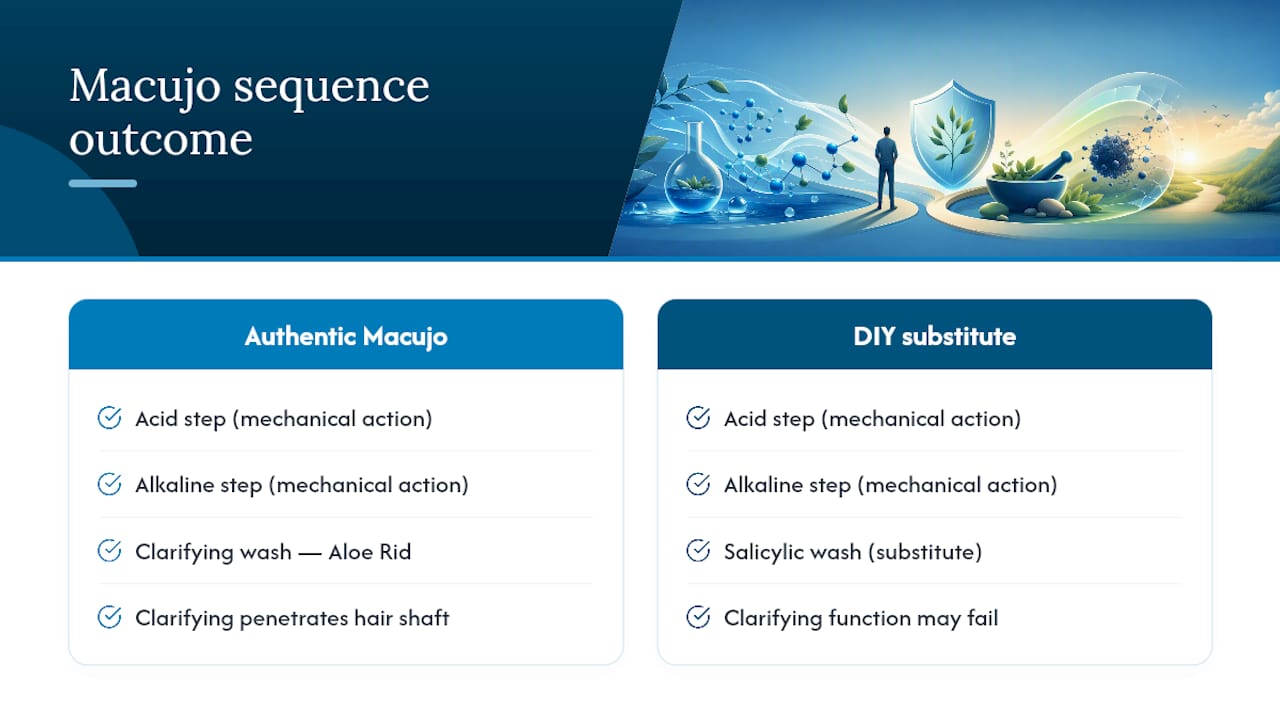
What people underestimate most is timing pressure. Forums are full of success stories from people who had two weeks and did five cycles patiently. Almost nobody posts the version where someone with three days and daily use tried the same protocol and it didn’t help, because there’s no story to tell there beyond “it didn’t work.” That silence skews perception of the odds.
If you’re going the substitute route, prioritize getting the sequence and contact times right before worrying about anything else. Sloppy execution with the correct ingredients beats a perfect sequence with the wrong ones.
— MIchael
Skip the Guesswork With a Complete Hair Cleansing Kit
Buying vinegar, dish soap, and a salicylic treatment separately means juggling three products with no guarantee they’re formulated to work together, and no way to know if a bottle sitting on a shelf for years still performs as claimed. Passhairdrugtest built its hair follicle shampoo kit around exactly the roles the Macujo cycle needs: a clarifying agent, a penetrating detox shampoo, and a follow-up neutralizing wash, sourced and tested as a matched set rather than assembled from whatever’s under your sink.
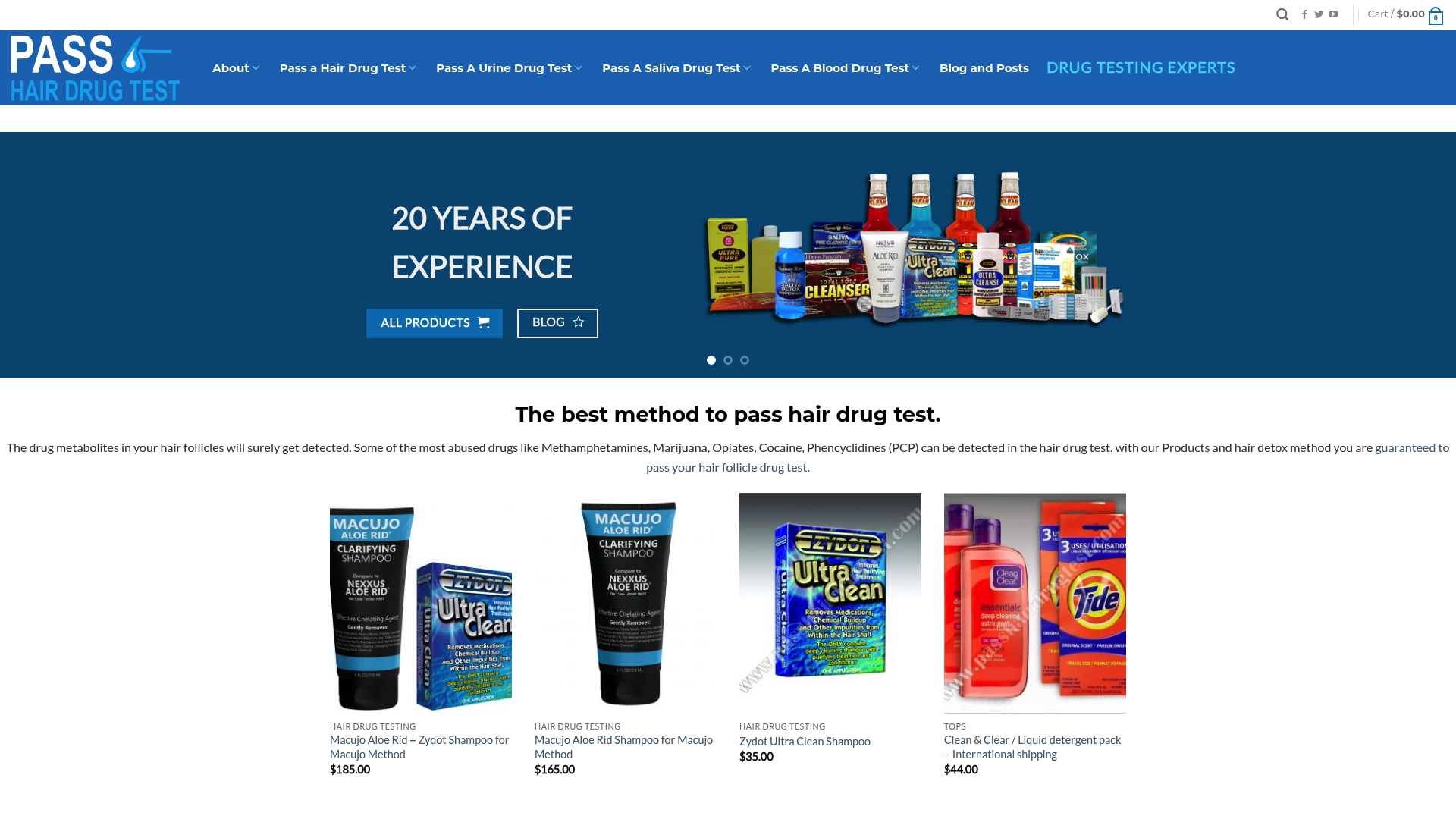
The Zydot Ultra Clean shampoo fills the neutralizer role for your final rinse before collection, and pairing it with a proper clarifying step removes the guesswork of whether a random drugstore substitute has the right pH or concentration. If your timeline is tight or the stakes are too high to experiment, start with the kit rather than piecing together a routine from scattered advice. Check the hair follicle shampoo kit page for what’s included and get your protocol started today.
Sources
- Macujo Aloe Rid Shampoo: The Critical Truth Revealed
- Macujo Method 2017: What It Is, How It Works, and What Changed
- Macujo Method Steps: The Complete Hair Cleansing Guide
This article is general information, not a substitute for advice from a qualified doctor. Consult a qualified healthcare professional about your own circumstances before acting on anything here.
Recommended
- How to Pass a Hair Test: Your Guide to the Macujo Method
- Macujo Method Success Rate: What the Evidence Actually Shows
- What is Macujo method and how it can help you?
