Uncategorized
No Hair for a Drug Test? What Happens Next
Aug
If you have no hair anywhere on your body, a hair follicle drug test cannot be performed, full stop. If you have little head hair but some body hair, collectors will usually take a sample from your chest, legs, underarms, or beard instead. Either way, the situation gets documented, and what happens next depends entirely on your employer’s testing policy.
Here’s the practical reality: this isn’t a loophole. Labs and collection sites see completely hairless donors regularly enough that most policies already spell out a next step. That next step is rarely “you’re off the hook.” It’s usually one of three things: body hair collection, a switch to urine or oral fluid, or a refusal notation on your file.
- If you have some body hair: collectors substitute chest, leg, arm, underarm, or facial hair for the missing head hair.
- If you have zero hair anywhere: the collector documents “unable to collect” and the employer’s policy dictates what happens, which may include an alternative test or a refusal classification.
- Standard sample requirements: a typical hair test needs roughly 90 to 120 strands and about 1.5 inches of hair to cover a 90-day detection window, and the lab confirms any nonnegative result with a second, more precise method.
Table of Contents
Key Takeaways
No hair anywhere on the body means the test physically cannot happen, and what follows depends entirely on your employer’s documented policy for that exact situation.
| Point | Details |
|---|---|
| No hair means no test | With zero hair anywhere on the body, a hair follicle test cannot be physically performed. |
| Body hair is the first fallback | Chest, leg, or beard hair often substitutes for head hair, but it gives a blurrier, averaged timeline. |
| Refusal risk is real | Some policies treat a sudden shave or total hair absence as equivalent to refusing the test. |
| Medical documentation helps | Alopecia or treatment-related hair loss should be documented and presented before the appointment, not after. |
| Passhairdrugtest supports preparation | The site sells Macujo Aloe Rid, Zydot Ultra Clean, and kit-based methods for people with enough hair to test, with no guaranteed outcome implied. |
Table of Contents
- Can You Get a Hair Follicle Test With No Hair?
- How Much Hair Do You Need, and When Does Body Hair Get Used?
- What If You Have No Head or Body Hair at All?
- What Happens When Hair Testing Isn’t an Option?
- Do Detox Shampoos or Shaving Actually Beat a Hair Test?
- How Does the Collection Process Actually Work?
- What Do Researchers and Testing Bodies Actually Say?
- What Should You Actually Do the Day Of?
- What Passhairdrugtest Offers If You’re Preparing Ahead of Time
- Further Reading and Primary Sources
- Frequently Asked Questions
- Sources
Can You Get a Hair Follicle Test With No Hair?
A hair follicle test detects drug metabolites that get embedded into the hair shaft as blood carries them to the hair follicle during growth. No follicle activity, no sample, no test. That’s the entire mechanism, and it’s why the presence or absence of hair matters so much more here than it does with urine or saliva testing.
The lab workflow itself is a two-step process, and it doesn’t change based on where the hair came from. First, the sample gets screened using an immunoassay, commonly ELISA. Any sample that comes back nonnegative on that screen then goes through a confirmatory test, usually gas chromatography-mass spectrometry (GC-MS) or liquid chromatography-tandem mass spectrometry (LC-MS/MS). This two-tier structure exists specifically to catch false positives from the initial screen before anyone’s employment status gets affected.
Hair testing typically screens for cannabis, amphetamines, cocaine, opiates, PCP, and MDMA, and it catches patterns of use that urine tests simply can’t see. That’s the entire appeal for employers: a single sample can flag repeated use over months, not just the last few days.
- 0.5 inches of hair ≈ roughly 30 days of history
- 1.5 inches of hair ≈ roughly 90 days of history, the industry-standard lookback window
- Hair grows at different rates in different people, so these windows are approximate, not exact
None of this works if there’s no hair to sample. That’s the entire reason body hair substitution exists as a formal, documented fallback in testing procedures rather than an improvised workaround.
How Much Hair Do You Need, and When Does Body Hair Get Used?
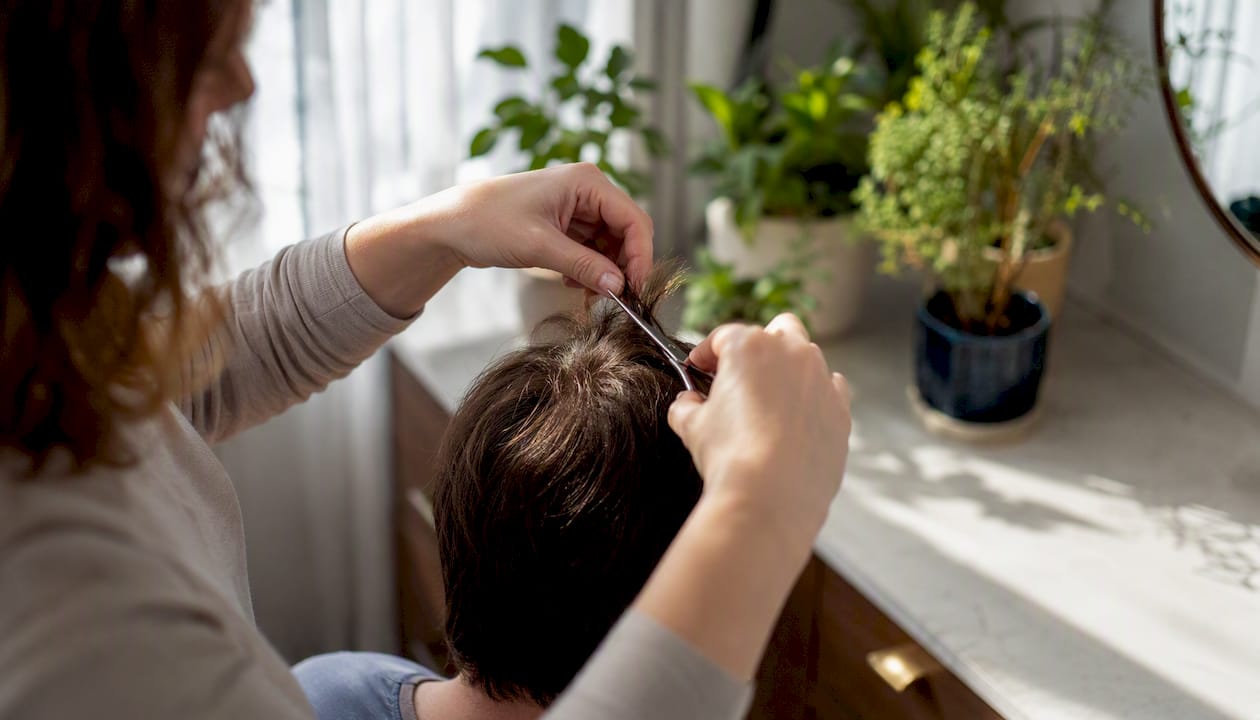
A standard head hair sample runs about 1.5 inches long and requires somewhere between 90 and 120 individual strands, collected in small snips rather than one big chunk. Collectors typically take these snips from the crown of the head, cutting close to the scalp because that’s the newest growth and the most relevant to a recent detection window.
Technicians are trained to pull small sections from underneath a parting or from the underside of the crown specifically so you don’t walk out with an obvious bald patch. It’s a deliberate, low-visibility technique, not a random hack job.
When head hair is too short, too sparse, or absent, collectors turn to body hair: chest, legs, arms, underarms, or a beard. This works in a pinch, but it comes with a real tradeoff. Body hair grows slower and far less predictably than head hair, so it can’t be cut into neat monthly segments the way a 1.5 inch head sample can. Labs treat a body hair result as an averaged window covering a longer, blurrier stretch of time rather than a precise 30 day or 90 day readout.
| Hair length | Approximate lookback window | Practical notes |
|---|---|---|
| 0.5 inch | ~30 days | Minimum useful length; limited history |
| 1.5 inches | roughly 30 days | Common when head hair is short but present |
| 1.5 inches | ~90 days | Standard industry sample for full 90-day window |
If you’ve recently had a haircut, say so before collection starts. Tell the collector how long ago you cut your hair and how short it currently is. This gets noted on the paperwork and can affect how the lab interprets your results, especially if a shorter-than-standard sample gets accepted.
Pro Tip: Ask the collector to write down your hair length and the date of your last haircut directly on the chain-of-custody form. That single note can matter later if your result or sample adequacy gets questioned.
What If You Have No Head or Body Hair at All?
If you genuinely have no hair anywhere, head or body, the test cannot happen. The collector’s job at that point isn’t to improvise. It’s to document the situation and defer to your employer’s or testing agency’s written policy.

That policy usually goes one of three ways. Some organizations pivot straight to an alternative test like urine or oral fluid. Others postpone and ask you to return once you have enough hair growth. And in some workplace policies, showing up with no hair, particularly if you shaved recently, gets treated as equivalent to a refusal to test, which typically carries the same consequences as an actual positive result.
That third possibility is the one nobody warns you about, and it’s the one that can blindside a job applicant who assumed baldness was simply a non-issue.
Medical conditions change this calculation. Alopecia, chemotherapy, radiation treatment, and certain autoimmune conditions are widely recognized as legitimate, documentable reasons for having no hair. If any of these apply to you, bring supporting documentation from a physician before your test date if you can, not after a refusal notation already exists on your file.
If you know in advance that you have no hair to sample, get ahead of it. Contact HR or the testing coordinator before your scheduled collection, explain the situation, and ask in writing what alternative they’ll accept. A phone call the morning of your appointment is too late to change a policy that’s already been decided.
Practical steps worth taking immediately:
- Notify HR or the testing coordinator before the appointment, not during it.
- Bring medical documentation if hair loss is due to a diagnosed condition or treatment.
- Request in writing which alternative specimen type will be accepted.
- Ask the collector to document, in their own words, that no hair was available for collection.
Pro Tip: If a collector tells you they can’t proceed because you have no hair, ask them to sign and date a written note stating exactly that. Keep a copy. If your employer later questions why no hair sample exists, that note is your evidence you didn’t refuse. You simply had nothing to give.
What Happens When Hair Testing Isn’t an Option?
When hair testing isn’t feasible, most employers default to urine testing, and a smaller number use oral fluid (saliva) testing. Blood testing shows up far less often outside medical or forensic settings, mostly because it’s invasive and only captures a narrow window of very recent use.
Each method answers a different question, and that’s worth understanding before you assume one alternative is automatically “easier.”
| Method | Typical detection window | Best for | Limitations |
|---|---|---|---|
| Hair | ~90 days (1.5 in sample) | Long-term or patterned use | Requires adequate hair; poor for very recent use |
| Urine | 1 to 7 days for most substances | Recent use, DOT-mandated screens | Doesn’t reflect long-term patterns |
| Saliva (oral fluid) | Hours to about 1 to 3 days | Very recent use | Narrow window, easily missed |
| Blood | Hours to a few days | Definitive recent exposure | Invasive, used mainly in medical or forensic cases |
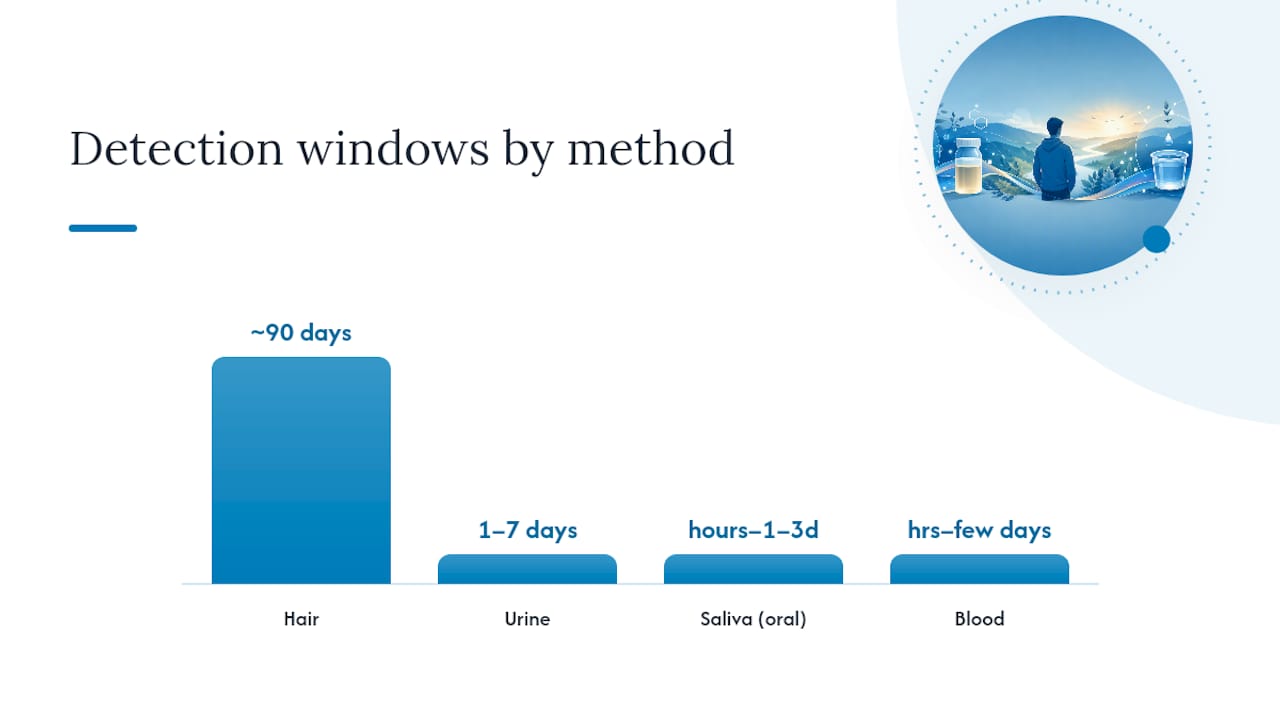
Urine remains the default fallback for most workplace and DOT-style screening programs because it’s fast, cheap, and well established legally. Oral fluid is gaining ground for its ease of observed collection. Blood testing is the outlier here. It’s precise but rarely chosen for routine employment screening simply because it requires a trained phlebotomist and captures the shortest window of the four.
Pro Tip: Ask HR directly which alternative test they’ll accept before your appointment, not during it. The detection window changes dramatically depending on the answer, and you want to know which window you’re actually being measured against.
Do Detox Shampoos or Shaving Actually Beat a Hair Test?
No. There’s no scientifically validated method that reliably strips embedded drug metabolites out of the hair shaft, and claims to the contrary don’t hold up against how the testing actually works. Metabolites get carried into the hair follicle through the bloodstream as the hair grows, which means they’re locked into the internal structure of the strand itself, not sitting on the surface where a wash could remove them.
That distinction matters. Surface contamination, like secondhand smoke exposure, is a real concern labs account for. But metabolites incorporated from within the follicle are a different story entirely, and shampoos, dyes, and bleach have not been shown to reliably remove them. Confirmatory GC-MS testing exists precisely to catch samples that look tampered with or produce inconsistent readings.
Labs can retest, and confirmatory methods are specifically designed to flag inconsistencies that suggest a sample was compromised. Attempts to defeat a hair test rarely go undetected, and they often create more suspicion than the underlying result would have on its own.
Shaving your head right before a scheduled test is one of the most common tactics, and it’s also one of the most likely to backfire. Depending on the employer’s written policy, a freshly shaved head with no advance notice can be interpreted as an intentional attempt to avoid testing rather than a coincidence, and that interpretation often carries the same weight as a refusal.
If you’re researching cleansing options out of genuine curiosity about what’s realistic, it’s worth reading an honest breakdown of how detox shampoos actually work and what they can and can’t reasonably claim to do, rather than relying on forum rumors.
How Does the Collection Process Actually Work?
The observed collection process follows a fixed sequence, and knowing the steps ahead of time takes a lot of the anxiety out of the appointment.
- Identity verification. You’ll show a photo ID before anything else happens.
- Site selection. The collector chooses a collection area, crown of the head by default, or body hair if head hair is insufficient.
- Cutting the sample. Multiple small snips are taken, cut close to the skin, and the root end gets marked so the lab knows which end represents the most recent growth.
- Sealing and labeling. The sample goes into a foil packet, sealed and labeled in your presence.
- Chain-of-custody paperwork. You and the collector both sign documentation establishing an unbroken record of who handled the sample from collection through lab delivery.
Samples must be cut directly from the donor, never pulled from a hairbrush or a previously cut clipping, which closes off an obvious avenue for substitution.
If your result comes back nonnegative on the initial ELISA screen, it automatically moves to confirmatory GC-MS or LC-MS/MS testing before anyone acts on it. That confirmation step typically adds a few business days to the turnaround.
Ask for a copy of the chain-of-custody form at the time of collection, not after the fact. If you ever need to dispute a result or request split-sample testing, having your own copy from day one makes that conversation far easier.
Pro Tip: Also ask the collector, on the spot, how you’d go about requesting reanalysis if your result comes back positive. Most people don’t find out that option exists until it’s too late to use it easily.
What Do Researchers and Testing Bodies Actually Say?
The consensus among peer-reviewed literature and professional testing bodies is fairly consistent: head hair is the preferred specimen, body hair is an accepted backup, and neither one is treated as flawless.
- Reviews describe head hair as preferable specifically because its growth phase is more consistent and predictable than body hair.
- The same research cautions against using body hair for precise timeline reconstruction, since its growth phases are far more erratic from one person to the next.
- Clinical overviews note that hair testing is poorly suited to detecting very recent use, generally missing anything inside the last 5 to 7 days, since new growth hasn’t yet reached the surface.
Body hair testing gives you a usable answer, but not a precise one. Labs report it as an averaged window rather than a month-by-month timeline, because body hair simply doesn’t grow in the same predictable phases head hair does.
The practical upshot: if your case ever hinges on pinpointing exactly when something happened, a body hair result is going to be a blunter instrument than a full head hair sample. That’s a real limitation, and it’s worth knowing before you assume any hair-based result carries the same precision regardless of where it came from.
What Should You Actually Do the Day Of?
If you show up with no hair, or barely any, the single most useful thing you can do is get ahead of the conversation instead of reacting to it in the room. Three things matter here: notify, document, and request.
Notify HR or the testing coordinator before your appointment, not when you’re already sitting in the chair. Document everything, medical notes if hair loss is condition-related, and a written record of any conversation about alternative testing. Request, in writing, which alternative test method will be accepted if hair collection isn’t possible, so there’s no ambiguity later about what was agreed to.
Keep every interaction professional and unemotional, even if the situation feels unfair. A calm, documented paper trail protects you far more than a frustrated conversation with a collector who has no authority to change company policy anyway.
What Passhairdrugtest Offers If You’re Preparing Ahead of Time
Passhairdrugtest sells hair-cleansing shampoos, multi-step kits, and detox guidance for people researching how to prepare before a scheduled hair follicle test, and no product on the market, ours included, guarantees a specific result on an official lab test.
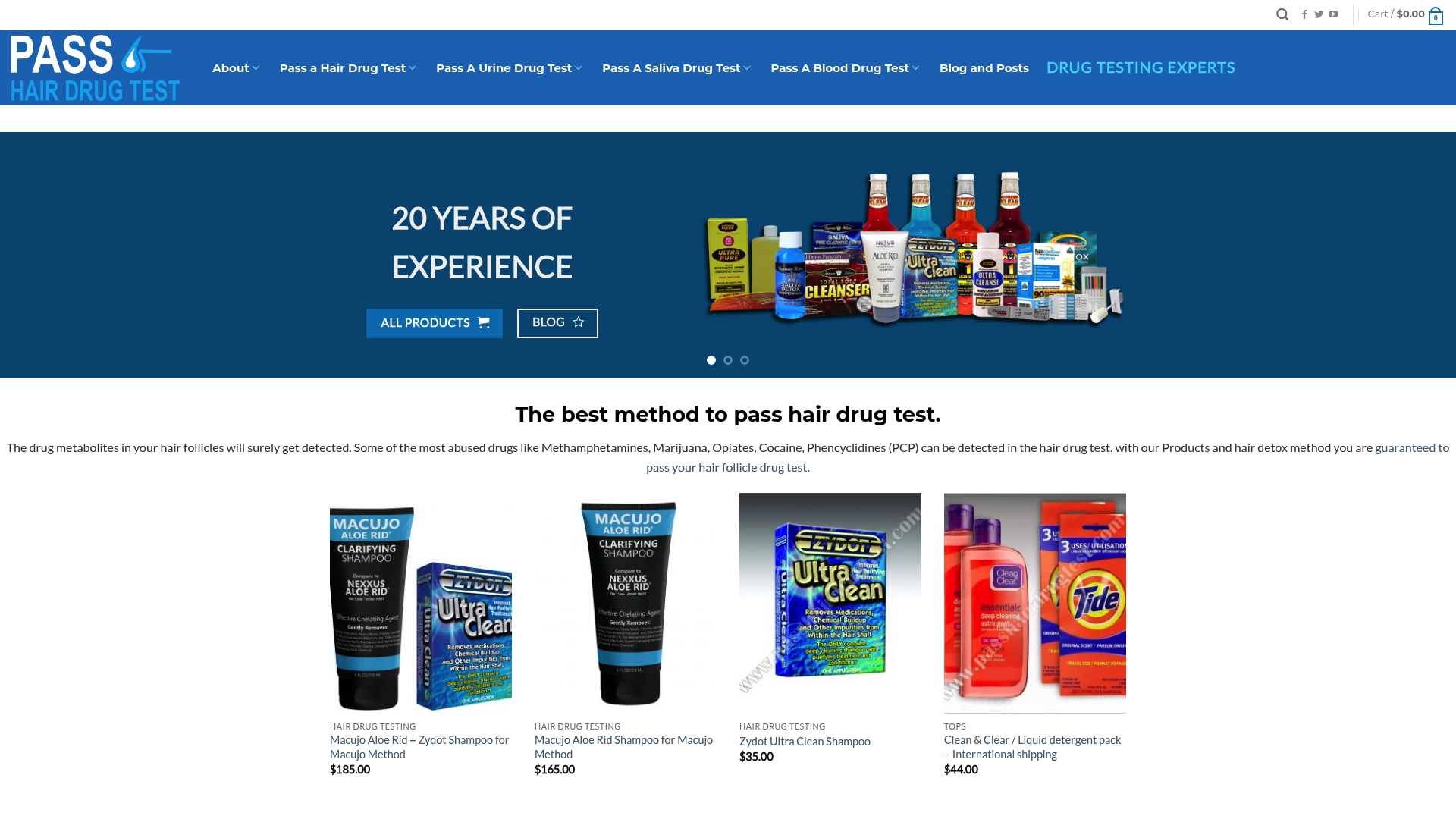
What the store actually offers: the Macujo Aloe Rid Shampoo, Zydot Ultra Clean, and the multi-step Macujo Method built around them, all designed around the same reality this article just walked through: metabolites sit deep in the hair shaft, and surface-level products have real limits. If you have enough hair to be tested and want to understand what a thorough cleansing regimen actually involves before your appointment, our hair follicle shampoo kit walks through the full process step by step.
Be straightforward with your employer or testing agency about your hair situation, follow their documented policy, and treat any product as preparation, not a guarantee. If you want to see the specific shampoo most customers ask about first, check out the Zydot Ultra Clean shampoo page for details on how it’s used.
Further Reading and Primary Sources
These sources cover the procedural, medical, and policy details referenced throughout this article, and they’re worth bookmarking if you need to reference something specific when talking to HR or a collector.
- Hair Strand Drug Test: How It Works, Uses, and What to Expect — sample size and detection window standards.
- Hair follicle drug test: How it works, uses, and what to expect — screening and confirmatory testing methodology.
- Review article on hair testing (peer-reviewed) — head hair versus body hair methodological limits.
- Hair Drug Testing 101 — body hair substitution and cleansing myth debunking.
- Body hair vs head hair drug test | US Drug Test Centers — collection and chain-of-custody procedures.
- 4 Reasons to Require a Hair Follicle Drug Screen — detection window math per inch of hair.
- Hair collection guidance | PROCOM — policy handling when donors have no head or body hair.
Frequently Asked Questions
Can a hair drug test be done with no hair at all?
No. If there’s no hair anywhere on the head or body, the collector cannot obtain a sample, and the test cannot be performed. The situation gets documented, and the employer’s policy determines what happens next.
What happens if I shave my head before a scheduled hair test?
It depends on your employer’s policy, but many treat a sudden, unexplained shave right before a scheduled test as equivalent to refusing the test, which usually carries the same consequences as a positive result.
Will body hair work if I don’t have enough head hair?
Usually, yes. Collectors commonly substitute chest, leg, underarm, or beard hair when head hair is insufficient, though body hair testing produces a broader, less precise timeline than head hair.
Can detox shampoo help me pass a hair follicle test?
There’s no scientifically validated shampoo or product that reliably removes metabolites embedded inside the hair shaft. Confirmatory GC-MS testing is specifically designed to catch inconsistent or tampered samples.
What if my hair loss is from a medical condition like alopecia?
Document it. Conditions like alopecia or hair loss from chemotherapy are widely recognized as legitimate reasons for an inability to provide a hair sample, and presenting medical documentation before your appointment can help you avoid a refusal classification.
Sources
- Hair Strand Drug Test: How It Works, Uses, and What to Expect
- Hair follicle drug test: How it works, uses, and what to expect
- Review article on hair testing (peer-reviewed)
- Hair Drug Testing 101
- Body hair vs head hair drug test | US Drug Test Centers
Recommended
- Pass hair Drug Test
- How Can I Pass a Hair Drug Test? – Pass Hair Drug Test
- How to Pass a Drug Test on Hair Follicles? – Pass Hair Drug Test
- Hair Drug Test Information – Pass Hair Drug Test
