Uncategorized
Only After Probable Cause: U.S. Military Hair Follicle Testing
Sep
The U.S. military does not use hair follicle testing as a routine drug screen. Urinalysis is the mandated method under the Department of Defense’s Military Personnel Drug Abuse Testing Program, and hair testing surfaces only in targeted investigations after probable cause is established. Military courts, including the Air Force Court of Criminal Appeals in U.S. v. Bethea, have upheld hair evidence as admissible when it was lawfully seized and properly authorized.
TL;DR:
- Hair follicle testing is only used in military investigations after probable cause is established, not as part of routine urinalysis screening.
- The detection window for scalp hair is about 90 days, with drug metabolites embedded inside the hair shaft, making washing ineffective at removing traces.
- Proper collection, documentation, and chain of custody are critical, as legal admissibility depends heavily on lawful seizure and follow-up lab confirmation.
- Urinalysis remains the primary screening tool, while hair testing serves as a longer-term forensic investigation aid rather than a routine check.
- Disputing a hair test result relies on verifying lawful process, documentation, and confirmatory testing, not on the detection window itself.
Table of Contents
Table of Contents
- How the Military Actually Uses a Military Hair Follicle Test
- What Detection Windows Actually Tell You
- Collection, Chain of Custody, and Why the Process Matters
- What to Do if You’re Asked for a Hair Sample
- Hair Testing vs. Urinalysis and Other Methods
- What Passhairdrugtest Brings to This Topic
- An Editorial Take on Hair Testing’s Real Role
- Ready to Understand Your Hair-Cleansing Options?
- Sources
- FAQ
How the Military Actually Uses a Military Hair Follicle Test
Urinalysis is the backbone of the Military Personnel Drug Abuse Testing Program, and DoD policy requires specimens to move through certified labs under strict chain of custody. New entrants get tested within 72 hours of accession as part of that mandated cycle, according to DoDI implementation guidance. A hair follicle drug test doesn’t fit into that rotation. It shows up when investigators need a longer look backward, and only under specific conditions:
- A positive urinalysis triggers a follow-up investigation into the scope or timeline of use.
- Command or law enforcement establishes probable cause tied to suspected drug activity.
- A magistrate authorizes the seizure based on an affidavit connecting prior evidence to a fair probability that hair will contain drug metabolites.
Court records back this pattern up. In U.S. v. Bush, the Court of Appeals for the Armed Forces reviewed hair analysis results, including lab concentration figures, as part of a broader evidentiary record built from investigative leads. Legal commentary on Army drug testing echoes the same theme: urinalysis is the authorized program method, while hair testing plays a supporting, forensic role rather than a frontline one.
What Detection Windows Actually Tell You
Hair testing looks back further than any other matrix the military uses, and that’s exactly why it gets reserved for investigations instead of routine checks.
A commonly cited detection window is around 90 days for a standard scalp hair sample, based on general hair drug test guidance, though the real window depends on hair length and growth rate. Body hair grows slower and can extend detection well beyond that range, which is one reason investigators sometimes request both types when scalp hair is unavailable or too short.
The biology explains why washing doesn’t erase the record. Drug metabolites get trapped inside the hair’s cortex as the strand forms, not just smeared on the surface, so surface-level cleaning rarely removes what’s already incorporated into the shaft. That said, hair testing has real limits. It’s built to detect a pattern of exposure, not to cleanly separate a single incident from repeated use, and labs generally avoid claiming that kind of precision in a report.
Collection, Chain of Custody, and Why the Process Matters
None of the science behind a military hair drug test means anything if the sample itself was mishandled. Collection and documentation decide whether a result ever makes it into evidence.
Forensic guidance from the UNODC’s hair testing manual lays out the basics collectors are expected to follow:
- Take the sample from the posterior vertex of the scalp, where growth rate is most consistent.
- Cut a pencil-thickness bundle close to the scalp and keep the root ends aligned and marked.
- Package the sample to prevent contamination and label it immediately with collection details.
- Route it through documented chain of custody to a certified lab for analysis.
Labs then run an initial immunoassay screen, followed by confirmatory testing with GC-MS or LC-MS/MS methods when a screen comes back positive. That confirmatory step matters legally: courts weigh both scientific reliability and the lawfulness of the seizure, and a Bethea-style affidavit tying prior evidence to probable cause is often the difference between admissible and excluded results.
Pro Tip: If you’re ever told a hair sample was taken without any accompanying paperwork explaining the legal basis for the seizure, that’s the first thing to flag to counsel; missing documentation is often the weakest link in a hair-testing case.
What to Do if You’re Asked for a Hair Sample
Getting pulled aside for a hair sample is unsettling, but how you handle the next twenty minutes can matter later.
- Confirm the collector’s identity and their authority to take the sample.
- Ask to see the chain-of-custody paperwork before collection begins.
- Ask whether a magistrate authorization or written order backs the request.
- Request access to JAG or independent legal counsel before proceeding if you have any doubt about the process.
- Ask about timelines for results and whether independent or second-lab testing is an option if you dispute the outcome.
Pro Tip: Write down names, times, and exactly what was said during collection as soon as you can. That contemporaneous record is often more useful to an attorney than anything you’ll remember weeks later.
Do not alter, wash, or destroy hair before or after a sample is taken, and do not physically resist collection once proper authorization is confirmed. Both can be used against you regardless of the underlying drug charge.
Hair Testing vs. Urinalysis and Other Methods
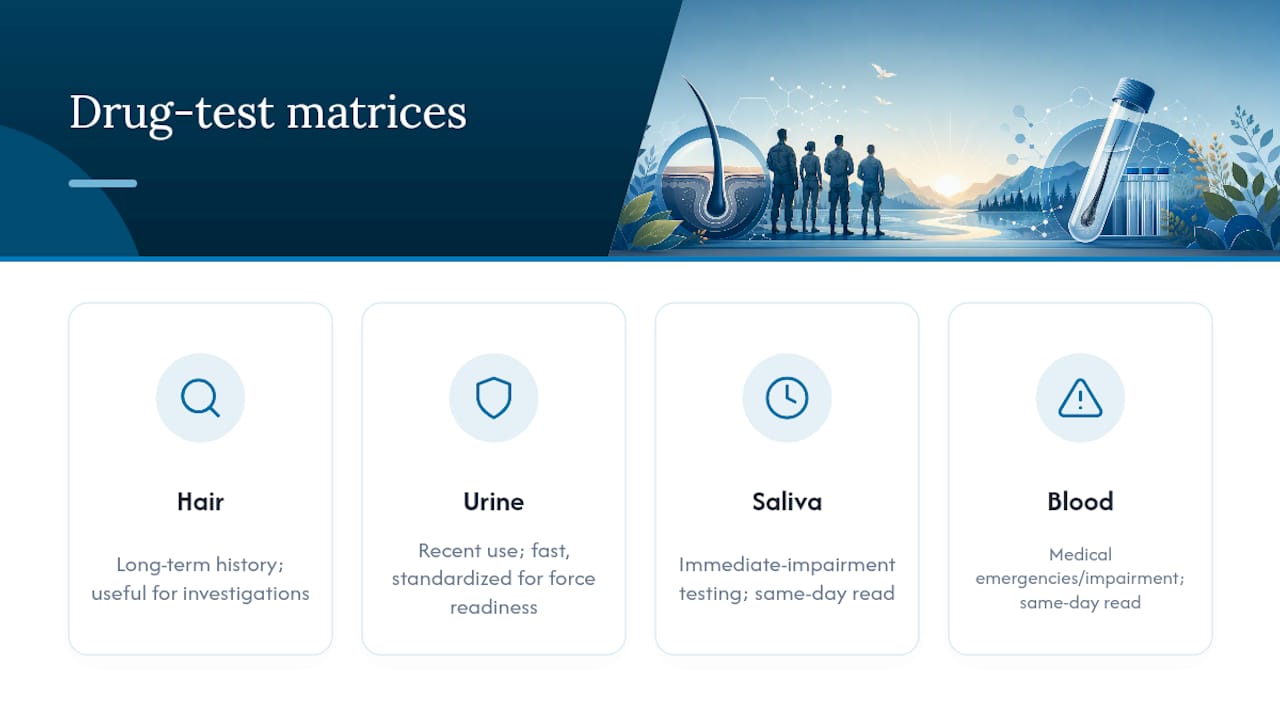
Urinalysis catches recent use and drives DoD program testing because it’s fast, standardized, and built for readiness checks across an entire force. A hair follicle drug test does the opposite job. It reconstructs a longer history, which makes it useful for investigations but impractical for testing thousands of service members on a rotating schedule. Saliva and blood tests fill a third niche entirely. They’re typically reserved for situations involving immediate impairment or medical emergencies, where a same-day read matters more than a historical one. Each matrix earns its place by matching the question it’s actually good at answering.
What Passhairdrugtest Brings to This Topic
The site has spent more than 20 years in the drug-testing and detox-product industry, focused specifically on hair-cleansing science. That specialization centers on products like Macujo Aloe Rid Shampoo, Zydot Ultra Clean Shampoo, and the multi-step Mike’s Macujo Method, alongside hosted guides on hair follicle drug testing built for people trying to understand how these tests actually work.
This article is informational, not legal advice. If you’re facing a hair-sample request tied to a military investigation, the details here should complement guidance from JAG or civilian counsel, not replace it. The site sells hair-cleansing products, and that context is disclosed plainly here so readers understand where the information ends and the commercial interest begins.
An Editorial Take on Hair Testing’s Real Role
The biggest misconception about military drug testing isn’t about detection windows or lab science. It’s the assumption that hair testing is somehow the “real” test lurking behind routine urinalysis, waiting to catch what urine misses. That’s backwards. The record shows hair testing gets used when there’s already a reason to look closer, not as a hidden second layer of routine screening.
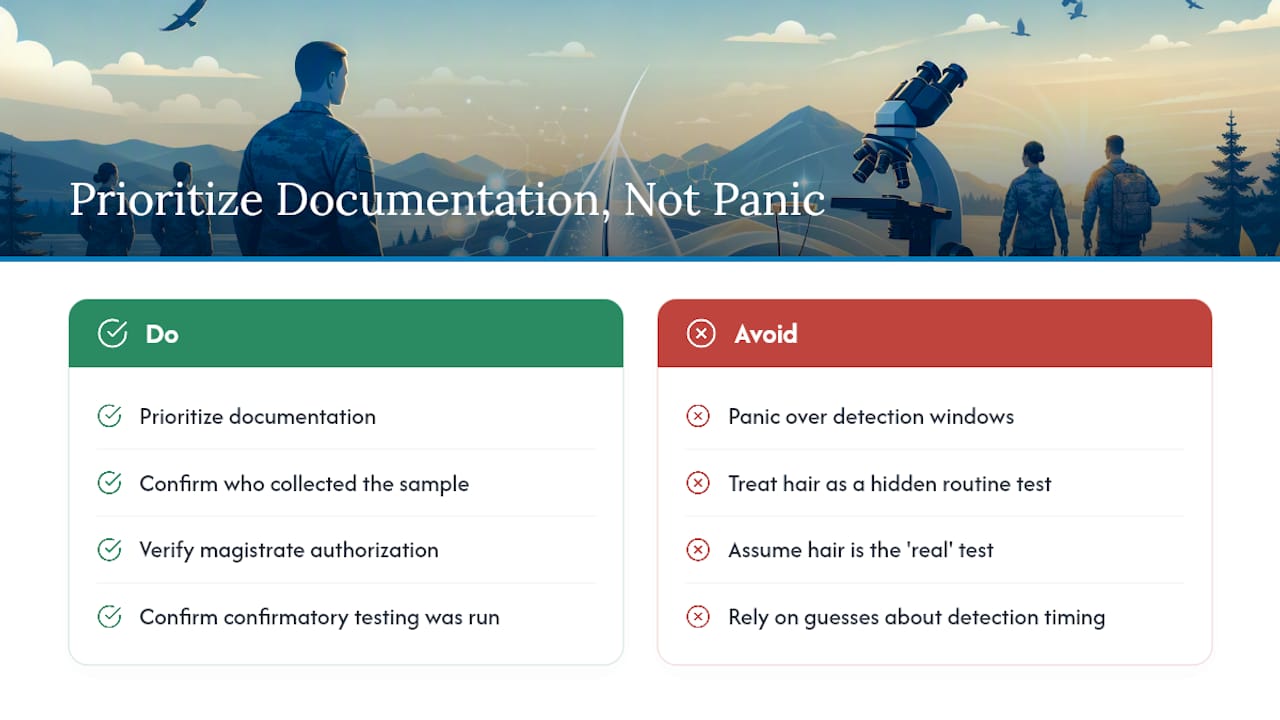
Conventional advice on this topic tends to overcorrect into fear, treating any mention of hair testing as an imminent threat. The more useful takeaway is procedural: the strength of a hair-testing case rests almost entirely on paperwork. Magistrate authorization, chain of custody, and confirmatory lab methods carry more weight than any detection-window statistic.
If you’re facing this situation, prioritize documentation over panic. Know who collected the sample, whether an order backed the request, and whether confirmatory testing was actually run. Those three facts tell you more about your position than any guess about how far back the test can see.
— MIchael
Ready to Understand Your Hair-Cleansing Options?
The business focuses on helping people understand hair-cleansing science before they walk into a testing situation unprepared. Instead of a generic detox aisle, a focused lineup is offered that includes Macujo Aloe Rid Shampoo, Zydot Ultra Clean Shampoo, and the multi-step Mike’s Macujo Method, plus extensive accumulated product knowledge.
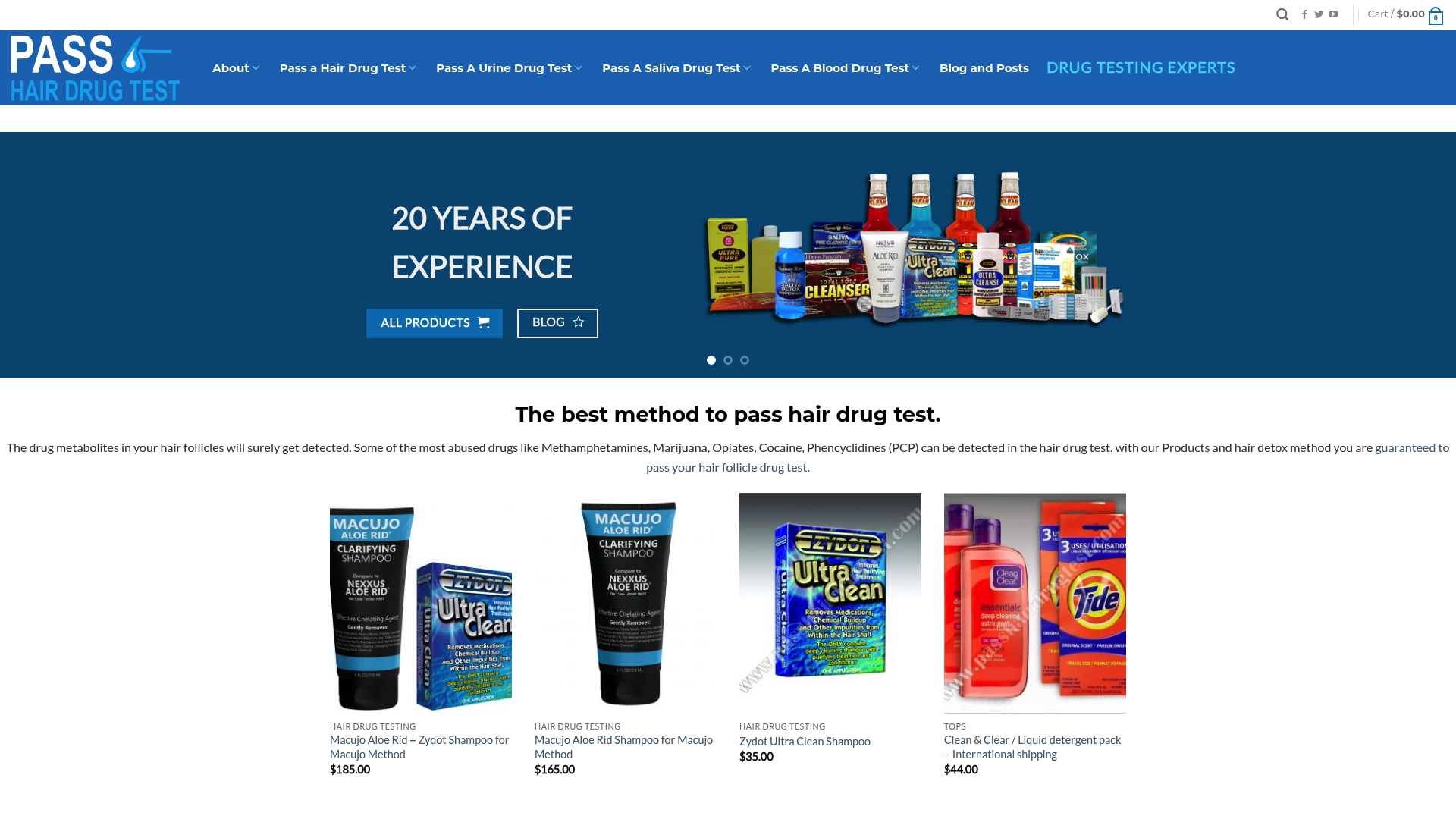
The product catalog covers hair, urine, saliva, and blood testing categories in one place, so you’re not piecing together information from five different sellers. If you want the deeper science first, the hair drug test information page breaks down detection windows and specimen factors in more detail, and the shampoo and method guide walks through how the multi-step protocol is meant to be used. Start with whichever page matches where you are right now, and reach out through the site’s support resources if you have questions before ordering.
This article is general information, not a substitute for advice from a qualified lawyer. Consult a qualified legal professional about your own circumstances before acting on anything here.
Sources
- 10 U.S.C. § 978 / DoD statutory basis for entrant testing
- U.S. v. Bethea, Air Force Court of Criminal Appeals (2005 term)
- UNODC manual: Guidelines for testing drugs under international control in hair, sweat and oral fluid
- Peer-reviewed article on hair testing and forensic toxicology (PMC)
FAQ
Does the military use hair follicle drug tests?
Not as a routine program test. The military relies on urinalysis as its mandated screening method and turns to hair testing only in targeted investigations, typically after probable cause or a positive urinalysis opens the door to further testing.
How long do you have to be clean for a military drug test?
For standard urinalysis, most substances clear the system within days to a few weeks depending on the drug and frequency of use. Hair testing is different: it can reflect a detection window of around 90 days for scalp hair, since metabolites stay locked in the strand long after urine clears.
What kind of drug test does the U.S. military use?
Urinalysis is the primary and mandated method under the Military Personnel Drug Abuse Testing Program, processed through DoD-certified labs with strict chain-of-custody rules. Hair, saliva, and blood testing exist but serve narrower, situational purposes rather than routine screening.
What drugs disqualify you from the military?
Disqualifying substances typically include marijuana, cocaine, amphetamines, opioids, and other controlled substances flagged under DoD drug policy, though specific disqualification rules vary by branch and circumstance. Anyone with questions about a specific substance or situation should consult their command or JAG counsel directly rather than relying on general guidance.
What happens if a hair follicle test result is disputed?
Service members can request chain-of-custody documentation, ask about independent or second-lab testing, and consult JAG or civilian counsel to challenge how the sample was collected or authorized. Admissibility often hinges on whether the seizure was lawful and whether confirmatory lab methods like GC-MS or LC-MS/MS backed the result.
Recommended
- Hair Follicle Drug Test Information
- Will Probation Give You a Hair Follicle Test?
- The Science Behind the Hair Drug Test
