Uncategorized
Home Hair Drug Test Kit: Realistic Prep and Kit Picks
Aug
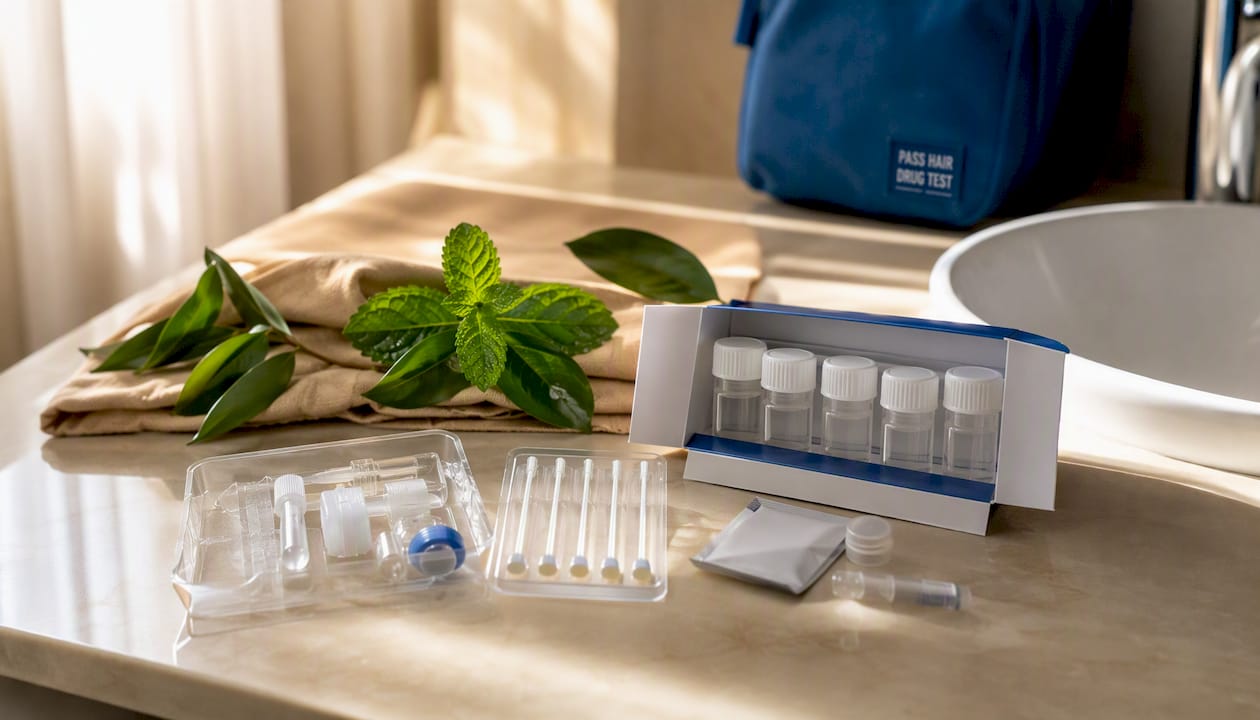
A home hair drug test kit, in the context of this article, is a detox or cleansing kit designed to reduce surface contamination on the hair shaft and improve your odds before a workplace hair follicle test. The honest verdict: these kits can help remove external residue, but they do not reliably strip metabolites that have already been incorporated into the hair via your bloodstream during growth. That distinction matters practically. The NIJ notes that labs actively work to separate ingestion from environmental contamination, and the standard detection window covers roughly 90 days of hair growth. Passhairdrugtest has spent more than 20 years helping people navigate this process with products built around that reality.
Key facts to hold onto before you read further:
- Hair follicle tests analyze a segment cut near the scalp generally representing about three months of growth
- Labs use immunoassay screening followed by GC-MS or LC-MS/MS confirmation on presumptive positives.
- Detox kits target surface contamination; metabolites embedded in the hair shaft are a different challenge.
- Starting a protocol early (ideally 10 or more days before your test) gives treatments the most opportunity to work.
Table of Contents
Table of Contents
- What does a home hair detox kit actually do?
- Why do results vary so much between people?
- How to use a multi-step hair detox kit
- When should you start, and what does it cost?
- How do labs detect tampering?
- What are the risks to your hair and scalp?
- How can you verify your results before the official test?
- Key Takeaways
- What I’ve learned after 20+ years in this space
- The Passhairdrugtest Hair Follicle Shampoo Kit is ready to ship today
- Useful sources
What does a home hair detox kit actually do?
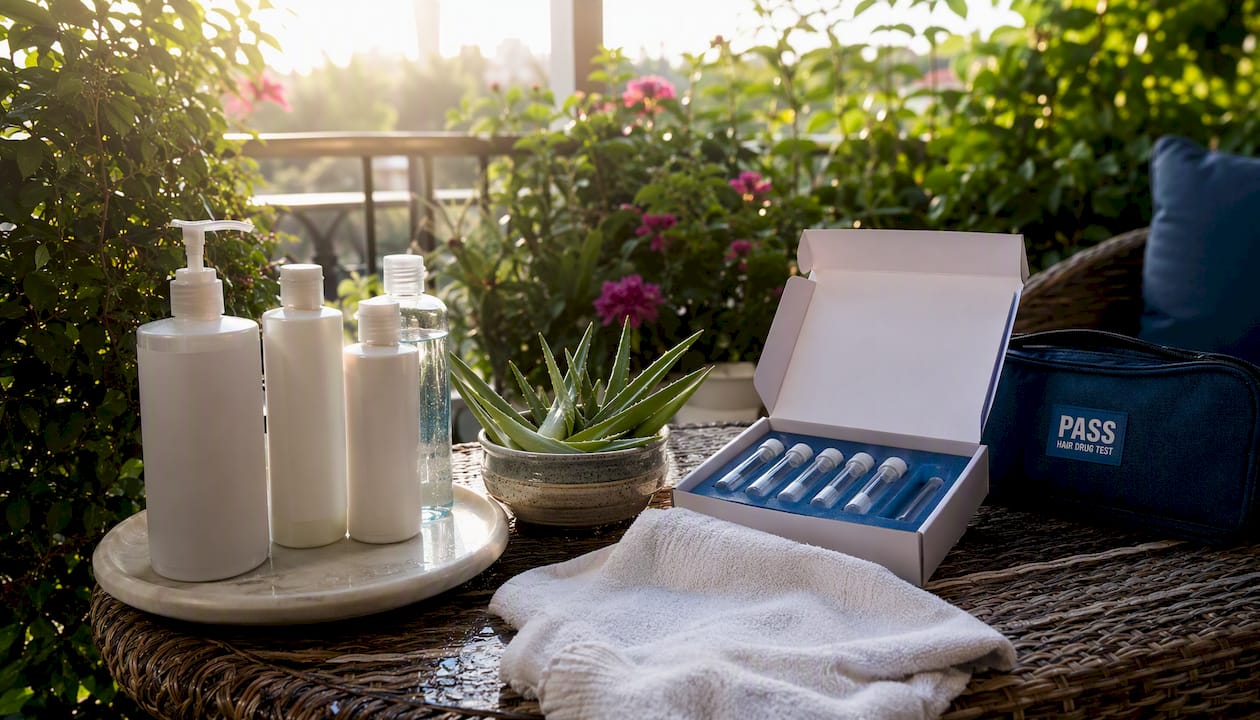
Detox and clarifying shampoos are formulated to deep-clean the hair shaft and remove surface buildup: excess oils, product residue, environmental pollutants, and external drug residue deposited on the cuticle. Common ingredients include high-concentration surfactants, clarifying agents, activated charcoal, bentonite clay, and botanical extracts. Each targets a different layer of buildup on the hair surface.
What they do not do is reach metabolites that entered the hair through the bloodstream during growth. Those molecules are bound inside the cortex of the hair shaft, and consumer clarifying products are not formulated to penetrate that deeply. Laboratory solvent washes use industrial-grade chemicals under controlled conditions; a detox shampoo is a different category of product entirely.
- Clarifying agents and surfactants: Strip oils, product buildup, and surface-deposited residue from the cuticle.
- Exfoliating scrubs: Physically loosen debris from the scalp and outer hair shaft.
- Activated charcoal or bentonite clay: Bind and lift environmental pollutants and some chemical residue.
- Multi-step protocols (e.g., Macujo Aloe Rid + Zydot): Combine a deep-penetrating clarifying shampoo with a final purifying wash to address multiple layers of surface contamination in sequence.
Pro Tip: A single clarifying wash rarely produces the same result as a repeated, multi-step protocol. The Macujo Aloe Rid approach used in Mike’s Macujo Method works through repetition, not a single application.
Why do results vary so much between people?
Forensic toxicology research is clear on this: hair melanin content and individual metabolism are the two biggest variables that determine how much drug actually incorporates into the hair shaft. Two people with identical THC use can produce measurably different concentrations in their hair. Darker, coarser hair tends to bind more drug molecules than lighter, finer hair, because melanin actively interacts with many drug compounds.
Beyond biology, cosmetic history changes the picture significantly. Bleaching, perming, and chemical dyeing all damage the cuticle and can reduce the concentration of incorporated metabolites, though they also weaken the hair structurally. Body hair grows more slowly than scalp hair, so a 1.5-inch body hair segment can represent a much longer period than 90 days.
- Melanin content: — Higher melanin binds more drug; darker hair may test at higher concentrations for the same use.
External contamination adds another layer of ambiguity. Trace amounts of a drug can deposit on hair from the environment, and labs acknowledge this is a persistent challenge even with washing protocols.
How to use a multi-step hair detox kit
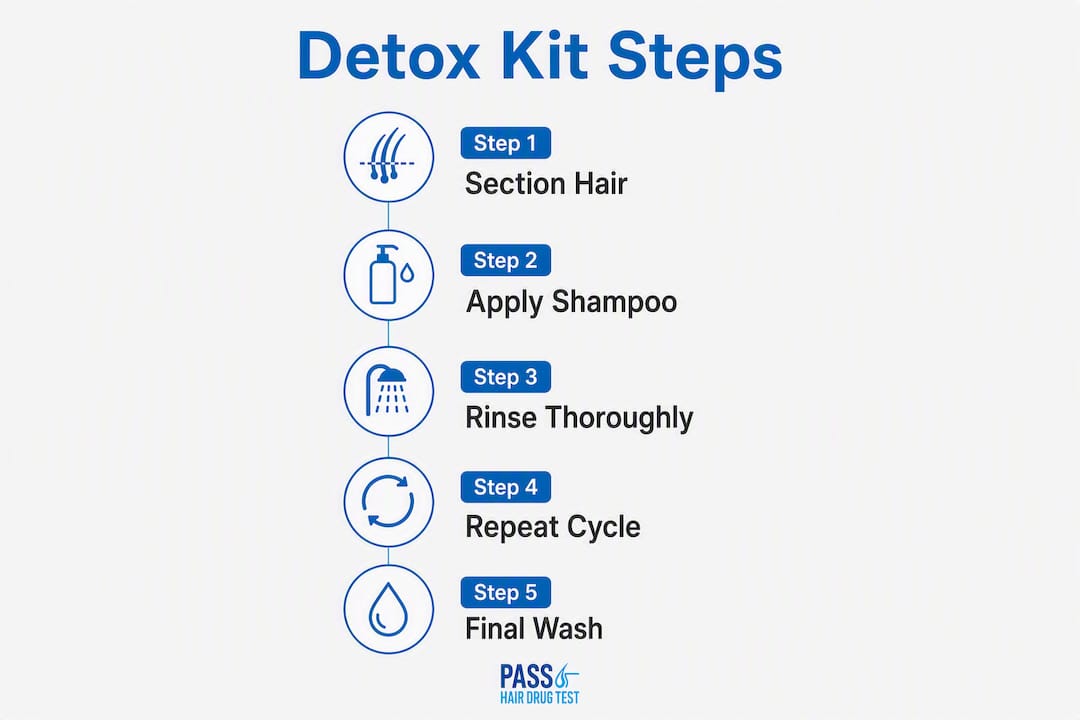
Follow this sequence when using a Macujo Aloe Rid-style multi-step kit. Read the product instructions first; the steps below reflect the general protocol.
- Apply the Macujo Aloe Rid shampoo — Work it into the scalp and along the full length of each strand. Section hair into four quadrants for complete coverage.
Safety warnings: Repeated harsh treatments can cause scalp irritation, chemical sensitivity, and hair breakage. Avoid getting product in your eyes. If you experience burning that does not subside within a few minutes of rinsing, wash the area with cool water and discontinue use. Do not use metal combs or heat styling tools immediately after treatment.
Pro Tip: Section your hair into four quadrants before applying shampoo. This takes an extra 60 seconds and dramatically improves coverage on thick or long hair, where the center sections are easiest to miss.
When should you start, and what does it cost?
According to Quest Diagnostics, labs collect a 100-mg sample (roughly 90–120 strands) cut close to the scalp, with the 1.5-inch segment representing approximately 90 days of growth. That window is the standard, though actual days covered depend on individual growth rate.
| Factor | Standard / Typical |
|---|---|
| Detection window | ~90 days |
| Sample size | ~100 mg (90–120 strands), 1.5 inches |
| Recommended protocol start | 10+ days before test |
| At-home kit costs vary but are commonly within a typical consumer price range |
Starting at least 10 days before your test gives you enough time to complete multiple treatment cycles. Last-minute single washes the night before are far less likely to produce a meaningful change. A typical kit from Passhairdrugtest includes the Macujo Aloe Rid Shampoo, Zydot Ultra Clean Shampoo, and step-by-step instructions; some bundles also include an at-home pre-test kit.
How do labs detect tampering?
Labs run a two-stage process. Labcorp describes the standard workflow: an initial immunoassay screen flags presumptive positives, which are then confirmed by GC-MS or LC-MS/MS. Negative screens are typically reported within 48–72 hours of sample arrival; confirmations take longer.
| Lab Method | Purpose | What It Detects |
|---|---|---|
| Immunoassay screening | Initial broad screen | Drug classes above cutoff thresholds |
| GC-MS / LC-MS/MS | Confirmatory analysis | Specific drug compounds and metabolites |
| Lab washing (pre-extraction) | Remove surface contamination | External residue before analysis |
Labs also assess the physical condition of the strand. Unusual chemical residue, severe cuticle damage inconsistent with normal cosmetic use, or strand appearance that suggests aggressive treatment can prompt additional scrutiny. The NIJ notes that distinguishing ingestion from contamination remains an evolving area, and standardization of washing protocols is still improving.
What are the risks to your hair and scalp?
Aggressive cleansing protocols carry real physical risks. Know them before you start.
- Scalp irritation and chemical burns: Strong surfactants and repeated washing strip the scalp’s natural oils and can cause redness, itching, or burns.
- Hair breakage: Repeated harsh treatments weaken the hair shaft, especially on chemically treated or fine hair.
- Color fading: Clarifying shampoos strip artificial color; expect significant fading after multiple applications.
- Increased sensitivity: Damaged cuticles absorb subsequent products more aggressively, raising the risk of further irritation.
For severe burning or irritation, rinse immediately with cool water for at least 10 minutes. If skin remains red or blistered, consult a clinician. After completing your protocol, use a deep conditioning mask or Nexxus detox shampoo as a gentler maintenance wash to begin restoring moisture.
Pro Tip: Apply a thin layer of petroleum jelly along your hairline and ears before each treatment session. It creates a barrier that reduces direct skin contact with the shampoo without interfering with the cleansing action on the hair shaft.
How can you verify your results before the official test?
An at-home hair follicle test kit gives you a screening-level read on your hair before the official lab test. It is not a substitute for lab confirmation, but it is a useful planning tool.
- Collect a comparable sample. Cut 90–120 strands as close to the scalp as possible, targeting the 1.5-inch segment nearest the root. Use clean scissors.
- Follow the kit instructions precisely. Timing and sample preparation affect the result.
- Read the result within the specified window. Results read outside that window are unreliable.
- If the home screen is negative, treat it as encouraging but not definitive. Home screening kits have a higher rate of false negatives and false positives than laboratory confirmation.
- If the home screen is positive, continue your protocol and retest before the official test date.
Key limitations to understand:
- Home pre-tests use immunoassay screening, the same first-stage method labs use, but without the confirmatory GC-MS step.
- A negative home result does not guarantee a negative lab result.
- Collect your verification sample at the same time of day and from the same scalp location you expect the collector to use.
Key Takeaways
A multi-step home hair detox kit can reduce surface contamination on the hair shaft, but no consumer product reliably removes metabolites already incorporated into the hair via the bloodstream.
| Point | Details |
|---|---|
| Detection window | Labs analyze a 1.5-inch sample representing roughly 90 days of growth. |
| Start early | Begin your protocol at least 10 days before the test for multiple treatment cycles. |
| Kits target surface residue | Clarifying shampoos remove external buildup; incorporated metabolites are a different challenge. |
| Verify before the official test | Use an at-home pre-test kit as a planning screen, not as definitive proof of a negative result. |
| Passhairdrugtest recommendation | The Hair Follicle Shampoo Kit combines Macujo Aloe Rid and Zydot products with step-by-step guidance. |
What I’ve learned after 20+ years in this space
The single biggest mistake people make is treating a detox shampoo like a magic eraser. It is not. What a well-designed multi-step protocol actually does is reduce the surface contamination load on the hair shaft, and for people whose test result sits near a threshold, that reduction can matter. For someone with heavy, long-term use, no shampoo protocol changes the metabolites locked inside the cortex.
What I respect about the Macujo Aloe Rid approach is that it does not pretend otherwise. The protocol is aggressive, repeated, and systematic because surface-level cleaning requires that. Passhairdrugtest has built its product line around that honesty: the kits are real products with real ingredients, paired with a pre-test option so you can check your own hair before the official test. That combination of a cleansing protocol plus a verification step is the most practical approach available to someone in this situation.
No product, including anything sold at Passhairdrugtest, can guarantee a negative lab result. Anyone who tells you otherwise is selling you something different from what we sell.
The Passhairdrugtest Hair Follicle Shampoo Kit is ready to ship today
Twenty years of product refinement went into what Passhairdrugtest offers: a Hair Follicle Shampoo Kit built around the Macujo Aloe Rid Shampoo and Zydot Ultra Clean Shampoo, with a clear step-by-step protocol included. You get the two-product sequence that forms the core of Mike’s Macujo Method, not a generic clarifying shampoo relabeled for this purpose.
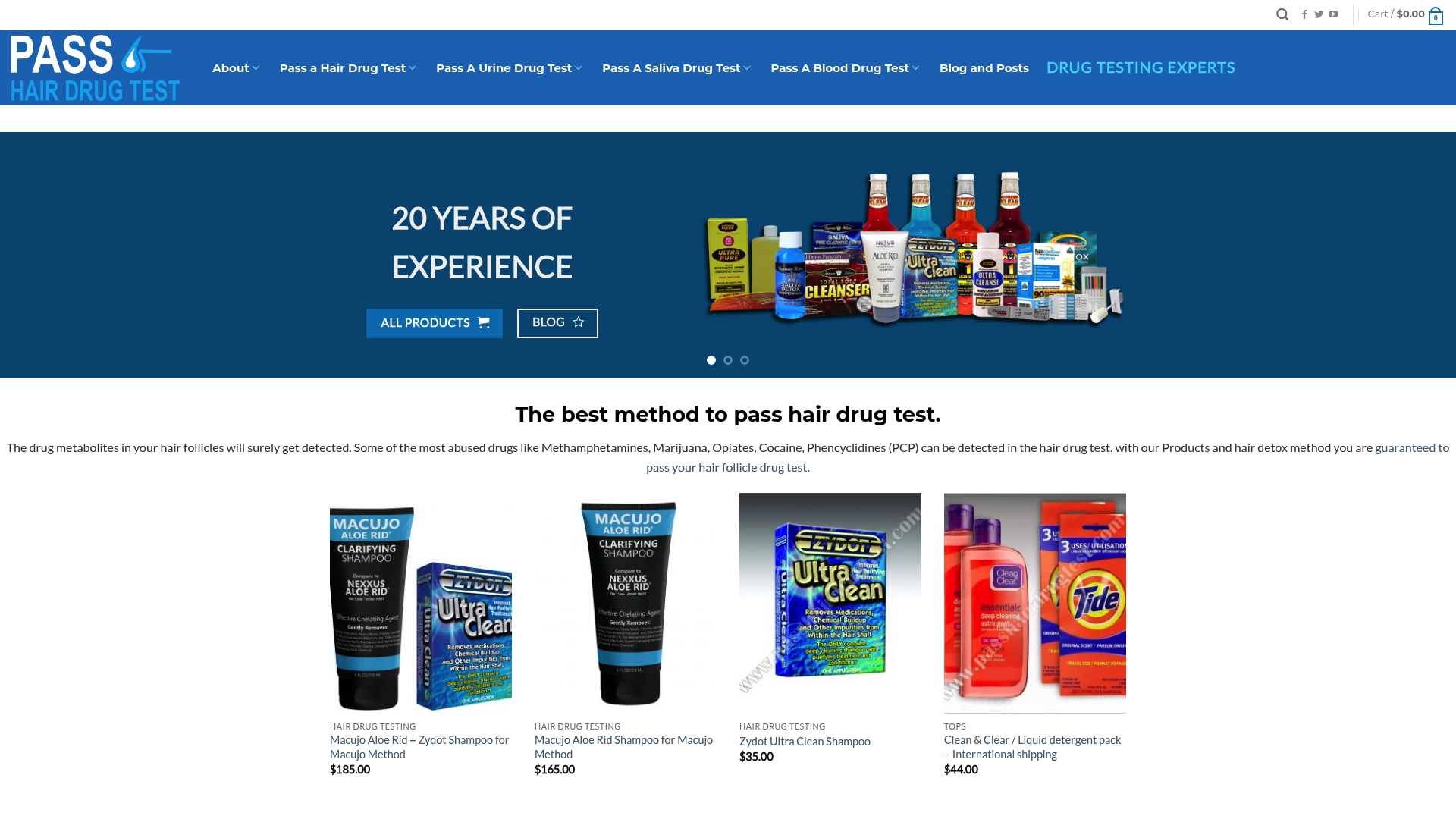
Add the Hair Follicle Test Kit to your order and you have a complete preparation and verification system: cleanse with the shampoo kit, then screen your own hair before the official test date. No lab appointment needed for that pre-check step.
No method guarantees a negative lab result. What this kit gives you is the most thorough surface-cleansing protocol available in a consumer product, paired with a way to check your progress. Order at Passhairdrugtest and your kit ships directly to you.
Useful sources
- NIJ: Detecting drugs in hair — ingestion vs. environmental contamination — primary forensic guidance on lab washing, contamination challenges, and standardization.
- PMC: Forensic toxicology review — hair analysis variability — peer-reviewed research on melanin, metabolism, and inter-individual variability in hair drug testing.
- Quest Diagnostics: Hair testing FAQ (PDF) — lab collection protocol, sample size, and detection window details.
- Labcorp: Hair follicle drug testing process — immunoassay and GC-MS/LC-MS/MS workflow, turnaround times.
- Healthline: Hair strand drug test — how it works — consumer-level overview of costs, accuracy, and what to expect.
- Concentra: Hair drug testing 101 — collection protocol and chain-of-custody guidance.
- Passhairdrugtest: Hair drug test information — publisher’s comprehensive guide to hair testing and product use.
- Passhairdrugtest: How to pass a hair drug test — step-by-step protocol and product recommendations from the publisher.
Recommended
- Hair Follicle Test Kit At Home | Pass Hair Drug Test
- The Science Behind the Hair Drug Test – Pass Hair Drug Test
- Detox vs Clarifying Shampoo for Hair Drug Test Prep
- Body Hair Drug Test: What You Need to Know
