
Uncategorized
90 Day Delta 8 Hair Test Risk, Labs Found It in 9.0% of Samples
Sep
Yes, delta-8 use can produce a confirmed positive for THC metabolites on a hair follicle test. Modern hair testing can flag cannabinoid exposure for months after use, and lab reports commonly list “THC metabolites” without specifying whether delta-8 or delta-9 caused the result. If you’re facing a hair test, the safest move is to treat delta-8 as fully detectable and follow the practical steps below.
TL;DR:
- Hair tests can detect delta-8 THC metabolites for up to 90 days, with standard panels reporting positive as THC metabolites without distinguishing the source.
- Confirmatory testing typically treats delta-8 and delta-9 THC the same unless specifically ordered for isomer separation, making delta-8 detection indistinguishable in routine screenings.
- Trace amounts of delta-8 can deposit in hair even from infrequent use, but regular consumption increases the likelihood of positive results within the detection window.
- Factors such as hair color, cosmetic treatments, and environmental exposure influence individual detection times and metabolite deposit levels.
- Stopping all cannabinoid use well in advance of testing is the most reliable way to avoid positive results, with detox products aiding but not guaranteeing success.
Table of Contents
Table of Contents
- How Does Hair Follicle Testing Actually Detect Delta-8?
- How Long Does Delta-8 Stay Detectable in Hair?
- Why Standard Panels Confuse Delta-8 With Delta-9
- What Changes Your Personal Detection Window?
- What Should You Do Before a Scheduled Hair Test?
- What Labs and Toxicologists Say About Delta-8 Testing Today
- How Passhairdrugtest Can Help You Prepare
- Sources
- FAQ
How Does Hair Follicle Testing Actually Detect Delta-8?
Cannabinoids reach hair through the bloodstream. As a hair follicle grows, blood vessels at the root deposit trace amounts of THC and its metabolites into the hair shaft, where they stay locked in as the strand lengthens. That’s the mechanism behind hair testing’s biggest advantage over urine or saliva: it captures a record of exposure that stretches back for months instead of days.
Labs don’t test the whole strand. They typically cut a segment close to the scalp, usually about 1.5 inches, which represents roughly the most recent three months of growth. Sample shorter, and the window shrinks; use body hair when scalp hair isn’t available, and the timeline estimate gets murkier because body hair grows at a different rate.
The testing itself happens in two stages. First comes an immunoassay screen, a fast chemical test that flags whether cannabinoid levels exceed a cutoff. That screen doesn’t identify which specific cannabinoid triggered it. Positive or borderline results move to confirmatory testing, usually gas chromatography-mass spectrometry (GC-MS) or liquid chromatography-tandem mass spectrometry (LC-MS/MS), both of which identify exact compounds at far higher precision.
Here’s the detail most people miss: even confirmatory testing that’s technically capable of separating delta-8 from delta-9 often isn’t run that way in practice. Standard hair drug test panels are built to detect “THC metabolites” as a category. Unless someone specifically requests isomer-specific analysis, the report comes back as a generic THC-metabolite positive, whether the source was a delta-8 gummy or a delta-9 joint. For anyone hoping delta-8’s semi-legal status would create a paper trail distinguishing it, that distinction usually never gets made.
How Long Does Delta-8 Stay Detectable in Hair?
Ninety days is the number you’ll see repeated across clinical and industry sources, and it holds up for a straightforward reason: it matches the standard 1.5-inch hair segment labs analyze, not some fixed biological rule about how long delta-8 metabolites survive. Cut a longer segment, and the retrospective window stretches further back.
The clearest peer-reviewed evidence for delta-8’s actual presence in hair comes from a validated LC-MS/MS hair analysis that tested 1,787 specimens and found delta-8-THC in 9.0% of them (528 specimens flagged for THC compounds broadly, with delta-8 specifically identified in that 9% subset). That study also established working detection limits: a limit of detection around 6.4 pg/mg for delta-8-THC and a limit of quantitation of 16 pg/mg, meaning the lab’s equipment can reliably flag delta-8 at genuinely trace concentrations.
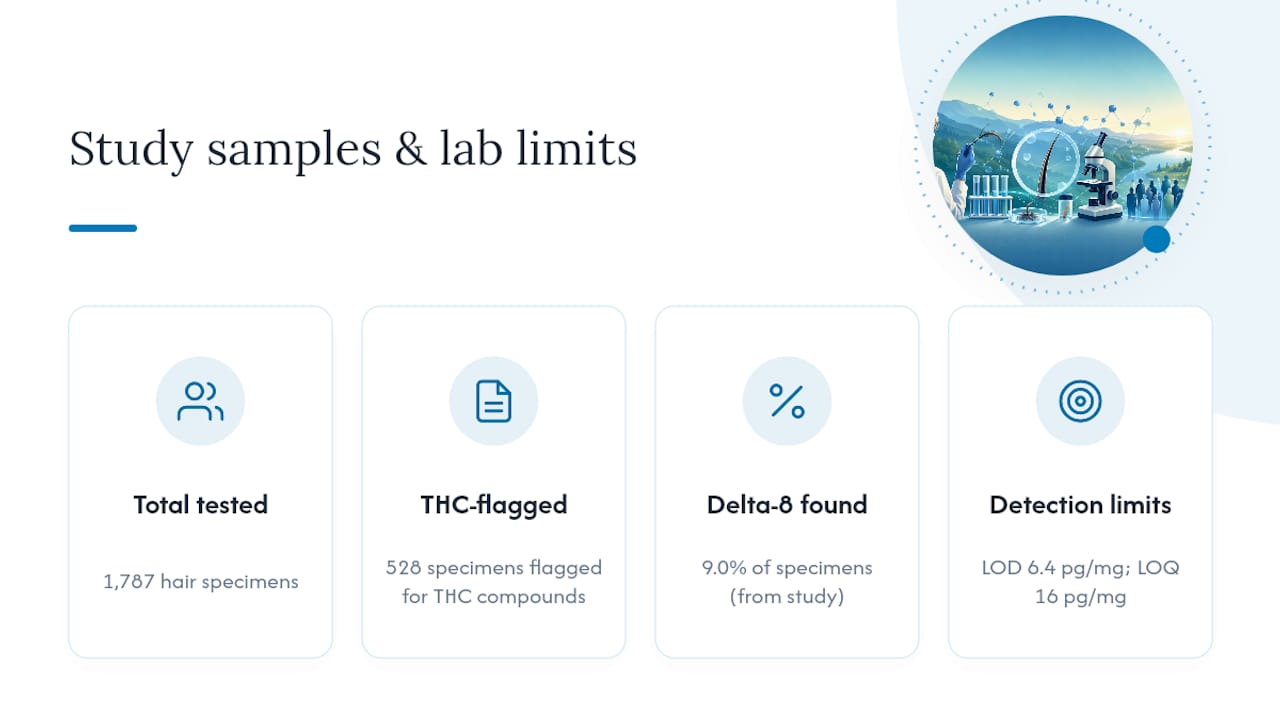
Those cutoffs matter more than most people realize. A limit of quantitation of 16 pg/mg is a tiny threshold. It means even modest, infrequent delta-8 use, if it deposits any measurable amount into new hair growth, has a real shot at crossing into “confirmed positive” territory rather than getting written off as background noise. The distinction between a detection limit and a reportable positive isn’t academic. Labs can technically see a compound below the LOQ, but they won’t report it as positive until concentration clears that quantitation threshold. Trace exposure sits in a gray zone; regular use typically clears it with room to spare.
Why Standard Panels Confuse Delta-8 With Delta-9
Immunoassay screening tests work by using antibodies designed to bind to THC metabolites. The problem is those antibodies aren’t always picky about which THC isomer they grab. Published lab evaluations found that delta-8 carboxy-THC produces 87 to 112 percent cross-reactivity on some commercial immunoassay platforms at a 50 ng/mL cutoff. In plain terms, a screening test built to catch delta-9 metabolites often reacts almost as strongly, or even more strongly, to delta-8 metabolites.
That single fact explains most of the confusion around delta-8 and drug testing. It’s why a hemp-derived, federally legal delta-8 product can trigger the exact same screening alarm as illegal delta-9 marijuana use.
The practical sequence looks like this:
- A screening immunoassay flags THC metabolites above the cutoff, regardless of source.
- The specimen moves to confirmatory GC-MS or LC-MS/MS testing.
- That confirmatory result typically reports as a generic “THC metabolite” positive unless isomer-specific testing was explicitly ordered.
- Employers and medical review officers usually treat any confirmed THC-metabolite result the same way policy-wise, whether delta-8 or delta-9 caused it.
Clinical case reports back this up in real-world settings. A pediatric case series documented patients whose routine screens flagged cannabinoids broadly, with specialized confirmatory testing later identifying delta-8 metabolites specifically, not delta-9. The screening step alone never made that distinction. Only targeted follow-up testing did.
What Changes Your Personal Detection Window?
No two people clear delta-8 metabolites from hair at the same rate. A handful of variables push your detection window longer or shorter, and understanding them helps you gauge your own situation more realistically.
- Frequency and dose. A single edible produces far less metabolite deposition than daily use over weeks. Chronic, heavier use builds cumulative concentration in new hair growth, making a confirmed positive more likely and pushing the window toward the full 90 days.
- Hair color and structure. Darker, coarser hair binds cannabinoids more readily than fine or light hair, largely due to melanin content. This means two people with identical usage patterns can produce different lab results based on hair type alone.
- Cosmetic treatments. Bleaching, dyeing, and chemical straightening can degrade some of the deposited compounds, though labs use decontamination washes specifically designed to rule out surface-level explanations before confirming a positive.
- Environmental exposure vs. ingestion. Secondhand smoke or handling delta-8 products can theoretically deposit trace amounts on hair’s surface, which is why proper lab protocol includes a wash step to distinguish external contamination from actual ingestion.
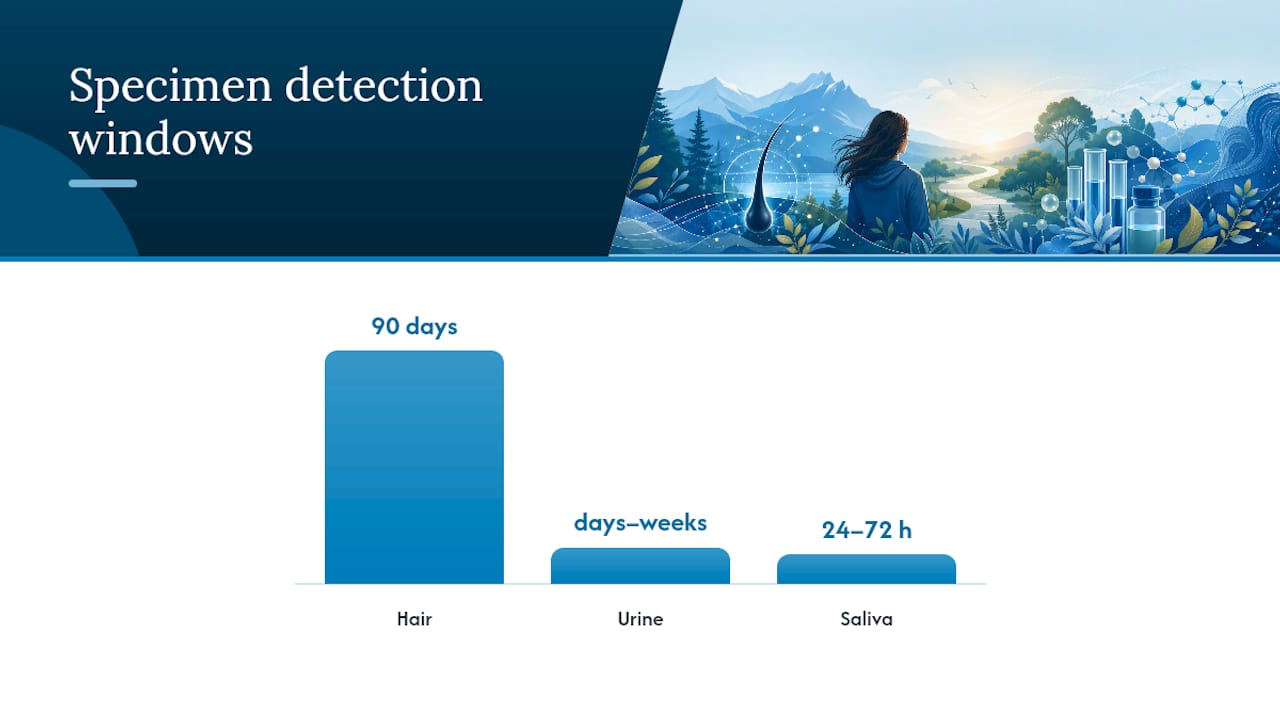
Compare that 90-day retrospective window to other specimen types, and hair’s reach becomes obvious. Urine testing typically covers days to a few weeks. Saliva windows run even shorter, often just 24 to 72 hours. Blood testing captures only very recent exposure, sometimes just hours. Hair is the outlier, and that’s exactly why employers who want a longer look-back period choose it.
Pro Tip: If you’re unsure whether a positive result stemmed from delta-8 or delta-9, ask directly whether isomer-specific confirmatory testing is available before assuming the report is final.
What Should You Do Before a Scheduled Hair Test?
The single most reliable step is stopping all cannabinoid use, delta-8 included, as far in advance of a scheduled test as possible. There’s no shortcut that erases months of deposited metabolites overnight, so timing matters more than almost anything else you control.
Beyond timing, a few concrete moves can help you navigate the process with fewer surprises:
- Document any legitimate, prescribed cannabinoid use ahead of time so a medical review officer (MRO) has context if a question arises.
- Ask your testing coordinator whether isomer-specific LC-MS/MS confirmation is available if you believe delta-8, not delta-9, is the actual source of a positive result.
- Understand that telling an MRO you used a “legal hemp product” rarely changes a reported outcome, since delta-8 products carry no prescription documentation and aren’t FDA-approved.
- Review hair drug test information on testing procedures and timing so you know what to expect before the appointment.
- Look into hair-focused cleansing options, including detox shampoo formulations built specifically for follicle tests, if you’re researching every avenue available to you.
None of these steps guarantee an outcome. What they do is put you in a more informed position instead of walking into a test blind.
What Labs and Toxicologists Say About Delta-8 Testing Today
LC-MS/MS technology can distinguish delta-8 from delta-9 in a research or specialized clinical setting. That capability exists right now. What doesn’t exist, in most cases, is a workplace testing program that actually requests that isomer-specific breakdown. Standard employer and regulatory testing policies are built around detecting the presence of THC metabolites generally, not identifying which specific hemp or cannabis product produced them.
That gap between lab capability and routine practice is the whole story. Clinical toxicologists note that even when isomer separation is technically possible, most programs never ask for it, so the practical outcome for the person tested stays the same either way. If you’re facing a hair test, the only assumption that protects you is treating delta-8 exactly like delta-9.
How Passhairdrugtest Can Help You Prepare
The company specializes in hair-cleansing products, including shampoos and multi-step methods aimed at helping users reduce drug metabolites in hair. Rather than a one-size-fits-all detox rinse, these products are positioned for both light and heavy use patterns, with detailed instructions and support materials for people who want to understand exactly what they’re using and why.
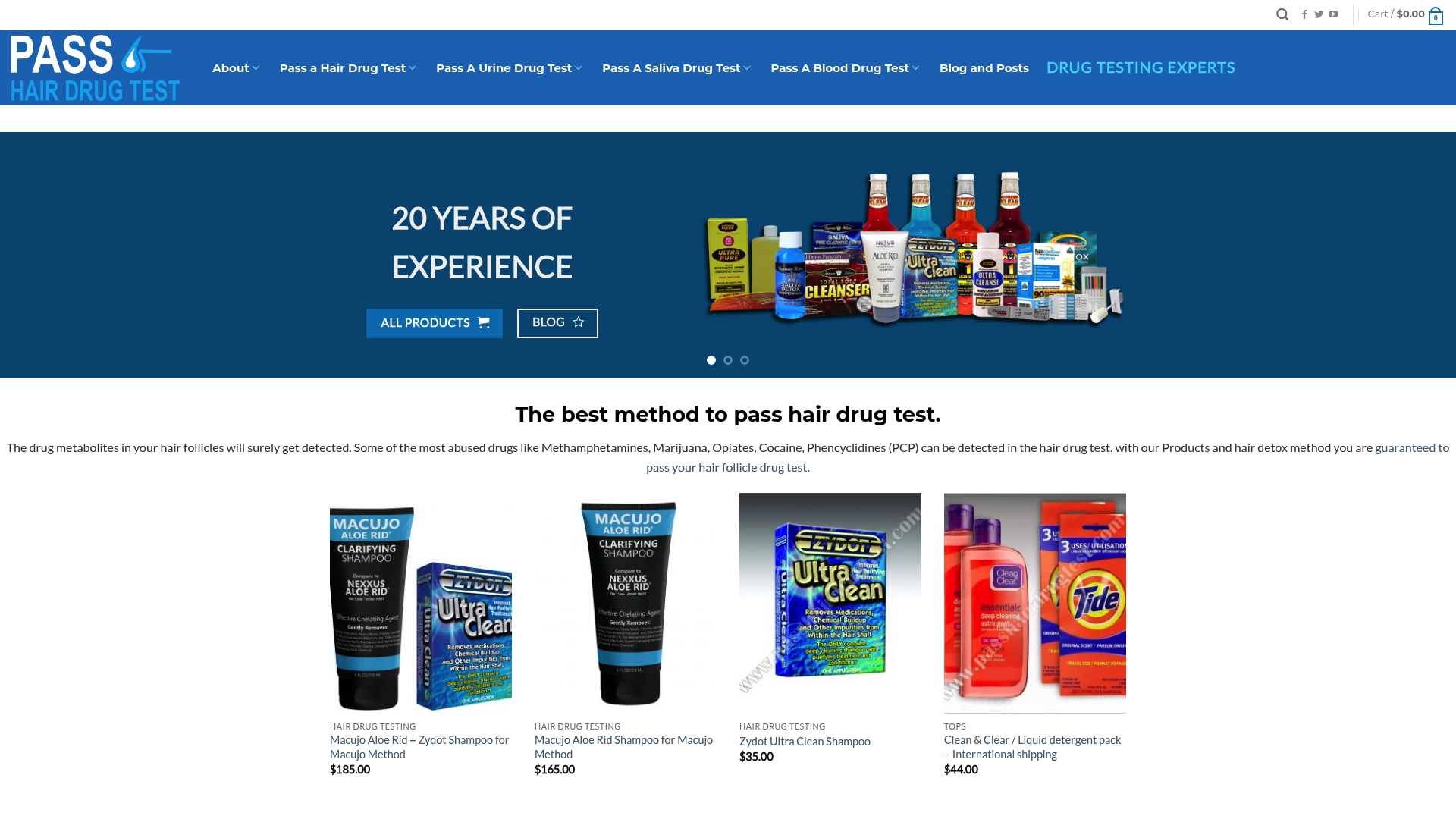
The site offers a multi-step hair follicle detox method and provides phone support for customers using their products. That’s a meaningful difference from generic detox shampoos sold with no instructions and no one to call when a question comes up mid-process. Browse the full hair and drug testing product catalog or read through the hair follicle testing guide to see which option fits your timeline and hair type.
None of this replaces the plain fact that timing and lab requirements still shape your outcome. Products are one tool among several, not a legal shield. If you’re working against a scheduled test date, the smartest first move is checking how to use detox shampoo correctly, then giving yourself as much lead time as your test date allows.
Sources
- The detection of delta‑9‑tetrahydrocannabinol, delta‑8‑tetrahydrocannabinol, delta‑10‑tetrahydrocannabinol, and cannabidiol in hair specimens
- Delta‑8 THC drug test detection and immunoassay cross‑reactivity (Journal of Analytical Toxicology)
- Delta‑8‑THC exposure and confirmation in pediatric patients (case series)
FAQ
Does Delta-8 Show Up on a Hair Follicle Drug Test?
Yes. Standard immunoassay screens cross-react heavily with delta-8 metabolites, and confirmatory testing typically reports a generic “THC metabolite” positive rather than distinguishing delta-8 from delta-9.
How Long Does Delta-8 Stay Detectable in Hair?
Hair testing commonly covers up to 90 days, based on the standard 1.5-inch hair segment labs analyze near the scalp. A peer-reviewed study found delta-8-THC in 9.0% of 1,787 tested hair specimens, using detection limits sensitive enough to catch trace exposure.
How Long Do I Need to Be Clean to Pass a Hair Follicle Test?
There’s no universal number, since detection depends on usage frequency, dose, and hair growth rate, but the 90-day window means recent use, even weeks old, can still surface. Stopping use as early as possible before a scheduled test remains the most reliable step.
Is Delta-8 Hard to Get Out of Your System?
Delta-8 metabolites bind into hair as it grows, so once they’re deposited, no amount of time short of new hair growth removes that record. Products like the hair detox shampoo options Passhairdrugtest sells are one avenue people research, alongside strict avoidance ahead of testing.
Recommended
- 90 Day Risk: Can an Occasional Smoker Fail a Hair Test?
- THC in Hair: What U.S. Cannabis Users Need to Know
- Trace THC in CBD Can Trigger a Positive Hair Drug Test for Workers
