Uncategorized
Eyebrow Hair Drug Test: What You Need to Know
Aug
Yes, eyebrow hair can technically be used in a drug test. Labs almost never choose it, though, for two straightforward reasons: you can’t collect enough of it without causing obvious cosmetic damage, and eyebrow hair grows on a shorter, more variable cycle than scalp hair, which makes detection timelines harder to interpret reliably.
Here’s what that means practically:
- Labs follow a strict specimen hierarchy. Scalp hair is always the first choice.
- If scalp hair isn’t available, collectors move to chest, underarm, or leg hair before considering facial hair.
- Eyebrow and other facial hair sit at the bottom of that list.
- If you’re facing a hair drug test, the collector will almost certainly reach for your scalp first. Eyebrow collection is an edge case, not standard procedure.
Table of Contents
Key Takeaways
Eyebrow hair is technically usable for drug testing but sits at the bottom of every lab’s specimen hierarchy due to volume constraints and unreliable growth cycles.
| Point | Details |
|---|---|
| Eyebrow hair: last resort | Labs prefer scalp, then chest, underarm, and leg hair before considering eyebrow or facial hair. |
| Scalp hair window | Scalp hair provides a segmentable ~90-day detection window based on a ~1.5-inch sample. |
| Body/eyebrow hair window | Body and eyebrow hair are weight-based, not segmentable, and labs may report an overview up to 12 months. |
| Myths don’t hold up | Shaving triggers a refusal finding; topical shampoos have no evidence-based mechanism to remove incorporated metabolites. |
| Passhairdrugtest | Offers Macujo Aloe Rid Shampoo, Zydot Ultra Clean, and multi-step kits as preparation support for those facing a hair follicle test. |
Table of Contents
- How does an eyebrow hair drug test actually work?
- What labs actually look for when collecting eyebrow or facial hair
- Detection windows: head hair compared with eyebrow and body hair
- Accuracy, limitations, and the myths that won’t die
- What SAMHSA, Quest Diagnostics, LabCorp, and CRL say
- If you’re facing a test that may use eyebrow or facial hair
- What the scientific literature says about plucked eyebrow hair analysis
- What I actually think about eyebrow hair testing
- Preparing for a hair drug test: what Passhairdrugtest offers
- Sources
How does an eyebrow hair drug test actually work?
The mechanism is the same regardless of where the hair comes from. When you use a substance, metabolites enter your bloodstream and get incorporated into the hair shaft as it grows during the anagen (active growth) phase. Once those metabolites are locked into the hair structure, they stay there. That’s what makes hair testing more difficult to beat than urine testing.
Lab analysis follows a two-step workflow. First, a screening immunoassay flags any sample that exceeds a threshold for a given drug class. Any positive screen then goes to confirmatory testing, either GC-MS (gas chromatography-mass spectrometry) or LC-MS/MS (liquid chromatography-tandem mass spectrometry). Confirmation testing is what separates a preliminary positive from a verified result, and it’s why false positives from hair tests are relatively rare.
The collection method differs depending on the hair site:
- Scalp hair is collected by length. A standard sample is roughly 1.5 inches cut close to the scalp, about the diameter of a pencil. Length corresponds to time, so labs can segment scalp hair to estimate when drug use occurred.
- Body hair (including eyebrow hair) is collected by weight, typically around 50 mg. Because body hair grows at different rates and cycles in and out of the anagen phase unpredictably, you can’t segment it by month the way you can with scalp hair.
That growth-rate difference is exactly why eyebrow hair creates interpretation problems. Eyebrow hair has a shorter anagen phase and a longer resting phase than scalp hair, so the relationship between hair length and time since use is far less predictable.
What labs actually look for when collecting eyebrow or facial hair
When scalp hair isn’t available, collectors work down a specimen hierarchy for body hair drug testing. The typical order runs: scalp, then chest, underarm, leg, and finally facial hair below the jawline. Eyebrows are generally the last resort.
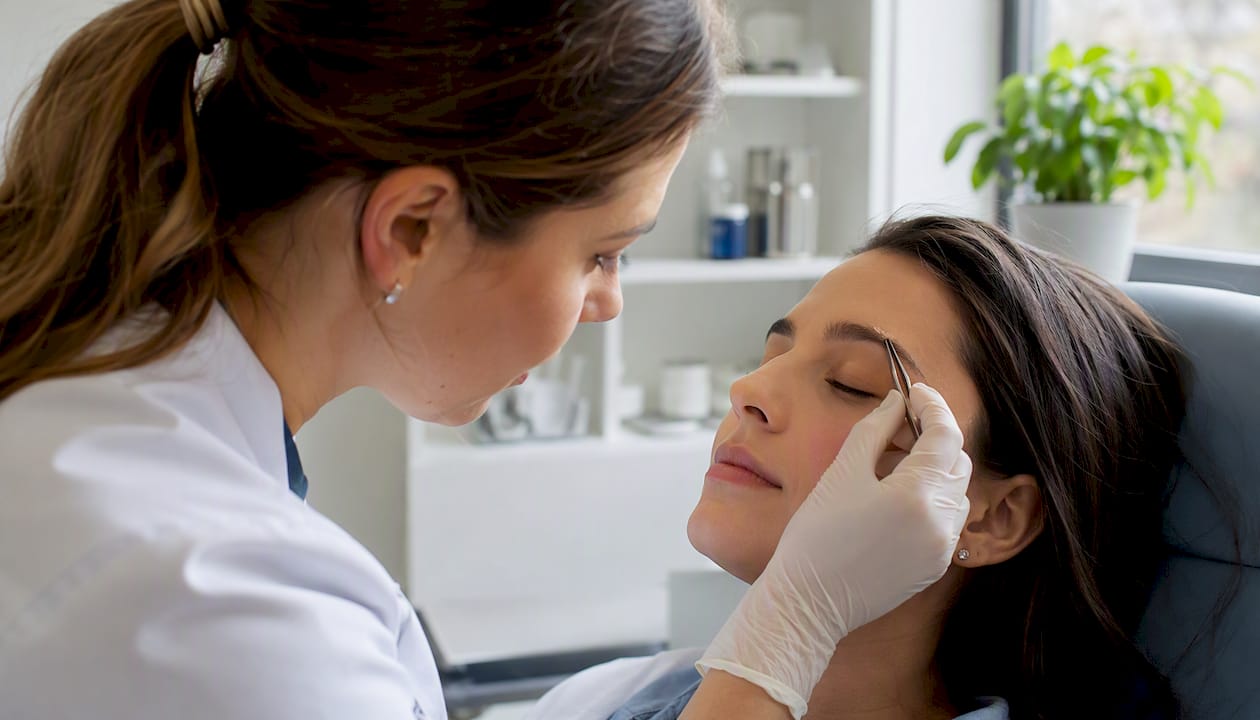
The volume problem is real. Some labs require approximately 50 mg of hair for a valid sample. To put that in perspective, collecting that amount from eyebrows alone would be cosmetically significant, meaning the collection would be visibly noticeable. That’s a practical barrier that keeps eyebrow collection rare.
A few other collection-specific details worth knowing:
- Plucked vs. cut: Eyebrow hair is sometimes plucked rather than cut, which preserves the follicle root. Some research protocols specifically use plucked hair to study follicle-level biomarkers.
- Pooling: When no single body site provides enough volume, collectors may pool hair from multiple sites. This is documented in chain-of-custody paperwork.
- Documentation: Any non-scalp collection site should be noted on the chain-of-custody form. Ask the collector to confirm this is recorded before you leave.
- Cosmetic treatments: Dyed, bleached, or chemically treated eyebrow hair can affect test results. Labs account for this during interpretation, but it’s a variable that can complicate outcomes.
Pro Tip: If a collector moves toward your eyebrows or face, ask immediately whether pooling from another body site is an option first. Don’t shave your body hair before a test in an attempt to avoid collection — that signals intent and may result in a refusal-to-test finding, which most employers treat the same as a positive.
Detection windows: head hair compared with eyebrow and body hair
The 90-day figure you see everywhere applies specifically to scalp hair, and it’s based on the roughly half-inch-per-month growth rate of head hair. A standard 1.5-inch sample covers approximately three months of history.
Body hair and eyebrow hair don’t work that way. Because growth rates vary and the anagen phase is shorter and less consistent, body hair cannot be reliably segmented for month-by-month analysis. Labs typically report body and facial hair results as an overview rather than a month-by-month timeline, sometimes describing the detection window as extending over many months.
| Hair Type | Collection Method | Typical Detection Window | Segmentable by Month? |
|---|---|---|---|
| Scalp hair | Cut by length (~1.5 in.) | ~90 days | Yes |
| Chest/underarm/leg hair | Collected by weight (~50 mg) | Overview, up to 12 months | No |
| Eyebrow/facial hair | Collected by weight or plucked | Overview, variable | No |
That “up to 12 months” figure sounds alarming, but it comes with a major caveat: the result tells you whether a substance was used during that window, not when. A positive eyebrow hair result can’t be pinned to a specific month the way a scalp result can.
Accuracy, limitations, and the myths that won’t die
What actually affects accuracy
Hair color matters more than most people realize. Melanin binds to some drug compounds, which means darker hair can show higher drug concentrations than lighter hair for the same level of use. Reputable labs apply correction factors, but it’s a known variable.
External contamination is another real factor. Passive exposure to drug smoke, for example, can deposit trace compounds on hair. That’s why labs use washing procedures before analysis and why confirmation testing via GC-MS or LC-MS/MS is non-negotiable for any positive result. The confirmation step is specifically designed to distinguish incorporated metabolites from surface contamination.
Cosmetic treatments — bleaching, perming, heavy dyeing — can degrade metabolite concentrations in hair. This cuts both ways: it can reduce the detectability of actual use, and it can create interpretation uncertainty that labs must account for.
The myths
“Shaving will solve it.” Shaving your head before a test doesn’t prevent collection. The collector moves to body hair. Shaving your entire body is treated as a refusal, which carries the same consequences as a positive test at most employers.
“Detox shampoos remove metabolites from hair.” Clinical and occupational-health resources are consistent on this point: once metabolites are incorporated into the hair shaft, there is no evidence-based mechanism by which a topical shampoo removes them. The shaft is not a surface you can wash clean. Products marketed as “detox shampoos” may affect surface residue, but they don’t reach the cortex where metabolites are embedded.
“Home remedies work.” Vinegar rinses, baking soda pastes, and similar treatments have no documented effect on incorporated metabolites. They’re not tested against the GC-MS/LC-MS/MS confirmation standard that any positive screen must clear.
Pro Tip: The single most useful thing you can do before a hair test is disclose any prescription medications to the medical review officer (MRO). Legitimate prescriptions can explain certain positive screens and prevent an incorrect adverse result.
What SAMHSA, Quest Diagnostics, LabCorp, and CRL say
SAMHSA sets the national policy framework for federal workplace drug testing in the United States. Its guidelines define accepted testing methodologies, confirmation standards, and chain-of-custody requirements that inform how labs like Quest Diagnostics, LabCorp, and Clinical Reference Laboratory (CRL) operate.
The operational picture from major labs is consistent:
- Scalp hair is the standard. Quest Diagnostics and LabCorp both document scalp hair as the preferred specimen for hair drug testing, citing its predictable growth rate and segmentability.
- Body hair is a documented alternative, collected by weight when scalp hair is unavailable or insufficient.
- Eyebrow and facial hair are acknowledged but low-priority. Lab guidance treats facial hair as an exceptional case, not a routine alternative.
- Confirmation is mandatory. All three major lab networks use immunoassay screening followed by GC-MS or LC-MS/MS confirmation before reporting a positive result.
- Chain-of-custody procedures apply regardless of collection site. A non-scalp collection doesn’t reduce the documentation requirements.
CRL (Clinical Reference Laboratory) similarly follows the screening-to-confirmation workflow and documents specimen-site alternatives in its collection protocols, consistent with the broader industry standard.
If you’re facing a test that may use eyebrow or facial hair
Act on these steps in order:
At the collection appointment:
- Ask the collector which specimen site they intend to use before anything is cut or plucked.
- If they indicate facial or eyebrow hair, ask whether another body site can provide sufficient volume first.
- Disclose all prescription medications to the collector or MRO before the sample is taken.
- Request that the collection site be documented on the chain-of-custody form.
- Ask for the A/B split sample option if available. This preserves a portion of your sample for independent retesting if you dispute the result.
Administrative steps:
- Write down what the collector tells you about the site and method, including the time and date.
- Get the lab’s name and contact information from the collection paperwork.
- Keep a copy of your chain-of-custody form.
If scalp hair is genuinely unavailable, ask the collector whether pooling from chest, underarm, or leg hair is permitted before eyebrow collection is attempted. Most collectors will prefer that option too.
If you believe the collection was improper or the result is incorrect, consult an employment attorney or occupational-health physician. A positive result from an eyebrow sample that was collected without following chain-of-custody procedures, or without offering alternatives, may be challengeable. This article is general information, not legal advice. Confirm your specific rights with a qualified professional.
What the scientific literature says about plucked eyebrow hair analysis
The short answer: feasible, but limited. A peer-reviewed study published in PubMed demonstrated that biomarkers can be detected and quantified in plucked scalp and eyebrow hair. The same study documented meaningful sample loss during processing and notable variability both within the same subject across sessions and between different subjects.
That variability finding is the key takeaway for anyone interpreting an eyebrow hair result. It means:
- A negative eyebrow result doesn’t carry the same confidence as a negative scalp result.
- A positive eyebrow result is more likely to face scrutiny during MRO review.
- Study sizing for any research using plucked eyebrow hair must account for these losses, which limits how many published studies can draw firm conclusions from small samples.
Statistic callout: The PubMed study on plucked hair analysis found that processing loss and intra-/intersubject variability were significant enough that researchers needed to factor them into study design — a finding that directly explains why labs treat eyebrow samples as less reliable than scalp samples for routine workplace testing.
The published literature on eyebrow-specific drug testing remains sparse. Most peer-reviewed work on hair drug testing uses scalp samples, and the studies that do examine body or facial hair tend to be small-scale. That’s not a reason to dismiss eyebrow hair testing entirely, but it is a reason to treat any single eyebrow hair result with more interpretive caution than a standard scalp result.
What I actually think about eyebrow hair testing
The gap between “technically possible” and “practically used” is wider here than in almost any other area of drug testing. Eyebrow hair testing exists in the literature and in lab protocols as a contingency, not a standard. The volume problem alone keeps it rare. The interpretation problem keeps it unreliable. And the cosmetic concern keeps most collectors from even attempting it when any other option exists.
What I’d tell anyone facing a hair test: focus on the scalp. That’s where the test will almost certainly happen, that’s where the 90-day window applies, and that’s where your preparation efforts matter most. The eyebrow scenario is worth understanding, but it shouldn’t be the center of your concern unless you have no scalp hair at all.
Preparing for a hair drug test: what Passhairdrugtest offers
If you’re researching preparation options before a hair follicle test, Passhairdrugtest offers a direct path to the products most people in this situation are looking for, without the guesswork of piecing together a protocol from scratch.
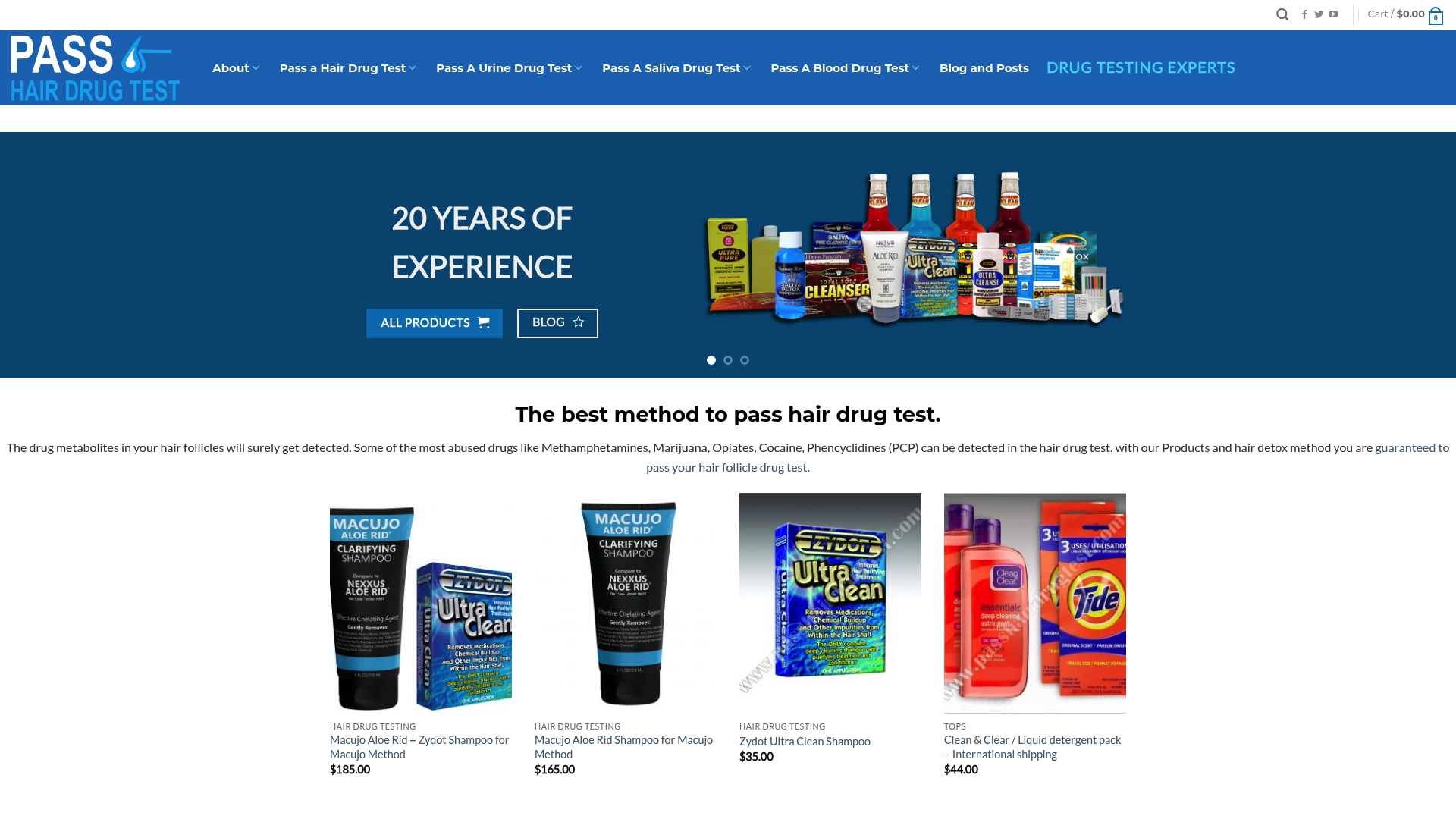
The site’s core offerings include the Macujo Aloe Rid Shampoo and Zydot Ultra Clean Shampoo, both used as part of Mike’s Macujo Method, a multi-step scalp preparation protocol. Passhairdrugtest also carries complete hair follicle shampoo kits that bundle the steps together. One important note the brand is transparent about: no shampoo or topical product removes metabolites already incorporated into the hair shaft. These products are preparation and support tools, not guaranteed solutions. With more than 20 years in the detox-product space, Passhairdrugtest provides the products, guides, and context to help you make an informed decision about your options.
Sources
- Hair Drug Testing 101 – Concentra
- Plucked human hair as a tissue in which to assess pharmacodynamic end points during drug development studies – PubMed
- Can Body Hair Be Used for Drug Testing? – AlphaBiolabs USA
- Can Eyebrows Be Used for a Hair Drug Test? – LegalClarity
- Samhsa
- Quest Diagnostics
This article is general information, not a substitute for advice from a qualified doctor. Consult a qualified healthcare professional about your own circumstances before acting on anything here.
Recommended
- Hair Drug Test Information – Pass Hair Drug Test
- Body Hair Drug Test: What You Need to Know
- Hair Follicle Drug Test Information – Pass Hair Drug Test
- Pass hair follicle drug test
