Uncategorized
What to Do Immediately If a Court Orders a Hair Drug Test in the U.S.
Aug
Yes, in most states a family court can order a hair follicle drug test when a judge finds “good cause” or determines it serves the child’s best interests, but the rule isn’t universal. California is the sharpest exception: the Deborah M. decision limits court-ordered testing under Family Code §3041.5 to methods approved by the U.S. Department of Health and Human Services, which historically meant urine testing, not hair. Where hair testing is permitted, it typically pulls roughly 90 days of history from a 1.5 inch sample and runs on strict chain-of-custody rules.
TL;DR:
- Most states allow court-ordered hair follicle testing when good cause exists, but California limits it to urine testing under federal guidelines due to Deborah M..
- Hair tests analyze a 1.5-inch sample that reveals approximately three months of drug use patterns, making it ideal for long-term use detection.
- Court orders should specify the lab, panel, payment, and deadlines, with collection procedures requiring strict chain-of-custody protocols to ensure admissibility.
- Hair testing costs between $100 and $300, with negative results often returned in 2 to 3 days and positive ones needing confirmatory testing.
- Hair test results can be challenged due to environmental contamination, cosmetic treatments, or unaccredited labs, emphasizing the need for proper context and procedures.
Table of Contents
Table of Contents
- Court Ordered Hair Drug Test: When and Why Judges Order One
- How Hair Follicle Drug Tests Work and What They Actually Show
- Does Your State Allow Court Ordered Hair Testing? (California Is Different)
- What a Court Order for a Hair Test Requires and How Collection Works
- What a Hair Test Costs and How Judges Use the Results
- Why Hair Test Results Can Be Challenged in Court
- What to Do the Day You’re Served With a Testing Order
- Is a Hair Follicle Test More Accurate Than a Urine or Saliva Test?
- What Privacy Protections Apply to a Court Ordered Drug Test?
- MIchael’s Take: What 20+ Years in This Industry Actually Shows
- Resources for Readers Researching Hair Test Preparation
- Sources
Court Ordered Hair Drug Test: When and Why Judges Order One
Judges don’t order testing on a whim. They usually need “good cause,” a legal standard that gets satisfied by things like a police report, a DUI conviction, a documented overdose, a witness statement about erratic behavior, or an admission made during a deposition or mediation. Family law attorneys note that this bar is often lower than people expect. According to Wirth Law Office, judges frequently accept “reason to believe” rather than demanding hard proof before granting a testing motion.
Either parent, a guardian ad litem, or the court itself can raise the issue. The judge then balances the tested parent’s privacy against the child’s safety, and safety usually wins when there’s a credible allegation on the table.
The choice of test matters, too:
- Hair testing gets favored when the concern is a pattern of use over months, not a single incident.
- Urine or oral fluid testing gets favored when the question is whether someone used in the last few days, such as before a scheduled visitation.
- Combination orders happen when a judge wants both a recent snapshot and a longer history.
How Hair Follicle Drug Tests Work and What They Actually Show
A standard sample is 1.5 inches of head hair cut close to the scalp, and it captures roughly 90 days of drug use history, because hair grows at a fairly predictable rate and traps drug metabolites as it forms. That’s the test’s whole value proposition: it shows patterns, not moments.
Statistic Callout: A 1.5 inch hair sample reflects roughly three months of history. A urine test typically reflects only the past few days. That gap is why courts reach for hair testing when the real question is “is this a pattern,” not “did this happen last Tuesday.”
Labs typically run a standard 5-panel screen covering marijuana, cocaine, opiates, amphetamines, and PCP, though expanded panels can add substances like fentanyl, benzodiazepines, or synthetic opioids depending on what the order specifies.
Strengths and weaknesses both matter here:
- Hair is hard to adulterate on short notice, unlike urine, which can be diluted or substituted.
- The long look-back window catches patterns that a same-week urine test would miss entirely.
- Cosmetic treatments like bleaching or repeated dyeing can degrade metabolites and skew results.
- Environmental exposure, being around someone else’s smoke, for instance, can occasionally trigger a contamination question.
- Sample sufficiency is a real issue for anyone with very short hair.
If you’re comparing testing types head to head, this breakdown of hair versus urine testing walks through the practical differences in more detail.
Does Your State Allow Court Ordered Hair Testing? (California Is Different)
Most states give family court judges broad discretion to order hair follicle testing once good cause is shown, and there’s no federal statute blocking it. But California carved out a real exception, and it’s worth understanding exactly what it says.
In Deborah M. v. Superior Court, a California appellate court held that Family Code §3041.5 requires court-ordered drug testing to conform to federal HHS testing guidelines. At the time those guidelines covered urine testing but not hair analysis, so the court found that ordering a hair test exceeded the judge’s authority under that statute. You can read the full appellate reasoning through FindLaw if you want the primary source rather than a summary. The Geller Firm’s breakdown of what California courts can and cannot order is a useful plain-language companion to the case itself.
Outside California, courts generally treat hair testing as just another tool available under a judge’s general authority to protect a child’s welfare, unless a specific state statute says otherwise.
- California: hair testing under §3041.5 is constrained by Deborah M.; urine testing remains the compliant default under that statute.
- Most other states: judges have discretion to order hair testing directly when good cause exists, without a comparable statutory limit.
- Every state: case law shifts, so confirm current authority with local counsel rather than assuming last year’s rule still applies.
What a Court Order for a Hair Test Requires and How Collection Works
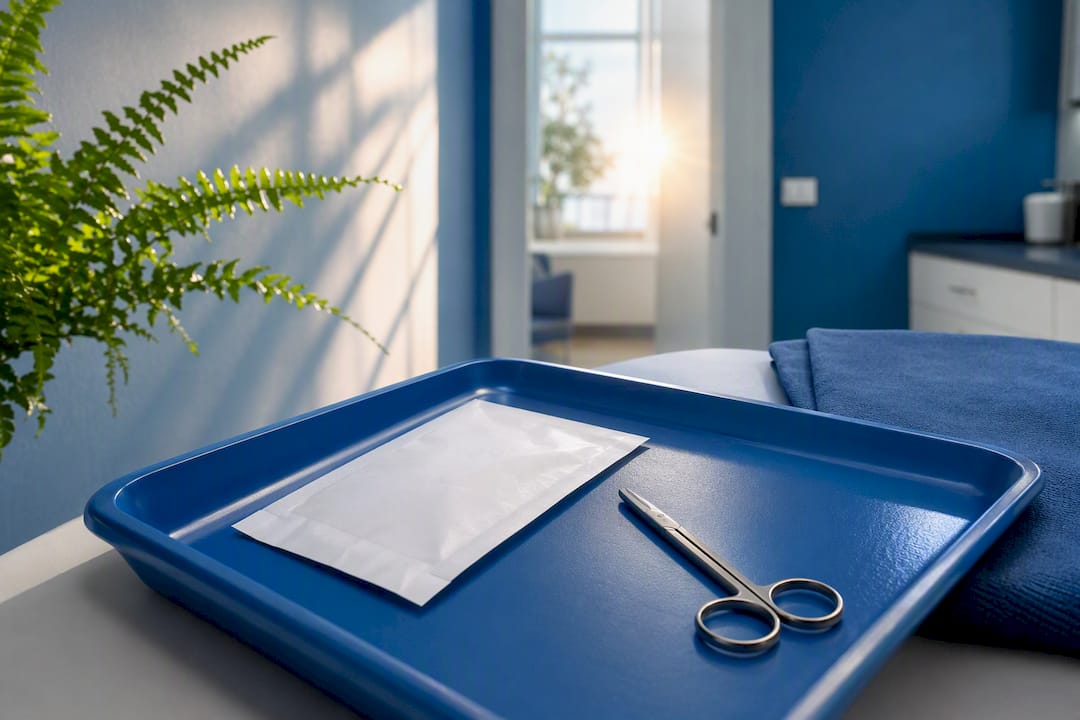
A well-drafted order does more than say “get tested.” It typically names the specific lab or testing vendor, sets a deadline, states who pays upfront, and often specifies the panel to be screened. Courts and attorneys alike recommend nailing these details down early, since a vague order tends to breed disputes later.
Collection follows a fairly rigid sequence to keep the sample admissible:
- The technician verifies your identity with photo ID before touching a single strand.
- Hair gets cut from a small area close to the scalp under direct observation, never self-collected.
- The sample is sealed, labeled, and barcoded in front of you.
- Every transfer, from collector to lab to storage, gets logged as part of the chain of custody.
That documentation is not paperwork for its own sake. According to LegalClarity, courts admit hair test results largely because chain-of-custody procedures establish the sample wasn’t tampered with between collection and analysis. Skip a step, and the whole result can get challenged.
Pro Tip: Photograph the sealed sample envelope and any paperwork you’re handed on collection day. If chain of custody ever becomes an issue, your own timestamped photos can back up your account of what happened.
What a Hair Test Costs and How Judges Use the Results
Expect to pay somewhere between $100 and $300 depending on the panel size and the lab used, and the requesting party often fronts that cost before it gets reallocated by the court later.
Turnaround moves fast when nothing shows up: negative results often come back in 2 to 3 days. A positive screen takes longer because labs run a confirmatory test, usually gas chromatography/mass spectrometry (GC/MS), before reporting anything as definitively positive.
- Screening flags a possible positive.
- Confirmatory testing verifies it against a scientific threshold.
- The lab issues a formal report with cutoff levels documented.
Statistic Callout: A positive result doesn’t automatically decide custody. Judges weigh it alongside everything else in the case, and a single test result is rarely, by itself, the deciding factor in a “best interests” determination.
Why Hair Test Results Can Be Challenged in Court
A lab report isn’t bulletproof evidence just because it came from a lab. Positive results can stem from something other than drug use, and courts increasingly expect context before treating a hair test as conclusive.
- Environmental exposure and cosmetic chemical treatments can both alter or contaminate a sample.
- Lab accreditation and documented confirmatory testing matter enormously; an unaccredited lab’s report carries far less weight.
- Shaving your head or aggressively dyeing hair right after being served with a testing order tends to draw a sharp adverse inference from the judge, often worse than a positive result would have.
- A bare lab printout, without an expert explaining metabolite thresholds and what the numbers actually mean, often isn’t enough to settle a contested issue on its own.
Forensic literature on this point is blunt: judicial acceptance of hair testing still depends heavily on how well the science gets explained to the court, not just whether a test came back positive.
What to Do the Day You’re Served With a Testing Order
The moment you’re handed an order, the clock starts. Here’s the sequence that actually protects your position.
- Call an attorney immediately and read the order’s exact language, especially any named lab, deadline, and payment terms.
- Check for statutory limits that might apply, particularly if you’re in California, where Deborah M. may give grounds for a motion to quash a hair-specific order.
- Request chain-of-custody documentation and the lab’s accreditation certificates before or during testing, not after a bad result.
- Ask for a split sample or retained portion in case you need independent retesting later.
- On collection day, bring photo ID, watch every sealing step, and photograph paperwork.
- Avoid cutting, shaving, or chemically treating your hair in the days before or after the order, since courts tend to read that as an attempt to dodge the test.
If you plan to object, a motion to quash or a request for an alternative test type needs to happen before the collection date, not after. Courts sometimes reallocate costs to the losing side on a motion, so raising a legitimate legal objection isn’t necessarily expensive even if it fails.
Pro Tip: Ask the court to specify the lab and exact panel in the order itself. It heads off later arguments about whether the lab was accredited or whether the panel matched what was actually authorized.
Is a Hair Follicle Test More Accurate Than a Urine or Saliva Test?
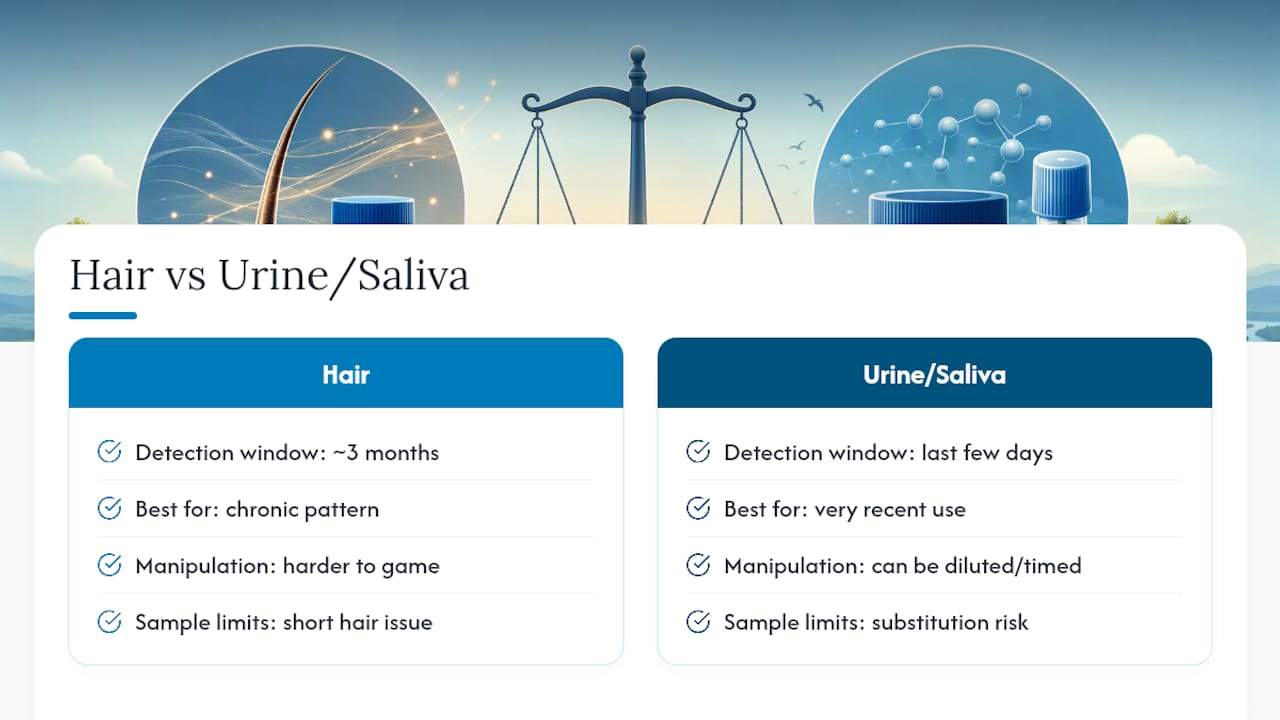
Neither method is universally “more accurate.” They measure different things. Hair testing is stronger at detecting a pattern of chronic use because it captures roughly three months of history, while urine and oral fluid tests are stronger at catching very recent use, typically within the last few days. According to PharmChek, courtroom professionals value hair testing specifically for its long-term view but flag its blind spot: it’s not built to catch use from the past week.
Hair testing does have a durability advantage. Urine can be diluted, substituted, or timed around a known test date. A hair sample, cut under supervision from close to the scalp, is much harder to manipulate on short notice, which is part of why courts often prefer it when timing games are a concern.
But “harder to game” doesn’t mean “immune to dispute.” Sample sufficiency is a real limitation for anyone with very short hair, and body hair or nail clippings sometimes get accepted as a substitute when head hair isn’t available, though each of those alternatives comes with its own detection window and interpretation quirks. Cosmetic treatments, particularly bleaching and repeated dyeing, can degrade the metabolites hair testing relies on, occasionally producing a result that looks lower than actual use or, less commonly, muddies interpretation entirely.
The honest answer for a parent facing an order: hair testing tends to be more reliable for proving or disproving a pattern, while urine testing tends to be more reliable for proving or disproving recent use. Which one matters more depends entirely on what the other side is alleging.
What Privacy Protections Apply to a Court Ordered Drug Test?
You don’t lose all privacy protection just because a family court judge signs a testing order, but those protections are narrower than most people assume once a child’s welfare is genuinely in question.
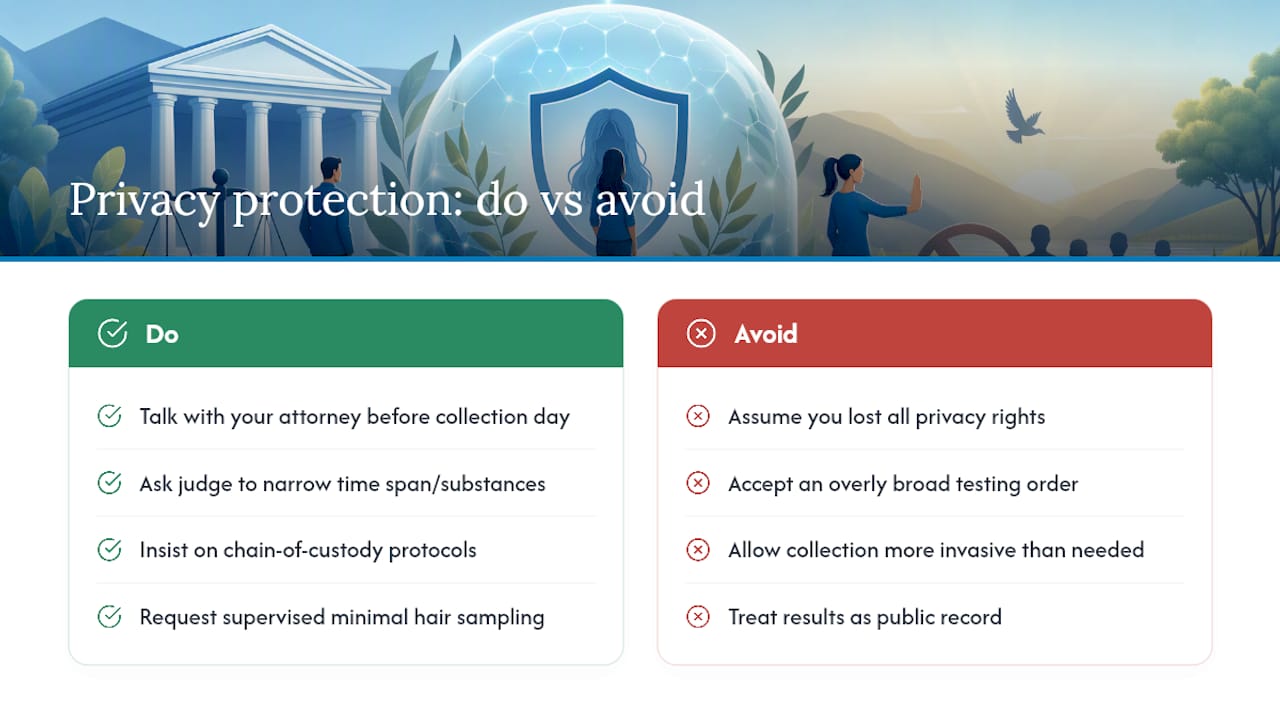
Courts are required to balance your privacy interest against the state’s interest in child safety, and that balancing test is exactly why judges need good cause before ordering testing in the first place rather than being able to order it automatically in every case. An order that’s overly broad, covering an unreasonable time span, an unnecessary panel of substances, or a testing method disproportionate to the actual allegation, can sometimes be challenged on those grounds alone.
Chain-of-custody and collection protocols exist partly for accuracy and partly to prevent testing from becoming invasive beyond what’s necessary. Supervised cutting of a small hair sample, for instance, is standard precisely because it limits what’s collected to what the lab actually needs.
Your results also aren’t public. They go to the court and the parties involved in the case, not into some general public record, though they can certainly become part of the evidentiary record if the case involves further hearings or appeals. If you believe an order oversteps what good cause actually supports, that’s a conversation to have with your attorney before collection day, not after the results come back.
MIchael’s Take: What 20+ Years in This Industry Actually Shows
After two decades watching how these orders play out, the pattern is consistent: most disputes aren’t about the science, they’re about paperwork. Panels get ordered too broad, labs go unnamed, chain-of-custody gets sloppy, and that’s where cases actually get won or lost. Readers who want the procedural weeds should start with our guide to hair follicle drug testing or the deeper hair follicle drug test information resource.
— MIchael
Resources for Readers Researching Hair Test Preparation
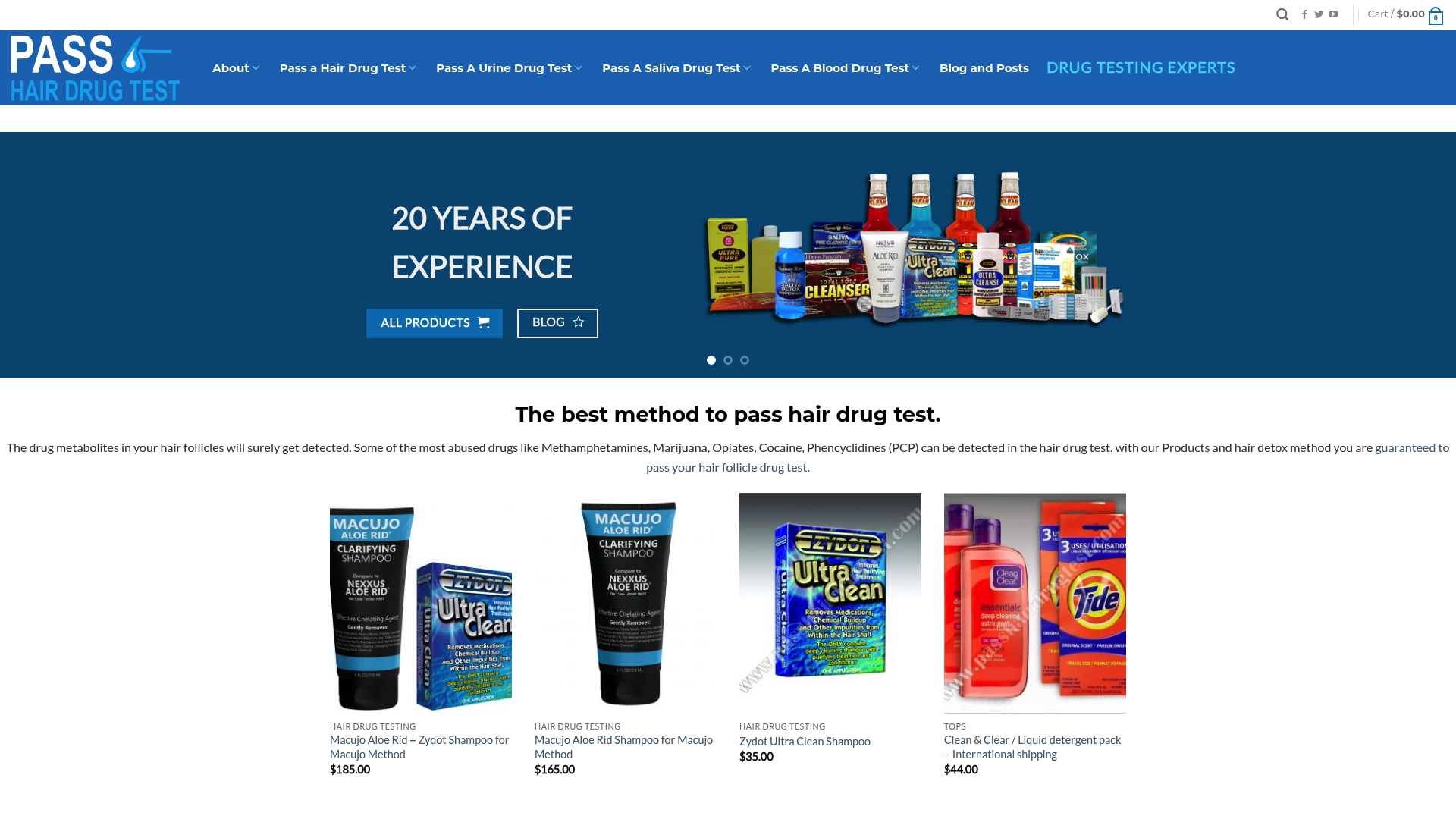
If you’re researching what actually happens to hair when it’s exposed to detox products, Passhairdrugtest carries the two most recognized names in this space: Macujo Aloe Rid Shampoo and Zydot Ultra Clean Shampoo, along with the multistep Mike’s Macujo Method that combines both into a structured routine. These are shampoo-based products built around clarifying and stripping hair, and instructional guides walk through the Zydot Ultra Clean process step by step for people who want to understand exactly what each stage does.
None of this is legal advice, and no product can guarantee a specific court outcome or override a properly conducted, accredited lab result. What Passhairdrugtest offers is over 20 years of product knowledge for people who want to understand their options and make an informed decision. If you’re weighing a hair follicle shampoo kit against a single-product approach, the detox versus clarifying shampoo comparison breaks down what separates the two categories so you’re not guessing at checkout. Browse the shampoo kit options and see which fits your timeline before your testing date arrives.
This article is general information, not a substitute for advice from a qualified lawyer. Consult a qualified legal professional about your own circumstances before acting on anything here.
Sources
- Can a family court judge order a hair follicle test? — LegalClarity
- Drug testing in court: what matters most to courtroom professionals — PharmChek
Recommended
- How Can I Pass a Hair Drug Test?
- Hair Drug Test Information
- How to Prepare for a Hair Test the Right Way
- How to Pass a DOT Hair Test: What the Law and Labs Say
