Uncategorized
Home Hair Detox: Realistic Protocol and Verification Guide
Aug
A careful home hair detox protocol can reduce the odds of a positive hair-strand drug test in some cases, but no method guarantees a clean result. Labs test the hair shaft itself, not the follicle, and drug metabolites bind inside the cortex where household products reach only the surface. Two authoritative bodies set the scientific floor here: the Society of Hair Testing (SoHT) consensus documents on sampling and interpretation, and NIJ-funded RTI metabolite research showing that phase II metabolites can distinguish actual use from surface contamination.
- Multi-step protocols (Macujo-style) are the most-discussed home approach.
- No published peer-reviewed study confirms that any home method reliably defeats a confirmed LC-MS/MS or GC-MS/MS result.
- Always verify with an at-home hair test kit before the official test date.
Pro Tip: Start any cleansing protocol at least 10–14 days before your scheduled test. That window lets you run multiple treatment cycles and still have time to retest.
Safety note: Repeated use of harsh cleansers strips the cuticle, causes breakage, and can irritate the scalp. Attempting to alter a workplace drug test may also carry legal or HR consequences depending on your employer’s policies and state law.
Table of Contents
Key takeaways
A multi-step home hair detox protocol is the most practical option available, but realistic expectations and early timing are what separate useful preparation from false confidence.
| Point | Details |
|---|---|
| Start at least 10–14 days out | Multiple treatment cycles require time; a single wash days before the test is unlikely to change your result. |
| Metabolites matter more than parent drugs | Labs detecting THC-COOH at ~0.2 pg/mg LOD have stronger evidence of use; surface cleansing does not reach cortex-embedded metabolites. |
| Verify before the official test | Use an at-home hair follicle test kit 3–4 days before your appointment so you have time to act on the result. |
| Positive results are not always final | Request GC-MS/MS confirmation and a B-sample retest before accepting any employment consequence. |
| Passhairdrugtest kits cover the full protocol | The Hair Follicle Shampoo Kit and at-home test kit together give you both the cleansing and verification steps in one place. |
Table of Contents
- How does a hair strand drug test actually work?
- What personal factors change your detection odds?
- What does the science actually say about home detox methods?
- A step-by-step at-home protocol for hair cleansing
- Should you verify your hair before the official test?
- What to do if your official test comes back positive
- How labs analyze and interpret hair test results
- The honest truth about home hair detox odds
- Passhairdrugtest has the products your protocol needs
- Sources
How does a hair strand drug test actually work?
Labs collect roughly 1.5 inches (about 3.8 cm) of hair cut close to the scalp, which typically covers several months of growth. They test the shaft, not the root. Drugs enter the hair through three routes: blood circulation during active growth, sweat and sebum deposited on the outer surface, and direct external contact.
Before any chemical analysis, labs wash the sample to remove surface contamination. The UNODC manual on hair testing recommends combinations of organic and aqueous solvents (acetone, methanol, surfactants) but acknowledges that no single wash procedure is universally standardized. After washing, labs screen with immunoassay, then confirm positives using LC-MS/MS or GC-MS/MS.
Key detection-window facts:
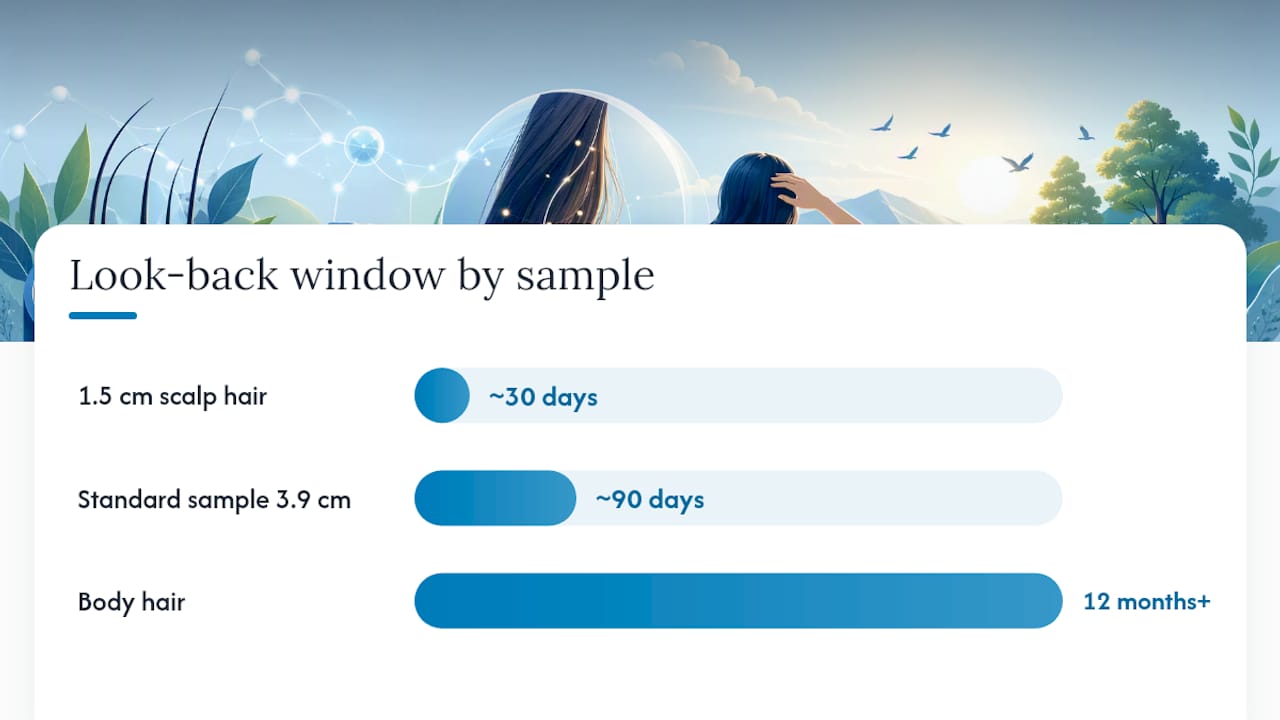
- 1.5 cm of hair covers roughly 30 days of growth (standard scalp growth rate).
- Standard sample length is 3.9 cm, covering approximately 90 days.
- Body hair grows slower and can extend the look-back window to 12 months or more.
- Confirmation uses mass-spectrometry methods that detect analytes at picogram-per-milligram concentrations.
What personal factors change your detection odds?
Several donor and lab variables shift the probability of a positive result, and understanding them helps you gauge your individual situation honestly.
- Hair pigmentation: Melanin binds some drugs more readily. Darker hair tends to accumulate higher drug concentrations than lighter hair at equivalent exposure levels.
- Bleaching and chemical treatments: Oxidative bleaching degrades some drug compounds in the shaft, but validated lab wash procedures are designed to account for this. Labs that detect unusually low concentrations may flag the sample rather than report it clean.
- Hair growth rate: Slower growth means older drug use appears closer to the scalp in the collected segment, compressing the timeline.
- Frequency and recency of use: Chronic, heavy use deposits more drug into the cortex than occasional use. A single exposure weeks before the test may fall below cutoff thresholds; daily use almost certainly will not.
- External contamination: THC and its precursor THCA-A can appear in non-users’ hair through contact with smoke or residue. A peer-reviewed study on cannabinoid incorporation confirmed this, though THC-COOH (the primary metabolite) is harder to explain away as passive exposure.
Pro Tip: If you have body hair collected instead of head hair, the look-back window extends significantly. Know which sample site the collector will use — it changes everything about your timeline.
What does the science actually say about home detox methods?
Published science does not confirm that any home hair detox method reliably defeats a confirmed mass-spectrometry result. That is the honest starting point.
The NIJ/RTI research found that phase II metabolite analysis can distinguish genuine drug use from surface contamination, which matters for detox attempts: if a lab is testing for metabolites rather than just parent compounds, surface-level cleansing has even less impact on the result. The research was limited by sample availability, and metabolite testing is not yet uniformly applied across all routine workplace labs.
The UNODC guidance notes that lab decontamination procedures use validated solvent combinations specifically calibrated to remove surface contamination while preserving embedded analytes. Consumer attempts to mimic those procedures with household products are unlikely to replicate that balance consistently.
What the evidence does and does not support:
- Supported: Repeated washing with penetrating surfactants may reduce surface-level drug residue.
- Unsupported: No published data confirms that home protocols remove cortex-embedded metabolites at levels sufficient to drop below lab cutoffs.
- Complicating factor: A GC-MS/MS validated method reported a limit of detection of approximately 0.2 pg/mg for THC-COOH, meaning labs can detect trace amounts that home treatments are unlikely to eliminate.
Do not overstate what any product can do. The science sets a ceiling on realistic expectations.
A step-by-step at-home protocol for hair cleansing
A multi-step, repeated wash protocol gives you the best practical chance among home methods. It is not guaranteed, and it will stress your hair. Run it with that understanding.
Materials needed: Macujo Aloe Rid shampoo, Zydot Ultra Clean shampoo, Clean & Clear Morning Burst (salicylic acid cleanser), white vinegar, and a Hair Follicle Shampoo Kit from Passhairdrugtest that bundles the core components.
Numbered protocol (one full cycle):
- Wet hair thoroughly. Apply white vinegar from roots to ends. Leave on 15–20 minutes without rinsing.
- Without rinsing the vinegar, apply Clean & Clear Morning Burst over the vinegar. Leave on an additional 20–30 minutes.
- Rinse both products out completely.
- Apply Macujo Aloe Rid shampoo and work it into the scalp and shaft. Leave on 20–30 minutes, then rinse.
- Finish with Zydot Ultra Clean shampoo as a final clarifying step. Follow the included instructions exactly.
Timing schedule:
| Days before test | Recommended action |
|---|---|
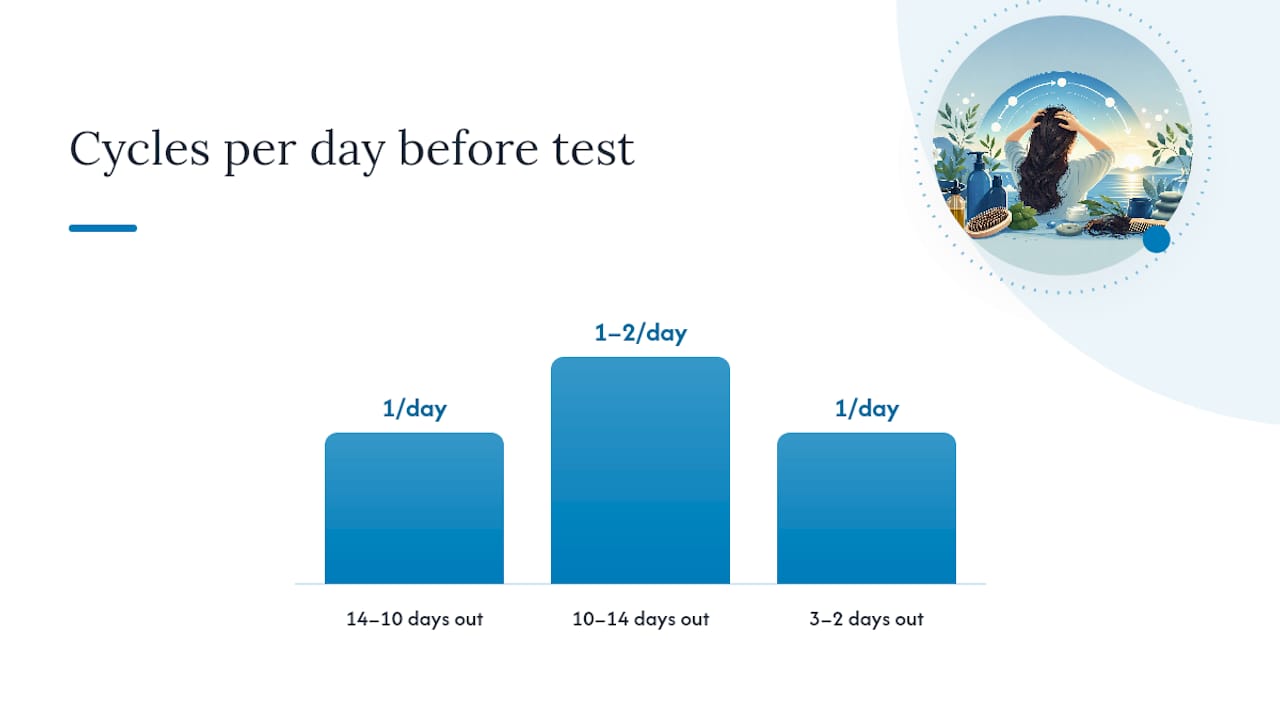
| 14–10 days out | Run 1 full cycle per day |
| 10–14 days out | Run 1–2 full cycles per day |
| 3–2 days out | Run 1 cycle; verify with home test kit |
| Day before test | One final Zydot Ultra Clean wash only |
Pro Tip: The Mike’s Macujo Method recommends at least 7 full cycles before the test. More cycles increase the mechanical and chemical stress on the cuticle, so protect your scalp with a barrier cream around the hairline.
Safety warning: Vinegar and salicylic acid together are aggressive. Expect dryness, frizz, and possible breakage. Stop immediately if you experience open scalp sores or severe irritation.
Should you verify your hair before the official test?
Yes, always verify if you have time. An at-home hair test kit gives you a data point before the official result is on record.
Options available in the U.S.:
- Retail home kits: Available through Passhairdrugtest’s at-home hair follicle test kit. You collect a small hair sample, apply the reagent, and read the result at home. Cost is generally lower than lab send-in options.
- Lab send-in kits: You collect the sample at home and mail it to a certified lab. Results are more reliable and typically returned within a few business days.
Sample from the same location the official collector will use, usually the back of the head near the crown. Test at least 3–4 days before your official appointment so you have time for one additional treatment cycle if the result is positive.
Pro Tip: A faint line on a home immunoassay kit still counts as a negative result by standard strip-test interpretation. If you are unsure, send a sample to a lab for LC-MS/MS confirmation rather than guessing.
What to do if your official test comes back positive
Do not treat a positive screening result as final. Request confirmatory testing before accepting any consequence.
- Request the confirmatory result. Ask whether the positive was confirmed by GC-MS/MS or LC-MS/MS, or whether it is still at the immunoassay screening stage.
- Ask for a split sample or B sample. Many certified labs retain a portion of the original sample. You have the right to request independent testing of that portion.
- Identify which analyte triggered the positive. Parent compound (THC) versus metabolite (THC-COOH) matters. Parent-only detection is more consistent with environmental exposure; metabolite detection is stronger evidence of actual use.
- Review chain of custody. Any break in documented chain of custody is grounds to challenge the result.
- Consult an employment attorney or MRO. A Medical Review Officer can evaluate the result in context. If your employer is subject to federal testing rules (DOT-regulated), specific appeal procedures apply.
Requesting confirmatory testing is a standard, recognized right in certified workplace drug testing programs. A positive screening result is not a confirmed positive until GC-MS/MS or LC-MS/MS has verified the specific analyte above the cutoff threshold. Use that distinction.
Pro Tip: Act within 72 hours of receiving a positive notice. Most programs have short windows for requesting a B-sample retest.
How labs analyze and interpret hair test results
Labs follow a two-stage process: screening first, then confirmation. A screening immunoassay flags samples above a threshold; only confirmed positives by mass spectrometry carry legal or employment weight.
Lab workflow steps:
- Decontamination wash: Organic and aqueous solvents remove surface contamination before extraction.
- Extraction: The washed hair is dissolved or digested to release embedded compounds.
- Immunoassay screening: Fast, high-throughput, but prone to cross-reactivity.
- Confirmatory analysis: GC-MS/MS or LC-MS/MS identifies and quantifies specific analytes.
Commonly referenced hair cutoff thresholds (from the Forensic RTI technical review):
THC-COOH detection is analytically demanding. A validated GC-MS/MS method reached a limit of detection of approximately 0.2 pg/mg for THC-COOH, which is why metabolite testing is considered stronger evidence of use than parent-drug detection alone. Metabolite testing is not yet uniformly applied across all routine workplace labs, but its adoption is growing.
The honest truth about home hair detox odds
The gap between what people hope a home hair detox will do and what the science actually supports is wide. After more than 20 years of watching this space, the pattern is consistent: people who start early, run the full protocol repeatedly, and verify with a home kit before the official test give themselves the best realistic shot. People who buy one bottle of shampoo two days before the test almost never move the needle.
What the evidence does support is that a rigorous, multi-step protocol can reduce surface-level drug residue. What it does not support is the claim that any home method reliably clears cortex-embedded metabolites below the confirmation cutoff of a modern mass-spectrometry lab. The honest framing is risk reduction, not elimination. Hair damage is real and sometimes severe. And depending on your employer and state, attempting to alter a drug test carries its own legal exposure worth understanding before you start.
Passhairdrugtest has the products your protocol needs
Twenty-plus years of experience in the detox-product space means Passhairdrugtest has built a product line around exactly the protocol described above, not generic shampoos repackaged with bold claims.
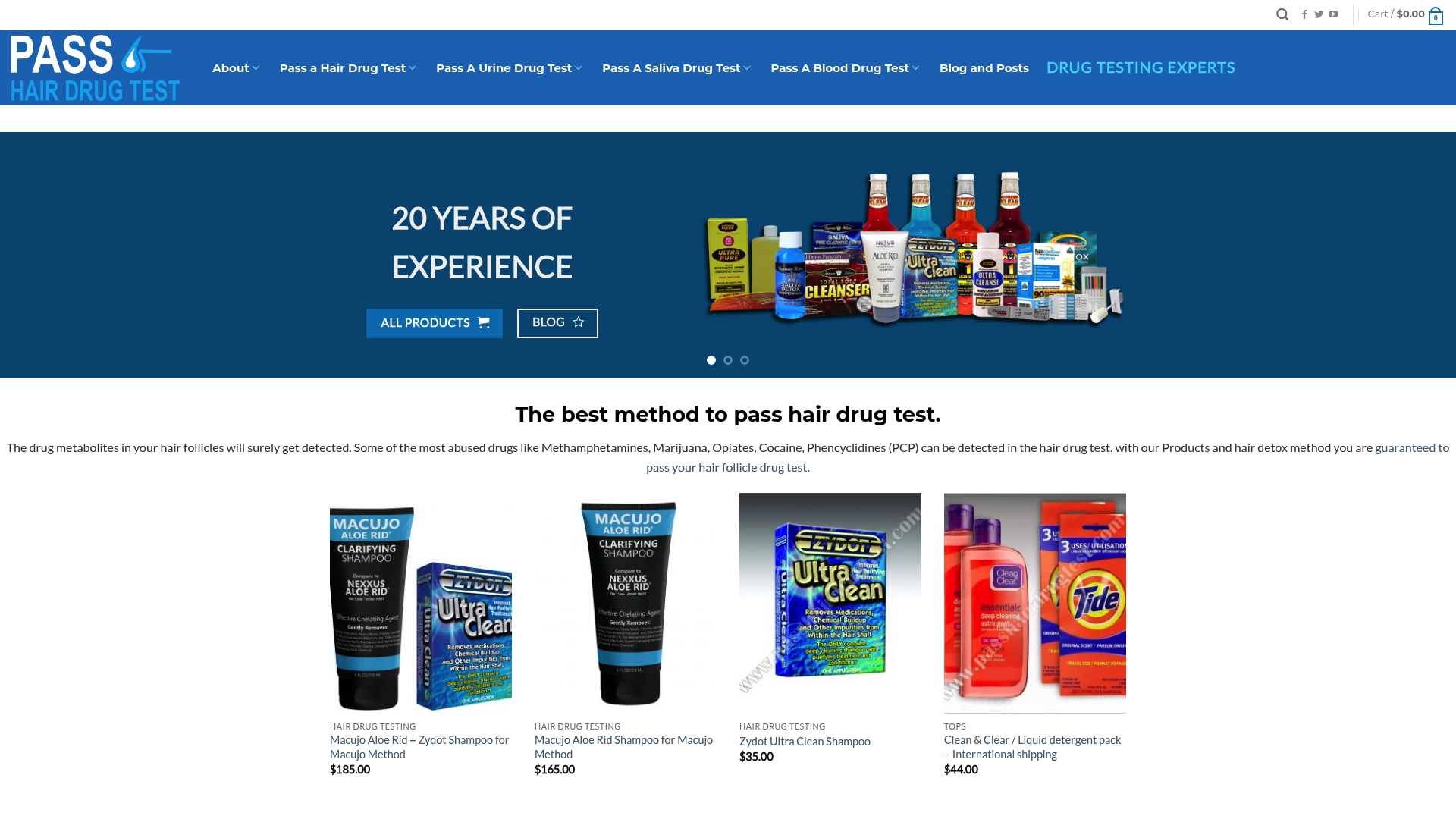
The Hair Follicle Shampoo Kit bundles the Macujo Aloe Rid shampoo and Zydot Ultra Clean into a single order, so you are not hunting down components separately. The at-home hair follicle test kit lets you verify before your official appointment. For those running a full multi-substance concern, Klean Detox Drink Ultra covers the urine and blood side of the equation. Every product ships with protocol guidance, and the site’s best hair detox shampoo comparison page helps you match the right product to your timeline and hair type. Order early, give yourself the full 10–14 day window, and verify before you walk in.
Sources
- Guidelines for testing drugs under international control in hair, sweat and oral fluid—MANUAL FOR USE BY NATIONAL DRUG ANALYSIS LABORATORIES
- Detecting drugs in hair: Is it drug use or environmental contamination? — NIJ (RTI research)
- Cannabinoid incorporation into human hair and the risk of external contamination (PubMed)
- Drug Testing in Urine, Oral Fluid, and Hair — technical review (Forensic RTI)
- Simultaneous quantification of THC‑COOH, OH‑THC, and further cannabinoids in human hair by GC‑MS/MS (Analytical Science Journals)
This article is for general informational purposes only and is not legal, medical, or employment advice. Confirm current testing rules and your rights with a qualified professional or your employer’s written policy.
This article is general information, not a substitute for advice from a qualified lawyer. Consult a qualified legal professional about your own circumstances before acting on anything here.
Recommended
- Detox vs Clarifying Shampoo for Hair Drug Test Prep
- Do Detox Shampoos Work for Hair Follicle Tests?
- Best Hair Detox Shampoo for Hair Follicle Drug Tests
- Hair Follicle Test Kit At Home | Pass Hair Drug Test
