No products in the cart.
Uncategorized
Do Detox Shampoos Work for Hair Follicle Tests?

26
Jul
Jul
Detox shampoos can reduce drug metabolite concentrations in hair, but they cannot reliably make a sample test negative. That’s the honest verdict, drawn from peer-reviewed studies on PubMed and PMC, forensic laboratory guidance, and the product experience behind Passhairdrugtest. If you have a hair follicle test coming up, that distinction matters enormously in practical terms.
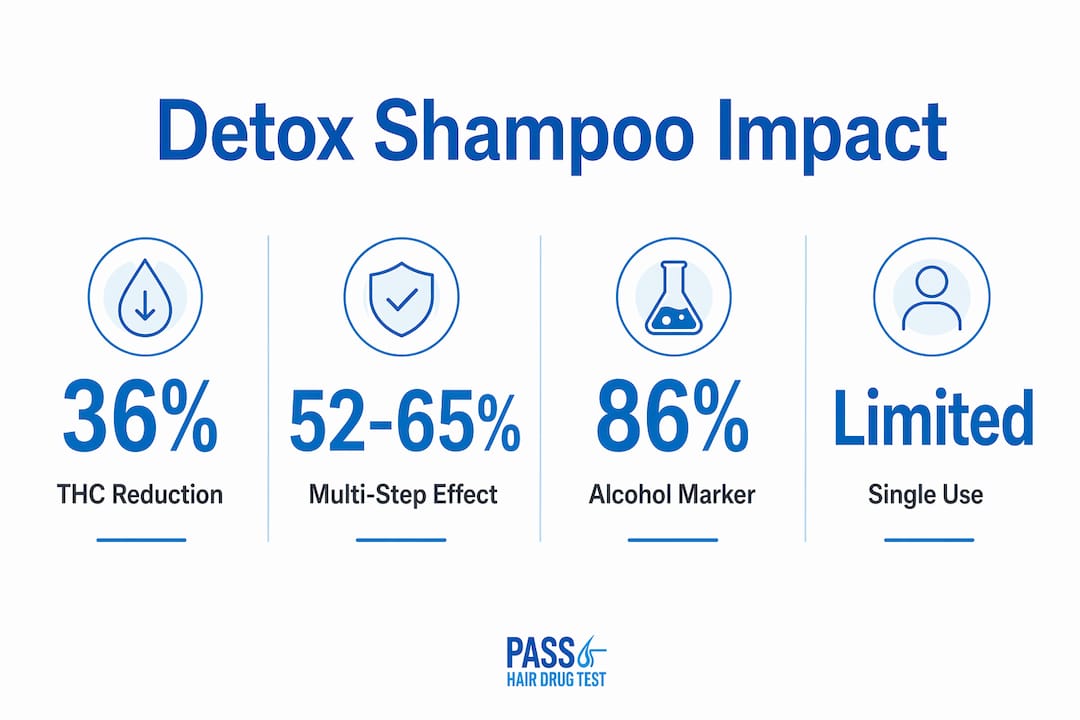
- Peer-reviewed evidence: A 2000 PubMed study found a single Ultra Clean wash reduced THC concentrations by a mean of 36% and morphine by 26%, but no sample dropped below the detection threshold.
- Lab consensus: Forensic panels consistently state that reduced concentrations do not prove abstinence, and that abstinence remains the only certain method to avoid a positive result.
- Products exist: Passhairdrugtest carries Macujo Aloe Rid Shampoo, Zydot Ultra Clean, and multi-step kits for people who choose to try a topical approach.
If your test is imminent: confirm the test type, check whether postponement is possible, and if you proceed with a product, follow the full multi-step regimen rather than a single wash.
Table of Contents
Table of Contents
- Do detox shampoos work, and what limits them biologically?
- What do peer-reviewed studies and forensic labs actually show?
- Which products and regimens do people commonly use?
- How does hair follicle testing actually work?
- What should you do if you have a hair follicle test coming up?
- What are the real risks of aggressive detox methods?
- Key Takeaways
- A straight read on what these products can and can’t do
- What Passhairdrugtest offers if you decide to try a product
- Useful sources and further reading
Do detox shampoos work, and what limits them biologically?
Detox shampoos marketed for hair follicle tests claim to work through several mechanisms: surfactant-based removal of surface residue, chelating agents like EDTA that bind mineral deposits, oxidative or solvent treatments that swell the cuticle, and repeated washout under occlusion (a swim cap or plastic wrap that holds the product against the scalp). Each mechanism targets a different layer of the hair shaft.

The problem is where drug metabolites actually live. When you use a substance, metabolites enter the bloodstream and get incorporated into the hair cortex during formation. The cortex sits beneath the cuticle, the hard outer layer of overlapping scales that protects the inner shaft. Forensic toxicologists note that the cuticle barrier and the binding of metabolites to hair proteins make deep penetration genuinely difficult for topical shampoos. Surface-level cleaning, no matter how thorough, cannot fully reach metabolites that are structurally embedded.
This is why single-application products consistently underperform multi-step regimens in user reports. A multi-step approach uses heat, prolonged contact time, and alternating chemistry (acid, then oxidizer, then surfactant) to progressively open the cuticle and attempt deeper washout. More steps mean more opportunity to reach the cortex, but also more chemical stress on the hair shaft.
Pro Tip: Before starting any regimen, do a strand test on a small section of hair. Harsh solvents and repeated oxidative treatments can cause breakage, and knowing your hair’s tolerance before test day prevents a cosmetic disaster on top of an already stressful situation.
What do peer-reviewed studies and forensic labs actually show?
The lab data is more nuanced than either product marketing or skeptics tend to admit.
The 2000 Ultra Clean study tested a single application on hair samples and reported mean concentration reductions across several substances. The reductions were real but modest, and none of the samples fell below detection thresholds.
| Substance | Mean Reduction (Single Wash) | Samples Dropped Below Detection |
|---|---|---|
| THC | 36% | — |
| Morphine | 26% | — |
| Cocaine | 5% | — |
A separate PMC forensic study on THC in hair tested multiple household and commercial products in vitro and found larger mean reductions: vodka at 58%, a Seborin hair tonic at 63%, Zydot shampoo at 52%, and a Desderman disinfectant at 65%. Those numbers look more promising, but the authors flagged high variability across samples and noted that statistical significance was inconsistent across treatments.
For alcohol markers, a separate in vitro study found one shampoo reduced EtG (ethyl glucuronide) by up to 86% after a 2.5-hour incubation, but FAEE (fatty acid ethyl esters), the other key alcohol marker, was inconsistent. Some shampoos actually increased FAEE because the ingredient itself was present in the formula. That’s the kind of unintended consequence that doesn’t show up in product descriptions.
The core takeaway from the lab literature: concentration reductions are real and measurable, but they are not the same as a negative result. Labs set detection thresholds, and a 36–65% reduction on a sample with a high starting concentration may still land well above that threshold.
Which products and regimens do people commonly use?
Macujo method and Old Style Aloe Toxin Rid
The Macujo method is the most widely cited multi-step regimen in online communities. It typically involves a pre-wash with a salicylic acid product, followed by application of Old Style Aloe Toxin Rid shampoo (the formulation marketed specifically for this purpose), then Zydot Ultra Clean as a final step. The regimen is repeated multiple times in the days before a test, with occlusion under a cap during the treatment phase. User reports on forums are anecdotal and vary widely in reported success. No controlled study has tested the full Macujo protocol.
Old Style Aloe Toxin Rid is the shampoo most associated with this method. It’s formulated with propylene glycol and a concentrated surfactant blend, which proponents argue allows deeper cuticle penetration than standard shampoos. Passhairdrugtest carries the Macujo Aloe Rid Shampoo as its primary product for this regimen.
Zydot Ultra Clean
Zydot Ultra Clean is a three-step kit: a clarifying shampoo, a deep-penetrating purifier, and an aloe conditioner. The manufacturer recommends completing the process in about 45 minutes and states that results last up to 24 hours. It’s typically used as the final step in a longer regimen rather than as a standalone treatment. The PMC study tested Zydot in vitro and reported a mean 52% THC reduction, though with the same variability caveats noted above.
What to know about these regimens
- Multi-step protocols (wash, occlusion, repeat) are chemically more aggressive than a single application and more likely to produce measurable concentration reductions.
- Bleaching or using harsh solvents between wash cycles carries real risk of scalp burns and permanent hair damage.
- All user-reported success stories from forums and product review pages are anecdotal. They cannot be verified, and negative outcomes are underreported.
- Passhairdrugtest offers multi-step shampoo kits that bundle the relevant products with instructional guides.
How does hair follicle testing actually work?
A standard hair follicle drug test collects approximately 1.5 inches (about 3.8 cm) of hair from the scalp, cut as close to the root as possible. Hair grows roughly half an inch per month, so a 1.5-inch segment represents an estimated three-month detection window. That’s the detection window most employers and labs reference.
The proximal segment, the portion closest to the scalp, is what labs analyze. This is the most recently grown hair and reflects the most recent period of use. Topical treatments applied to the full length of hair, or focused on the distal (older, farther-from-scalp) portion, are largely irrelevant to what the lab actually tests. Any regimen needs to target the scalp-adjacent hair specifically.
If scalp hair is unavailable or shaved, labs can collect body hair, which has a longer and less predictable growth cycle. Body hair samples can reflect a detection window of up to 12 months in some cases, which makes the timeline considerably less favorable. For more detail on hair drug test basics, Passhairdrugtest’s information page covers laboratory methodology and collection procedures.
One firm warning: attempting to substitute someone else’s hair, submit a wig, or tamper with a sample in a legal or federally mandated testing program is a serious offense. Labs are trained to detect substitution, and the consequences extend well beyond a failed test.
What should you do if you have a hair follicle test coming up?
Prioritize these steps in order, based on how much time you have.
- Confirm the test type. Not all drug tests are hair follicle tests. Verify with HR or the testing provider whether it’s hair, urine, saliva, or blood. Each has a different detection window and a different set of options.
- Check whether postponement is possible. If you have a legitimate reason to delay (medical appointment, scheduling conflict), even a few extra weeks of abstinence meaningfully changes the proximal hair segment.
- Review your employer’s policy. Some workplace programs allow for a medical review officer (MRO) consultation if you have a prescription that could affect results. Know your rights before the test.
- If you choose a topical approach, start as early as possible. A single wash the morning of the test is the least effective option. Multi-step regimens performed over several days give the chemistry more opportunity to work.
- Use an at-home hair test kit before the real test. Passhairdrugtest carries home drug test kits that let you check your status before the official test date.
What to avoid:
- Do not bleach your hair repeatedly without conditioning. Breakage and scalp burns are real risks, and arriving at a test with visibly damaged hair can raise flags.
- Do not attempt sample substitution or tampering in any legally mandated or federally regulated testing context.
- Do not rely on a single-application product as your only preparation if you have a meaningful exposure history.
If the test is for a safety-sensitive federal position (DOT-regulated, for example), the stakes are higher and legal counsel is worth considering before you take any action.
What are the real risks of aggressive detox methods?
The chemistry required to open the hair cuticle and attempt cortex-level washout is not gentle. Here’s what can go wrong:
- Scalp burns: Prolonged contact with acidic or oxidative products, especially under occlusion, can cause chemical burns on the scalp. This is not rare in people who extend recommended contact times.
- Hair breakage: Repeated cuticle-opening treatments weaken the hair shaft. Combining bleach, solvents, and surfactants over multiple sessions can cause significant breakage, particularly for fine or chemically treated hair.
- Color alteration: Oxidative treatments lighten hair. If you have color-treated hair, aggressive regimens will visibly alter it.
- Permanent follicle damage: Extreme cases of chemical overexposure can damage the follicle itself, leading to patchy or slowed regrowth.
Red flags that a method is unsafe or unreliable:
- Instructions that require ingesting or injecting any product
- Claims of “guaranteed” negative results
- Advice to substitute, tamper with, or adulterate a sample
- Recommendations that conflict with how labs actually detect substances (for example, claims that a single wash eliminates all metabolites)
Pro Tip: If a product’s instructions tell you to ingest anything or promise a 100% pass rate, walk away. No topical shampoo can guarantee a negative result, and any product making that claim is misrepresenting what the science shows.
A brief legal note: attempting to alter evidence in a court-ordered, federally mandated, or workplace compliance drug test can carry legal consequences beyond losing a job. This article is general information, not legal advice. Confirm the rules for your specific situation with a qualified professional or your testing program’s guidelines.
Key Takeaways
Detox shampoos can reduce drug metabolite concentrations in hair, but no peer-reviewed study has shown a single application reliably drops samples below lab detection thresholds.
| Point | Details |
|---|---|
| Reductions are real but limited | Studies show mean reductions for THC of 36% with a single Ultra Clean wash and 52–65% with various products in vitro, but no tested samples dropped below detection in controlled conditions. |
| Multi-step regimens outperform single washes | Repeated cycles with occlusion and alternating chemistry reach the cortex more effectively than one application. |
| The 90-day window is fixed | Labs test the proximal 1.5 inches of scalp hair, representing roughly three months; treatments must target that segment specifically. |
| Abstinence is the only certain method | Forensic consensus is clear: reduced concentrations do not equal a negative result, and abstinence remains the only guaranteed approach. |
| Passhairdrugtest offers kits and guidance | Multi-step shampoo kits, Zydot Ultra Clean, and Macujo Aloe Rid are available with instructional materials for those who choose a topical approach. |
A straight read on what these products can and can’t do
Most articles about detox shampoos fall into one of two camps: breathless product promotion or flat dismissal. Neither serves someone who actually has a test coming up.
The honest position sits in the middle. The lab data is real. Concentration reductions of 36% with a single Ultra Clean wash and 52–65% with various products in vitro are not nothing, especially in a multi-step regimen over several days. But “reduced concentration” and “negative result” are not the same thing, and the gap between them depends on your starting concentration, your hair’s porosity, the specific substances involved, and the lab’s detection threshold. All of those variables are outside your control.
What I find underappreciated in most discussions is the in vitro problem. The studies showing 52–65% reductions were conducted on hair samples in controlled lab conditions, not on people who then walked into a testing facility. Real-world outcomes involve recontamination from scalp oils, inconsistent application, and the specific chemistry of your hair. The gap between a controlled incubation and an actual test is significant.
The practical implication: if you’re going to try a topical approach, do it properly. A half-hearted single wash is unlikely to move the needle. A full multi-step regimen, started as early as possible, gives the chemistry its best chance. And an at-home test before the real one is the only way to get any signal about where you actually stand.
What Passhairdrugtest offers if you decide to try a product
Facing a hair follicle test and choosing to try a topical approach is a decision only you can make. If you do, the quality of the product and the regimen matters.
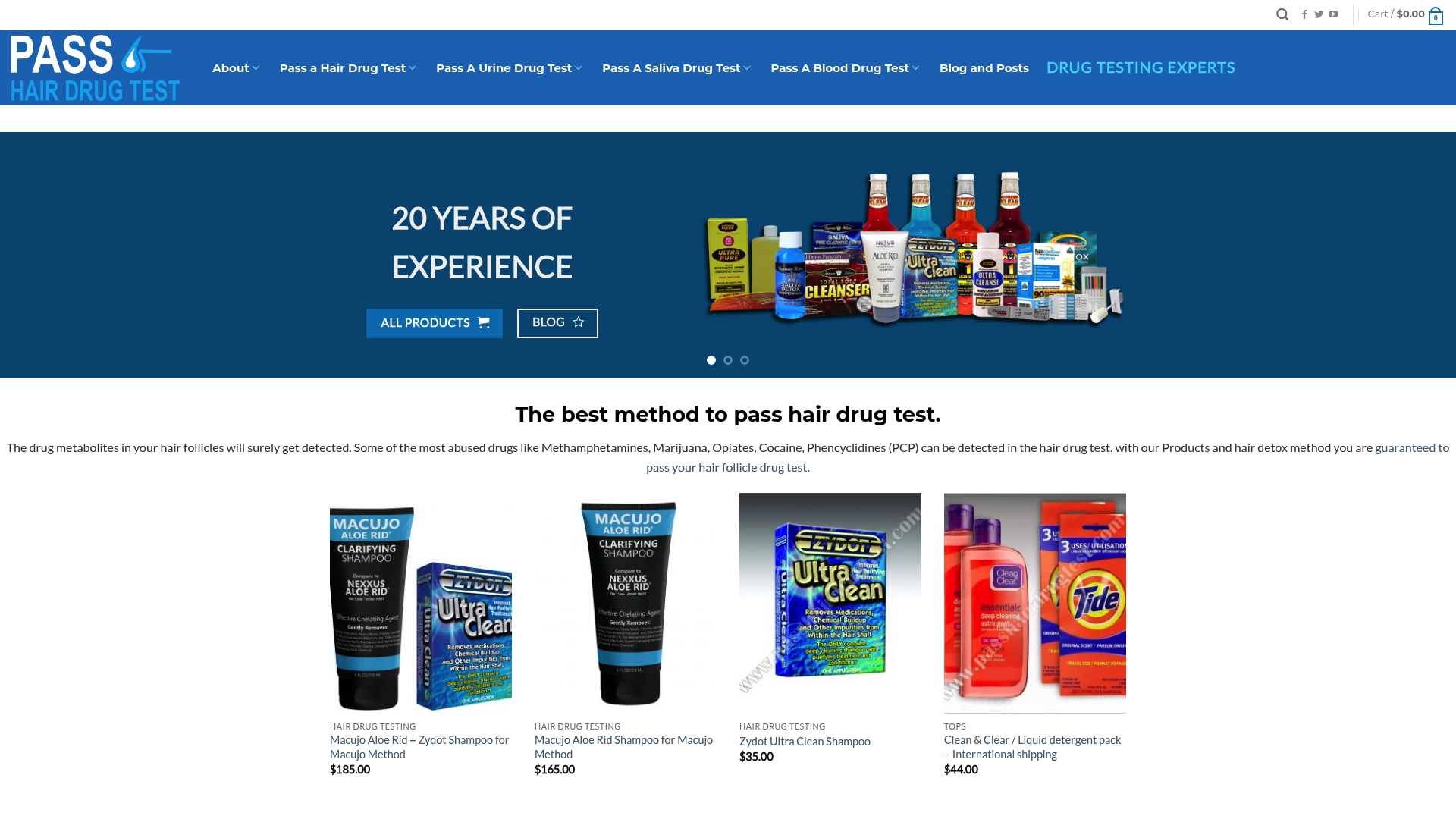
Passhairdrugtest has spent more than 20 years in the drug-testing and detox-product space, and its lineup reflects what the evidence and user experience suggest actually moves the needle. The core offerings are the Macujo Aloe Rid Shampoo, Zydot Ultra Clean, and bundled hair follicle shampoo kits that include step-by-step instructional guides for Mike’s Macujo Method. Each kit is designed to be used over multiple sessions in the days before a test, not as a last-minute single wash.
Results vary based on substance, exposure level, hair type, and how closely you follow the regimen. No product can guarantee a negative result. What Passhairdrugtest provides is the right chemistry, clear instructions, and the product combination that the evidence and user community consistently point to as the most credible option available.
Useful sources and further reading
| Source | Type | What it covers |
|---|---|---|
| Ultra Clean single-wash study, PubMed | Peer-reviewed (forensic) | Measured concentration reductions after one Ultra Clean application; found no samples dropped below detection |
| THC hair concentration manipulation, PMC | Peer-reviewed (in vitro) | Tested multiple products including Zydot; reported 52–65% mean reductions with high variability; includes forensic caution language |
| EtG and FAEE detox shampoo study, EM consulte | Peer-reviewed (in vitro) | Alcohol marker-specific; found up to 86% EtG reduction but inconsistent FAEE results |
| Passhairdrugtest hair drug test information | Client resource | Laboratory methodology, collection procedures, and detection window basics |
| Passhairdrugtest product and regimen guidance | Client resource | Product formulation context and multi-step regimen instructions |
A note on study types: In vitro studies test hair samples in controlled lab conditions. They show what a product can do chemically, but they don’t replicate the full complexity of a real test, including recontamination, application consistency, and individual hair variation. Treat in vitro findings as directional evidence, not guaranteed real-world outcomes. Anecdotal forum reports are unverifiable and subject to strong selection bias toward positive outcomes.
Recommended
- How to pass hair drug test
- How to Pass a Drug Test on Hair Follicles? – Pass Hair Drug Test
- Hair Follicle Drug Test – Best guaide for hair drug test – Pass Hair Drug Test
- Hair Follicle Drug Test Information – Pass Hair Drug Test
