Uncategorized
Body Hair Drug Test: What You Need to Know
Jul
A body hair drug test analyzes drug metabolites embedded in non-scalp hair to confirm past, repeated drug use. Labs screen the same drug classes as scalp hair tests, but the detection window is broader and less precise. If you’re facing one, the practical upshot is this: body hair reveals a historical pattern of use, not a recent incident, and it’s typically used when scalp hair isn’t available or when an employer or court needs a wide-window overview.
- Body hair provides a broad lookback period, with some laboratory sources indicating it can reflect use going back up to 12 months for certain sites, though this window is general and not specific to particular months.
- Labs cannot segment body hair by month the way they can with scalp hair, so results reflect a general history, not a timeline.
- If you face testing, disclose any recent chemical hair treatments to the collector and ask which body site will be sampled.
Pro Tip: Ask the collector to note the specific body site on the chain-of-custody form. Labs record this on the report, and it matters for interpreting your results.
Table of Contents
Table of Contents
- How does a body hair drug test actually work?
- Body hair vs. scalp hair: which gives a better detection window?
- How accurate is a body hair drug test?
- What happens during body hair collection?
- Do hair treatments and hair type change your results?
- How do you read your results and what should you do next?
- When is a body hair test the wrong choice?
- Key Takeaways
- A perspective worth considering
- Why the “just use body hair” assumption gets donors in trouble
- What Passhairdrugtest offers if you’re preparing for a hair test
- Useful sources
How does a body hair drug test actually work?
Drug metabolites enter hair through the bloodstream. After you use a substance, metabolites circulate and are absorbed by the hair follicle as the shaft grows. It takes roughly five to seven days for a drug to appear in a new hair segment above the scalp. Body hair follows the same biological pathway, but with one key difference: body hair growth cycles are slower and more variable, which changes how labs interpret results.
Once a sample reaches the lab, the workflow is consistent:
- Washing: The lab washes each specimen to strip surface contaminants, separating environmental residue from metabolites that were incorporated internally.
- Immunoassay screening: A rapid screen flags samples that exceed cutoff thresholds for target drug classes.
- Confirmatory testing: Any non-negative result goes through GC-MS or LC-MS/MS confirmation, which identifies and quantifies specific metabolites rather than just flagging a reaction.
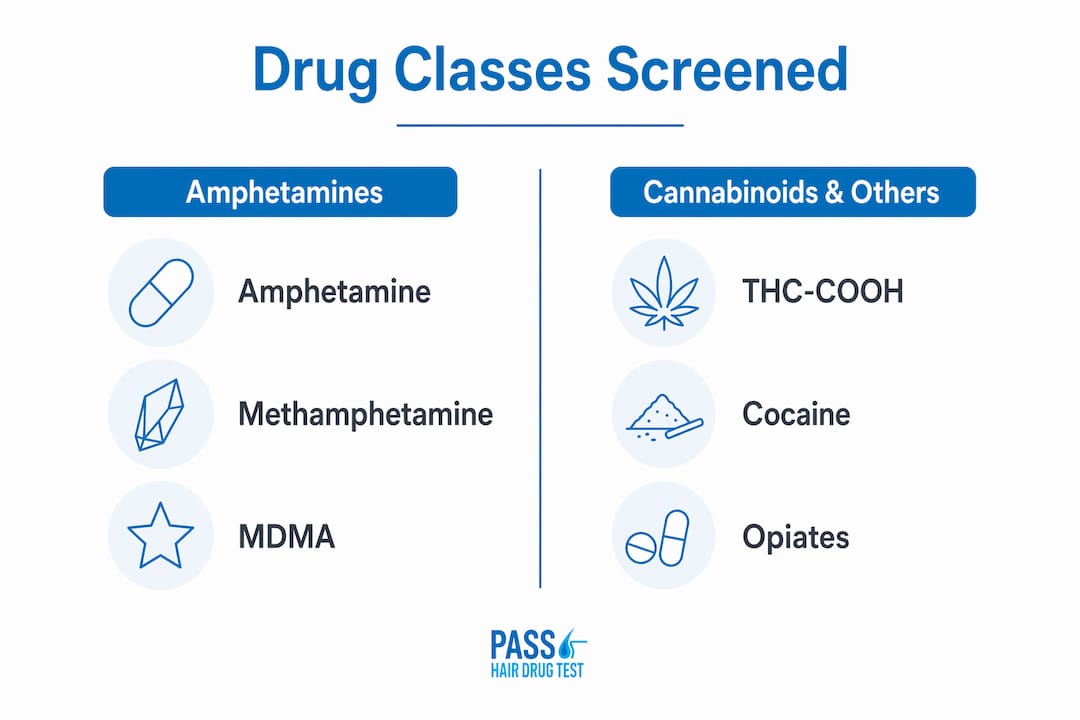
Standard hair panels cover amphetamines, cannabis metabolites (THC-COOH), cocaine, opiates, MDMA, and PCP. Extended panels add fentanyl, methadone, and other substances depending on the testing program.
| Drug Class | Examples Screened |
|---|---|
| Amphetamines | Amphetamine, methamphetamine, MDMA |
| Cannabinoids | THC, THC-COOH |
| Cocaine | Cocaine, benzoylecgonine |
| Opiates / Opioids | Morphine, codeine, heroin metabolite, fentanyl |
| Other | PCP, methadone, EDDP |
Body hair grows more slowly than scalp hair and spends more time in the resting (telogen) phase. That variability is exactly why labs cannot segment it into monthly windows the way they do with scalp hair.
Body hair vs. scalp hair: which gives a better detection window?
The difference comes down to precision versus breadth. Scalp hair grows at roughly 0.5 inches (about 1.3 cm) per month, so the standard 1.5-inch sample from the root represents approximately 90 days of history. Labs can cut that sample into segments and map drug use month by month.
Body hair doesn’t work that way. It’s collected by weight, roughly 100 mg, not by a measured length, because individual strands grow at inconsistent rates and spend unpredictable time in resting phases. Some sources indicate body hair can reflect use going back up to 12 months for certain sites, but that window is non-specific. You can’t point to a segment and say “this represents March.”
- Scalp hair: ~90-day window, segmentable, month-by-month profile possible.
- Body hair: Broader window, potentially up to 12 months for some body sites, but without reliable month-by-month time mapping.
- When collectors choose body hair: Bald donors, very short scalp hair, or legal/court situations where any hair evidence is needed. Collectors follow a preference order: chest, underarm, leg, then facial hair.
On donor comfort, body hair collection is typically done by clipping, not plucking. It’s less targeted than scalp collection and covers a wider surface area, but it’s not painful. Collectors gather enough mass from one or more sites to meet the weight requirement.
Pro Tip: If you’re bald or have very short scalp hair, don’t assume the test won’t happen. Collectors are trained to move to body sites rather than accept a shaved head as a refusal.
How accurate is a body hair drug test?
Hair testing accuracy depends heavily on the lab’s protocol. The two-step process, immunoassay screening followed by GC-MS or LC-MS/MS confirmation, is the industry standard for a reason: it filters out both false positives from cross-reactive compounds and false negatives from borderline samples.
- False positives from environmental exposure are reduced by washing and by testing for metabolites formed inside the body, not just parent compounds on the hair surface. Labs prioritize internal metabolites specifically to distinguish ingestion from contact.
- False negatives are more likely with very low or infrequent use, heavily bleached hair, or hair that has been chemically damaged to the point where metabolite concentration falls below cutoff thresholds.
- Cross-reactivity in immunoassay screens can flag some medications, but confirmation testing resolves those cases before a result is reported as positive.
Turnaround time reflects this process. A negative result typically comes back within 24–72 hours. A confirmed positive takes longer because the sample must go through the full confirmation workflow before the lab reports it.
“Washing protocols and metabolite testing make professional hair tests robust against secondhand exposure — labs prioritize metabolites formed inside the body, not only parent compounds on the hair surface.”
AlphaBiolabs
What happens during body hair collection?
Collection is straightforward, but knowing the specifics helps you prepare. For scalp hair, the standard is a pencil-thickness bundle of about 90–120 strands cut to 1.5 inches from the root. Body hair is different.
Body hair collection specifics:
- Sample weight: approximately 100 mg, roughly the size of a cotton ball when compressed.
- Common sites in order of collector preference: chest, underarm, leg, facial hair (beard or mustache).
- Multiple sites may be combined if a single site doesn’t yield enough mass.
- The collector records the source site on the specimen envelope.
Chain-of-custody steps:
- Donor presents valid photo ID.
- Collector documents the sample source, site, and donor information.
- Sample is sealed in a tamper-evident package and labeled.
- Donor and collector both sign the chain-of-custody form.
- Sample ships to the certified lab under documented custody.
Labs note the hair source on the report (e.g., “chest hair”) because detection windows vary by site, and that annotation matters when interpreting results.
| Collection Type | Measurement Method | Typical Amount |
|---|---|---|
| Scalp hair | Length from root | 1.5 inches, ~90–120 strands |
| Body hair | Weight | ~100 mg |

Pro Tip: Bring a list of any prescription medications and note the dates of recent hair treatments. Handing this to the collector before the sample is taken creates a documented record that can protect you if results come back borderline.
Do hair treatments and hair type change your results?
Yes, and more than most donors realize. Bleaching, dyeing, perming, and straightening all alter the hair shaft structure and can reduce the concentration of detectable metabolites. A heavily bleached sample may test below the cutoff even when use occurred, which is a false negative scenario. Labs ask donors to disclose recent treatments for exactly this reason.
Hair color and texture also play a role. Melanin content affects how drugs bind to the hair shaft. Darker, coarser hair tends to bind certain drug compounds more readily than fine, light hair. This doesn’t mean dark-haired donors test positive more often, but it does mean labs consider these variables when interpreting borderline results.
A few other factors worth knowing:
- Recent shaving: If you shaved a body site recently, the collector will move to another site. Shaving does not prevent collection.
- Hair extensions: Extensions are not your hair and won’t be used for testing. Collectors collect only hair growing from your scalp or body.
- Detox shampoos: Labs wash samples with controlled protocols. Products applied externally affect the hair surface, but the wash step is designed to separate surface residue from internally incorporated metabolites. The science behind hair drug testing explains this distinction in more detail.
Pro Tip: Disclose every chemical treatment, even minor ones like a single bleach session months ago. Unexpectedly low metabolite levels without a disclosed explanation can raise questions about sample integrity.
How do you read your results and what should you do next?
Results come in three forms, and each calls for a different response.
Negative: The sample showed no drug metabolites above the cutoff thresholds. Turnaround is typically 24–72 hours. No further action is required unless you believe the sample was mishandled.
Non-negative / Positive: The sample exceeded cutoff thresholds and was confirmed by GC-MS or LC-MS/MS. You have the right to request the specific method used, the cutoff levels applied, and the quantitative result. If you take prescription medications that could explain the finding, provide documentation immediately.
Inconclusive / Insufficient sample: The lab couldn’t process the sample, usually because the mass was too low. The collector will schedule a recollection, either from the same site or an alternative body location.
Practical next steps if you receive a positive:
- Request the full confirmatory report, including the specific metabolite identified and the cutoff used.
- Provide prescription documentation to the Medical Review Officer (MRO) within the timeframe specified.
- Ask whether the report notes the body site used. If body hair was collected, request that annotation for your records.
- If you believe the result is in error, request a split-sample retest through the MRO before the retention period expires.
Pro Tip: The MRO review process exists specifically to catch legitimate prescription explanations. Contact the MRO directly, not the employer, and do it before the review window closes.
When is a body hair test the wrong choice?
Hair testing is best suited to detect repetitive or long-term patterns of use and is not recommended for post-accident or reasonable-suspicion scenarios where immediate detection is required. If someone used a substance once last week, a body hair test may not detect it at all. The five-to-seven-day incorporation delay means very recent use won’t show up, and a single-use event may fall below detection thresholds even after incorporation.
- Use urine or oral fluid when: The goal is detecting recent use (within days), post-accident testing, or reasonable-suspicion situations.
- Use scalp hair when: You need a month-by-month profile of the past 90 days.
- Use body hair when: The donor has insufficient scalp hair and a broad historical overview is acceptable, or when the legal situation requires any available hair evidence.
Body hair is also less legally precise than scalp hair in contexts where timing matters. Courts and legal proceedings that require a specific month-by-month timeline will find scalp hair segmentation far more useful. Body hair results are admissible but carry the caveat that the window is non-specific.
Pro Tip: If you’re an employer or program administrator choosing a test type, match the specimen to the objective. Body hair is a last resort for pattern detection, not a substitute for scalp hair testing.
Key Takeaways
Body hair drug testing reliably detects historical, repeated drug use but cannot pinpoint when specific events occurred, making it a broad-window screen rather than a tool that provides a specific timeline.
| Point | Details |
|---|---|
| Detection window | Body hair may reflect use over a broad period, with some sources noting detection for up to 12 months, but it cannot be segmented by month. |
| Sample requirement | Labs collect approximately 100 mg of body hair by weight, not by strand length. |
| Lab confirmation | All non-negative results are confirmed by GC-MS or LC-MS/MS before being reported as positive. |
| Cosmetic treatments | Bleaching, dyeing, and perming can reduce detectable metabolite levels; always disclose treatments to the collector. |
| Passhairdrugtest | Passhairdrugtest offers hair-cleansing shampoos and multi-step kits for donors preparing for a hair follicle drug test. |
A perspective worth considering
Why the “just use body hair” assumption gets donors in trouble
Most people assume that if they shave their head, the test can’t happen. That’s wrong, and it’s the kind of assumption that leads to a failed test or a refusal notation, which is often treated the same as a positive result.
The more interesting issue is what body hair results actually mean legally and practically. Because body hair can’t be segmented, a positive result on a chest or leg sample tells you someone used a substance at some point in a broad historical window. It doesn’t tell you when. In a legal context, that ambiguity cuts both ways: it’s harder to argue the result is wrong, but it’s also harder for the opposing party to argue it proves use at a specific time.
The other thing most guides miss is the melanin factor. Drug binding in hair isn’t uniform across hair types. Coarser, darker hair binds certain compounds more readily. Labs account for this, but donors rarely know to ask about it. If you have naturally dark, coarse body hair and a borderline result, that context is worth raising with the MRO.
The bottom line: body hair testing is a blunt instrument. It’s useful for confirming a pattern of use over a long period, and it’s the fallback when scalp hair isn’t available. Treat it that way, and you’ll interpret results more accurately than most people do.
What Passhairdrugtest offers if you’re preparing for a hair test
Facing a hair follicle drug test is stressful, especially when the sample might come from body hair you can’t easily manage. Passhairdrugtest has spent more than 20 years focused on exactly this situation: providing hair-cleansing products and clear guidance for people who need to understand their options before a test.
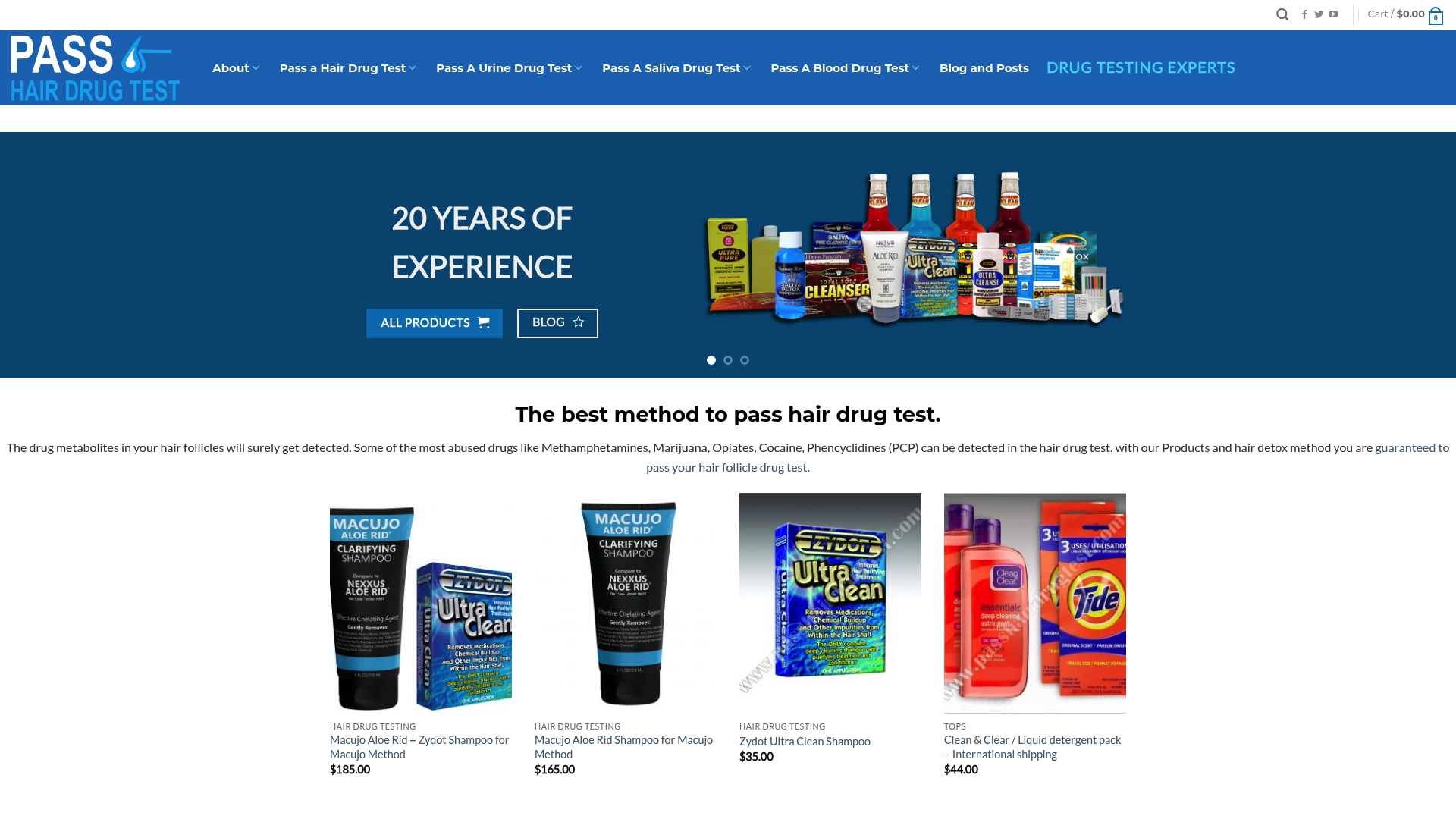
The site’s core products include Macujo Aloe Rid Shampoo, Zydot Ultra Clean Shampoo, and multi-step cleansing kits built around Mike’s Macujo Method. These are designed for use before a hair test and come with detailed instructions. No product can guarantee a passing result, and outcomes depend on your specific use history, hair type, and the lab’s cutoff thresholds. Review the hair follicle shampoo kit options, confirm your test date and the lab’s methods first, and reach out to Passhairdrugtest’s support team with questions about which product fits your situation.
This article is general information, not legal or medical advice. Confirm current lab methods and cutoff thresholds with your testing provider or a qualified professional for your specific case.
Useful sources
- Quest Diagnostics: Hair Testing FAQ — Lab methods, detection windows, and panel coverage from one of the largest U.S. testing providers.
- AlphaBiolabs USA: Can Body Hair Be Used for Drug Testing? — Explains weight-based collection and segmentation limitations for body hair.
- US Drug Test Centers: Body Hair vs. Head Hair Drug Test — Covers collector preference order and practical donor expectations.
- Concentra: Hair Drug Testing 101 — Overview of standard drug panels and extended panel options.
- AlphaBiolabs: What Affects a Hair Drug Test Result? — Detailed breakdown of cosmetic treatment effects, washing protocols, and contamination controls.
- SAMHSA — Federal substance abuse and mental health guidance; primary source for federally regulated testing standards.
- Ask your testing lab directly for the specific methods, cutoff thresholds, and confirmation procedures used for your specimen. That information is your most reliable reference for interpreting your own results.
Recommended
- Hair Drug Test Information – Pass Hair Drug Test
- Hair Follicle Drug Test Information – Pass Hair Drug Test
- The Science Behind the Hair Drug Test – Pass Hair Drug Test
- Pass hair follicle drug test
