No products in the cart.
Uncategorized
Will Probation Give You a Hair Follicle Test?

23
Aug
Aug
Most probationers never see a hair follicle test. Standard supervision leans on urine or oral-fluid screening because it’s cheap and catches recent use, which is what a probation officer usually cares about week to week. Hair testing shows up when the court wants a longer look back, roughly 90 days, or when there’s a specific reason to suspect timed-use evasion, a pre-sentencing evaluation, or fentanyl exposure concerns.
If you’ve been ordered to take one, don’t panic and don’t try to outsmart the process. Cooperate with the collector, disclose any prescription medications to the medical review officer (MRO) before results come back, and write down the date, time, and location of your collection. Ask directly who retains the specimen and for how long.
- Cooperate fully; refusal is often treated the same as a positive result.
- Disclose all prescriptions and over-the-counter medications in writing.
- Ask about specimen retention policy before you leave the collection site.
- If results come back nonnegative, request the MRO interview and ask about retesting the retained sample.
Pro Tip: Get the name of your collector and the lab in writing at the time of collection. If you ever need to challenge a result, that detail matters more than people expect.
Table of Contents
Key Takeaways
Probation departments reserve hair follicle testing for cases needing a long-term use pattern, while urine and oral fluid remain the default for routine, recent-use monitoring.
| Point | Details |
|---|---|
| Hair testing is selective, not routine | Courts order it for pre-sentencing evaluations, drug court compliance, or suspected evasion, not standard check-ins. |
| Detection window runs about 90 days | Standard scalp samples cover roughly three months but miss use from the most recent 5 to 7 days. |
| Confirmation testing backs up screening | Positive ELISA screens go through GC-MS or LC-MS/MS confirmation, checking for metabolites that prove ingestion. |
| Your rights include retesting | Request testing of the retained sample at an independent lab quickly, and bring medical documentation to the MRO. |
| Passhairdrugtest.com offers preparation resources | The site’s hair follicle shampoo kits and guides draw on 20+ years of hair-testing knowledge, with no guaranteed outcome for court-ordered tests. |
This article is general information, not a substitute for advice from a qualified lawyer. Consult a qualified legal professional about your own circumstances before acting on anything here.
Table of Contents
- Which Drug Tests Does Probation Use for a Hair Follicle Test?
- How a Hair Follicle Test Actually Works
- Detection Windows and What Can Skew a Hair Test
- Where and How Samples Are Collected
- What to Do After a Positive or Nonnegative Result
- Why This Guide Is Worth Trusting
- Your Legal Rights When Probation Orders a Hair Test
- Myths About Hair Testing on Probation You Should Ignore
- How Hair Testing Policies Differ Across States and Departments
- Getting Ready for a Hair Test: Products and Resources
- Sources
Which Drug Tests Does Probation Use for a Hair Follicle Test?
Urine and oral fluid dominate routine probation testing. Both are inexpensive, fast, and built for catching drug use in the days before the test, which fits the rhythm of weekly or random check-ins most supervision programs run on. A NIJ pilot study in a probation population found that hair assays detected a higher rate of drug-positive cases than urinalysis alone, and the researchers recommended pairing the two methods for the fullest picture of a person’s use pattern.
That combination is exactly why hair testing enters the picture selectively rather than routinely. A few things typically push a probation department toward ordering a hair follicle drug test:
- The court order or plea agreement specifically names hair testing as a condition.
- A drug court or specialty docket uses hair panels for compliance verification over months, not days.
- The person has a documented history of missed or manipulated urine tests.
- A pre-sentencing evaluation needs a longer-term substance use history.
- The supervising agency is monitoring for fentanyl or opioid exposure and wants a wider detection window.
Local lab contracts matter too. Some counties have standing agreements with labs that only run urine and oral fluid, which makes hair testing logistically rare there even if a judge would otherwise favor it. Other jurisdictions, particularly those running specialized drug courts, budget for hair panels as a standard compliance tool. If your paperwork doesn’t specify the test type, ask your probation officer directly. It’s a fair question, and most officers will tell you.
How a Hair Follicle Test Actually Works
The collection itself takes a few minutes. Following the same procedure laboratory providers describe, a collector typically cuts about 100 milligrams of hair, roughly the thickness of a pencil, from the vertex posterior (the back of the crown), close to the scalp. A sample around 1.5 inches long represents approximately 90 days of hair growth, since head hair grows at a fairly predictable rate.
Once the sample reaches the lab, it goes through two stages:
- Screening. An immunoassay (commonly ELISA) scans for the presence of drug classes at or above a cutoff level.
- Confirmation. Any sample that screens positive moves to confirmatory testing using gas chromatography-mass spectrometry (GC-MS) or liquid chromatography-tandem mass spectrometry (LC-MS/MS), the gold standard for identifying specific compounds and their metabolites.
Labs specifically look for phase II metabolites, the chemical byproducts your body creates when it actually processes a drug, rather than just the parent compound sitting on the hair’s surface. That distinction is central to how forensic examiners rule out contamination versus ingestion.
Panel size varies by what the court or supervising agency orders. A standard 5-panel test screens for marijuana, cocaine, opiates, amphetamines, and PCP. Extended 10- or 12-panel tests add prescription opioids, benzodiazepines, and sometimes additional synthetic substances, which is increasingly relevant given how many people on supervision are also managing legitimate prescriptions.
Turnaround is faster than most people assume. Negative results are often reported within 48 to 72 hours of the lab receiving the sample. If the screen comes back positive, confirmation testing typically adds another 72 hours before a final result reaches your probation officer.
Detection Windows and What Can Skew a Hair Test
Standard scalp hair sampling looks back about 90 days, but it has a blind spot at the front end. Hair tests generally can’t reliably detect use within the first 5 to 7 days after ingestion, because the hair containing that evidence hasn’t grown far enough out of the follicle to be cut and tested yet. That gap surprises a lot of people who assume hair testing catches everything, right up to the day of the test.
Several personal and cosmetic factors can shift how a hair sample reads in the lab:
- Faster or slower natural hair growth changes how much of the 90-day window a given sample actually covers.
- Dyeing, bleaching, and other chemical treatments can lower metabolite concentrations in the hair shaft.
- Those same treatments can create unusual metabolite-to-parent compound ratios that labs flag for closer review rather than a straightforward negative.
- Environmental exposure to smoke or residue is a genuine concern, which is why labs run wash steps and rely on metabolite detection rather than surface residue alone.
The UNODC’s technical review of hair testing lays out just how much hair biology complicates interpretation, from growth-phase variation to the segmental analysis needed to map use over time accurately. Fentanyl adds another wrinkle: NIJ research on court-ordered testing found that fentanyl and its analogs often require a targeted assay, meaning a standard panel that doesn’t specifically test for it can miss exposure entirely.
Pro Tip: If you’ve recently dyed or bleached your hair, mention it to the collector before the sample is taken. It won’t guarantee a different outcome, but it documents a legitimate reason for the lab to scrutinize the metabolite ratios rather than assume the worst.
Where and How Samples Are Collected
Collection happens at a probation office, a contracted collection site, or a lab’s own collection center, depending on what your supervising agency has arranged. Whichever location it is, the collector should be following a documented chain-of-custody process from the moment your hair is cut.
That paperwork is worth understanding, because it’s your main defense if something ever needs to be challenged later:
- The collector records their name, the date, and the exact time of collection.
- Your sample gets labeled and sealed in your presence, ideally with a tamper-evident seal you can see applied.
- A witness signs off on the collection, confirming the sample belongs to you and was handled correctly.
- The lab documents a retention policy, meaning a portion of your sample is kept in case a retest is ever requested.
Expect to pay for the test in most jurisdictions. Hair testing generally costs more than urine screening, though exact fees vary widely by region, lab, and whether the probation department covers part of the cost. If head hair isn’t available, collectors can sometimes use body hair, but that comes with a caveat: body hair grows more slowly and in less predictable phases, which makes the standard 90-day window estimate far less reliable. If a collector proposes body hair sampling, ask how that affects the interpretation of your specific timeline.
What to Do After a Positive or Nonnegative Result
A positive screen isn’t the final word. Every confirmed or presumptive positive triggers a medical review officer (MRO) interview, a licensed physician’s chance to review the result with you and hear about any prescriptions or medical conditions that could explain it. This step exists specifically to catch legitimate explanations before a result gets reported as a probation violation.
If the MRO interview doesn’t resolve things in your favor, you generally have the right to request retesting of your retained sample at an independent, accredited lab. Move quickly. Retained samples don’t sit around forever, and the sooner you request a retest, the stronger your position.
- Pull together pharmacy records and physician notes covering the testing window.
- Save receipts for any legal over-the-counter products you used.
- Write a dated timeline of any hair treatments, salon visits, or known chemical exposures.
- Ask your probation officer, in writing, exactly what happens next procedurally.
Pro Tip: A written, dated timeline feels tedious to put together, but it’s often the single piece of documentation that turns a confusing case into a defensible one.
Consult an attorney as soon as a nonnegative result appears, especially before any violation hearing. An independent toxicologist’s report reviewing the lab’s methodology, chain-of-custody paperwork, and metabolite ratios can materially change how a judge weighs the result.

Why This Guide Is Worth Trusting
Passhairdrugtest.com has spent more than 20 years in the hair-testing and detox-product space, working with people who are trying to understand exactly what a lab does with their sample and why. This guide draws on that operational familiarity alongside published NIJ research and laboratory procedural standards, not guesswork.
- The site documents product options, including detox shampoo kits and step-by-step guides, built around real testing procedures rather than marketing claims.
- No product on the market, including anything sold here, can guarantee passing a court-ordered hair follicle test. Labs run rigorous, well-documented protocols specifically designed to catch manipulation.
- Never tamper with a court-ordered sample. Doing so can carry consequences far worse than a positive result.
- If you’re facing a court-ordered test, talk to your attorney about your specific legal obligations before making any decisions.
Readers wanting more procedural depth can review the hair follicle drug test information hub for additional technical detail.
Your Legal Rights When Probation Orders a Hair Test
Probation conditions carry real constitutional weight, but courts have consistently upheld drug testing, including hair testing, as a valid condition of supervision because it serves a legitimate rehabilitative and public-safety purpose. You don’t have unlimited privacy protection here. Once you’re under court-ordered supervision, your expectation of privacy is narrower than it would be as a private citizen.
That said, you still have procedural rights worth knowing. You’re generally entitled to know what substances are being tested for, and you have a right to disclose prescription medications to the MRO before a result is finalized against you. You also typically have the right to request that a portion of your retained sample be retested at an independent lab, though the exact process and deadlines vary by jurisdiction and by what your specific court order says.
Refusing a hair test ordered as a condition of probation is treated in most jurisdictions the same way a positive result would be, as a violation. That surprises people who assume refusal is a neutral, safer option. It usually isn’t.
Ask your probation officer or public defender for the specific testing policy your court or county follows in writing. Verbal explanations from officers are sometimes inconsistent with what the actual order says, and having the written policy protects you if a dispute comes up later. If anything about the collection process feels off, ask questions on the spot and document the answers.
Myths About Hair Testing on Probation You Should Ignore
A lot of bad advice circulates about hair follicle testing, and some of it can genuinely hurt you if you act on it.
Myth: Shaving your head avoids the test entirely. In practice, collectors trained for hair testing can typically use body hair as an alternative, and showing up freshly shaved right before a scheduled test often reads as an obvious attempt to evade, which can itself trigger consequences.
Myth: Detox shampoos guarantee a negative result. Reputable labs use wash protocols and mass spectrometry confirmation specifically designed to catch surface manipulation, and metabolites bound deep in the hair’s cortex are considerably harder to remove than most marketing claims suggest.
Myth: Hair tests can pinpoint the exact day you used a substance. They can’t. Hair testing shows a pattern of exposure over roughly a 90-day window, not a precise timeline, which is part of why segmental analysis and metabolite ratios matter so much to interpretation.
Myth: A positive hair test is unchallengeable. It isn’t. The MRO interview, the right to request retesting, and the documentation you can bring, prescriptions, treatment records, a written exposure timeline, all exist specifically because hair testing has known limitations.
Myth: All probation departments use hair testing routinely. Most don’t. Urine and oral fluid remain the default for the reasons covered earlier: cost, speed, and a focus on recent use rather than a long-term pattern.
How Hair Testing Policies Differ Across States and Departments
There’s no single national standard governing when probation departments use hair follicle testing. Each state, and often each county or judicial district within a state, sets its own policy based on budget, lab contracts, and the priorities of local drug courts.
Specialty drug courts tend to lean on hair testing more than general probation caseloads do, because compliance verification over an extended period is central to how those programs measure progress. A general probation officer supervising a large caseload, by contrast, often relies almost entirely on urine testing simply because it’s faster and cheaper to administer across dozens of people every month.
Federal supervised release and some state-level programs increasingly reference fentanyl-specific monitoring in their testing protocols, a shift driven partly by the NIJ’s own research showing that standard panels can miss fentanyl exposure without a targeted assay. If you’re supervised in a jurisdiction dealing heavily with opioid cases, don’t assume your panel automatically screens for it. Ask.
The honest takeaway is that your specific court order, plea agreement, or drug court handbook is the only document that actually tells you what to expect. General information, including this guide, can prepare you for what’s possible. It can’t replace reading your own paperwork or asking your probation officer directly what your county’s lab uses.
What I’d Want Someone To Know Before Their Test
Cooperation and documentation, not clever workarounds, are what actually protect people through this process. If you’re ordered to test, show up, disclose your medications, and keep your own paper trail. That’s what gives you real options if something goes wrong.
Getting Ready for a Hair Test: Products and Resources
Beyond the procedural side, Passhairdrugtest.com built its business specifically around helping people understand and prepare for hair follicle testing, drawing on decades of focus on hair chemistry and detox science rather than general drug-testing content. The product lineup centers on the Macujo Aloe Rid shampoo and Zydot Ultra Clean, along with Mike’s Macujo Method, a multi-step cleansing approach that’s become one of the most discussed hair-prep routines in this space.
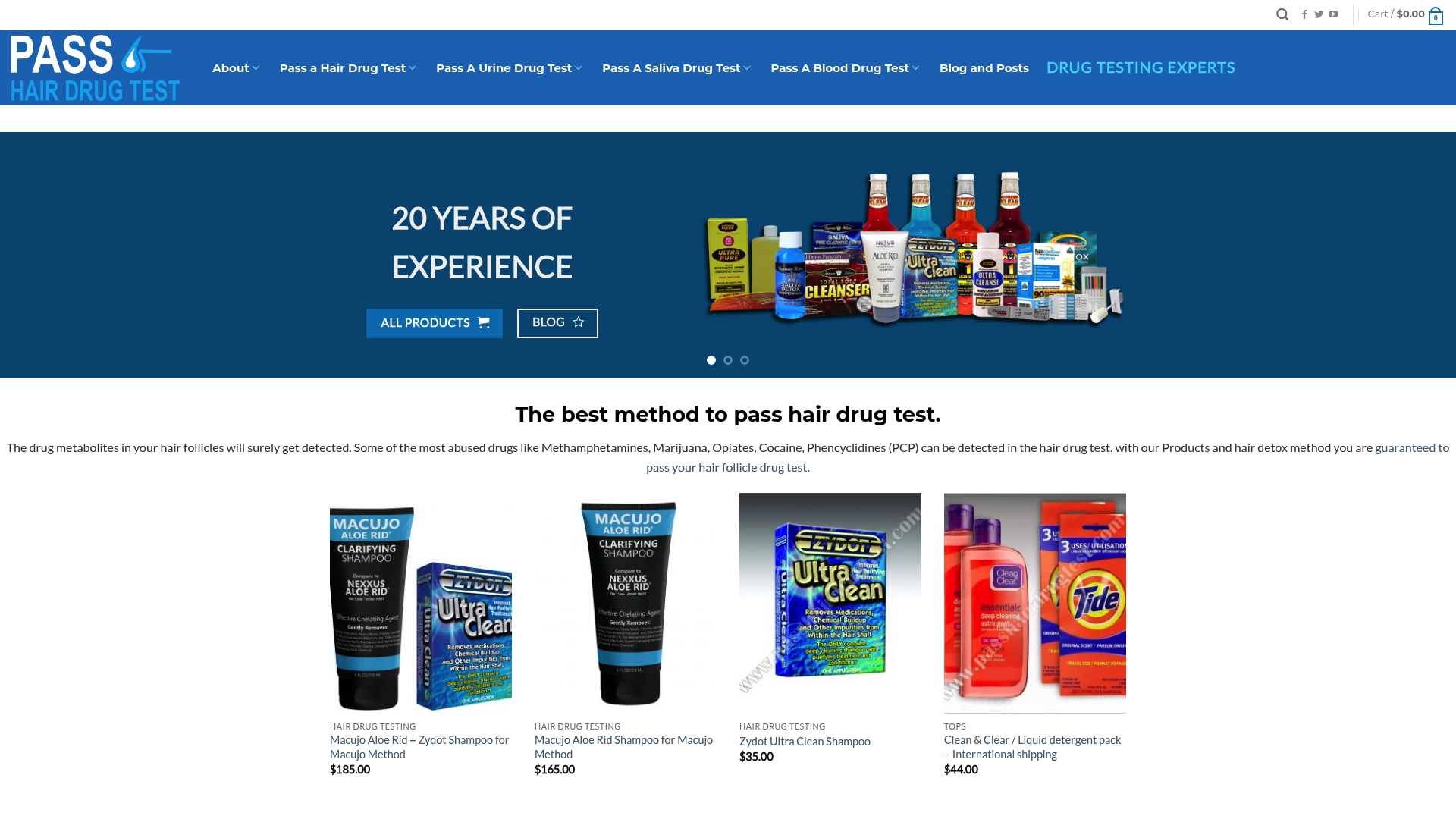
If you want to understand the mechanics behind these products before you buy anything, the how-to-pass guide walks through the reasoning step by step, and the full product catalog breaks down every shampoo kit and detox option available. None of these products can guarantee passing a court-ordered test, and nothing here is a substitute for following your probation terms or talking to an attorney if you’re facing a violation hearing. What Passhairdrugtest.com can offer is two decades of specific, practical knowledge about hair chemistry, so you’re making an informed decision instead of guessing.
If you’re preparing for an upcoming test and want to see exactly what’s involved, start with the hair follicle shampoo kit page for full product details and ordering information.
Sources
- Hair assays for drugs of abuse in a probation population — NIJ pilot study
- Hair follicle testing: Process & benefits | Labcorp
- Hair, sweat and oral fluid: Technical drug testing overview — UNODC
Recommended
- Hair Follicle Drug Test – Best guaide for hair drug test – Pass Hair Drug Test
- How to Pass a Drug Test on Hair Follicles? – Pass Hair Drug Test
- Hair Follicle Drug Test Information – Pass Hair Drug Test
- Pass hair follicle drug test
