No products in the cart.
Uncategorized
Macujo Method Risks: 50–65% Lab Reductions, Plus Scalp Burn Dangers
02
Oct
Oct
The Macujo Method poses real health risks when performed aggressively, and its effectiveness is inconsistent and unproven in controlled clinical trials. The routine combines acidic washes, salicylic-acid scrubbing, and sometimes bleach cycles directly on the scalp, which can cause chemical burns or irritation. If you are worried about scalp injury or chemical exposure, stop and talk to a clinician before continuing.
TL;DR:
- Chemical reduction of drug residues in hair varies widely depending on the drug, porosity, and routine adherence, making guaranteed success impossible.
- The most effective residue reduction steps involve prolonged acid contact and oxidative bleaching, which also cause the highest risk of severe scalp and hair damage.
- Repeated aggressive scrubbing can cause skin irritation, burns, secondary infections, and permanent hair or scalp damage, especially if symptoms like blistering or oozing appear.
- Systemic absorption of salicylic acid poses health risks, particularly for children, pregnant women, and those with kidney or liver issues, with signs of toxicity including ringing ears and nausea.
- Safer alternatives include consulting medical professionals, trimming hair, or using less aggressive cleansing products, rather than attempting DIY chemical routines.
Table of Contents
Table of Contents
- What the Macujo Method involves (common steps and chemicals)
- Acute and short-term health risks to scalp and hair
- Systemic and chemical-specific safety concerns
- How hair damage and treatments affect test results and what labs detect
- Evidence summary from peer-reviewed studies and limits of the research
- Precautions, safer options, and what to do after exposure
- Publisher perspective, credentials, and medical disclaimer
- Where the real judgment call actually lies
- Safer, supervised options if you want to explore this further
- Sources
- FAQ
What the Macujo Method involves (common steps and chemicals)
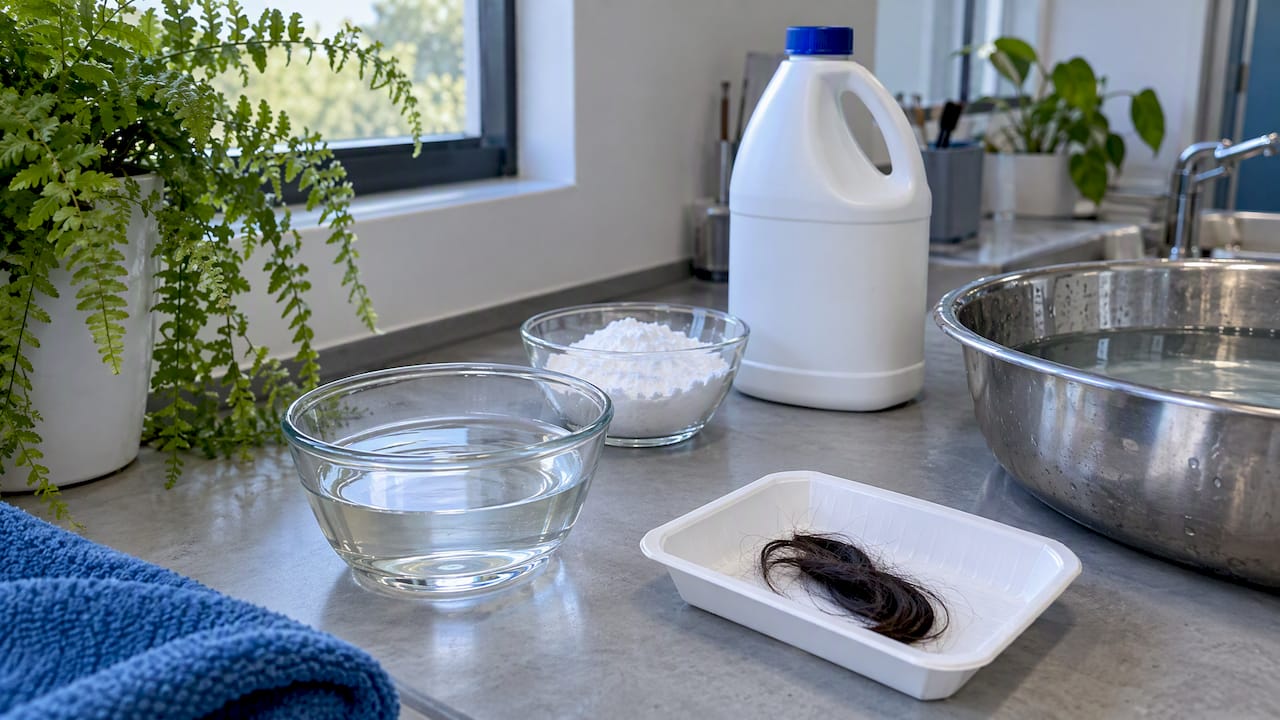
The method is a multi-step hair-washing routine built around the idea that acidic and oxidative chemicals can strip drug residue out of the hair shaft. A typical sequence looks like this:
- Soak the hair in an acidic solution, often white vinegar mixed with a liquid cleanser, to open the cuticle.
- Scrub the scalp and hair vigorously with a salicylic-acid shampoo, sometimes left on for extended periods.
- Rinse with a high-pH detergent or dish soap to strip oils and residue.
- Apply an optional bleach or peroxide cycle for additional oxidation.
- Dry and repeat the cycle, sometimes daily, in the days before a scheduled test.
Each stage pulls from a different chemical class. The acidic soak relies on vinegar’s low pH to swell the hair shaft. The scrubbing stage depends on salicylic acid, a keratolytic compound that breaks down the outer layer of skin and hair. The detergent rinse uses high-pH surfactants to strip lipids, and the optional bleach step introduces hydrogen peroxide, a strong oxidizer. Some versions also use ethanol-based disinfectants as a final rinse.
The steps most likely to damage hair and scalp tissue are the prolonged acid contact and any oxidative cycle. Laboratory research on multi-step homemade treatments found that combinations involving salicylic acid, baking soda, and bleach cycles produced the largest reductions in some drug concentrations, but those same oxidative and alkaline steps were also linked to the greatest physical damage to the hair matrix. In other words, the chemistry that strips the most residue tends to be the chemistry that does the most harm to the hair and the skin beneath it.
Acute and short-term health risks to scalp and hair
Repeated aggressive scrubbing with acidic and keratolytic chemicals carries a real chance of skin injury, especially when products are left on longer than labeled or applied daily over several days.
- Irritation and contact dermatitis: redness, itching, and stinging are common first signs of overexposure to salicylic acid or vinegar-based soaks.
- Chemical burns and blistering: prolonged contact, especially combined with scrubbing, can break down the skin barrier and cause raw, weeping patches.
- Secondary infection: broken or blistered skin on the scalp is vulnerable to bacterial infection if not kept clean and protected.
- Cuticle erosion and porosity changes: repeated acid and oxidative exposure roughens and lifts the hair cuticle, making strands more porous and fragile.
- Breakage and possible permanent loss: hair weakened at the shaft can snap off, and scalp tissue damaged by chemical burns can scar, which sometimes prevents regrowth in that spot.
Watch for red-flag symptoms: spreading redness, blistering, oozing, intense burning pain, or skin that turns white or leathery where chemicals sat longest. If any of these appear, rinse the area thoroughly with cool water, stop all further chemical application immediately, and avoid covering the area with anything occlusive. Severe burns, blistering over a large area, or signs of infection warrant prompt medical attention rather than home treatment.
Pro Tip: If a product label says to rinse after a set number of minutes, treat that number as a ceiling, not a suggestion, since leaving acidic or keratolytic products on longer does not reliably improve results and raises the chance of a burn.
Systemic and chemical-specific safety concerns
The risks from this method are not limited to the skin. Salicylic acid can be absorbed through broken or extensively scrubbed skin, and high-concentration exposure raises the possibility of salicylism, a form of salicylate toxicity.
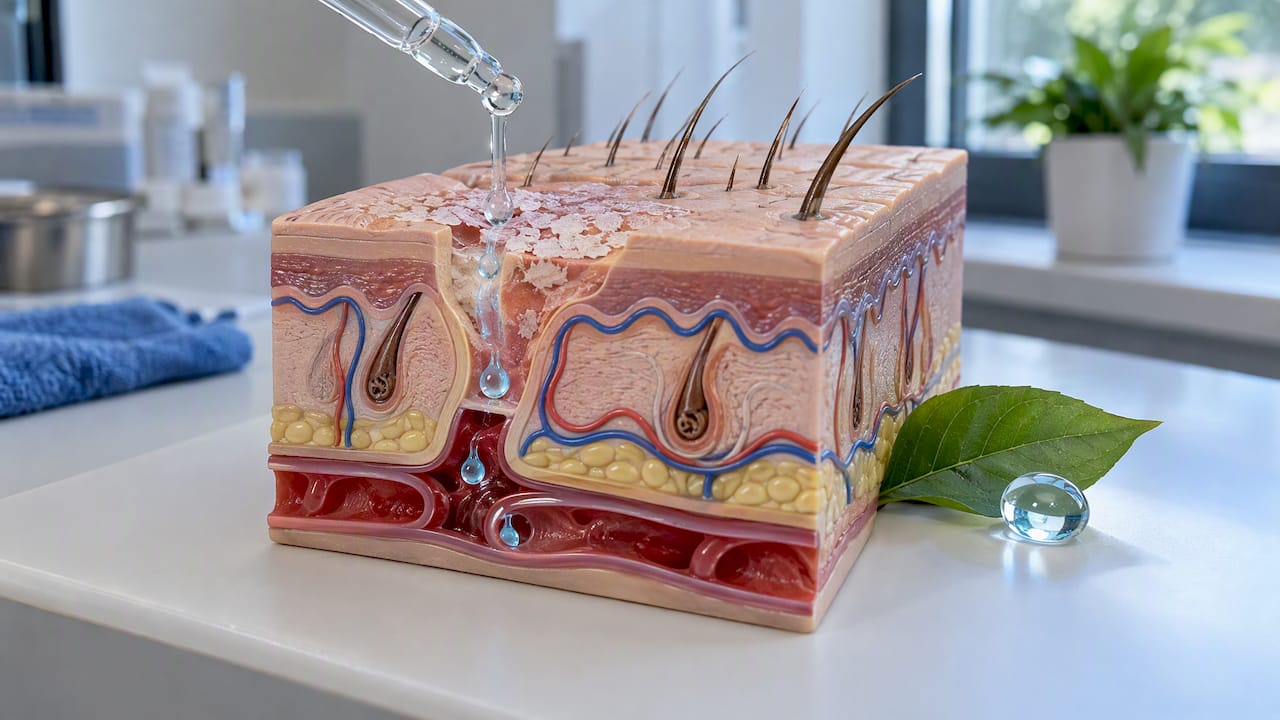
Product labeling for 6% salicylic acid shampoo warns that extensive or prolonged use can lead to systemic absorption and lists contraindications and toxicity signs, which matters directly for anyone scrubbing this product into the scalp for an hour or more at a time.
Symptoms of salicylate toxicity can include:
- Ringing in the ears (tinnitus) or temporary hearing changes.
- Nausea, vomiting, or abdominal discomfort.
- Dizziness, confusion, or rapid breathing in more severe cases.
Certain groups face higher risk from salicylate exposure, including children, people with kidney or liver impairment, and nursing mothers, who the labeling specifically advises avoiding chest-area contact. People taking anticoagulants or methotrexate should also be cautious, since salicylates can interact with these medications. Separately, mixing bleach with acidic products or ammonia-based cleaners can release toxic chlorine gas, and inhaling those fumes can cause coughing, throat irritation, chest tightness, and in serious cases respiratory distress. Anyone who is pregnant, nursing, treating a young child’s hair, or managing a chronic liver or kidney condition should treat this entire chemical combination as a reason to consult a clinician first rather than experiment at home.
How hair damage and treatments affect test results and what labs detect
The honest answer is that chemical treatments can lower drug concentrations in hair, but how much depends heavily on the drug and the technique, and the effect is inconsistent enough that no method guarantees a passing result.
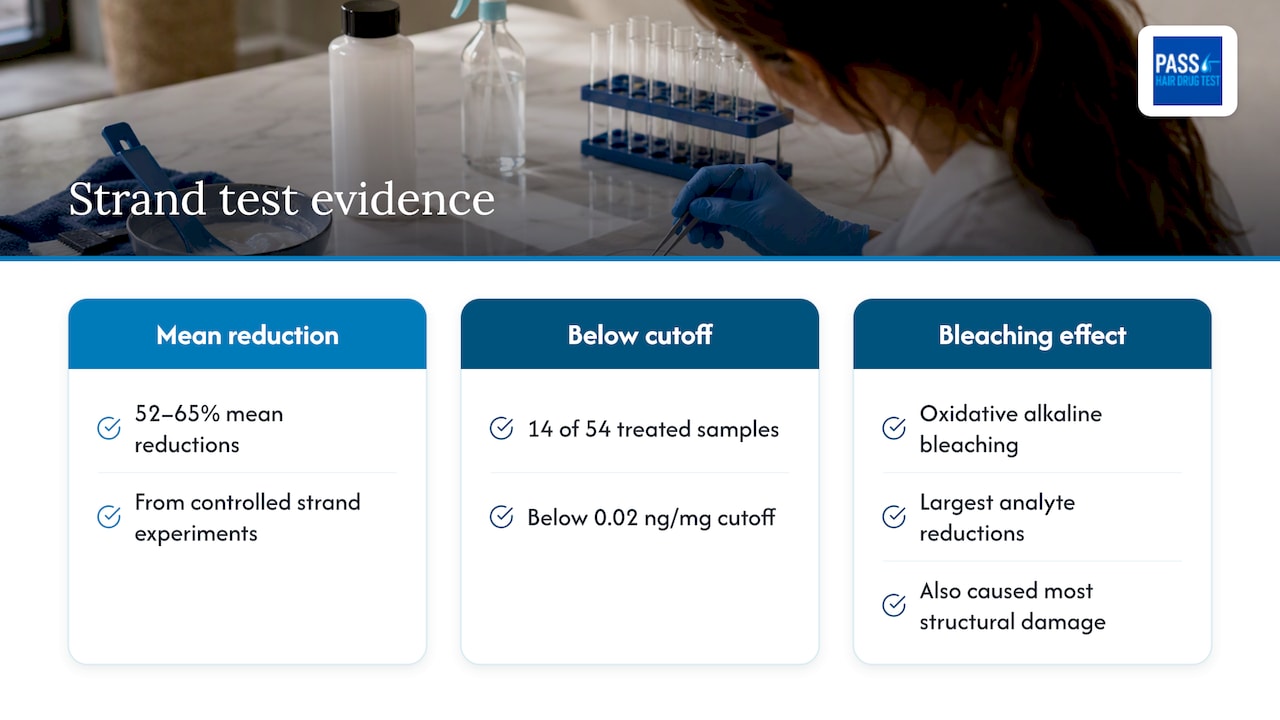
- Laboratory strand testing found that common over-the-counter products and disinfectants reduced THC concentrations in hair by an average of about 50 to 65% in a series of 54 treated samples, with some falling below the planned cutoff.
- A separate strand-treatment study on multi-step homemade routines found reductions of up to 90% for some drugs and around 60% for THC, with cocaine and MDMA generally more susceptible to oxidative or alkaline leaching than THC.
- Treated hair often looks visually normal, which means casual inspection rarely catches a manipulated sample.
That last point matters for anyone weighing this method against the forensic process described in resources on how hair follicle tests interpret results. Hair porosity plays a large role in why outcomes vary so much between people: more porous, damaged, or previously bleached hair tends to leach analytes more readily than healthy, tightly structured hair, which is part of why two people following an identical routine can get different results. Labs are not defenseless against this. Beyond visual inspection, forensic toxicologists increasingly rely on complementary urine testing to cross-check results and on biomarkers such as PTCA, a compound that can indicate oxidative hair treatment, as described in a review of sample-manipulation detection methods. No routine, universally deployed screen catches every manipulation attempt yet, but the detection science is actively closing that gap.
Evidence summary from peer-reviewed studies and limits of the research
The strongest data on this topic comes from controlled strand experiments, not from real-world use, and that distinction matters more than most online discussions acknowledge.
In the PMC study of THC-positive hair treated with products including a popular detox shampoo, vodka, and disinfectant, researchers reported mean reductions between 52% and 65%, with 14 of 54 treated samples dropping below the 0.02 ng/mg cutoff used in that series of experiments. The companion study on homemade multi-step treatments used similar strand-based methodology, cutting treated hair into segments, extracting the residue, and analyzing it by liquid chromatography mass spectrometry, and found that oxidative bleaching under alkaline conditions produced the largest analyte reductions but also the most structural damage to the hair.
Both studies share real limitations. Strand experiments apply chemicals to cut hair samples in a lab, not to a living scalp with blood flow, natural oils, and variable porosity, so they cannot fully predict what happens when a person repeats this routine on their own head for days. Sample sizes in this field remain modest, hair types and prior chemical history (color treatment, perms, previous bleaching) vary widely between individuals, and none of the published strand research tracks safety outcomes like burns or systemic absorption in real users. A separate review of evasion attempts found that products marketed for this purpose are often sold with bold claims and testimonials but inconsistent objective evidence of effectiveness. Taken together, the research supports a cautious read: reductions are real and measurable in a lab, but no controlled clinical trial has validated this as a safe or reliably effective procedure for a living person to perform on themselves.
Precautions, safer options, and what to do after exposure
If you are set on understanding this method, treat the following as the minimum safety floor rather than a complete solution.
Avoid these combinations and practices entirely:
- Never mix bleach with vinegar, acidic cleansers, or ammonia-based products, since the combination can release toxic chlorine gas.
- Do not leave high-concentration salicylic acid shampoo on the scalp longer than the label directs, especially repeated daily over several days.
- Do not attempt to deliberately irritate or burn the scalp in an effort to increase chemical penetration.
Safer alternatives exist depending on your situation. Talking to an employer or HR department about testing policy, asking whether an alternate testing matrix is available, or simply trimming hair where policy allows are all lower-risk paths than aggressive home chemistry. A clinician can also advise on underlying substance use concerns directly, which addresses the root issue rather than the test itself.
If you have already applied this method and are dealing with irritated or burned skin, rinse the area with cool water, avoid any further product application, and keep the area clean and uncovered. Watch for ringing in the ears, nausea, dizziness, or breathing difficulty, which can signal systemic toxicity from salicylate absorption or chemical fume exposure, and contact Poison Control or a clinician promptly if any of those appear. Photograph visible skin damage for your own records before it heals, in case you need to describe it to a medical provider later.
Pro Tip: Keep the original product packaging on hand if you seek medical care, since the exact salicylic acid concentration and any warnings listed on the label help a clinician assess your exposure faster.
Publisher perspective, credentials, and medical disclaimer
The website provides product pages dedicated to Macujo-related shampoos alongside broader information on the Macujo Method and its documented risks. This article was written by Michael, drawing on that institutional background in reviewing chemical-specific hazards and peer-reviewed research on hair-manipulation studies.
This content is for general information and is not a substitute for medical advice, diagnosis, or treatment. If you experience a severe skin reaction, breathing difficulty, or symptoms suggesting systemic toxicity, seek emergency medical care rather than relying on anything written here.
Where the real judgment call actually lies
The conventional framing of this topic treats it as a pass-or-fail question, and that framing undersells what the research actually shows. The honest takeaway from the strand studies is that chemical reduction in hair is real but uneven: it depends on the drug, the hair’s porosity, and how aggressively the routine is followed, which is exactly the kind of variability that makes a guaranteed outcome impossible to promise honestly.
What gets underweighted in most discussions is the physical cost. Oxidative and prolonged acid exposure are the steps most tied to both bigger reductions in lab studies and the worst skin and hair damage, which means the most aggressive version of this routine is also the most dangerous one. If you take one thing from this article, prioritize understanding what each chemical step actually does to living tissue before you consider using it, not just whether a study measured a percentage drop in a cut hair sample under lab conditions.
— Michael
Safer, supervised options if you want to explore this further
The site offers hair-cleansing shampoos and kits built around less aggressive formulations than a full DIY bleach-and-acid routine, including products referenced throughout the research above, alongside detox options for urine, saliva, and blood testing. Because we operate a commercial store alongside this information, our product recommendations reflect what we sell.
- Browse our full range of hair, urine, saliva, and blood testing products if you want a more controlled option than mixing household chemicals yourself.
- Read our guide to the Macujo Method for step-by-step product instructions if you choose to proceed.
- Check our hair follicle test information page to understand what a test actually measures before deciding on any method.
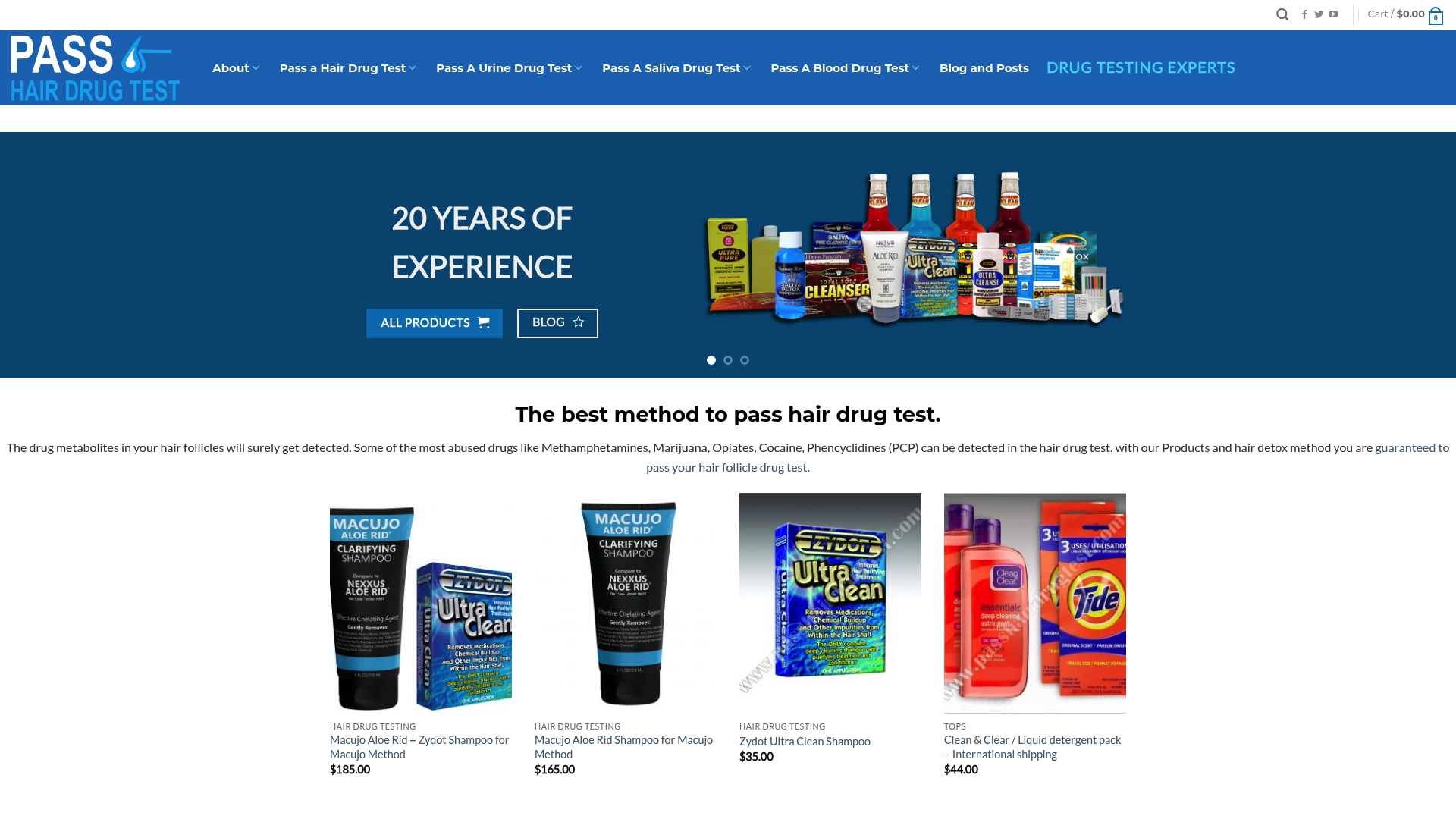
If chemical safety is your main concern, start with our products page to compare options before committing to any aggressive home routine.
Sources
- Manipulation of THC Hair Concentrations by Commercially Available Products – PMC
- Hair analysis: Assessment of homemade hair treatment effects on drug concentrations in the keratin matrix – PubMed
- Salicylic Acid 6% (w/w) Shampoo – DailyMed
FAQ
Does the Macujo Method actually work?
Effectiveness is inconsistent: laboratory strand studies found that similar products and treatments reduced THC concentrations by roughly 50 to 65% on average, with some samples dropping below test cutoffs and others not. No controlled clinical trial has confirmed it reliably works for a living person under real-world conditions.
What can throw off a hair follicle test?
Aggressive chemical treatments, including acidic washes, salicylic acid scrubbing, and oxidative bleaching cycles, can lower drug concentrations detectable in hair, as shown in strand-based laboratory research. Hair porosity and prior chemical damage also affect how much residue leaches out, which is why results vary between individuals.
What disqualifies a hair sample from a drug test?
Labs can flag a sample as unsuitable if it shows signs of recent cosmetic chemical treatment, extremely low hair volume, or visible damage inconsistent with normal grooming. Forensic reviewers also look for biomarkers like PTCA that can indicate deliberate oxidative manipulation, though no routine screen catches every case.
Can a hair follicle test detect infrequent use?
Hair testing is generally designed to detect patterns of use over the growth period a sample represents, and very infrequent or single-use exposure can fall near or below standard detection cutoffs. Detection also depends on dose, hair growth rate, and the specific cutoff a lab applies, which hair testing information resources cover in more detail.
Recommended
- Macujo Without Aloe Rid, Safe Substitutes and Risks
- Macujo Method Reviews for Hair Drug Tests at Passhairdrugtest.com
- Macujo Method Reviews: is Macujo Method Legit?
