
Uncategorized
Why ‘Up to 90 Days’ Misleads in MDMA Hair Testing
Sep
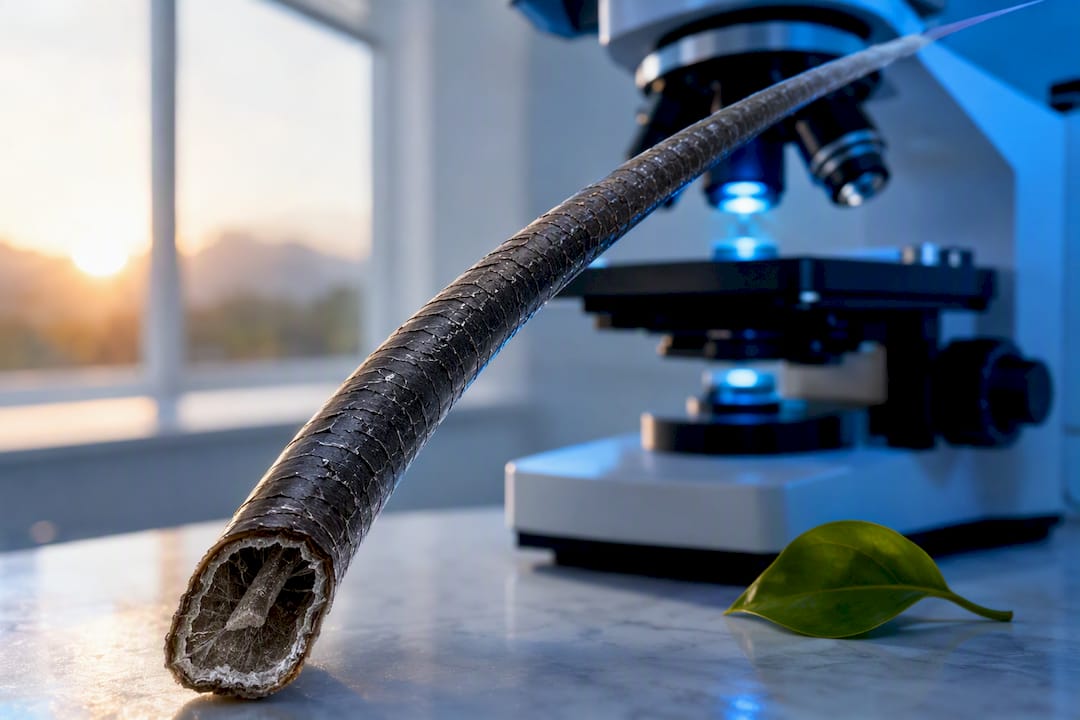
MDMA hair detection time typically runs up to around three months, based on a standard 1.5 inch hair sample taken close to the scalp. Detection isn’t immediate: it takes roughly 5 to 7 days after use for MDMA to show up in newly grown hair. Dose, frequency, hair growth rate, and lab cutoff levels all shift that window in either direction.
TL;DR:
- Hair analysis typically detects MDMA use within a three-month window, with the sample reflecting about 90 days of growth from the scalp.
- Detection usually takes 5 to 7 days after use, with higher doses and frequent use leading to more reliable and longer-lasting results.
- Darker hair may retain higher MDMA levels due to melanin binding, while cosmetic treatments like bleaching or dyeing can lower detectable concentrations.
- Forensic testing uses cutoff levels around 0.2 to 0.5 ng/mg, with confirmatory mass spectrometry required to verify positive results.
- Environmental contamination is addressed through metabolite testing and washing protocols, but distinguishing true use from contact exposure remains complex.
Table of Contents
Table of Contents
- How Hair Testing Detects MDMA
- What “Up to 90 Days” Actually Means
- Factors That Change MDMA Hair Detection Time
- Lab Cutoffs and Confirmation Methods
- Contamination Versus Actual Use
- How Samples Are Collected and When Results Arrive
- What This Article Can (and Can’t) Tell You
- A Few Practical Next Steps Worth Taking
- Where To Go From Here
- Sources
How Hair Testing Detects MDMA
MDMA reaches hair through the bloodstream, not from surface contact alone. As hair follicles form new cells, they draw nutrients and compounds from circulating blood, and trace amounts of MDMA and its metabolites get locked into the hair shaft as it grows. This is fundamentally different from a drug just sitting on the hair’s surface, which is why forensic testing focuses so heavily on internal incorporation versus external residue.
That biological process explains the lag time. Hair doesn’t grow instantly, so a dose taken yesterday won’t show up in a test performed today. It typically takes 5 to 7 days for the affected hair to grow far enough above the scalp to be collected and analyzed.
Segmental analysis builds on this timeline mechanically:
- Labs cut the proximal 1.5 inches (about 3.8 cm) of hair closest to the scalp.
- Average human hair grows about half an inch per month, so 1.5 inches maps roughly to about three months.
- Cutting hair into smaller segments lets labs estimate rough use patterns across different time periods, though not exact dates.
What “Up to 90 Days” Actually Means
The 90 day figure isn’t a fixed rule. It’s a working estimate built on an assumed hair growth rate, and that assumption doesn’t hold true for everyone. Clinical labs describe standard hair testing as covering roughly the prior 90 days, but growth rate varies by individual, so the same 1.5 inch sample can represent a slightly shorter or longer window depending on the person.
What the research shows: Segmental hair-analysis studies support cutoffs around 0.5 ng/mg as a reasonable threshold in forensic contexts, with strong correlation to recent use among consistent users.
Use patterns matter just as much as timing:
- A single low dose may leave a faint, borderline signal that’s harder to confirm.
- Sporadic, occasional use produces inconsistent concentrations across hair segments.
- Regular or heavy use builds up detectable levels more reliably and across more of the sample.
Segmental testing can narrow down roughly when use occurred, but it’s not precise enough to pin down an exact date. Chronic users show more consistent, and more easily interpreted results than someone who used MDMA once weeks ago.
Factors That Change MDMA Hair Detection Time
Several variables push detection windows longer or shorter, and they matter more than most people expect.
- Dose and frequency: Higher doses and repeated use raise the concentration of MDMA metabolites in hair, making detection more likely and often extending how far back a positive result can be traced.
- Hair growth rate and sample length: Faster hair growth means a fixed length sample covers fewer calendar days. Someone whose hair grows quickly may have a shorter effective detection window than the standard 90 day estimate suggests.
- Hair color, texture, and cosmetic treatments: Melanin binds more readily to certain drug compounds, so darker hair can sometimes retain higher concentrations than lighter hair. Bleaching, dyeing, and chemical straightening can degrade hair structure and lower measured concentrations.
- Lab method and sensitivity: Assays like LC-MS/MS detect far lower concentrations than older screening methods, meaning a lab using a more sensitive method might catch a single low dose that a less sensitive one would miss entirely.
Pro Tip: If you’ve recently colored, bleached, or chemically treated your hair, mention it when you’re asked about testing. Cosmetic treatments can genuinely lower measured drug concentrations, and that context matters if a result is ever disputed.
Lab Cutoffs and Confirmation Methods
Every hair drug test result depends on a cutoff, a minimum concentration a sample must hit before it’s called positive. Forensic literature commonly cites Society of Hair Testing guidance in the range of 0.2 to 0.5 ng/mg for amphetamine-type substances like MDMA, though the exact number a given lab uses can vary by context and jurisdiction.
Results don’t rely on a single test. Labs run a two-step process:
- An initial screening, usually immunoassay-based, flags samples that might be positive.
- Any presumptive positive goes through confirmation testing using GC/MS or LC-MS/MS, which identifies the exact compound rather than just a chemical class.
Why this matters: A screening result alone isn’t definitive. The limit of quantification on confirmatory mass spectrometry is what separates a scientifically defensible positive from a preliminary flag, which is why confirmed results carry far more weight than a screen by itself.
Understanding where a specific lab sets its threshold matters if you’re trying to interpret a result. The cutoff level a lab chooses can be the difference between a borderline reading and a confirmed positive.
Contamination Versus Actual Use
Hair sitting in an environment with MDMA residue, at a party, in a car, near drug paraphernalia, can theoretically pick up trace amounts on its surface without the person ever ingesting anything. Labs take this seriously because a false positive from environmental exposure would be a genuine problem for anyone tested.
To address it, forensic labs use two main tools:
- Metabolite testing: MDMA is metabolized in the body into specific conjugated compounds. Finding these metabolites rather than just the parent drug is strong evidence the substance was actually processed by the body, not just sitting on the hair’s surface.
- Wash and extraction protocols: Labs use optimized washing procedures before extraction to strip away surface residue, isolating what’s actually incorporated into the hair shaft.
Even with these safeguards, distinguishing a genuine single low dose from light contamination isn’t always straightforward. It’s one of the trickier gray areas in forensic hair testing.
How Samples Are Collected and When Results Arrive
The collection process follows a specific set of standards, and it happens in a particular order:
- A technician cuts a sample from the proximal 1.5 inches of hair, as close to the scalp as possible, since this section represents the most recent growth.
- Collection is supervised to preserve chain of custody. Discarded hair or hairbrush samples aren’t accepted because they can’t be verified.
- Plucked follicles are rarely used; almost all standard testing relies on clipped strands rather than root tissue.
- Initial screening results can come back in 24 to 48 hours.
- If a sample screens positive, confirmatory testing by mass spectrometry typically adds another 48 to 72 hours before a final result is issued.
What This Article Can (and Can’t) Tell You
The site has educational resources covering hair, urine, saliva, and blood testing topics related to drug testing and detox products.
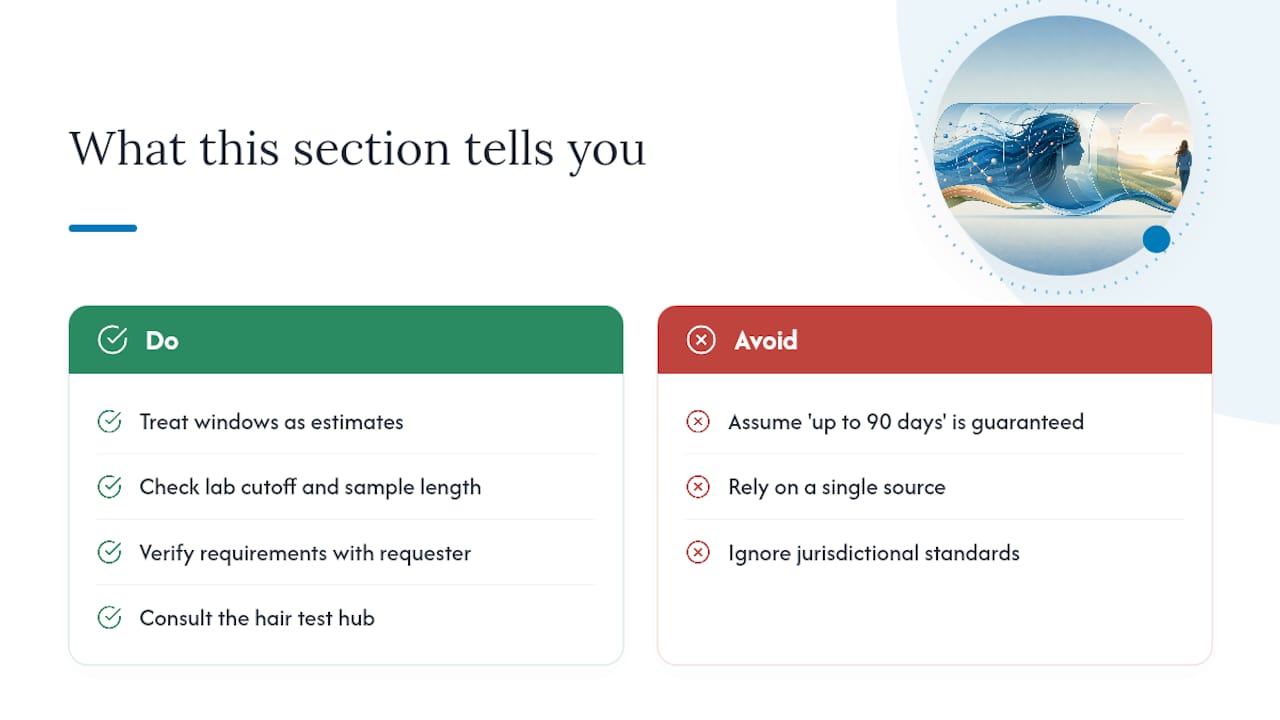
Detection windows described here are estimates drawn from published forensic research, not guarantees. Actual results depend on the specific lab, its chosen cutoff, and jurisdiction-specific standards. If you’re facing an actual test, the hair drug test information hub covers more detail, but always verify the exact cutoff and sample length requirements directly with the organization requesting the test.
A Few Practical Next Steps Worth Taking
If you’re facing a hair test, ask the requesting organization what cutoff level and sample length they’re using before you assume anything about timing. Keep the 5 to 7 day lag and roughly 90 day window in mind. If the stakes are high, confirm chain of custody procedures and get advice from a lab professional rather than guessing.
— MIchael
Where To Go From Here
Reading about detection windows is one thing. Deciding what to actually do with that information is another, and that’s where most people get stuck. There are a few different routes people take, from waiting out the window naturally to researching cleansing protocols in more depth.
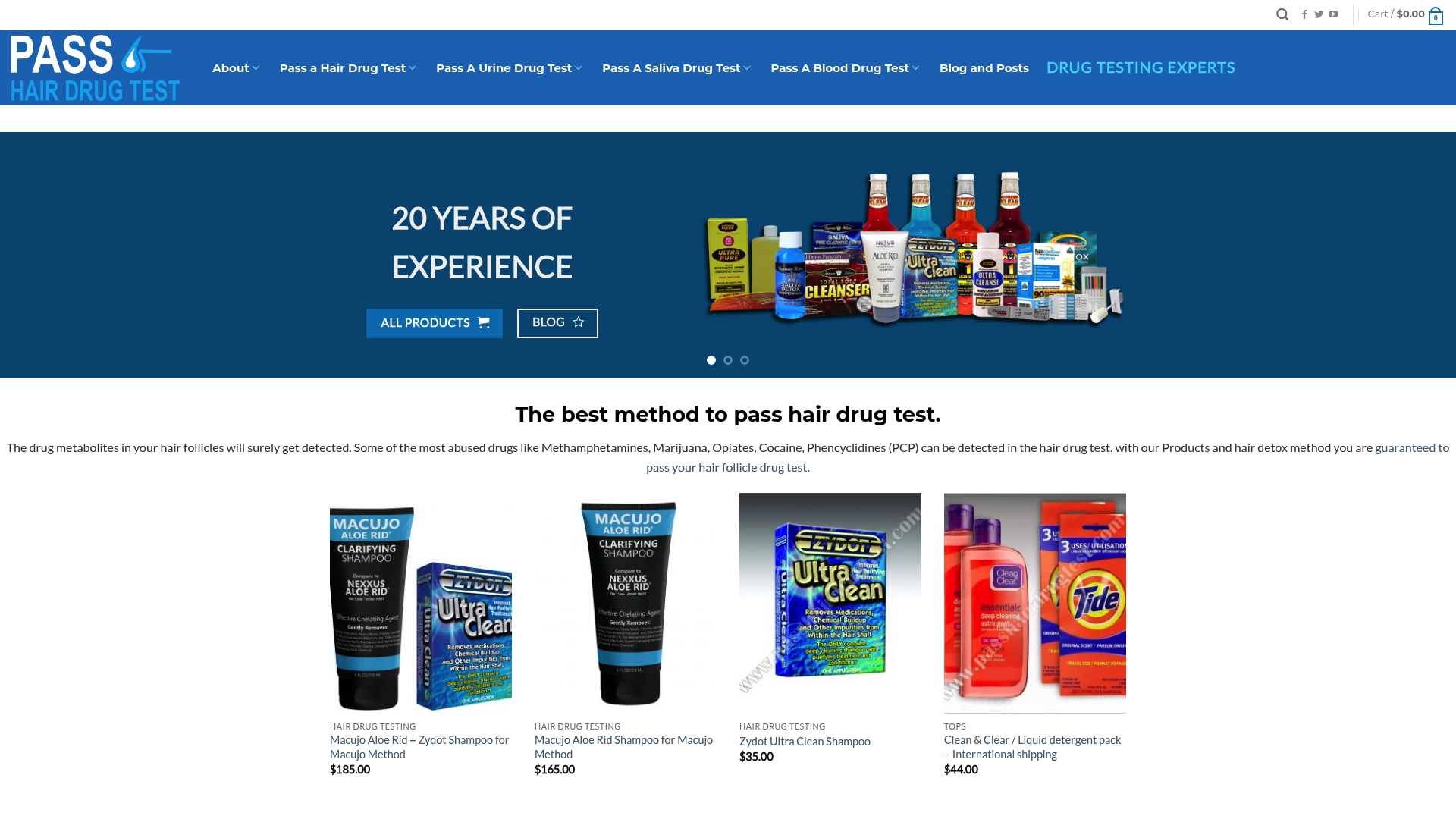
The catalog offers a direct-to-consumer option: shampoos, kits, and step-by-step guides in one place. These are marketed for addressing concerns about hair drug tests. The best hair detox shampoo category page breaks down the options the site carries, including its signature formulas and the multi-step Macujo Method. To be clear: these products are marketed to help reduce surface residue and contaminants on hair, and no product on the market can guarantee a negative result. If you want the specifics on how the detox shampoo process works or how to compare it against a basic clarifying wash, those pages walk through the practical differences. Start there if you want a clear picture of what’s actually involved before test day.
This article is general information, not a substitute for advice from a qualified doctor. Consult a qualified healthcare professional about your own circumstances before acting on anything here.
Sources
- Detecting drugs in hair: Is it drug use or environmental contamination? | National Institute of Justice
- Hair drug testing | Labcorp
- Assessment of Chronic Exposure to MDMA in a Group of Consumers by Segmental Hair Analysis (Journal of Forensic Toxicology)
- Segmental analysis of amphetamines in hair using a sensitive UHPLC‐MS/MS method
Recommended
- How Long Does Meth Stay Detectable in Hair?
- LSD Hair Test: Forensic Reliability and Interpretive Limits
- Long Hair Drug Test: What Labs Actually Measure
- Hair Drug Test vs Urine: Which Detects Use When
