No products in the cart.
Uncategorized
90 Day Risk: Can an Occasional Smoker Fail a Hair Test?

09
Sep
Sep
Yes, occasional marijuana use can show up on a hair follicle test, but it’s less likely to trigger a positive than regular use, and there’s no guaranteed safe amount. Labs test a 1.5 inch sample of roughly 100 strands to cover about 90 days of history, so a single low-frequency exposure inside that window is a real, if smaller, risk. If you’ve used within 90 days and get tested, your best move is confirmatory lab testing rather than guesswork. Abstinence for the full window remains the only reliable strategy.
TL;DR:
- A hair follicle test can detect occasional marijuana use within the last 90 days, but the chance of a positive result from single-use is lower than from regular use.
- THC deposits into hair during growth, with a lag of 5 to 10 days after use, making tests taken immediately after use less reliable for detection.
- Factors such as hair color, chemical treatments, and external contamination can influence the likelihood of detection and interpretation of results.
- Confirmatory testing with mass spectrometry is necessary to validate positive screens, which typically take an extra 72 hours to process.
- Abstaining entirely for the 90-day window remains the most reliable way to pass a hair drug test, while quick detox products lack scientific backing.
Table of Contents
Table of Contents
- Occasional Smoker Hair Test Basics: How the 90-Day Window Works
- How THC Gets Into Hair and How Fast It Shows Up
- Occasional Use vs. Chronic Use: Comparing the Odds
- What Changes Your Detection Odds: Hair Color, Treatments, and Contamination
- Screening, Confirmation, and What a Positive Report Actually Means
- Getting Ready for a Hair Test: Realistic Timelines and What to Skip
- If Your Result Comes Back Positive: Next Steps Worth Taking
- What Two Decades in This Industry Taught Us About Honest Expectations
- How Passhairdrugtest Helps You Prepare Before Test Day
- Sources
Occasional Smoker Hair Test Basics: How the 90-Day Window Works
A hair follicle test doesn’t look at your blood chemistry today. It reads a chemical diary written into your hair over the past three months, which is why an occasional smoker hair test can flag use that happened weeks before the appointment.
Labs collect roughly 100 to 120 strands, cut close to the scalp, weighing about 100 mg, and they use the 1.5 inch (3 cm) segment closest to the scalp as the standard sample, according to Labcorp’s hair testing process. That length isn’t arbitrary. Head hair grows about half an inch per month, so 1.5 inches of hair roughly maps to about three months of growth, which is why these tests typically cover a 90-day detection window.
The lab workflow generally follows this sequence:
- Collection: a technician cuts a hair sample from the crown, closest to the scalp, along with any relevant history the client provides.
- Screening: an immunoassay test scans for cannabinoid metabolites in the sample.
- Confirmation: any presumptive positive gets retested using more precise mass-spectrometry methods.
- Reporting: results go back to the requesting party with a documented chain of custody.
Turnaround times matter more than most people expect. Negative results typically come back in 48 to 72 hours, while a presumptive positive that needs confirmatory testing adds another 72 hours or so before a final result is issued, per Labcorp’s data. That gap exists because confirmatory testing is slower and more selective. It’s also the step that protects you from a false positive making it to your employer’s desk. You can read more about the full hair follicle collection process if you want the mechanics laid out step by step.
How THC Gets Into Hair and How Fast It Shows Up
THC and its metabolites don’t just sit on your hair like dust. They travel through your bloodstream and get deposited into the hair follicle as it forms, then get carried outward as the strand grows. Sweat and sebum, the natural oils your scalp produces, add a secondary route, depositing trace metabolites directly onto the hair shaft after it’s already grown out. That’s part of why environmental exposure, not just personal use, can complicate a result.
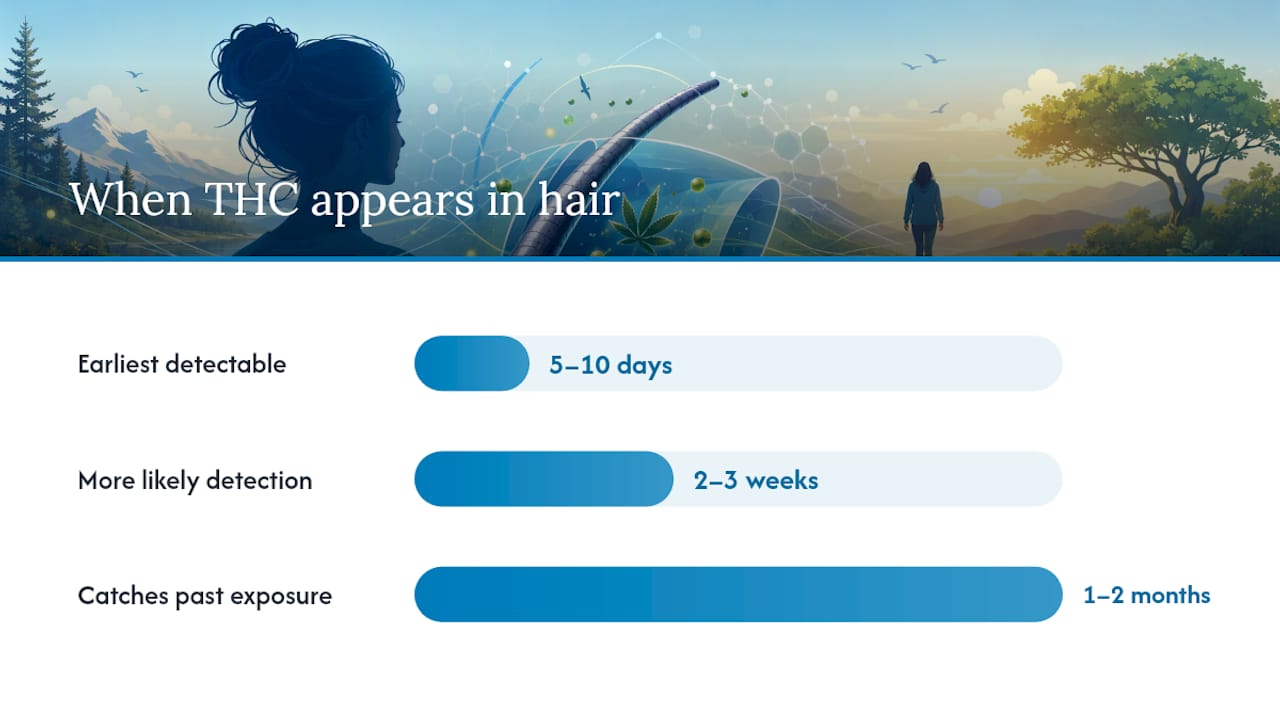
There’s a lag between use and detectability. Once THC enters the follicle, it typically takes about 5 to 10 days before that segment of hair grows long enough to be part of a testable sample, meaning a test taken the day after a single use is far less likely to catch it than one taken two or three weeks later.
This timing quirk trips up a lot of occasional users:
- A hair test taken within days of use may miss the exposure entirely because the affected hair hasn’t emerged from the scalp yet.
- A test taken a month or two later can catch that same exposure, since it’s now grown into the tested segment.
- Results are qualitative, meaning they indicate exposure occurred, not how much was used or exactly when.
That last point deserves emphasis. Hair testing can’t reliably tell a lab, or an employer, whether you smoked once or every weekend for a month. Forensic reviews of hair analysis consistently find weak correlations between self-reported use and hair concentration levels, which is exactly why labs frame results as exposure history rather than a dosage readout. If you want the deeper mechanics of how metabolites move from bloodstream to hair shaft, Passhairdrugtest’s breakdown of the science covers the pathway in more detail.
Occasional Use vs. Chronic Use: Comparing the Odds
Chronic users build up metabolite concentration over months, which is why hair testing catches heavy or long-term use with far more consistency than it catches a single incident. Occasional use sits in a gray zone: detectable, but nowhere near as reliably.
Forensic literature backs this up directly. Reviews comparing hair and urine testing in forensic settings find that hair testing produces higher positivity rates for chronic or concealed use, while urine testing is better suited to catching very recent exposure within the last one to seven days. That pattern exists because hair accumulates a record over time; urine reflects a shorter, more immediate snapshot.
There’s no numeric cutoff that guarantees a clean occasional smoker hair test result. Detection probability depends on a mix of variables:
- Total amount used, even across a single or a few sessions.
- How close the use was to the 90-day sampling window.
- Individual metabolism and hair growth rate, which vary person to person.
- Hair characteristics that affect how much metabolite gets bound into the strand.
Practitioners in forensic toxicology caution that hair testing often can’t cleanly separate an occasional user from a light chronic one, which is exactly why the NIJ’s review of hair drug testing recommends treating any use inside the 90-day window as a real risk rather than a probably-fine gamble. If you’ve used even once in the last three months and a test is coming up, the conservative assumption is that it’s detectable until proven otherwise.
What Changes Your Detection Odds: Hair Color, Treatments, and Contamination
Not every occasional user faces the same odds, and a few physical factors shift the math meaningfully.
Melanin content is one of the biggest variables. Darker, more melanin-rich hair tends to bind more THC metabolite than lighter or gray hair, which means two people who used the exact same amount can produce different concentration readings purely because of hair pigment. This is a known limitation, not a fringe theory, and it’s one reason hair testing draws scrutiny in discrimination and fairness discussions.
Cosmetic treatments cut the other direction. Bleaching, perming, and heavy chemical dyeing can degrade hair structure enough to reduce detectable metabolite levels, sometimes significantly, which complicates interpretation for both defense and prosecution in legal contexts.
Contamination is the third wrinkle. Secondhand smoke can settle onto hair from the outside without ever entering the bloodstream, and labs address this by washing samples before testing and looking for metabolite patterns that indicate actual metabolism rather than surface residue, a process detailed in forensic assessments of hair testing’s limits.
- Darker, coarser hair generally shows higher metabolite binding than fine or light hair.
- Bleach and chemical treatments can lower detectable concentrations, sometimes enough to produce a false negative.
- Lab washing protocols are designed to strip external contamination before analysis.
- Body hair grows more slowly and inconsistently than head hair, so it’s used mainly when head hair isn’t available, and its detection window estimate is far less precise.
Pro Tip: If you’ve recently bleached, permed, or heavily dyed your hair, mention it to the testing facility. Documented treatment history can matter if a result is ever disputed or reviewed.
Screening, Confirmation, and What a Positive Report Actually Means
Every hair test runs through two distinct stages, and understanding both helps you interpret a result instead of just reacting to it.
The first stage is an immunoassay screen, a fast, broad test designed to flag anything that might be a cannabinoid metabolite. Screens are sensitive but not perfectly specific, which is why a presumptive positive never stands alone. Any flagged sample moves to confirmatory testing using gas chromatography or liquid chromatography paired with mass spectrometry (GC-MS or LC-MS/MS), methods precise enough to identify the exact compound and rule out cross-reactivity from unrelated substances.
Turnaround reflects that two-step process: negatives generally clear in 48 to 72 hours, while a confirmatory positive takes an additional 72 hours or so before it’s finalized, following the standard lab timeline.
- Immunoassay screening catches likely positives quickly but isn’t the final word.
- GC-MS/LC-MS/MS confirmation identifies the specific metabolite and its concentration.
- Chain-of-custody documentation protects the sample’s integrity from collection to report.
- A documented history of last use and any hair treatments can support a retest request if a result seems questionable.
Getting Ready for a Hair Test: Realistic Timelines and What to Skip
If a test is on the calendar, timing is the variable you actually control.
- Count back 90 days from your test date. Any use inside that window carries some detection risk, and the closer to the test, the higher that risk generally runs.
- Avoid secondhand smoke exposure in enclosed spaces leading up to the test, since surface contamination, while filtered out by lab washing in most cases, is still a variable worth avoiding.
- Document your last use date and any recent hair treatments, so you have a factual timeline ready if questions come up later.
- Skip risky cosmetic treatments right before sampling. Bleaching or perming immediately before a test can raise more questions than it answers.
- Be skeptical of quick-fix “detox” claims promising same-day results. No product reverses 90 days of biology overnight, and treating a hair-cleansing routine as a guaranteed eraser sets up unrealistic expectations.
Pro Tip: Detox shampoos are formulated to help strip external residue and reduce surface-bound metabolite before a scheduled test. They work best as part of a longer preparation window, not as a same-morning miracle.
If Your Result Comes Back Positive: Next Steps Worth Taking
A positive screen isn’t automatically the final answer, and how you respond matters.
- Request confirmatory GC-MS or LC-MS/MS testing if it hasn’t already been run. Screening alone should never be treated as conclusive.
- Ask for chain-of-custody documentation and details on the specific lab method used.
- Provide your own timeline of last use and any relevant hair treatment history, in writing, if the stakes involve employment.
- If the result affects a job offer or current employment, loop in HR, a union representative, or legal counsel before assuming the outcome is final.
- Consider an independent retest through a separate accredited lab, especially if timing, contamination, or treatment history gives you a reasonable basis to question the result.
What Two Decades in This Industry Taught Us About Honest Expectations
Michael here, writing from Passhairdrugtest’s side of this conversation, where we’ve watched people misjudge their own risk for over 20 years. Hair testing is genuinely good at catching sustained use and genuinely inconsistent at pinning down a single low-frequency exposure. Both things are true at once, and pretending otherwise does readers a disservice.
What we won’t do is promise a guaranteed clean result. What we will do is point you toward preparation methods and guides built on that same honesty, so you’re making an informed choice instead of a hopeful one.
— Michael
How Passhairdrugtest Helps You Prepare Before Test Day
This catalog is focused on helping people prepare for a hair follicle test using products developed specifically for that purpose, not repurposed shampoo aisle guesswork. That’s the difference between our approach and generic advice you’ll find scattered across forums.
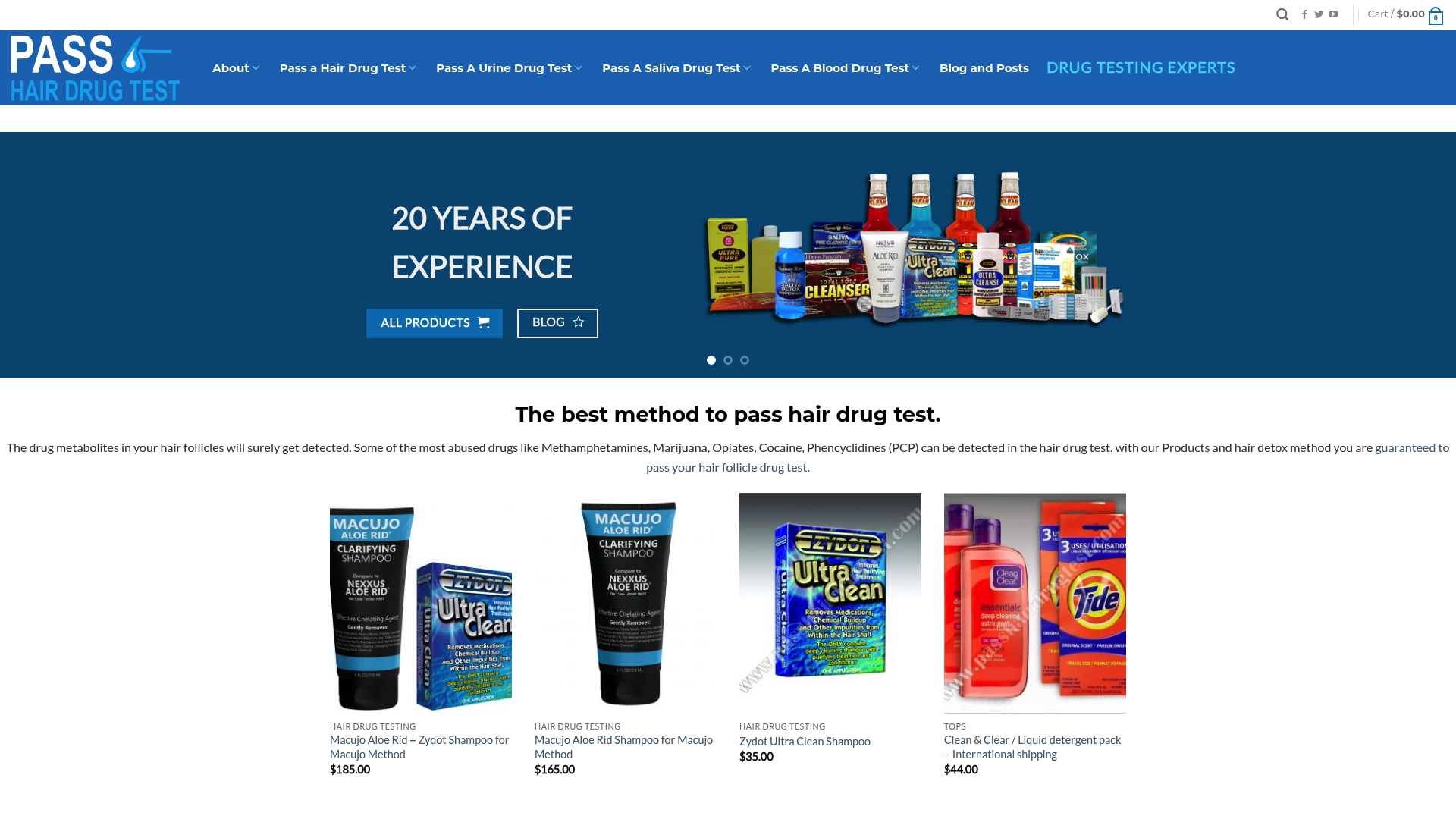
We carry detox shampoo formulas, multi-step cleansing kits, and instructional guides built around methods like Mike’s Macujo Method, all designed for people who know they’ve used within the detection window and want a structured, experience-tested preparation plan. None of this replaces abstinence as the most reliable option, and no product claims to guarantee a passed test. What it offers is a documented, methodical approach instead of last-minute panic.
If your test date is set and you’ve used within the past 90 days, start by looking at the best hair detox shampoo options built for this exact situation, and pair any preparation with confirmatory testing awareness if the stakes are high. Browse the catalog, read the method guides, and pick the preparation path that matches your actual timeline, not just your hopes for one.
Sources
- Hair Follicle Drug Testing: Process & Benefits | Labcorp
- Detecting drugs in hair: exposure or contamination? | NIJ
- Hair testing and self-report comparison — PMC (2014)
- Hair versus urine drug testing in forensic populations: systematic review
Recommended
- How Can I Pass a Hair Drug Test?
- How to pass hair drug test
- Fail Hair Drug Test? What It Means and What to Do Next
- Hair Drug Test Information
