No products in the cart.
Uncategorized
Coverage, Not Sensitivity, Explains Why Spice Hair Tests Miss Use
06
Sep
Sep
Yes. Specialized hair testing using LC‑MS/MS and related mass spectrometry methods can detect many synthetic cannabinoids, including Spice and K2 compounds. Standard 5- or 10-panel immunoassay screens usually cannot. Hair testing also gives investigators a detection window stretching back weeks or months, far longer than blood or urine.
TL;DR:
- Hair testing for synthetic cannabinoids can detect many analogs missed by standard urine drug panels due to their constantly evolving chemical structures.
- Detection windows in hair extend from weeks to months, with compounds typically appearing 1 to 3 weeks after use, especially for infrequent or light consumption.
- Validated LC‑MS/MS methods can identify synthetic cannabinoids at very low concentrations, but only if the lab’s compound library includes the specific analog tested for.
- Hair sample treatments, hair type, and use frequency influence detection, making proper wash protocols and sample collection methods crucial for accurate results.
- To trust a positive or negative result, verify that the lab updates its target list regularly, uses validated wash procedures, and provides detailed testing information in writing.
Table of Contents
Table of Contents
- What Spice (Synthetic Cannabinoids) Are and Why They Need Special Tests
- Will Spice Show Up on a Hair Test? Detection Windows Explained
- How Labs Detect Spice in Hair: LC‑MS/MS and Validation
- What Affects Detection: Contamination, Hair Type, and Dosage
- What a Positive or Negative Spice Hair Result Actually Means
- How to Get Tested and Choose a Lab That Actually Screens for Spice
- PassHairDrugTest.com’s Take on Spice Testing
- The Analytical Reality Behind Spice Testing
- Preparing for a Hair Test? Here’s Where PassHairDrugTest.com Fits In
- Sources
What Spice (Synthetic Cannabinoids) Are and Why They Need Special Tests
Spice is a street name for a broad category of synthetic cannabinoids, chemicals sprayed onto plant material or sold as powders to mimic THC’s effects. K2, Black Mamba, and Bliss are other common names for the same general drug class. None of these products contain a single fixed chemical; they’re families of related compounds that chemists keep tweaking.
That constant tweaking is the real problem for testing labs. New analogs show up faster than most screening panels can be updated, and a compound that dodges detection this year might be common street product next year.
- Synthetic cannabinoids bind to the same receptors as THC but have wildly different molecular structures.
- Manufacturers alter side chains and core structures specifically to outrun drug laws and lab panels.
- A DEA factsheet on Spice describes the class as diverse and constantly evolving, which is exactly why fixed, older immunoassay panels miss so many of them.
Will Spice Show Up on a Hair Test? Detection Windows Explained
Hair testing catches a much wider window of past use than urine or blood, but it doesn’t work instantly. Drugs need time to migrate from the bloodstream into the hair shaft, so there’s a lag before anything shows up.
Detection windows at a glance: Blood typically reflects use within hours to a couple of days. Urine usually catches use from the past few days. Hair testing can pick up exposure from weeks to an extended period earlier, depending on hair length and growth rate.
A commonly used guideline treats each centimeter of hair close to the scalp as roughly one month of growth, so a standard 1.5 cm sample can represent approximately three months of history. Longer segments extend that timeline further.
- Ingested Spice typically doesn’t appear in the hair shaft until about one to three weeks after use, since the compound has to grow up through the follicle.
- A single, isolated use is far less likely to produce a detectable concentration than repeated or heavy use, since more exposure means more compound gets incorporated into the growing hair.
- Some individual synthetic cannabinoids have been detected in hair more than a year after exposure in documented cases, though that’s the exception rather than the rule.
That combination, delayed onset paired with an extended tail, is why hair testing tells a very different story than a urine cup ever could.
How Labs Detect Spice in Hair: LC‑MS/MS and Validation
Forensic and clinical labs rely on tandem mass spectrometry, not the antibody-based immunoassays used in routine urine screens. LC‑MS/MS, UPLC‑MS/MS, and LC‑QTOF/HRMS workflows separate compounds chromatographically, then identify them by mass fragments using multiple-reaction monitoring. That multi-transition confirmation is what makes a positive result defensible rather than a guess.
Sensitivity in these methods is measured in picograms per milligram of hair (pg/mg), an almost absurdly small unit. Validated methods have reported limits of quantification in the 0.5 to 5.0 pg/mg range for many synthetic cannabinoids, meaning labs can flag exposure at concentrations most people would assume are too faint to measure.
A lab is only as good as its compound library. If a specific synthetic cannabinoid analog isn’t on the target list, the test won’t flag it, no matter how sensitive the instrument is.
- Compound libraries need frequent updates because new analogs enter circulation constantly.
- Pragmatic re-validation, adding new target compounds without rebuilding the whole method from scratch, keeps labs current without months of downtime.
- The practical takeaway: ask any lab exactly which compounds they screen for and what their LLOQs are before assuming a negative result means no exposure.
What Affects Detection: Contamination, Hair Type, and Dosage
Not every hair sample tells a clean story, and labs have built specific safeguards to separate someone who used Spice from someone who merely stood near it.
- Washing protocols come first. Labs use validated decontamination washes before extraction, designed to strip surface residue without stripping compound that’s been incorporated into the hair matrix itself.
- Confirmatory transitions back up the wash. Mass spectrometry identification using multiple ion transitions helps confirm that a positive reflects systemic exposure rather than external residue that survived the wash.
- Hair chemistry matters. Color, porosity, and cosmetic treatments like bleaching or relaxing can all alter how much compound binds to or leaches from the shaft.
- Growth rate and sample weight change sensitivity. Slower-growing hair concentrates drug over a longer window per centimeter, and labs need a minimum sample weight to run a valid test.
- Dose and frequency drive concentration, but not precisely. Heavier or more frequent use generally produces higher pg/mg readings, though the relationship is semi-quantitative at best; it can’t reliably reconstruct exact amounts consumed.
- Collection site matters for chain of custody. Head hair is the standard for forensic and workplace testing; body hair is sometimes used when head hair isn’t available, but it grows differently and interpretation shifts accordingly.
Pro Tip: If you’re disputing a result, ask specifically whether the lab ran a validated wash step before extraction. That single detail determines whether a positive can be explained away as environmental contact.
What a Positive or Negative Spice Hair Result Actually Means
A lab report on synthetic cannabinoids is rarely a simple yes or no. Most labs issue a qualitative screen followed by a semi-quantitative confirmation, and that concentration number carries real limits.
- A “low-level” positive, often in the single-digit to low double-digit pg/mg range, may reflect passive exposure or a single incidental contact rather than habitual use, while concentrations above roughly 150 pg/mg more commonly indicate heavier or more recent use.
- Concentration ranges suggest a pattern, not a precise dose or a specific date of use. Treat any exact-use claim built from a pg/mg number with skepticism.
- A negative result only rules out the compounds actually on that lab’s panel. It says nothing about analogs the lab wasn’t screening for.
- If a result carries real consequences, request the method used, the LLOQs, and the wash protocol in writing before accepting the finding as final.
- High-stakes cases, custody disputes, employment termination, or criminal proceedings, usually justify an independent confirmatory retest and, in contested legal settings, an expert witness who can speak to the analytical limits above.
How to Get Tested and Choose a Lab That Actually Screens for Spice
You can order hair testing for synthetic cannabinoids through a few different channels: direct-to-consumer testing labs, a clinician who orders it through a diagnostic lab, or an employer/forensic program with its own contracted lab. Not every option covers Spice by default, so ask before you pay.
- Confirm the exact method used (LC‑MS/MS, UPLC‑MS/MS, or HRMS) rather than accepting a vague “advanced testing” claim.
- Ask for the specific compound list and each analyte’s LLOQ in pg/mg.
- Verify lab accreditation, CAP or ISO status is the standard signal of a lab that follows documented, updated screening practices.
- Ask how often the compound library gets updated and whether the lab participates in proficiency testing.
- Confirm their wash procedure and reporting format before you commit.
Pro Tip: A lab that can’t answer a direct question about its compound list or LLOQs in writing usually isn’t running the level of testing you actually need for Spice.
PassHairDrugTest.com’s Take on Spice Testing
The site’s resource pages, including detailed hair drug test information and step-by-step guides on the Macujo method, reflect extensive experience in the drug-testing and detox-product space.
The Analytical Reality Behind Spice Testing
The biggest misconception about Spice hair testing isn’t whether it works. It’s the assumption that a “hair drug test” is one uniform product. It isn’t. A hair test built for THC, cocaine, and opiates on a standard panel often has nothing to do with synthetic cannabinoid detection, because Spice compounds require their own target list and their own validated LC‑MS/MS method entirely.
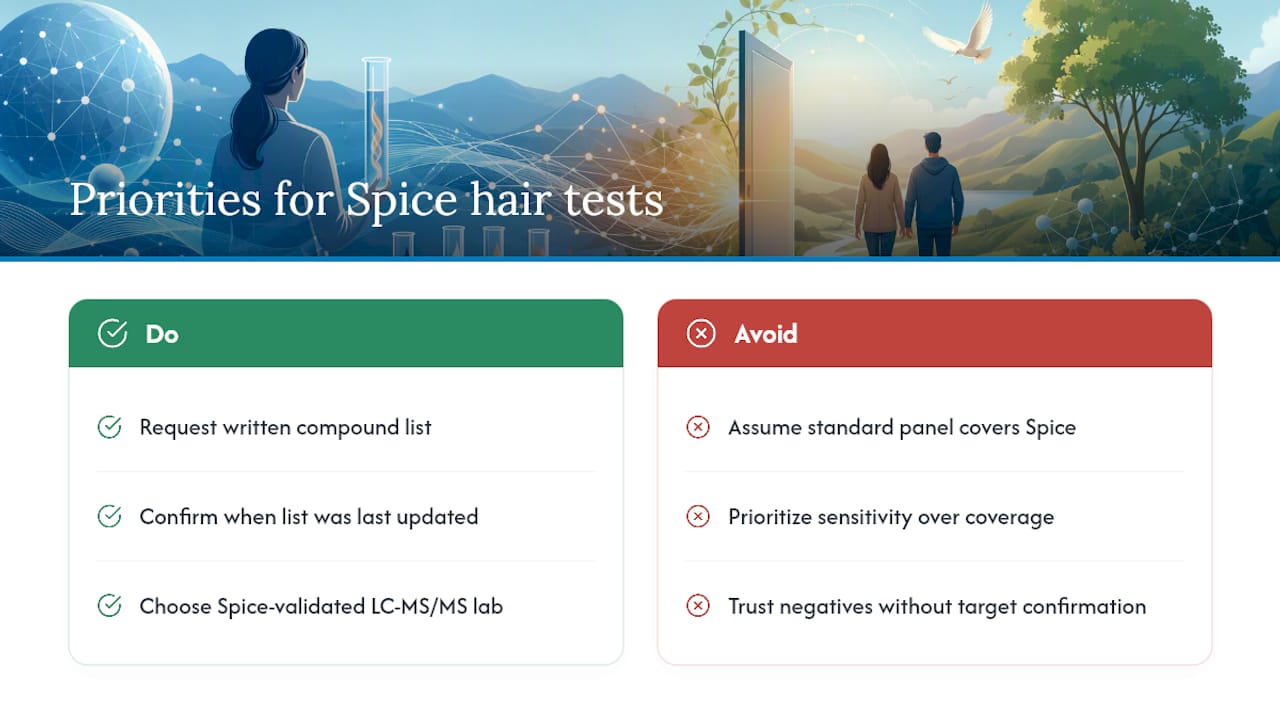
What gets underrated in most consumer discussion is the compound library problem. People fixate on sensitivity, how low a lab can detect, when the more common failure point is coverage: a lab simply not screening for the specific analog someone was exposed to. A negative result from a lab with an outdated target list tells you almost nothing.
If you’re preparing for or contesting a Spice-specific hair test, the priority isn’t finding the “most sensitive” lab. It’s finding one that can tell you, in writing, exactly which compounds it screens for and when that list was last updated. Everything else, wash protocols, LLOQs, accreditation, matters, but coverage comes first.
— Michael
Preparing for a Hair Test? Here’s Where PassHairDrugTest.com Fits In
If you’re facing a hair follicle test and want to understand your options for hair-cleansing before testing day, Passhairdrugtest built its business around exactly that need. The site’s core offerings include hair detox shampoos like Macujo Aloe Rid and Zydot Ultra Clean, multi-step cleansing kits, and detailed instructional guides walking through Mike’s Macujo Method step by step.
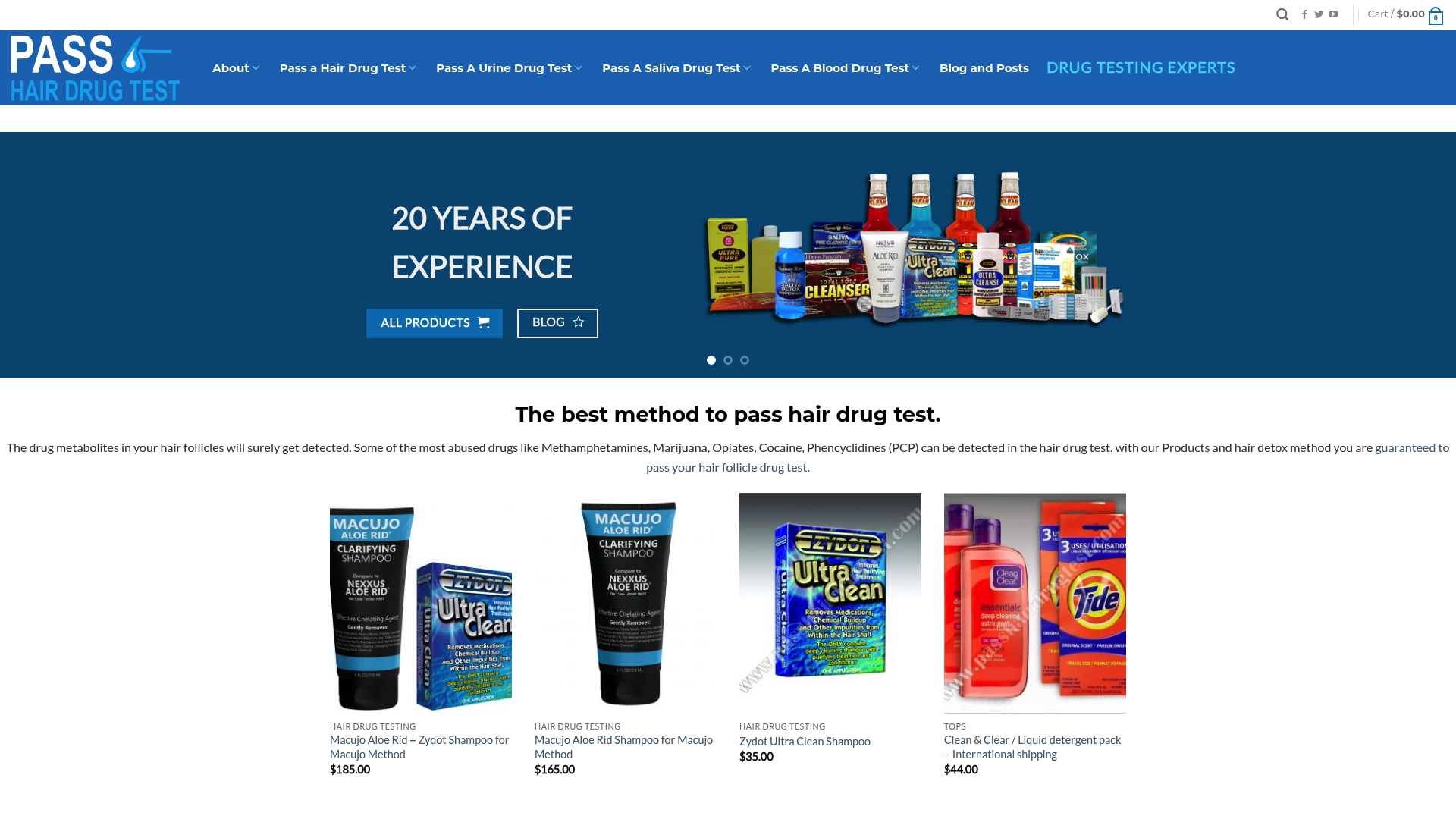
These products don’t make claims about beating specific lab science; they’re marketed as hair-cleansing solutions for people preparing ahead of a scheduled test. If you want the full breakdown of how the multi-step method works and which product fits your situation, the guide to Mike’s Macujo Method walks through the process, and the best hair detox shampoo page compares the options directly. Start there to see which approach matches your timeline before your test date arrives.
Sources
- Fast and effective LC‑MS/MS analysis of synthetic cannabinoids
- Synthetic cannabinoids in hair – Pragmatic approach for method updates, compound prevalences and concentration ranges in authentic hair samples
- Simultaneous determination of synthetic cannabinoids and their metabolites in human hair using LC‑MS/MS
Recommended
- Hair Drug Test Accuracy: What the Science Actually Shows
- The Science Behind the Hair Drug Test
- Hair Test Cutoff Levels: What the Numbers Actually Mean
- Body Hair vs Head Hair: What Drug Test Labs Really Use
