No products in the cart.
Uncategorized
Braids and Hair Drug Tests: What Collectors Do and What You Can Control
22
Oct
Oct
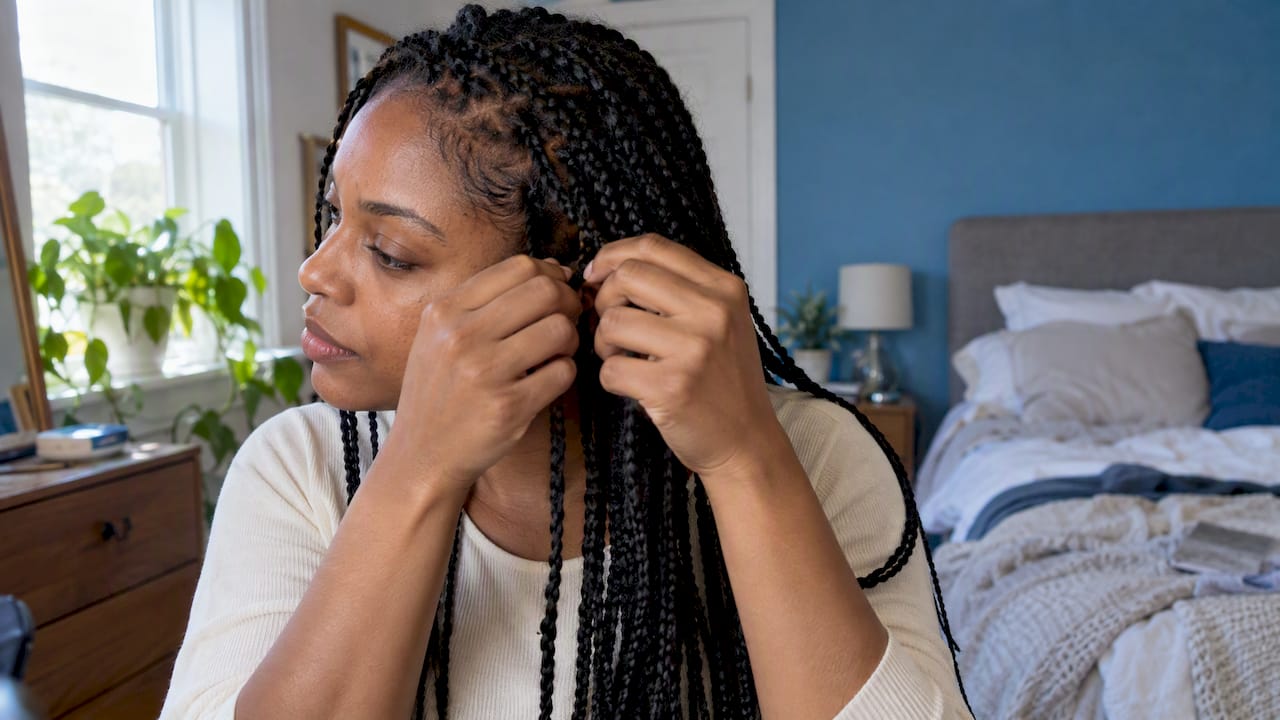
Braids do not exempt you from a hair drug test, and they do not hide anything from the lab. The collector will ask you to take out any braid extensions, weave or synthetic hair, then cut small samples of your own hair close to the scalp. If your braids are your natural hair, expect some of them to be undone so the collector can reach loose hair. This guide covers what happens at the collection site, how braids change the process, and what you can and cannot do beforehand.
Table of Contents
TL;DR
- Collectors need hair growing from your scalp. Synthetic or added hair has to come out first, and the collector notes it on your paperwork.
- Braids, locs and twists don’t block a test. Expect the collector to undo a few braids or work around them, and to cut about 100 mg of hair in total.
- A 1.5-inch sample covers roughly 90 days of growth. Time, not styling, is the biggest factor in the result.
- No cosmetic or shampoo method has a guaranteed outcome. Bleaching can lower detectable THC, but labs know about it and it can damage hair.
- If you have a test coming, plan the hairstyle around the appointment, and ask the employer or testing site about their policy in advance.
Table of Contents
- How a hair test collection works
- What happens when you wear braids
- Body hair: the fallback, not the escape
- Do braids change your result?
- Can you pass a hair test in 30 days?
- Our perspective: what we tell customers who wear braids
- A practical plan for the weeks before your test
- Where our products fit
- Common mistakes with braids before a test
- FAQ
- Sources
How a hair test collection works
A standard hair collection is simple. According to Omega Laboratories’ collection guidance, collection typically takes about 100 mg of hair, which is roughly 90 to 120 strands, or a bunch about as thick as a soda straw. The collector cleans the scissors, parts your hair across the crown, and cuts thin pieces from several small areas of the posterior vertex, the spot at the back of the crown. Taking small pieces from several places avoids a visible bald patch.
The hair is cut, not pulled. That matters for a common myth: the lab does not test the follicle itself. It tests the hair shaft, which holds a record of what circulated in your body as the hair grew.
The usual sample is the 1.5 inches closest to the scalp. At an average growth rate of about 1 cm (0.4 inches) per month, that covers about 90 days, as described in the federal notice on hair testing guidelines. The same notice explains that drugs take roughly 5 to 7 days to reach the hair above the skin, so hair testing is a poor tool for catching use in the last week.
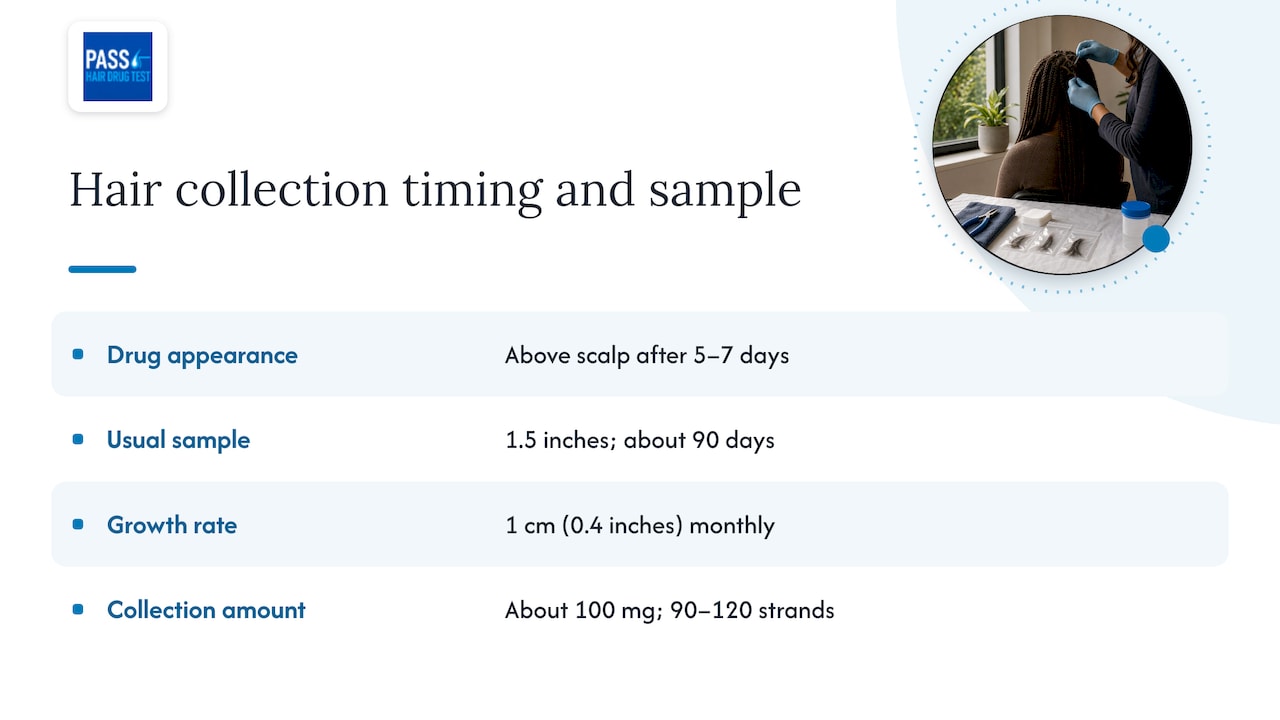
If your hair is shorter than 1.5 inches, the collector takes more strands to reach the needed weight. For a fuller walk-through of the process, our hair drug test information page covers the basics.
What happens when you wear braids
The rule that matters most: the lab wants only hair that grows out of your scalp. The collection instructions published by IBDN say that artificial or synthetic hair connected to real hair must be removed by the donor before collection. Collectors are told to make sure any hair they take is growing out of the scalp, and to record on the collection form that artificial hair was removed.
In practice, that means three things.
- Braiding hair, extensions and weaves come out. If you have box braids with added synthetic or human hair, the added hair cannot be part of the sample. Bring time to take them out, or arrive with a plan to have the collector work around them.
- The collector may ask to undo some braids. One drug-testing provider’s FAQ says they cannot simply cut off a single braid and that a couple of braids need to be undone. The same provider says it cannot take a dreadlock, because locs are often mixed with artificial hair, so it collects around them where possible. Policies differ by site, so treat that as one example, not a universal rule.
- Your paperwork records it. The removal of added hair is noted on the chain of custody form. That is normal and not a mark against you.
Natural braids, cornrows and twists
If your braids are only your own hair, with no added pieces, the collector may be able to part a section and cut from the loose hair or from a few unbraided rows. Hair that is tightly braided can make it harder to get the 100 mg without undoing a lot of work, so collectors sometimes ask to take down several braids.
For very curly or coily textures, the Omega guidance notes that collectors often use a rubber band to hold sections before cutting, so the root ends stay aligned. Root alignment matters because labs can split a sample by length to see timing.
Locs
Locs are the hardest case for the collector, because the hair is matted together and often has been re-twisted with products. Some sites will collect loose hair around the locs near the scalp. Others may ask for a different hair source. You should not assume a particular site will accept locs, so call ahead.
Body hair: the fallback, not the escape
Some people ask whether they can dodge the issue by offering body hair. Collectors do use it when someone has little or no head hair: Healthline notes that the collector might use body hair if there is very little or none on the head. Body hair grows more slowly than scalp hair, so it can reflect a longer period of use, not a shorter one. Whether it is allowed at all depends on the employer’s instructions and the collection site. Don’t plan around it, and don’t shave in a way that would look like an attempt to avoid collection. Employers can treat refusal or an unusable sample as a failed or incomplete test.
Do braids change your result?
Braids themselves do not change what is inside your hair. What can change the result is what was done to the hair, and how long the hair is.
Length of hair and timing. The test looks at what grew in the last roughly three months. Hair that is under 1.5 inches gives a shorter picture, but collectors compensate by taking more strands. If you were braided for a long time, the new growth near the scalp is the part that counts, because that is the part collectors cut.
Heavy chemical treatments. Texturizers, relaxers, bleach and color can lower drug concentrations. A 2022 study on commercial products and THC in hair reports that bleaching has reduced levels in some studies by roughly 30% to 60%. That is a reduction, not a guarantee of a negative result. The same research shows these treatments damage the hair structure, which a collector may notice, and labs are increasingly aware of manipulation attempts. We cover this in more detail on our page about how bleach and dye change hair drug tests.
Passive exposure. Hair is exposed to the environment, so labs run wash steps to remove outside contamination. Smoke in a room can in theory leave traces on hair, and the federal guidance treats separating real use from external contamination as the central challenge. Wash protocols are standard but vary by lab.
Tight styles and scalp care. Nothing in the research we reviewed shows that braids, oils or scalp products on their own make a result positive or negative. Keep the scalp clean and avoid anything that damages hair right before a test, because damaged, brittle hair is easier to flag.
Can you pass a hair test in 30 days?
If you have been a regular user, a 30-day window is tight. A 1.5-inch sample holds about 90 days of history, so 30 days of abstaining leaves about 60 days of earlier use still inside the sample. This is the same federal guidance cited above, and it is the biggest reason hair tests are hard to beat with short notice.
Occasional or light use is different: lower amounts mean lower concentrations, and a lab cutoff may not be crossed. We can’t promise that for any individual. Hair drug test accuracy also varies by drug, and a study of self-reported use found only 57.5% agreement for marijuana between hair results and self-report, which shows how uneven the picture is. Read our summary of hair drug test accuracy if you want the detail.
Our perspective: what we tell customers who wear braids
We’ve sold hair cleansing products and drug-testing products for more than 20 years, and the braid question comes up constantly. Our honest view is this.
First, the hairstyle is a logistics problem, not a loophole. Plan for the collector to see your natural hair at the scalp. Decide before your appointment whether you will take down braids at home, because doing it under time pressure in a clinic is stressful, and a half-removed style can delay the collection.
Second, products work on the outside of the hair, and the question people most want answered is how far that goes. Some of our customers use a multi-step approach, with our shampoos, because they want to remove surface residue and reduce what the lab might measure. Our site describes our Mike’s Macujo Method as a multi-step routine, and we sell Macujo Aloe Rid Shampoo and Zydot Ultra Clean Shampoo. The research is clear on one point, though: no standardized method exists, results are unpredictable, and the only dependable route to a negative result is time without use. We would rather you know that before you buy anything. If you want to read our reasoning, see do detox shampoos work for hair follicle tests and the damage detox shampoo can do.
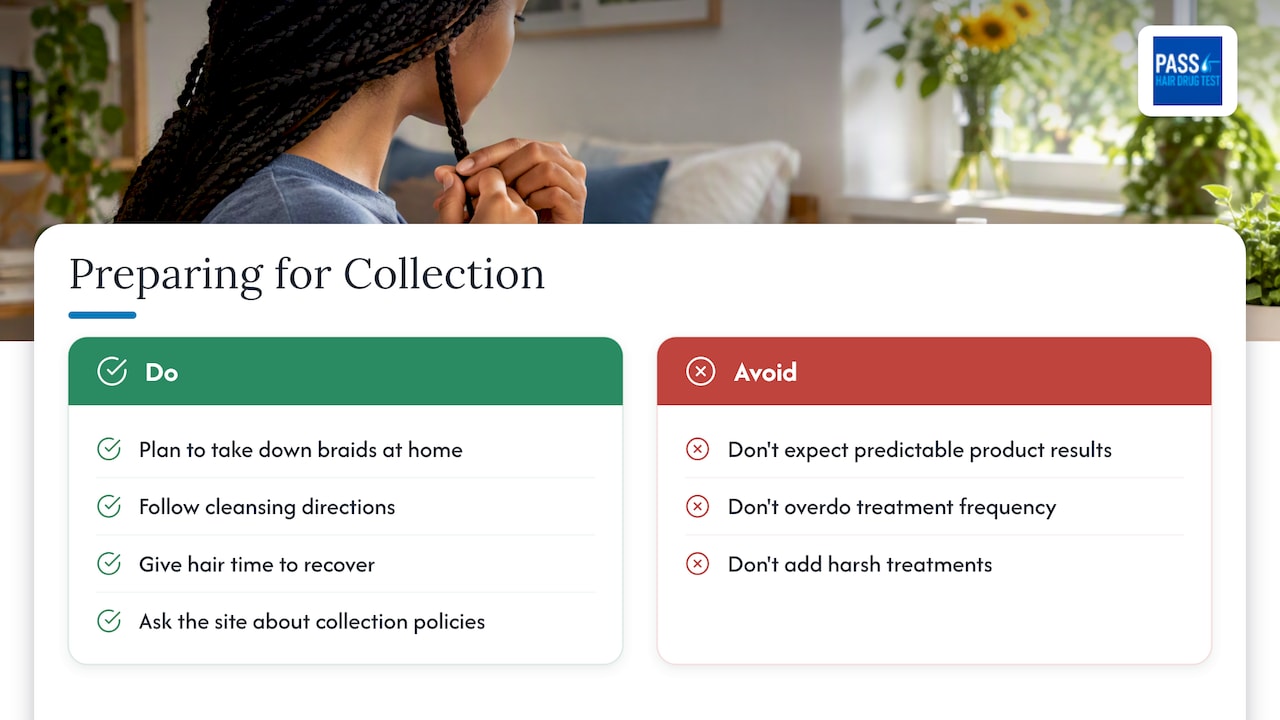
Third, protect the hair you have. Braids and locs often mean hair that has been pulled, colored or chemically treated already. Adding harsh treatments on top can leave brittle strands that look tampered with. If you use a cleansing routine, follow the directions, do not overdo frequency, and give yourself time to let the hair recover before collection.
Fourth, ask questions early. The employer or the testing site can usually tell you whether they accept body hair, whether they will cut around locs, and how long to schedule. That call costs nothing.
— MIchael
A practical plan for the weeks before your test
Here is a realistic order of operations if a test date is set and you wear a protective style.
- Find out the details. Ask the employer or collection site which hair they accept, how long the appointment takes and whether they require a specific length. Ask about your style by name: box braids, cornrows, twists, locs, sew-in weave.
- Count back 90 days. Whatever you did in the three months before the collection is what the sample can show. Use that to judge your own risk honestly.
- Decide on your style. If your braids include added hair, plan when to remove it. Many people take down braids the day before so the hair is clean, detangled and ready. Avoid arriving with product buildup, heavy oils or glue residue.
- Don’t bleach in a panic. Bleaching can lower measured concentrations but damages the hair, is not reliable, and the lab can look for signs of it.
- Keep your hair in good condition. Gentle washing with a shampoo made for your hair type is better than aggressive treatments. If you choose a cleansing routine, read our guide on how to use detox shampoo and compare detox and clarifying shampoo so you know what each is for.
- Bring ID and any instructions. Arrive on time, follow the collector, and don’t argue about the process. Your cooperation is documented.
| Situation | What the collector typically does | What you should do |
|---|---|---|
| Braids with synthetic or added hair | Requires added hair to be removed and notes it on the form | Remove extensions before the appointment or plan time to do it |
| Natural braids or cornrows | Cuts thin sections from the crown, may undo some braids | Take down a few braids ahead, keep hair clean and detangled |
| Locs | May collect loose hair around locs near scalp, or refuse if mixed with added hair | Call the site beforehand |
| Short or shaved head | May take more strands, or body hair in some cases | Ask the employer about their policy |
| Chemically treated hair | Collects as normal, may note damage | Avoid new harsh treatments close to the test |
Where our products fit
If you are preparing for a hair test and want a cleansing routine, we sell hair detox shampoos and a multi-step kit approach on our products page, along with urine, saliva and blood detox products and home test kits if you want to check yourself first. For hair, our home hair detox protocol explains a realistic routine and how to check your hair at home. We also offer phone support, so you can ask how a routine fits your hair type, including braided or textured hair, before you order.
To be clear about expectations: our products are meant to be used as part of a plan, not as a substitute for time. No product can promise a particular lab result.
Common mistakes with braids before a test
- Assuming braids block the sample. They don’t. Collectors can undo braids, and extensions are removed before collection.
- Leaving added hair in. If synthetic hair is attached to your own, the collector cannot use it and will ask for it to be taken out.
- Arriving with a new chemical job. Fresh relaxers, bleach or color can damage the hair and draw attention.
- Waiting until the night before. Taking down braids takes hours. Do it with time to spare.
- Skipping the question about policy. Employers differ. A short call beats a surprise at the collection site.
- Relying on one claim. Be wary of any promise of a guaranteed pass. The federal guidance and the scientific literature we reviewed do not support one.
FAQ
Can I wear braids to a hair drug test?
Yes, you can arrive in braids, but any added synthetic or human hair has to be removed, and the collector may ask you to undo some of your own braids. Sites handle this differently, so call ahead. Plan extra time in case the collector needs to work around your style.
How many strands of hair do you need for a drug test?
A standard collection takes about 100 mg, which is roughly 90 to 120 strands, or a bunch about the thickness of a soda straw, according to Omega Laboratories. Some labs use a smaller sample for a basic panel, and collectors take more strands if your hair is short. The collector cuts thin pieces from several spots on the crown.
How long will a hair follicle test detect drugs?
The standard 1.5-inch sample represents about 90 days, based on an average growth of about 1 cm per month, per the federal guidance. Use from the last 5 to 7 days usually isn’t in the sample yet, because drugs take that long to reach hair above the scalp. Body hair can reflect a longer time frame.
What throws off a hair follicle test?
Heavy cosmetic treatments such as bleaching can lower detectable drug levels, and one published study puts the reduction at about 30% to 60% in some cases. They don’t guarantee a negative result, they damage hair, and labs use wash steps and look for signs of tampering. Outside contamination can also affect a sample, which is why labs wash hair before testing.
Can you pass a hair follicle test in 30 days?
If you used regularly, probably not by abstaining alone, since the sample covers about 90 days and the earlier 60 days remain in the hair. Light or occasional use may produce lower levels, but no one can promise an outcome. If you are in this position, talk to the employer about options and plan for time.
Sources
- Omega Laboratories: hair collection tips and advice
- IBDN: Four Steps to Hair Collection
- Federal Register: Mandatory Guidelines for Federal Workplace Drug Testing Programs
- PMC: Manipulation of THC Hair Concentrations by Commercially Available Products
- Healthline: Hair follicle drug test
- Brassets Group: hair drug testing FAQ
- PubMed: hair testing and self-reported drug use
Recommended
- Protect Your Dreadlocks: What to Say at a 90 Day Hair Drug Test
- How to Prepare for a Hair Test the Right Way
- African American Hair Drug Test: A Practical Prep Plan
- How Can I Pass a Hair Drug Test?
