No products in the cart.
Uncategorized
Match Your Hair Detox Kit to Your Test Date, Backed by 20+ Years of Protocols
04
Sep
Sep
If you’ve got several weeks and untreated hair covering the full 90-day window, a documented multi-step protocol beats a single shampoo every time. If your last use was light and your test window is longer, a maintenance detox shampoo may be enough. Either way, no product on the market can promise a negative result, so verify with a home or mail-in pre-test before the real one if your schedule allows it.
TL;DR:
- A multi-step hair detox protocol is more effective than a single shampoo if you have several weeks before testing and untreated hair coverage over a 90-day window.
- Reliable kits should disclose specific ingredients, detailed protocols, safety instructions, and encourage pre-test verification to validate effectiveness.
- Chemical treatments like bleaching or perming can either reduce or alter detectable drug levels, with results varying by individual hair type and substance involved.
- Matching the detox method to your timeline and hair condition, including recent chemical treatments, is crucial for maximizing chances of passing a drug test.
- Pre-test home or mail-in hair tests remain the only honest way to verify if your detox routine succeeded before the official testing day.
Table of Contents
Table of Contents
- How to Choose a Hair Detox Kit: What to Check on the Label
- What Does the Research Say About Chemical Treatments and Hair Detox Products?
- Step-by-Step: Matching a Hair Detox Kit to Your Situation
- How Do You Verify a Hair Detox Kit Actually Worked?
- Why We Push Honesty Over Hype When Choosing a Hair Detox Kit
- Where Our Kits Fit the Checklist Above
- Sources
How to Choose a Hair Detox Kit: What to Check on the Label
Most kit pages are written to sell, not inform. Before you buy anything, run the product description through a short checklist that separates real protocols from bottled hope.
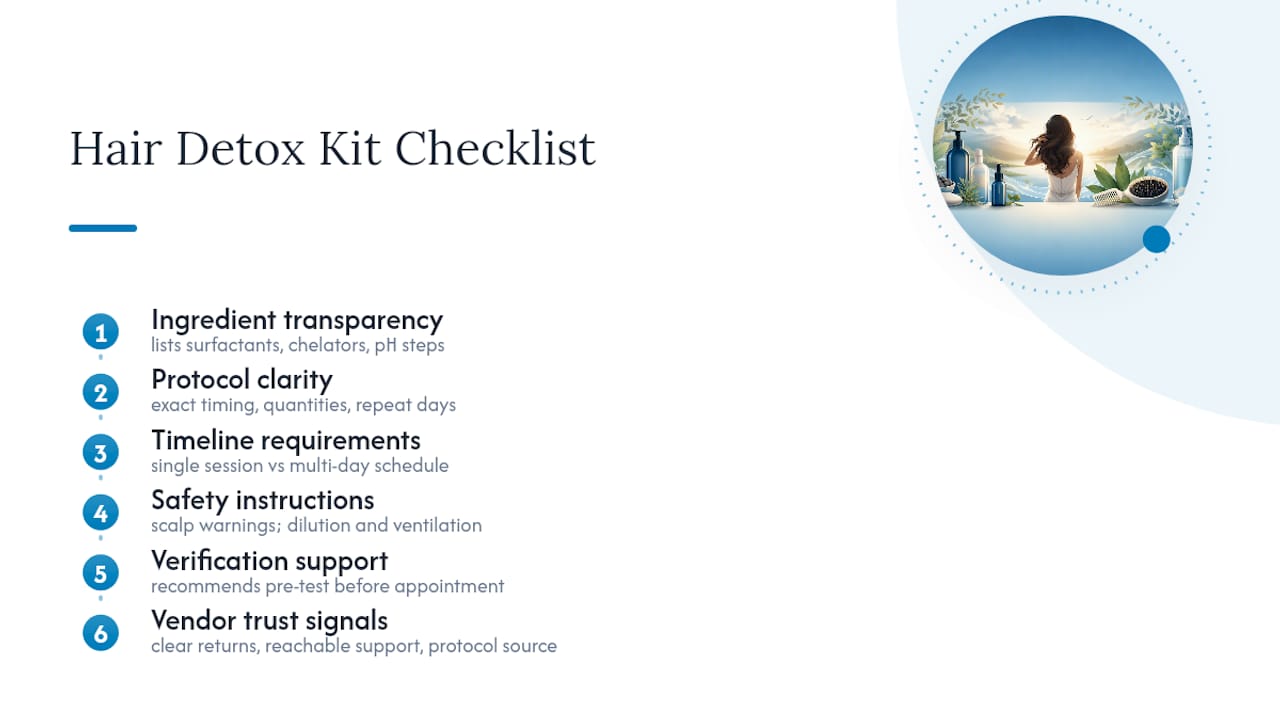
Ingredient transparency. A trustworthy detox shampoo names its surfactants, chelating agents, and acidic or alkaline wash steps rather than hiding behind “proprietary blend” language. If a label won’t tell you what’s cutting into the hair shaft, that’s a red flag, not a trade secret worth respecting.
Protocol clarity. The best kits spell out exact timing, quantities, and the number of days you need to repeat the process. Vague instructions like “use as needed” are a sign the seller hasn’t tested the routine on real timelines. Publishers with real experience, like the Macujo Method, publish specific step counts and wait times because the sequence actually matters.
Timeline requirements. Some kits need one intensive session; others require repeated applications over several days leading up to the test. Match this to your actual deadline before you buy, not after.
Safety instructions. Look for scalp and skin warnings, dilution guidance, ventilation notes, and what to do if irritation shows up. Detox shampoos often contain stronger surfactants and acids than everyday hair care, and skipping the warnings can leave you with a raw scalp on top of a stressful week.
Verification support. A kit that recommends a pre-test, home or mail-in, before your real appointment is being honest about its own limits.
Vendor trust signals. Check for a clear return policy, reachable customer support, and any disclosure of where the protocol came from. A seller willing to explain its own detox shampoo application steps in detail has less to hide than one selling a mystery bottle with a five-star review count and nothing else.
Pro Tip: Read the return policy before the ingredient list. A seller confident in their product will let you return an unopened kit; one that won’t is telling you something about how well it actually performs.
What Does the Research Say About Chemical Treatments and Hair Detox Products?
Forget the marketing copy. The actual lab data on hair-cleansing products is a mixed bag, and knowing the real numbers changes how you should think about any kit’s promises.
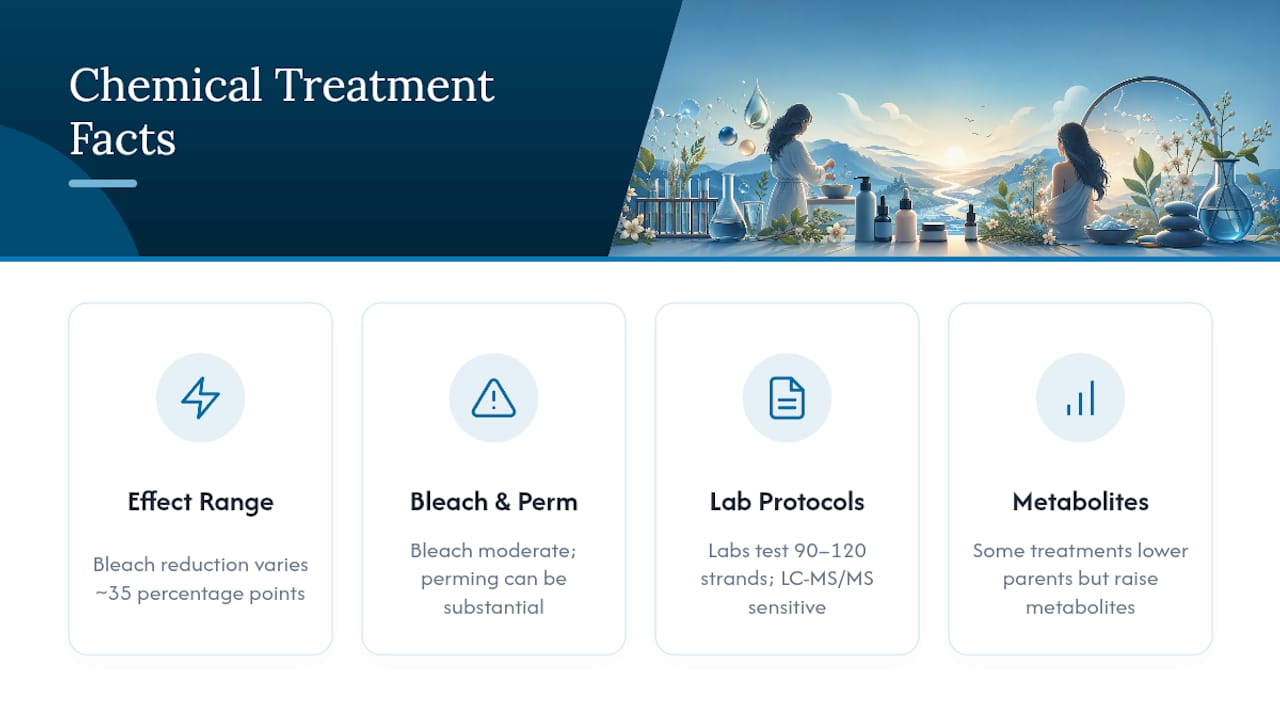
Bleaching has been shown to reduce detectable THC concentrations by a moderate percentage in some studies, and perming has produced reductions that can be substantial in others, according to research published in PMC on commercially available hair-cleansing products. Those numbers sound promising until you notice the range: a nearly 35-percentage-point swing between the low and high end of bleaching alone. Results depend heavily on the individual hair sample, the drug class involved, and how aggressively the wash cycle was repeated.
Standard lab collection also works against loose assumptions about “washing it out.” Labs typically pull a small standardized amount of hair, roughly 90 to 120 strands, cut close to the scalp, and analyze a length representing a detection window of several months, per LabCorp’s hair testing guidance. Confirmation testing typically runs on LC-MS/MS instruments sensitive enough to catch low concentrations that a home test might miss entirely.
Here’s the part most kit sellers leave out: chemical treatments don’t always move in one direction. A study on permanent dye and chemically treated hair found that some treatments lower parent drug levels while certain metabolites actually increase, because oxidative chemistry reacts differently depending on the analyte, according to research published via DOI. That’s why hair color alone is a poor predictor of how well any detox product will work for you.
This variability is exactly why forensic guidance from UNODC’s hair testing protocols recommends validated decontamination procedures and documentation of any cosmetic treatments. Labs know washing can strip external contamination without touching what’s bound inside the hair matrix, so heavily treated samples sometimes get flagged for a closer look or paired with a urine test.
Step-by-Step: Matching a Hair Detox Kit to Your Situation
Picking the right kit isn’t about brand loyalty. It’s about matching intensity to your actual circumstances.
- Confirm your timeline. Are you looking at immediate notice (under 7 days), short notice (7 to 21 days), moderate lead time (3 to 6 weeks), or long lead time (over 6 weeks)? Your answer determines almost everything else.
- Inspect your hair. Note the length, whether it’s been recently bleached, dyed, or permed, its porosity, and whether body hair might end up as the sample if scalp hair is too short.
- Choose your intensity level. Short-notice, higher-risk situations usually call for a multi-step, Macujo-style protocol; longer timelines with lighter recent use may only need an ongoing detox shampoo routine.
- Verify completeness and safety. Check that the kit lists every required item, includes scalp-care instructions, and recommends a pre-test rather than promising a result outright.
- Plan your verification window. Where possible, schedule a home or mail-in pre-test 3 to 7 days before the official appointment so you have time to react if something looks off.
Pro Tip: Do the hair inspection in step 2 before you shop. Sellers can’t tell you which kit fits porous, color-treated hair versus virgin hair you’ve never touched with chemicals, and that difference changes which protocol makes sense.
How Do You Verify a Hair Detox Kit Actually Worked?
A pre-test is the only honest way to know where you stand before the appointment that counts. Home and mail-in hair test kits typically cost within a range under two hundred dollars, depending on how many substances the panel screens for, and they come with their own instructions that need to be followed exactly, not approximated.
Run the pre-test with enough buffer that you can react to the result:
- A clean pre-test result is reassuring but not a guarantee, since home kits and lab confirmation methods aren’t identical in sensitivity.
- A positive pre-test means you still have options: repeat the protocol and retest, delay the official test if your circumstances allow it, or consult with a testing lab about a confirmatory retest.
- If scalp hair is too short, body hair such as chest, underarm, or leg hair may be substituted, though growth rates and detection windows differ enough that interpretation gets murkier.
- Keep a simple record of your hair’s recent chemical history, dye, bleach, perm treatments, and dates, in case a result gets disputed and needs context.
Why We Push Honesty Over Hype When Choosing a Hair Detox Kit
Experience in the industry and the biggest thing that separates a real protocol from a bottle with a scary-sounding name is documentation. We publish the actual steps behind home hair detox protocols, including Mike’s Macujo Method, because a reader following vague instructions under deadline pressure is a reader who fails.
We also walk through how to use detox shampoo correctly, because misapplying an otherwise decent product wastes both time and money. None of this comes with a guarantee. We recommend pre-test verification because the forensic literature is clear that outcomes vary by hair type, treatment history, and drug class, and anyone telling you otherwise is selling confidence, not chemistry.
— MIchael
Where Our Kits Fit the Checklist Above
A kit built around Mike’s Macujo Method checks the boxes this guide just walked through: documented step order, specific timing between applications, and scalp-care instructions instead of a single “lather and hope” bottle.
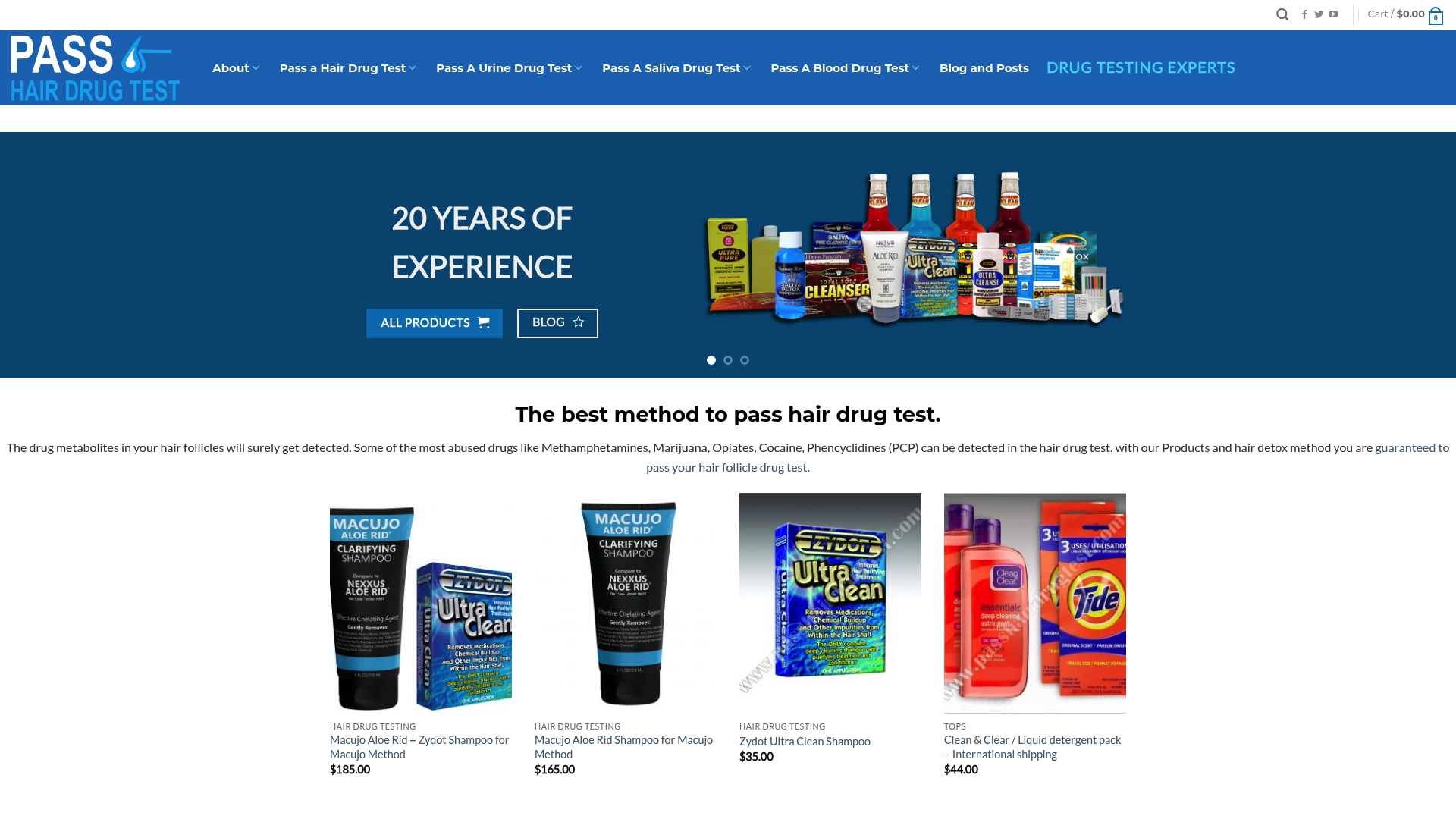
The Aloe Rid detox shampoo kits pair the multi-step protocol with the actual products the steps call for, so you’re not piecing together a routine from three different retailers the week before your test. Each kit ships with usage instructions, and our support team can walk you through timing questions if your test date moves. If your notice is short and your hair hasn’t been touched by an at-home fix yet, start with the hair follicle shampoo kit built for exactly that scenario, and plan a pre-test before your real appointment.
Sources
- Manipulation of THC Hair Concentrations by Commercially Available Products — PMC
- The effect of permanent dye colour on illicit drug and metabolite levels in chemically treated hair — DOI
- UNODC: Hair, sweat and oral fluid testing guidance
- LabCorp: Hair drug testing guidance
Recommended
