No products in the cart.
Uncategorized
Hair Test Cutoff Levels: What the Numbers Actually Mean
27
Aug
Aug
Hair test cutoff levels are reported in picograms per milligram (pg/mg), and confirmation cutoffs for the drugs labs test most often run roughly: cocaine 500 pg/mg, opiates (morphine, codeine, 6-AM) 200 pg/mg, amphetamines and methamphetamine 200 to 500 pg/mg depending on the lab, THC (carboxy-THC) 50 pg/mg or lower, and PCP 300 pg/mg. Fentanyl and methadone cutoffs vary more by laboratory, since these panels are newer additions to most menus.
Pro Tip: If your reported value sits above the confirmation cutoff, that number came from mass spectrometry, not the initial screen. It’s the one that counts.
- Cocaine: ~500 pg/mg
- Opiates (morphine/codeine/6-AM): ~200 pg/mg
- Amphetamines/MDMA/methamphetamine: ~200-500 pg/mg
- THC (carboxy-THC): ~50 pg/mg or lower
- PCP: ~300 pg/mg
The Society of Hair Testing (SoHT) consensus sets these minimum required detection levels as an industry reference point, and major US labs including Quest Diagnostics, LabCorp, and USDTL (United States Drug Testing Laboratories) build their own cutoff tables around that framework.
TL;DR:
- Confirmation cutoffs are typically around 500 pg/mg for cocaine, 200 pg/mg for opiates, and 50 pg/mg for THC, based on industry standards.
- Lab results are finalized only if confirmatory mass spectrometry results exceed the specific cutoff levels, not during initial screening.
- A standard hair sample of 100 mg from a 1.5-inch segment reflects roughly a 90-day detection window, with 5 to 10 days delay after drug use.
- External factors like cosmetic treatment, contamination, and individual metabolism can cause variability in results independent of actual drug intake.
- Confirmed results should be interpreted within the context of verified lab procedures, accredited labs, and the specific drug analyte measured.
Table of Contents
Table of Contents
- Hair Test Cutoff Levels by Drug Class: A Quick Reference
- Why Screening and Confirmation Cutoffs Are Different Numbers
- What Sample Size and Hair Length Tell You About the Detection Window
- What Changes a Hair Test Result Beyond Actual Drug Use
- Reading a Lab Report: A Practical Checklist
- The Standards Behind the Numbers: SoHT, Accreditation, and Method Validation
- Regulatory Standards for Hair Test Cutoffs Vary by Jurisdiction and Purpose
- How Cutoff Levels Shape False Positive and False Negative Risk
- Making Decisions Off a Cutoff Result: Clinical and Workplace Context
- Key Takeaways
- Sources
Hair Test Cutoff Levels by Drug Class: A Quick Reference
Every lab report lists a number next to a drug name, and that number only means something once you know what it’s being measured against. Confirmation cutoffs are the values that determine whether a result gets reported as positive, and they’re consistently expressed in pg/mg, a unit of mass per mass that reflects just how little of a substance actually ends up trapped in a hair shaft.
The table below reflects commonly cited confirmation cutoffs. Treat these as reference points, not universal law. Individual labs adjust cutoffs based on panel design, instrumentation, and the purpose of the test.
| Analyte | Typical Confirmation Cutoff | Note |
|---|---|---|
| Cocaine (and benzoylecgonine) | 500 pg/mg | SoHT’s consensus minimum for cocaine metabolites |
| Opiates (morphine, codeine) | 200 pg/mg | Matches SoHT guidance for natural opiates |
| Oxycodone | 100 pg/mg | Lower threshold reflects potency and dosing patterns |
| Tramadol | 200 pg/mg | Included in expanded opiate panels at some labs |
| THC (carboxy-THC) | 50 pg/mg or lower | Confirmation targets the specific metabolite, not the parent compound |
| PCP | 300 pg/mg | Less commonly tested but standardized across most panels |
| Methamphetamine/MDMA | 200-500 pg/mg | Wider lab-to-lab variance than other classes |
SoHT’s detailed consensus document lists cocaine at 500 pg/mg, opiates at 200 pg/mg, tramadol at 200 pg/mg, oxycodone at 100 pg/mg, and THC at 50 pg/mg as minimum required detection levels. Quest Diagnostics publishes its own screen and confirmation cutoffs, which line up closely with SoHT’s numbers but aren’t identical line for line.
A few naming quirks trip people up. Cocaine confirmation often tests for benzoylecgonine, a metabolite, rather than cocaine itself. THC confirmation targets THC-COOH, sometimes labeled carboxy-THC, which is a distinct molecule from the parent THC compound found in screening panels. If your report lists an analyte name you don’t recognize, that’s usually why. Always check the specific lab’s datasheet before assuming a number matches the table above exactly, since methodology and calibration standards shift the decimal points slightly from one facility to the next.
Why Screening and Confirmation Cutoffs Are Different Numbers
A screening test and a confirmation test measure different analytes which causes their cutoff values to differ. Screening cutoffs typically sum related compounds within a drug class against a threshold, while confirmation cutoffs focus on quantifying specific metabolites individually using mass spectrometry.
- The screen runs first. For cannabinoids, USDTL’s screening threshold sits around 1 pg/mg, covering the whole class of THC-related compounds combined.
- Confirmation narrows the target. The same lab’s confirmation cutoff for carboxy-THC alone can run closer to 0.05 pg/mg, since it’s isolating one metabolite rather than a class total.
- Only confirmation counts as a reportable positive. A specimen that screens positive but fails to confirm at the specific analyte level is not reported as positive.
Pro Tip: If a number on your report looks impossibly small compared to what you expected, you’re probably looking at a confirmation cutoff for a single metabolite, not a class-level screening threshold. When in doubt, call the lab and ask which stage the number came from.
What Sample Size and Hair Length Tell You About the Detection Window
Standard hair testing needs about 100 mg of hair, roughly 90 to 120 strands, collected close to the scalp. A 1.5-inch segment is the industry default because hair grows at approximately half an inch per month, giving that segment a detection window of roughly 90 days.
That window isn’t instant, either. Drug metabolites take five to ten days to travel from the bloodstream into the hair shaft, so anything used in the last week likely won’t show up yet. Segmental testing, where a lab analyzes separate inch-long pieces of a longer sample, can narrow down roughly when use occurred within that 90-day span rather than treating it as one blended average.
- Standard sample: ~100 mg, or 90 to 120 strands
- Standard length: 1.5 inches, close to the scalp
- Growth rate: ~0.5 inch per month
- Lag time: 5 to 10 days between use and detectable deposition
- Shorter hair, shaved heads, or body hair samples produce different, often less standardized windows
What Changes a Hair Test Result Beyond Actual Drug Use
Two people with identical drug use can walk away with two very different numbers on their lab report, and cutoff levels alone don’t explain why. External contamination, meaning drug residue that settles onto hair from smoke or handling rather than entering the bloodstream, is the most cited confounding factor. Labs address this with validated wash steps designed to strip surface contamination before extraction, a process the UNODC’s technical guidance flags as essential given how faint the actual analyte concentrations are inside the hair shaft.
Cosmetic treatment matters more than most people expect. Bleaching and repeated dyeing can degrade analytes already incorporated into hair, sometimes lowering a measured concentration well below what continuous use would otherwise produce. Dose, frequency, route of administration, and individual metabolism all shift how much of a substance actually gets deposited, which is part of why two people with the same habits can land on opposite sides of a cutoff.
- External contamination vs. actual ingestion, addressed through validated wash protocols
- Hair color, bleaching, and chemical treatments altering analyte retention
- Dose, frequency, and metabolic differences between individuals
- Lab-specific limits of quantitation (LOQ) and detection (LOD) shaping what gets reported at all
If timing precision matters for your situation, ask whether segmental analysis or an alternate matrix like urine or serum makes more sense than a single hair segment average.
Reading a Lab Report: A Practical Checklist
A lab report is not intuitive on first read, and most confusion traces back to skipping one of these steps in order.
- Check the analyte name and unit first. Confirm you’re reading a pg/mg value tied to the specific metabolite (like benzoylecgonine, not “cocaine class”) rather than a screening summary.
- Compare the reported value against the lab’s own confirmation cutoff, not a generic number pulled from an unrelated source.
- Verify the testing method listed on the report. Look for LC-MS/MS or GC-MS/MS, the two accepted confirmation technologies, along with an accreditation statement.
- Gather supporting documentation if you’re disputing a result. Prescription records and recent cosmetic hair treatments are the most commonly requested evidence.
- Request a split specimen review or retest through a different matrix if the timeline or result genuinely doesn’t add up.
Pro Tip: When communicating with an employer or test administrator about a disputed result, always request the certified lab report along with chain-of-custody documentation. Verbal explanations rarely move the needle; paperwork does.
The Standards Behind the Numbers: SoHT, Accreditation, and Method Validation
Cutoff numbers aren’t arbitrary. They’re anchored to the SoHT’s minimum required detection levels, and those levels shift depending on why the test exists in the first place. A workplace screening panel is built around identifying likely repeated use, while forensic or single-intake cases sometimes require laboratories to work closer to the raw limit of quantitation rather than a standardized cutoff, since a single exposure produces far less analyte than habitual use.
- LC-MS/MS and GC-MS/MS are the accepted gold-standard confirmation technologies across accredited labs
- Validated decontamination and extraction protocols are required specifically because hair analyte concentrations run far lower than in urine
- A trustworthy lab report explicitly states its LOQ/LOD, references SoHT where applicable, and carries a clear accreditation statement
Cutoffs function as decision thresholds built for population-level screening, not as absolute forensic limits. In cases involving a single alleged exposure, laboratories may need to look well below the standard cutoff, toward the raw limit of quantitation, to draw a defensible conclusion.
Reading a report without checking for these elements is like reading a lab result with no reference range attached. The number alone tells you very little.
What 20+ Years in the Detox Industry Teaches You About the Limits of At-Home Checks
Passhairdrugtest has spent more than two decades in the drug-testing and detox-product space, and one lesson holds steady: certified lab confirmation is the only standard that counts for official reporting. At-home tests and preparatory shampoos serve as pre-checks and cosmetic cleaning steps, not replacements for accredited analysis.
- Use at-home kits to gauge risk before a scheduled test, not as proof of a clean result
- Keep documentation of any hair treatments or medications in case a lab result gets disputed later
Regulatory Standards for Hair Test Cutoffs Vary by Jurisdiction and Purpose
There’s no single global law dictating hair test cutoff levels. In the United States, federal workplace testing under agencies like the Department of Transportation still centers primarily on urine testing, and hair testing operates largely under employer policy and industry consensus rather than a uniform federal mandate specific to hair. That’s part of why SoHT’s guidelines carry so much weight. In the absence of binding federal cutoff regulation for hair specifically, laboratories and employers lean on SoHT’s consensus values as the closest thing to an accepted industry standard.
Forensic and legal contexts, such as child custody disputes or criminal proceedings, often demand a different standard than workplace screening. Courts may require expert testimony explaining not just whether a cutoff was exceeded but what that specific concentration plausibly indicates about frequency or timing of use. A detailed SoHT consensus document explicitly distinguishes between standard workplace cutoffs and the lower limits of quantitation sometimes required in single-intake or forensic cases, where a false negative carries far higher stakes than a marginal false positive.
International jurisdictions vary further still. Some countries incorporate SoHT-aligned values into formal regulatory frameworks for occupations like transportation or law enforcement, while others leave hair testing standards largely to individual laboratories or private employer policy. If your test falls under a specific legal proceeding, whether custody, licensing, or a regulated industry, ask directly which standard applies. Generic workplace cutoffs and forensic-grade limits of quantitation are not interchangeable, and assuming one when the other applies can misrepresent what a result actually proves.
How Cutoff Levels Shape False Positive and False Negative Risk
Every cutoff is a tradeoff between two kinds of error, and understanding that tradeoff changes how you should read a borderline result. Set a cutoff too low, and trace environmental exposure or incidental contact risks triggering a positive for someone who never actually used the substance. Set it too high, and genuine light or infrequent users slip through undetected, producing a false negative.
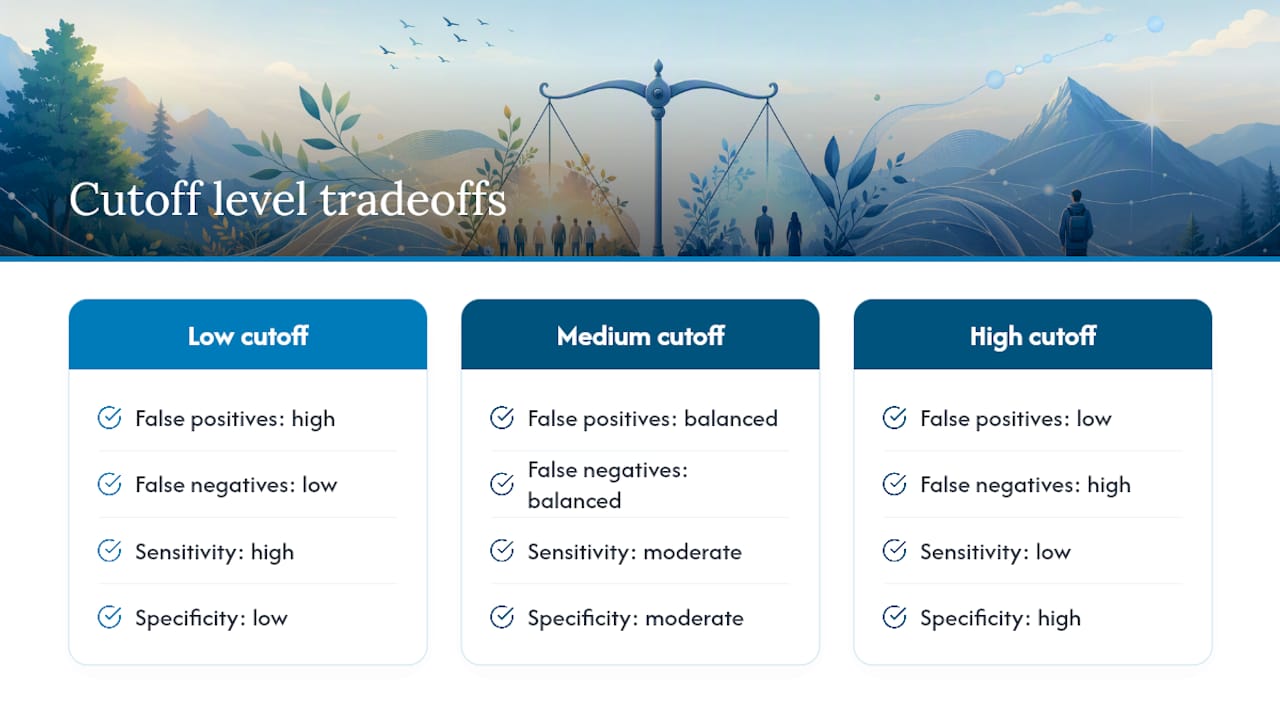
SoHT’s minimum required detection levels represent an attempt to balance those two risks across a broad population, not to eliminate either one entirely. That’s why decontamination washing exists as a mandatory step before confirmation testing: it’s specifically designed to strip external residue so a positive result reflects incorporation into the hair shaft rather than surface contact. Even with validated wash protocols, no cutoff completely separates passive exposure from active use, particularly in households or workplaces with heavy secondhand smoke exposure.
False negatives carry their own quieter risk. Someone who used a substance once, in a low dose, close to the testing date, may fall below the cutoff even though the drug was technically present in trace amounts. This is exactly why forensic and custody cases sometimes push labs toward reporting closer to the raw limit of quantitation instead of the standard cutoff. The tighter the threshold, the more sensitive the test becomes, but also the more vulnerable it becomes to flagging incidental exposure rather than genuine use.
The practical takeaway: a cutoff isn’t a verdict on innocence or guilt. It’s a statistical line drawn to manage two competing error rates, and where that line sits depends entirely on what the test is being used to decide.
Making Decisions Off a Cutoff Result: Clinical and Workplace Context
A number above a cutoff means something different in a hiring decision than it does in a custody hearing or a substance-abuse treatment program, and treating every positive result identically is where a lot of workplace policy goes wrong. Employers generally use standard SoHT-aligned cutoffs because their goal is identifying patterns of use across a large applicant pool, not proving a single incident beyond doubt.
Clinical settings, particularly addiction treatment monitoring, often care more about trend over time than a single number. A treatment provider tracking a patient across multiple hair segments over several months is usually looking for a declining concentration trend rather than a single pass or fail threshold. In that context, segmental analysis matters far more than the topline number.
For workplace decisions specifically, a few practices reduce the odds of an unfair call:
- Never rely on a screening result alone. Only confirmed positives, verified through LC-MS/MS or GC-MS/MS, should factor into an employment decision.
- Allow for a medical review officer (MRO) process. A qualified reviewer can account for legitimate prescriptions before a result gets finalized as positive.
- Document any disputed circumstances immediately, including recent hair treatments, known environmental exposure, or prescribed medications that could explain a borderline result.
If you’re facing a workplace hair test and want to understand your own risk profile before a scheduled appointment, reviewing the hair follicle drug test process in detail can help clarify what the panel actually screens for and how the timeline lines up with your own history.
A grounded take on reading your own results
The honest stance here is simple: trust the confirmed lab number, not the anxiety around it. Most disputes get resolved faster with documentation and a calm conversation than with guesswork about what a pg/mg value “probably” means.
— MIchael
Where At-Home Products Fit Before a Certified Hair Test
Nobody walks into a scheduled hair test wanting surprises, and that’s the gap Passhairdrugtest’s product lineup is built to close. Unlike guessing at detox timelines with generic advice, a targeted approach gives you a concrete pre-test routine backed by two decades of formulation experience in this exact category.
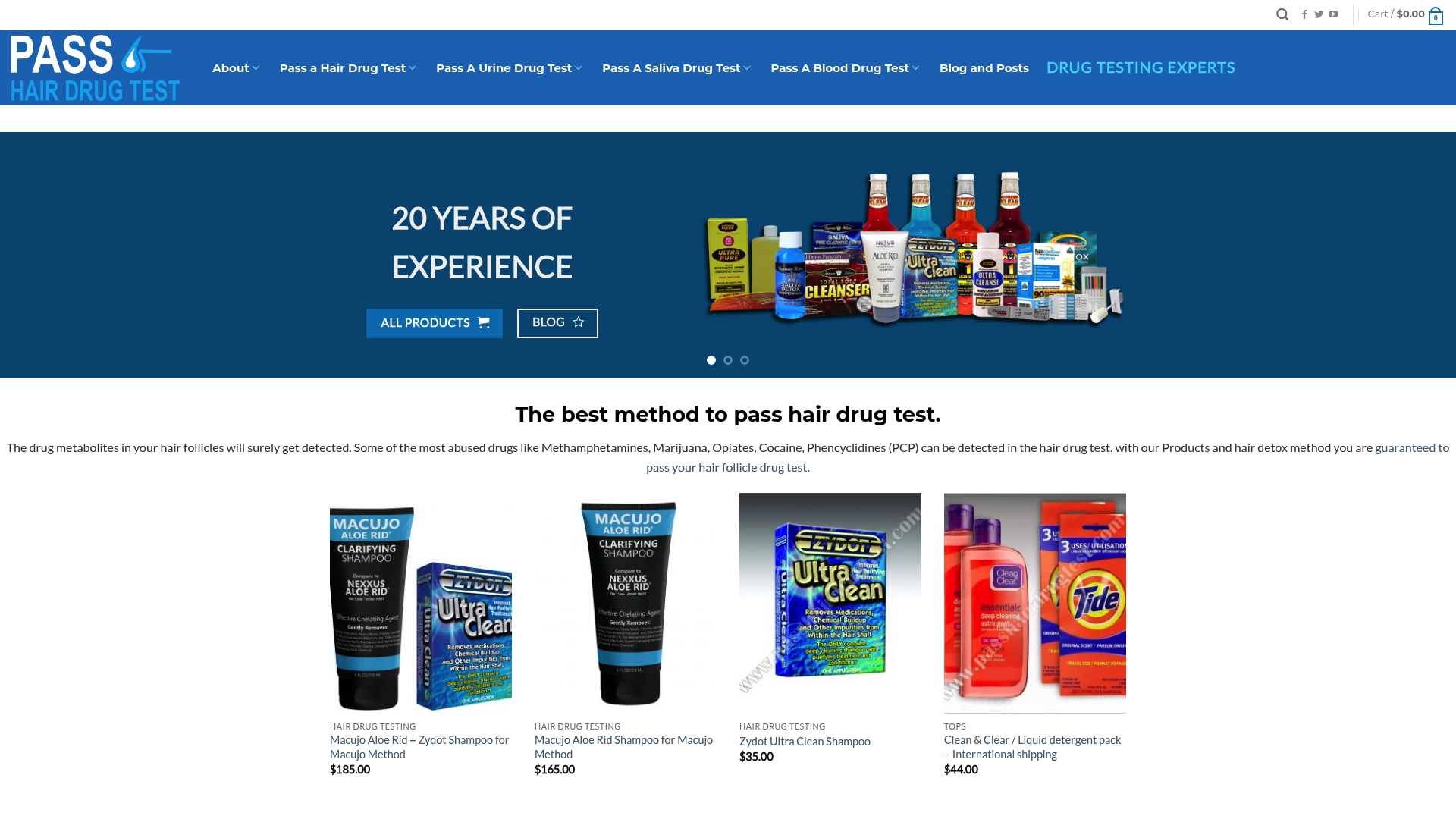
The lineup breaks down by purpose. Detox shampoos like Macujo Aloe Rid are designed to work through cuticle-opening and follicle-cleansing steps rather than simple surface washing. The multi-step Mike’s Macujo Method combines several products in sequence for a more thorough approach, while Zydot Ultra Clean Shampoo offers a simpler single-step option. At-home hair test kits let you check where you stand before committing to a scheduled appointment, functioning as a pre-check rather than a guarantee.
Be clear-eyed about what these products do and don’t claim. Only an accredited lab using LC-MS/MS or GC-MS/MS confirmation provides an official result. Detox shampoos and cleansing methods can reduce surface residue and support your preparation routine, but they don’t override a certified lab’s confirmed finding. If you’re weighing your options ahead of a test, the best hair detox shampoo lineup is the logical starting point for building a preparation plan around your specific timeline.

Key Takeaways
Confirmed hair test results are reported in pg/mg against SoHT-referenced cutoffs, and only mass-spectrometry confirmation, not the initial screen, determines a reportable positive.
| Point | Details |
|---|---|
| Units matter first | Every hair test cutoff is expressed in pg/mg; confirm you’re reading a confirmation value, not a screening summary. |
| Screening and confirmation differ | Screening uses cumulative class-level cutoffs while confirmation isolates a single metabolite at its own threshold. |
| Sample size sets the window | A standard 1.5-inch, 100 mg sample covers roughly 90 days of history, with a 5 to 10 day lag before detection. |
| Cutoffs balance two risks | Lower thresholds catch more true positives but risk flagging passive exposure; higher thresholds risk missing light use. |
| Passhairdrugtest supports preparation | Detox shampoos, the Macujo Method, and at-home kits help you prepare and pre-check, but lab confirmation remains the official standard. |
Sources
- Society of Hair Testing (SoHT) consensus
- Hair testing certifications & cutoff levels | Quest Diagnostics
- On The Level: Screening and confirmation testing explained | USDTL
- Hair drugs of abuse testing FAQ | LabCorp
- UNODC technical note: Hair, sweat and oral fluid
Recommended
- How to Pass a Hair Follicle Drug Test for Weed at Pass Hair Drug Test
- Hair Drug Test Information – Pass Hair Drug Test
- Hair Testing Shampoo Kits – Pass Hair Drug Test
- Long Hair Drug Test: What Labs Actually Measure
