No products in the cart.
Uncategorized
How to Prepare for a Hair Test the Right Way
25
Aug
Aug
The most reliable way to prepare for a hair test is honest disclosure plus documented abstinence and normal hair care, not last-minute chemical fixes. Hair testing looks back roughly 90 days, and no shampoo, vinegar rinse, or bleach job reverses that window reliably. If you have a hair follicle test coming up, here’s what actually matters right now:
- Write down every prescription and over-the-counter medication you take, with dosages
- Tell the collector about any recent bleaching, dyeing, or perming before the sample is cut
- Skip any new chemical treatment in the days before your appointment. It can flag the sample as tampered
- Understand that detox shampoos may reduce some drug residue but won’t guarantee a clean result
Quick fact: Standard hair tests examine about 1.5 inches of hair close to the scalp, covering roughly 90 days of growth. That’s the number to plan around.
Table of Contents
Key Takeaways
Preparing for a hair follicle test comes down to honest disclosure, realistic timing, and understanding that no shortcut beats documented abstinence and a properly applied protocol.
| Point | Details |
|---|---|
| Know your window | Standard tests cover about 90 days of hair growth from a 1.5 inch sample near the scalp. |
| Disclose everything | Bring a prescription list and mention any recent bleaching, dyeing, or perming before collection. |
| Skip the myths | Shaving triggers a body hair sample, and vinegar or alcohol rinses have no lab-backed effect. |
| Understand the science | ELISA screens flag possible positives; GC/MS or LC-MS/MS confirms them with high sensitivity. |
| Consider a documented protocol | Passhairdrugtest’s Macujo Method and Zydot Ultra Clean Shampoo target the hair shaft directly, with no guarantee claimed. |
Table of Contents
- How Does a Hair Follicle Drug Test Actually Work?
- What Drugs Show Up and How Far Back Does It Go?
- What Happens During Collection, and How Long Do Results Take?
- What Should You Do in the Days and Weeks Before Testing?
- Do Detox Shampoos, Shaving, or Vinegar Rinses Actually Work?
- Why Publisher Experience and Product Standards Matter Here
- What This Guide Gets Right That Most Advice Misses
- Where Passhairdrugtest Fits Into Your Preparation
- Sources
How Does a Hair Follicle Drug Test Actually Work?
Drugs and their metabolites enter hair through the bloodstream while the follicle is forming new growth, then get locked into the hair shaft as it hardens. Hair grows around half an inch per month, so a 1.5 inch segment near the scalp captures roughly three months of history. That’s the entire premise behind hair drug testing preparation: you can’t wash away something that’s embedded in the structure of the strand itself, not just sitting on the surface.
Labs don’t rely on a single test. They run a two-stage process:
- Screening: An ELISA immunoassay flags samples that likely contain a target drug class. It’s fast and cheap, but not definitive on its own.
- Confirmation: Any presumptive positive goes through GC/MS or LC-MS/MS, mass spectrometry methods that identify the exact compound and its concentration.
This is the same ELISA screening followed by GC/MS or LC-MS/MS confirmation workflow used across most accredited labs. A screen tells you something might be there. A confirmation tells you exactly what compound, at what concentration, using a method sensitive enough to hold up in a legal dispute. That distinction is why “beating the screen” isn’t the same as passing the test.
What Drugs Show Up and How Far Back Does It Go?
Standard panels typically screen for THC, cocaine, opiates, amphetamines, PCP, and often MDMA. Each drug metabolizes and binds to hair differently, but the detection logic stays consistent: a segment about 1.5 inches long, roughly 100 mg or 90 to 120 strands, corresponds to about 90 days of exposure.
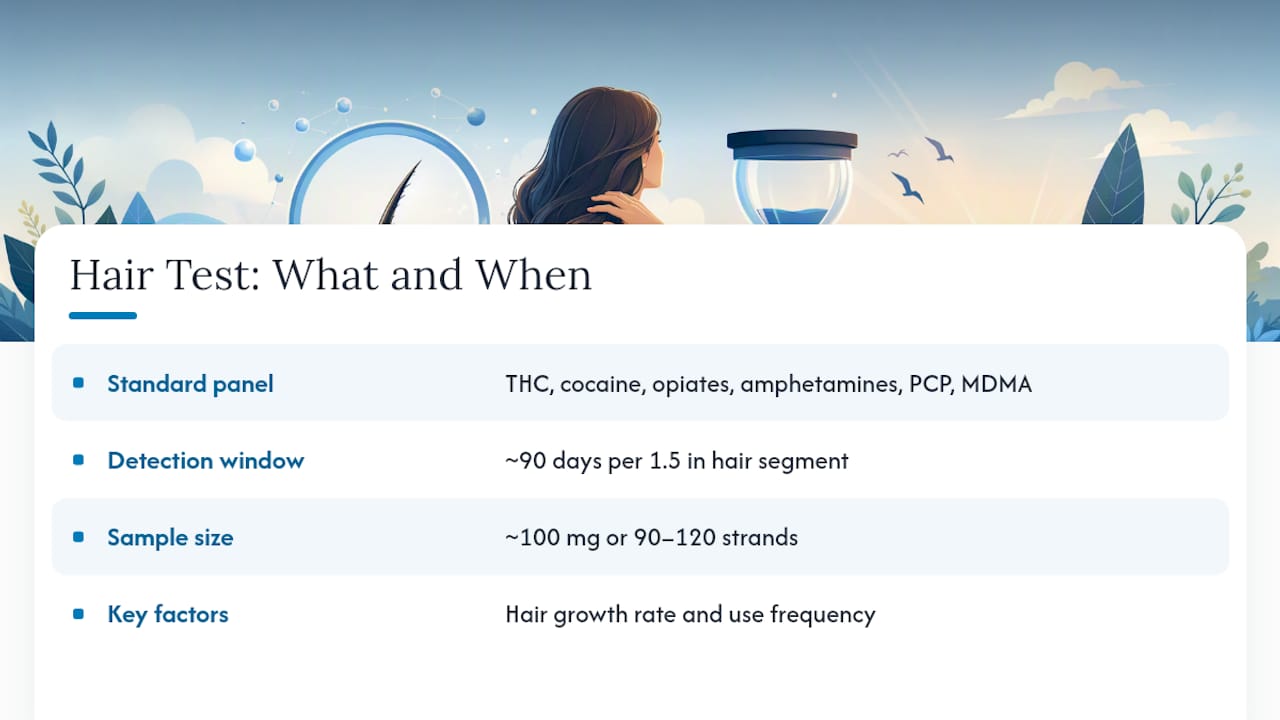
Hair growth rate matters more than people assume. Someone with faster-growing hair packs less drug history into the same 1.5 inch cut than someone whose hair grows slowly. Frequency of use matters just as much. A single, isolated use often deposits too little of the drug into the hair shaft to clear a lab’s detection threshold, while repeated use over weeks builds up a concentration that’s much harder to miss. This is why a one-off event carries genuinely low odds of detection, but anything resembling a pattern gets picked up reliably.
What Happens During Collection, and How Long Do Results Take?
Collection is quick, but the mechanics behind it matter if you’re trying to know what to expect.
- A trained collector cuts several small bundles of hair from the crown of the head, close to the scalp, rather than one large chunk. Sampling from multiple spots across the crown avoids leaving an obvious bald patch while still gathering a representative sample.
- If scalp hair is too short or absent, collectors may use body hair instead, which extends the detection window well beyond 90 days since body hair grows much more slowly.
- The sample gets sealed in foil and logged under chain-of-custody procedures designed to prevent substitution or tampering between collection and lab analysis.
- Negative screening results typically come back in 48 to 72 hours. A presumptive positive triggers GC/MS or LC-MS/MS confirmation, which adds roughly another 72 hours before a final result is issued.
Shaving your head to dodge the test doesn’t work the way people hope. It just prompts the collector to request body hair as a substitute sample, and a freshly shaved head right before a scheduled test is itself a red flag that gets noted.
What Should You Do in the Days and Weeks Before Testing?
Preparation splits cleanly into two timeframes, and confusing them is where most people go wrong.
In the 48 to 72 hours before your appointment, keep things simple. Wash your hair normally with your regular shampoo. Do not perm, bleach, or dye your hair right before the test. A collector who spots fresh chemical treatment may flag it, and some labs will note it as a possible attempt to compromise the sample. Avoid heavy styling products that could interfere with sample integrity, and skip anything marketed as a same-day “flush” claiming to clear months of use overnight. That kind of promise doesn’t match how hair testing actually works.
In the two-plus weeks before your appointment, the calculus changes. If abstinence is realistic for you, this is the window where it actually helps, since new hair growth after your last use carries a lower concentration. This is also when you should gather documentation. If you take a prescribed medication that could trigger a positive (certain ADHD medications, prescribed opioids, or other controlled substances), get your prescription paperwork together now. A Medical Review Officer can review documented prescriptions against a confirmed positive and determine whether it’s a legitimate medical explanation rather than illicit use.
If you’re dealing with dependence and worried about withdrawal from stopping suddenly, talk to a doctor before your test date rather than trying to power through alone. Medical guidance consistently recommends disclosure and clinical support over unsupervised attempts to manage the problem quietly.
Pro Tip: If you want a realistic sense of where you stand before the real test, an at-home hair test kit can set expectations. Treat it as information, not proof. Home kits use similar screening chemistry but don’t carry the same confirmatory rigor as a lab GC/MS run.
For people who choose to use a detox shampoo protocol as part of their preparation, timing and correct application matter enormously. Rushing the process the night before rarely helps.
Do Detox Shampoos, Shaving, or Vinegar Rinses Actually Work?
Most home remedies circulating online oversell what they can deliver. A peer-reviewed laboratory study is the clearest evidence available on this question, and it doesn’t support the internet folklore.
Researchers testing hair treatments against THC concentrations found reductions ranging from about 52% with a common detox shampoo up to roughly 65% with a stronger disinfectant solution. But these reductions were inconsistent across samples, and none of the treatments reliably produced a negative result.
That’s the finding from a controlled study on hair treatments and THC concentrations, and it cuts both ways. It confirms that certain treatments genuinely lower measurable drug concentration in hair, which is more than plain vinegar or a drugstore clarifying shampoo can claim. It also confirms that “reduced” is not “eliminated,” and labs know it.
Forensic toxicology sets detection cut-offs for THC in hair as low as 0.02 to 0.05 nanograms per milligram, depending on the protocol. That threshold is deliberately sensitive enough to catch residual amounts that survive an at-home wash. Shaving fails for the reason already covered: it just triggers a body hair sample. A confirmed positive can be appealed through the Medical Review Officer process, but that path exists for documented prescriptions, not for arguing that a detox shampoo should have worked.
Why Publisher Experience and Product Standards Matter Here
Passhairdrugtest has spent more than 20 years in the hair-cleansing product space, which means watching which claims hold up against lab testing standards and which ones are marketing noise. When you’re evaluating any prep product, apply the same filter:
- Look for a documented step-by-step protocol, not just a bottle with vague instructions
- Check whether the product addresses surface buildup versus what’s embedded in the hair shaft, since those require different chemistry
- Favor sellers who are upfront that no method offers a guarantee, because that framing matches the actual science
- Confirm a refund or support policy exists if you have questions about application
Pro Tip: A structured multi-step protocol like the Macujo Method combines a chemical opening step with a specialized shampoo, which addresses more of the hair shaft than shampoo alone. Anyone promising a single-wash miracle fix is skipping the part where lab detection limits actually work.
If you have a dependence issue rather than an isolated use situation, clinical support is the more responsible route than product-based prep alone.
What This Guide Gets Right That Most Advice Misses
Most articles on this topic split into two useless camps: scare pieces claiming nothing works, or sales pages claiming everything works if you buy the right bottle. Neither matches what the toxicology literature actually shows.
The real picture is more specific. Reductions in detectable concentration are real and measurable, not imaginary, but they’re inconsistent enough that no method clears the bar of “guaranteed.” The conventional wisdom that “detox shampoos are all snake oil” ignores the peer-reviewed data showing meaningful percentage reductions. The opposite claim, that any product on the market guarantees a clean result, ignores how sensitive modern GC/MS confirmation has become.
What actually moves the odds, in order of impact: time since last use, correct and complete application of a documented multi-step protocol rather than a rushed single wash, and honest disclosure of anything that could explain a result to an MRO. Skipping straight to a same-day fix while ignoring the other two is the single most common mistake I see people make, and it’s the one most likely to backfire.
— MIchael
Where Passhairdrugtest Fits Into Your Preparation
Passhairdrugtest built its business around one specific problem: helping people prepare for hair testing using protocols grounded in how hair actually holds onto drug residue, not vague promises. Its core lineup, Macujo Aloe Rid Shampoo, Zydot Ultra Clean Shampoo, and the multi-step Mike’s Macujo Method, targets the hair shaft directly rather than relying on a single surface rinse.
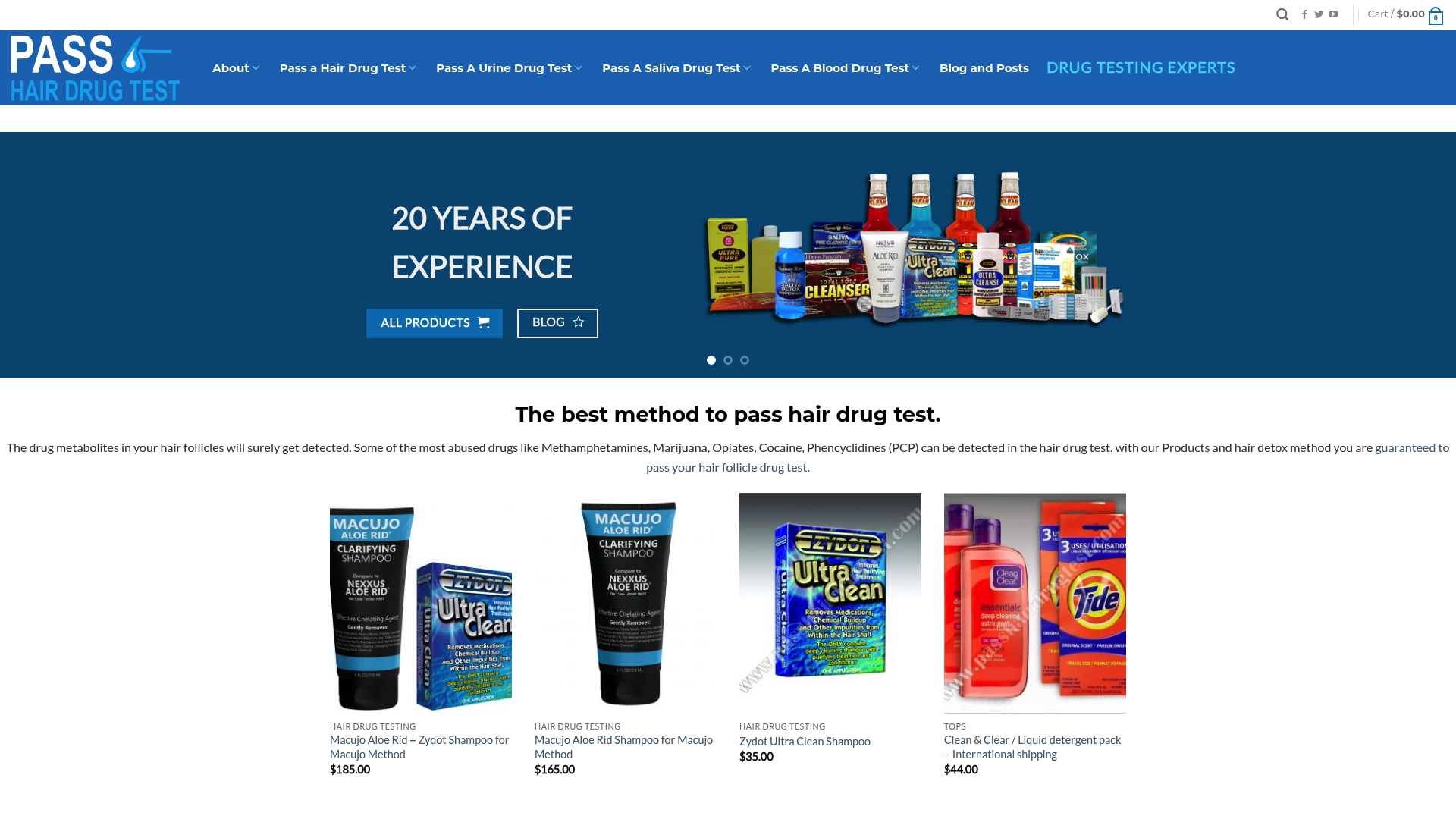
If you’re weeks out from a test and abstinence alone isn’t enough of a plan, a documented protocol beats guesswork from random forum threads. The Macujo Method walks through the exact sequence and timing that gives a multi-step approach its best shot, and the best hair detox shampoo options page breaks down which product fits your hair type and timeline. Order early. These protocols take repeated applications over days, not hours, so the worst time to start is the night before your appointment.
Sources
- Hair follicle drug testing: Labcorp guidance
- Peer-reviewed study on effects of hair treatments on THC concentrations (PMC)
- Healthline: Hair follicle drug test overview
This article is general information, not a substitute for advice from a qualified doctor. Consult a qualified healthcare professional about your own circumstances before acting on anything here.
Recommended
- How Can I Pass a Hair Drug Test? – Pass Hair Drug Test
- Pass hair Drug Test
- How to Pass a Drug Test on Hair Follicles? – Pass Hair Drug Test
- Hair Detox Products for Drug Testing – Pass Hair Drug Test
