Uncategorized
Macujo Method Success Rate: What the Evidence Actually Shows
Aug
The Macujo method’s success rate is genuinely hard to pin down, and anyone who gives you a clean number is probably selling something. No peer-reviewed controlled trial has confirmed those figures. The method may reduce detectable metabolite levels in some users, but it cannot guarantee a negative result, and the gap between “reduced” and “below the lab cutoff” is where most failures happen.
- Vendor marketing routinely cites 90–99.9% success, but those figures come from self-reported forums and promotional copy, not independent clinical trials.
- Labs running GC-MS or LC-MS/MS can detect analytes embedded in the hair cortex that surface treatments cannot reliably reach.
- Hair length, usage frequency, substance type, and product authenticity all shift your personal odds significantly.
Pro Tip: If your test is 1–3 days away, start the protocol immediately and add a Zydot Ultra Clean wash on test morning. Do not waste time on methods that require weeks of prep. A home hair drug test kit used 24 hours before your appointment gives you a realistic read on where you stand.
Table of Contents
Key Takeaways
The Macujo method gives light-to-moderate users a realistic but unguaranteed shot at passing a hair follicle drug test, with success depending more on usage history, product authenticity, and cycle count than on the protocol alone.
| Point | Details |
|---|---|
| Realistic success range | Light/occasional users with 7+ days prep report the best outcomes; heavy users face low odds regardless of cycle count. |
| No controlled trial confirmation | No peer-reviewed study confirms the method reliably brings metabolite levels below lab cutoffs across all users. |
| Product authenticity is critical | Counterfeit Old Style Aloe Toxin Rid is a leading cause of failure; source from a verified supplier. |
| Safety risks are real | Repeated acid and surfactant cycles cause scalp irritation, chemical burns, and hair breakage; patch test first. |
| Passhairdrugtest kit option | The Hair Follicle Shampoo Kit from Passhairdrugtest includes authentic Aloe Rid and Zydot Ultra Clean with protocol instructions. |
Table of Contents
- What the Macujo method is and where it came from
- How to actually do the Macujo method, step by step
- What vendors and online communities claim about success rates
- What independent research actually says about hair detox methods
- Why your personal odds might be very different from the average
- Health and scalp risks you need to know before starting
- How many cycles to do and when to schedule them
- Common mistakes that cause the method to fail
- Realistic verdict: who should try this and what to do if it fails
- An editorial perspective on what the Macujo method can and cannot do
- The Passhairdrugtest hair follicle kit covers every step of the protocol
- Sources
What the Macujo method is and where it came from
The Macujo method is a multi-step chemical hair-cleansing protocol that circulated on drug-use forums in the early 2000s, attributed to a user known as “Mike Macujo.” The core idea is straightforward: use a sequence of acidic, keratolytic, and surfactant-based products to strip the outer lipid layer of the hair shaft and reduce the concentration of drug metabolites before a hair follicle drug test.
The protocol targets surface contamination and the cuticle layer, working on the theory that repeated chemical exposure loosens metabolite binding in the hair shaft. Whether it reaches analytes locked in the cortex is the central scientific dispute.
The standard product lineup includes:
- White vinegar (acetic acid): opens the hair cuticle and lowers pH to prepare the shaft for deeper penetration by subsequent products.
- Clean and Clear Morning Burst or a comparable salicylic acid acne cleanser: acts as a keratolytic to exfoliate surface lipids and residue.
- Old Style Aloe Toxin Rid shampoo (also called Aloe Rid): the specialized detox shampoo at the center of the protocol, formulated with propylene glycol, which is believed to help draw metabolites from the shaft.
- Tide liquid detergent or a strong surfactant: a final wash step to strip remaining surface residue.
- Zydot Ultra Clean shampoo: used as a finishing treatment, often on the morning of the test, to remove any remaining surface contamination and condition the hair.
Mike’s later variants added a baking soda paste step to further alter the hair’s pH environment and increased the number of daily repetitions.
How to actually do the Macujo method, step by step
Materials you need:
- White vinegar
- Salicylic acid acne cleanser (2% salicylic acid minimum)
- Old Style Aloe Toxin Rid shampoo
- Tide liquid detergent (a small amount)
- Zydot Ultra Clean shampoo (for test day)
- Rubber gloves
- Shower cap
- Timer
The sequence:
- Wet your hair thoroughly. Do NOT wet your scalp with water first if you can avoid it; you want the vinegar to contact dry-ish hair.
- Saturate your hair with white vinegar, working it into the scalp. Put on the shower cap and leave it on for 30 minutes.
- Without rinsing out the vinegar, apply the salicylic acid cleanser directly over the vinegar. Massage it in and leave the shower cap on for another 30 minutes.
- Rinse thoroughly with warm water.
- Wash with Old Style Aloe Toxin Rid shampoo. Lather, leave it on for 10–15 minutes, then rinse.
- Apply a small amount of Tide liquid detergent, lather briefly, and rinse immediately. This is a short step, not a soak.
- Finish with a second wash of Old Style Aloe Toxin Rid.
- On test day, replace the final Aloe Rid wash with Zydot Ultra Clean as your last step before leaving.
The salicylic acid in step 3 functions as a keratolytic, breaking down the bonds between dead skin cells and surface lipids on the hair shaft. That is why an acne cleanser is used rather than a standard clarifying shampoo.
Safety callout: Wear rubber gloves for every step. The combination of vinegar and salicylic acid on an already-sensitized scalp can cause chemical burns with repeated use. If you notice open sores, cracking skin, or bleeding, stop immediately and let the scalp recover before continuing.
Pro Tip: Apply a thin layer of petroleum jelly along your hairline and ears before starting. It creates a barrier that reduces the amount of vinegar and cleanser that contacts the skin directly, cutting irritation without interfering with the hair-shaft treatment.
What vendors and online communities claim about success rates
The numbers you see on product pages and in forum threads are striking. Claimed success rates for the Macujo method typically fall in this range:
- 90–95%: the most common figure cited in forum threads and how-to guides.
- 99–99.9%: the upper-end claims that appear on vendor product pages and promotional copy.
- “Guaranteed to work”: language that appears alongside money-back offers on some retail sites.
Where do these numbers come from? Mostly from self-reported outcomes on Reddit, drug-testing forums, and the comment sections of review sites. A user posts that they passed; other users upvote and share. The failures are underreported for obvious reasons: people who fail a drug test are less likely to return to a forum and announce it publicly. That selection bias alone inflates the apparent success rate substantially.
“Our Macujo Aloe Rid Shampoo has helped thousands of customers pass their hair follicle drug tests with a reported success rate of over 99%.” This type of claim, common across vendor marketing pages, is promotional copy. It is not drawn from a controlled study, a blinded trial, or an independent lab analysis. Treat it as a marketing signal, not a clinical finding.
As investigative reviews of Macujo Aloe Rid products note, vendor success-rate claims commonly come with money-back guarantees or selective anecdotal reporting. That structure is a marketing mechanism, not independent validation. The guarantee creates the impression of confidence without requiring the company to prove efficacy under controlled conditions.
What independent research actually says about hair detox methods
The scientific picture is less optimistic than the vendor claims, and more nuanced than a flat “it doesn’t work.”
Peer-reviewed literature on hair analysis and evasion attempts finds that attempted evasion of hair testing is a documented and growing activity, but the evidence for commercial product efficacy is mixed. Many published claims rest on self-reports rather than controlled trials, and when studies do control variables, effect sizes shrink and inconsistency increases.
The core chemistry problem is this: chemical treatments like vinegar, salicylic acid cleansers, and surfactants target the outer cuticle and surface-bound lipids. They can reduce surface contamination. But drug metabolites that have been incorporated into the hair cortex during the growth process are bound in a different matrix, and hair is a complex biological structure where environmental pollutants and internal metabolite deposition behave differently. Removing surface residue is not the same as removing cortex-embedded analytes.
| Evidence type | What it measures | Reliability |
|---|---|---|
| Self-reported forum posts | Whether the user passed or failed their specific test | Low: selection bias, no controls, unknown lab sensitivity |
| Vendor marketing data | Anecdotal customer outcomes, often filtered | Low: promotional, not peer-reviewed |
| Lab studies on chemical treatment | Metabolite concentration changes in treated hair samples | Moderate: controlled but often small-sample |
| Peer-reviewed evasion reviews | Patterns across published literature on evasion attempts | Higher: systematic, but findings are mixed |
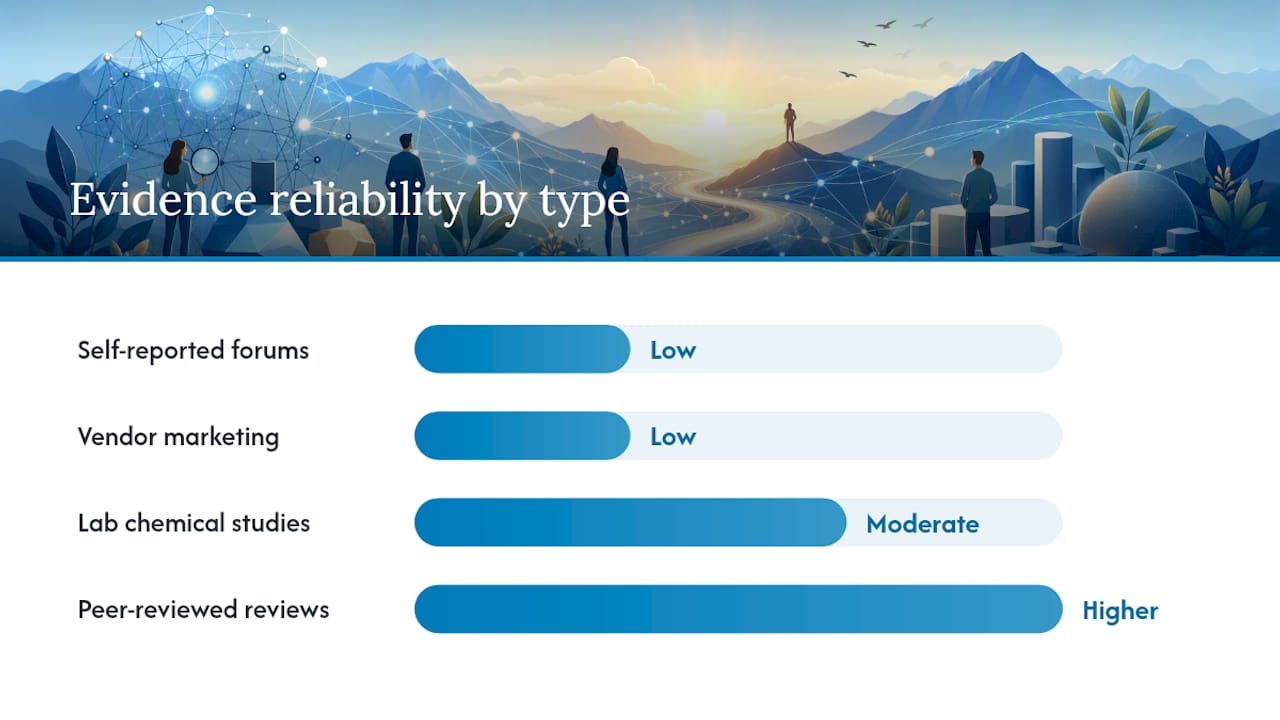
No peer-reviewed clinical study has confirmed that commercial detox shampoos or the Macujo method reliably reduce drug metabolites below laboratory cutoffs across a broad user population. That conclusion appears consistently in health journalism reviews of detox shampoo efficacy and in the academic literature.
Pro Tip: When reading a study or forum thread about Macujo results, check the lab method used. A test that uses enzyme immunoassay (EIA) screening is less sensitive than one confirmed by GC-MS. A “pass” on a cheap immunoassay screen does not predict a pass on a GC-MS confirmation test.
Why your personal odds might be very different from the average
The Macujo method’s results vary more than almost any other detox protocol, because the outcome depends on at least five independent variables that interact with each other.
Usage factors:
- Frequency and recency of use: A one-time user who smoked three weeks ago faces a fundamentally different challenge than someone who uses daily. THC metabolites, for instance, accumulate in hair at rates tied to frequency of exposure.
- Substance type: THC pharmacology and metabolite behavior differ from stimulants and opioids. The way metabolites incorporate into hair varies by substance, which means a protocol optimized for cannabis users may not perform the same way for someone tested for methamphetamine or opiates.
Hair factors:
- Hair porosity and texture: Highly porous or chemically treated hair (bleached, permed, relaxed) may absorb and release metabolites differently than virgin hair. Some users with high-porosity hair report better results; others report worse, because the same porosity that lets chemicals in also let metabolites in more deeply.
- Hair length: Standard hair drug tests collect 1.5 inches of hair from the root, representing approximately 90 days of growth. If your use falls outside that window, the method’s job is easier. If you used heavily within the last 90 days, the target zone is fully loaded.
Test and product factors:
- Lab sensitivity and cutoff thresholds: Labs set cutoff concentrations for a positive result. A test with a lower cutoff catches more positives. The method might reduce metabolite levels enough to pass one lab’s threshold but not another’s.
- Product authenticity: Counterfeit or diluted versions of Old Style Aloe Toxin Rid circulate online. Using a fake product while following the real protocol produces real-protocol effort with fake-product results.
Quick self-assessment checklist:
- [ ] Last use was more than 30 days ago (better odds)
- [ ] Use was occasional, not daily (better odds)
- [ ] Hair has not been chemically treated in the past 6 months
- [ ] You have at least 5–7 days before the test
- [ ] You can source authentic Old Style Aloe Toxin Rid
- [ ] You have no open scalp wounds or active dermatitis
The more boxes you check, the more favorable your starting position. Heavy daily users with less than 72 hours before a test are in the hardest category regardless of protocol.
Health and scalp risks you need to know before starting
The Macujo protocol is chemically aggressive by design. That is the point. But repeated exposure to the combination of acetic acid, salicylic acid, strong surfactants, and alkaline baking soda (in Mike’s variants) carries real risks that are worth understanding before you start.
Common adverse effects reported by users:
- Scalp redness and burning during and after treatment
- Follicle inflammation and tenderness
- Excessive hair dryness, brittleness, and breakage
- Scalp peeling and flaking from repeated keratolytic exposure
- In severe cases, contact dermatitis or chemical burns at the hairline
The keratolytic action of salicylic acid that makes it useful for stripping surface lipids is the same mechanism that causes irritation when overused. The scalp is not designed for repeated acid-then-alkaline cycling.
Medical caution: If you develop open sores, significant scalp cracking, or signs of infection (warmth, pus, spreading redness) during the protocol, stop all treatments and consult a clinician before continuing. Proceeding on a compromised scalp barrier increases chemical absorption and infection risk.
Before you start:
- Do a patch test on a small section of hair and scalp 24 hours before your first full treatment.
- If you experience severe burning within the first 10 minutes of a step, rinse immediately rather than waiting out the full time.
- Limit total cycles to what your scalp can tolerate. More cycles do not always mean better results, and a damaged scalp can complicate the test collection itself.
How many cycles to do and when to schedule them
The most commonly reported regimen in online communities is two full cycles per day for 7 days before the test, with a Zydot Ultra Clean wash on the morning of the test. That adds up to roughly 14 complete treatment cycles. Some users report doing as few as 5–7 cycles when time is short; others push to 20+ when they have two weeks of prep time.
The relationship between cycle count and effectiveness is not linear. The first several cycles likely produce the most meaningful reduction in surface contamination. After that, you are dealing with cortex-embedded analytes that chemical surface treatments are less able to reach, and you are adding scalp damage with each additional cycle.
Common regimen patterns reported online:
- 7-day standard: 2 cycles per day, 14 total, Zydot Ultra Clean on test morning.
- 3-day intensive: 3 cycles per day, 9 total, used when prep time is short.
- 1-day emergency: 3–4 cycles in a single day, Zydot Ultra Clean as the final step. This is the lowest-confidence approach and is generally a last resort.
The step-by-step guides and Mike’s variants documented across how-to sites note that the baking soda paste addition in some versions is meant to further disrupt the cuticle between cycles, but this also increases irritation risk.
Pro Tip: Schedule your last full Macujo cycle the evening before your test, not the morning of. On test morning, use only Zydot Ultra Clean. This gives your scalp a few hours to calm down and reduces the chance that visible scalp irritation draws attention at the collection site.
Common mistakes that cause the method to fail
Most self-reported failures trace back to a short list of procedural errors. If you have already done cycles and are worried about your results, check these first.
Checklist of common mistakes:
- Wrong product order: Skipping the vinegar step or applying Aloe Rid before the salicylic acid cleanser breaks the chemical logic of the sequence. Each step prepares the hair for the next.
- Insufficient soak time: Rinsing the vinegar after 10 minutes instead of 30 cuts the cuticle-opening effect significantly.
- Low-strength salicylic acid cleanser: Products with less than 2% salicylic acid may not provide adequate keratolytic action. Check the label.
- Counterfeit Aloe Rid: The most commonly cited cause of failure in user reports. Authentic Old Style Aloe Toxin Rid has a specific formulation. Cheaper imitations do not replicate it.
- Too few cycles: Users who do 3–4 cycles and expect the same result as someone who completed 14 are comparing very different interventions.
- Not using Zydot Ultra Clean on test day: Skipping the final finishing step leaves surface residue that the preceding cycles loosened but did not fully remove.
- Using conditioner or styling products between cycles: These can redeposit lipids and residue onto the hair shaft, partially undoing the previous cycle’s work.
Verification steps before your test:
- Purchase a home hair drug test kit and use it 24–48 hours before your scheduled test.
- If the home test is positive, add one or two more cycles if your scalp can tolerate it.
- If the home test is negative, proceed with the Zydot Ultra Clean wash on test morning and avoid any hair products.
- Do not use dry shampoo, hairspray, or styling products on test day.
Realistic verdict: who should try this and what to do if it fails
The honest answer on Macujo method effectiveness is that it gives light-to-moderate users with at least 5–7 days of prep time a reasonable shot, probably better than doing nothing, but not a guaranteed pass. Heavy daily users, especially those with less than 72 hours before a test, face long odds regardless of how carefully they follow the protocol.
Success probability by user profile (based on aggregated user reports, not controlled trials):
- Light/occasional user, 7+ days prep: Moderate-to-favorable odds. Most self-reported successes fall in this category.
- Moderate user, 5–7 days prep: Uncertain. Outcome depends heavily on lab sensitivity and product authenticity.
- Heavy/daily user, any prep time: Low confidence. The metabolite load in the cortex is likely too high for surface treatments to bring below cutoff.
- Any user, less than 48 hours prep: Very low confidence. Insufficient cycles to make a meaningful difference.
If the method fails or you need a backup plan:
- Request a retest if the positive result surprises you. Labs can and do make errors, and a retest gives you additional time.
- Understand the detection window: standard hair tests cover the 90 days prior to collection. If your use falls outside that window, a positive result may be challengeable.
- Consult an employment attorney if the test result affects your job. Some states have protections for off-duty cannabis use.
- For future tests, the longer your abstinence period before collection, the more of the positive-growth zone grows out and can be trimmed.
A sensible decision process: assess your usage profile honestly, follow the full protocol with authentic products, confirm with a home test 24 hours before your appointment, and have a fallback plan ready before you walk in.
An editorial perspective on what the Macujo method can and cannot do
The most important thing missing from most Macujo method discussions is an honest accounting of what “success” actually means. Passing a hair drug test is not the same as removing all drug metabolites from your hair. It means getting the metabolite concentration below the lab’s cutoff threshold. That distinction matters enormously for how you interpret both the method’s mechanism and its reported results.
They reflect a real pattern: a large number of people who follow the protocol carefully, with authentic products, and who have moderate usage histories, do pass their tests. But those numbers are drawn from a self-selected population that skews toward people with favorable starting conditions. The heavy daily user who fails and loses their job is not posting a forum update.
What I find consistently underestimated is the role of product authenticity. The Macujo protocol is only as good as the products used in it. Old Style Aloe Toxin Rid is not interchangeable with a generic clarifying shampoo, and counterfeit versions of it are common enough that sourcing from a reputable supplier is not optional, it is the single most controllable variable in the entire process. The protocol, the timing, the cycle count: all of that matters less if the core product is fake.
The other thing worth saying plainly: no detox method, including Macujo, is a substitute for abstinence and time. If you have 90 days before a test and you stop using now, you do not need a protocol. The method exists for people who do not have that luxury, and it gives them a fighting chance, not a guarantee.
The Passhairdrugtest hair follicle kit covers every step of the protocol
For readers who decide to move forward with a product-supported protocol, Passhairdrugtest has spent more than 20 years sourcing and supplying the specific products the Macujo sequence requires. The Hair Follicle Shampoo Kit includes Old Style Aloe Toxin Rid and Zydot Ultra Clean, the two specialized shampoos at the center of the method, along with step-by-step instructions that map directly to the protocol described in this article.
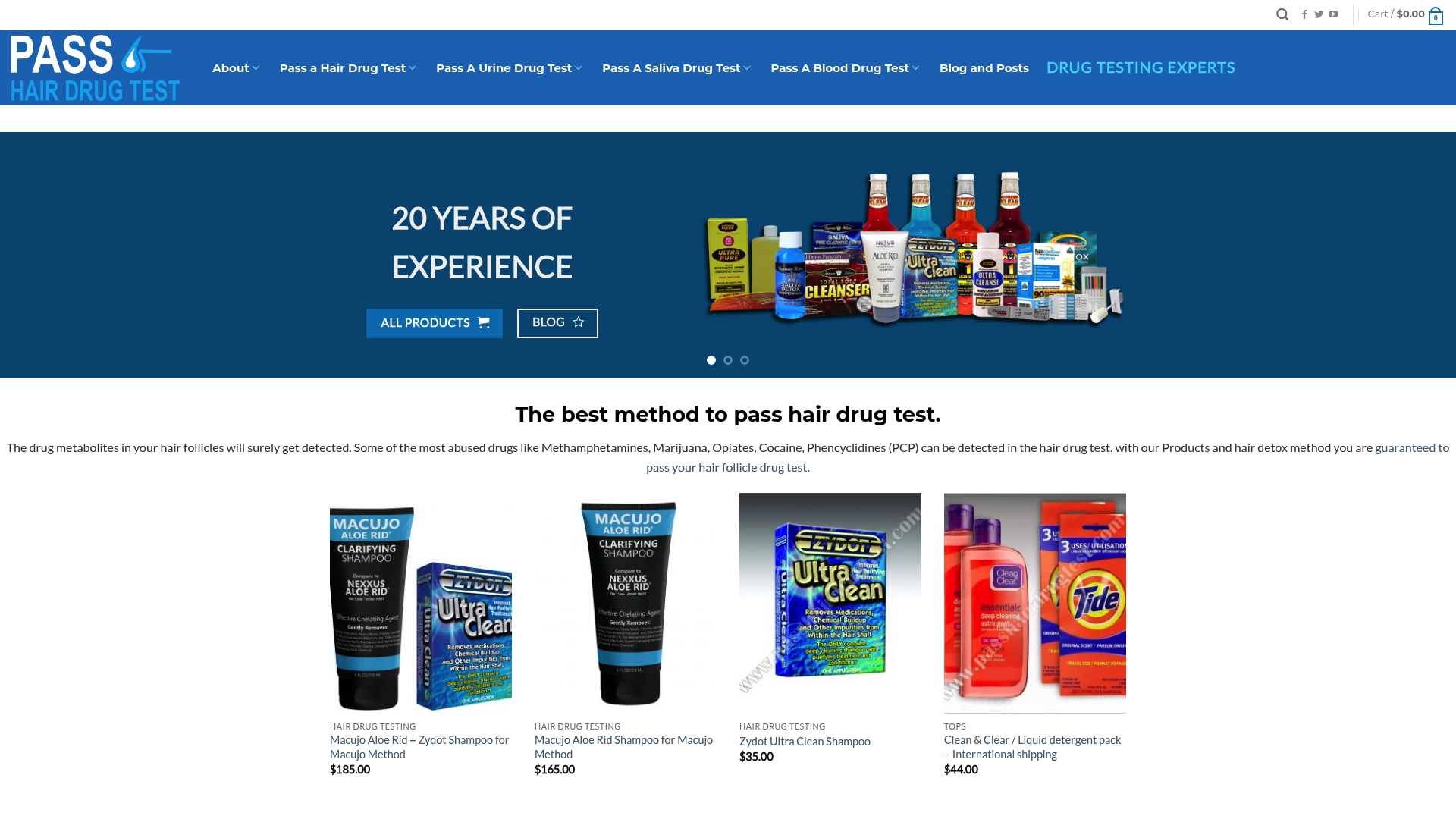
No kit eliminates the variables that determine your personal odds: usage history, hair type, lab sensitivity. What it does is remove the product-authenticity risk, which is the most common controllable cause of failure. You get the real formulations, not a generic substitute, with customer support available if you have questions about the protocol. For readers with an imminent test and no time to source products separately, the kit is the most direct path to a complete, correctly sequenced attempt. Visit the hair testing shampoo kits page to see current options and order today.
Sources
The sources below represent the strongest available evidence on hair drug testing, detox method efficacy, and the chemistry behind the Macujo protocol. Peer-reviewed sources should carry more weight than vendor pages or forum aggregators.
This article provides general information about the Macujo method and hair drug testing. It is not legal, medical, or professional advice. Confirm current testing standards and any legal implications with a qualified professional before making decisions based on this content.
Recommended
- Macujo Method Reviews: is Macujo Method Legit? – Pass Hair Drug Test
- Macujo Method Reviews Archives – Pass Hair Drug Test
- What is Macujo method and how it can help you?
- Mike’s Macujo Method 2021 Hair Detox at Passhairdrugtest.com
