Uncategorized
Benzodiazepines Hair Test: What You Need to Know
Jul
Benzodiazepines are detectable in a hair follicle drug test, and multi-step cleansing kits can sometimes reduce drug levels in the hair shaft, although no product can guarantee a negative result on LC‑MS/MS confirmation. That’s the honest answer, and everything below builds on it.
- Detection window: A standard 1.5-inch scalp sample covers roughly 90 days of exposure, because hair grows approximately 0.5 inches per month.
- Confirmation standard: Labs use immunoassay screening first, then LC‑MS/MS to confirm, with lower limits of quantification in the pg/mg range.
- Product source: Passhairdrugtest carries the Macujo Aloe Rid Shampoo, Zydot Ultra Clean Shampoo, and the full Mike’s Macujo Method kit for people preparing for a test.
Read the step-by-step prep plan and product breakdown below before your test date.
Table of Contents
Table of Contents
- How do benzodiazepines get into your hair?
- How do labs detect benzodiazepines in a hair test?
- Do cleansing kits actually lower benzodiazepine levels?
- Step-by-step prep plan using a cleansing kit
- What red flags make labs look closer at your sample?
- Legal, employment, and safety considerations
- Which benzodiazepines does a hair test detect?
- How does hair testing compare to urine, blood, and saliva tests?
- Key Takeaways
- The honest case for preparation over panic
- Ready to prepare? Passhairdrugtest has the kit
- Authoritative sources and further reading
How do benzodiazepines get into your hair?
The test analyzes the hair shaft itself, not the follicle. When you take a benzodiazepine, the drug and its metabolites enter your bloodstream, reach the hair bulb, and become physically incorporated into the hair shaft as the strand grows. That’s why the test reflects exposure history over months, not just recent use.
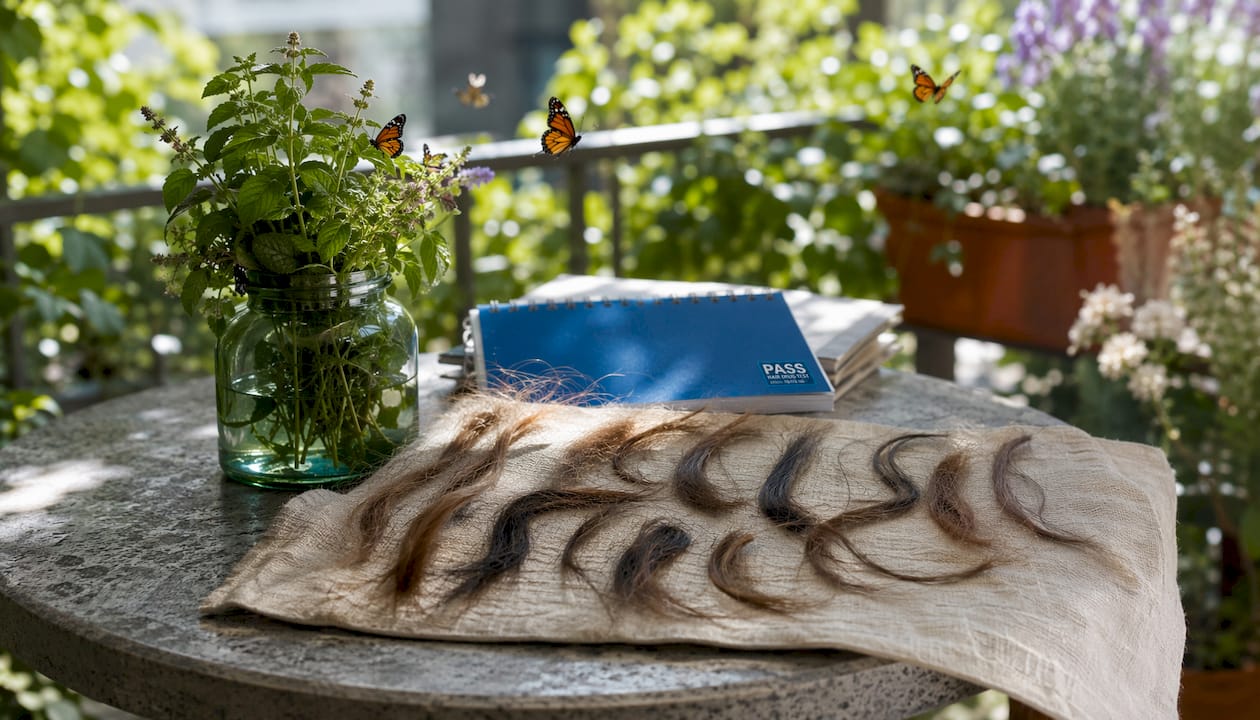
Hair grows roughly 0.5 inches per month. A lab collecting a 1.5-inch segment from close to the scalp is looking at approximately the past 90 days. Longer hair means a longer potential record, though most standard workplace panels only analyze the proximal 1.5 inches.
Several factors affect how much drug ends up in the shaft:
- Dose and frequency: Higher or more frequent doses deposit more metabolites.
- Lipophilicity: More fat-soluble compounds tend to incorporate more readily.
- Melanin content: Darker hair binds certain drugs more strongly than lighter hair, so the same dose can produce higher measured concentrations in dark hair.
- Cosmetic treatments: Bleaching, perming, and chemical relaxers can degrade metabolites already in the shaft, sometimes lowering measured concentrations.
- Hair texture: Structural differences across hair types affect drug binding and distribution.
| Hair length | Approx. months covered |
|---|---|
| 0.5 inches | ~1 month |
| — | ~2 months |
| 1.5 inches | ~3 months (standard panel) |
| — | ~6 months |
How do labs detect benzodiazepines in a hair test?
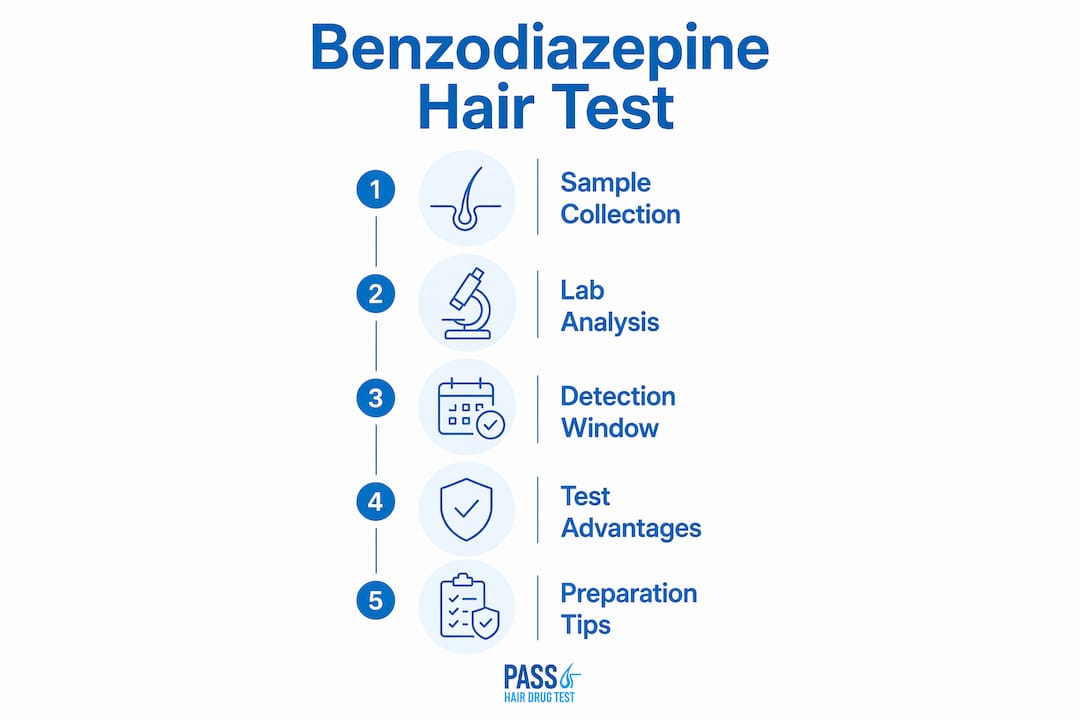
The lab runs two stages. First, an immunoassay screen sweeps the sample quickly for the presence of benzodiazepines. It’s high-throughput and sensitive, but it can produce cross-reactive results and lacks the specificity to stand alone as a final answer.
The second stage is what actually determines your result. LC‑MS/MS confirmation identifies and quantifies specific benzodiazepines and their metabolites with lower limits of quantification typically between 0.5 and 5 pg/mg. At that sensitivity, even trace residual amounts that survive a cleansing session can still register.
The lab’s decontamination step matters here. Before extraction, specimens go through wash steps using solvents like dichloromethane and water to strip external surface contamination. That means any residue sitting on the outside of the hair strand is removed by the lab itself before analysis begins. What the instrument is measuring is what’s embedded in the cortex.
Key points about the lab process:
- A positive immunoassay screen triggers LC‑MS/MS; a negative screen typically ends the process.
- Cutoffs vary by lab and testing program; some workplace panels use higher thresholds than forensic panels.
- LC‑MS/MS can distinguish between specific benzodiazepines, so the confirmation result often names the compound.
- Mayo Clinic Labs notes that confirmation testing targets specific metabolites, not just parent drugs.
Do cleansing kits actually lower benzodiazepine levels?
The forensic toxicology consensus is clear on one point: metabolites are embedded in the hair cortex during growth, not just sitting on the surface. Surface washing, including the lab’s own decontamination step, removes external residue. The harder problem is the metabolites locked inside the shaft.
Forensic literature consistently shows that because metabolites become part of the hair matrix during growth, effective cleansing needs to reach embedded compounds, not only surface residue. Success depends on dose, hair type, and the lab’s analytical sensitivity.
Where cleansing can help:
- Recent, low-dose, or infrequent exposure where baseline concentrations are closer to the lab’s cutoff.
- Multi-step protocols that open the hair cuticle and allow deeper penetration of cleansing agents.
- Hair that has already been chemically treated, which may have lower incorporated concentrations to begin with.
Where cleansing hits its limits:
- High-dose or long-term use deposits metabolites well above most labs’ cutoffs; reducing levels enough to go negative is much harder.
- LC‑MS/MS can detect some benzodiazepines at as low as 0.036 pg per hair strand, meaning even small residual amounts can register.
- Instrument sensitivity varies by lab; a more sensitive instrument requires fewer strands to confirm a positive.
Pro Tip: Cosmetic bleaching before a test can lower measured concentrations, but visibly damaged or over-processed hair is a red flag that labs and collection technicians notice immediately. Subtle is safer than aggressive.
Step-by-step prep plan using a cleansing kit
This is a pragmatic, kit-focused protocol, not a guarantee. The goal is to reduce residual metabolite levels as much as possible before your test date.
7–14 days before the test:
- Stop all benzodiazepine use immediately. Every additional dose adds to the hair record.
- Order your kit from Passhairdrugtest: the Macujo Aloe Rid Shampoo and Zydot Ultra Clean Shampoo are the core products; the combined Macujo Method kit bundles both.
- Begin Mike’s Macujo Method sessions. The protocol involves wetting hair, applying a salicylic acid-based treatment, working in the Macujo Aloe Rid Shampoo, and rinsing thoroughly. Aim for multiple sessions across the prep window, not just one or two.
- Space sessions to avoid scalp damage. Irritation is expected; open sores or raw skin are a sign to slow down.
24–48 hours before the test:
- Complete your final Macujo Method session.
- Follow with Zydot Ultra Clean Shampoo as the finishing wash. It’s designed as a day-of or day-before treatment to clear residual surface buildup.
Test day:
- Wash with Zydot Ultra Clean Shampoo the morning of the test.
- Do not use any styling products, dry shampoo, or leave-in treatments after washing.
- Avoid contact with anyone who uses substances; passive transfer from smoke or skin contact is a real, if minor, variable.
Pro Tip: Full product directions for each step are available on the Passhairdrugtest site. Read them before your first session, not the night before your test.
What red flags make labs look closer at your sample?
Collection technicians and labs watch for signs that a sample has been tampered with or is unsuitable for analysis.
- Shaved head or extremely short hair: If scalp hair is too short to collect 1.5 inches, the collector may take body hair, which has a longer and less predictable growth cycle.
- Visibly bleached or chemically damaged hair: Severe damage raises suspicion of deliberate alteration and may prompt a request for recollection or an alternative specimen.
- Inconsistent sample length: A sample that appears cut or thinned unevenly can trigger scrutiny.
- Missing chain-of-custody documentation: Any gap in the paperwork can invalidate the result or require a retest.
- Excessive external contamination: Unusual chemical residues on the hair surface, beyond what the lab’s wash step removes, can complicate interpretation.
If your sample is flagged, the collector may request a second collection or switch to an alternative specimen type. If you have a valid prescription for a benzodiazepine, presenting that documentation to the medical review officer is the correct step, not attempting to explain away a positive result after the fact.
Legal, employment, and safety considerations
Attempting to alter a hair sample carries real risks beyond the test itself.
- Employer policies: Many workplace drug testing programs treat a failed, refused, or adulterated test the same as a positive result.
- Consent and chain-of-custody: Signing the collection form confirms you provided the sample voluntarily and that it was handled properly. Disputes after signing are difficult.
- Prescription documentation: If you take benzodiazepines legally, a valid prescription reviewed by a medical review officer can explain a positive. This is the cleanest path when it applies.
- Legal exposure: Deliberately adulterating a federally mandated drug test (DOT-regulated positions, for example) can carry legal consequences beyond job loss.
- DIY chemical risks: Harsh acids and solvents used in some DIY protocols can cause chemical burns if misapplied. Stick to products with clear directions.
When in doubt, consult HR, an occupational health physician, or an employment attorney before the test, not after.
Which benzodiazepines does a hair test detect?
Hair testing panels vary by lab, but most target a broad range of benzodiazepines and their metabolites. Common targets include alprazolam (Xanax), diazepam (Valium), clonazepam (Klonopin), lorazepam (Ativan), temazepam, oxazepam, triazolam, flurazepam, and nordiazepam.
Detection challenges differ by compound. Triazolam, for example, incorporates into hair at very low concentrations, making it harder to detect at low doses but also harder to confirm at the lab’s cutoff. Compounds with hydroxyl or carboxyl groups tend to incorporate at lower rates, which can work in either direction depending on the lab’s sensitivity. Designer benzodiazepines, including flubromazepam and diclazepam, are increasingly included in updated immunoassay panels and LC‑MS/MS target lists. Lorazepam presents a specific challenge: some older immunoassay kits have limited cross-reactivity for it, meaning a screen might miss it while LC‑MS/MS confirmation would catch it.
How does hair testing compare to urine, blood, and saliva tests?
Each specimen type has a different detection window and use case.
Urine is the most common workplace test. Benzodiazepines typically appear within hours and can remain detectable for days to weeks depending on the compound and frequency of use. Urine confirmation also uses LC‑MS/MS and targets specific metabolites. The window is much shorter than hair, which is why urine tests are better for recent use and hair tests are better for establishing a longer exposure history.
Blood has the shortest window, usually hours to a few days, and is most useful for determining active impairment at a specific point in time.
Saliva sits between blood and urine, typically detecting use within the past 24–72 hours. It’s increasingly used for roadside impairment testing.
Hair is the only matrix that routinely covers a 90-day window from a single sample. That’s its primary advantage for employers and forensic investigators, and the primary challenge for anyone trying to prepare for one.
Key Takeaways
Benzodiazepines are detectable in hair for up to 90 days, confirmed by LC‑MS/MS at pg/mg sensitivity, and multi-step cleansing kits can reduce levels but cannot guarantee a negative result.
| Point | Details |
|---|---|
| Detection window | A 1.5-inch hair sample covers approximately 90 days at ~0.5 inches of growth per month. |
| LC‑MS/MS sensitivity | Confirmation testing detects benzodiazepines at 0.5–5 pg/mg; residual amounts after cleansing can still register. |
| Cleansing realistic limits | High-dose or long-term use makes a negative result harder; low-dose, recent exposure gives cleansing the best chance. |
| Avoid red flags | Shaved heads, visibly damaged hair, or broken chain-of-custody can trigger recollection or an alternative specimen. |
| Passhairdrugtest products | Macujo Aloe Rid Shampoo, Zydot Ultra Clean Shampoo, and the combined Macujo Method kit are available at Passhairdrugtest. |
The honest case for preparation over panic
Most articles in this space either oversell cleansing kits as a sure thing or dismiss them entirely. Neither position is accurate. The forensic literature is clear that metabolites embedded in the hair cortex are not easily removed, and LC‑MS/MS confirmation is sensitive enough to catch low residual concentrations. At the same time, the outcome genuinely depends on variables: how much you used, how often, your hair’s melanin content, and which lab is running the test. A person with recent, low-dose exposure and a thorough multi-step protocol is in a meaningfully different position than someone with months of daily use.
What the evidence actually supports is this: a well-executed multi-step cleansing regimen, started early enough and applied consistently, can reduce the concentration of metabolites in the hair shaft. Whether that reduction crosses the lab’s cutoff threshold is the variable nobody can promise. The right frame is risk reduction, not certainty. Anyone who tells you otherwise is selling you something stronger than the science supports.
Ready to prepare? Passhairdrugtest has the kit
Passhairdrugtest has spent more than 20 years focused on one thing: giving people facing a hair follicle drug test a practical, product-backed preparation option. The product line is built around the Macujo Aloe Rid Shampoo and Zydot Ultra Clean Shampoo, used together as part of Mike’s Macujo Method.
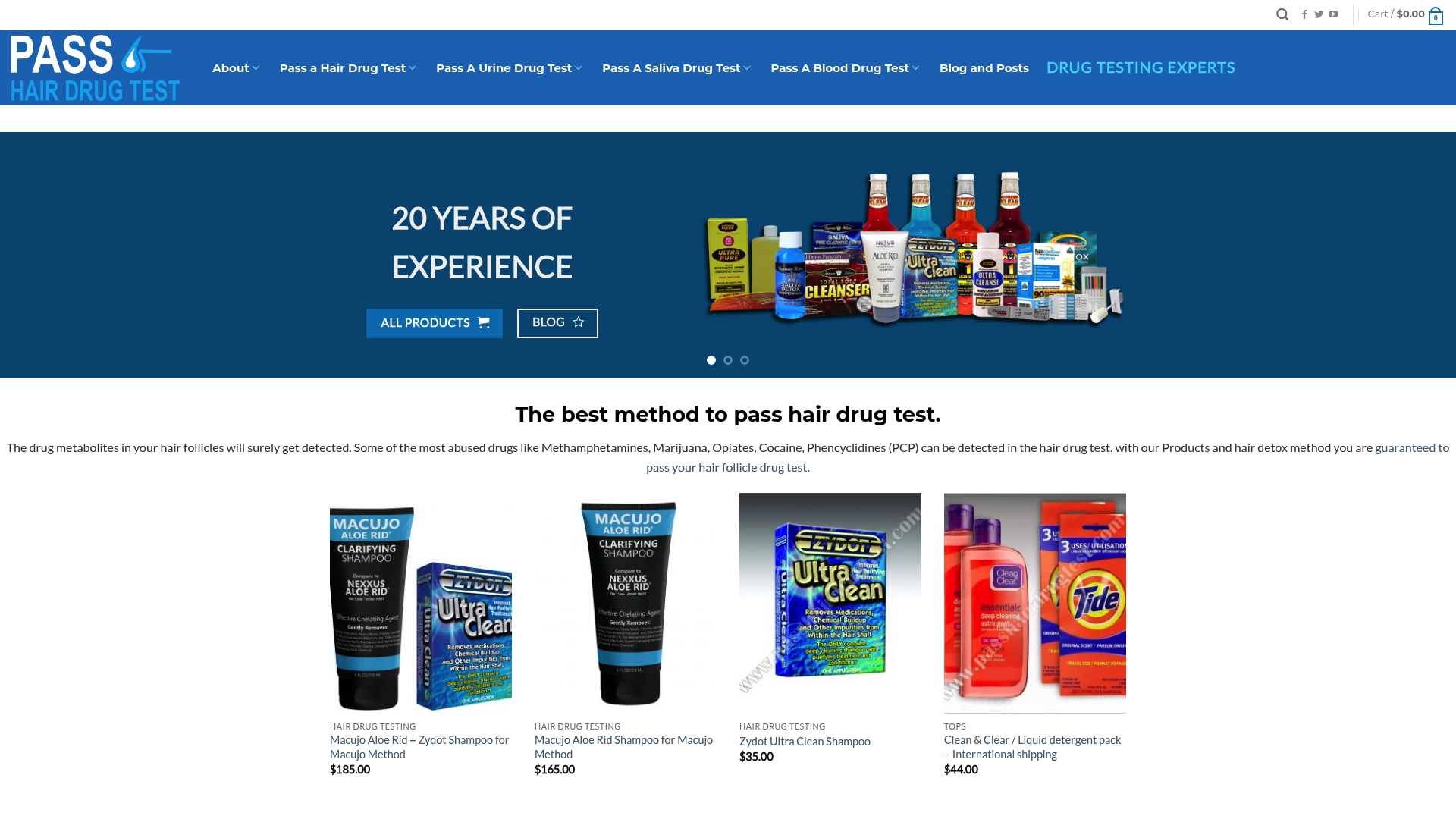
The hair testing shampoo kits page lists current bundle options, including the combined Aloe Rid and Zydot kit for the full Macujo protocol. Each kit ships in discreet packaging with full directions included. No guaranteed result is claimed, because no honest seller can make that promise. What you get is the most widely used multi-step cleansing protocol available, with the products that support it. Visit the kit page to check current availability and place your order before your prep window closes.
Authoritative sources and further reading
- Hair testing for hypnotics in the forensic field (PMC) — peer-reviewed review of hair incorporation mechanisms and detection methods for benzodiazepines and related hypnotics.
- UHPLC-MS/MS validated method for benzodiazepines in hair (PubMed) — LC‑MS/MS method validation study with LLOQ data and workplace drug testing application.
- Immunoassay screening vs. LC‑MS/MS for benzodiazepines in urine (PMC) — comparative study of immunoassay sensitivity and specificity versus LC‑MS/MS confirmation.
- Mayo Clinic Labs: Benzodiazepines Confirmation, Urine — clinical lab documentation on metabolites targeted in confirmation testing.
This article is general information, not medical or legal advice. Confirm current testing standards and your specific situation with a qualified medical professional, your employer’s medical review officer, or an attorney.
Recommended
- Hair Drug Test Information – Pass Hair Drug Test
- The Science Behind the Hair Drug Test – Pass Hair Drug Test
- Hair Follicle Drug Test Information – Pass Hair Drug Test
- Pass hair Drug Test
