No products in the cart.
Uncategorized
Facing a Hair Test: Can Relaxers Reduce Drug Levels to 5–67%?
11
Sep
Sep
Chemical relaxers are not a reliable way to beat a hair follicle drug test. Treat any at-home method as risk reduction, not a guarantee, and read the evidence below before you decide what to do next.
TL;DR:
- Chemical relaxers can reduce drug residue in hair by 5% to 67%, but results are inconsistent and depend on the drug type, treatment, and hair condition.
- Lab studies show household products can significantly lower THC levels, but the effectiveness varies and does not guarantee passing a drug test.
- Rinsing or chemically treating hair does not reliably remove drug metabolites, especially if the lab uses precise testing methods like LC-MS/MS.
- Short-term or last-minute attempts at detox protocols are unlikely to fully eliminate drug traces and pose risks of hair and scalp damage.
- Using multiple wash cycles with structured detox shampoo protocols offers the best chance for reduction but still cannot guarantee a negative test result.
Table of Contents
Table of Contents
- Why Relaxers Can Lower Drug Concentrations in Hair
- What Do Controlled Studies Actually Show About At-Home Methods?
- How Labs Actually Collect and Test Your Hair
- What Should You Actually Do Before a Test?
- Why We Give You the Cautious Version, Not the Easy Answer
- If You Decide to Try a Product-Based Approach
- Sources
Why Relaxers Can Lower Drug Concentrations in Hair
Alkaline relaxers work by breaking down the disulfide bonds in keratin, the protein that makes up your hair shaft. That same chemical process that straightens curl pattern also opens the hair’s cuticle and cortex, which lets some drug residues leach out during the treatment.
Forensic researchers have measured this directly. One study found that after chemical straightening, remaining drug concentrations in treated hair ranged anywhere from 5% to 67% of the original amount, depending on the drug tested and the treatment used. That is a massive range, and it tells you the effect is inconsistent rather than dependable.
A few things drive that inconsistency:
- Cocaine and its metabolites tend to break down more under alkaline exposure than THC does.
- Single applications produce smaller reductions than repeated or prolonged exposure.
- Hair porosity, prior damage, and how long the relaxer sits all change the outcome.
Labs also run confirmation testing with LC-MS/MS, a method sensitive enough to detect residues far below what a home test would catch. A partial reduction that feels significant to you may not move the needle against a lab’s cutoff at all.
What Do Controlled Studies Actually Show About At-Home Methods?
The strongest data point comes from a peer-reviewed study testing five common household and marketed products, including a detox shampoo and a plain drugstore shampoo, against THC-positive hair samples. After three 30-minute wash cycles, mean THC reductions were substantial for several common household products, but statistical significance varied by product.
- Desderman disinfectant, Seborin hair tonic, vodka, Zydot shampoo, and Head & Shoulders shampoo all produced measurable THC reductions to varying degrees.
These numbers came from controlled lab testing, not real-world conditions, and researchers found that not every reduction reached statistical significance, meaning some results could reflect natural variation rather than a true treatment effect, according to the study on everyday products and THC concentrations.
Separate research on aggressive homemade protocols, combining baking soda, salicylic acid, and bleach, found reductions as high as about 90% for cocaine in some experimental setups, while THC showed less reduction with the same treatment, per research on homemade hair treatments and drug concentrations. That gap between drugs matters enormously if THC is what you are worried about.
One more wrinkle: hair that looks visually undamaged after treatment can still carry chemical markers a trained lab technician recognizes. In-vitro results, meaning tests run on isolated hair samples in a lab, do not always translate cleanly to in-vivo conditions, meaning a real person’s hair with its own oil production, growth cycle, and prior chemical history.
How Labs Actually Collect and Test Your Hair
Standard collection pulls about 100 milligrams of hair, roughly 90 to 120 strands, cut close to the scalp. A 1.5 inch segment closest to the scalp represents about 90 days of history, according to LabCorp’s hair testing protocol. That segment length is why the term “hair follicle test” is technically a misnomer. Labs test the cut hair shaft, not the follicle itself, since plucking hair for the root is uncomfortable and not standard practice for donors.
Testing happens in two stages:
- An initial immunoassay screening flags samples above a preliminary cutoff.
- Confirmed positives move to LC-MS/MS, a far more precise method that identifies specific drug metabolites rather than just a general chemical signature.
Before either step, most labs run a decontamination wash and test that wash solution separately. If metabolites, meaning the byproducts your body creates after processing a drug, show up consistently inside the hair after washing, that points to ingestion rather than surface contamination, according to National Institute of Justice reporting. This is precisely why rinsing hair with a product, even a good one, does not guarantee a clean result. Metabolite detection is built specifically to catch what surface removal misses.
What Should You Actually Do Before a Test?
Start with what not to do. Over-processing hair with repeated bleach, relaxer, or acid treatments in a short window does not reliably scale the benefit, and it carries real risk of chemical burns, scalp irritation, and hair breakage. Aggressive protocols tested in labs used controlled concentrations and timing; replicating that at home without guidance is a different risk profile entirely.
Here is a more realistic path if you are facing a test with limited time:
- Get honest about your timeline. A test scheduled tomorrow leaves you far fewer options than one scheduled in two weeks.
- Ask whether an alternative specimen is possible. Some employers accept oral fluid or urine testing, which carry shorter detection windows than hair.
- Document any recent chemical treatment. If you colored, relaxed, or bleached your hair recently for unrelated reasons, note the date. This matters if a lab technician flags your sample and a retest or alternate site collection becomes necessary.
- Follow product instructions exactly, if you choose that route. Skipping steps or shortening wait times in a multi-step protocol undermines whatever chance it had of working.
- Set realistic expectations. No shampoo, relaxer, or combination protocol has been shown to reliably produce a negative result across all drugs and all lab cutoffs.
Pro Tip: If you’re going to try a product-based approach, start as early as possible. Every study showing meaningful reductions involved multiple wash cycles or repeated applications, not a single last-minute attempt the night before your appointment.
If you want to understand the broader test mechanics before deciding on any product, our hair follicle drug test information page walks through what actually gets analyzed and why timing changes your odds.
Why We Give You the Cautious Version, Not the Easy Answer
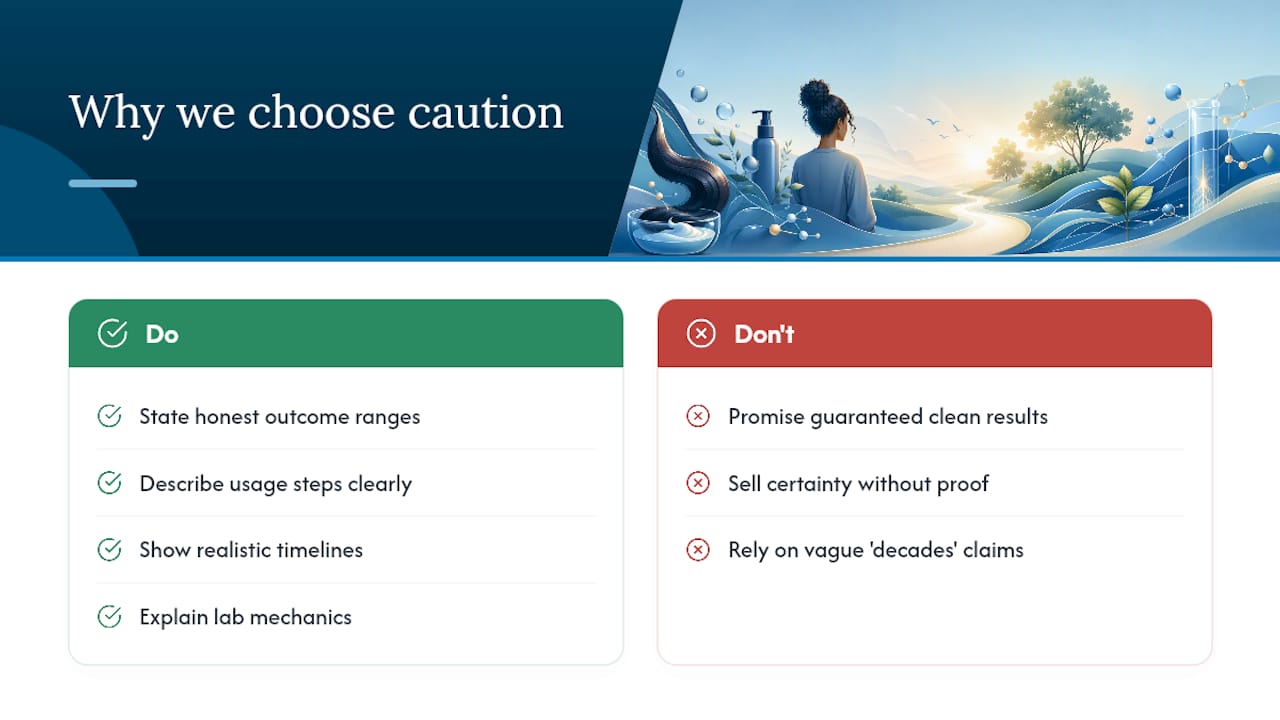
Some companies have claimed decades of experience in the drug testing and detox product industry, but the forensic literature is messy, and anyone promising a guaranteed clean result is not reading the same studies others are. They reflect real variability in how different drugs bind to hair and how different chemistries strip them out.
We would rather tell you the honest range of outcomes than sell you certainty we cannot back up. That is why our product pages describe usage steps and realistic timelines rather than promises, and it is why this article spends more words on lab mechanics than on hype.
— MIchael
If You Decide to Try a Product-Based Approach
If you’re weighing a product route, know what you’re actually buying into: a documented multi-step process, not a magic fix. Passhairdrugtest built its reputation around three specific tools, Macujo Aloe Rid Shampoo, Zydot Ultra Clean Shampoo, and Mike’s Macujo Method, a structured multi-step protocol built around repeated washing cycles rather than a single rinse.
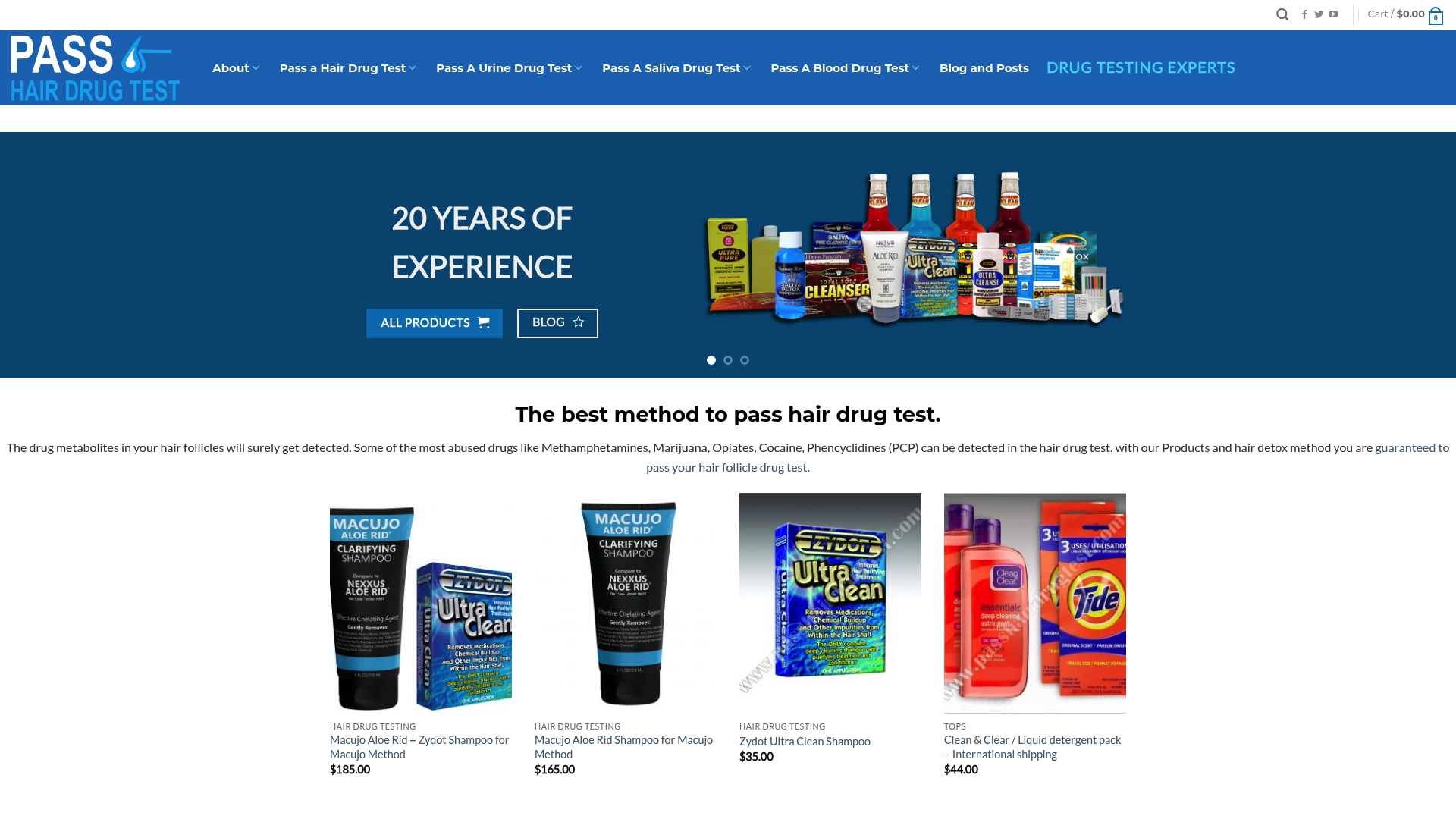
Start at our best hair detox shampoo page to compare kit options, or go straight to the hair testing shampoo kits page if you already know the Macujo approach fits your timeline. Every kit comes with written instructions, and following them precisely, in the right order, for the full duration, matters more than which specific product you pick.
Here is the realistic checklist before you buy anything: confirm how many days you have before testing, read the full instructions before your first wash (not during it), and understand that no product on the market, ours included, publishes a guaranteed pass rate because the underlying science does not support that claim. What we can offer is a protocol built on decades of customer feedback and the same forensic principles covered above. If your timeline is short, how to use detox shampoo walks through the application steps so you are not guessing the night before your appointment.
Sources
- Effects of commercially available everyday products on THC concentrations in hair samples (PMC)
- Hair analysis: Assessment of homemade hair treatment effects on drug concentrations in the keratin matrix (DOI)
- Detecting drugs in hair: is it drug use or environmental contamination? (NIJ)
- Hair drug testing (LabCorp)
Recommended
- Bleach Lowers Lab Numbers but Doesn’t Guarantee a Negative Drug Test
- How Can I Pass a Hair Drug Test?
- How to pass hair drug test
- The Science Behind the Hair Drug Test
