Uncategorized
Two Decades of Evidence: What Hair Drug Test Myths Get Wrong
Oct
Hair follicle tests do detect drug exposure with meaningful reliability, and most of the popular “tricks” for beating them do not work the way forums claim. Detection depends on the drug, the dose, the hair itself, and the lab’s protocols, and any positive result should go through confirmatory testing before anyone treats it as final. The sections below walk through why.
TL;DR:
- Hair drug tests detect drug exposure through metabolites embedded in the hair, with a typical 1.5-inch sample representing roughly 90 days of growth, but individual hair growth rates vary.
- Cosmetic treatments like bleaching and dyeing can reduce detectable drug levels but do not reliably erase them, and visible damage may lead to extra lab scrutiny.
- Confirmatory testing with chromatography and metabolite analysis is essential to validate initial screening results, which can produce false positives if relied upon alone.
- External contamination is addressed through wash protocols and metabolite detection, but environmental exposure can still influence results if not properly accounted for.
- Success stories about beating hair tests from forum tips are likely anecdotal, as official lab protocols are designed to prevent false negatives or positives regardless of cosmetic or environmental factors.
Table of Contents
Table of Contents
- How Hair Follicle Drug Tests Work and What They Can Detect
- Common Hair Drug Test Myths, Debunked One by One
- What Actually Skews Accuracy: Contamination, Cosmetics, and Hair Type
- Lab Safeguards That Cut Down False Results
- What to Do If You’re Facing a Test or a Positive Result
- What Two Decades in This Industry Actually Teaches About Detox Products
- Why Forum Success Stories Don’t Settle the Science
- Where These Claims Come From
- Where to Learn More About Detox Product Options
- Sources
- FAQ
How Hair Follicle Drug Tests Work and What They Can Detect
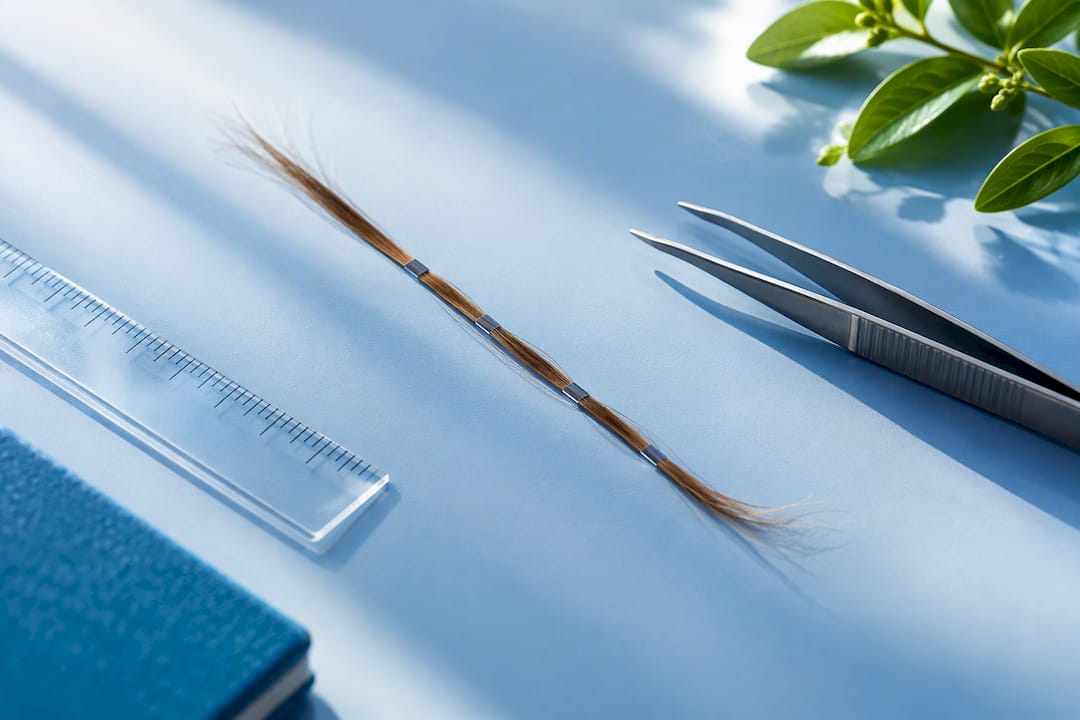
Drugs and their metabolites enter hair mainly through blood flowing to the hair follicle as the strand grows, though sweat and sebum from skin glands also deposit trace amounts, and external contact with drug residue can leave material on the surface. Because the follicle sits below the scalp, whatever circulates in the bloodstream during growth gets locked into the structure of the strand itself.
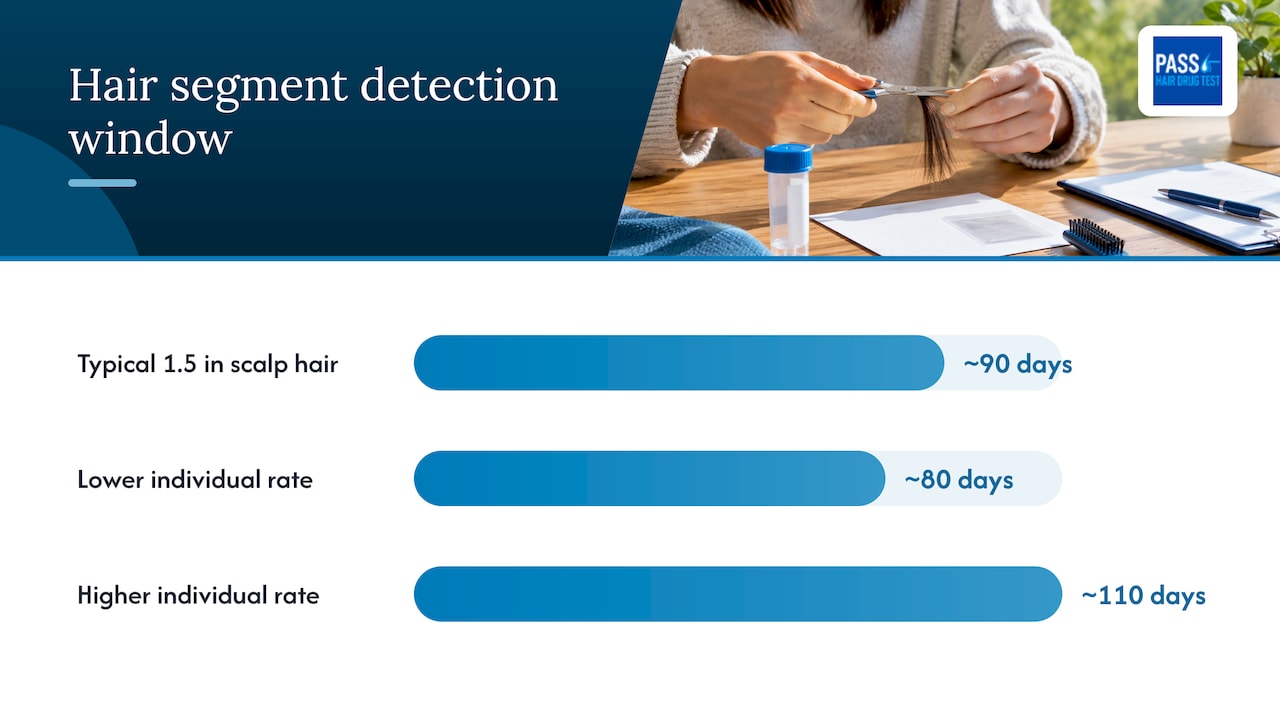
Labs standardize collection to make results comparable. A typical head hair sample is cut close to the scalp, and the lab tests the segment closest to the root, usually about 1.5 inches, which corresponds to roughly 90 days of growth. That figure is an average, not a guarantee: hair grows at different rates depending on genetics, age, hormones, and overall health, so the same 1.5 inch segment might represent 80 days for one person and 110 for another.
Body hair behaves differently. It grows more slowly and spends more time in a resting phase, so a body hair sample can reflect a broader and less precise timeframe than head hair, and interpreting it requires more caution than a straightforward 90 day estimate (Testing).
Most programs run a two-step process:
- A screening test, usually an immunoassay, flags samples that may contain drug metabolites.
- A confirmatory test, using chromatography paired with mass spectrometry, identifies and quantifies the specific substance.
Screening alone is fast but not specific enough to stand on its own, which is why regulated programs require the second step before anyone acts on a result. Anyone who wants a deeper breakdown of how test type affects the answer can compare hair testing against urine screening for a sense of how the two matrices differ in what they catch and when.
Common Hair Drug Test Myths, Debunked One by One
Most of what circulates about beating a hair test comes from forum posts, not lab data. Here is what the evidence actually supports.
- Myth: one-time use never shows up. A single exposure can incorporate detectable amounts into hair, especially with drugs that bind readily to melanin, though a single very light use is more likely to fall below a lab’s cutoff than repeated use. The honest answer is “it depends on dose and drug,” not a flat no.
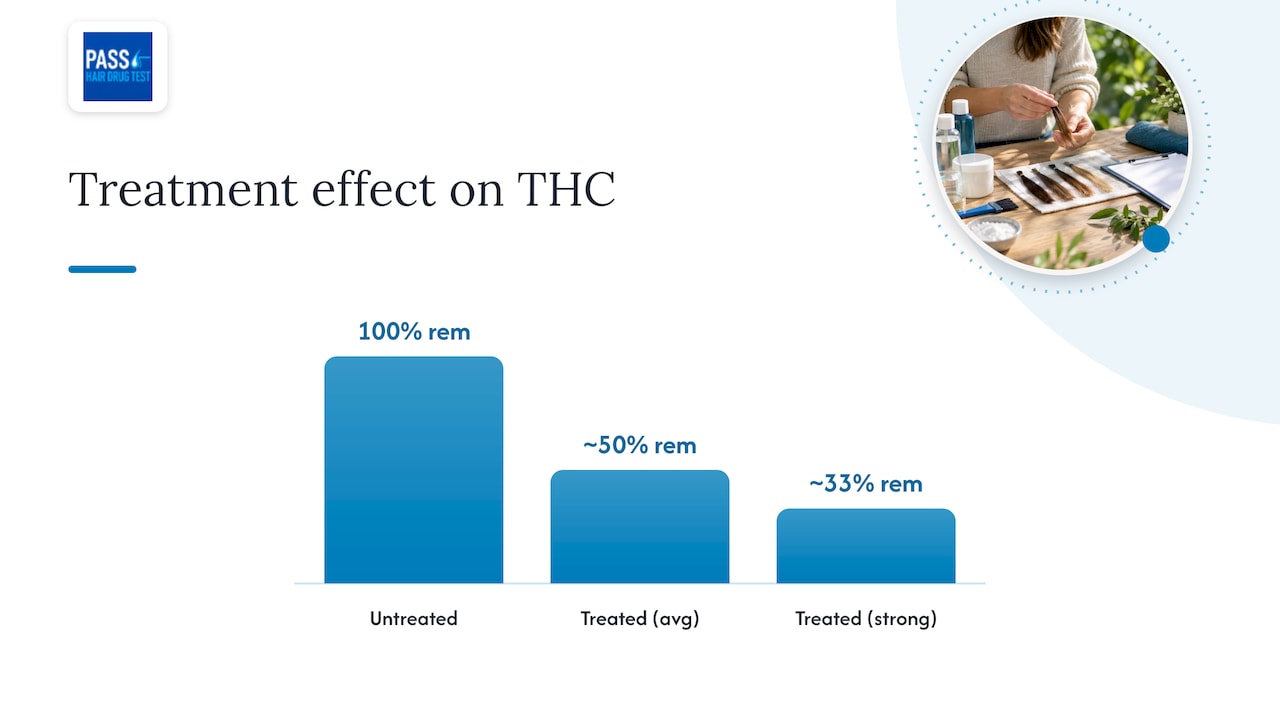
- Myth: bleach or detox shampoo always beats the test. Controlled research on cosmetic and commercial products found that some shampoos and treatments reduced measurable THC concentrations by an average of roughly 52% to 65% in tested samples, but the effect was inconsistent and did not reliably push every sample below the detection threshold (PMC study on product effects on hair). Some samples came back clean, others did not, which is exactly the kind of variability that explains why forum success stories are not a reliable predictor for any individual case.
- Myth: secondhand smoke or casual hair contact causes a positive. Surface contamination is a real phenomenon, which is precisely why labs run wash and decontamination steps before testing and rely on metabolite markers rather than raw drug presence to judge whether ingestion occurred.
- Myth: hair length gives an exact 90 day calendar. The 1.5 inch segment is a working average, not a precise clock, because individual growth rate varies enough to shift the real window by weeks in either direction.
- Myth: body hair and head hair give the same answer. Body hair’s slower growth and longer resting phase mean a positive result there can reflect a broader and older exposure period than a same-length head hair sample would.
- Myth: hair tests are frequently wrong. Screening tests can produce a false flag that gets filtered out at confirmation, but confirmatory chromatography and mass spectrometry testing is built specifically to correct for that, which is why regulated programs never finalize a result on the screen alone.
Pro Tip: Read any hair test result as a two-step process, screen then confirm, and treat a screen-only result as provisional rather than final.
Exceptions run through all of these: drug-specific incorporation rates, the difference between light and heavy exposure, and how sensitive a given lab’s equipment is, all shift where the real threshold sits.
What Actually Skews Accuracy: Contamination, Cosmetics, and Hair Type
A handful of variables matter more than most people assume, and none of them make a lab’s result meaningless on their own.
External contamination is the most cited concern, and it is also the one labs are best equipped to handle. Wash and decontamination steps followed by metabolite-specific testing help distinguish drug that was ingested from drug that simply landed on the surface of the hair.
Cosmetic treatments matter too, but not the way detox forums describe. Bleaching, dyeing, and perming typically lower the concentration of detectable analytes, yet peer-reviewed findings show these treatments do not reliably erase them, and labs record visible chemical or cosmetic damage, which can prompt additional scrutiny of a sample (2022 SoHT consensus guidelines).
Hair type plays a quieter role. Melanin content affects how strongly some drugs bind to the strand, which means darker, more heavily pigmented hair can concentrate certain substances more than lighter hair exposed to the same amount.
One data point worth remembering: treatments in a controlled study reduced measured THC concentrations by an average of roughly half to two-thirds depending on the product, illustrating that reduction is common but elimination is not guaranteed.
- Contamination is addressable through wash protocols and metabolite analysis, not eliminated by assumption.
- Cosmetic damage lowers concentrations but does not reliably clear them, and labs can flag visible treatment.
- Drug-specific incorporation differs, so occasional light use of one substance may register differently than the same pattern with another.
Lab Safeguards That Cut Down False Results
Modern hair testing labs follow a layered process specifically designed to catch both false positives and false negatives before a result reaches anyone’s employer or file.
The 2022 SoHT consensus guidelines recommend validated wash protocols, segmentation of the sample into defined lengths, and mass-spectrometry confirmation for any screen that comes back positive. These are not optional extras: they are the baseline for a defensible result.
- Immunoassay screening flags possible positives quickly but lacks the specificity to stand alone.
- Confirmatory testing with GC-MS or LC-MS/MS identifies and quantifies the exact substance present, which regulated programs require before a result is finalized (SAMHSA MRO Manual).
- Metabolite markers, such as benzoylecgonine for cocaine, help distinguish actual ingestion from surface contamination because metabolites form inside the body rather than sitting on the hair.
- A Medical Review Officer reviews results alongside chain-of-custody documentation, adding a layer of contextual judgment before anything becomes official.
This is also why a single screening result should never be treated as a verdict. The layered structure exists precisely because any one step, taken alone, is not reliable enough to carry that weight.
What to Do If You’re Facing a Test or a Positive Result
A positive screen is not the end of the process, and there are concrete steps worth taking before assuming the worst.
- Ask the employer or testing organization which lab and which matrix (hair, urine, saliva, or blood) will be used, since that affects both the detection window and the appeal process.
- Request the full lab report and chain-of-custody documentation rather than accepting a verbal summary.
- Confirm whether confirmatory testing (GC-MS or LC-MS/MS) and metabolite analysis were run, and ask specifically about wash results if contamination is a concern.
- If something seems off, ask about retesting or an independent lab analysis, and consider consulting a Medical Review Officer or legal counsel for anything tied to employment consequences.
- Document any recent hair treatments, prescriptions, or known environmental exposures that could plausibly explain a result, since this kind of record supports a review request.
Readers who want more background on how results should be weighed against other evidence can see how hair test findings interact with disclosed history and other matrices.
Pro Tip: Keep a simple written log of any hair treatments or medications around the time of testing. It costs nothing and can matter later if a result needs review.
What Two Decades in This Industry Actually Teaches About Detox Products
A business with long experience in the drug-testing and detox-product space has found that results vary by person, by substance, and by how heavily someone was exposed. Products can lower detectable concentrations in some cases, mirroring what controlled research on shampoos and cosmetic treatments has found, but no product changes that outcome for every user, and labs are equipped to notice cosmetic tampering or chemical damage during collection.
The most useful approach pairs a factual understanding of how testing works, the kind laid out in this article, with the same official lab guidance and MRO direction that governs how any result actually gets interpreted. Neither a shampoo nor a myth from a forum overrides that process.
Why Forum Success Stories Don’t Settle the Science
Anecdotes about beating a hair test spread easily because people love sharing a win and almost never post about the test they failed. That survivorship bias makes shampoo tricks and home remedies look far more consistent than the controlled research actually shows.
Lab protocols, SoHT consensus guidance, and confirmatory chromatography exist precisely because they don’t rely on someone’s memory of what worked once. When a forum post and a peer-reviewed study disagree, the study should carry the weight, and readers are better served trusting official procedure over a stranger’s outcome.
— MIchael
Where These Claims Come From
Readers who want to verify any of the above can go straight to the primary documents: the SAMHSA MRO Manual for confirmatory testing rules, the 2022 SoHT consensus guidelines for lab-standard protocols, the PMC study on product effects for controlled shampoo data, and the 2025 WIREs Forensic Science review for a current look at hair testing’s strengths and limits.
Where to Learn More About Detox Product Options
If you’re researching hair-cleansing products rather than just the science behind testing, there are detox shampoos, multi-step cleansing kits, and informational guides available that are built around that research, without promising a guaranteed outcome for every user or exposure level.
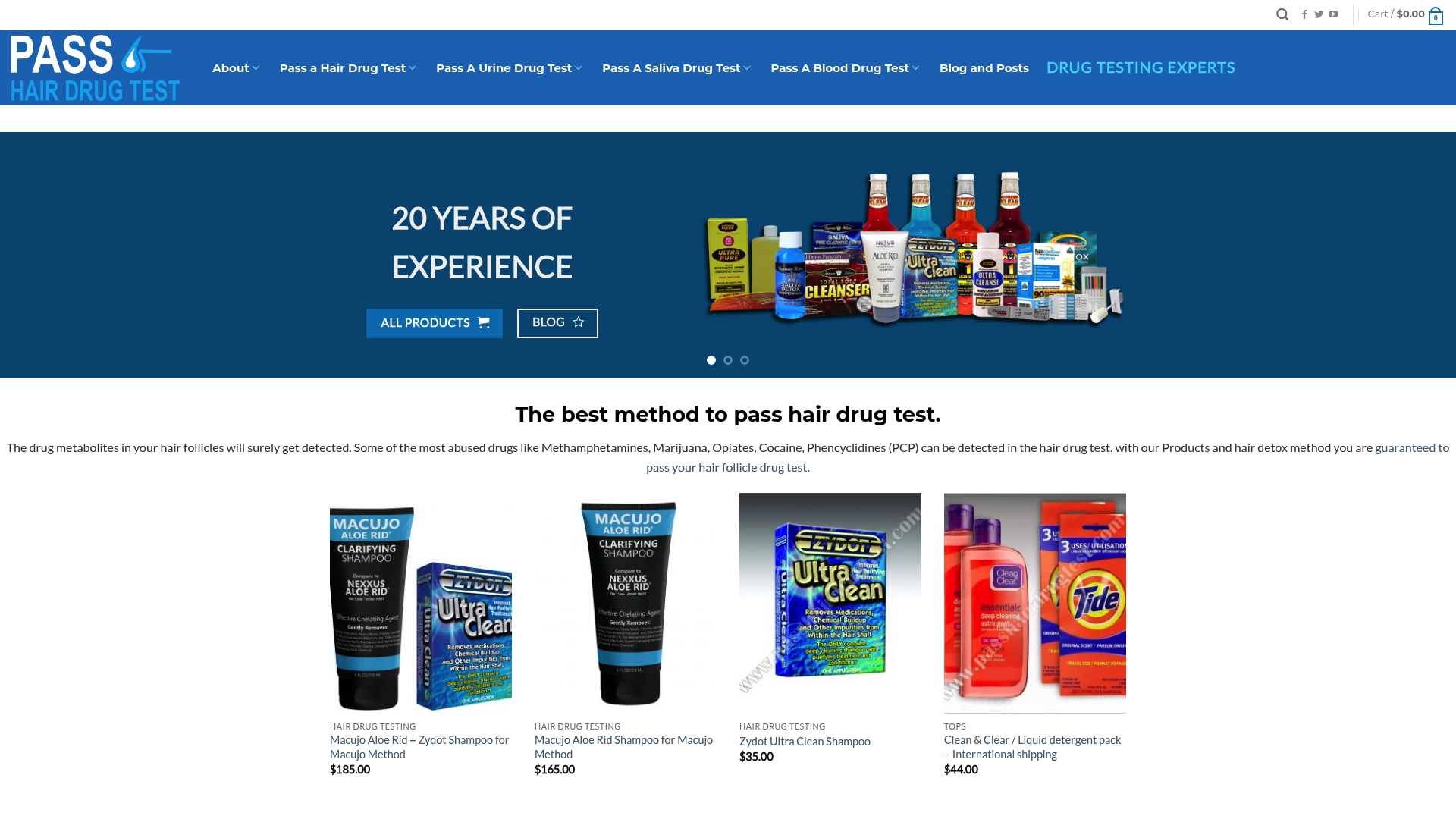
- Detox shampoos and cleansing kits are listed on the products page, organized by method and use case.
- Readers who want the fuller picture before buying anything can start with the hair drug test information page.
- Anyone wanting the instructional side can review the shampoo and method guide for how these products are meant to be used.
None of this replaces the lab and legal steps covered earlier. It’s simply where to look if you want to understand the product side of this industry with the same level of detail this article gave the science.
Sources
- 2022 SoHT consensus on general recommendations for hair testing
- Medical Review Officer (MRO) Manual — SAMHSA / HHS Mandatory Guidelines
- Study of cosmetic and commercial product effects on THC concentrations in hair (PMC)
- Hair testing in forensic toxicology: recent insights from root to tip (WIREs Forensic Science)
FAQ
What can throw off a hair follicle test?
External contamination, such as contact with drug residue in the environment, is the main factor that can complicate results, which is why labs run wash and decontamination steps before testing. Cosmetic treatments like bleaching or dyeing can also lower detectable concentrations, and heavily damaged hair may prompt extra scrutiny during collection.
How long can a hair follicle test detect drugs?
A standard head hair sample tests the segment closest to the scalp, roughly 1.5 inches, which corresponds to an approximate 90 day window, though individual growth rate can shift that estimate (SoHT consensus guidelines). Body hair can reflect a longer and less predictable timeframe because it grows more slowly and spends more time in a resting phase.
How often are hair follicle tests wrong?
Screening tests can occasionally flag a false positive, which is exactly why regulated programs require confirmatory testing with chromatography and mass spectrometry before finalizing any result (SAMHSA MRO Manual). A result that only went through the initial screen should be treated as provisional rather than conclusive.
How accurate is a hair strand test for drugs?
Confirmatory testing that pairs chromatography with mass spectrometry is considered reliable enough for regulated workplace and legal programs to depend on, since it identifies and quantifies the specific substance rather than just flagging a possible match. Accuracy still depends on proper wash protocols, segmentation, and lab handling, which is why standardized procedures matter as much as the underlying technology.
Recommended
- The Science Behind the Hair Drug Test
- Hair Drug Test Accuracy: What the Science Actually Shows
- How to Prepare for a Hair Test the Right Way
- Bentonite Clay and Hair Drug Tests: What the Evidence Shows
