Uncategorized
Home Urine Drug Test Kit: Your Private Pre-Screen Guide
Aug
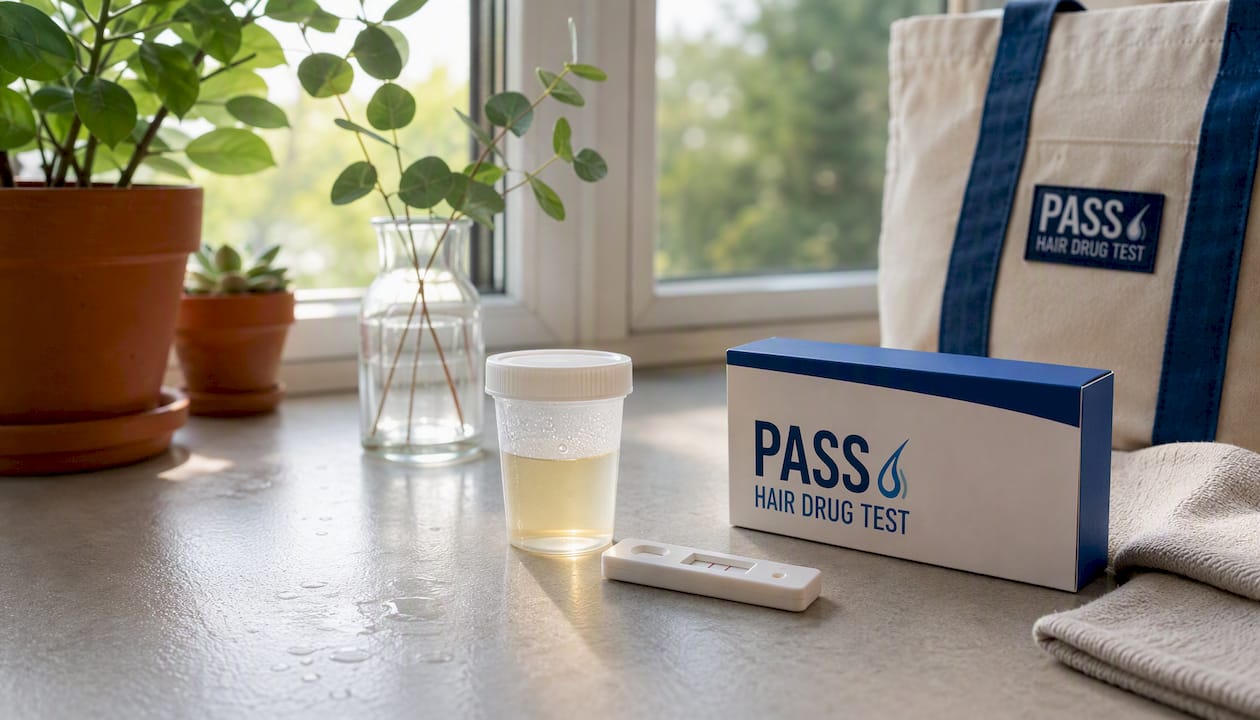
A home urine drug test kit is the right first move if you want a fast, private answer before a formal test. Buy a CLIA-waived instant dip or cup kit, follow the instructions exactly, and treat any positive as preliminary. For employment or legal situations, a positive at-home result requires laboratory confirmation before it means anything official.
Table of Contents
Table of Contents
- How do home urine drug test kits work?
- Detection windows: urine versus hair and when each one matters
- How accurate are home urine drug tests?
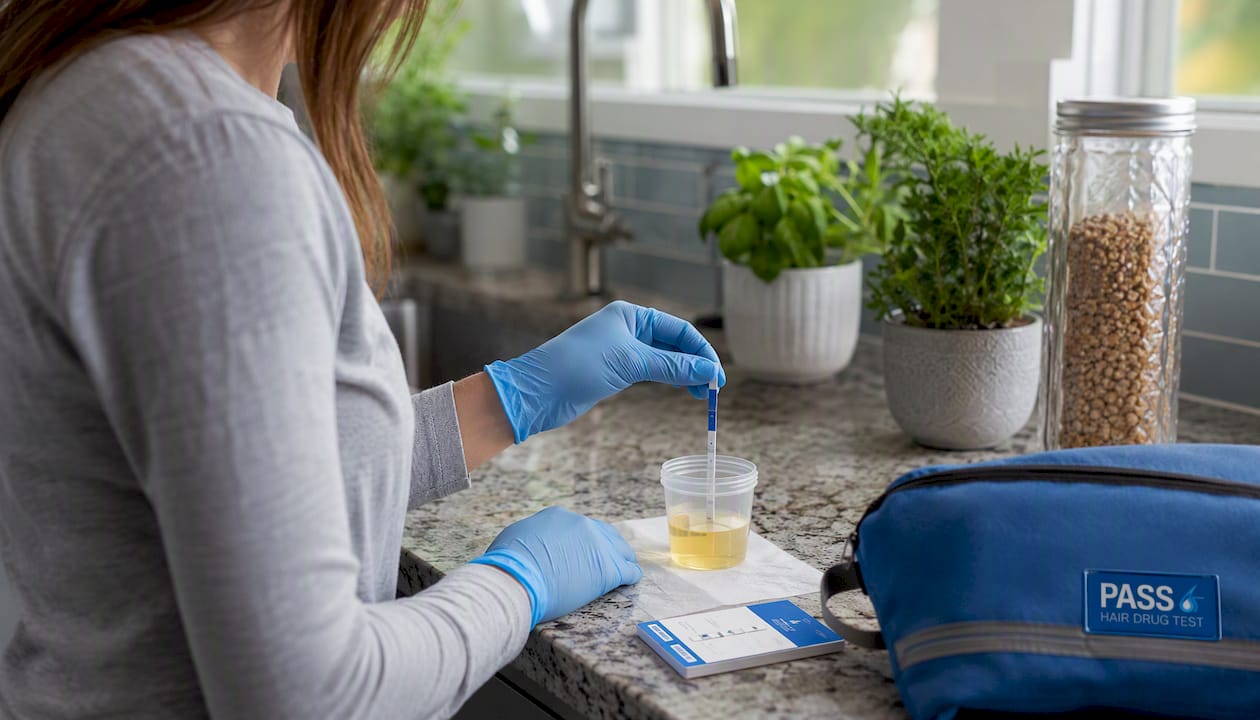
- How to use a home urine drug test kit correctly
- How to interpret results and what to do next
- How to choose a reliable home urine drug test kit
- Passhairdrugtest has a home urine kit built for private pre-screening
- Key Takeaways
- Why urine kits tell only half the story before a hair test
- Authoritative sources and further reading
How do home urine drug test kits work?
These kits use immunoassay technology. The test strip contains antibodies that bind to specific drug metabolites in urine. When metabolite levels exceed a preset cutoff concentration, the antibody-drug reaction blocks a colored line from forming, producing a positive result. Below the cutoff, the line appears, and the result reads negative.
Two kit types cover most situations:
- Instant dip/cup immunoassay kits: You collect urine, dip the strip or use a self-contained cup, and read results in 2–5 minutes. These are the fastest option for a private pre-screen. Many CLIA-waived kits use the same immunoassay methods as professional settings, though results are still preliminary.
- Lab-mailable kits: You collect the sample at home and ship it to a certified laboratory. Some retail kits include prepaid mailers and preaddressed packaging for this purpose. Results typically arrive within about 5 business days after the lab receives the sample, and you get a quantitative lab report rather than a pass/fail line.
Most instant kits also include specimen validity checks: a temperature strip on the collection cup confirms the sample is body-temperature fresh, and some cups test creatinine and pH to flag diluted or adulterated samples.
Detection windows: urine versus hair and when each one matters
Urine and hair tests are not interchangeable. They answer different questions.
| Substance | Typical urine detection window | Hair follicle detection window |
|---|---|---|
| THC (occasional use) | 3–4 days | Up to 90 days |
| THC (heavy/daily use) | Up to 30 days | Up to 90 days |
| Cocaine | 2–4 days | Up to 90 days |
| Opiates | 2–4 days | Up to 90 days |
| Amphetamines | 1–3 days | Up to 90 days |
| Benzodiazepines | 3–7 days (short-acting) | Up to 90 days |
| MDMA | 2–4 days | Up to 90 days |
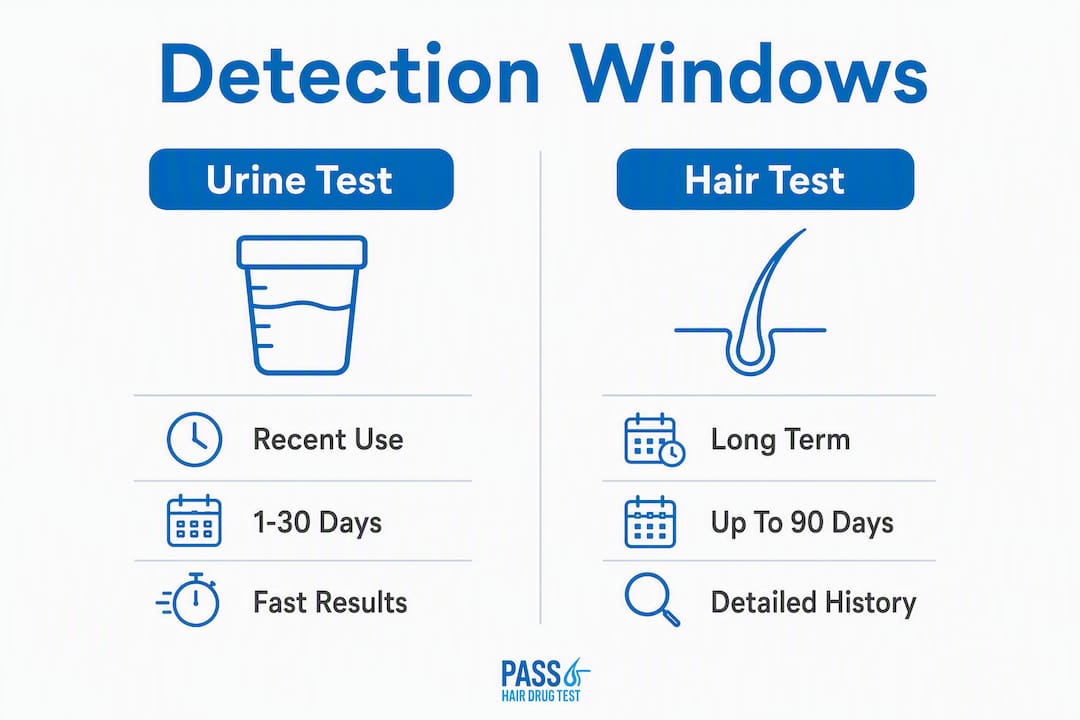
Urine is best for catching recent use within roughly 1–30 days, depending on the substance and how often you use it. Hair follicle tests look back up to 90 days and are specifically designed to detect habitual or repeated use patterns that urine misses entirely.
If your upcoming test is a hair follicle test, a urine pre-screen tells you about the last few days to a few weeks. It will not tell you whether your hair is clean. For that, you need to understand hair follicle drug testing and whether hair-detox preparation is appropriate for your situation.
Pro Tip: If your last use was more than 30 days ago and your urine screen is negative, that is a good sign for urine-based tests. It says nothing about your hair sample.
How accurate are home urine drug tests?
Accuracy is real but conditional. Some instant kits claim accuracy above 97% when properly administered, with specific cutoffs such as THC at 50 ng/mL, cocaine at 300 ng/mL, and amphetamines at 1,000 ng/mL. Those numbers come from manufacturer testing at designated cutoff levels. Deviate from the protocol and the accuracy claim no longer applies.
| Error type | Common causes | Examples |
|---|---|---|
| False positive | Cross-reactivity with legal substances | Ibuprofen (opiates), poppy seeds (morphine), certain antihistamines (amphetamines) |
| False negative | Testing too early, dilution, metabolic variation | Heavy water intake before testing, testing before peak metabolite excretion |
| Invalid result | Adulteration, temperature out of range, expired kit | Bleach or oxidizing agents added to sample |
Hydration is the most common source of skewed results. Drinking large amounts of fluid before testing dilutes creatinine and drug metabolite concentrations, potentially pushing a positive below the detection cutoff. Specimen validity checks catch many of these cases, but not all.
CLIA-waived status means the FDA has determined the test poses low risk when used correctly. It does not make the result definitive. For any employment or legal chain-of-custody situation, a positive home result is preliminary and requires lab confirmation before any formal action.
Key figure: Instant kits with specific cutoff concentrations can claim accuracy above 97% — but only when the user follows the manufacturer’s protocol exactly.
How to use a home urine drug test kit correctly
Getting the mechanics right matters more than which brand you pick. Following kit instructions closely is what separates a reliable screen from a wasted test.
- Check the expiration date. Expired kits degrade the antibody chemistry and produce unreliable results. Discard any kit past its printed date.
- Avoid excessive fluid intake for 2 hours before testing. Normal hydration is fine. Drinking large volumes of water right before testing risks a dilute result that may not reflect your actual status.
- Collect a midstream urine sample. Let the first few seconds of urine pass, then collect in the provided cup. Midstream samples have more consistent metabolite concentrations.
- Check the temperature strip immediately. A valid sample reads 90–100°F within 4 minutes of collection. Outside that range, the sample is invalid.
- Follow the strip or cup timing exactly. Most instant kits require a 5-minute development window. Reading results too early or too late changes what you see.
- Read results in good lighting. Even a faint line in the test zone counts as a negative. No line at all in the test zone is a positive.
- Document everything. Photograph the result next to the packaging, including the lot number and expiration date. Keep the packaging and any included mailer materials if you plan to send the sample for lab confirmation.
Pro Tip: If the result is positive, do not discard the kit or the sample. Photograph both and store the packaging. You will need that documentation if you pursue lab confirmation.
How to interpret results and what to do next
Negative result: A negative means drug metabolites were not detected above the kit’s cutoff at the time of testing. That is useful information, but it is a snapshot. If your last use was recent, retest closer to your actual test date. A negative on a urine screen does not confirm your hair is clean.
Positive result: Treat it as preliminary. A positive at-home result means the screen detected metabolites above the cutoff, but cross-reactivity and other factors can produce false positives. Next steps:
- Arrange laboratory confirmation through a certified lab or a mail-in kit with prepaid mailers.
- Document the at-home result with photos and preserve the packaging.
- If the test is employment-related, follow your employer’s chain-of-custody instructions. Do not attempt to alter or substitute the sample.
- Consider whether your upcoming test is a hair follicle test. A positive urine screen combined with a hair test in your future means hair-detox preparation deserves serious attention.
Invalid result: Repeat with a fresh kit. If you get a second invalid, use a lab-mailable kit for a confirmed collection. Preserve the invalid kit in case the invalidity is questioned later.
How to choose a reliable home urine drug test kit
Not all kits are equal. These criteria separate reliable options from low-quality products:
- Drug panel: Match the panel to what your employer or testing program screens for. A 5-panel kit misses substances a 12-panel test catches.
- Cutoff sensitivity: Lower cutoffs catch more positives but increase false-positive risk. Standard federal workplace cutoffs (THC at 50 ng/mL, for example) are a reasonable baseline.
- CLIA-waived status or FDA clearance: This is the minimum credibility marker for an OTC kit. It confirms the test has been reviewed for safety and basic performance.
- Specimen validity features: Temperature strips are standard. Creatinine and pH checks are better. These protect you if results are ever questioned.
- Mail-in confirmation option: Some retail kits include prepaid mailers. If there is any chance you will need a confirmable result, pay the extra cost for a kit that includes this.
- Expiration date and storage conditions: Check both before buying. Heat and humidity degrade immunoassay strips faster than the printed date assumes.
Retail instant tests typically cost less than lab-mailable kits, which carry a higher price but deliver a quantitative lab report. For a private pre-screen with no formal stakes, an instant kit is sufficient. For anything employment-related, the mail-in option is worth the difference.
Buying note: Kits sold by reputable online sellers often include detailed instructions and panel-specific cutoff information on the product page. Read that page before buying, not after.
Passhairdrugtest has a home urine kit built for private pre-screening
If you are facing a hair follicle test and want to screen yourself privately first, Passhairdrugtest offers a clean urine drug test option designed for exactly that use case. With more than 20 years in the drug-testing and detox-product industry, the site carries kits alongside detailed guidance on what the results mean and what to do next.
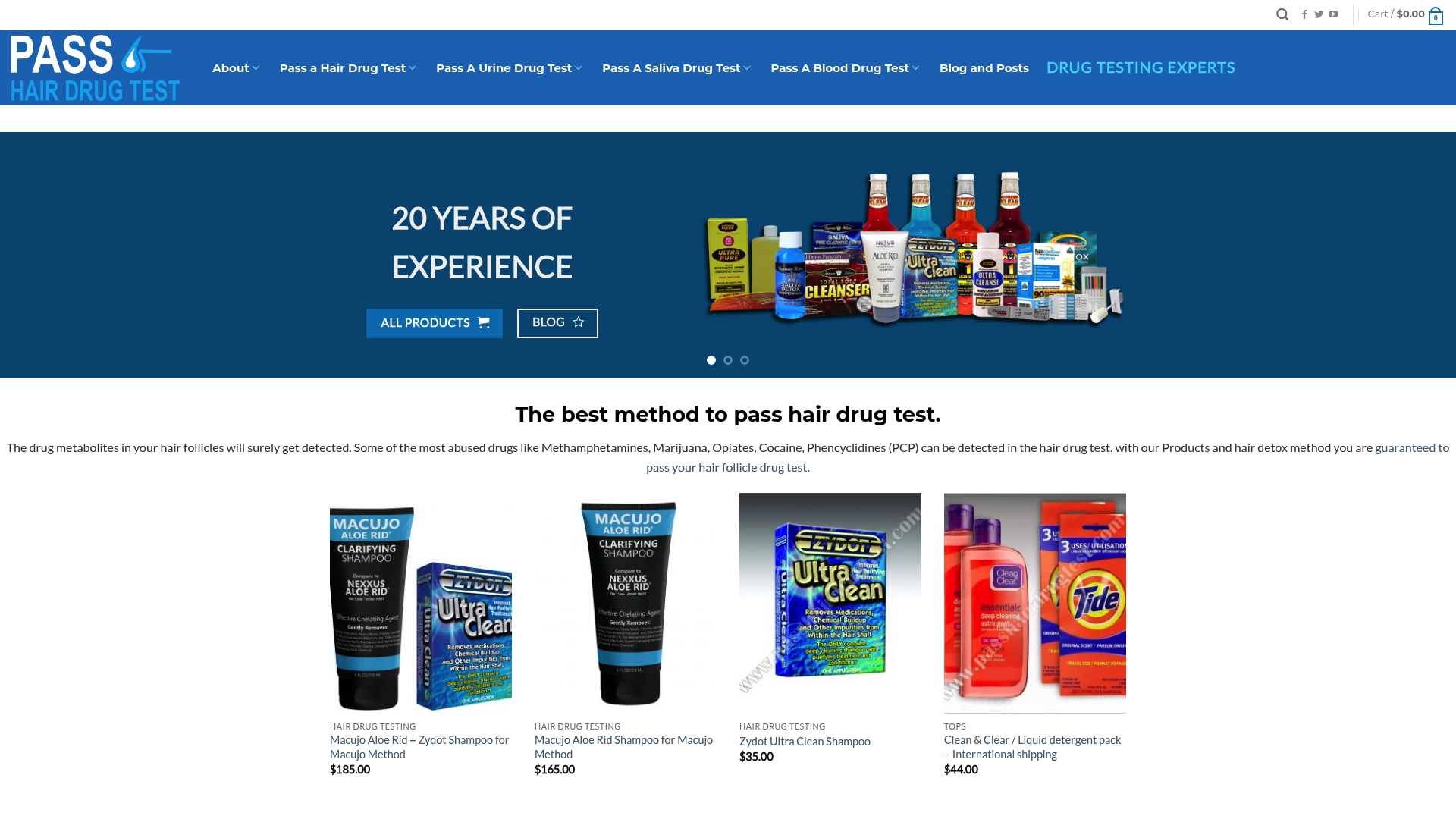
A positive at-home result is not the end of the process. It is the signal to move to lab confirmation and, if your upcoming test is a hair follicle test, to start hair-detox preparation immediately. Passhairdrugtest’s hair follicle shampoo kit and step-by-step guides are built for that next stage. Check the product pages, read the detection window guidance, and order what fits your timeline.
Key Takeaways
A home urine drug test kit is a reliable private pre-screen, but it only covers recent use — hair follicle tests look back up to 90 days, so a negative urine result does not mean your hair sample is clean.
| Point | Details |
|---|---|
| Urine vs. hair detection | Urine screens recent use (days to ~30 days); hair tests detect use up to 90 days back. |
| Positive results are preliminary | Any positive at-home result requires laboratory confirmation before employment or legal use. |
| Instructions determine accuracy | Following kit protocol exactly — timing, temperature check, hydration — is what makes results reliable. |
| Hair test prep is separate | A negative urine screen does not clear your hair; hair-detox preparation is a distinct next step. |
| Passhairdrugtest for both stages | Passhairdrugtest offers home urine kits for pre-screening and hair-detox products for follicle test preparation. |
Why urine kits tell only half the story before a hair test
Most people using an at-home urine screen before a hair follicle test are asking the wrong question. They want to know if they will pass. The urine kit answers a narrower question: did you use anything in the last few days to a few weeks? That is useful, but it is not the same thing.
Hair follicle tests are specifically designed to catch what urine misses. A single use three weeks ago may not show in urine but will almost certainly appear in a hair sample collected that same day. The 90-day window is not a technicality. It is the entire point of hair testing.
The smarter use of a home urine kit is as a baseline check, not a clearance test. If it comes back positive, you have an urgent problem on two fronts: recent use and likely hair contamination. If it comes back negative, you have answered the recent-use question and can focus entirely on hair preparation. Neither result tells you your hair is clean. That requires a different approach.
Authoritative sources and further reading
- At-Home Drug Tests: How They Work and What to Know | Testing.com — covers how immunoassay screening works, what makes results preliminary, and when lab confirmation is required.
- How To Test Privately For Drugs Without A Lab Visit | Ovus Medical — explains CLIA-waived status, privacy advantages, and why instruction adherence drives accuracy.
- FDA: Drugs of Abuse Home Use Test — the FDA’s own guidance on OTC drug test kits, including what clearance means and how to interpret results.
- Passhairdrugtest: Clean Urine Drug Test — product and guidance page for at-home urine screening options.
- Passhairdrugtest: Hair Follicle Drug Testing Guide — explains hair test methodology, detection windows, and preparation options for those facing a follicle test.
- Passhairdrugtest: Pass Urine Drug Test — preparation guidance for urine testing, including what affects results and how to approach the process.
This article is general information, not medical or legal advice. Confirm current testing standards and chain-of-custody requirements with your employer, testing facility, or a qualified professional.
Recommended
- Pass A Urine Drug Test – Pass Hair Drug Test
- Pass A Urine Drug Test – Pass Hair Drug Test
- Clean Urine Drug Test – Pass Hair Drug Test
- Cheat Urine Drug Test – Pass Hair Drug Test
