No products in the cart.
Uncategorized
Detox vs Clarifying Shampoo for Hair Drug Test Prep
29
Jul
Jul
When a hair follicle drug test is on the line, reach for a verified detox-style regimen, not a routine clarifying wash. Standard clarifying shampoos remove everyday oils and light product residue, but they rarely penetrate deep enough to address the embedded residues that drug tests detect. A true detox protocol pairs chelating agents with high-performance surfactants, and technique matters just as much as the formula itself.
Here’s what to do right now:
- Buy a verified detox kit from Passhairdrugtest, such as the Macujo Aloe Rid Shampoo or Zydot Ultra Clean Shampoo, both built around Mike’s Macujo Method.
- Start the regimen 7–14 days before your test to allow enough wash cycles for meaningful residue reduction.
- Follow the application technique exactly: wet thoroughly, massage the scalp for 60–90 seconds, hold the dwell time, and repeat as the protocol directs.
Pro Tip: A single clarifying wash is fine for weekly maintenance, but it is not a substitute for a structured detox protocol when you have a test coming up.
Table of Contents
Table of Contents
- What does each shampoo type actually remove?
- Which ingredients actually do the deep-cleaning work?
- How to apply a detox product so it actually works
- How do you pick the right product for test prep?
- What no shampoo can guarantee, and the real risks
- Recommended regimen and products for hair test prep
- Key Takeaways
- Why ingredient verification matters more than the label
- Ready to start your regimen?
- Useful sources
What does each shampoo type actually remove?
Clarifying shampoos are periodic, strong-surfactant formulas designed to cut through everyday oils, sweat, light product residue, and hard-water mineral film. They reset the scalp after a stretch of heavy dry shampoo or styling product use. Most formulators recommend them no more than once or twice a week for average hair, and less often for color-treated or dry hair.
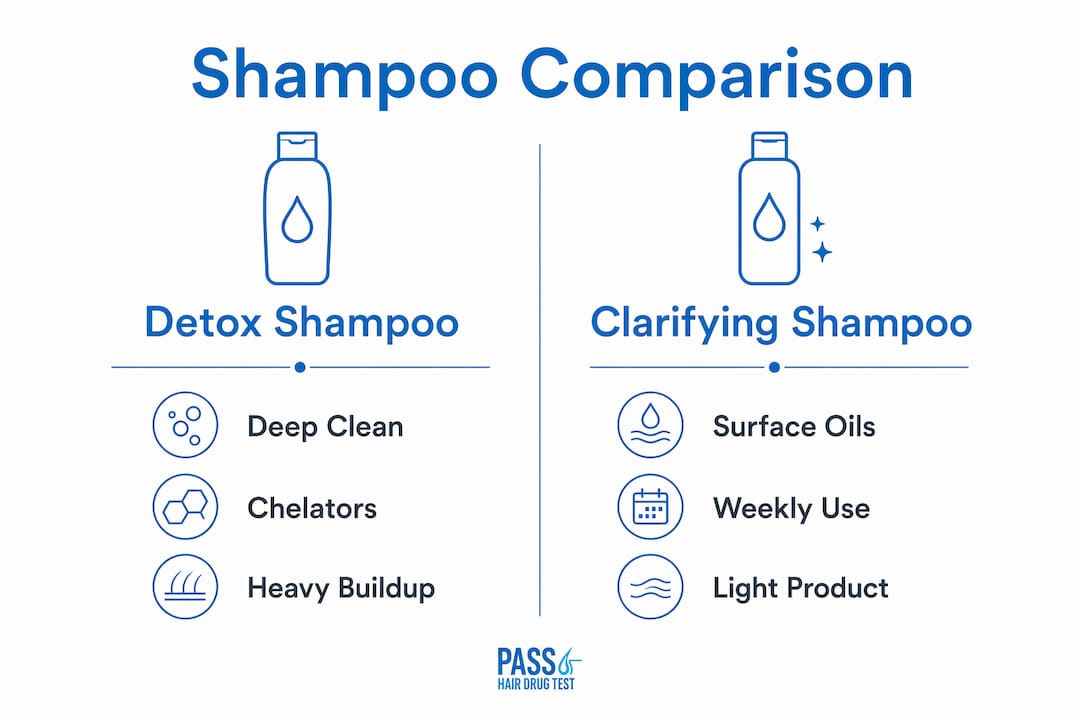
Detox shampoos, or detox protocols, go further. They target long-term, sticky residues from gels, waxes, and heavy styling products, plus some mineral and metal deposits, through chelation and more aggressive surfactant systems. Multi-step methods like Mike’s Macujo Method layer multiple products to maximize penetration.
The two categories overlap but serve different jobs:
- Clarifying: Weekly or bi-weekly maintenance, removes surface-level buildup, oils, and light residue.
- Detox protocol: Occasional deep reset, targets embedded residues and metal deposits, often multi-step.
- When to clarify: Hair feels heavy or greasy, styling products aren’t holding, routine reset needed.
- When to detox: Major buildup after months of heavy product use, or preparing for a high-stakes hair follicle test.
Which ingredients actually do the deep-cleaning work?
Ingredient functionality predicts deep-clean performance far better than marketing labels like “detox” or “purifying.” Here is what to look for on a product label:
Active ingredient classes and what they target:
- Chelating agents (disodium EDTA, tetrasodium EDTA, sodium phytate, citric acid salts): bind metal ions like copper, calcium, and magnesium so they rinse away. Hard-water minerals require chelation — basic surfactants alone won’t touch them.
- High-performance surfactants (sodium lauryl sulfate, sodium laureth sulfate, olefin sulfonate): dissolve synthetic polymers, silicones, and oils so they lift off the hair shaft.
- Gentle acids (salicylic acid, citric acid, lactic acid): clear sebum at the follicle level and help the cuticle lie flatter after a strong wash.
- Absorbents (activated charcoal, bentonite clay): pull surface oils and particles, though they do not replace chelators or surfactants for deep residue.
Quick label checklist before you buy:
- Chelator listed? (EDTA, phytate, or citrate)
- Strong surfactant present? (sulfate or equivalent anionic surfactant)
- pH modifier or acid included?
- Heavy conditioning oils or leave-in agents dominating the formula? (red flag — they deposit residue)
Marketing buzzwords like “minty tingle,” “natural,” or charcoal-only claims sound active but don’t guarantee deep-clean performance. A formula that leans on sensation without real chelation or surfactant strength may feel dramatic and do very little.
How to apply a detox product so it actually works
Correct application multiplies product efficacy. Experts consistently cite technique as the factor that separates a productive detox session from a wasted one.
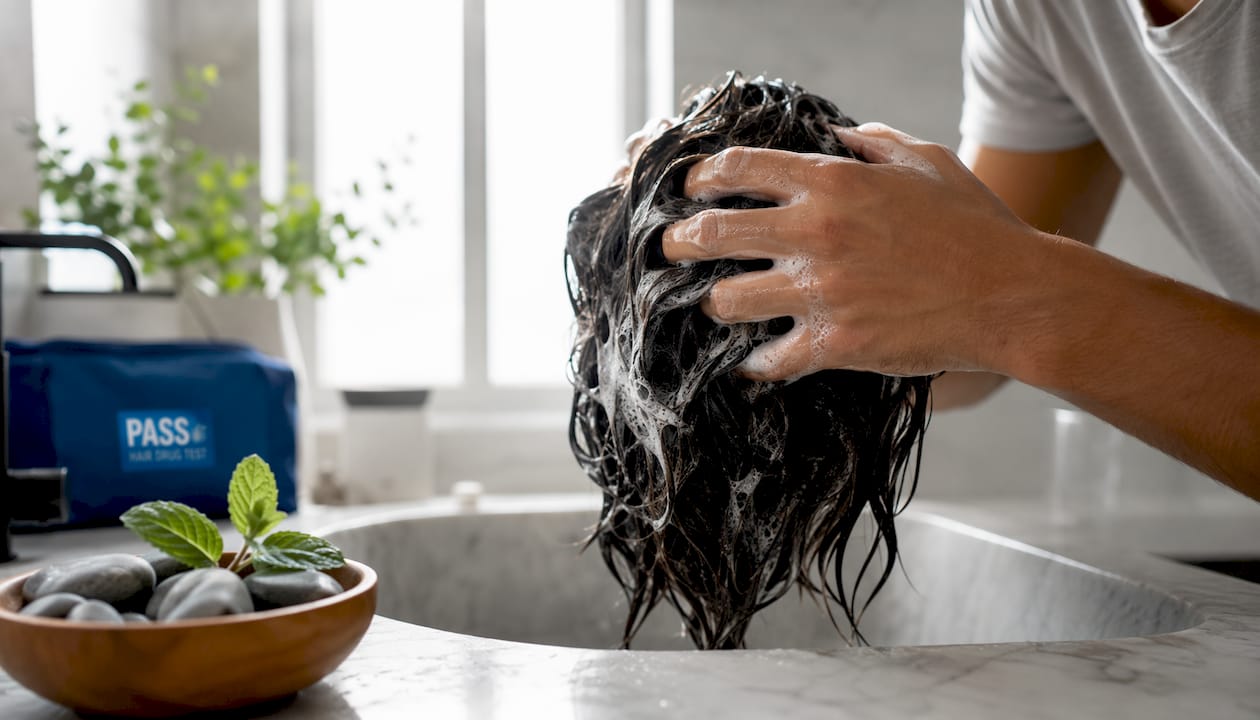
- Wet hair thoroughly. Saturate every strand and the scalp before applying any product. Dry or damp hair reduces product distribution and contact time.
- Apply the detox shampoo generously to the scalp and roots. Work it in with your fingertips, not your nails.
- Massage the scalp for 60–90 seconds. This mechanical action loosens deposits and drives the formula into the follicle zone.
- Hold the dwell time. Most detox formulas recommend 1–3 minutes of contact before rinsing. Don’t rush this step.
- Rinse completely with lukewarm water. Hot water can open the cuticle further and increase irritation after a heavy cleanse.
- Repeat the wash if the protocol calls for it. Many multi-step methods like Mike’s Macujo Method require a second pass.
- Deep condition immediately after. Over-stripping triggers compensatory sebum production and can damage the cuticle. A protein-repair or moisture-restoring conditioner after every heavy session is non-negotiable.
Timing guidance: Start the regimen 7–14 days before your test. Schedule deep detox washes every other day in the first week, then daily washes in the final 3–7 days. On the day before the test, do a final cleansing wash per kit instructions. On test day itself, apply no new products.
Pro Tip: After rinsing, run your fingers through your hair. If it squeaks slightly and feels lighter than usual, the surfactants did their job. If it still feels coated or waxy, repeat the wash in the problem zones before conditioning.
How do you pick the right product for test prep?
The decision rule is simple: routine maintenance calls for a clarifier; test-grade residue reduction requires a verified detox kit or a chelator-containing formula with a documented protocol.
What to look for:
- Explicit chelator on the ingredient list (EDTA or citrate family)
- Strong anionic surfactant system
- Product page that specifies application instructions and dwell times
- Indication for hard-water or metal removal
- No heavy oils or conditioning agents dominating the formula
Label red flags:
- Scent or sensation emphasized over active ingredients
- “Natural only” positioning without any chelators listed
- Heavy leave-in conditioning agents near the top of the ingredient list
- Vague claims with no ingredient detail or application guidance
Decision flow: Assess your buildup pattern and days remaining before the test. Light buildup, plenty of time? A strong clarifier may help as a maintenance step. Heavy buildup, test within two weeks? Go straight to a verified detox kit with chelation built in.
What no shampoo can guarantee, and the real risks
No topical shampoo or wash guarantees a negative hair follicle drug test result. Detectability depends on use history, ingestion timeline, hair type, hair growth rate, and the specific lab methods used. Anyone claiming a guaranteed pass is overstating what the science supports.
Physical risks of aggressive detoxing include:
- Cuticle damage and increased porosity, which can actually accelerate reaccumulation of residues
- Color fade, especially on chemically treated or bleached hair
- Scalp irritation and dryness from over-stripping
- Compensatory oil production if heavy detox sessions are not followed by rehydration
Operationally, some chemical markers embed in the hair cortex rather than sitting on the surface. Standard clarifiers may not reach these without chelation and correct technique. That’s why ingredient selection and application method both matter.
One legal note: attempting to alter a test sample may violate employer policies or applicable law. Consult legal counsel if you are uncertain about your situation.
Practical mitigations: Limit heavy detox sessions to the regimen schedule, always rehydrate after each session, and follow manufacturer instructions exactly rather than improvising.
Recommended regimen and products for hair test prep
A practical 14-day regimen built around Passhairdrugtest’s kits looks like this:
Sample 14-day plan:
- Days 14–8: Alternate a full detox wash (using Macujo Aloe Rid Shampoo per Mike’s Macujo Method) with a deep conditioning session. Allow the scalp to recover between heavy sessions.
- Days 7–3: Daily detox wash following the full protocol. This is the highest-intensity phase.
- Days 2–1: Reduced-intensity clarifying washes and a final cleansing pass per kit instructions.
- Test day: No new products. Follow lab sample collection rules exactly.
Client products that implement this regimen:
- Macujo Aloe Rid Shampoo: The core product for Mike’s Macujo Method, formulated for repeated deep-cleansing cycles.
- Zydot Ultra Clean Shampoo: Used as a final-step cleanse, typically on the day before or day of the test, to clear any remaining surface residue.
- Hair Follicle Shampoo Kit: Bundles both products with application instructions for readers who want a complete, ready-to-use package.
Manufacturer claims for some branded detox formulas include measurable reductions in product buildup and metals after one wash, though these figures come from manufacturer consumer studies and should be read as directional rather than definitive. Follow the label instructions on whichever kit you choose, and do not skip the conditioning step.
Key Takeaways
A verified detox-style regimen with chelators and high-performance surfactants, applied correctly over 7–14 days, gives you the best realistic chance of reducing detectable residues before a hair follicle drug test.
| Point | Details |
|---|---|
| Detox beats clarifying for test prep | Chelators and strong surfactants in detox kits target embedded residues that standard clarifiers miss. |
| Technique is as important as product | Massage for 60–90 seconds, hold dwell time 1–3 minutes, and repeat washes as the protocol directs. |
| Start 7–14 days before the test | Begin the regimen early enough to complete multiple deep-cleansing cycles before the test date. |
| No method guarantees a pass | Detectability depends on use history, hair type, and lab methods — no shampoo eliminates all risk. |
| Passhairdrugtest kits cover the full regimen | Macujo Aloe Rid Shampoo and Zydot Ultra Clean Shampoo, sold at Passhairdrugtest, map directly to the 14-day protocol above. |
Why ingredient verification matters more than the label
Most people shopping for a detox shampoo before a hair test make the same mistake: they read the front of the bottle. The marketing copy on a “detox” or “deep cleanse” shampoo tells you almost nothing about whether it can actually reduce embedded residues. What matters is the ingredient list on the back.
After more than 20 years focused on hair-test preparation products, Passhairdrugtest has built its kits around this principle. The Hair Follicle Shampoo Kit pairs Macujo Aloe Rid Shampoo with Zydot Ultra Clean Shampoo precisely because each product addresses a different phase of the cleansing process: the Aloe Rid handles repeated deep-cycle washing, and the Zydot Ultra handles the final surface cleanse. That structure matches the ingredient checklist and application technique described throughout this guide.
Ready to start your regimen?
Passhairdrugtest offers the two most referenced products for hair follicle test preparation in one place, with clear instructions for every step of the regimen. The Hair Follicle Shampoo Kit bundles Macujo Aloe Rid Shampoo and Zydot Ultra Clean Shampoo with application guidance so you know exactly what to use and when. Select the kit that matches your timeline, follow the instructions on the label, and start at least 7 days before your test date for the best chance of completing the full protocol.
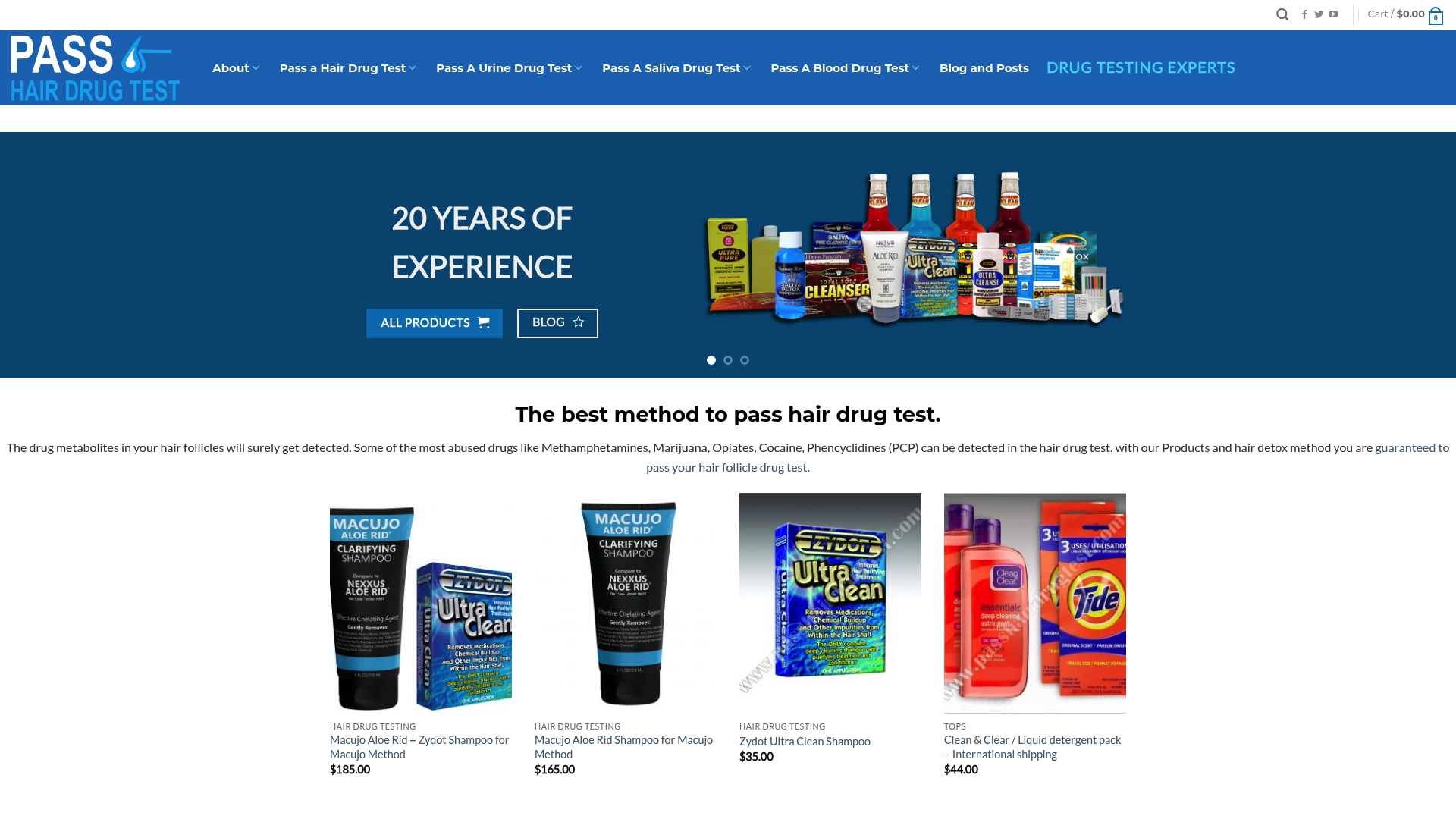
Visit Passhairdrugtest to review the available kits and place your order.
This article is general information, not legal or medical advice. Confirm current testing policies and applicable rules with your employer, testing facility, or a qualified professional before acting.
Useful sources
- Healthline — Clarifying shampoo overview: Defines clarifying shampoos, recommended frequency, and appropriate hair types. Supports the “what each is” and “how to choose” sections.
- TheProductBuzz — Clarifying shampoos and buildup removal: Chemistry-first analysis of surfactants, chelators, and acids; supports the ingredients section and the 2026 product-testing insight on ingredient functionality.
- Cécred — Detoxifying vs clarifying shampoo: Explains the practical difference between detox and clarifying formulas; supports the definitions and regimen sections.
- Colorists Laboratory — Detox vs clarifying: Covers hard-water minerals and the need for chelation; supports the ingredients and limitations sections.
- Acure — Clarifying vs regular shampoo: Frequency guidance and aftercare; supports the limitations and application technique sections.
- Theouai — Detox shampoo application technique: Expert guidance on massage, dwell time, and technique; supports the application technique section.
- MyShowerLine — Clarifying shampoo benefits and precautions: Practical aftercare and scalp-health guidance; supports the limitations section.
- K18 — Detox-style clarifying shampoo product claims: Manufacturer consumer-study claims for buildup and metal reduction; cited as directional manufacturer data in the regimen section.
- Passhairdrugtest — Hair Follicle Shampoo Kit: Client product page for the primary kit recommended throughout this guide.
- Passhairdrugtest — Zydot Ultra product page: Client product page for the Zydot Ultra Clean Shampoo referenced in the regimen.
Recommended
- How to pass hair drug test
- How Can I Pass a Hair Drug Test? – Pass Hair Drug Test
- Pass hair Drug Test
- Hair Detox Products for Drug Testing – Pass Hair Drug Test
