Uncategorized
15 Minute Sealed Exposure Can Affect a Secondhand Smoke Hair Test
Oct
Secondhand smoke can, in rare and extreme circumstances, leave enough cannabinoid residue in hair to register on a screening test, but it almost never produces a confirmed positive for actual drug use. Labs distinguish exposure from ingestion by checking for THC-COOH, a metabolite the body only produces after absorbing the drug, not from smoke settling on hair. The sections below walk through the evidence, the lab science, and what to do if a result ever comes back positive.
TL;DR:
- Secondhand cannabis smoke can deposit detectable cannabinoids on hair in extreme conditions, but only prolonged, unventilated exposure typically produces positive results.
- Detection of THC-COOH in hair confirms ingestion and body processing of cannabis, whereas finding only THC suggests external contamination without drug use.
- Laboratory protocols include washing hair samples and confirming with mass spectrometry to differentiate between contamination and use, though standards vary.
- Casual secondhand exposure in ventilated environments or during brief contact rarely results in positive or confirmable drug tests.
- Using cleansing shampoos or at-home tests does not guarantee a negative result and should be complemented by honest disclosure and follow-up testing, especially in legal or employment contexts.
Table of Contents
Table of Contents
- How hair follicle drug tests work: incorporation, window, and what is measured
- What the science and official guidance say about passive exposure and hair detection
- How labs distinguish contamination from active use: wash protocols, metabolites, and confirmation
- Practical steps to reduce risk before a hair test
- If you test positive: confirmatory analysis, records, and appeals
- A publisher’s perspective on secondhand smoke and hair testing
- Options for reducing contamination risk before a test
- FAQ
- Sources
How hair follicle drug tests work: incorporation, window, and what is measured
A hair follicle test typically looks back about 90 days, using a hair sample of roughly 100 milligrams, or about 90 to 120 strands, cut close to the scalp, according to NIJ guidance. That window is why employers and courts favor hair testing over urine or saliva: it reflects months of history rather than days.
Drugs and their byproducts can end up in hair through more than one path. Understanding those paths is the key to understanding why secondhand exposure sometimes shows up at all.
- Bloodstream incorporation: when a substance is ingested or inhaled, it and its metabolites circulate in blood and get trapped in the hair follicle as the strand grows.
- Sweat and sebum diffusion: compounds can migrate into the hair shaft from skin oils and sweat, even after the original exposure event.
- External contamination: smoke, dust, or direct contact can deposit drug residue on the outside of the hair without the person ever absorbing anything.
That third path is where secondhand smoke concerns come from, and it is also where the most important technical distinction lives: the difference between the parent drug and its metabolite. THC is the compound in cannabis smoke that can physically land on hair from the air. THC-COOH, by contrast, is produced only inside the body after THC is metabolized. Finding THC alone on a strand says the hair was near smoke. Finding THC-COOH says the body processed the drug, as described in a 2019 review of cannabinoid detection methods.
Laboratories build their workflow around that distinction. A standard process includes:
- Washing or decontaminating the sample to strip away surface residue before testing.
- Screening the washed sample for the presence of cannabinoids or other target drugs.
- Confirmatory testing using gas chromatography-mass spectrometry (GC-MS) or liquid chromatography-tandem mass spectrometry (LC-MS/MS) to verify any presumptive positive and, ideally, to identify metabolites specifically.
This two-step design exists precisely because contamination is a known problem in forensic hair testing, not a hypothetical one.
What the science and official guidance say about passive exposure and hair detection
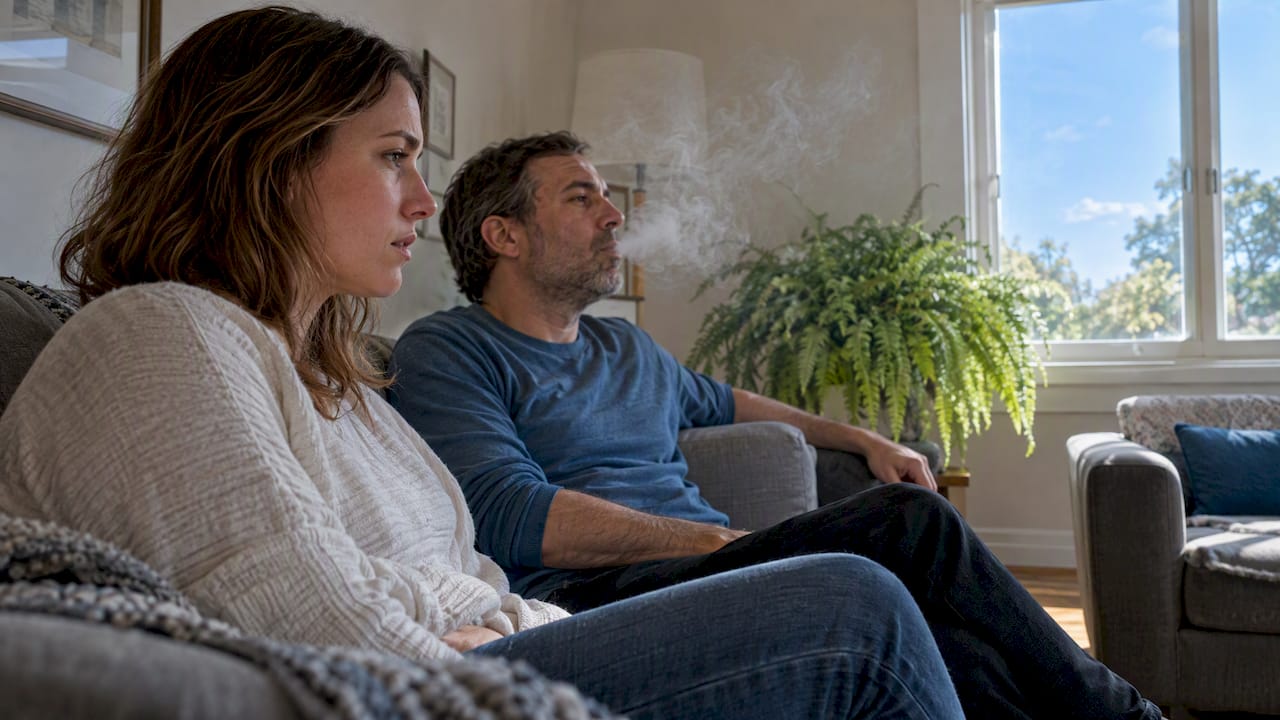
The honest answer is that passive exposure can leave a mark on hair, but only under conditions far more intense than everyday life. A 2025 forensic study exposed subjects to secondhand cannabis smoke for just 15 minutes in an unventilated room and found detectable cannabinoids in their hair afterward, even though their urine metabolite tests came back negative.
A 15-minute exposure in a sealed, smoke-filled room was enough to deposit detectable cannabinoids in hair in a 2025 study. That single data point captures both the risk and its limits: it took a closed space, no airflow, and sustained proximity to produce a measurable result.
Other research reinforces that smoke is not the only route for this kind of contamination. A study on cosmetic hemp oil use found that daily topical application led to detectable THC, CBN, and CBD in many volunteers’ hair, while THC-COOH stayed absent. That pattern, parent compounds present, metabolite missing, is the same signature contamination leaves behind, whether it comes from smoke, oil, or hand-to-hair transfer.
A few conditions shape whether passive exposure leaves anything behind at all:
- Ventilation: open air disperses smoke quickly; sealed rooms let it concentrate on skin and hair.
- Proximity and duration: sitting close to an active smoker for an extended period matters far more than walking through a smoky hallway.
- Analytic sensitivity: some labs can detect cannabinoids at concentrations other labs would miss, which means two people with identical exposure could get different results depending on where the sample is tested.
It is worth being direct about what these studies do and do not prove. They show that cannabinoids can land on hair from the air under controlled, intense conditions. They do not show that casual contact, living with a smoker in a ventilated home, or being near someone smoking outdoors produces the same effect, and none of the available research claims that ordinary secondhand exposure reliably triggers a confirmed positive once metabolite confirmation is applied.
How labs distinguish contamination from active use: wash protocols, metabolites, and confirmation
The Society of Hair Testing’s 2022 consensus guidance lays out the recommended approach: validated wash protocols, mass spectrometry confirmation, and caution against interpreting a result in isolation. Hair color, cosmetic treatment, and proximity to users all factor into how a lab reads a borderline sample.
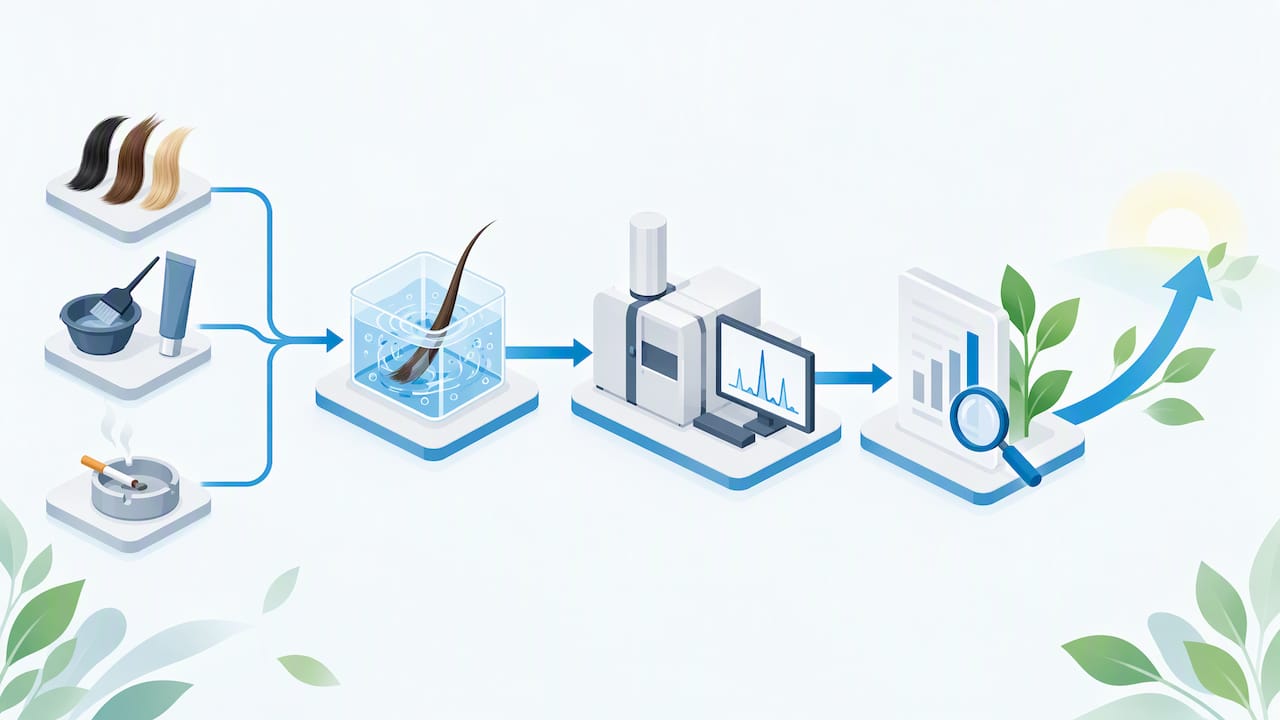
The core safeguard is the THC-COOH requirement. Because this metabolite only appears after the body processes THC, a lab finding THC-COOH has much stronger grounds to conclude ingestion rather than surface contact. Finding THC without any metabolite is the pattern associated with contamination, not use, which is why a thorough lab report distinguishes between the two rather than reporting a single cannabinoid result.
Some labs go further with wash-kinetic or segmental analysis, testing how much drug washes off over repeated rinses, or testing different segments of the same strand to see where concentrations are highest. These techniques help interpret ambiguous cases, though they are interpretive tools rather than a universal fix.
- Wash-kinetic analysis measures how readily a compound rinses away, since surface contamination tends to wash off more easily than incorporated drug.
- Segmental analysis compares sections of hair to check for patterns consistent with ongoing use versus a single contact event.
The weak point in this system is standardization. Wash protocols are not uniform across every laboratory, and limits of quantitation, the smallest concentration a given lab’s equipment can reliably detect, vary from one facility to another. That means the same hair sample could, in theory, produce different readings depending on which lab processes it.
Pro Tip: If a result is contested, ask specifically whether the lab tested for THC-COOH or only screened for THC, since that single detail determines how much the result actually proves.
Practical steps to reduce risk before a hair test
Nobody can fully control every environment they pass through, but a few habits lower the odds of surface contamination well before test day. Readers planning ahead can also review a hair sample collection protocol that explains sampling timing and how treatments get documented.
- Avoid closed, smoky spaces. Enclosed rooms with no airflow are the exact condition that produced detectable residue in controlled research, so stepping outside or opening windows matters.
- Limit close, extended contact with heavy smokers. Brief, ventilated contact carries far less risk than sitting beside someone smoking in a sealed car or small room.
- Wash bedding and clothing regularly, and avoid sharing hats, pillows, or hairbrushes, since residue can transfer through fabric and shared head-contact items.
- Be realistic about cleansing shampoos and cosmetic treatments. Labs record cosmetic treatment history and factor it into interpretation, so no product can promise a guaranteed outcome against confirmatory testing.
- Consider an at-home pre-test or an alternate specimen. Urine and saliva testing cover a much shorter detection window than hair, which changes the timing calculation entirely depending on when exposure happened.
Documentation matters as much as behavior. Keeping a simple record of where and when exposure happened, and disclosing it to the collector at the time of the test, gives any later dispute something concrete to point to rather than a claim made after the fact.
Pro Tip: Write down the date, location, and duration of any significant secondhand exposure the same day it happens. A contemporaneous note carries more weight in a dispute than a recollection formed after a positive result.
If you test positive: confirmatory analysis, records, and appeals
A screening positive is not a final answer. The first move is requesting confirmatory testing by GC-MS or LC-MS/MS, and asking specifically whether the lab checked for THC-COOH rather than only the parent compound. That single question often resolves whether a result reflects exposure or ingestion.
- Request the wash log and chain of custody documentation, which shows how the sample was handled and decontaminated before testing.
- Ask the lab to retain a portion of the sample for independent retesting, since a second lab’s result can support or challenge the first.
- Present documented exposure history and any cosmetic hair treatments during an appeal, since both affect how a result should be interpreted.
- Consult an employment attorney or occupational health specialist when a job or license is at stake, particularly if the lab cannot produce clear confirmatory data.
A SAMHSA and NIJ review of contamination issues confirms that external contamination is a recognized source of disputed results, which gives appeals grounded in documentation a real basis to stand on.
A publisher’s perspective on secondhand smoke and hair testing
The myth that casual secondhand exposure routinely results in positive hair tests persists because people confuse detectability with proof of use. The two are not the same thing, and conflating them leads to either needless panic or false confidence in cleansing products. A company in the drug-testing and detox product space with over 20 years of experience sells hair cleansing shampoos, cleansing kits, and at-home test kits alongside informational resources on how hair testing actually works. These products may reduce surface residue, but no product guarantees an outcome, and a laboratory’s confirmatory analysis is the only authority that settles what a result means.
— MIchael
Options for reducing contamination risk before a test
Readers who want a practical next step beyond behavioral changes have a few product categories to consider. Hair Drug Testing Products on the site include cleansing shampoos and multi-step kits built around removing surface residue from hair before a scheduled test, alongside at-home pre-test kits that let someone check their own result privately first.
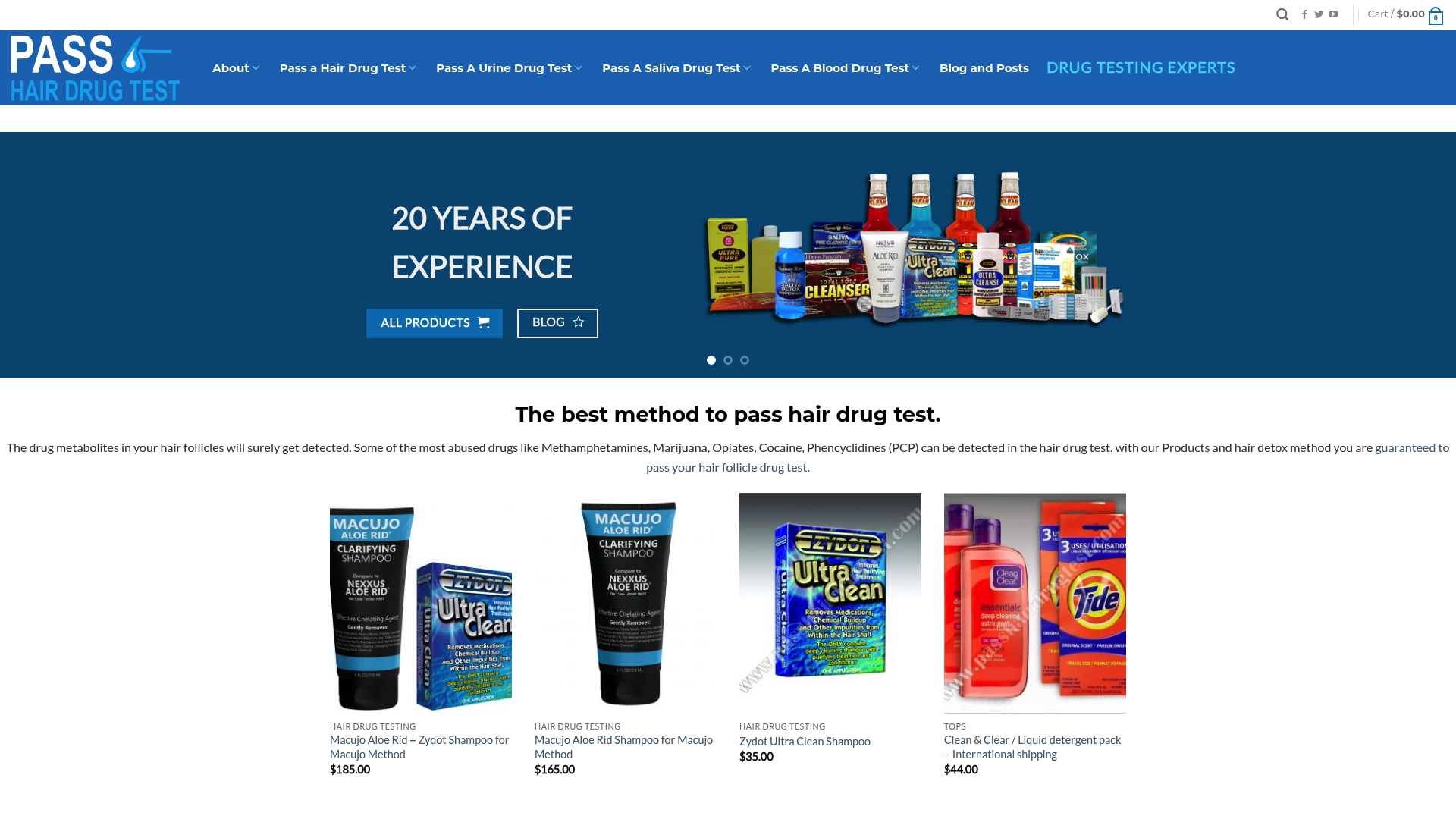
None of these products override a laboratory’s confirmatory process, and no cleansing routine comes with a guarantee against a properly run GC-MS or LC-MS/MS analysis. They are a mitigation attempt, not a substitute for honest disclosure or for following an employer’s testing rules.
- Hair cleansing shampoos and kits target surface contamination before a scheduled hair test.
- At-home pre-test kits let someone check their own result privately before an official screening.
- Urine and saliva alternatives are worth discussing with an employer when hair testing timing is a concern.
Anyone weighing these options can start by browsing the hair follicle shampoo kit page to see what a cleansing routine actually involves before test day.
FAQ
Can you fail a hair test from secondhand smoke?
It is possible but rare, and generally requires extended exposure in an enclosed, unventilated space, as shown in a 2025 passive exposure study. Most casual exposure does not produce enough residue to register, and confirmatory metabolite testing further reduces the chance of a false conclusion.
How long do I have to stop smoking for a hair follicle test?
Hair tests typically cover a detection window of about 90 days, based on how hair sampling works, so there is no short stretch of abstinence that removes drug history already incorporated into existing hair growth. Only new, unexposed hair growth falls outside that window.
Can secondhand smoke get into your hair follicle?
Smoke can deposit cannabinoids on the outer surface of hair through airborne exposure, particularly in closed, smoke-filled rooms, as demonstrated in controlled research. That surface contamination is different from the drug actually entering the bloodstream and showing up as a metabolite inside the hair shaft.
What can cause a false positive hair follicle test?
External contamination from smoke, secondhand contact with users, or even cosmetic products like hemp oil can deposit cannabinoids on hair without any ingestion taking place, according to a review of hemp oil exposure. Confirmatory testing for THC-COOH is the standard way labs tell contamination apart from actual drug use.
Sources
- Passive exposure study (PubMed ID 40480121)
- Detecting drugs in hair: incorporation vs environmental contamination (NIJ)
- Review: bioanalytical techniques for cannabis in human hair (2019)
- SoHT General Consensus on Hair Testing (2022)
Recommended
- 90 Day Risk: Can an Occasional Smoker Fail a Hair Test?
- How to pass hair drug test
- Why the 5–14 Day Lag Makes Hair Tests Miss One Time Use
- Hair Drug Test Information – Pass Hair Drug Test
