
Uncategorized
90 Days and the 5–7 Day Lag: How Labs Detect Adderall in Hair
Sep
Adderall (amphetamine) is commonly detectable in a hair strand test for up to about 90 days after use, though nothing about that number is exact. Labs test the proximal hair segment closest to the scalp, and it takes roughly 5 to 7 days after a dose before amphetamine actually shows up in the shaft. The real number for any one person shifts with dose, hair growth speed, sample length, and how the lab sets its cutoffs.
TL;DR:
- Hair testing for Adderall can detect use up to 90 days, depending on segment length and hair growth speed, but recent use within five to seven days may not show.
- The detection window varies with individual factors such as dose, hair pigmentation, cosmetic treatments, and whether scalp or body hair is tested.
- Confirmatory testing with mass spectrometry is necessary to verify positive results, especially if the subject has a prescription and documentation.
- Stopping Adderall does not eliminate already incorporated drug residues in the hair, which can be detected for months after discontinuation.
- Hair tests target a broader use pattern, while urine, blood, or saliva only indicate recent use within a few days.
Table of Contents
Table of Contents
- Adderall Hair Test Detection Window Explained
- How Hair Follicle Testing for Adderall Actually Works
- What Changes Your Personal Detection Timeline
- Why a Positive Hair Result Isn’t Always Straightforward
- Hair Testing Compared to Urine, Blood, and Saliva
- If You Take Adderall Legitimately, Do This
- The Evidence Behind These Numbers
- What Twenty Years in This Industry Has Taught Us
- Where Passhairdrugtest Fits Into Your Research
- Sources
- FAQ
Adderall Hair Test Detection Window Explained
The 90-day figure comes from a simple biological fact: scalp hair grows at roughly 1.0 to 1.5 centimeters per month, so a lab that cuts a 3 to 4 centimeter proximal segment is effectively pulling a three-month record of what passed through your bloodstream. It’s less a countdown clock and more a growth ring, the way a tree trunk logs a season.
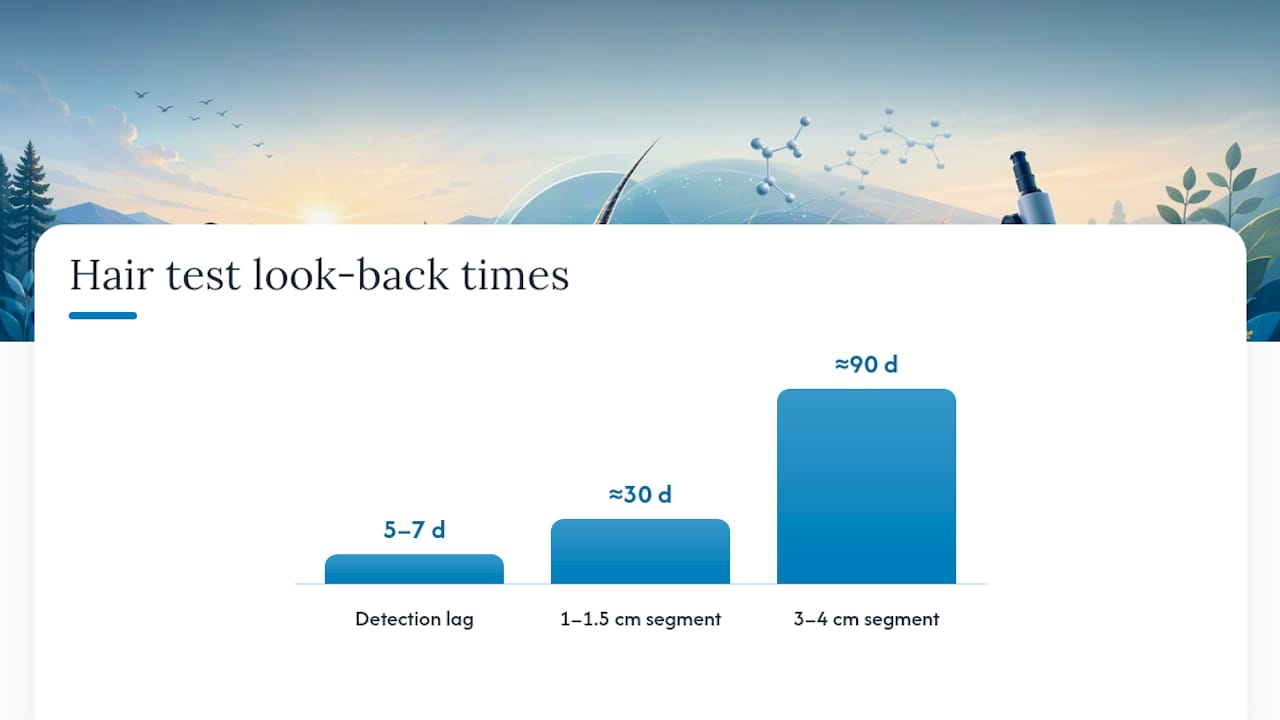
Here’s the part most people miss: drugs don’t show up in hair the moment you take them. Amphetamine travels through the blood, reaches the hair follicle through the dermal papilla and surrounding capillaries, and gets incorporated into the growing shaft only after that segment forms. That process takes about 5 to 7 days, which is why a test given the day after a first dose can come back negative even in someone who genuinely used.
A few practical points shape how this window actually plays out for a given sample:
- Segment length matters. A lab analyzing 1 to 1.5 centimeters covers roughly a month; one analyzing 3 to 4 centimeters covers closer to 90 days.
- The lag is a blind spot, not a loophole. Recent use inside that 5 to 7 day window may not register yet, regardless of dose.
- Body hair changes the math. When scalp hair is too short or unavailable, collectors can substitute body hair, which grows more slowly and less predictably, stretching the look-back period in ways that are hard to pin to a calendar date.
- Stopping the drug doesn’t erase the record. Hair that already grew in stays chemically marked, so quitting today doesn’t produce an immediate negative on segments formed weeks ago, a point clinical detection-time overviews confirm repeatedly.
For a deeper look at how labs calculate this look-back period, Passhairdrugtest has a companion breakdown of the 90-day window and the detection lag that applies the same growth-rate logic to a different drug class.
How Hair Follicle Testing for Adderall Actually Works
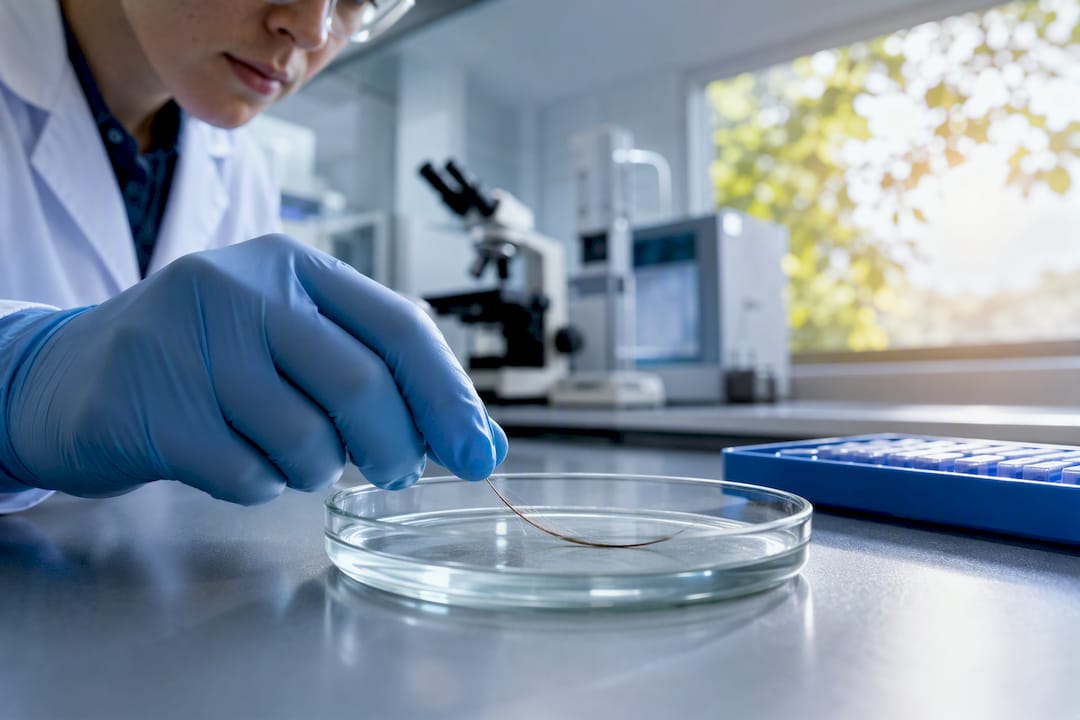
Collectors don’t pull hair from beneath the scalp despite the common phrase “follicle test.” They cut a small bundle from the posterior vertex, the crown area at the back of the head, as close to the scalp as possible. That proximal cut is what gives the sample its timeline; hair collected further from the root simply reflects an older period of exposure.
The lab workflow generally runs in three stages:
- Collection. A trained collector cuts roughly a pencil-width bundle of hair close to the scalp, or substitutes body hair (chest, arms, legs) if scalp hair is too short, chemically treated, or absent.
- Screening. The sample is washed, dissolved, and run through an initial immunoassay, commonly ELISA, that flags whether amphetamine-class compounds are present above a preset cutoff.
- Confirmation. Any presumptive positive gets a second, more precise pass using GC/MS or LC-MS/MS, mass spectrometry methods that identify the exact compound and rule out cross-reactivity from other substances.
One detail worth knowing before you agree to any panel: the phrase “12-panel” isn’t standardized across labs. Some employers test a narrow list focused on illicit drugs; others build wider panels that include prescription stimulants like amphetamine and methamphetamine metabolites. Always check the actual requisition form rather than assuming what’s included, and if you’re researching the collection and analysis process in more depth, Passhairdrugtest’s overview of hair follicle drug testing walks through what a typical requisition covers.
What Changes Your Personal Detection Timeline
The 90-day figure is a population average, not a guarantee for any individual. Several variables push a real result higher or lower than that benchmark.
- Dose and frequency. Someone taking a therapeutic dose occasionally will generally show lower analyte concentrations than someone using higher doses daily, since repeated exposure compounds in the shaft over time.
- Hair growth rate. Growth speed varies by person, and a slower grower effectively packs more days of exposure into the same centimeter of hair, which can shift how far back a given segment reaches.
- Hair pigmentation. Peer-reviewed research on hair pigmentation and drug binding shows melanin has a chemical affinity for certain basic drugs, including amphetamines, which means darker hair can sometimes retain higher concentrations than lighter hair exposed to an identical dose.
- Cosmetic processing. Bleaching, relaxing, and repeated coloring can degrade the hair shaft’s structure and reduce how much drug residue survives to the point of testing.
- External contamination and lab cutoffs. Environmental exposure, secondhand smoke, or contact residue can theoretically deposit trace amounts on the hair’s surface, which is exactly why labs wash samples before analysis and set cutoff concentrations meant to separate genuine incorporation from surface contact.
Pro Tip: If you’re trying to reason backward from a test date to a specific dose, don’t. Hair testing dates a window, not a day. Treat the 90-day figure as a range to explain, not a calendar to reverse-engineer.
Why a Positive Hair Result Isn’t Always Straightforward
A positive screen doesn’t automatically mean deliberate use, and it doesn’t pinpoint when exposure happened. Labs build in several safeguards specifically because hair testing carries more interpretation risk than urine or blood.
- Contamination versus incorporation. SAMHSA’s technical guidance on hair testing lays out wash procedures designed to strip surface residue before analysis, then relies on metabolite-to-parent-drug ratios to help distinguish someone who ingested the drug from someone who merely touched a contaminated surface.
- Metabolites matter more than the raw parent compound. Because the body metabolizes amphetamine into detectable byproducts, finding metabolite markers alongside the parent drug is stronger evidence of actual use than the parent compound alone.
- A positive marks a window, not a moment. The result tells you exposure occurred sometime during the segment’s growth period, generally the prior 90 days, not on a specific date.
- Confirmatory testing exists for a reason. Immunoassay screens produce false positives more often than mass spectrometry does, which is why GC/MS confirmation is the standard follow-up before any consequential decision gets made on the result.
If you take Adderall by prescription, documentation becomes your strongest tool here. A dated prescription record, paired with a request for confirmatory testing, resolves most disputes before they escalate.
Hair Testing Compared to Urine, Blood, and Saliva
Each specimen type answers a different question, and that’s exactly why testing programs choose one over another based on intent rather than convenience.
| Specimen | Typical detection window |
|---|---|
| Hair | Up to about 90 days |
| Urine | About 3 to 4 days |
| Blood | Up to about 46 hours |
| Saliva | About 20 to 50 hours |
Employers and clinicians reach for hair testing when they care about a pattern of use over months, not a snapshot of yesterday. Urine, blood, and saliva exist for the opposite goal: catching recent or current impairment. A clean urine result the same week as a hair test doesn’t contradict a hair positive; they’re simply measuring different timeframes of the same history.
If You Take Adderall Legitimately, Do This
A legitimate prescription changes the entire conversation around a positive result, but only if you handle disclosure correctly.
- Disclose before testing, not after. Most testing programs have a formal process for reporting current prescriptions; use it proactively rather than explaining a positive after the fact.
- Carry current documentation. A pharmacy printout or prescriber’s letter dated near the test carries far more weight than a verbal explanation.
- Request confirmatory testing. If a screen comes back positive, ask specifically for GC/MS or LC-MS/MS confirmation and chain-of-custody records rather than accepting the immunoassay result as final.
- Loop in your prescriber. Occupational health departments and medical review officers generally accept direct confirmation from a prescribing clinician, which can resolve a dispute faster than any paperwork you supply alone.
For more on what to expect from this process, Passhairdrugtest’s guide on hair drug test information covers what documentation typically satisfies a medical review officer.
The Evidence Behind These Numbers
The detection windows and interpretation caveats throughout this article rest on a small set of primary sources rather than industry folklore. SAMHSA’s technical guidance on drug metabolites and hair testing is the closest thing to a federal standard for how labs distinguish incorporation from contamination, and it’s the document most forensic toxicologists point to when explaining wash protocols and metabolite ratios.
Peer-reviewed work on hair pigmentation and testing variability fills in the piece SAMHSA’s procedural guidance doesn’t fully address: why two people with identical doses can produce different concentrations depending on melanin content and cosmetic treatment. Together, these sources explain both the mechanics of collection and the biological noise that makes any single number an estimate rather than a guarantee.
What Twenty Years in This Industry Has Taught Us
Detection science is consistent; people’s situations are not. We’ve spent two decades watching readers search for a guaranteed fix, and the honest answer is that no shampoo, home remedy, or last-minute regimen carries scientific backing as a reliable way to strip incorporated drug from a lab hair sample once it’s grown into the shaft.
If you have a legitimate prescription, disclosure and confirmatory testing will serve you better than any DIY method ever could. Save the product research for situations where you’re genuinely trying to understand your options, not as a substitute for documentation you’re entitled to provide.
— MIchael
Where Passhairdrugtest Fits Into Your Research
If you’re still working through what your options look like beyond documentation and disclosure, Passhairdrugtest focuses on hair-cleansing research and offers products including shampoos and a multi-step cleansing method, rather than a generic drugstore shelf of detox products.
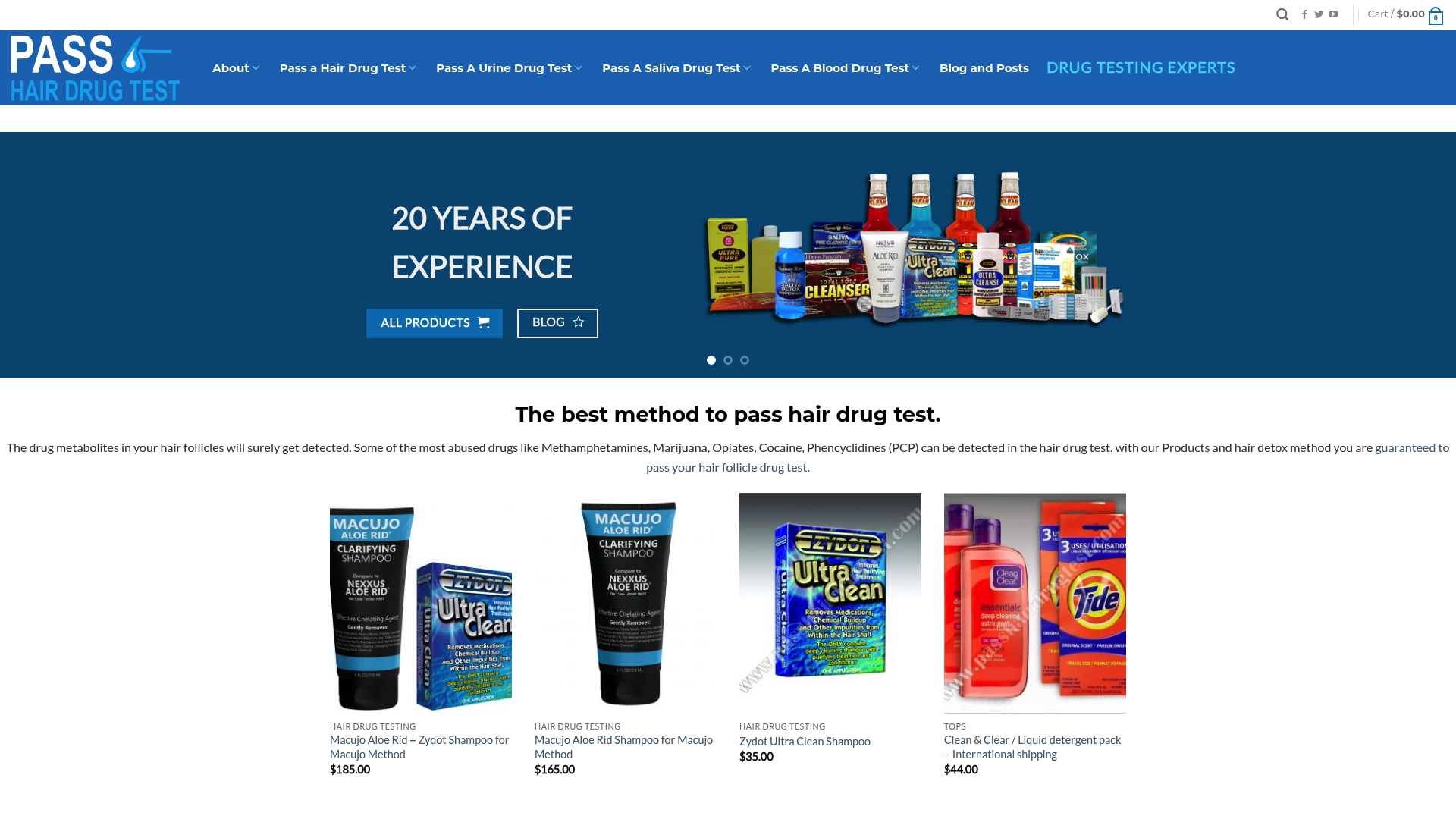
The site organizes its full catalog by test type, including hair drug testing products, urine, saliva, and blood testing supplies, so you’re not stuck guessing which category applies to your situation. Every product page includes detailed instructions and support resources, since the company’s position has always been that a product is only as good as the reader’s understanding of how to use it correctly. None of this replaces the disclosure and confirmatory-testing steps covered earlier. If you want to see what’s available, start with the hair drug test information page to understand your situation, then browse the hair-cleansing shampoo options if you decide product research is your next step.
This article is general information, not a substitute for advice from a qualified doctor. Consult a qualified healthcare professional about your own circumstances before acting on anything here.
Sources
- Drug metabolites and hair testing — SAMHSA
- Hair strand drug test: How it works, uses, and what to expect — Healthline
- Peer-reviewed overview on hair testing variability and method considerations — NCBI PMC
FAQ
How Long Will Adderall Show on a Hair Follicle Test?
Adderall is commonly detectable in hair for up to about 90 days, depending on the segment length a lab analyzes and how recently you used. There’s roughly a 5 to 7 day lag after a dose before it becomes detectable in the hair shaft.
What Shows Up on a 12-Panel Hair Follicle Test?
Panel contents vary by lab and by employer requisition, so “12-panel” doesn’t mean the same list everywhere. Many panels cover amphetamines, opiates, cocaine, marijuana metabolites, and PCP, but you should always check the specific requisition form rather than assume a standard list applies.
Will My Hair Grow Back Clean If I Stop Taking Adderall?
Stopping the medication doesn’t erase drug already incorporated into hair that has grown in. Once you stop, new growth closest to the scalp will reflect the period after discontinuation, but older segments further from the root can still test positive for months afterward.
How Long After Taking Adderall Will I Fail a Drug Test?
In hair, amphetamine typically becomes detectable 5 to 7 days after use, once that portion of the shaft has grown in. In urine, detection is usually much faster, often within hours and lasting about 3 to 4 days.
Recommended
- 90 Day Window Explained: Opioid Hair Detection Time and the 5–10 Day Lag
- Why ‘Up to 90 Days’ Misleads in MDMA Hair Testing
- Why the 5–14 Day Lag Makes Hair Tests Miss One Time Use
- Long Hair Drug Test: What Labs Actually Measure
