No products in the cart.
Uncategorized
One Edible vs Daily Use: How Labs Detect Edibles in a Hair Drug Test
17
Sep
Sep
Eating an edible doesn’t spare you from hair testing. THC-COOH from cannabis edibles gets absorbed into your bloodstream and incorporated into growing hair, just like smoked or vaped THC. Labs using a standard 1.5-inch sample can detect use going back roughly 90 days, though a single edible eaten yesterday won’t register for another week or two.
TL;DR:
- THC metabolites from edibles require about five to ten days to incorporate into hair and become detectable in a test.
- Regular, heavy edible use results in consistent detection over a 90-day window, while a single dose may often fall below detectable levels.
- Factors like body fat, hair melanin, and cosmetic treatments influence the likelihood of THC metabolites appearing in hair samples.
- Hair tests are less affected by efforts to mask or detox, as labs rely on decontamination washes and confirmatory GC-MS analysis.
- Time remains the most reliable factor for reducing detection chances, with product claims offering limited or no proven effectiveness.
Table of Contents
Table of Contents
- How Does a Hair Follicle Drug Test Detect Edibles?
- How Long Do Edibles Stay Detectable in Hair?
- What Factors Affect Whether Edibles Show Up in Hair?
- Do Edibles and Smoking Show Up Differently in Hair Tests?
- Can You Beat a Hair Test With Detox Shampoos or Bleaching?
- What Should You Do Before an Upcoming Hair Test?
- Why Evidence Matters More Than Guesswork Here
- Preparing for a Hair Test With Passhairdrugtest
- Sources
- FAQ
How Does a Hair Follicle Drug Test Detect Edibles?
When you eat an edible, your liver converts THC into metabolites, including THC-COOH, that circulate in your blood and get deposited into hair follicles as the hair grows. This is why a hair follicle drug test doesn’t measure whether you’re high right now. It measures whether THC metabolites entered your bloodstream at some point in the recent past.
Labs don’t need to pluck hair painfully. Collectors clip a 1.5-inch sample close to the scalp, roughly 100 milligrams or 90 to 120 strands, from the crown of the head. That length corresponds to about three months of hair growth at an average rate of approximately half an inch per month.
A 1.5-inch hair sample represents approximately 90 days of drug use history, according to Labcorp’s testing standards.
Testing happens in two stages. An initial immunoassay screen flags samples that might contain THC metabolites, and any presumptive positive goes through GC-MS confirmation, a more precise method that identifies the exact compound and rules out false positives from things like secondhand smoke exposure. Employers favor this approach because:
- It’s harder to manipulate than a urine sample collected on demand
- It reflects a three-month behavioral pattern instead of a single moment
- It can flag contamination versus actual ingestion through decontamination washing steps before confirmation
Hair testing for marijuana isn’t cheap or fast compared to urine screening, but the longer window is exactly why some employers choose it over other methods.
How Long Do Edibles Stay Detectable in Hair?
Nothing shows up immediately. Metabolites need time to travel from your bloodstream into the hair follicle and then grow up through the scalp, which creates an incorporation lag of about 5 to 10 days after use. A hair test taken the morning after eating a gummy will likely come back clean, not because the THC wasn’t there, but because it hasn’t reached a testable position in the hair shaft yet.
Once that window passes, detectability depends heavily on how often you’re eating edibles:
- Single edible, one-time use: Often falls below reliable detection thresholds. A study of 136 subjects found hair testing sensitivity around 0.77 for heavy users, but sensitivity drops meaningfully for light or infrequent consumption.
- Occasional use (weekly): More likely to leave a detectable trace, though results can still be inconsistent depending on dose and hair growth rate.
- Chronic, daily use: Consistently detectable across the full 90-day window, since metabolite deposition accumulates with each dose.
Interestingly, some research suggests edibles can produce higher peak urinary THC-COOH concentrations than an equivalent dose of vaporized cannabis. That matters for hair testing too. Higher circulating metabolite levels mean more material available for incorporation into the hair shaft, so a strong edible habit can leave a comparable or even more pronounced signature than smoking the same amount of THC.
What Factors Affect Whether Edibles Show Up in Hair?
Dose and frequency drive most of the variation. One gummy eaten at a party behaves nothing like a nightly habit; THC accumulates in fatty tissue and releases slowly, so regular users build up a reservoir that keeps feeding metabolites into new hair growth long after the last dose.
Several other variables shift the odds:
- Metabolism and body fat: THC is fat soluble, so people with higher body fat percentages can store and slowly release it longer than lean, fast-metabolizing individuals.
- Hair melanin and color: Some forensic research suggests darker, more pigmented hair binds more drug residue than lighter hair, an ongoing point of discussion in toxicology.
- Growth rate: Hair doesn’t grow at identical speeds on every head, which can shift how much of a 90-day window a given sample actually represents.
- Cosmetic treatments: Bleaching and repeated dyeing can degrade some drug residue in hair, but not predictably or completely.
- External contamination: Being near cannabis smoke can deposit trace THC on hair surfaces without any ingestion at all, which is why labs run decontamination washes before confirmation testing.
Pro Tip: If you’re worried about contamination skewing results from secondhand exposure, ask the testing facility whether their protocol includes a pre-wash step and metabolite-specific confirmation. That combination is what separates surface residue from actual incorporation.
Do Edibles and Smoking Show Up Differently in Hair Tests?
The route of ingestion changes how fast THC hits your bloodstream, but not necessarily what ends up in your hair. Edibles digest slowly through the liver, producing 11-hydroxy-THC and delaying peak blood concentration by one to three hours. Smoking or vaping sends THC into the bloodstream within minutes, hitting peak levels almost immediately.
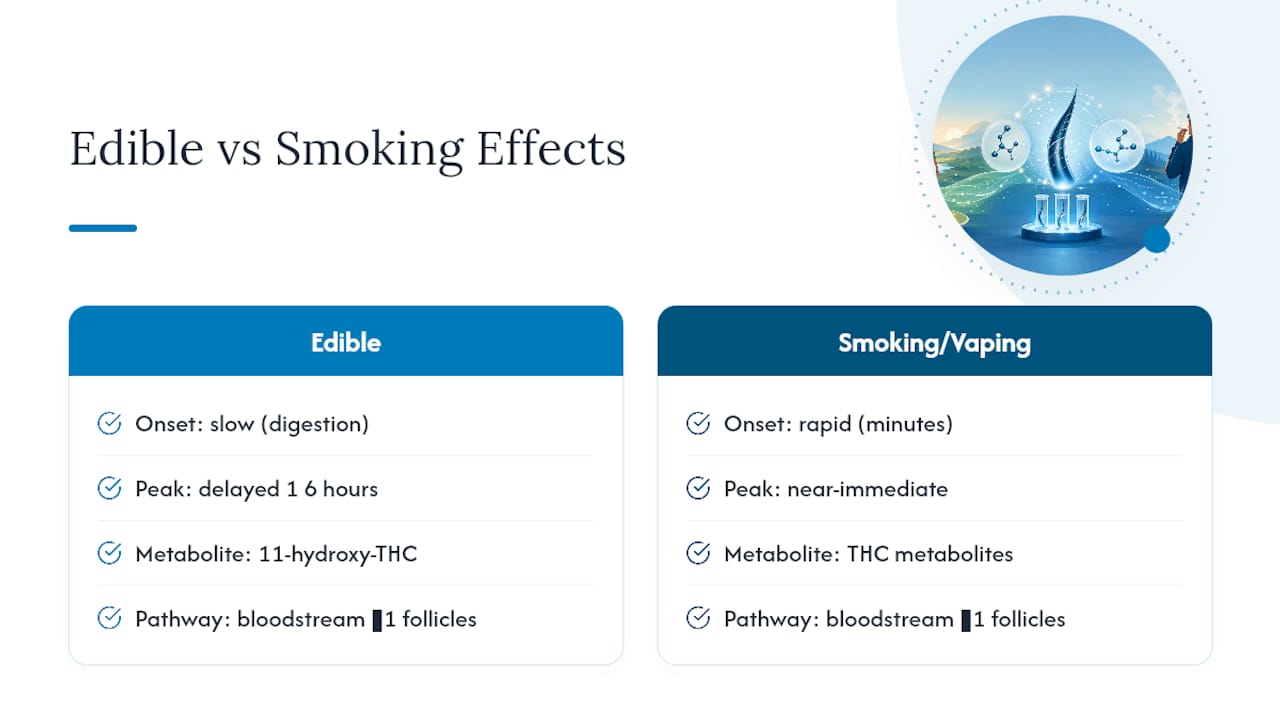
Despite that timing difference, both routes funnel THC metabolites into the same bloodstream that feeds hair follicles. A hair test doesn’t care how the THC got into your system. It cares how much metabolite exposure accumulated over the growth period, which means heavy edible users face essentially the same detection risk as heavy smokers.
Can You Beat a Hair Test With Detox Shampoos or Bleaching?
Surface-level washing rarely touches metabolites that are already embedded inside the hair shaft, which is exactly why labs run their own decontamination wash before confirmation testing. Anything that rinses off easily was never going to survive that step anyway.
A few claims deserve a reality check:
- Detox shampoos: There’s limited independent evidence that any shampoo reliably alters confirmed lab results, despite widespread marketing claims.
- Shaving your head: This often triggers a request for body hair instead, or gets flagged as a refusal, neither of which helps you.
- Bleaching or dyeing: This can reduce detectable THC levels somewhat, but the effect is inconsistent and won’t guarantee a clean result.
The honest takeaway: time is the only variable that reliably removes THC metabolites from new hair growth. Everything else is a gamble with uneven odds.
What Should You Do Before an Upcoming Hair Test?
Start by getting specifics, not assumptions. A little homework now beats guessing later.
- Confirm the test details: Ask about sample length, which lab processes it, and whether they use GC-MS confirmation cutoffs.
- Document any prescriptions: If you take medications that could cross-react with immunoassay screens, bring documentation before testing, not after a flagged result.
- Factor in the incorporation lag: A short-notice test is less likely to catch very recent use, since metabolites need roughly a week to grow into a testable position.
- Evaluate any product claims skeptically: Treat elapsed time as your primary control variable, not a substitute for it.
Pro Tip: If your test is scheduled with more than a few weeks’ notice, that window matters more than any product you buy in the final 48 hours. For deeper mechanics on how THC binds to hair, this breakdown of THC in hair covers the science in more depth.
Why Evidence Matters More Than Guesswork Here
I’ve spent enough time around the drug-testing and detox side of this industry to notice a pattern: people want a shortcut, and the market is happy to sell them one. The honest picture is less satisfying. Hair testing sensitivity genuinely favors catching regular, heavy use over a single edible eaten weeks ago, and no amount of confident marketing changes the underlying chemistry of metabolite incorporation.
What I’d tell anyone facing a hair test is simple: understand the timeline first, then decide what’s realistic for your situation. Passhairdrugtest’s guides on hair follicle testing go deeper into the mechanics if you want to plan with real information instead of hope.
— MIchael
Preparing for a Hair Test With Passhairdrugtest
The company has focused on hair-cleansing products, including shampoos and multi-step cleansing methods. That’s a narrower, deeper focus than generic detox retailers that treat hair products as an afterthought to their urine and saliva lineup.
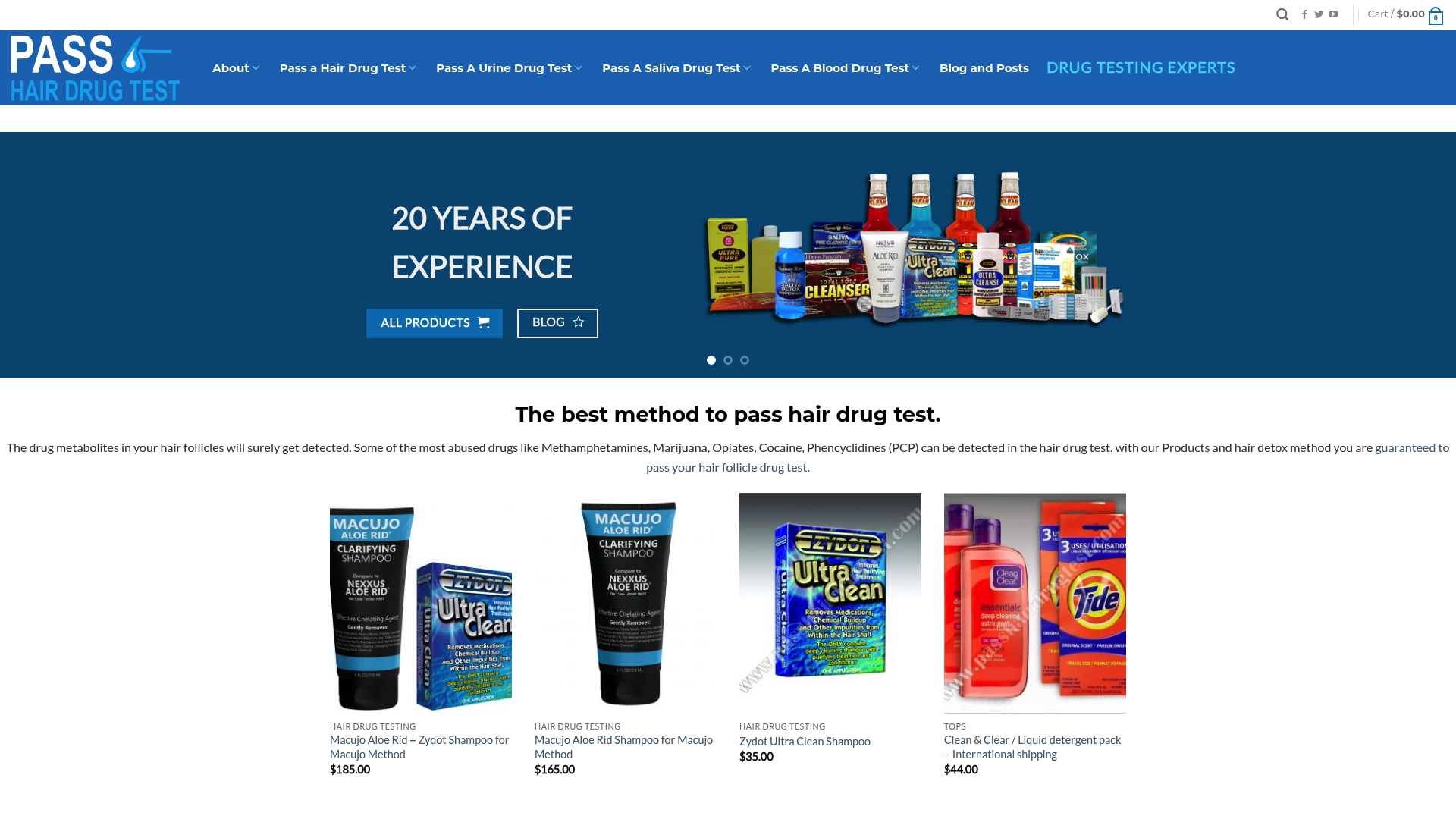
None of these products are a substitute for time. If your test is tomorrow morning and you smoked or ate edibles heavily last week, no shampoo rewrites the last 90 days of hair growth. What these products address is the cleansing step itself, paired with detailed instructions for both light and heavy users. The company provides customer support for people working through the cleansing process.
If you’re weighing your options, browse the full product catalog or read the detailed walkthrough on how the Macujo Method works before your test date arrives.
Sources
- Hair Follicle Drug Testing: Process & Benefits | Labcorp
- Peer-reviewed study on hair testing sensitivity (PMC)
- Detecting drugs in hair: Is it drug use or environmental contamination? | NIJ
- Hair follicle drug test overview | Healthline
- Do Edibles Show Up on Drug Tests? Detection Times & Guide (THCGummies summary)
FAQ
How long can edibles be detected in hair?
Edibles are typically detectable for up to 90 days in a standard 1.5-inch hair sample, though a single low-dose edible may fall below reliable detection thresholds for light users.
Can edibles make you fail a drug test?
Yes. Edibles produce the same THC metabolites that hair, urine, and saliva tests screen for, and some research shows edibles can produce even higher peak metabolite concentrations than smoking an equivalent dose.
What shows up on a 12-panel hair follicle test?
A multi-panel hair test screens for multiple substance categories at once, including THC metabolites, opiates, cocaine, amphetamines, and several other commonly monitored drug classes, using the same immunoassay-then-GC-MS confirmation process used for THC-specific tests.
How long does a 10mg edible stay in your system?
For hair specifically, a single 10mg edible may not reach detectable levels at all for infrequent users, given the lower sensitivity of hair testing for light use; for regular consumers, repeated 10mg doses accumulate and become detectable across the 90-day window.
Does Passhairdrugtest sell products for edibles specifically?
Passhairdrugtest sells hair-cleansing shampoos and kits designed around THC metabolite removal generally, including edible-derived THC, rather than products marketed for one consumption method alone; current pricing and options are listed on the product page.
Recommended
- Body Hair vs Head Hair: What Drug Test Labs Really Use
- Hair Drug Test vs Urine: Which Detects Use When
- How Labs Use Phase II Metabolites to Confirm Drug Use in Hair
- THC in Hair: What U.S. Cannabis Users Need to Know
