No products in the cart.
Uncategorized
Trace THC in CBD Can Trigger a Positive Hair Drug Test for Workers
13
Sep
Sep
Pure CBD will not trigger a positive hair drug test because standard panels screen for THC and its metabolite THC-COOH, not cannabidiol. The real risk comes from what’s riding along with the CBD: trace THC in full-spectrum products, mislabeled “THC-free” items, or contamination from smoke and handling hemp flower. If you need certainty before a test, the safest move is stopping all CBD exposure and keeping every certificate of analysis you can find.
TL;DR:
- Full-spectrum CBD products may contain up to 0.3% THC, which can accumulate in hair over time with daily use, risking positive drug tests.
- Contamination from passive smoke or handling hemp flowers can deposit THC onto hair, potentially causing false positives without ingestion.
- Private labs set low thresholds for THC-COOH detection, making repeated small exposures in the past three months sufficient to trigger a positive result.
- Independent batch-specific certificates of analysis are essential for verifying product accuracy and reducing the risk of unintentional THC intake.
- Detox shampoos and multi-step cleansing routines do not guarantee passing a hair drug test, and eliminating all THC exposure 90 days before testing remains the most effective strategy.
Table of Contents
Table of Contents
- How Hair Follicle Tests Detect Cannabis and What a Positive Means
- Why CBD Itself Usually Won’t Show Up, and How CBD Use Can Still Cause a Positive
- Factors That Raise Your Risk of Testing Positive as a CBD User
- What to Do Before a Hair Test or After a Positive Result
- What We’ve Learned From Two Decades in This Business
- Hair Detox Options Worth Knowing About
- Sources
- FAQ
How Hair Follicle Tests Detect Cannabis and What a Positive Means
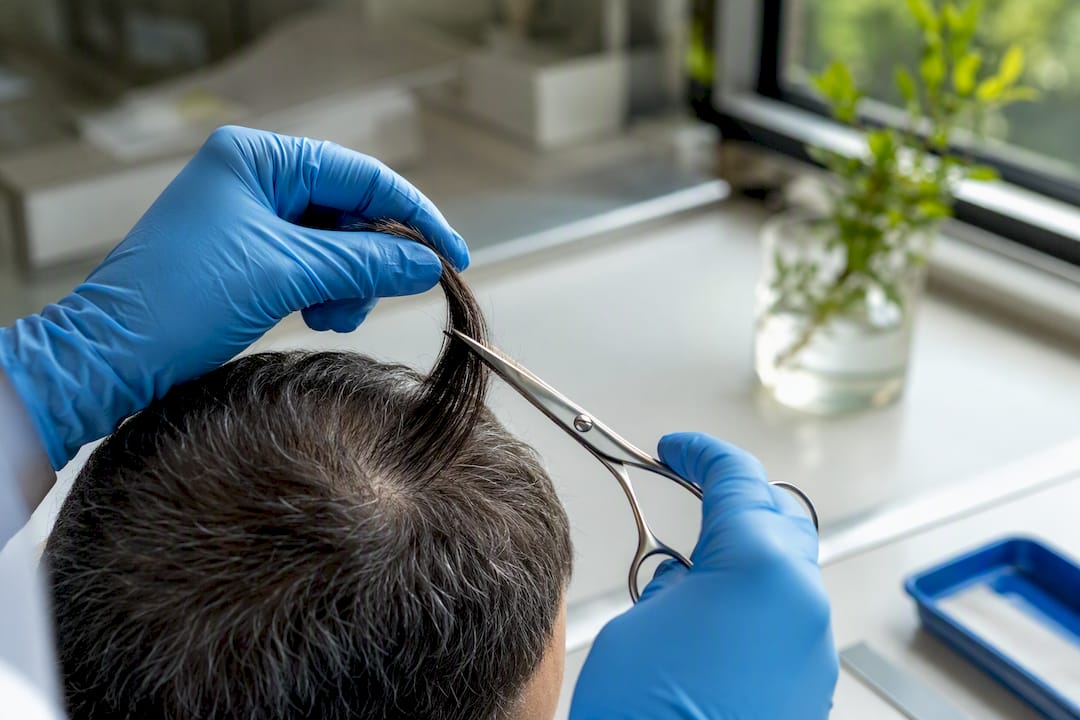
Labs typically cut a 1.5-inch hair sample close to the scalp, which represents roughly 90 days of growth and exposure. That window is the whole point of a hair test: unlike urine or saliva, it’s built to catch patterns of use stretching back three months, not just last weekend.
The lab isn’t looking for CBD at any point in that process. It’s looking for THC and its metabolite THC-COOH, the compound your body produces after metabolizing THC. Testing happens in two stages. First comes an immunoassay screen, a fast, cheap test that flags samples for further review. Anything that screens positive moves to confirmatory testing, usually gas chromatography-mass spectrometry (GC-MS) or liquid chromatography-tandem mass spectrometry (LC-MS/MS), which identifies the exact molecules present at a much higher level of precision.
A few structural quirks of hair testing matter for anyone worried about a false alarm:
- There’s no single federal cutoff for hair testing the way there is for some urine panels.
- Private labs set their own thresholds, often in the range of a few picograms of THC-COOH per milligram of hair.
- Because those thresholds are low and the detection window is long, repeated small exposures can add up faster than people expect.
- SAMHSA’s federal guidelines center on urine screening; hair testing is more common among private employers who want a longer look-back period.
That last point matters if you’re comparing notes with someone who passed a urine test after using CBD. Hair and urine measure completely different things over completely different timeframes, so a clean urine result tells you nothing about what a hair test three months later might show.
Why CBD Itself Usually Won’t Show Up, and How CBD Use Can Still Cause a Positive
CBD and THC are different molecules that your body processes differently, and no standard workplace panel is designed to detect CBD at all. The screen is built around THC and THC-COOH. If your product genuinely contained zero THC, there would be nothing for the test to catch.
The trouble starts with the word “genuinely.” Full-spectrum CBD products can legally contain up to 0.3% delta-9-THC, and that’s not a rounding error you can ignore if you’re using the product daily. Small doses of THC, taken repeatedly over weeks, accumulate in hair in a way a single exposure never would.
Product mislabeling makes this worse than the percentages suggest. Multiple studies have found detectable THC in products marketed and sold as “THC-free” or as pure CBD isolate, often because of cross-contamination during extraction or simple quality-control failures. You can follow every label instruction perfectly and still be dosing yourself with THC you never agreed to.
A myth worth killing outright: the idea that CBD “converts” to THC once it hits stomach acid. That conversion happens in a test tube under lab conditions. Peer-reviewed research on actual human metabolism has found no meaningful CBD-to-THC conversion in the body. If you test positive after using CBD, acid conversion is not the explanation. Contamination or mislabeling almost always is.
External contamination is the other path, and it doesn’t require ingesting anything:
- Standing near marijuana smoke in an enclosed space can deposit cannabinoids onto and into hair shafts.
- Handling raw hemp flower with bare hands and then touching your hair transfers residue directly.
- Applying a THC-containing topical and then running your fingers through your hair can do the same.
Forensic researchers have documented hair testing positive from passive smoke exposure alone, with no ingestion involved, which is exactly why confirmatory testing exists to sort out real signal from surface contamination.
Factors That Raise Your Risk of Testing Positive as a CBD User
Not every CBD user faces the same odds, and the differences come down to a handful of concrete variables you actually control.
- Product type. Full-spectrum products carry the most THC risk since they’re allowed trace amounts by design. Broad-spectrum products are supposed to have THC removed but still show contamination in some testing. Isolate, which is CBD in its purest form, carries the lowest risk, assuming the label is accurate.
- Dose and frequency. Someone using a high-dose, full-spectrum tincture every day is building cumulative THC exposure in a way an occasional low-dose user simply isn’t.
- Method of use. Ingestibles and inhaled hemp products create internal exposure that ends up in hair via bloodstream incorporation. Topicals applied to skin pose more of a contact contamination risk than a systemic one, though careless handling can bridge the two.
- Hair characteristics. Porosity, chemical treatments like bleaching or relaxing, and hair thickness all affect how readily cannabinoids bind to the shaft and how much a cleansing attempt can realistically remove.
- Label accuracy. A product with no independent lab report is a guess dressed up as a guarantee.
Pro Tip: Before you buy any CBD product, look for a batch-specific third-party certificate of analysis (COA), not a generic one pulled from the brand’s website. A COA tied to your exact bottle’s batch number is the only way to know what’s actually inside it.
What to Do Before a Hair Test or After a Positive Result
If a hair test is on the calendar, the only approach with real logic behind it is eliminating exposure entirely, as early as possible. Because hair testing looks back roughly 90 days, stopping today doesn’t erase yesterday’s growth. It just prevents adding more.
If you’ve already tested positive, don’t panic and don’t argue with the lab tech. Take these steps instead:
- Request confirmatory testing by name. GC-MS or LC-MS/MS results are far more reliable than the initial immunoassay screen, and you’re entitled to ask which method was used.
- Ask about a split-specimen policy, which lets a portion of your sample go to a second, independent lab for verification.
- Gather every COA, purchase receipt, and product label you have for anything you were using in the prior three months.
- Pull your employer’s written drug testing policy so you know exactly what standard applies to your situation.
If you work in a safety-sensitive role covered by DOT regulations, know this going in:
DOT guidance is explicit that CBD use is not accepted as a legitimate medical explanation for a positive marijuana result. Medical Review Officers verify positive results through standard protocol regardless of what CBD product someone claims to have used.
That means “I only used CBD” carries no weight with an MRO reviewing a confirmed positive. The confirmatory test result is what matters, not the explanation attached to it.
One more dose of realism: detox and cleansing products can reduce detectable cannabinoid residue in hair for some users, but the evidence on effectiveness is inconsistent and results vary by individual. No shampoo or tonic offers a guaranteed rapid clearance, and anyone promising a sure thing is overselling.
What We’ve Learned From Two Decades in This Business
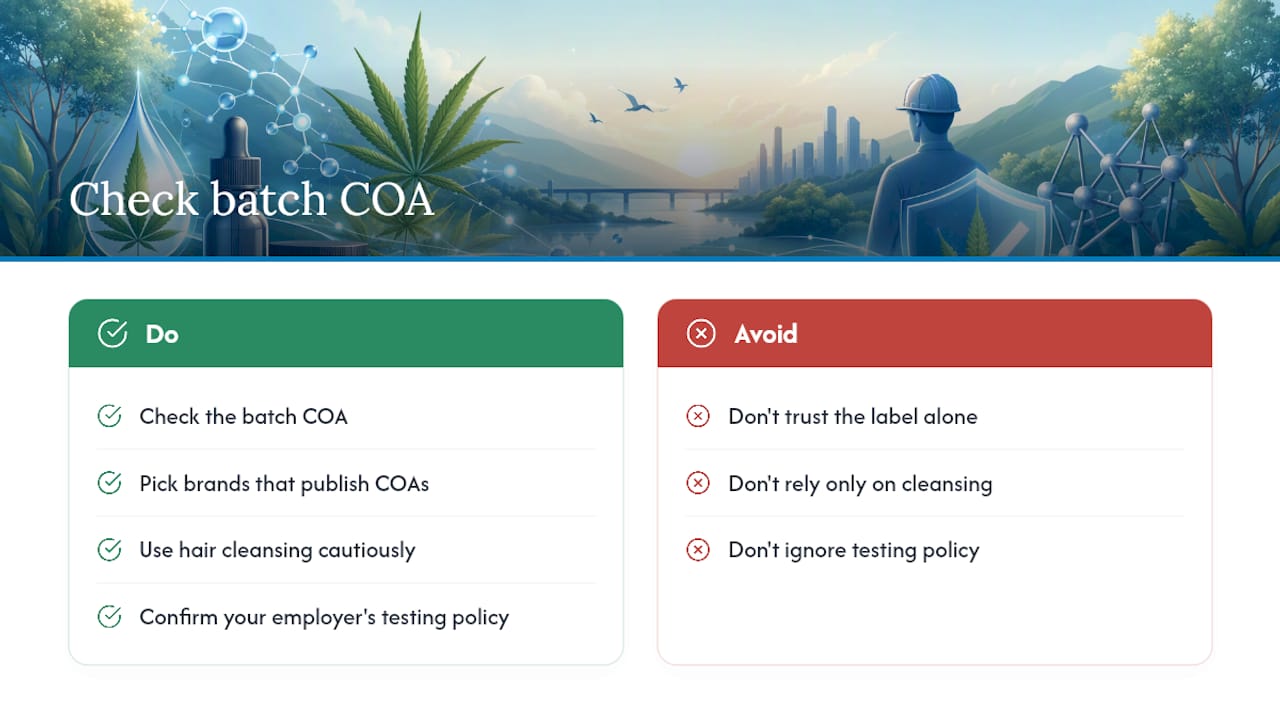
Experience in this industry suggests the pattern is consistent: the customers who get burned aren’t the ones using bad detox methods. They’re the ones who trusted a CBD product’s label without checking the batch-specific COA behind it.
Supply chain transparency beats marketing copy every time. A brand willing to publish independent lab results for every batch is telling you something a slick bottle design never will. That said, honesty matters here too: hair cleansing products can reduce detectable residue for some users, but nothing is foolproof, and your employer’s testing policy is still the final word on outcomes.
— MIchael
Hair Detox Options Worth Knowing About
If you’re staring down a hair test and want more than a wait-and-hope plan, Passhairdrugtest built its entire catalog around this exact problem. The lineup centers on Macujo Aloe Rid Shampoo and Zydot Ultra Clean Shampoo, along with the multi-step Mike’s Macujo Method, which combines a specific sequence of products designed to work through the hair shaft rather than just coat the surface.
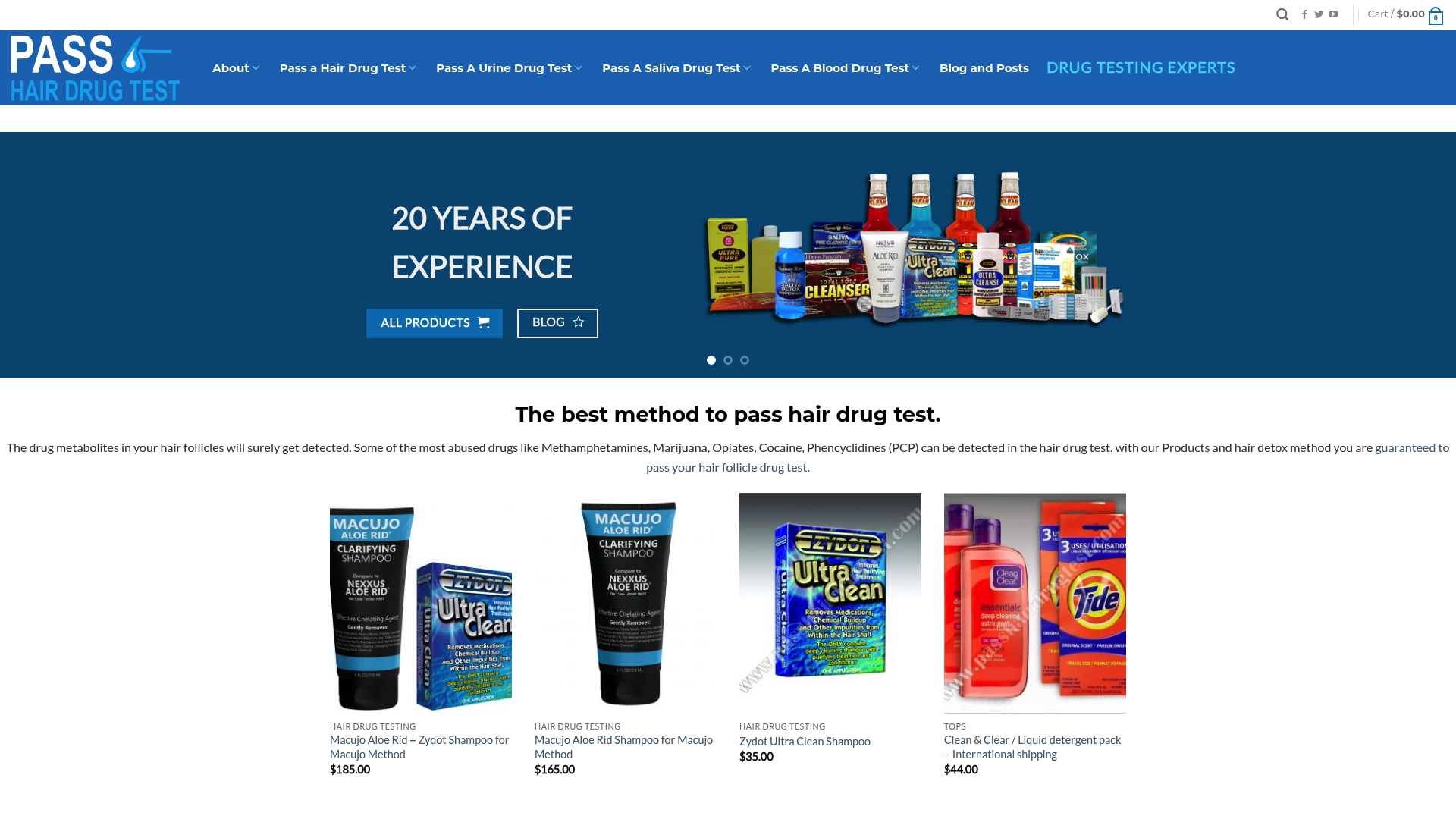
None of these products claim to guarantee a passed test, and you should be skeptical of anyone who tells you otherwise. What they offer is a documented, step-by-step process paired with instructional guides that walk you through timing and application. Pair any product decision with the documentation habits covered above: keep your COAs, know your testing timeline, and understand what confirmatory testing actually checks. Browse the hair testing shampoo kits to compare options, or read the step-by-step preparation guide before you decide which approach fits your timeline.
Sources
- U.S. Department of Transportation — CBD notice
- NCBI / PubMed Central — Cannabidiol research review
- Healthline — Does CBD Show Up on a Drug Test?
- NCBI — Studies on cannabinoid content and product variability
- SAMHSA — Substance Abuse and Mental Health Services Administration
FAQ
Has anyone failed a drug test using CBD?
Yes, but not because of the CBD itself. Cases typically trace back to full-spectrum products with legal trace THC, mislabeled items containing more THC than advertised, or external contamination from smoke or handling hemp flower.
How can I detox my hair follicles?
There’s no guaranteed method, though specialized shampoos and multi-step routines like Mike’s Macujo Method are designed to reduce detectable residue in hair for some users. Results vary by hair type, exposure level, and how closely instructions are followed.
How long does CBD stay in hair?
CBD itself isn’t what’s being measured, but any accompanying THC exposure can remain detectable in the 1.5 inches of hair closest to the scalp for roughly 90 days, matching the standard hair test detection window.
How long do edibles stay in your system for a hair follicle test?
THC from edibles gets incorporated into hair as it grows, so it can remain detectable for the same roughly 90 day window that any other THC exposure would show up in a standard hair test.
How do I pass a hair follicle test in 2026?
The most reliable approach is eliminating all THC exposure at least 90 days before testing, since that’s how far back a standard hair sample reaches. Beyond abstinence, some people pair that timeline with a cleansing method such as detox shampoo protocols to address recent exposure, understanding that no product offers a guaranteed outcome.
Recommended
- THC in Hair: What U.S. Cannabis Users Need to Know
- How to pass hair drug test
- How Can I Pass a Hair Drug Test?
- How to Pass a Drug Test on Hair Follicles?
