No products in the cart.
Uncategorized
Hair Test Detox Timeline: Day-by-Day Plan Before Your Test
14
Nov
Nov
The timeline is short to state and easy to misjudge. A standard hair test looks back about 90 days, THC takes roughly a week or more to show up in hair at all, and the hair already in the sample cannot be “waited out” in a few days. If you have a hair follicle test coming, the useful question is not only how long THC stays in hair. It is what you can do in the time you have left. We built our hair cleansing routine around that question, and this guide lays out the timeline so you can place yourself on it.
Table of Contents
TL;DR
- A standard hair test analyzes about the first 1½ inches of hair from the scalp, which covers roughly 90 days of growth.
- THC use typically takes 7 to 10 days to show up in hair, so use in the last week is often not what a hair test is measuring.
- Hair grows about ½ inch a month, so what you used 2 months ago is still sitting inside the sample.
- Everyday hair products can lower THC concentrations in hair, which is why a structured, multi-step cleansing routine started early matters.
- Start as soon as you know a test is coming: the more days you have, the more complete the routine you can follow.
Table of Contents
- How a hair test reads time
- The THC hair timeline, stage by stage
- What changes the timeline for you
- Why a cleansing routine fits into this timeline
- Your plan, based on how many days you have
- Can you pass after two months without cannabis?
- Other drugs have their own timelines
- What to do on test day
- Start your routine with the right products
- Our point of view
- FAQ
- Sources
How a hair test reads time
A hair test is a timeline written in keratin. The lab does not ask what is in your body today. It asks what was deposited into the hair as it grew.
According to Quest Diagnostics’ hair testing FAQ, the standard sample is the first 3.9 cm (1½ inches) of head hair, cut as close to the scalp as possible. Head hair grows about 1.3 cm (½ inch) per month, so that length represents about 90 days. The same document says it takes about 5 to 10 days for hair that contains a drug to grow from the follicle out to the scalp surface where it can be collected.
Three things follow from this:
- The last week is mostly invisible. Hair that formed in the last few days has not yet grown out of the scalp, so very recent use is not what the test is reading.
- The oldest part of the window is the end of the sample. The tip of the 1½ inch cut holds hair that grew about three months earlier.
- Length matters. Shorter hair means a shorter window, and the lab may take a longer segment or other hair if the head sample is too short. Body hair is not a reliable substitute for a detection window, because its growth rates are not well studied and it stops growing at a certain length, as the same Quest document notes.
One detail specific to cannabis: the lab does not mainly look for THC itself. SAMHSA’s hair testing document explains that most hair testing targets the parent drug, but for cannabis the target is the metabolite THC-COOH. Laboratories need very sensitive instruments for this because the amounts in hair are tiny.
The THC hair timeline, stage by stage
Here is how the timeline works from the day of use forward.
| Time after use | What is happening in the hair |
|---|---|
| Days 0 to 6 | The hair that carries the drug is still forming under the skin. Nothing has surfaced yet. |
| Days 7 to 10 | Typical first detection after smoking, per a controlled cannabis study by Huestis and colleagues. |
| About 2 weeks | A 2019 peer-reviewed review says drugs take about two weeks to reach and deposit in newly formed hair. |
| About 1 month | The same review says THC hair samples should be collected about a month after first intake for reliable detection. The hair is now about ½ inch out. |
| Months 2 to 3 | The use stays in the sample as the hair keeps growing. It sits further from the scalp but is still inside the 1½ inches that get cut. |
| After about 3 months | Hair containing that use grows past the standard 1½ inch cut. Longer samples can reach further back. |
The controlled study mentioned above analyzed the first 3.9 cm of hair from the root to show use within the previous three months. That matches the 90-day rule of thumb you see everywhere.
Why there is no fixed “clean date”
People often assume 90 days of abstaining means a guaranteed negative. Research shows it is messier than that. Hair does not stop carrying a drug neatly on day 90. In a 2023 review, negative hair results for THC-COOH were reported after 6 to 7 months of abstinence in the literature it covered, longer than for most other drugs. The authors also note that dormant hair can keep contributing to the positivity of freshly grown hair.
Your own timeline depends on how often you used, how much, your hair length and your hair type. A one-time use and a daily habit do not look the same on a lab report.
What changes the timeline for you
The 2019 review lists the factors that influence what ends up in hair and what a test finds:
- Route and amount. How you took it and how much of it.
- Duration of use. Longer use means more drug along the length of the hair.
- Amount of hair collected. A fuller sample gives the lab more to analyze.
- Metabolic rate. People process substances differently.
- Hair color and pigment. Pigmented hair binds more drugs than non-pigmented hair. Our page on gray hair drug testing explains why white or gray hair can still test positive.
- Hair treatment. Dyes and other products change the chemistry of the hair. See our guide on how bleach and dye change hair drug tests.
If you want the basics of how this works for cannabis in particular, THC in hair: what U.S. cannabis users need to know goes deeper than this timeline.
Why a cleansing routine fits into this timeline
Waiting is the one thing the timeline cannot speed up. Hair grows at its own pace, and for many people the test date arrives before 90 days or more have passed since their last use. That is the gap a hair cleansing routine is meant to address.
There is research behind the idea that what you do to your hair matters. A 2022 peer-reviewed study from Germany tested commercially available hair-care products on THC-containing hair. Treatments lowered THC concentrations by a mean of 52% with Zydot shampoo and up to 65% with another product tested, and in some cases brought concentrations below the detection level. The authors also noted that the treatments could not be spotted visually. In other words, how you treat your hair in the weeks before collection is a real variable, not a myth.
That is the logic behind our two core hair products and our multi-step method:
- Zydot Ultra Clean Shampoo, the shampoo the study found lowered THC concentrations by a mean of 52%.
- Macujo Aloe Rid Shampoo, our other signature hair shampoo.
- Mike’s Macujo Method, our multi-step cleansing method, which we offer with unlimited phone support.
The lesson from the timeline is that a routine works best when it is planned, not improvised the night before. Each step has a place on the calendar.
Your plan, based on how many days you have
We cannot promise what a lab will find. What we can do is show how to use the time you have. Treat the dates below as a planning frame, and follow the instructions that come with your product for the exact steps.
3 months or more
This is the most comfortable position. Stop using now and keep your routine going as the hair grows. Because THC can remain in hair for a long time after you stop, a cleansing routine added in the final stretch before your test gives you more than waiting alone. Order early so you have the product and instructions in hand well before collection day.
1 to 3 months
This is where most people land. The hair that carries your past use is still inside the 1½ inch sample. Stop using immediately, and begin your cleansing routine without delay. Each week of hair-care consistency is a week of treatment applied to the hair that will be cut.
1 to 4 weeks
The hair at the scalp is the newest growth and the most important to get right, because the test is cut from the root end. A hair test can only reflect use that has had 7 to 10 days to appear, so stopping now keeps new use out of the newest growth. Start your routine at once and follow it exactly.
Under a week
There is still something to do. Hair that formed in the last week has typically not been collected yet, and your routine can still be applied to the hair that will be cut. Contact us by phone and we will help you sort the steps for your product while you still have time.
Can you pass after two months without cannabis?
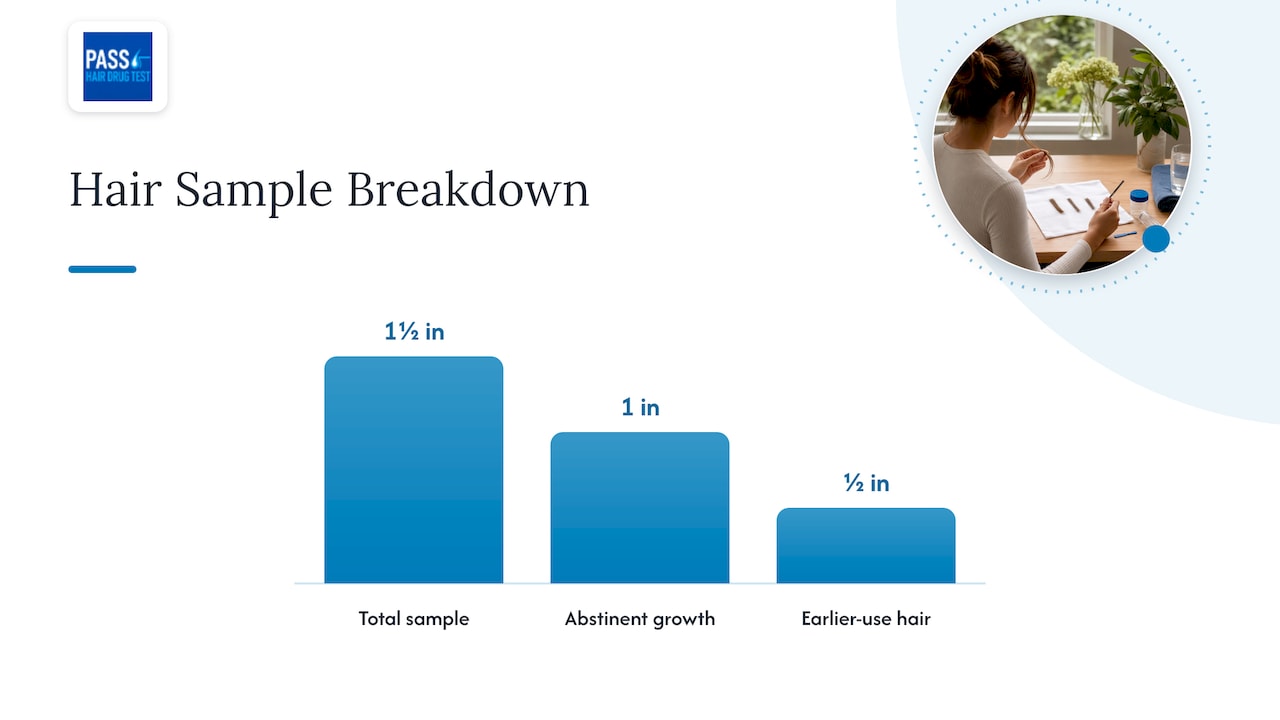
People search for this exact question, and the answer comes from simple arithmetic. Hair grows about ½ inch per month, and the test cuts 1½ inches. After two months clean, the scalp-end inch of the sample grew while you were not using, and the remaining half inch is older hair from the period you were. That is why two months of abstaining is not the same as passing, particularly for frequent users. The lab still has hair from your use window to analyze.
For that reason, we suggest two months be treated as a head start rather than a finish line. Combine your abstinence with a cleansing routine for the remaining weeks. Keep in mind the 2023 review’s observation that THC-COOH can remain detectable for months, which is why we recommend being proactive instead of hoping the clock alone settles it.
Other drugs have their own timelines
The 90 day frame applies across drugs, but the details differ. For example, a study of 63 chronic methamphetamine users, published in 2015 from Thailand, found most remained methamphetamine-positive in hair up to about 90 days after stopping, about 16% still positive at 120 days, and all negative by 153 days. If you are facing a broader panel, our guides on opioid hair detection time and hair detox for amphetamines lay out those timelines.
What to do on test day
A few practical points that follow from how the test works:
- Do not cut or shave your head hair in a panic. If head hair is too short, the lab can use body hair, and body hair does not give the same detection window as head hair.
- Keep the routine going until collection. The sample is cut at the scalp, so the hair nearest the root matters.
- Know which test you are facing. Hair testing suits pre-employment and random programs looking at up to 90 days. Quest notes that urine or oral fluid, which cover the last 1 to 3 days, are the preferred methods after an accident or on reasonable suspicion. If your employer has mentioned another type, we also carry products for urine, saliva and blood tests.
On testing rules, federal workplace programs follow HHS and SAMHSA guidelines. A January 2025 HHS notice, effective July 7, 2025, added fentanyl to urine and oral-fluid panels and changed marijuana reporting names to D9THC and D9THCC. It did not change the 90 day logic of how a hair sample is read. Private employers set their own panels, so check your paperwork or ask the collection site which drugs are covered.
Start your routine with the right products
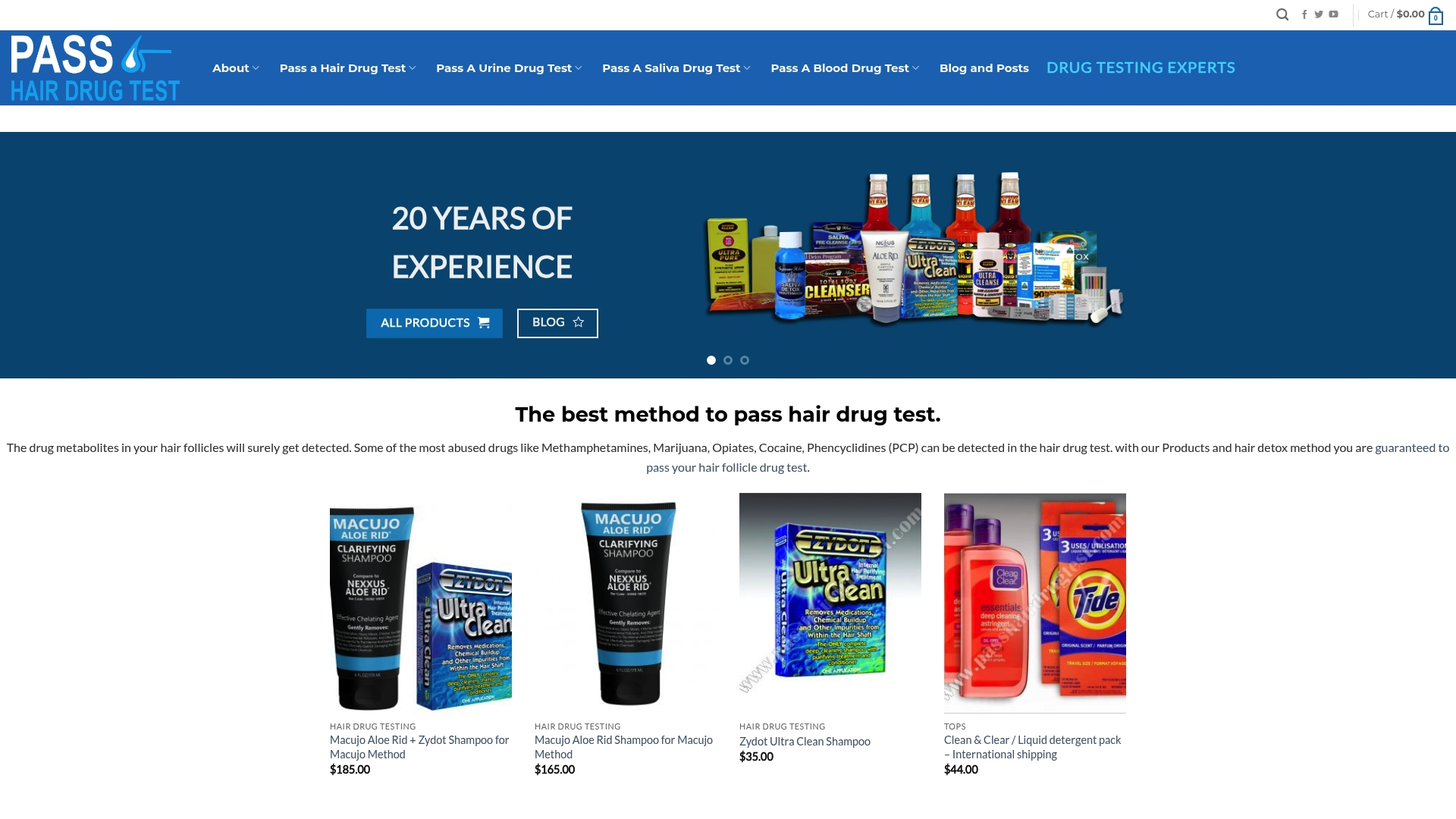
If you have a hair follicle test scheduled, the next step is simple: get the products and instructions in your hands now, not the week of. Our hair drug testing products include Zydot Ultra Clean Shampoo, Macujo Aloe Rid Shampoo and Mike’s Macujo Method, our multi-step routine. We have more than 20 years in the drug-testing and detox-product industry and offer unlimited phone support, so you can call with questions as you go. Our guide to how to pass a hair drug test shows how the routine fits your calendar.
If you want to read first, our hair follicle drug test guide and hair drug test information page cover the process from collection to results.
Our point of view
Most people who write to us have the same problem: a test date, a calendar, and a fear that the calendar is too short. The timeline answers part of that. Hair is a 90 day record, and you cannot rewrite last month by wishing it away.
What you can control is how you treat the hair that will be cut. That is why we built our hair offering around Zydot Ultra Clean Shampoo, Macujo Aloe Rid Shampoo and the multi-step Mike’s Macujo Method. We believe a complete, step-by-step routine, started early and followed carefully, is the strongest way to prepare, and we back it with unlimited phone support so nobody has to guess.
Our advice is the same whether you have three months or three days: stop using, start now, and do not skip steps. The sooner you begin, the more of the routine you can complete.
MIchael
FAQ
How long does THC stay in hair?
A standard test looks back about 90 days, based on 1½ inches of head hair growing about ½ inch a month. Longer hair samples can cover a longer period. Research on THC-COOH shows hair can remain positive for months after use ends, so your own timeline depends on how heavily and how long you used.
How soon after use does THC show up in a hair test?
Typically 7 to 10 days. Hair containing the drug has to grow from the follicle to the scalp surface before it can be cut. That is why use in the last few days is generally not what a hair test measures.
What throws off a hair follicle test?
Hair-care products and treatments can change how much THC a lab measures. A 2022 study found everyday hair products reduced THC concentrations by 52% to 65% on average. Pigment, hair length and how often you used also affect results.
When should I start a hair cleansing routine?
As soon as you know a test is coming. Every week before collection is another week of hair-care consistency applied to the hair that will be cut. Begin with the product instructions and call our support line if you have questions.
Sources
- Quest Diagnostics, Hair testing FAQ
- SAMHSA, Drug Metabolites and Hair Testing
- Huestis et al., Cannabinoid Concentrations in Hair from Documented Cannabis Users
- Shah et al., A review of bioanalytical techniques for evaluation of hair analysis
- Larabi et al., The duration of ketamine detection in hair after treatment
- Bertges et al., Manipulation of THC Hair Concentrations by Commercially Available Products
- Duration of detection of methamphetamine in hair after abstinence
- Federal Register, January 16, 2025, HHS/SAMHSA notice
Recommended
- Same Day Hair Detox Before a Hair Drug Test: What Works
- Your Last Week Before a Hair Test: What You Can Still Do
- 72, 48, 24 Hours: Last Minute Hair Detox Backed by Research
- Home Hair Detox: Realistic Protocol and Verification Guide
