Uncategorized
90 Day Ketamine Hair Test: What U.S. Labs Check and Why Shampoos Fail
Sep
Yes, specialized hair tests can detect ketamine and its metabolite norketamine, typically covering a window that may range from about one week to approximately three months depending on hair length and growth rate. This isn’t a test found on standard employment drug panels, so you need to confirm the lab you’re using actually screens for it. Any positive result should go through confirmatory testing and Medical Review Officer (MRO) evaluation before anyone treats it as proof of use.
TL;DR:
- Hair tests can detect ketamine use within a window of about one week to three months, depending on hair length, growth rate, and cosmetic treatments.
- Confirmatory testing using GC-MS or LC-MS/MS is essential to verify positive results, especially when only ketamine is detected without its metabolite norketamine.
- Detecting both ketamine and norketamine in hair provides stronger evidence of ingestion, as external contamination rarely produces measurable levels of the metabolite.
- Standard workplace drug panels typically do not include ketamine, so specialty panels are necessary for accurate detection in legal or employment cases.
- External detox shampoos do not reliably remove ketamine integrated into the hair shaft; only lab-ordered confirmatory tests can accurately determine usage.
Table of Contents
Table of Contents
- How Does a Ketamine Hair Test Actually Work?
- How Long Does Ketamine Stay in Hair?
- What Do Labs Test For, and What Are the Cutoffs?
- What Sample Does a Ketamine Hair Test Require?
- How Should You Interpret a Positive or Negative Result?
- Where Can You Get a Ketamine Hair Test?
- Do Detox Shampoos Actually Change Ketamine Hair Test Results?
- What I’ve Learned Watching This Industry for Two Decades
- How Passhairdrugtest Can Help You Prepare
- Sources
- FAQ
How Does a Ketamine Hair Test Actually Work?
Ketamine reaches hair follicles through the bloodstream during growth, binding into the hair shaft as it forms. That’s different from external contamination, where drug residue settles onto the hair’s surface from smoke, powder, or handling without ever entering the body. This distinction is why labs run a decontamination wash before testing. It strips off surface residue so the analysis reflects what actually got absorbed, not what brushed against a used bag or shared surface.
Labs don’t just look for ketamine itself. They also test for norketamine, its primary metabolite, because the body only produces norketamine after metabolizing ketamine internally.
- Ketamine alone on a hair test can mean either ingestion or contamination.
- Ketamine plus norketamine together is a stronger signal of actual use, since contamination rarely produces detectable metabolite levels.
- Labs typically confirm findings using GC-MS or LC-MS/MS, the two gold-standard analytical methods for hair drug testing.
Pro Tip: A published analytical method reported limits of quantitation as low as 0.05 ng/mg for both ketamine and norketamine in hair, which is precise enough to catch fairly light or infrequent use.
How Long Does Ketamine Stay in Hair?
Ketamine generally shows up in head hair about 7 to 10 days after use, once that segment of hair has grown far enough past the scalp to be sampled. A standard 1.5 inch (3 cm) hair sample gives labs roughly a 90 day look back, since head hair grows at an average rate of about half an inch per month.
Several factors push that window wider or narrower:
- Dose and frequency: heavier, more frequent use tends to leave a stronger, more persistent signal.
- Hair color and melanin: darker, more pigmented hair can bind and retain more of certain compounds than lighter hair, according to analytical hair-testing research.
- Growth rate and segment length: slower growth or shorter samples shrink the usable window; longer segments extend it but need cutoff adjustments.
- Cosmetic treatments: bleaching and chemical processing can degrade drug concentrations in the hair shaft.
Chronic, high-dose use is where things get unusual. One case report found an estimated elimination half-life in hair of around 0.88 months, meaning trace amounts can theoretically remain detectable well beyond the typical 90 day mark in heavier users, even as concentrations drop sharply over time.
What Do Labs Test For, and What Are the Cutoffs?
Hair drug testing runs in two stages. The first is a screening test, usually an immunoassay, designed to flag samples that might contain ketamine. Any presumptive positive then moves to confirmatory testing, which is where the real precision comes in.
- Screening is fast and cost-effective but prone to occasional false flags from cross-reacting compounds.
- Confirmatory testing relies on targeted GC-MS or LC-MS/MS analysis to positively identify and quantify ketamine and norketamine.
- Segment length matters for cutoffs. The Society of Hair Testing consensus sets cutoff values for adult hair segments of up to 3 cm, and requires dilution adjustments when labs analyze longer segments.
- Metabolite confirmation is emphasized. SoHT guidance specifically recommends confirming norketamine alongside ketamine to support evidence of actual ingestion rather than surface contact.
This two-tier structure is exactly why a rushed or unaccredited test carries real risk in employment or legal settings. A screening-only result without confirmatory backup shouldn’t stand as the final word in cases with legal or employment consequences.
What Sample Does a Ketamine Hair Test Require?
Labs have specific expectations for how a sample gets collected, and deviations from protocol can affect both accuracy and legal defensibility.
- Standard collection uses about 1.5 inches (3 cm) of head hair, cut from the crown as close to the scalp as possible.
- Body hair substitutes (chest, leg, or facial hair) get used when head hair is unavailable, but body hair grows more slowly and irregularly, so the detection timeline becomes far less precise.
- Segmenting a longer sample lets labs break it into sections representing different growth periods, which helps map roughly when exposure occurred.
- Cosmetic treatments like bleaching or repeated dyeing can lower measurable drug concentrations, sometimes enough to affect results near the cutoff.
- Chain-of-custody protocols, including validated decontamination washes and documented handling, matter enormously any time a hair test could be used in hair follicle drug testing disputes or employment decisions.
How Should You Interpret a Positive or Negative Result?
A confirmed positive that includes both ketamine and norketamine carries more weight than one showing ketamine alone, since the metabolite is much harder to explain through external contact. Toxicologists treat that combination as stronger evidence of actual ingestion, per the SoHT consensus on interpretation standards.
False positives can still happen. Environmental exposure, cross-contamination during handling, or lab processing errors are the usual suspects. False negatives tend to trace back to insufficient sample length, very recent use that hasn’t grown out yet, or a dose too low to clear the cutoff.
- Request confirmatory testing if a screening result comes back positive and you dispute it.
- Ask whether an MRO reviewed the result, since prescription ketamine use for approved medical purposes is a legitimate explanation an MRO can document.
- Keep your own records if the test ties to employment or a legal matter.
Pro Tip: If a result affects your job or a legal case, always push for confirmatory LC-MS/MS testing before accepting a screening result as final.
Where Can You Get a Ketamine Hair Test?
Most standard workplace drug panels, including common 5, 10, or 12-panel tests, don’t screen for ketamine at all. SAMHSA’s guidance on workplace testing confirms that expanded or specialty panels are required to catch it. If you need ketamine specifically covered, ask the lab or testing provider directly rather than assuming a generic panel includes it.
- Lab-ordered specialty panels are the standard for anything tied to employment or legal proceedings, since they follow strict chain-of-custody rules.
- Specialty toxicology labs, such as USDTL, list hair, nails, and urine as valid specimen types for ketamine and its metabolites.
- Mail-in or home collection kits offer convenience for personal research, but they generally can’t meet chain-of-custody standards required for HR or court use.
- Turnaround times for confirmatory hair testing typically run several business days once the sample reaches an accredited lab.
Do Detox Shampoos Actually Change Ketamine Hair Test Results?
Peer-reviewed analytical work makes one thing clear: once ketamine incorporates into the hair shaft through the bloodstream, it’s genuinely difficult to remove. Decontamination washes used by labs are designed to strip external contamination, not analyte that’s already bound inside the hair structure.
- Multi-step cleansing approaches, including the kind detailed in Mike’s Macujo Method, can reduce certain external residues on the hair’s surface.
- No published study demonstrates that any cleansing method reliably defeats confirmatory GC-MS or LC-MS/MS testing for incorporated ketamine and norketamine.
Pro Tip: If a legal or employment outcome hangs on the result, lean on lab-ordered confirmatory testing and MRO review, not unverified promises about detox timelines.
What I’ve Learned Watching This Industry for Two Decades
Most people asking about a ketamine hair test aren’t worried about the science. They’re worried about a job offer or a court date, and they want a straight answer instead of a sales pitch.
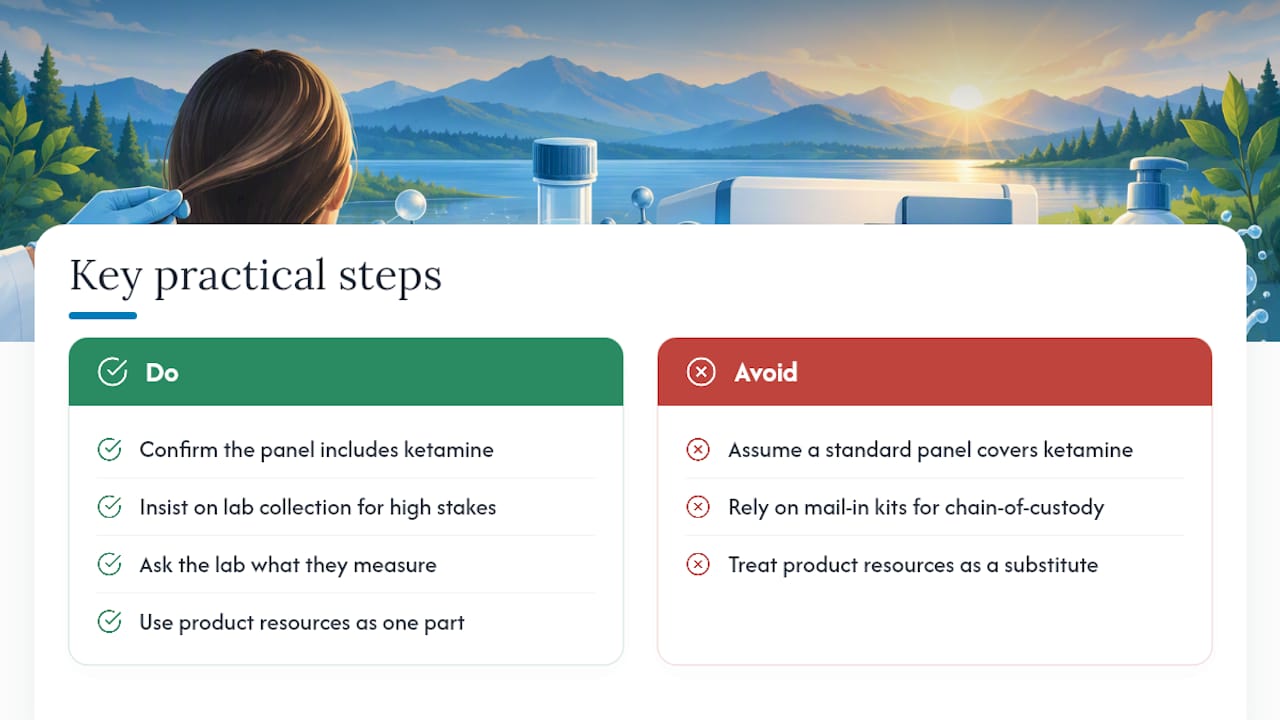
Here’s the piece almost nobody mentions: the biggest risk isn’t the test itself, but assuming a standard panel already covers ketamine when it usually doesn’t. Confirm the panel first. If the stakes are real, insist on lab collection over a mail-in kit, because chain-of-custody gaps cause more disputed results than anything happening at the molecular level. Use product resources as one part of a broader plan, never as a substitute for understanding what the lab is actually measuring.
— MIchael
How Passhairdrugtest Can Help You Prepare
The company states it has over 20 years in the hair-testing and detox-product space, reflected in its product lineup. Whether you’re trying to understand your options or actively preparing for a test, the full product catalog covers hair, urine, saliva, and blood testing needs in one place.
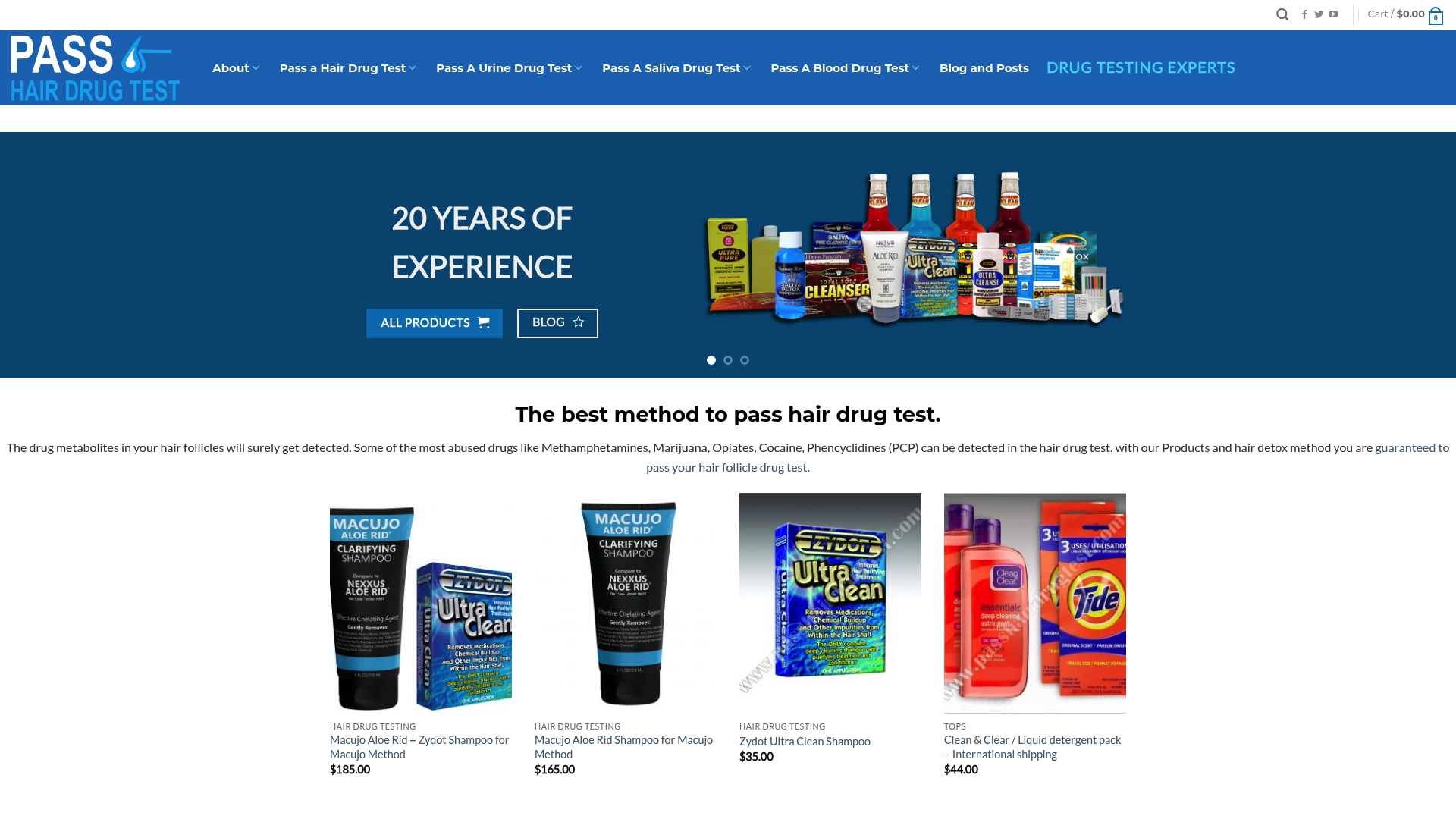
For hair-specific concerns, some available products include Macujo Aloe Rid Shampoo, Zydot Ultra Clean Shampoo, and multi-step cleansing methods focused on cleaning external residue from the hair shaft. If you want to understand detection science before you buy anything, the hair drug test information page walks through detection windows and interpretation in plain language. Ready to look at your options? Start with the hair drug testing shampoo guide to see which method fits your timeline and hair type.
Sources
- Society of Hair Testing — Drug of Abuse Consensus and Recommendations
- PubMed: Analytical method for ketamine and norketamine in hair (2006)
- USDTL — Ketamine testing
FAQ
Can a Ketamine Hair Test Detect Occasional Use?
Yes, sensitive lab methods can detect fairly light or infrequent use, since analytical studies report limits of quantitation around 0.05 ng/mg for ketamine and norketamine in hair. Detection still depends on dose, timing, and how close to the scalp the sample was cut.
Does a Standard Employment Drug Panel Include Ketamine?
Most standard 5, 10, or 12-panel workplace tests do not include ketamine, according to SAMHSA’s workplace testing guidance. You need to request a specialty panel specifically if ketamine screening matters for your situation.
How Far Back Can a Ketamine Hair Test Look?
A standard 1.5 inch (3 cm) hair sample typically covers about a 90 day window, since head hair grows roughly half an inch per month. Chronic heavy use can sometimes leave traces detectable longer, based on a case study estimating a hair elimination half-life near 0.88 months.
Can Detox Shampoo Beat a Ketamine Hair Test?
No cleansing method reliably removes ketamine or norketamine once it has incorporated into the hair shaft. Multi-step approaches sold through Passhairdrugtest target external residue on the hair’s surface, not analyte already bound inside it.
What Does It Mean if Both Ketamine and Norketamine Show Up?
Detecting both compounds together is stronger evidence of actual ingestion than ketamine alone, since the body only creates norketamine through internal metabolism. The SoHT consensus guidance recommends this combined confirmation specifically to rule out surface contamination.
Recommended
- 90 Day Window Explained: Opioid Hair Detection Time and the 5–10 Day Lag
- Long Hair Drug Test: What Labs Actually Measure
- Why Baking Soda Fails Many U.S. Hair Drug Tests Despite 60% Lab Drops
